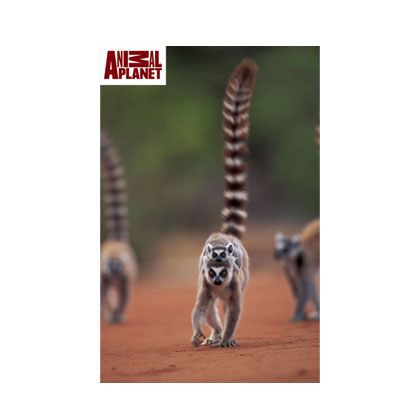
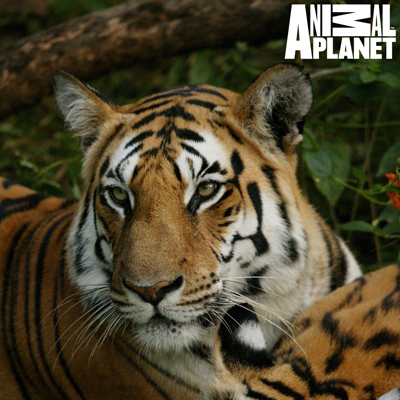
Tag: Animal Planet

  • Discovery to launch three new channels

    Discovery to launch three new channels

    GOA: Discovery Networks Asia-Pacific has announced the launch of three new channels in India at the ongoing GoaFest. Widely recognised for enhancing the television viewing experience in India over the last two decades, Discovery will launch a refreshing new concept Hindi entertainment channel named ID – Investigation Discovery.

    One of the pioneers in high definition genre in India, the company will also expand its HD offering with the launch of two differentiated gold standard channels – TLC HD World and Animal Planet HD World.

    The company’s expanded portfolio of 11 differentiated channels reflects India’s potential and resonates the core promise of digitisation in India.
     

    ID will be India’s first Hindi entertainment channel dedicated to offering compelling true stories of mystery, crime and suspense. The channel promises to ‘always reveal’ intriguing twists and turns that culminate into thrilling conclusions. Providing fascinating stories of human nature, the channel’s alluring series, in-depth specials and thought-provoking one-offs will challenge viewers’ perceptions and expand the Hindi entertainment genre.

    Rahul Johri executive vice president and general manager – South Asia, Discovery Networks Asia-Pacific and head of revenue, pan-regional ad sales and Southeast Asia said, “The launch of three new channels    ID, TLC HD World and Animal Planet HD World demonstrates Discovery’s commitment to entertain Indian viewers and offer high-quality and differentiated programming. ID is one of the great success stories in US cable and we are thrilled to present the impactful and entertaining investigative programming to viewers in India.” 
     

    “Steering the premium audience in the country, TLC HD World promises to celebrate every moment of life by offering the finest experiences from across the world. With its dedicated 24-hour programming, the channel will indulge the audience through its captivating content on destinations, personalities and trends underscoring its ‘live more’ promise,” stated the release.

     
    Offering the gold standard in high definition, Animal Planet HD World will bring alive the warm and intimate bond that exists between humans and animal kingdom. “Surprisingly Human, it will broadcast premiere content, scheduled as per Indian viewers’ preference with gripping on air packaging,” the release added.

    Discussing the growth potential of high definition in India, Johri said, “The launch of the two new high definition channels TLC HD World and Animal Planet HD World has further extended Discovery’s leadership in the HD genre. Both the new networks, along with existing Discovery HD World, will enrich television viewing experience and satisfy the emerging demands of audience, advertisers and affiliates.”

     Discovery’s existing portfolio in India includes eight channels: Discovery Channel, Animal Planet, Discovery Tamil, TLC, Discovery Kids, Discovery Science, Discovery Turbo and Discovery HD World.
  • Animal Planet’s new series ‘The Wildlife of Tim Faulkner’ premiers 1 June

    Animal Planet’s new series ‘The Wildlife of Tim Faulkner’ premiers 1 June

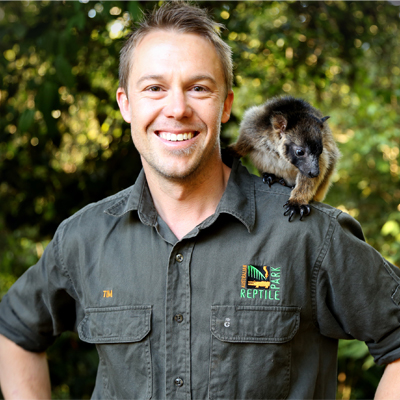
    MUMBAI: Wrestling a saltwater crocodile, wrangling a deadly inland Taipan or milking a Funnel-web spider to make anti-venom; it’s all in a morning’s work for reptile park operations manager and wildlife expert Tim Faulkner. Then there’s the giant Galapagos tortoise to weigh, the baby wombat to feed, the flying fox to rescue and a new species of native bird to discover. That still leaves time in this passionate conservationist’s day to release a blue- tongued lizard, tag a wild platypus and save the Tasmanian Devil from extinction. Welcome to the wildlife of Tim Faulkner.

    Premiering June 1st, Animal Planet brings a new television series following the daily adventures of Australian wildlife expert, Tim Faulkner in Australian Reptile Park and beyond. Airing every night at 9 pm in June, each episode of THE WILDLIFE OF TIM FAULKNER captures his amazing energy, not only at the Reptile Park, but high in the hills of Devil Ark in NSW Barrington Tops, trapping rogue crocodiles in the Northern Territory and tagging wild platypus in their natural habitat.

    Tim Faulkner describes his real passion as “Australian wildlife, their management within zoos, the education of people who visit the zoos and their conservation within their natural habitat”.

    Now 32 years, Tim has been working in the zoo and conservation industry his whole life. Since volunteering at a Sydney Wildlife Park from the age of 14, Tim has worked with some of Australia’s rarest most endangered species and their species management programs within captivity.  Tim is currently General Manager of the award winning Australian Reptile Park, and has received accolades for his conservation work on Tasmanian devil breeding facility Devil Ark.

    Tim is playing an important role in the Tasmanian devil mainland breeding program, the Devil Ark.  The iconic Tasmanian devil is nearing extinction from the devil facial tumour disease. In Animal Planet’s series, viewers follow Tim as he discusses the devastating effect facial tumors are having on the animal and what the Reptile Park is doing to help. Tim is extremely proud that the Park has bred more devils than any other establishment.

    The series also introduces viewers to extracting venom from snakes and spiders. Tim’s work with the Australian Reptile Park’s venom program also sees him handle the world’s deadliest snakes and spiders to produce venom which is then made into anti-venom at the Commonwealth Serum Laboratory.

    THE WILDLIFE OF TIM FAULKNER will also see him moving a 4 metre alligator from one pond to another; entering an Alligator lagoon to retrieve eggs from some not so happy gator moms; repairing a leakage in a not-so-friendly crocodile’s pool; visiting a bat rehab centre; rescuing a funnel web spider and a rogue Death Adder; milking a rare King Brown snake and other awe-inspiring works at the park.

    Highlights of the series:


    · Australia Reptile Park is the only zoo in Australia committed to saving lives with a Venom-Milking Program in place for the past 50+ years, saving over 300 lives each year being the sole supplier of a variety of venoms, which is used for all snake and funnel-web anti-venom in Australia.

    To keep up the supply of venoms, highly trained staff of the Australian Reptile Park regularly ‘milk’ more than 300 snakes and 500 spiders that are included in the program.

     
    · Devil Ark is a Tasmanian devil breeding facility in the NSW Barrington Tops that is currently home to around 170 Tasmanian devils. Founder John Weigel, also owner of the Australian Reptile Park, built Devil Ark in 2010 to house large numbers of Tassie devils living in natural conditions.

    The species is under threat of extinction from Devil Facial Tumour Disease, an insidious contagious cancer that is transmitted by biting. Unfortunately for the devil, they bite frequently when feeding, socialising and mating, so the disease has spread quickly, reducing numbers by a massive 90% in some parts of Tasmania.

  • Wherever they go, Spy cams follow

    Wherever they go, Spy cams follow

    MUMBAI: Taking natural-world filmmaking to an unparalleled scale, Animal Planet’s new series SPY IN THE WILDbrings most engaging and secret stories of some of the most intriguing and charismatic animals present on this Earth. Award winning teams of directors and cameramen employ remote-controlled buggy-cameras, buried periscopes and state-of-the-art technologies to bring forth the lives of world’s famous animals.

    Starting May 1st, every night at 10 pm on Animal Planet, SPY IN THE WILDgives a new perspective on the behaviour, emotions, intelligence and extreme survival tactics used by animals. Specially designed cameras and the latest technology allow the viewers to really get to know the species that include lions, elephants, polar bears, tigers and penguins.  

    For the first time, state of the art ‘SpyCreatures’ infiltrate the dolphins’ underwater world, often interacting and engaging the curiosity of the dolphins themselves, offering a unique glimpse of their intelligence and personalities.   The sensational ‘Bouldercam’ takes viewers to within a whisker of the lion. The programme also introduces ‘Dungcam’ and applies the revolutionary brand of photography to perhaps the most popular of all animals – the African Elephant.  Using the‘Tuskcams’ and ‘Trunkcams’, the crew uses intelligence and sensitivity of elephants and seeks support to carry the cameras on their tusks and trunks to film the tigers wherever they go, even on the move.With bouldercam’s revolutionary sound system, the television vibrates to the purrs, roars, yelps and barks of these highly vocal animals.The team also uses mini-cranes, buried cameras and tracking vehicles to grab the action.

    Production Facts

    1. For the three-part special Penguins – Spy in the Huddle, 1,000 hours of intimate behaviour were recorded – almost nothing that happened on the colony was missed. With emperor penguins, this proved to be the longest continuous shoot of emperors ever made – more than 330 consecutive days. The overwintering crew was totally  isolated for 8 months, with no contact with the outside world beyond a satellite uplink, in temperatures as low as -60?C. There were only 10 days when they didn’t film.

    2. Humboldt penguins are shy birds and have hardly ever been filmed. Spycams played a key role in the 165 days of filming.

    3. For Dolphins – Spy in the Pod, 900 hours of intimate behaviour were recorded over the course of 1 year, in countries as diverse as Mozambique, Canada, Florida, South Carolina, Honduras, Costa Rica, Australia, South Africa and Argentina.

    4. In the course of the filming period, they dived over 1500 times and spent nearly 3000 hours at sea filming with the Spy Creatures and dolphins in all weathers. Over half of the filming took place via free diving (as opposed to using scuba gear), in depths ranging from shallow coral reefs to nearly 70 feet deep!

    Episode Details:

    Tiger – Spy in the Jungle:   The elephant camera crew reveals the incredible story of four cubs growing up in this previously unseen world.  By following the tiger, the camera-carrying elephants uncover a wildlife world every bit as rich as that of Africa, encountering sloth bears – a rarely filmed bear with a unique character, famous for carrying its comical babies on its back – and leopards, the tiger’s major competitor. The episode also brings to light the extraordinary red dogs. These fearsome creatures race through the jungle in huge packs, striking fear into anything in their path.

    Polar Bear – Spy on the Ice: Shot mainly using spy cameras, this episode gets closer than ever before to the world’s greatest land predator.Icebergcam, Blizzardcam and Snowballcam are a new generation of covert devices on a mission to explore the Arctic islands of Svalbard in Norway. Backed up by Snowcam and Driftcam, these state-of-the-art camouflaged cameras reveal the extraordinary curiosity and intelligence of the polar bear.  The cameras also follow the bears as they hunt seals, raid bird colonies, dive for kelp and indulge in entertaining courtship rituals. Icebergcam even discovers their little-known social nature as seven bears share a washed-up whale carcass.

    Elephants – Spy in the Herd: Elephants show many human similarities – life span, social structure, wisdom of age and emotional bonds – which allows this series to connect even more strongly with the audience.  The cameras are disguised as elephant dung.  These come in different versions and use different lenses.  Shots are captured as the cameras are carried by the elephants or even kicked like a football. The intimacy of the ‘dungcams’ images reveal the subtleties of elephant life in a way that has never been seen before.

    Dolphins – Spy in the Pod is a magical underwater adventure. Dolphins are one of the most social and playful animals on the planet. Using the trademark blend of extraordinary imagery,analysis of behaviour and moments of humour, the episode looks at thesecret lives of one of the world’s most popular and charismatic animals.

    Lion – Spy in the Den makes us imagine sitting just a whisker away, watching lion cubs growing up learning to be lions themselves, and getting into all kinds of trouble. Out on the African plains, right under the lion’s nose, ‘bouldercam’ – a state-of-the-art mini camera and buggy with surround sound, all hidden in a ‘boulder’ – trundles along.

    Penguins – Spy in the Huddle: The amazing technical wizardry of the penguincams allows them to blend into these penguin colonies, allowing a closer view of the creatures than ever before as they immerse themselves in the penguin world, both on land and at sea.Penguins – Spy in the Huddle spends nearly a year in their close company, deploying 50 spycams to capture as never before the true character of three very different, yet equally charismatic, birds

  • JAINHITS commences dual language voice feeds

    JAINHITS commences dual language voice feeds

    NEW DELHI: JAINHITS has started providing voice feeds in dual languages on its platform at no additional cost for its customers.


    While initially, it is providing the dual language feed to four of its channels; it will later expand this proposition to other channels.


    Consumers will be able to avail dual language voice feeds for the channels namely Discovery, History TV18, Animal Planet and Nickelodeon. Through this offering, JAINHITS customers can choose to have audio voice feeds in Hindi or English. The language options from English to Hindi or vice versa can be switched using the remote.


    According to JAINHITS head Rakesh Gupta, “Spreading happiness is JAINHITS’ motto. This is one more effort to spread the happiness amongst our ISO (Independent Service Operator) partners and their customers. This is one more step towards JAINHITS’ endeavour to offer the most advanced and enriched digital cable TV services.”


    JAINHITS provides consumers with more than 250 channels and plans to increase it to 500 in the near future. The company provides MPEG-4 quality digital cable TV services including SD/HD channels from national, regional and International broadcasters.


     JAINHITS will soon roll out its full HD and multi-screen services for consumers. The key proposition of the HITS platform is its cost-effective investment for cable operators which stands at a minimum of only Rs 25,000 per month. With this, they expect to do business with 400 plus partners and install over 1000 Mini Downlink Headend’s across 640 districts of India by the end of 2014.


    The HITS platform is the only Direct-to-Network (DTN) service in India. This system has an advantage of having a centralized Conditional Access System (CAS) and Subscriber Management System (SMS). JAINHITS offers Triple Play Service throughout India – Video, Data & Voice. 

  • Animal Planet to have Hindi programming blocks from April 2

    Animal Planet to have Hindi programming blocks from April 2

    Animal Planet, a 24-hour channel which comes under Discovery Communications India, will also be providing Hindi programming from April 2, 2001.


    The Hindi programmes will air as a half-hour block from Monday to Thursday, 2 pm to 2.30 p m, and a one-hour block on Saturday and Sunday, from 12 noon to 1 PM


    Commenting on the new initiative, Discovery MD Kiran Karnik says: “We are delighted to add a Hindi audio to selected programmes. This will provide an opportunity to our present audience to enjoy the best of Animal Planet’s spectacular and high-quality programmes in a language that many of them may prefer.”


    Launched in 1999, the channel already reaches 7.5 million homes, according to a company press release.

  • The Closest, Deadliest Encounters

    The Closest, Deadliest Encounters

    MUMBAI: Explorer Steve Backshall returns on his mission to find the world’s deadliest animals. In the new series DEADLY 60 ON A MISSION, Steve and his trusty crew go in search of the biggest, fastest, most venomous animals in his deadliest series ever. From lethal beauties to killer beasts, his journey takes him to some of the most hostile and remote places on Earth in order to determine the deadliest top 60.

    Starting April 1st, every night at 9 pm on Animal Planet, DEADLY 60 ON A MISSION is a highly concentrated dose of incredible adventure, high adrenaline and utterly hair raising encounters that are unbeatably deadly.

    Filmed on location around the world from Sri Lanka to Nepal,Peru to Australia, the team hits the ground running – and they’re bringing the viewers along for the ride.Swimming unprotected with wild alligators, paragliding alongside an Egyptian vulture, being lowered by helicopter into a crocodile nest in Australia, a close encounter with the most venomous snake on earth; this is a record breaking series with the planet’s top predators.

    Each episodeof DEADLY 60 ON A MISSIONsees animals deadly enough to warrant a treasured place on Steve’s list.However, the search is never straight forward as the crew does whatever it takes to get the ultimate close encounter, facing some of the harshest territories known to man…or beast. From diving in the fresh water swamps of Florida on the hunt for Alligators to exploringthe remote island of Komodo on a quest for the Komodo Dragon – the world’s largest lizard, capableof killing a buffalo – the series makes viewers feel asthough they’re at the heart of the action, and part of thegang.

    Each animal is assigned three killer facts andrated on the Deadly 60 scale as viewers are immersedin the quest for the world’s most lethal predators. Inaddition, the specials allow viewers to see behindthe scenes and find out just what it takes to be part ofthe Deadly 60 team as they’re on the hunt in the world’swildest places.

    Some of the highlights of the series are:

    In South Africa, the crew looks for one of the most iconic deadly animals – the ferocious great white shark.On this mission Steve also goes in search of the fastest animal on land, uses some of the latest camera technology on a trio of Africa’s deadliest snakes before being charmed by the astonishing snake stomping secretary bird.

    Steve Backshall and his crew travel to Australia and New Zealand in search of more lethal predators. Steve has his most dramatic encounter ever as he dangles beneath a helicopter and is dropped onto the nest of a wild saltwater crocodile. Steve heads out in search of the largest toothed predator on the planet – the mighty sperm whale.

    On a mission to track down some of the largest deadly animals Asia has to offer, Steve and his crew are chased by a group of ravenous, three metre long Komodo dragons, the world’s largest venomous lizard! Steve then heads to Nepal in search of more deadly giants. He enlists the help of an elephant to track down a very grumpy rhinoceros and stalks the forests in search of the largest cat on earth, the highly elusive and endangered Bengal tiger. He also has a chance encounter with a nest of giant honeybees before taking to skies to paraglide with an Egyptian vulture above the foothills of the Himalayas.

    Join Steve Backshall as he continues his search for the planet’s deadliest predators with a visit to Florida in the USA. He dives into the crystal clear waters of the Silver Springs river to swim with a wild alligator before wading into a swamp to try and catch a slippery amphibian, the weird and wonderful amphiuma. Steve then heads to the drier pine woodlands on the trail of America’s largest serpent, the eastern diamondback rattlesnake.


  • The One Alliance threatens to switch off channels to Reliance BIG TV

    The One Alliance threatens to switch off channels to Reliance BIG TV

    MUMBAI: The subscribers of direct-to-home TV services provider Reliance Big TV may stop receiving 26 channels that form part of the The One Alliance bouquet about three weeks from now.


    The One Alliance through a public notice has informed subscribers of Reliange Big TV that the channels it aggregates can go off in the next three weeks, if the DTH player doesn’t clear outstanding dues.


    “We have issued a public notice as per the guidelines. The outstanding is huge and we are hoping that the matter is resolved soon,” says The One Alliance EVP sales and strategy Makarand Palekar.


    The channels that come in The One Alliance bouquet are: Sony Entertainment Television, MAX, MIX, SAB, PIX,SIX,Aath, Animal Planet, AXN, Animax, Discovery Channel, Discovery Channel Tamil, TLC, Discovery Science, Discovery Turbo, Aaj Tak, Headlines Today, Times Now, Tez, Discovery Kids, ET Now, Zoom, Movies Now, Discovery HD World, SIX HD and SET HD.


    “Talks are on with Reliance Big TV,” informs Palekar.


    The One Alliance is getting tough against all distribution platforms. The aggregator had switched off channels given to IndusInd Media and Communications (IMCL) on 5 March, after issuing a 21 day notice to the multi system operator (MSO) for non-payment of huge outstanding.


    “We met the officials from IMCL and resolved the matter on Friday, 7 March. The channels from the bouquet (to IMCL) have been restored,” says Palekar.

  • Animal Planet’s new initiative “Where Tigers Rule”

    Animal Planet’s new initiative “Where Tigers Rule”

    MUMBAI: Animal Planet will bring the country’s attention on India’s majestic animal – Tiger – with its special month-long programming initiative WHERE TIGERS RULE.

    Leading Bollywood actors Abhay Deol and Chitrangada Singh have joined India’s leading wildlife channel Animal Planet to create nationwide awareness on the threats affecting tigers’ survival and the acute role tigers play in balancing India’s ecosystem.

    From the breathtaking landscapes of Sundarbans to the magnificent forests of Ranthambore, WHERE TIGERS RULE provides an intimate look into the mysterious world of tigers. Featuring some of the leading tiger experts like Alphonse Roy, Valmik Thapar, Saba Douglas Hamilton, Dave Salmoni, Simon King, John Varty, Niall McCann, WHERE TIGERS RULE showcases the elusive lifestyle of tigers and raise concern about the grave situation of dwindling tiger population.

    With a few thousand tigers left in the wild, every small effort represents hope for their survival.

    Through this engaging month-long line-up, Animal Planet’s WHERE TIGERS RULE highlights the secret lives of this private predator revealing its behaviour, predatory skills, conflict with humans, habitat destruction, poaching and conservation issues.
     

    WHERE TIGERS RULE will air every night at 8 PM from 1st to 31st March, only on Animal Planet.
     

    Commenting on the initiative, Rahul Johri, Senior VP and General Manager – South Asia and Head of Revenue, Pan Regional Ad Sales and Southeast Asia, Discovery Networks Asia-Pacific said,”Tiger is a symbol of wildlife wealth of India and holds an irresistible fascination due to its secretive predatory nature.  Its dwindling population is a matter of great concern.  Animal Planet through its dedicated programming aims to help viewers understand and appreciate this majestic and endangered big cat.”
     

    Leading actor Abhay Deol says, “Tiger is a supreme predator and is an indication of the well-being of our ecosystems. Saving the tiger is not just a choice, it’s our need.  I am hopeful that my association with Animal Planet will help raise consciousness amongst audience in securing the future of this beautiful animal.”
     

    Actor Chitrangada Singh said, “We are left with very few tigers in the wild and if collective action is not taken, the most iconic animal could be wiped off the planet forever.  Animal Planet’s Where Tigers Rule is a wonderful initiative that will sensitise viewers to understand the importance of this charismatic cat.”
     

    Now in its third year, Animal Planet’s WHERE TIGERS RULE has previously been supported by Ajay Devgn, Bipasha Basu and John Abraham.  The cause also gained affiliation from Olympic gold medalist Abhinav Bindra, filmmaker Mike Pandey and conservationists Belinda Wright.
     

    Some of the programmes in line-up include:
     

    SWAMP TIGER documents the life of the most elusive of cats – the royal Bengal tiger of the Sundarbans. Using elaborate night-sight equipment sensitive to moon and stars, the viewers will watch never-seen-before sight of a female tiger covering a carcass with leaves just before dawn and many revelations that follow.
     

    TIGERS NEXT DOOR takes a look at an intimate portrait of Sita, an Indian tigress and her cubs in the forest of Bandhavgarh in Central India.  The film analyses political changes sweeping across the nation which could mean a better future for the locals and tigers alike.
     

    INDIA – KINGDOM OF THE TIGER is a historical epic depicting India from 1910 to the modern era. The film chronicles life of Jim Corbett, the famed English hunter-naturalist, as he races to save an Indian village from the terror of a man-eating tiger.

    Naturalist and filmmaker John Varty and zoologist David Salmoni are the ultimate friends of these beautiful animals. LIVING WITH TIGERS follows their dynamic and ambitious program which has been developed to reintroduce captive tigers into the wild.


    TIGER, HUNTING FOR A HOME looks at some of the issues concerning the plight of Tigers and how their existence or extinction impacts life around them.

  • The true stories of real life feral children on raised wild

    The true stories of real life feral children on raised wild

    MUMBAI: Stories of children raised by animals have fascinated us for many centuries; Mowgli from The Jungle Book, the myth of Romulus and Remus, and even Tarzan. Do wild children who have been reported to be brought up by untamed animals actually exist, or are they merely folklores or elaborate hoaxes? On Animal Planet’s RAISED WILD, discover the shocking phenomenon and horrifying truth of real life feral children who have actually been bred by undomesticated animals.

    A three-part special, join anthropologist Mary-Ann Ochota as she sets off on the trails of these extraordinary youths to uncover the actuality of their existence and unravel their remarkable stories. From the deep jungles of Uganda, to the rural heartlands of Ukraine, and to one of the most isolated places on Earth, the island of Fiji, follow Mary-Ann on RAISED WILD as her quest to separate fact from fiction takes her across three continents to disentangle the truth about these wild children, who live and survive on the very edge of humanity. RAISED WILD premieres on Sunday, January 26 at 7 pm. The episodes will repeat the following Sunday, February 2 at 11 am.

    RAISED WILD begins with the search for John Ssabunnya, the alleged ‘monkey boy’ of Uganda. Reported to be living deep in heart of these East African forests, it has been described that he not only moves and sounds like our cousins of the animal kingdom, but also displays numerous monkey-like characteristics such as his nocturnal behaviour, his fur-like, hairy body, and his ability to survive solely on fruits and plants, a diet that is highly identical to that of Africa’s native vervet monkeys. With Charles Darwin’s extensive study of men evolving from primates and centuries of research and scientific theories closely linking human beings to these creatures, is it possible that ‘monkey humans’ really do exist?

    RAISED WILD then continues with the investigation of one of the most infamous cases of feral children in Kiev, Ukraine, where a girl called Oxana Malaya has been reported to astoundingly exhibit dog-like behaviour; barking, panting, snarling, jumping and running on all fours amid a pack of untamed dogs, and feeding on dead animals when hunger strikes. Is this ‘dog girl’ a well-conceived fable or a fact? Just how did she end up in the care of these animals, picked up their habits and managed to survive for so long as one of them, away from civilisation for years? Follow Mary-Ann as she scours the country to unriddle the mystery, travelling far and wide from Kiev to Kherson to Odessa and even to Novaya Blagoveschenka, the village where Oxana is believed to have been born.

    RAISED WILD ends in Fiji with possibly one of the strangest tales of wild children. As a child, ‘bird boy’ Sujit Kumar was supposedly kept and raised in a coop full of chickens for a few years by his poverty-stricken parents, for reasons unknown, and was cited to have then continued living his life being tied to a wall in the corner of a home for the aged for almost 25 years. Having being amongst chickens for so long, he apparently started to behave like them; pecking on the ground for food, clucking, squawking, screeching occasionally and lashing out when people try to touch him. Who is this ‘bird boy’ and how credible is his story? Join Mary-Ann as she digs deep to delve into the truth of the mysterious and disturbing world of savage feral youths. What is the likelihood that these wild children are mere figments of imagination? Is it even possible for animals to raise human beings? Are these children so far gone that it is too late for them to blend back into society and lead normal lives? How many more of such youths are out there? Find out on the following episodes of RAISED WILD:

    MONKEY BOY OF UGANDA: Mary-Ann journeys to equatorial Africa to uncover the truth behind the rumour of young boy living with monkeys. In 1992, a young boy was discovered in the jungle acting disturbingly similar to a monkey. Rumours circulated that the boy screeched like a monkey, squatted instead of stood and was covered in hair from head to toe. Join Mary-Ann as she investigates to determine if this child really could have been raised by monkeys, and if so, how he survived in the wild.

    DOG GIRL OF UKRAINE: Mary-Anna journeys to Ukraine to uncover the truth behind the incredible story of Oxana Malaya, a young girl allegedly raised by dogs. Born during the Soviet era to alcoholic parents, young Oxana is said to have turned to the family dogs for warmth and love. Years later, she reportedly was acting exactly like a dog, a claim supported by compelling video footage. How might a child recover from such beginnings? Can her feral behaviour fade with time?

    BIRD BOY OF FIJI: Mary-Ann travels to Fiji to uncover the shocking truth behind the story of the Bird Boy of Fiji. Rumours circulate that police discovered the small boy while he was squawking, flapping his arms and pecking at his food. Villagers claim the child’s parents kept him locked under the house with the family chickens, and it was his years spent with the birds that affected his development. Can this child recover from such an upbringing?


  • Explore wildlife and landscapes of Madagascar on animal planet

    Explore wildlife and landscapes of Madagascar on animal planet

    MUMBAI: Madagascar is the fourth largest island in the world and is home to 5% of the world’s plant and animal species, of which more than 80% are found only there.New species are still being discovered every year;hence conservationists are currently placing Madagascar as a top priority.

    Narrated by Sir David Attenborough, Animal Planet’s mini-series MADAGASCARpaints the definitive portrait of this truly remarkable island continent. Airing every night at 10:00 PM from December 23 to 27, Animal Planet takes viewers to an island full of strange places and bizarre animals including the charismatic ring-tailed lemurs and the enigmatic Sifaka. The land is also home to more chameleons than anywhere else and the biggest bugs and weirdest spiders in the world. From the rain-drenched forests to the arid extremes, the seriesMADAGASCAR explores the extraordinary wildlife and dramatic landscapes of a fascinating, but fragile, island unlike anywhere else on Earth.

    Madagascar is country that has never been filmed in such detail before. It’s one of the few places left on Earth where there are still wildlife mysteries. Animal Planet brings the weird and wonderful, the beautiful and unique qualities of this island to Indian television screens for the first time.Viewers discover an amazing collection of wildlife, many of which have never before been filmed – cyanide-eating lemurs, cannibalistic frogs, meat-eating plants, cryptic leaf-tailed geckos, tadpole-eating wasps, tunnel-digging chameleons and house-proud flycatchers are just some of the weird and wonderful wildlife featured in this programme.

    Much of Madagascar’s extraordinary wildlife is under threat – from hunting and loss of habitat – and none more so than in the south of the island. Sir David Attenborough said, “We are still unravelling the mysteries of Madagascar’s wildlife. How tragic it would be, to lose it before we’ve even understood it.”

    Lying just off the coast of Africa, Madagascar is a land of misty mountains, tropical rainforests and weird spiny desert scrub.The great mystery of Madagascar is its unique and varied flora and fauna – a diversity of life that makes even the famed Galapagos Islands fade into insignificance by comparison. What is it that makes Madagascar so different from the rest of the world? Discover how the island’s remarkable past has produced its intriguing present, like the Tsingy – a series of jagged limestone peaks which have cut off animals in isolated gorges, allowing them to evolve into their own unique species.

    An island of extremes, where the east is cloaked in soaking rainforest, the west and south is almost a desert. The south of Madagascar is home to its most extraordinary landscapes – from forests of ‘upside down’ trees, to alien ‘spiny deserts’. In stark contrast to the east, this is a place that’s bone-dry for most of the year – but it’s extraordinarily rich in wildlife. Here only the toughest and most opportunistic survive – and some of the strategies for survival are ingenious. The series ravels from the highest mountains, where trees are few and it’s cold enough for frost, through the lush, cloaking rainforests, down to the tropical coast, discovering the ringtailed lemurs, the jewelled geckos and the predatory wasps. So what is it that has made this narrow eastern strip in particular sorich in life? To know, watch MADAGASCAR, every night at 10 pm from December 23 to 27, only on Animal Planet.
    Did you know?

    • Madagascar, the world’s oldest island, broke off from Africa and India and has been on its own for more than 70 million years. In splendid isolation, it has evolved its very own wildlife – more than 80% of it is found nowhere else.
    • Sifakas – The Marojejy Massif is the last sanctuary of one of Madagascar’s rarest lemurs, the elusive, ghostly-white silky sifaka. It is estimated that only 200 of these endearing creatures are left on Earth.
    • In the lush rainforests of Ranomafana hides one of Madagascar’s most remarkable animals, the golden bamboo lemur, only discovered a few years ago. It is incredibly specialised, eating just one species of bamboo, a plant loaded with highly-toxic cyanide. Every day they consume twelve times the lethal dose of this poison with no ill-effects – no-one knows how they can do this!
    • Living in the iconic baobab forests on the west of the island are huge-eyed mouse lemurs – the world’s smallest primates – emerging at night to feed on the sugary droppings of bizarre fluffy bugs.