Tag: Anil Wanvari

  • ATF 2016 discusses secret sauce for Asian OTT’s successes

    ATF 2016 discusses secret sauce for Asian OTT’s successes

    SINGAPORE: The media and entertainment industry is known for its dynamic and unpredictable nature. With digital media taking an upward turn, over the top services are slowly making a mark and challenging traditional viewing methods. To address how effective are the various OTT models, the pre-ATF market conference on 6 December witnessed the session ‘View From Over The Top.’

    The discussion was led by IndianTelevision.com group founder, CEO and editor-in-chief Anil Wanvari, and covered the scope of the new content buyers in the online evolution and the success in re-aligning company strategies to meet new demands.

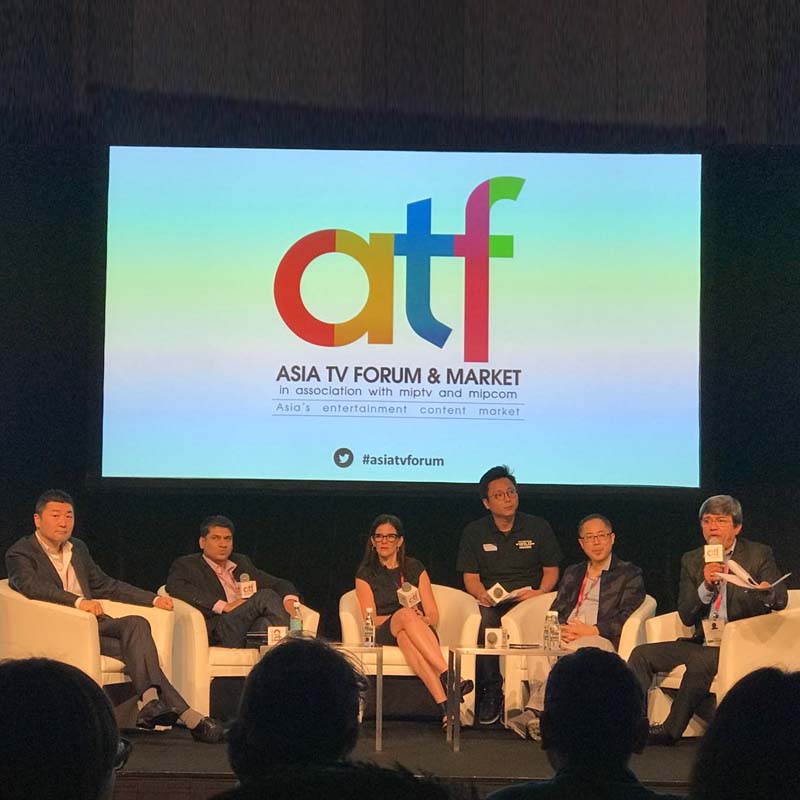
    The panelists consisted of an interesting bunch of execs whose services are as different as chalk and cheese: Hulu Japan (Japan), chief content officer, Kazufumi Nagasawa; Singapore-based Hooq co-founder and chief content officer, Krishnan Rajagopalan; LeTV (China), chief executive producer, Hao Fang; and US-based AwesomnessTV head of worldwide distribution, Rebecca Glashow.

    Wanvari set the ball rolling by questioning whether OTT as a business concept is a pipe dream or a reality. “OTT services have not really made a dent on viewing habits for a large part in Asian markets where television viewing is still rating high with consumers,” he stated. “Yet close to 100 or so OTT/VOD services have launched in various Asian nations. No one knows what the right business model is — Is it AVOD? Is it TVOD? Or, is it SVOD? Or is it a freemium model? Or is it a telco-bundled/TV set-bundled service? What is the pricing sweet spot? How much time will it take to build them into viable businesses? It looks like the OTT industry looks like what the cable and satellite TV industry did in the early nineties across Asia. The broadcasters were making losses and kept on bleeding for a decade or so. Will the same happen to OTT? And, what could help accelerate its fortunes better? Is it data costs? Or consumer education?”

    The panelists then went to on to talk about how they were each dealing with the market’s challenges. With China being the largest market in terms of mobile subscribers, LeTV took a strategic decision to bundle its streaming service platform with ‘Le’ mobile phones and in Hong Kong with its TVs. Consumers got LeTV free for varying periods as it was built into the price of the hardware.

    On the other hand, Hooq, being a comparatively young player in the market, Rajagopalan mentioned that the Asian audience is slowly getting used to the idea of paid services. Hooq has strong partnerships with telcos such as Singtel, Airtel, Vodafone, Globe Telecom, Telkomsel in different regions as it rolls out. Partnering with other companies has enabled Hooq to reach out to consumers who might be unaware of Hooq or don’t want to shell out money as it’s a SVOD service. Hooq launched in Singapore in end-November adding to Indonesia, Philippines, India and Thailand – countries in which it has been investing.

    AwesomnessTV follows a completely different approach; it perceives itself as a content creator for all the screens – TV, theatre, mobile, tablet – and its MCN strategy is totally a separate kettle of fish. Its advantage is that it has a strong millennial content focus on account of it strong digital talent. This has landed it deals with various platforms: Verizon for its Go90 mobile service; with ITV2 in the UK for which it is developing a millennial targeted commissioned programme block. A slate of feature films is also in the offing.

    And because its productions have a slew of digital stars it uses their online social media following to tease their fans and lure them to watch the content it creates for the other screens. Glashow said that she was in Asia to explore and evaluate opportunities and build partnerships to help it with its Asian foray. With enough money from its varied parents right from Verizon to Dreamworks Animation and Hearst Entertainment, it can afford to be ambitious for the continent as well.

    Hulu Japan – which is owned wholly by the broadcaster Nippon TV after Hulu exited a few years ago — follows the SVOD model, and has partnered with the Japanese major telco DoCoMo. As far as content is concerned, Nagasawa said that the OTT service has an international to domestic content ratio of 50:50. The service offers its users a smorgasbord of international top series as well as domestically produced content. Production budgets vary from 10,000 dollars to as much as a million dollars.

    Nagasawa said he has plans to make Hulu a one-stop-destination for consumers as the company plans to expand its linear streaming service to include transactional video on demand (TVoD) and electronic sell-through.

    Speaking about original content production, Hooq which recently released the trailer of its first original co-produced show ‘On The Job’ at ATF, Rajagopalan commented: “We have converted a movie into a TV series and are paying more than what goes into the production of a TV show as with multiple business models existing, content differentiation is the key to success. And that’s where the focus should be.”

    Stressing the same fact, Fang added, “While creating our content, we almost feel as if we are buying a building as it costs us around RMB four to five billion! We want to produce more original content but it is difficult.”

    When asked by Wanvari what kind of content and partners are the panelists looking for, Ramagopalan said that it all depends on how differentiated the content is. Glashow advised, “Before producing anything, know your audience and then reach out to them. For us, our client is the audience and so we take feedback from them and listen to what they want.” And, Fang revealed that LeTV is keeping an open mindset and is willing to participate with everyone.

  • ATF 2016 discusses secret sauce for Asian OTT’s successes

    ATF 2016 discusses secret sauce for Asian OTT’s successes

    SINGAPORE: The media and entertainment industry is known for its dynamic and unpredictable nature. With digital media taking an upward turn, over the top services are slowly making a mark and challenging traditional viewing methods. To address how effective are the various OTT models, the pre-ATF market conference on 6 December witnessed the session ‘View From Over The Top.’

    The discussion was led by IndianTelevision.com group founder, CEO and editor-in-chief Anil Wanvari, and covered the scope of the new content buyers in the online evolution and the success in re-aligning company strategies to meet new demands.

    The panelists consisted of an interesting bunch of execs whose services are as different as chalk and cheese: Hulu Japan (Japan), chief content officer, Kazufumi Nagasawa; Singapore-based Hooq co-founder and chief content officer, Krishnan Rajagopalan; LeTV (China), chief executive producer, Hao Fang; and US-based AwesomnessTV head of worldwide distribution, Rebecca Glashow.

    Wanvari set the ball rolling by questioning whether OTT as a business concept is a pipe dream or a reality. “OTT services have not really made a dent on viewing habits for a large part in Asian markets where television viewing is still rating high with consumers,” he stated. “Yet close to 100 or so OTT/VOD services have launched in various Asian nations. No one knows what the right business model is — Is it AVOD? Is it TVOD? Or, is it SVOD? Or is it a freemium model? Or is it a telco-bundled/TV set-bundled service? What is the pricing sweet spot? How much time will it take to build them into viable businesses? It looks like the OTT industry looks like what the cable and satellite TV industry did in the early nineties across Asia. The broadcasters were making losses and kept on bleeding for a decade or so. Will the same happen to OTT? And, what could help accelerate its fortunes better? Is it data costs? Or consumer education?”

    The panelists then went to on to talk about how they were each dealing with the market’s challenges. With China being the largest market in terms of mobile subscribers, LeTV took a strategic decision to bundle its streaming service platform with ‘Le’ mobile phones and in Hong Kong with its TVs. Consumers got LeTV free for varying periods as it was built into the price of the hardware.

    On the other hand, Hooq, being a comparatively young player in the market, Rajagopalan mentioned that the Asian audience is slowly getting used to the idea of paid services. Hooq has strong partnerships with telcos such as Singtel, Airtel, Vodafone, Globe Telecom, Telkomsel in different regions as it rolls out. Partnering with other companies has enabled Hooq to reach out to consumers who might be unaware of Hooq or don’t want to shell out money as it’s a SVOD service. Hooq launched in Singapore in end-November adding to Indonesia, Philippines, India and Thailand – countries in which it has been investing.

    AwesomnessTV follows a completely different approach; it perceives itself as a content creator for all the screens – TV, theatre, mobile, tablet – and its MCN strategy is totally a separate kettle of fish. Its advantage is that it has a strong millennial content focus on account of it strong digital talent. This has landed it deals with various platforms: Verizon for its Go90 mobile service; with ITV2 in the UK for which it is developing a millennial targeted commissioned programme block. A slate of feature films is also in the offing.

    And because its productions have a slew of digital stars it uses their online social media following to tease their fans and lure them to watch the content it creates for the other screens. Glashow said that she was in Asia to explore and evaluate opportunities and build partnerships to help it with its Asian foray. With enough money from its varied parents right from Verizon to Dreamworks Animation and Hearst Entertainment, it can afford to be ambitious for the continent as well.

    Hulu Japan – which is owned wholly by the broadcaster Nippon TV after Hulu exited a few years ago — follows the SVOD model, and has partnered with the Japanese major telco DoCoMo. As far as content is concerned, Nagasawa said that the OTT service has an international to domestic content ratio of 50:50. The service offers its users a smorgasbord of international top series as well as domestically produced content. Production budgets vary from 10,000 dollars to as much as a million dollars.

    Nagasawa said he has plans to make Hulu a one-stop-destination for consumers as the company plans to expand its linear streaming service to include transactional video on demand (TVoD) and electronic sell-through.

    Speaking about original content production, Hooq which recently released the trailer of its first original co-produced show ‘On The Job’ at ATF, Rajagopalan commented: “We have converted a movie into a TV series and are paying more than what goes into the production of a TV show as with multiple business models existing, content differentiation is the key to success. And that’s where the focus should be.”

    Stressing the same fact, Fang added, “While creating our content, we almost feel as if we are buying a building as it costs us around RMB four to five billion! We want to produce more original content but it is difficult.”

    When asked by Wanvari what kind of content and partners are the panelists looking for, Ramagopalan said that it all depends on how differentiated the content is. Glashow advised, “Before producing anything, know your audience and then reach out to them. For us, our client is the audience and so we take feedback from them and listen to what they want.” And, Fang revealed that LeTV is keeping an open mindset and is willing to participate with everyone.

  • MIPJunior: Can Indian animation make its mark?

    MIPJunior: Can Indian animation make its mark?

    CANNES: As the MIPJunior Lab got filled with an inquisitive audience, “The Passage to India” session began with the moderator, Indiantelevision.com founder, CEO and editor-in-chief Anil Wanvari, giving facts and figures about the kids broadcasting space in India.

    Wanvari started off by mentioning the humungous size of the 0-14 year population group – at 350 million at last count, which is expected to touch 375 million or so by 2020. Which is why the Indian market is attractive, he pointed out for kids programming and animation. Highlighting statistics from 2015 data, he stated that localization is helping the 20-plus kids channels operating in India up the local-international ratio from 10:90 to 80:20. With that wide a ratio and language dubs of each channel, content from the US dominates the television market with about 44 per cent, Japan 17 per cent, India 16 per cent, the UK and France four per cent, Canada one per cent; and if compared to statistics of 2014, it was 42 per cent, 17 per cent, 13 per cent, seven per cent and four per cent, three per cent, respectively.

    These statistics clearly paint the picture of how locally produced shows are being favoured not just by the audience but also the broadcasters. The top six to eight spots of the kids genre are occupied by locally produced programmes such as Motu-Patlu and Chotta Bheem, among others.

    Wanvari pointed out that kids genre accounts for six minutes per cent of total viewership and most of the kids content is in animation format the production cost of which per 30 minutes is between Rs 1.5 to six million.

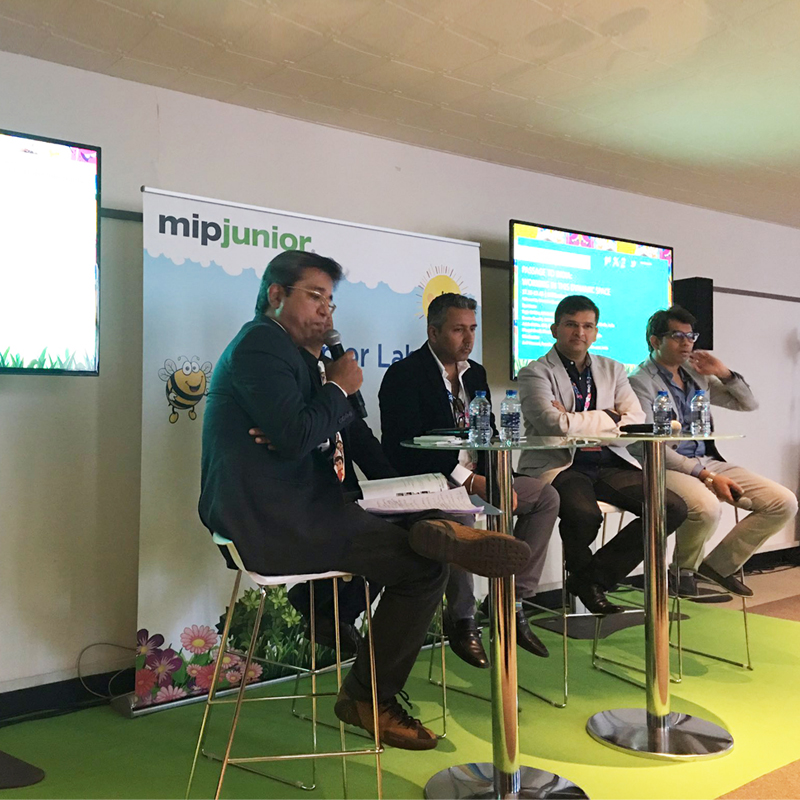
    After introducing the panelists – Green Gold Animation founder and CEO, Rajiv Chilaka, Viacom18 Digital Ventures COO Gaurav Gandhi, Cosmos-Maya founder, Anish Mehta, and Graphiti Multimedia director and COO Munjal Shroff, Wanvari threw the question to the panelists asking what makes the prospects of the Indian animation sector so bright this time around; earlier attempts have failed.

    He also queried them about how the Indian animation space has changed over the years, in which areas are the opportunities available for international players, and what content works for broadcasters and digital platform for kids.

    Chilaka mentioned, “Back in 2001, there was only one channel catering to kids segment and now, there are 25-plus channels which showcase content produced locally as well. Over the years, the quality of animation, the technology, the services provided all have improved, and to support that, are the increased budgets.”

    Speaking about the international market, Shroff commented, “Through our show ‘Kulveera’, we did a case study with Cartoon Network UK wherein we produced a pilot episode and gauged the response of the audience and it was interesting to see that kids loved the show.” So, as long as one’s series has a strong storytelling going on, the place from where the content originates hardly matters.

    Mehta’s animation studio Cosmos-Maya has been doing wonders and, at present, has three co-production deals going on. “Our co-production deals are with Italian, French and German companies. We will be launching the French co-produced show ‘Captain Cactus’ which was made in association with Euope’s well-known film maker Olivier Jean-Marie,” expounded Mehta.

    “Over the period of 20 years, our work has evolved from being a service company to IP production, and finally we are at a stage where we can co-produce.”

    With the advent of digital platform, and Voot being probably the biggest kids SVOD service, Gandhi added, “It’s said that, in next three years, more homes will be have the streaming device than television sets. We are an open market, and ready to buy any good content.”

    Mehta also stated that, for co-productions to work, it’s necessary that one needs to understand the demographics. “Personally, after doing research, we follow a mixed model which blends well with both the countries.

    Since ‘Captain Cactus’ is a co-production between India and Europe, the animation style and narrative is set according to the tastes of audience of both the countries.”

    The session was wrapped up with Q&A round wherein many people were interested in learning more about how can they work with not just Indian animation studios but also on how their content can work across the various platforms.

  • MIPJunior: Can Indian animation make its mark?

    MIPJunior: Can Indian animation make its mark?

    CANNES: As the MIPJunior Lab got filled with an inquisitive audience, “The Passage to India” session began with the moderator, Indiantelevision.com founder, CEO and editor-in-chief Anil Wanvari, giving facts and figures about the kids broadcasting space in India.

    Wanvari started off by mentioning the humungous size of the 0-14 year population group – at 350 million at last count, which is expected to touch 375 million or so by 2020. Which is why the Indian market is attractive, he pointed out for kids programming and animation. Highlighting statistics from 2015 data, he stated that localization is helping the 20-plus kids channels operating in India up the local-international ratio from 10:90 to 80:20. With that wide a ratio and language dubs of each channel, content from the US dominates the television market with about 44 per cent, Japan 17 per cent, India 16 per cent, the UK and France four per cent, Canada one per cent; and if compared to statistics of 2014, it was 42 per cent, 17 per cent, 13 per cent, seven per cent and four per cent, three per cent, respectively.

    These statistics clearly paint the picture of how locally produced shows are being favoured not just by the audience but also the broadcasters. The top six to eight spots of the kids genre are occupied by locally produced programmes such as Motu-Patlu and Chotta Bheem, among others.

    Wanvari pointed out that kids genre accounts for six minutes per cent of total viewership and most of the kids content is in animation format the production cost of which per 30 minutes is between Rs 1.5 to six million.

    After introducing the panelists – Green Gold Animation founder and CEO, Rajiv Chilaka, Viacom18 Digital Ventures COO Gaurav Gandhi, Cosmos-Maya founder, Anish Mehta, and Graphiti Multimedia director and COO Munjal Shroff, Wanvari threw the question to the panelists asking what makes the prospects of the Indian animation sector so bright this time around; earlier attempts have failed.

    He also queried them about how the Indian animation space has changed over the years, in which areas are the opportunities available for international players, and what content works for broadcasters and digital platform for kids.

    Chilaka mentioned, “Back in 2001, there was only one channel catering to kids segment and now, there are 25-plus channels which showcase content produced locally as well. Over the years, the quality of animation, the technology, the services provided all have improved, and to support that, are the increased budgets.”

    Speaking about the international market, Shroff commented, “Through our show ‘Kulveera’, we did a case study with Cartoon Network UK wherein we produced a pilot episode and gauged the response of the audience and it was interesting to see that kids loved the show.” So, as long as one’s series has a strong storytelling going on, the place from where the content originates hardly matters.

    Mehta’s animation studio Cosmos-Maya has been doing wonders and, at present, has three co-production deals going on. “Our co-production deals are with Italian, French and German companies. We will be launching the French co-produced show ‘Captain Cactus’ which was made in association with Euope’s well-known film maker Olivier Jean-Marie,” expounded Mehta.

    “Over the period of 20 years, our work has evolved from being a service company to IP production, and finally we are at a stage where we can co-produce.”

    With the advent of digital platform, and Voot being probably the biggest kids SVOD service, Gandhi added, “It’s said that, in next three years, more homes will be have the streaming device than television sets. We are an open market, and ready to buy any good content.”

    Mehta also stated that, for co-productions to work, it’s necessary that one needs to understand the demographics. “Personally, after doing research, we follow a mixed model which blends well with both the countries.

    Since ‘Captain Cactus’ is a co-production between India and Europe, the animation style and narrative is set according to the tastes of audience of both the countries.”

    The session was wrapped up with Q&A round wherein many people were interested in learning more about how can they work with not just Indian animation studios but also on how their content can work across the various platforms.

  • IDOS 2016: The DD FreeDish alternative for TV channels & advertisers

    IDOS 2016: The DD FreeDish alternative for TV channels & advertisers

    GOA: Has the pubcaster DD’s free to air platform FreeDish emerged as a viable proposition for advertisers? What are its expansion plans, going forward? These were some of the questions posed by the Indiantelevision.com founder, CEO & Editor in chief Anil Wanvari at IDOS 2016 in Goa during the session on FTA channels to SAB Group CEO Manav Dhanda, B4U broadcasting division COO and CFO Sandeep Gupta, Starcom India group CEO Mallikarjun ‘Malli’ Das, and DD’s FreeDish deputy director-general (engineering) AK Jha.

    Jha started out by saying that the DTH platform has 55 private tenants including those from the majors – Sony Pictures Television Networks, Star India, and Zee TV – as well as from smaller broadcast networks such as B4U and the SAB group. “We want more such customers to come on our platform,” he expressed. He, however, confessed that getting an exact count of the number of subscribers was difficult as FreeDish was only a platform and the STBs were distributed by recognized vendors. “But, by extrapolating TRAI DTH data, conversations with STB manufactures and chipset suppliers, our estimates are that it could be anywhere between 20 million and 40 million. We would safely put it at about 25 million,” said Jha.

    Gupta and Dhanda explained why the two networks have taken the FTA route on the DTH platform.

    “As a broadcaster, we wanted to be on every platform. Since our focus was to be present everywhere, we got on to it very early when there were very few tenants. Although we were pay channels, we were FTA on DD FreeDish. B4U Movies was the Star Plus of DD direct is what MSOs told us. Only after BARC data rolled out did we come to know that rural has got so much of weightage. Otherwise, FreeDish was only one of the means of getting ourselves available everywhere,” said Gupta.

    Added Dhanda: “We wanted to build the maximum reach. We have five channels. We are also on cable, DTH and other platforms. It was not triggered by the advent of BARC data which suggests you need to be there. There is a cost for entry. Distribution and content are major costs for broadcasters. As a broadcaster, we want ROI. Syndicated content channels like us have not managed to build a compelling pay TV channel proposition. Hence, it is safe to go to FTA.”

    But, is it good to go FTA on DD FreeDish? Since the only revenue stream is from advertising, is the platform attracting advertiser interest?

    “FTA has just come into focus as BARC gave a new set of lenses. Earlier, TAM used to measure LC1 but media planners did not take it seriously as they were urban focused. Now with the 6,000 metres under BARC’s rural sample, it has taken on a different hue,” said Malli. “There are three segments advertisers look at from an audience segmentation – HD – 9 million-10 million homes; the fat middle with all the pay channels. And, there is the rural which is FTA. For brands, which are purely rural, it makes sense to go FTA. Distribute the spends over 30-40 weeks on an FTA media outlet, rather than finish it over eight to nine weeks on the more expensive pay channels. Some money is going into FTA from existing TV channel spends, some is coming from local cable, wall paintings and OOH.”

    But, are media buyers buying air time on channels on FreeDish purely for the rural audiences or for urban and rural audiences as defined by BARC? “When media planners are buying for rural, it makes sense,” he said. “When they look at rural+urban, they start looking at old currencies, and things don’t move. There’s still some confusion. Once these old data currencies are exhausted, and some new benchmarks are set for rural, the ad dollars will start flowing in aggressively. HD channels have only nine to 10 million subscribers, yet planners are putting the advertiser’s money into them. Whereas FTA has a larger reach, but the currency dynamics need to be taken care of.”

    Is there a ROI coming in for advertisers? “It’s a little too early. The plane has to yet land,” opined Malli. ”Retailers, distributors and sales people say, take Star Plus. The rural sample is 6,000 metres. We have to triangulate what the trade says with the BARC data, as they will want the spectacular as they will want the ads to be in the biggest properties. Currently, we have put the money for our clients on FTA. We have to get a larger body of evidence.”

    Jha said that DD FreeDish is augmenting its capacity by 24 channels and gearing up for this by moving to MPEG4 STBs, which are going to be made available to subscribers soon. “Currently, we are empanelling the STB manufacturers for MPEG4 boxes,” he explained. “Within four months, the STBs will roll out. Post that, the existing subscribers will be able to receive the 80 channels, whereas the new subscribers with MPEG 4 boxes will get 104 channels after the auctions conclude and tenants got on board.”

    Malli expressed that this was good news, it was not something that the advertising community would put its money immediately on .”At least, we know what we are investing in with the MPEG-2 boxes now,” he said. “We will have to see how many MPEG4 STBs roll out, how they are accepted before we put our might behind them.”

    Jha responded to this by saying that, in the new regime of MPEG4, DD FreeDish will be able to tell the advertiser community, exactly how many subscribers there were because the conditional access was being built in to the STBs. “Over time, we hope the entire universe of FreeDish will migrate to the new boxes,” he said.

    Jha is bullish about the prospects of free TV. “Customers in rural areas cannot afford the high sticker prices of Rs 3,000-7,000 per year that commercial DTH players are charging consumers,” he said. “Customers need to pay just Rs 2,000-Rs 3,000 for the STBs once to be able to receive a bouquet of good channels free. Hence, we are quite confident of DD FreeDish and the alternative we offer to Indian TV viewers.”

  • IDOS 2016: The DD FreeDish alternative for TV channels & advertisers

    IDOS 2016: The DD FreeDish alternative for TV channels & advertisers

    GOA: Has the pubcaster DD’s free to air platform FreeDish emerged as a viable proposition for advertisers? What are its expansion plans, going forward? These were some of the questions posed by the Indiantelevision.com founder, CEO & Editor in chief Anil Wanvari at IDOS 2016 in Goa during the session on FTA channels to SAB Group CEO Manav Dhanda, B4U broadcasting division COO and CFO Sandeep Gupta, Starcom India group CEO Mallikarjun ‘Malli’ Das, and DD’s FreeDish deputy director-general (engineering) AK Jha.

    Jha started out by saying that the DTH platform has 55 private tenants including those from the majors – Sony Pictures Television Networks, Star India, and Zee TV – as well as from smaller broadcast networks such as B4U and the SAB group. “We want more such customers to come on our platform,” he expressed. He, however, confessed that getting an exact count of the number of subscribers was difficult as FreeDish was only a platform and the STBs were distributed by recognized vendors. “But, by extrapolating TRAI DTH data, conversations with STB manufactures and chipset suppliers, our estimates are that it could be anywhere between 20 million and 40 million. We would safely put it at about 25 million,” said Jha.

    Gupta and Dhanda explained why the two networks have taken the FTA route on the DTH platform.

    “As a broadcaster, we wanted to be on every platform. Since our focus was to be present everywhere, we got on to it very early when there were very few tenants. Although we were pay channels, we were FTA on DD FreeDish. B4U Movies was the Star Plus of DD direct is what MSOs told us. Only after BARC data rolled out did we come to know that rural has got so much of weightage. Otherwise, FreeDish was only one of the means of getting ourselves available everywhere,” said Gupta.

    Added Dhanda: “We wanted to build the maximum reach. We have five channels. We are also on cable, DTH and other platforms. It was not triggered by the advent of BARC data which suggests you need to be there. There is a cost for entry. Distribution and content are major costs for broadcasters. As a broadcaster, we want ROI. Syndicated content channels like us have not managed to build a compelling pay TV channel proposition. Hence, it is safe to go to FTA.”

    But, is it good to go FTA on DD FreeDish? Since the only revenue stream is from advertising, is the platform attracting advertiser interest?

    “FTA has just come into focus as BARC gave a new set of lenses. Earlier, TAM used to measure LC1 but media planners did not take it seriously as they were urban focused. Now with the 6,000 metres under BARC’s rural sample, it has taken on a different hue,” said Malli. “There are three segments advertisers look at from an audience segmentation – HD – 9 million-10 million homes; the fat middle with all the pay channels. And, there is the rural which is FTA. For brands, which are purely rural, it makes sense to go FTA. Distribute the spends over 30-40 weeks on an FTA media outlet, rather than finish it over eight to nine weeks on the more expensive pay channels. Some money is going into FTA from existing TV channel spends, some is coming from local cable, wall paintings and OOH.”

    But, are media buyers buying air time on channels on FreeDish purely for the rural audiences or for urban and rural audiences as defined by BARC? “When media planners are buying for rural, it makes sense,” he said. “When they look at rural+urban, they start looking at old currencies, and things don’t move. There’s still some confusion. Once these old data currencies are exhausted, and some new benchmarks are set for rural, the ad dollars will start flowing in aggressively. HD channels have only nine to 10 million subscribers, yet planners are putting the advertiser’s money into them. Whereas FTA has a larger reach, but the currency dynamics need to be taken care of.”

    Is there a ROI coming in for advertisers? “It’s a little too early. The plane has to yet land,” opined Malli. ”Retailers, distributors and sales people say, take Star Plus. The rural sample is 6,000 metres. We have to triangulate what the trade says with the BARC data, as they will want the spectacular as they will want the ads to be in the biggest properties. Currently, we have put the money for our clients on FTA. We have to get a larger body of evidence.”

    Jha said that DD FreeDish is augmenting its capacity by 24 channels and gearing up for this by moving to MPEG4 STBs, which are going to be made available to subscribers soon. “Currently, we are empanelling the STB manufacturers for MPEG4 boxes,” he explained. “Within four months, the STBs will roll out. Post that, the existing subscribers will be able to receive the 80 channels, whereas the new subscribers with MPEG 4 boxes will get 104 channels after the auctions conclude and tenants got on board.”

    Malli expressed that this was good news, it was not something that the advertising community would put its money immediately on .”At least, we know what we are investing in with the MPEG-2 boxes now,” he said. “We will have to see how many MPEG4 STBs roll out, how they are accepted before we put our might behind them.”

    Jha responded to this by saying that, in the new regime of MPEG4, DD FreeDish will be able to tell the advertiser community, exactly how many subscribers there were because the conditional access was being built in to the STBs. “Over time, we hope the entire universe of FreeDish will migrate to the new boxes,” he said.

    Jha is bullish about the prospects of free TV. “Customers in rural areas cannot afford the high sticker prices of Rs 3,000-7,000 per year that commercial DTH players are charging consumers,” he said. “Customers need to pay just Rs 2,000-Rs 3,000 for the STBs once to be able to receive a bouquet of good channels free. Hence, we are quite confident of DD FreeDish and the alternative we offer to Indian TV viewers.”

  • ‘Broadcasters could consider different pricing for rural-urban subscribers’

    ‘Broadcasters could consider different pricing for rural-urban subscribers’

    When DEN Networks promoter Sameer Manchanda set up the national MSO in 2007, one of the key professionals on his team, which was led by CEO Anuj Gandhi, was the cable TV veteran S.N. Sharma. The trio quickly ramped up the company and took it to national level status.  Gandhi then moved on in 2010 to join Network18. And, Sharma who was the president (operations), was promoted as the CEO a year or so later.

    He continued with the company, expanding it nationally, and seeing it through the first two phases of digitization before departing in 2015 to get on board India’s biggest and most funded  startup  — the Mukesh Ambani-backed Reliance Jio.  A former McKinsey professional Pradeep Parameswaran was roped in to lead the company in his place.

    Sharma, meanwhile, at Jio, worked on planning and building the team for company’s foray into cable TV along with another cable TV veteran K. Jayaraman.

    Then, in July 2016, Sharma made a sudden about-turn and decided to return to DEN Networks, a move that raised the eyebrows of many but cheered many in the trade. For he is known for his relationships and his deep understanding of how cable TV should be run in the Indian context.

    Sharma was one of the key notes at indiantelevision.com’s Eleventh India Digital Operators Summit 2016 which concluded over the weekend at the Leela Hotel in south Goa. He had a one-on-one conversation with Indiantelevision.com Founder, CEO  & Editor in chief Anil Wanvari. Read on to get some insights into what is going on at DEN and with Sharma. Excerpts from the conversation:

    Why did you leave DEN in the first case, join Reliance and then why did you choose to come back?

    Having been into the cable industry for over 20 plus years, I thought, let me do something else. And, that’s why I moved to Reliance. Basically, I wanted to roll out fibre to the home (FTTH) over there. It would have been a great experience and learning (I thought). And it was, indeed. I learnt a lot in the short span of one and a half year. It was a wonderful learning that I brought in to my personality.

    But then, there was a call from my previous employer DEN, my friend Sameer.  I am one of the co-founders of DEN Network. And, I requested my employers at Reliance if I could leave. And they were kind enough to let me go back. It was more of an emotional decision than a professional one. All my learnings that I have had  at Reliance, I am
    sure, will help me learn to drive DEN in a better manner,in a positive direction in time to come.

    What are the challenges you are facing?

    The challenge as we all know is primarily monetization.  We started seeding boxes in 2010, now it is 2016. DAS came in 2012. And “hote hote” (by and by) it became 2013. Phase I and II happened quickly.

    There is a lag in monetization. Of course, we all can understand and you will appreciate that an industry which evolved since 1990, almost 30 year old industry, it  takes time for things to change. And, we took tiny, baby steps to monetize it.  But now, the time has come the boxes seeded in 2010 have almost lived their life and new technology is coming in. So my prime task is to see to it that we augment the process of monetization.

    The other challenge that I face immediately which I am working very aggressively on is to reduce the cost. We all know that Phase III digitization got into  a confused state, with boxes having got seeded, and the courts intervening.  Analogue signal has also been taken away from many of us. The MIB says 93 per cent  of digitization has happened. So the monetization process also has to start. But, in the bargain, we have already incurred some expenditure.  And unless I start recovering my revenue, the journey will be difficult.

    This time, in a short span of one and a half month, I addressed my cable TV partners, my business partners and my associates in a very transparent manner. We had a discussion – a whole day discussion wherein I shared with them my experiences with the telco. I shared with them the upcoming technology. I told them there is a change. The technology is not going to spare them.  We all used to think that last mile …last mile. But, my subscriber is not bound by last mile. My biggest threat today is the handset that I carry. The viewing habits are changing. Technology is bringing other alternatives. For the same viewer  who used to be watching their services. It is high time they realized it and accepted this change. And, they all agreed. I was surprised. It was a very open, frank and to-the-point discussion. I told them if we are willing to change, if we are willing to adopt, life will be there for us, otherwise the journey is going to be difficult. Everybody is cooperating. We hope to see a very good upside as far as collections are concerned.

    Third is making the LCOs, our partners realize the pains we are going through.  And, make them see the technology.

    And fourth is we have started conducting sessions with cable TV operator to sensitise them with the consumers. Like the regulator also said: Don’t force things on the consumer. He is in no mood. So the approach has to be friendlier than earlier. We have to change the face of our representative visiting the home of the subscriber. The
    presentation of our package has got lost.  We brought in a digital set-top box, we invested in that. But, we forgot in the process that we had not changed our face to the consumer. The cable TV operators accepted that we need to bring in a lot of ethics and discipline in that part.  You will see our representatives wearing uniforms. Uniform could be ours or the LCO’s.  It has to be in a presentable form. Today, if you are visited by a courier boy, the way he  is approaching is different.

    I am sure the cable TV operators will comply.

    Where are you reducing costs?

    Our priority early on was to penetrate the market, you increase your reach and when you penetrate certain areas, those can be reached through fibre or through links from telcos. After some time, you realize that you have spent an X amount in reaching an area and you have seeded 50 boxes. It does not make sense to you. So, you need to make a quick decision. You retract, you save money on that. Or you go to another MSO who is reaching the same area  and he has done it using a different pipe. And, he has 50,000 subscribers. So, I would tell him, why don’t we share the pipe. That process (of sharing)  has already started.  Then, we have started sharing the infrastructure also in another manner, in terms of content. If a competitor has a pipe serving more subscribers in the same area than I have less or vice-versa, I am open to sharing the pipe with the competitor. This is helping reduce costs. We have started sharing local content with cable operators. The cable operator has local content with him. So, instead of spending separately on the same content, we have started sharing that content too. Then, there are usual steps — reduction of manpower, to hire on a temporary basis, and cutting down the day-to-day expenses.

    Where are you getting your maximum margins?

    You see we have largely been a phase III player.  We have seeded 5.5 million in phase III, and 3-4 million are to go in phase IV. Of the 13 million subscribers, we have seeded 9-9.5 million. My upside will come from revenues of phase III boxes, which were yielding Rs 10-20. We have already crossed a milestone of Rs 40- 45 revenues, By December-end, it will touch  Rs 75 plus — that is a 45 per cent growth. Phase I is likely to give us 15-20 per cent.

    Who is going to get you this money – LCOs or the customer?

    You see the mood is set.  In the exercise, baby steps were taken to augment phase I revenues. It took us four years.  Phase III customer is also aware.  All studies and research show us is that the  buyingcapacity is there,  paying capacity is there too. HD is another example.  Around 70 per cent of TVs are HDTVs going into to Phase III
    areas. As it is for me to perform and deliver, I need my costs to be under control.  On the whole, we have also become very cost-conscious. We want our pie of the revenue.

    The cable sector has been bashed red and blue and cable TV bottomlines are stained with red ink? When will it turn around?

    You will see by Q3 end there should be an upside.

    You are very strong up north. Are you strengthening that or are you expanding into newer territories?

    As of now, my focus is to strengthen where we are. I have 13 million subscribers, I am happy to be limited where we are. As we start seeding boxes, it might go to 15 million as we deliver. I want to have a positive bottomline. I want a fair share of revenue. I want to move towards an era where sharing of revenues has be settled. As of now, there is always a dilemma, am I to stand by the TRAI that cable operators should get 35 per cent of revenue. The fact of the matter is that today we are receiving 35 per cent, and he is getting 65 per cent.

    I am very much focused that let’s first  set it right. It will take time and over few months. But, I see that over the next 12 months, this will move towards 50:50. And then, as we move forward, and add more values in the system, I am sure the operator will also get to earn  more through us if he wants to stay with us and be part of the journey.  If he says, he does not want to do broadband with, that’s his choice. If that arises, then we might go direct or we have leave that with him. I am very focused that instead of spreading thinly, focus where you, monetize it well. Settle a good business model. A good business case.  Business will follow.

    LCOs’ insecurity is less than earlier. Your comments.

    You can’t help it. Even MSOs. Nobody is secure. Times are changing. We have to adapt. You can’t ignore the technolgy. If I don’t change, just because my fellow LCO has not, and even I don’t, that’s a folly. Today, in  a matter of time, we started broadband. We have tested a broadband formula. We have close to 125,00 subscribers. We did this with a focused mind in Delhi and Kanpur. To test how the technology behaved, how the arithmetic works here. Now we find that, with 15-17 per cent of penetration, the project is breaking even. Now, anything added into it, is your upside.  The LCOs who are willing to work with us are very happy as they march around with us. And also, there is a learnin that the normal consumer is consuming 40 GB of internet at a speed of 10 mbps at a price of Rs 800. Broadband consumption is rising fast, 5 GB has gone to 10, and 20 GB has gone to 40 GB. Putting in everything into perspective, the cost is Rs 10 per GB.  Next year, I am sure it will be 100GB. And the speed will touch 50 MBPs. In such a scenario, if  I don’t move, somebody else will move.

    You must be happy Goldman Sachs invested but it was a discount to its earlier price, actually a deep discount What’s the way forward on the investment?

    It’s a subjective analysis . But, you should say that this proves that there is strength in the business model of DEN.

    On broadband there will be an increased investment going in. And besides broadband, we are incorporating OTT and value added services.

    So what’s the way forward on the pay TV market, with 31 December coming up?

    We are looking at it wholly. The boxes are going at a good speed. We are not really pushing. My focus is on getting Phase I, II III right. Once that business model is set in place, everything will also.  It is a matter of time, the  pull should come from the consumer, from the LCO. If he is willing to work with me. In the earlier case, in Phase I and II, we were subsiding the boxes. Today, it is a pure business case. This my product. You want to do business with me, please do.

    How can broadcasters assist the process of digitization till the tariff order comes out?

    There was a time when broadcasters used to have dual pricing policy. For rural, it was lower, and for urban, higher.  Now, that we have invested and are investing, all of a sudden  they have foregone  that policy of theirs, which they were following in analogue, and still they are following in some places even today. The moment we seed STBs in phase III, they start charging digital rates. I would urge broadcasters too relook at this.
  • ‘Broadcasters could consider different pricing for rural-urban subscribers’

    ‘Broadcasters could consider different pricing for rural-urban subscribers’

    When DEN Networks promoter Sameer Manchanda set up the national MSO in 2007, one of the key professionals on his team, which was led by CEO Anuj Gandhi, was the cable TV veteran S.N. Sharma. The trio quickly ramped up the company and took it to national level status.  Gandhi then moved on in 2010 to join Network18. And, Sharma who was the president (operations), was promoted as the CEO a year or so later.

    He continued with the company, expanding it nationally, and seeing it through the first two phases of digitization before departing in 2015 to get on board India’s biggest and most funded  startup  — the Mukesh Ambani-backed Reliance Jio.  A former McKinsey professional Pradeep Parameswaran was roped in to lead the company in his place.

    Sharma, meanwhile, at Jio, worked on planning and building the team for company’s foray into cable TV along with another cable TV veteran K. Jayaraman.

    Then, in July 2016, Sharma made a sudden about-turn and decided to return to DEN Networks, a move that raised the eyebrows of many but cheered many in the trade. For he is known for his relationships and his deep understanding of how cable TV should be run in the Indian context.

    Sharma was one of the key notes at indiantelevision.com’s Eleventh India Digital Operators Summit 2016 which concluded over the weekend at the Leela Hotel in south Goa. He had a one-on-one conversation with Indiantelevision.com Founder, CEO  & Editor in chief Anil Wanvari. Read on to get some insights into what is going on at DEN and with Sharma. Excerpts from the conversation:

    Why did you leave DEN in the first case, join Reliance and then why did you choose to come back?

    Having been into the cable industry for over 20 plus years, I thought, let me do something else. And, that’s why I moved to Reliance. Basically, I wanted to roll out fibre to the home (FTTH) over there. It would have been a great experience and learning (I thought). And it was, indeed. I learnt a lot in the short span of one and a half year. It was a wonderful learning that I brought in to my personality.

    But then, there was a call from my previous employer DEN, my friend Sameer.  I am one of the co-founders of DEN Network. And, I requested my employers at Reliance if I could leave. And they were kind enough to let me go back. It was more of an emotional decision than a professional one. All my learnings that I have had  at Reliance, I am
    sure, will help me learn to drive DEN in a better manner,in a positive direction in time to come.

    What are the challenges you are facing?

    The challenge as we all know is primarily monetization.  We started seeding boxes in 2010, now it is 2016. DAS came in 2012. And “hote hote” (by and by) it became 2013. Phase I and II happened quickly.

    There is a lag in monetization. Of course, we all can understand and you will appreciate that an industry which evolved since 1990, almost 30 year old industry, it  takes time for things to change. And, we took tiny, baby steps to monetize it.  But now, the time has come the boxes seeded in 2010 have almost lived their life and new technology is coming in. So my prime task is to see to it that we augment the process of monetization.

    The other challenge that I face immediately which I am working very aggressively on is to reduce the cost. We all know that Phase III digitization got into  a confused state, with boxes having got seeded, and the courts intervening.  Analogue signal has also been taken away from many of us. The MIB says 93 per cent  of digitization has happened. So the monetization process also has to start. But, in the bargain, we have already incurred some expenditure.  And unless I start recovering my revenue, the journey will be difficult.

    This time, in a short span of one and a half month, I addressed my cable TV partners, my business partners and my associates in a very transparent manner. We had a discussion – a whole day discussion wherein I shared with them my experiences with the telco. I shared with them the upcoming technology. I told them there is a change. The technology is not going to spare them.  We all used to think that last mile …last mile. But, my subscriber is not bound by last mile. My biggest threat today is the handset that I carry. The viewing habits are changing. Technology is bringing other alternatives. For the same viewer  who used to be watching their services. It is high time they realized it and accepted this change. And, they all agreed. I was surprised. It was a very open, frank and to-the-point discussion. I told them if we are willing to change, if we are willing to adopt, life will be there for us, otherwise the journey is going to be difficult. Everybody is cooperating. We hope to see a very good upside as far as collections are concerned.

    Third is making the LCOs, our partners realize the pains we are going through.  And, make them see the technology.

    And fourth is we have started conducting sessions with cable TV operator to sensitise them with the consumers. Like the regulator also said: Don’t force things on the consumer. He is in no mood. So the approach has to be friendlier than earlier. We have to change the face of our representative visiting the home of the subscriber. The
    presentation of our package has got lost.  We brought in a digital set-top box, we invested in that. But, we forgot in the process that we had not changed our face to the consumer. The cable TV operators accepted that we need to bring in a lot of ethics and discipline in that part.  You will see our representatives wearing uniforms. Uniform could be ours or the LCO’s.  It has to be in a presentable form. Today, if you are visited by a courier boy, the way he  is approaching is different.

    I am sure the cable TV operators will comply.

    Where are you reducing costs?

    Our priority early on was to penetrate the market, you increase your reach and when you penetrate certain areas, those can be reached through fibre or through links from telcos. After some time, you realize that you have spent an X amount in reaching an area and you have seeded 50 boxes. It does not make sense to you. So, you need to make a quick decision. You retract, you save money on that. Or you go to another MSO who is reaching the same area  and he has done it using a different pipe. And, he has 50,000 subscribers. So, I would tell him, why don’t we share the pipe. That process (of sharing)  has already started.  Then, we have started sharing the infrastructure also in another manner, in terms of content. If a competitor has a pipe serving more subscribers in the same area than I have less or vice-versa, I am open to sharing the pipe with the competitor. This is helping reduce costs. We have started sharing local content with cable operators. The cable operator has local content with him. So, instead of spending separately on the same content, we have started sharing that content too. Then, there are usual steps — reduction of manpower, to hire on a temporary basis, and cutting down the day-to-day expenses.

    Where are you getting your maximum margins?

    You see we have largely been a phase III player.  We have seeded 5.5 million in phase III, and 3-4 million are to go in phase IV. Of the 13 million subscribers, we have seeded 9-9.5 million. My upside will come from revenues of phase III boxes, which were yielding Rs 10-20. We have already crossed a milestone of Rs 40- 45 revenues, By December-end, it will touch  Rs 75 plus — that is a 45 per cent growth. Phase I is likely to give us 15-20 per cent.

    Who is going to get you this money – LCOs or the customer?

    You see the mood is set.  In the exercise, baby steps were taken to augment phase I revenues. It took us four years.  Phase III customer is also aware.  All studies and research show us is that the  buyingcapacity is there,  paying capacity is there too. HD is another example.  Around 70 per cent of TVs are HDTVs going into to Phase III
    areas. As it is for me to perform and deliver, I need my costs to be under control.  On the whole, we have also become very cost-conscious. We want our pie of the revenue.

    The cable sector has been bashed red and blue and cable TV bottomlines are stained with red ink? When will it turn around?

    You will see by Q3 end there should be an upside.

    You are very strong up north. Are you strengthening that or are you expanding into newer territories?

    As of now, my focus is to strengthen where we are. I have 13 million subscribers, I am happy to be limited where we are. As we start seeding boxes, it might go to 15 million as we deliver. I want to have a positive bottomline. I want a fair share of revenue. I want to move towards an era where sharing of revenues has be settled. As of now, there is always a dilemma, am I to stand by the TRAI that cable operators should get 35 per cent of revenue. The fact of the matter is that today we are receiving 35 per cent, and he is getting 65 per cent.

    I am very much focused that let’s first  set it right. It will take time and over few months. But, I see that over the next 12 months, this will move towards 50:50. And then, as we move forward, and add more values in the system, I am sure the operator will also get to earn  more through us if he wants to stay with us and be part of the journey.  If he says, he does not want to do broadband with, that’s his choice. If that arises, then we might go direct or we have leave that with him. I am very focused that instead of spreading thinly, focus where you, monetize it well. Settle a good business model. A good business case.  Business will follow.

    LCOs’ insecurity is less than earlier. Your comments.

    You can’t help it. Even MSOs. Nobody is secure. Times are changing. We have to adapt. You can’t ignore the technolgy. If I don’t change, just because my fellow LCO has not, and even I don’t, that’s a folly. Today, in  a matter of time, we started broadband. We have tested a broadband formula. We have close to 125,00 subscribers. We did this with a focused mind in Delhi and Kanpur. To test how the technology behaved, how the arithmetic works here. Now we find that, with 15-17 per cent of penetration, the project is breaking even. Now, anything added into it, is your upside.  The LCOs who are willing to work with us are very happy as they march around with us. And also, there is a learnin that the normal consumer is consuming 40 GB of internet at a speed of 10 mbps at a price of Rs 800. Broadband consumption is rising fast, 5 GB has gone to 10, and 20 GB has gone to 40 GB. Putting in everything into perspective, the cost is Rs 10 per GB.  Next year, I am sure it will be 100GB. And the speed will touch 50 MBPs. In such a scenario, if  I don’t move, somebody else will move.

    You must be happy Goldman Sachs invested but it was a discount to its earlier price, actually a deep discount What’s the way forward on the investment?

    It’s a subjective analysis . But, you should say that this proves that there is strength in the business model of DEN.

    On broadband there will be an increased investment going in. And besides broadband, we are incorporating OTT and value added services.

    So what’s the way forward on the pay TV market, with 31 December coming up?

    We are looking at it wholly. The boxes are going at a good speed. We are not really pushing. My focus is on getting Phase I, II III right. Once that business model is set in place, everything will also.  It is a matter of time, the  pull should come from the consumer, from the LCO. If he is willing to work with me. In the earlier case, in Phase I and II, we were subsiding the boxes. Today, it is a pure business case. This my product. You want to do business with me, please do.

    How can broadcasters assist the process of digitization till the tariff order comes out?

    There was a time when broadcasters used to have dual pricing policy. For rural, it was lower, and for urban, higher.  Now, that we have invested and are investing, all of a sudden  they have foregone  that policy of theirs, which they were following in analogue, and still they are following in some places even today. The moment we seed STBs in phase III, they start charging digital rates. I would urge broadcasters too relook at this.
  • IDOS 2016: TRAI tariff framework coming next fortnight

    IDOS 2016: TRAI tariff framework coming next fortnight

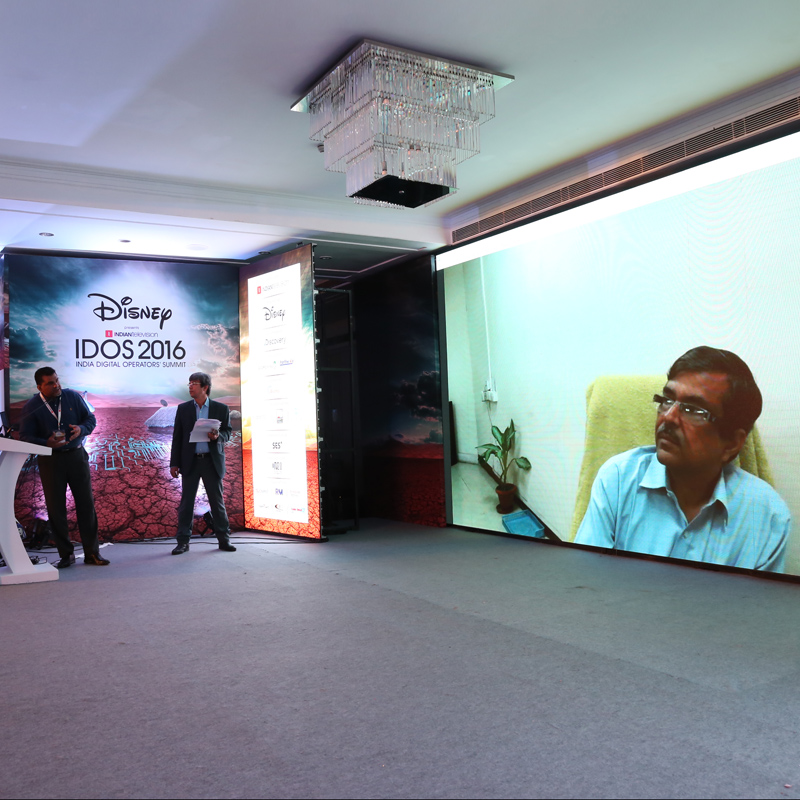
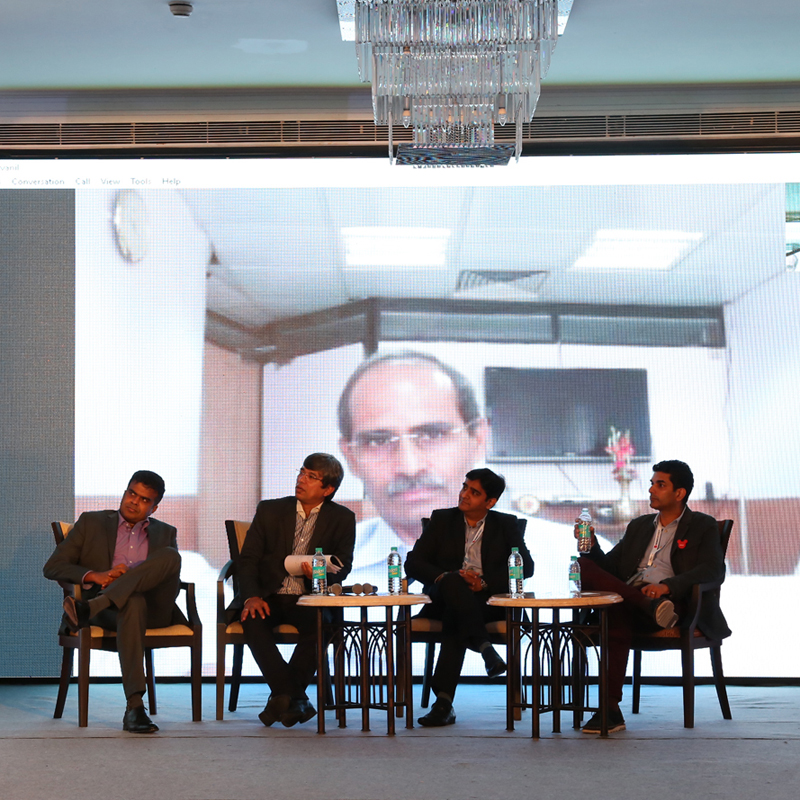
    GOA: The draft tariff framework of the Telecom Regulatory Authority of India (TRAI) is set to be released in a fortnight. This was declared by TRAI principal advisor (telecom services) Sunil Kumar Gupta in a Skype video conference with indiantelevision.com’s founder, CEO and editor-in-chief Anil Wanvari at IDOS 2016 here on Friday evening.

    “We have taken the views of all the stakeholders while drawing up the framework. It is based on the following four major planks — non-discriminatory pricing, transparency, consumer protection and overall growth of the industry,” he said.

    Gupta was clear that the sunset date for Phase IV was unshiftable. “Both MIB and we are very committed to this,” he said. “31 December 2016 is the sunset date for DAS Phase IV.”

    He cautioned that no one should take shelter around the fear that someone may try and scuttle phase IV by approaching the court. “There are enough set top boxes in the country today,” he said. “There is no shortage. Hence there can be no delay.”

    He reiterated that progress on digitisation and DAS has been good. “Revenues from the ground are going up in phase I and phase II,” he said. “According to MIB, 93 per cent of phase III has been digitised and in phase IV, there has been some good seeding too.”

    Gupta also warned that unless interconnection agreements are signed between MSOs and LCOs, the parties would not get any recourse from TDSAT as that is the direction that has been given. “It is important that the agreements are signed,” he said. “We have gone around the country and spoken to LCOs around the country. Often times they have been apprehensive about some of the agreements. But when we have explained to them, many of them have not read them properly, and hence the apprehension. When they have been explained and read it, they have gone ahead and done the shining.”

    He also expected a decisive verdict from the Delhi High Court in the first week of October around the Phase III litigation. Gupta urged the cable community to focus and keep the consumer aware of what was happening through their own networks and encourage him/her about DAS. “It is in the industry’s own interest,” he stated.

    On being asked whether TRAI would intervene and hasten the process on the infrastructure consultation paper, Gupta said there are some people who want to share infrastructure and some who don’t. On being prodded if the regulator would intervene if those who don’t want it to go through outweigh the ones who want it to, Gupta said, the consultation process would follow its due course. “Infrastructure sharing is between two private players, they can go ahead and do it. I don’t see why we need to intervene and mandate infrastructure sharing.”

    He also insisted that the entire industry – including the cable operators – need to tweak business models and the cable ops need to look at broadband seriously. “There is a lot of upside to broadband,” he said. “ARPUs are good over there, they can offer value to the consumer. Change is upon the industry and it needs to embrace this change and drive themselves forward. No telco can offer the kind of services, cable TV can offer, say 40 GB at a price of Rs 700-800 a month. The entire cable TV sector holds a lot of potential. Now the industry needs to realise it.”

  • IDOS 2016: TRAI tariff framework coming next fortnight

    IDOS 2016: TRAI tariff framework coming next fortnight

    GOA: The draft tariff framework of the Telecom Regulatory Authority of India (TRAI) is set to be released in a fortnight. This was declared by TRAI principal advisor (telecom services) Sunil Kumar Gupta in a Skype video conference with indiantelevision.com’s founder, CEO and editor-in-chief Anil Wanvari at IDOS 2016 here on Friday evening.

    “We have taken the views of all the stakeholders while drawing up the framework. It is based on the following four major planks — non-discriminatory pricing, transparency, consumer protection and overall growth of the industry,” he said.

    Gupta was clear that the sunset date for Phase IV was unshiftable. “Both MIB and we are very committed to this,” he said. “31 December 2016 is the sunset date for DAS Phase IV.”

    He cautioned that no one should take shelter around the fear that someone may try and scuttle phase IV by approaching the court. “There are enough set top boxes in the country today,” he said. “There is no shortage. Hence there can be no delay.”

    He reiterated that progress on digitisation and DAS has been good. “Revenues from the ground are going up in phase I and phase II,” he said. “According to MIB, 93 per cent of phase III has been digitised and in phase IV, there has been some good seeding too.”

    Gupta also warned that unless interconnection agreements are signed between MSOs and LCOs, the parties would not get any recourse from TDSAT as that is the direction that has been given. “It is important that the agreements are signed,” he said. “We have gone around the country and spoken to LCOs around the country. Often times they have been apprehensive about some of the agreements. But when we have explained to them, many of them have not read them properly, and hence the apprehension. When they have been explained and read it, they have gone ahead and done the shining.”

    He also expected a decisive verdict from the Delhi High Court in the first week of October around the Phase III litigation. Gupta urged the cable community to focus and keep the consumer aware of what was happening through their own networks and encourage him/her about DAS. “It is in the industry’s own interest,” he stated.

    On being asked whether TRAI would intervene and hasten the process on the infrastructure consultation paper, Gupta said there are some people who want to share infrastructure and some who don’t. On being prodded if the regulator would intervene if those who don’t want it to go through outweigh the ones who want it to, Gupta said, the consultation process would follow its due course. “Infrastructure sharing is between two private players, they can go ahead and do it. I don’t see why we need to intervene and mandate infrastructure sharing.”

    He also insisted that the entire industry – including the cable operators – need to tweak business models and the cable ops need to look at broadband seriously. “There is a lot of upside to broadband,” he said. “ARPUs are good over there, they can offer value to the consumer. Change is upon the industry and it needs to embrace this change and drive themselves forward. No telco can offer the kind of services, cable TV can offer, say 40 GB at a price of Rs 700-800 a month. The entire cable TV sector holds a lot of potential. Now the industry needs to realise it.”