Tag: Anil Wanvari

  • Houseful at Bengaluru leg of MIP India roadshow

    Houseful at Bengaluru leg of MIP India roadshow

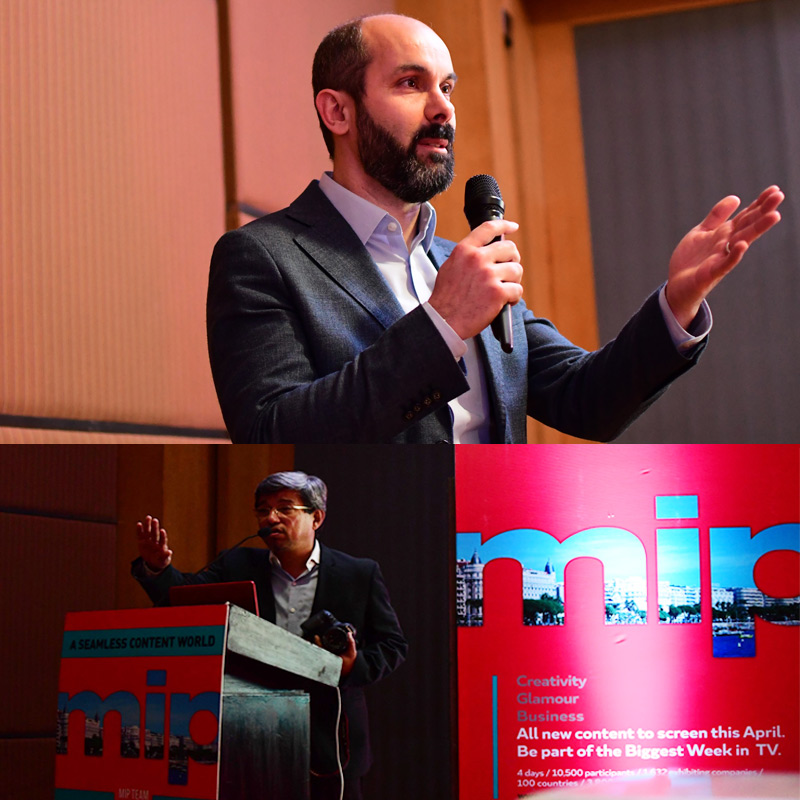
    BENGALURU: All the seats were taken and more had to be brought in as the Bengaluru leg of the MIP TV India roadshow ended last evening at the Lalit Ashok. With the theme ‘A Seamless Content World’, the Bengaluru MIP was addressed by Reed Midem (Paris) Asia Head Paul Barbaro and India representative for Asia Markets and Indiantelevision.com managing director and CEO Anil Wanvari. The duo addressed the rapt audience in tandem.

    Beginning with the theme of the roadshow, Wanvari quoted Netflix chief content officer Ted Sarandos’ words that he had spoken during an interview – “A good story told well is a global product.” In today’s connected world, which is increasingly becoming seamless, content is king, queen and prince irrespective of geography. This was evident by the success of creations such as the Louis Fonse-Daddy Yankee’s Spanish number Despacito, which had 5 billion views on YouTube, even more than those that Gangnam Style had, explained Wanvari.

    “Increasingly, scripted and non-scripted local shows made in a local language and aimed at domestic viewers are finding a global audience. And building a fan base overseas can only boost the revenue potential,” said Barbaro. Exhorting Indian creators, animators, Indian content aggregators and buyers and people from the Indian media and entertainment industry to participate at the India Pavilion at MIP TV 2018 at Cannes from 9 April to 12 April 2018, Barbaro and Wanvari spoke of the advantages, the gains, the benefits of doing so.

    Citing examples of some successes of local content, Barbaro said, “Historically, dramas and comedies have not travelled well because they are steeped in local customs, conventions and cultures. Yet, Keshet’s Loaded, Star India’s Iss Pyaar Ko Kya Naam Doon, and Broken Pieces from Turkey’s Global Agency made compelling scripted entertainment centred on universal truths. And these stories have enthralled audiences in a number of diverse geographies.”

    Reed Midem’s statistics and data about buyers and sellers and the kind of content that was required, details about the money that could be earned from different countries were shared. Case studies were presented and AVIs of some success stories of some of the people who participated at MIP TV were played.

    “Don’t come and register if you plan to come to MIP TV just once. You have to be there for the long haul if you want to truly succeed, to network with the buyers and sellers and leverage the associations that you built there,” concluded Wanvari very bluntly.

    For details contact: Priyanka Sharma +91-8017562056/+91-22-6642 4062

    Email: priyankas@indiantelevision.co.in or devikak@indiantelevision.co.in

  • Indian OTTs to be in focus on day 2 of ATF

    Indian OTTs to be in focus on day 2 of ATF

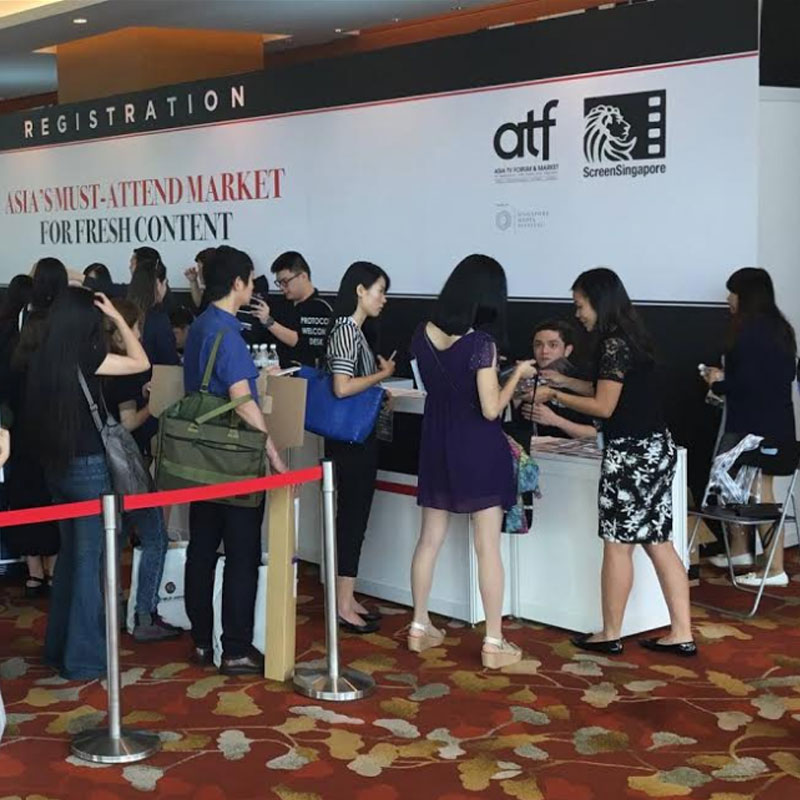
    MUMBAI: Singapore-based Reed Exhibitions’ Asia TV Forum (ATF) will commence today with 60 countries taking part. The first day will see sessions based on content, advertising and the evolution of storytelling and digital traditions and innovation Ninety thought leaders will deliver fresh insights in over 24 sessions from 28 November to 1 December 2017, discussing present-day issues such as big data, movement in the over-the-top (OTT) scene, new monetisation strategies, unscripted entertainment formats and kids’ content.

    The Indian sessions will start from the second day. The first one will be ‘Bollywood & Beyond: Fresh content from India’. The speakers present for the session will be Epic TV network head content syndication Adita Jain, Greengold Animation VP content sales Bharath Laxmipati, One Life Studios founder Siddharth Kumar Tewary, Rajshri Entertainment MD Neha Barjatya, and Toonz Animation India senior manager- content syndication and distribution Viju Thomas. The session will be moderated by Indiantelevision.com group founder, CEO and editor-in-chief Anil Wanvari.

    Wanvari has been working on developing opportunities for India’s animation and live action sector – whether for TV or OTT – over the past three years at ATF as its representative for India, Pakistan, Sri Lanka and Bangladesh.

    India’s OTT ecosystem has been exploding with newer apps popping up ever so quickly. At last count, close to 42 OTT services were operational in India. The second Indian session will be about the needs and wants of Indian OTT buyers. The panellists for the discussion will be Pittie Group/Epic TV CEO and MD Aditya Pittie, Viacom18 Digital ventures COO Gaurav Gandhi, producer, entrepreneur and storyteller Sidharth Jain, Spuul founder and global CEO Subin Subaiah, and GoQuest Media Ventures MD Vivek Lath. This panel discussion will also be moderated by Wanvari.

    ATF will also focus on virtual reality (VR) sessions, which will delve into the discourse that takes place among ecosystem partners, from content concept, creation and circulation. Real Vision VR filmmaker, speaker and published author Clyde Desouza will moderate the panel. Desouza is working with Times Now for its VR immersive journalism.

    On day three, listen to GreenGold Animation founder and CEO Rajiv Chilaka talk about how to provide 360-degree experience to kids. Chilaka has created and built one of the India’s largest animation brands Chhota Bheem, which currently has a viewership of over 40 million across platforms. He will also talk about nurturing localised IPs and stories and priming them to go global.

    The major Indian satellite TV networks Sony Pictures Networks India, Star India, Indiacast-Viacom18, and Zee Telefilms have their syndication and licensing teams exhibiting at the Marina Bay Sands venue. Other noteworthy exhibitors include: format and content syndication company GoQuest, Swastik Productions’ One Life Studios that is hawking its mega-budget Porus and homegrown formats, One Take Media, which is selling its kids animation and cookery shows, film and digital content creator and distributor Rajshri Entertainment, infotainment channel Epic TV, and kids’ content pioneer GreenGold.

  • ‘It is criminal for TV not to think of social change’ – PMC’s Kriss Barker

    ‘It is criminal for TV not to think of social change’ – PMC’s Kriss Barker

    For most programming executives and management in TV companies today, television is all about running on a treadmill chasing ratings, viewership, and the concomitant revenues, followed by the next bonus and promotion. Every trick in the creative book and outside it is resorted to, to keep the ratings of a show on a high.

    Hence, it comes as a breath of fresh air when one comes across a senior media professional who does not care much about ratings or twisted elongated plots, rather focuses on helping the creation of TV and radio content with meaning, which has an impact on society and sparks off social change. US-born Population Media Centre vice-president international Kriss Barker has been behind creative initiatives on TV and radio in 56 countries over her 20-year career.

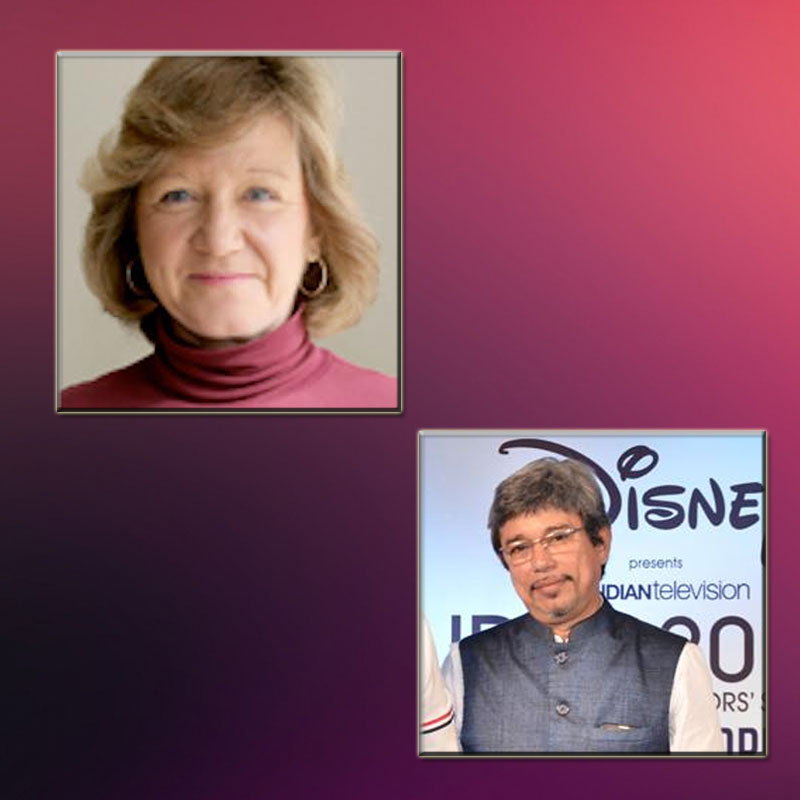
    She is in India at the invitation of a Hong Kong-based financing and production house and Indiantelevision.com’s founder Anil Wanvari to train Indian TV writers to produce entertainment education, which is based on the PMC Methodology. The latter itself is based on the Sabido scriptwriting methodology, which has been used to write television shows in about 80 languages and more than a 100 countries. The workshop is underway in Mumbai currently and ends on 3 December. Indiantelevision.com ‘s Kirti Chauhan got into a conversation with Barker – who is a PhD in public health  and has made Cape Town South Africa as her home , but travels 300 days each year, preaching the gospel of television with purpose – on the importance of TV as a medium to spark social change and how it can be done in India. Excerpts:

    What are the factors behind your shift from being a health practitioner to a media practitioner and scriptwriter trainer?

    My background is in public health and I have spent a lot of time working on public health inventions. And you find that you are spending so much time treating illness and diseases which are preventable. Public health has avoided doing it for years. We are treating conditions at the very end of the situation, rather than at the beginning. We do not focus so much on prevention, rather we have our eyes on treatment.

    When I found this powerful communication tool, which we call the Sabido or PMC methodology, it really helps to motivate change that can lead to prevention using media.

    Miguel Sabido – a TV researcher from Televisa in Mexico in the sixties and seventies – created this methodology, which focuses not on the story – but the social issue or problem. The story comes last. First, I first need to get ‘what’ is the real problem, and ‘why’ does that problem exist. And then look at ‘positive’ and ‘negative’ values that people in society hold around that. We need to honour these values and we need to integrate those people holding those into the TV show’s script and let those voices be heard.  Sabido or PMC methodology believes there are three characters every story or TV show has: positive, negative, and transitional. The transitional character is the one who has the journey – it is the one, the audience has to identify with. That is the doubting character, who does not know what to do. The positive and negative role models are almost like archetypes – they are too bad and too good to relate to me, but the one in the middle is exactly like me. He or she is the one I relate to.

    In Toilet Ek Prem Katha, the father is the negative character, the daughter is the positive one, and Akshay Kumar is the transitional. You love him.  All three are needed to help tell a story that in turn helps influence and bring about the desired social change.

    There are socially relevant shows being made on TV? What’s so special about a Sabido methodology show?

    A lot of people think they are doing social shows but this is not done effectively. I think it because only some (not all of them) of a whole gamut of theories and golden rules have been captured and used in these shows. You feel you have mastered the techniques but the fact is that you have not mastered the refinements. And you know that a lot of these programmes fail because of this. People have made music videos, short films around responsible parenting etc. Over the years, what we have learnt is that it needs to be a long running TV series, it needs to be a serial drama. You can’t do this in film or documentary, music video or a short number of episodes. You can’t cut short this; everybody is looking at a shortcut. But like in life, you get what you put in and hence, they have failed.

    When we go into a country we do a lot of formative research which helps creative people, the writers, to understand the realities of the situation of the social issues. But we have to be very careful all along the way. For example, we design a show about women inequality, women’s empowerment, the question is how far do you go before women say: no, no, that’s not me! So you have to take it a little bit aspirational, but you can’t take it too far or it is no longer believable.  And it is no longer even desirable.

    How important is it for TV channels and OTT platforms in the modern world to engage in social change shows? Why should they do it?

    It is criminal not to. Media is such an important powerful tool, and it has been misused a lot. We just play with it. And then we get things like the Columbine shooting or people going and shooting a cinema because they saw it in a movie or in a TV show.

    If you want to make a powerful product even more popular, make it more relatable. That’s the big disconnect. That is why the biggies are losing to Netflix and Hulu in the US because the former decide what they want people to see and they forgot that people really want to see themselves.

    What are the challenges you have faced?

    Funding is the big challenge. For example, a radio programme running at least twice a week over a year needs at least 104 episodes. In television, it is at least for a season. However, to get an investor or donor to commit to that is challenging. A radio show of that duration in Africa takes around $1.5-2 million. This is a lot of money for even a donor or investor, or a bucket of investors. They would rather do billboards or a comic book is what we hear sometimes.  The biggest challenge is to convince the investors that if they really want mass change on a big scale, this approach is cost effective as you can reach out to millions of people.

    How receptive have television stations and research been to using television as a tool for changing society?

    They are getting more so now because they have started realising that by not doing this, they would lose the market. For example, we are currently negotiating with Televisa Mexican, they are struggling (especially younger market) to find a way to get back into the market because of Netflix. We come in, and we say that the way to get back that market is to make a show about them.

    We had a hit show in LA, East Los High and the reason behind its popularity was that it was the only show ever produced in LA by Latinos and for Latinos. The whole production and acting cast and crew were Latinos. That’s the first this had ever happened. It seems nuts to me because this was in East LA where the majority of the population is Latino. People will watch shows of a lower production quality as long as they see themselves in the characters and the story. Like in Nollywood where the production quality is not great, but some of them connect so well.

    You have had a legacy relationship with India? Can you elaborate?

    Our predecessor organisation worked here many years ago and helped produce Hum Log, Humrahi on Doordarshan. Since about 2003, we have been wanting to get into India and just haven’t managed to get any inroads. Right now, we have been engaged by south-east Asian investment organisation One Talk Media and then they partnered with Indiantelevision.com. We are training some of the writers in our methodology and we hope to carry something to fruition with the two partners. India is a sophisticated market like Mexico and the US, and this is a model we will follow here. 

     Tell us about your reason to enter India.

    We have been trying to get into India for a long time – it’s a huge-huge market. The reason behind PMC is to try and create a sustainable population for the world. Whether you like it or not, India has a huge demographic impact on world sustainability. So, to be here and looking at societal behaviour change and looking at family planning and population dynamics, looking at women’s empowerment, children’s health – these are exactly the kind of things we need to be doing in a huge powerhouse like India.

    Have you ever cast big stars or are you planning to cast in your social issues related shows?

    We tend not to. And one of the reasons is cost. Our shows are trying to be a slice of life. We want you to believe that these are real people and if you get a big star or a known person, whether for the radio voice over or for a TV show, our viewers are not going to believe that the character is real no matter how good the actor is. So, we tend to take younger, less known voices and faces because we can make him who you want him to be.

    How effective has the Sabido method been in attaining its objective of social change?

    50 of the 55 shows that have been made using the Sabido or PMC methodology have achieved the desired social change objective. So the method works. The four or five that did not work was because we deviated from the methodology or put them in the wrong time slot.

    We lowered the fertility rate in Ethiopia by over a child and a half in a period of two and a half year period.  So it works.

    What is the relevance of societal change in a world of so much audio-video content? What role can it really play?

    A couple of things. Identification is big, these shows are built around that. So it’s entertainment that has a purpose and I feel most of us, I believe, like to be entertained. We want to go in that space where we can just relax, not want to think, but at the same time most of us like learning something. There is no preaching. These are ‘educational’ shows, social change content shows but we are not doing a good job if anybody recognises it to be that. For instance, a viewer in Africa should not tell me that the show is about female genital mutilation. Rather she should tell me it is about Fatima (a character) who had a rough time in her life. Just the educational content should be a part of the entertaining story. If you can build a story about someone who is like ‘me,’ then you have me in. 

  • ATF 2017 attracts Indian  content studios, both big and small

    ATF 2017 attracts Indian content studios, both big and small

    MUMBAI: Singapore-based Reed Exhibitions’ Asia TV Forum (ATF) is round the corner and the buzz around the event only seems to be ramping up. This year, the forum will see around 60 countries from all over the globe. From 28 November to 1 December 2017, more than 90 thought leaders will deliver fresh insights at over 24 ATF conference sessions, discussing present-day issues such as big data, movement in the over-the-top (OTT) scene, new monetisation strategies, unscripted entertainment formats and kids content.

    Indiantelevision.com founder Anil Wanvari has been working on developing opportunities for India’s animation and live action sector – whether for TV or OTT – over the past three years at ATF as its representative for the regions of India, Pakistan, Sri Lanka and Bangladesh.

    “We have seen the presence from south Asia grow from a small 20-30 to around 140 this year since I was given the task of working closely with the region’s content creators, buyers and distributors,” says Wanvari. “I and the team which works with me have been happy to help catalyse their presence on Asian and global stages. ATF has a strong presence of smaller buyers, producers, distributors from the region apart from the big name players from Europe and the US. It has become a must visit event for the content executive.”

    The major Indian satellite TV networks Sony Pictures Networks India, Star India, Indiacast-Viacom18, and Zee Telefilms have their syndication and licensing teams exhibiting in the Marina Bay Sands venue. Other noteworthy exhibitors include: format and content syndication company GoQuest, Swastik Productions’ One Life Studios which is hawking its mega budget Porus and homegrown formats, One Take Media which is selling its kids animation and cookery shows, film and digital content creator and distributor Rajshri Entertainment, infotainment channel EPIC TV, kids content pioneer Green Gold.

    “This is probably the highest exhibitor strength India has managed at ATF ever,” says Wanvari. “The country’s content selling industry has come a long way despite the oft repeated statement that our TV shows are not good enough to cut the international grade.”

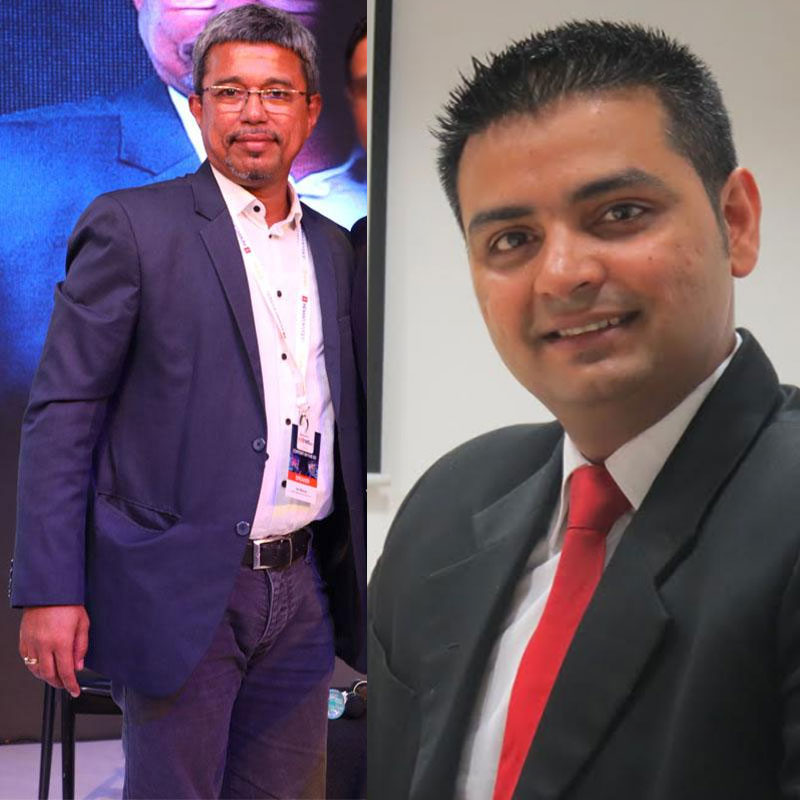
    Among the initiatives that Wanvari and Reed Exhibitions have supported is the building up of delegations from India and south Asia. The first of these has been the one which has been growing under the umbrella of the Media & Entertainment Association of India (MEAI). The association’s secretary Ankur Bhasin has cobbled together a delegation of 11 small and medium enterprises (SMEs) consisting of 13 delegates in the content creation and distribution spaces.

    Says Bhasin, “Fueled by improved connectivity and mobile explosion, Asia-Pacific is experiencing the fastest growth worldwide in terms of growth of time spent consuming media online – about 6.7 per cent consistently year on year compared to global average of 2.9 per cent. Although the average consumption of three plus hours per day for the Indian audience and about six hours per day for Chinese viewers is still relatively low compared to western countries, with over 60 per cent of the world population concentrated here, that is a substantial change on how media is being consumed. It is no surprise that this explosion is resulting in a growing demand for content in the APAC market.”

    Wanvari points out there are many commonalities in culture that India shares with east Asian countries like Singapore, Malaysia, Indonesia, Vietnam, Japan, south Korea, Sri Lanka, Pakistan and Bangladesh. “We all share Asian sensibilities and values,” he says. “Hence, we can relate to each other’s content.”

    Bhasin believes ATF is a very important market to target Asian buyers as well as to look for co-production opportunities. “Increasingly, there has been demand from MEAI members to focus on markets in the east and this has resulted in a growing delegation to ATF from MEAI. MEAI hopes this will materialize into a pavilion next year to give a fixed presence to the delegation being put together by the association with the support of Anil and his team,” Bhasin adds.

  • Sabido TV scriptwriting workshop in Mumbai on 23 November

    Sabido TV scriptwriting workshop in Mumbai on 23 November

    MUMBAI: A unique scriptwriting workshop is being organized by the Hong Kong based One Talk Production group in partnership with the indiantelevision.com group from 23-27 November and 29-2 December 2017 in Mumbai.

    The former is an Asian content TV producer, which has developed a specialized and unique methodology in TV drama content and storytelling, and is run by Hanno Hornbanger. 

    The workshop is to be conducted by entertainment education serial drama writing expert Kriss Barker. Vice-president for international programs at the US-based Population Media Center (PMC -an international organization that works with broadcast media to produce entertainment-education programs),  Barker  has trained numerous media and health communication professionals in the Sabido methodology for behavior change communication using  mass media. This apart she has assisted production teams worldwide to develop limited episode dramas which have been used to create awareness of social evils and also gradually rid society of them.

    The Sabido method was instituted by Televisa producer Miguel Sabido in the eighties and has been used in the production of telenovellas in Mexico and several other countries over the years.

    Says Indiantelevision.com group founder & CEO Anil Wanvari: “We are delighted to be working with One Talk and Kriss in bringing this unique methodology to Indian TV dramas and scriptwriters. While commerce (read ratings and advertising dollars) is at the heart of any TV  channel or OTT platform’s existence, it is important that the mediums are consciously used to bring about societal changes. Writing is at the core of any television show and we hope that exposure to the Sabido method will  help sensitise both young and experienced TV writers to this need whenever they are writing.”

     “We are a production company which seeks to produce socially relevant TV series across Asia using the Sabido method. We are already in production in Vietnam and the Phillippines with shows and films which were a result of the workshops we conducted there. And we are working towards a similar objective in India too,” says Hornbanger.  “What’s unique about the Sabido workshop methodology, is that it ends with stories, concepts, scripts which are then further developed to get into production for telecast following a channel mandate. The writers whose scripts will be selected will go on to write the complete show until its completion. “

    Adds Wanvari: “We are happy to say that three leading Indian Hindi GECs have evinced interest in partnering with us to telecast the shows that will emerge from the workshop and this unique methodology.”

    The One Talk group has conducted extensive research over India which has uncovered Indian society’s pain points. The research will be presented to participants, following which Barker will run them through the Sabido method to develop a character values grid,  story settings, character profiles, story arcs (and triggers and consequences), storylines, and plotting for a TV show.

    The workshop has limited seats which are filling fast. “ We are handpicking writers to be a part of this scriptwriting programme,” say Hornbanger and  Wanvari. “But we have some seats left for scriptwriters who are willing to commit themselves to learn the Sabido methodology. They can approach indiantelevision.com offices in Mumbai and send across their candidature. The best part about this workshop is that they can attend it for free.”

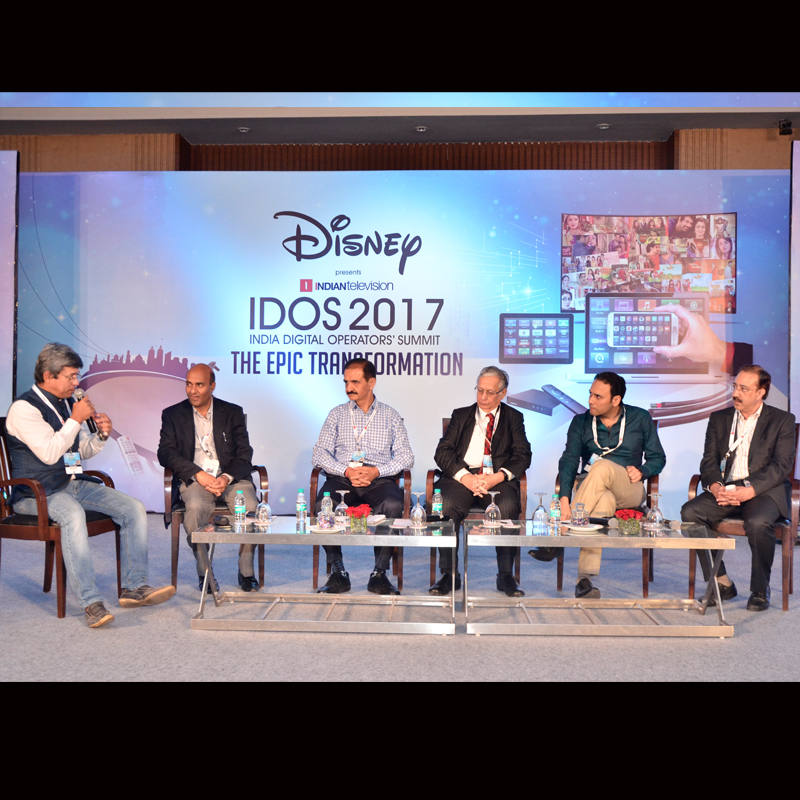
  • IDOS 2017: OTT is here to stay but may not replace pay TV

    IDOS 2017: OTT is here to stay but may not replace pay TV

    NEW DELHI: The over-the-top (OTT) medium is here to stay and cannot be put down, but the television medium will continue to survive in the face of this challenge in India.

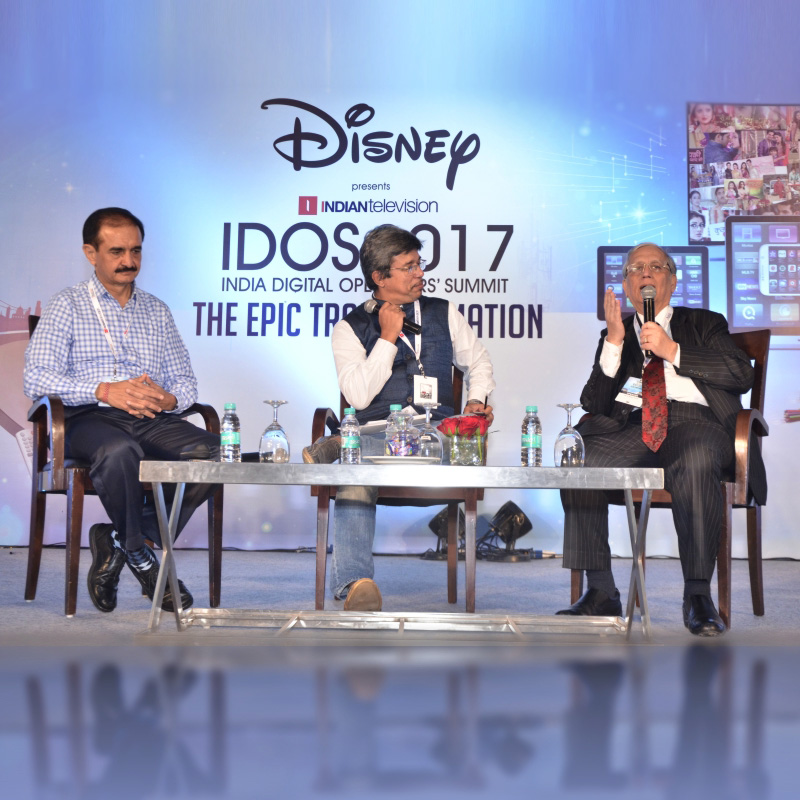
    The stressful life of today and the relationship built by the local cable operator are other reasons for the survival and well-being of the television medium. These were some of the views expressed at a discussion on the OTT Challenge to Pay TV at the Indian Digital Operators Summit organised by indiantelevision.com and moderated by the latter’s founder, CEO and editor-in-chief Anil Wanvari.

    Viacom 18 Digital Ventures’ senior vice-president and head of marketing Akash Banerji said that OTT would fundamentally change the scenario but admitted that “we over-estimate the short term, and under-estimate the long term.” He felt that the impact of OTT on pay TV may begin to show some change by 2020-21, but not immediately.

    Clearly, he said, some disconnect with the cable operators had led to the growth of OTT. Secondly, OTT was providing the content relevant to the individual viewer. Thirdly, he said that Viacom 18 was for the first time indulging in a B2C model where the consumer had the last word. He, however, admitted that the long-term survival of OTT lay in the medium moving to a subscriber-based scenario.

    Shaji Mathews, who has recently joined as the CEO of Kerala Cable Communicators in Kochi, said that OTT was no challenge, and (on the contrary) it would augment TV. He was confident that wired technologies will continue to dominate even as wireless technologies attempt to make inroads.

    He also felt that there was no level playing field for OTT at present, and so growth will take time.

    DEN Networks CEO S N Sharma said that the MSOs had entered the field of OTT in an attempt to provide a platform to various OTT players only to reach the consumer, realising that the consumer habits are changing. DEN had made inroads as far as fee-to-air OTT was concerned, and was only amalgamating the OTT players. The aim was to move with technology.

    Ashok Mansukhani of Hinduja Media Group admitted that OTT was a gigantic disruptor of the entire value chain but felt it would take some years to make inroads.

    Vynsley Fernandes of CastleMedia felt that the growth of OTT would largely depend on who has the TV remote in the home.

    Sisir Pillai of Lukup Media was confident that whatever the medium, it would survive if it had adequate content.

  • IDOS 2017: Tech needed to integrate different media in a single box

    IDOS 2017: Tech needed to integrate different media in a single box

    NEW DELHI: With the scenario changing to that of a multi-screen era, the need of the hour is to create a single technology that can deliver all systems into the home.

    This was the general view of CastleMedia’s Vynsley Fernandes and Rahul Nehra, the founder of Kalpin and national secretary of Society of National Telecommunication Engineers, in a panel on soft solutions for set-top box hardware at the Indian Digital Operators Summit organised by Indiantelevision.com whose founder and CEO Anil Wanvari moderated the discussion.

    Fernandes felt that the STBs of today should be like home media gateways that could help operate OTT, tablets or laptops, SD and HD TV, gaming and even radio. The aim was to have master devices that could operate all media.

    He regretted that the failure rate of the present STBs which were mostly of Chinese origin was very high – seven to eight million failed every year.

    The cable industry had learnt its lesson the hard way whereas the direct-to-home STBs were more porous and met the needs of the DTH industry.

    With more options which included complicated technologies like virtual reality, Nehra said, there was need for more sophistication. He said there were no STB manufacturers but the demand for TV remained high, thanks to the cable operators.

    But, he said, work had begun in this direction and a pilot project near Hyderabad was almost ready to prepare hardware for the software. He said consumers wanted HD at the rate of SD and so newer technologies had to be found.

  • IDOS 2017: Cable TV sector needs more collaborative broadcasters, say MSOs

    IDOS 2017: Cable TV sector needs more collaborative broadcasters, say MSOs

    NEW DELHI: Even as the multi-system operators and cable operator are doing their bit to aid digitisation, broadcasters need to participate more in the process which officially has been completed. They need to be more transparent and supportive of the distribution platform operator — in this case the MSO and cable TV operator — and not be like a tax collector always asking for more.

    This was the general view of both, S N Sharma of Den and Ashok Mansukhani of Incable in a discussion in ‘The Indian MSO: Redefining the raison’etre’, who also said it was only now that the MSO was beginning to monetise almost five years after digital addressable system was first launched.

    Furthermore, the broadcasters were still free to fund the business as they wanted, and, as Sharma put it, there are only two laws that control the broadcaster – the Programme and Advertising Codes and the Cable Television Networks (Regulation) Act 1995. Thus, there is virtually no regulation for the broadcaster, Sharma said.

    Both, Sharma and Mansukhani agreed that MSOs and even LCOs had put in a lot of effort to get DAS off the ground — that too in a period of four to five years, which is unprecedented globally.

    “The DAS regulation was brought in for transparency and to allow everyone to have a fair share of the huge subscription revenues that viewers were paying to watch cable TV,” said Sharma. “But, the sad part is that broadcasters are constantly asking for rate increases of 24 per cent or so without even asking if it were possible,” added Mansukhani.

    They said that it would be better if the broadcasters were to communicate rate increases to viewers and invest in promoting that, rather than expecting MSOs who are just about recovering from the hangover of the huge investments they have put into DAS as well as getting robust systems and processes in place. “Also, we are not equipped or have the creative mindset to communicate this effectively for all channels,” agreed both Sharma and Mansukhani.

    Rather than going to courts to stall the TRAI tariff order, they said, broadcasters could collaboratively work with the DPOs to take DAS on to the next level. “Neither the government nor the regulator has been able to do anything,” they said.

    “We have our own troubles, recouping our investments to bring back profitability into the cable TV sector, as well as dealing with piracy and leakages which broadcasters take time to check and stop because they have procedures to follow,” said Sharma.

    Mansukhani disagreed with Indiantelevision.com founder, CEO and editor-in-chief Anil Wanvari that the cable TV sector will not be in a position to manage complicated skinny a la carte bundles for the millions of customers that it serves. “Our backends are ready,” he said. “Our SMS, billing and KYC of the customers is in place,” he said. “We are just waiting for the (court) order to come through.”

    He opined that the industry would ultimately survive the changes, and he was also confident that the cable industry was ready to adapt to any new technology.
    To a question about monetisation, Sharma said the MSOs were not beginning to reap the monetary benefits of Phase I. Even the DTH industry was beginning to break even only now, more than a decade after it was launched.
    Mansukhani said he was happy that the Hinduja’s headend in the sky (HITS) NXTDigital was reaching 1.5 million consumers. But, the need was to break even as early as possible and “giving a dividend to my shareholders.”

    But, he stressed the need to keep the dialogue open with the LCOs who are the ones dealing with the consumer. Consumer connect has to continue. He regretted that the level playing field that he had hoped to get from the government has never came.

    Both Mansukhani and Sharma agreed that, though the government had not made a difference between the urban and rural viewers, this was necessary if there has to be penetration in rural areas. Otherwise, they would go to Doordarshan’s FreeDish.

    Sharma said his company was soon launching a device that would not be internet-based and could be used for all gadgets including mobiles, TV, tabs, and so on.

    Mansukhani said that it was clear that the MSO will have to graduate from being a TV MSO to a multi-screen MSO.

  • Indiantelevision.com’s VR news journalism workshop gives fresh insights

    Indiantelevision.com’s VR news journalism workshop gives fresh insights

    MUMBAI: “Immersive Journalism.” “The Use of VR in News Journalism”

    Indian broadcast news journalists have heard these terms being used either online or in conversations. But, apart from NDTV, Republic and Times Network, not many of them have explored the innovation that is currentl engaging TV news viewers worldwide.

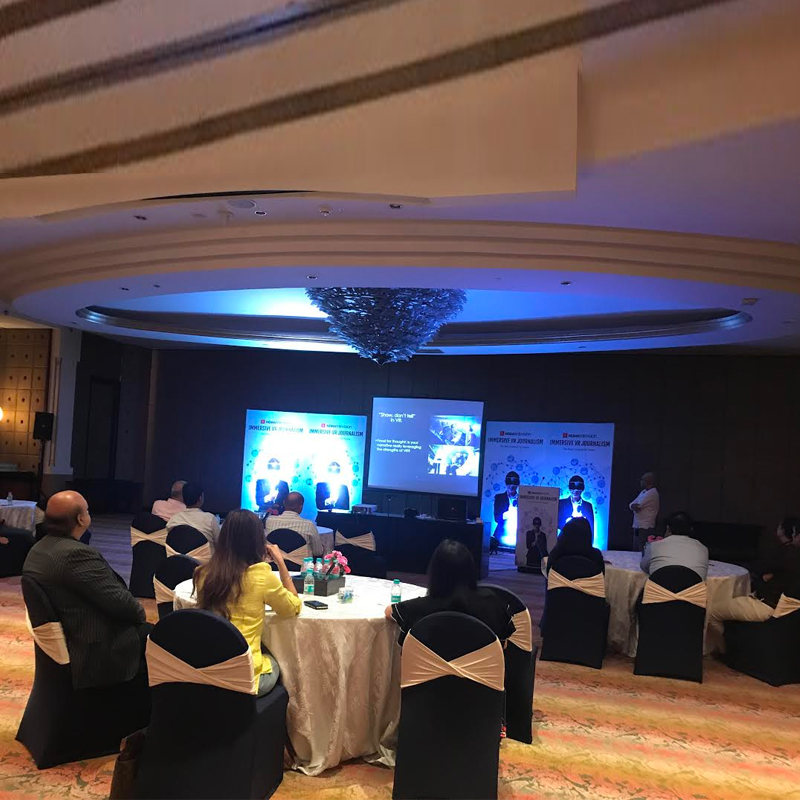
    To fill this gap, indiantelevision.com organised a half-day workshop in Noida’s Radisson Blu MBT Hotel on 26 September.

    In the house were a select group of tech professionals from news organisations such as NDTV, ABP News, India Today and News18 Television. The workshop was presented by  VR expert, the Dubai-based Clyde Desouza.

    Indiantelevision.com founder, CEO and editor-in-chief Anil Wanvari stated at the start of the workshop that VR journalism is not just in an experimental stage currently, it is a reality amongst many broadcasters worldwide. The reason for this is the falling prices of 360 VR cameras and VR headsets.

    public://Clyde DeSouza.jpg

    Clyde Desouza gives his take

    I’ve just completed a whirlwind initiative to bring awareness of Immersive Journalism to media organisations in India, thanks to the support and thrust provided by IndianTelevision.com.

    What started out as a series of discussions with the founder of IndianTelevision.com, Anil Wanvari, culminated in an exclusive, invite-only seminar on the future of factual storytelling – Virtual Reality and Mixed Reality Journalism at the Radisson Hotel, Noida, India.

    The top news and media organisations are headquartered in Noida, and CxO-level professionals from these organisations attended along with news editors and graphics teams to look into the future of news reporting and what I’d like to term as “Experiential Journalism.”

    The audience was informed and engaged. I won’t hesitate to say I’ve learned equally as much from the questions posed, as from the non-linear discussions that ensued well past the two-hour time allotted for the workshop.

    It was encouraging to see attendance from such prestigious organisations as E&Y, alongside respected NEWS and media organizations such as NDTV, ABP, and Network 18 in India.

    The seminar started with an overview of what Immersive Journalism is, with due credit given to the such luminaries as Noni De La Peña, but also the current state of the art in Virtual Reality news reporting and looking forward to Mixed Reality storytelling.

    As a tech / creative evangelist for VR, I was happy and impressed with the questions asked, and was genuinely excited to field queries ranging from Photogrammetry offer ideas on how CG “assets” could be created, and a library built for rapid Immersive Journalism pieces, with existing television CG packages and solutions such as VizRT and Wasp3D.

    There is certainly an appetite among the media and NEWS organisations in India, to take reporting beyond what’s possible on linear TV.

    While I’m currently bringing one of India’s leading news channels up to speed in VR, it was heartening to see almost all other major and emerging media organisations, aware that in order to build loyalty to their channel and brand, they need to engage their audiences on a level that goes beyond sensationalism and traditional news reporting.

    Twitter @cly3d

    Linkedin: https://www.linkedin.com/in/clydesouza

    www.realvision.ae/blog

    Many of the broadcasters are foraying into it because they want to get brand innovation credibility, apart from attaining a sense of future preparedness. Wanvari added that currently most of the players are actually producing a lot of 360 videos, rather than fully immersive ones.

    The early adopters apart, most news broadcasters are treading cautiously because the monetisation models have yet to be developed, and though prices have been heading southwards, the cost of VR gear – both at the producer end and at the consumer – still make it an elitist hobby, said Wanvari.

    He added that around three million headsets have been sold internationally.

    He urged the Indian news industry to get together under the NBA umbrella to work cohesively with tech partners, and platforms to increase awareness amongst its members as well as to negotiate on both production equipment and content standards.

    Desouza, on his part, began by explaining to the audiences what VR really seeks to achieve.

    “VR is not VR for VR’s sake,” he said. “It’s the experience that your brain feels.” 

    He explained the difference between VR and AR. “AR is when digital assets are added into the real world,” he said. “VR is when it’s entirely virtual and digital.”

    Desouza pointed out that care should be taken while filming 360-degree videos. “You have to keep the viewer in mind. You can’t pan and swish and zoom in like you would do with a normal camera. These kinds of motions give the VR viewer a headache.”

    He pointed out that many organisations are investing hundreds of thousands of dollars and producing videos that don’t really work as VR or immersive journalism.

    “The VR video has to draw the viewer into understanding that it is his point of view which he is experiencing,” he said.

    Desouza added that news brands internationally are using — and can use — VR to galvanise the audience into action.

    “For instance, a feature on haemophiliacs can be told from a victim’s point of view and the viewer should be able to feel and experience what the haemophiliac is feeling and going through and how we need to deal with them,” he explained.

    His view is that Indian news organisations would do well to keep aside budgets of about US$ 100,000 to start up their VR departments as well as a room with young, trained journalists so that costs can be kept under control.

    His talk was illustrated with the best and the worst examples of VR and immersive journalism videos from global studios.

    Desouza is currently consulting a leading Indian English news broadcaster to help steer it into VR journalism, and is in talks with a couple of others for the same.

    To read Clyde Desouza’s perspective on the workshop, click here.

  • Competing with Google & FB on free side and with Netflix and Amazon on subscription — Hotstar CEO Ajit Mohan

    One of the early movers in the Indian over the top (OTT) space, Hotstar – – part of the Twenty First Century Fox-owned Star India – has been setting a scorching pace for itself. In a nation where high data costs made customers wary of consuming content when on the move, it displayed a voracious appetite for acquiring them. Today, its massive subscriber base equals or surpasses the total subs of all the VOD services in Asia and rivals that of the big boys in the US.

    It has also been aggressive in its content strategy – paying top dollar for movies and TV series from  top notch Hollywood studios as well as for sports telecast rights.

    21st Century’s Fox’s leaders – the Murdoch brothers Lachlan and James – along with the Star India management led by Uday Shankar and Sanjay Gupta – are quite bullish that the investments being poured into Hotstar are well worth it and should bear fruit, sooner than later. Estimates are that around $500 million has so far been pumped into the VOD service.

    The man in the hotseat at Hotstar has been the US returned executive Ajit Mohan who has been steering it right from day one three years ago. With single minded focus, he has been at his task of building a robust product and a team that helps it remain so.

    The publicity shy Mohan was one of the Indian VOD leaders who had a one on one with Indiantelevision.com founder, CEO and editor in chief Anil Wanvari at the highly successful  second VIDNET OTT conference in Mumbai two weeks ago.  Excerpts from the conversation:

    First of all, I would like to start by congratulating you on your CBS Showtime deal. Tell me little more about it?

    If you look at what we have built on Hotstar premium we feel pretty proud. I think we have built a fairly distinctive subscription service which in many ways I think compares to the best in the world.  I am not sure that there is any platform worldwide that brings together the best studios for American TV shows and movies. With Hotstar Premium we have HBO, Fox and Disney movies exclusively. And we thought that the only missing piece was Showtime. So we have done an exclusive partnership with  Showtime to both bring the Showtime brand and also the best of their marquee shows  to India on Hotstar.

    I think it really completes our offering. We have built a free service that has scaled up dramatically in the past two and half years or so. Now we are kind of applying some of the same rigor and aggression on P remium as well.  From the content proposition point of view I feel pretty good about how it  looks like.

    What will we get to watch? What kind of shows and will it be on same day and date?

    It is. One of the promises we have as pat of the English part of Premium is that all the TV shows will be aired at the same time as  the US. That’s true for HBO, Fox and it will be true for Showtime as well. Billions, one of their best shows will be on Hotstar and Twin Peaks too. Overall, I think it’s a pretty exciting roster.

    I think more than any individual shows what I am excited about is that both HBO and Showtime in the US have created these fabulous premium pay TV propositions on the back of really redefining what a high quality  American show looks like. I think  by bringing them together on the same platform, what we are essentially saying when it comes to English content there really is no need to look beyond Hotstar Premium. Not in terms of other services.  Or not in terms of torrents, which is still a meaningful source of competition for us.

    We will now start investing in educating the market where there is a substantial number of users who have an affinity to English who are spending a lot of time – especially the younger demographic – digging up for content on torrents. And very often they don’t get good quality versions. They don’t get it on time.Or they get It dubbed or subtitled in a language that is not familiar.

    Now the reality is that as a consumer in India you don’t need to have  to go through the pain. It may be difficult for them to understand the richness of the proposition that is  on offer today. Now when you compare it to consumers in any other part of the world today; the Indian consumer has probably the best deal.  Rs 199 per month only…I don’t think price is a  challenge anymore. So I think it’s more about creating  awareness.  And I think there is still a segment – especially in the younger demographic – who believes it’s cool to pirate. And I am sure that philosophy will be carried by a lot of people. For most people,  it is just creating awareness that there is a serious ease of getting almost every show that you want on Hotstar Premium at a price that is quite affordable. And that is what we are going to invest in on the back of the Showtime deal and what we already have on Premium. And taking it to a mass market in a way that’s not been done in this country before.

    So will you have Hindi sub titles? Or in any other languages?

    Currently, it’s English subtitles. I think the fundamental  point you are making is improving accessibility, can dramatically expand the audience for English TV shows or movies in India. Hollywood has shown that with dubbing. The direction we are moving is to make it accessible by subtitling in multiple languages which you will see over the next few months.

    How are you doing on the app download front?

    We have crossed 300 millions downloads and we are seeing downloads across all operators. Wifi.  Jio obviously has  had a tremendous impact on the ecosystem in terms of expanding access to mobile broadband and increasing affordability. Two things stand out over the last nine months when Jio has had this massive disruption. One is that video has  benefited disproportionately. For us what the last two years -and the last year in particular – has really established is the bet that we made if data was not a constraint,  people will gravitate towards  long-form content including on a mobile. That  what we saw in the early stages of the ecosystem , people consuming short form clips, user generated content  – that it did not represent the truth. It was not the end state; it was the beginning of the market.  That has really played out  And you see that in the data, the time spent time..the watch time on video  has grown disproportionately to social media.. And by multiple factors. And Hotstar has grown – disproportionately to any other video platform.

    300 million I don’t think somebody else has this kind of numbers in the world.

    I think Jio has been an enabler. But more and more you are seeing that for sieving out where consumers are going, both in terms of adoption and in terms of watch time. I think data is an enabler. My sense is that the more people have access to 4G, the cheaper data gets – a high quality propostion like Hotstar that has both the content proposition and is compelling as well  and we are seriously investing in technology to keep improving the consumer experience. I think that combination is quite powerful.

    We are seeing that in the numbers which are substantive. One of the numbers that stands out for us is that just on the Google Playstore globally we crossed 100 million downloads a couple of months ago. From what we know, only Netflix has done that globally outside of Hotstar and may be in the entertainment space, Spotify. And it does feel like even being in one market in India, I think  the scale of what we are seeing clearly compares to the best in the world.

    I believe this should be a moment of pride for the country as well that in the mobile ecosystem that we are blazing the trail in terms of what can be done. And for us, we really think of ourselves as “we are not replicating models that have happened in other parts of the world. We are truly creating a template for what a mobile centric business could look like which would be relevant in any market.”

    How many of these are active?

    In the month of May and June 2017, we crossed more than 100 million active users

    How would you define these actives?

    Somebody coming and spending meaningful time at least once a month. The reality is almost everyone who comes to Hotstar comes multiple times a month. And very often multiple times a day. But a monthly active way is a good way to look at it as it a common measure for looking at adoption across the ecosystem. And all our 100 millions actives are unique.

    Some of the OTT players are distinguishing between monthly active users and uniques.  

    Digital is an interesting space where is there is no common measurement system in place and that equally applies to Facebook, Youtube or Hotstar. It makes sense to have a common measurement that is consistent. To the extent that  we know how to identify  unique users, their presence on devices, not everyone logs in. It’s not the same login across Hotstar, Facebook, Google  – all of those still remain. But We are seeing more than 100 million users coming to Hotstar.

    Are you still in the consumer acquisition mode or you have passed that. In what phase are you?

    I think we are going to be in a perennial growth mode for a long time because of two reasons: I think that’s the kind of company we want to build. The proposition is so exciting,  it’s relevant for more than 100 million users.

    Second, the context of India where as more people get access to  data… one of the things that we are convinced is the primary use case for getting people getting online can be video and Hotstar.

    The next 100 million or the first 500 million to go on digital in India.. we think mobile video and especially around the entertainment proposition that we have.. more than search, social media or ecommerce we can be the beach head. Because people love stories and it’s relevant for  a larger number of people. From that point of view I don’t think we are going to stay away from focusing on growth for a long time. I think we can be the primary use case for bringing people online in India.

    But your customer acquisition cost are going up or down?

    I think costs are going down. It’s a two and half year old platform now; there is a lot equity of the Hotstar as a brand. Once you reach a certain scale and have broken through I think the organic momentum starts kicking in. We are in the stage where it feels like growth is happening with far less effort than two years ago. Having said that it looks exciting to look for the next100 million users..and the next 100 million users after that.

    It’s not in an optimization mode, it’s in growth mode and in growth mode our focus is all three:  adoption of new users, it’s watch time and the third is revenue.

    I think for a uniquely consumer internet company we believe there is a virtuous cycle between consumer adoption, engagement and revenues.  We don’t see  it as competing, we see it as going together.  

    Varun (HotStar head of product and engineering EVP) said in some conference that he would like get some billion minutes. Correct me if am wrong?

    A year ago in APOSTech in Shanghai Varun had articulated this ambition of crossing a billion minutes a day in watch time. I don’t think we have said this publicly but we have crossed that  number a few times  in the past couple of months.  

    How has the playground has changed since you were here last year. What do you seeing? Your tech is keeping up or you have to spruce up your tech. You invested in Zapr to get some analytics in place. What has changed?

    Three things in my mind have changed.

    We have made significant movement in the past 12 months.  I think we have hired 60 engineers just in the last nine months. I think we are looking at doubling that number in the next six months.

    We have the clarity that we can build something unique in India and compete with some of the best global tech companies. It comes with building our own technology muscle.

    Second, if you look at the consumer internet space with lot of actions across e-commerce, fin-tech and our own media space, we have been quite thoughtful in building a deep bench in leadership. The past 12 months have been marked by a significant bulking up of our leadership capacity in Hotstar.

    Third big change that has happened as a result of that there is starting to be  a bit of a separation in terms of services that are standing out from an adoption, engagement and scale point of view – and clearly that’s happening.

    The last 12- 15 months have seen the launch of whole bunch of new services in OTT and a lot of them have very interesting propositions. They are occupying interesting positions in the market …some fairly niche but if I step back and think about it what we are proud of at Hotstar is we are breaking away when it comes to  serious scale and engagement.

    And for me it looks like we are competing with Google and Facebook on the free side which is all about its large scale,  ad supported and big numbers. And on the other front its subscription, which is still nascent, much smaller audience at the moment, we are competing with Netflix and Amazon Prime. At Hotstar, we have two sorts of vertical, one is the free ad supported business and the subscription business where we are facing two different sets of competitors.

    But I believe the ad supported services, IPL got you good revenues from two partners Vivo and Maruti. Agencies have told me its Rs 20 crore per head.

    I think we did okay.

    But that is serving out well in the terms of revenue.

    One of things is clear to advertisers and that’s a big movement in the last 12-24 months especially at a time when there have been a lot of issues around  brand safety that came up in the UK. I think two things are showing up I think most advertisers started to recognizing that the Hotstar proposition is unique. In most parts of the world high quality on demand content on streaming is completely behind the paywall. Therefore it’s not available for brands to advertise on like you can’t advertise on Netflix in US.

    So Hotstar represents a unique opportunity on digital where for the longest time advertisers could only reach audience through user generated content or short clips whereas on HotStar you get premium content which is very different from most streaming business models.

    Second thing that the advertisers started recognizing the power of its engagement. I think it different when you reach an audience when they are scrolling and checking something on social media for 30 seconds or when watching a 40 second clip. It’s a very distracted audience. So even when you presumably get scale and you get metrics like video views what you are not getting is real engagement that comes with long form content. There is a reason why television helped build brands for 50-60 years. It was because people spent time deeply immersed into stories. And that’s the proposition we offer on Hotstar.

    Sports is driving you plus Hollywood. You kind of have tip toed away from originals unlike what Amazon Prime or Netflix are doing?

    I feel I keep answering this question but for whatever reason people don’t want to embrace the answer – especially my peers. Sports is big on Hotstar.  Sports is less than 15 per cent of our total watch time. It’s definitely played a meaningful role for us.

    But TV shows and movies are much larger on Hotstar. The proposition of Hotstar at least for consumers is  that they know that Hotstar is beyond cricket or sports. On originals, almost everything we have is exclusively on Hotstar on digital. Right from the early stages we believe in the power of exclusive content. Which is why Game of Thrones, a Star Plus show is all exclusively on Hotstar. The originals bandwagon was started by the people who did not have the enough content. I am not sure why Hotstar with the most compelling  content portfolio in the world would want to get on the same bandwagon.

    Why is Republic TV  there on your platform?

    …..For more of the interview click and watch the video  link below