Tag: Anil Wanvari

  • We are in the race to build a niche product, not to increase user numbers: Aditya Pittie

    We are in the race to build a niche product, not to increase user numbers: Aditya Pittie

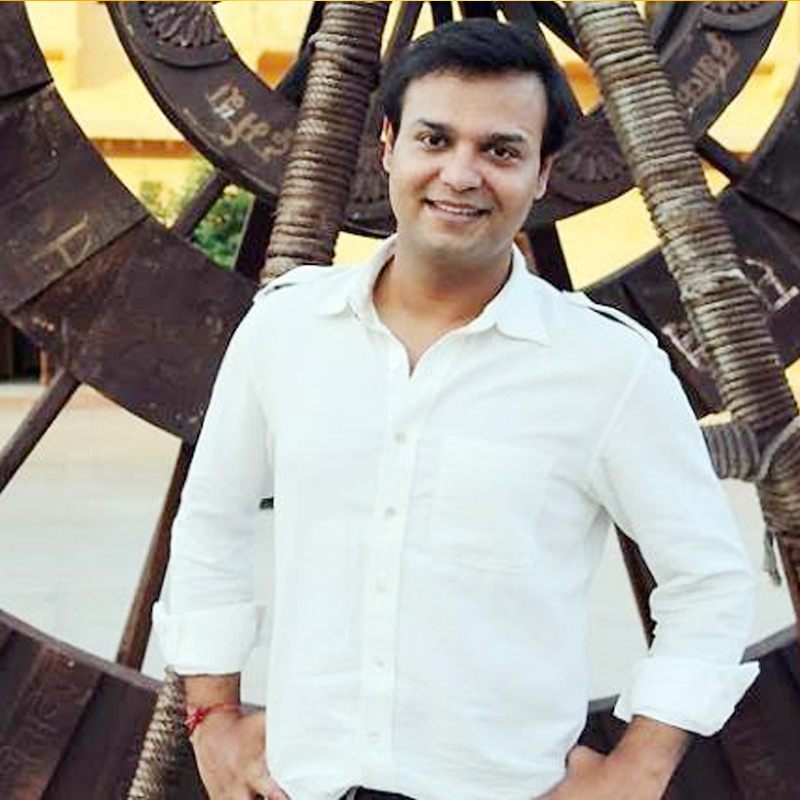
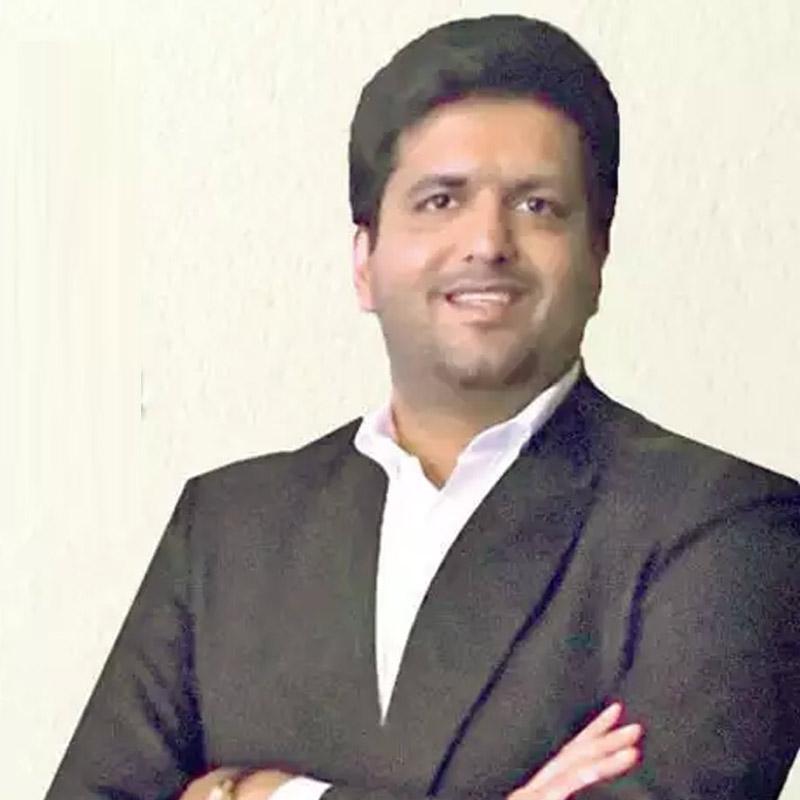
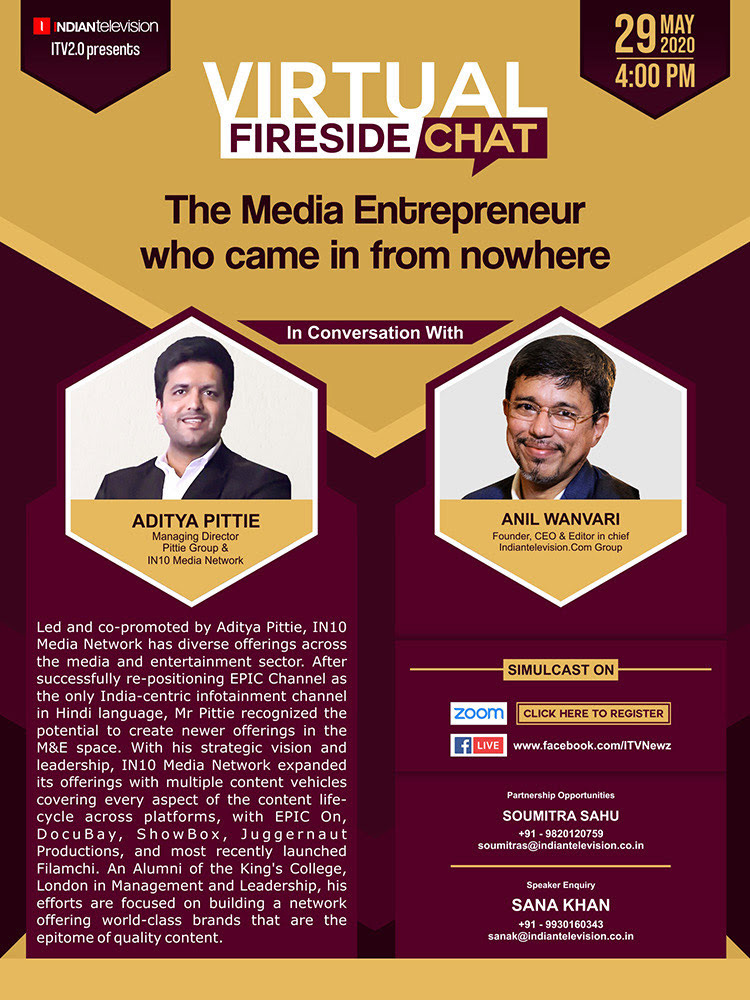
    “We are not in the race of having x million DAUS or MAUS or active users. We are in the race of building a niche product.” IN10 Media Network managing director Aditya Pittie is pretty much clear about where he wants to position the network’s OTT business in an ever-growing market. Anand Mahindra- and Aditya Pittie-promoted IN10 Media has a bouquet of varied media offerings such as television (Epic TV), OTT platforms (Epic On and Docubay), and production house (Juggernaut).

    During a virtual fireside chat with Indiantelevision Group founder, CEO and editor-in-chief Anil Wanvari, Pittie asserts that Epic On and Docubay are not driven by number of users. They are rather driven by time spent, organic tractions, etc. Instead of increasing the number of users, the aim is to build a niche product as a vertical player. That is the OTT strategy the company is following. He is also bullish about Juggernaut, which is going to be one of the company’s key businesses going forward. He says that having an asset like Juggernaut will definitely be a big value addition. “We have the probably largest order book in the industry right now with more than 11 shows confirmed for production,” he states.

    Here he dwells at length on the network’s OTT business, strategy, etc.

    Excerpts:

    After the successful entry into the broadcast business, you launched Docubay. Tell us about it.

    Docubay came about because of our love for factual entertainment. We were very interested in documentaries and we believed that as a genre it is the most popular in the world. Prominent OTTs like Amazon have a good library of documentaries. A lot of people across the world enjoy watching them. Then we thought: why don’t we look at a dedicated platform for documentaries. Then we thought of going global, instead of making India-centric. Today, Docubay is a very powerful product; the experience of watching documentaries on Docubay is far superior than any other platform. And we don’t call our subscribers. We call them members, because the idea is to build a community. That’s why it has the tagline of ‘one tribe, many stories.’ The message is that there are many things to explore in this planet, but we are all one tribe. That is the message of Docubay. We just went live on Roku in North America.  And we are one of the very few companies – in the smaller media networks segment – in India that has its own OTT technology in-house. We spent almost a year and a half in building that technology. As an organisation we are really proud of both our OTT products.

    How are Epic On and Docubay faring in terms of pricing and number of subscribers?

    As regards the KPIs and metrics, Epic On and Docubay are not driven by number of users. They are driven by time spent, how many organic tractions, etc. We are not in the race of having x million DAUS or MAUS or active users. We are in the race of building a niche product.  The pricing of Epic On or Docubay is far higher than any of the horizontal or generic OTT. We are very clearly a vertical player. We have very specific offering and then charge a premium for that offering. That is the model we are working on. By no way we try to fret about how many users we have or how faster our user base is growing. We are not hungry just to drive traffic. We wanted quality traffic. Some of the conversion rates that we have in terms of install vs number of people who are subscribing is probably one of the best in the industry. Those are the kind of models we try to work on. Stickiness, higher paying members who are looking for a specific service as opposed to getting everybody to come on the platform and give what they like. That is not our strategy.  

    Since you are not looking at metrics, what is your business game plan to monetise?

    Profitability in the media business is about how much content you want to put out. We have a business plan in place. We believe in a direction we want to take. Going forward, 15 to 20 years from now, when OTTs become mainstream, there will be a big market for vertical OTTs where people will subscribe and pay you a premium for the kind of content you create and curate for them, which is dedicated to the genre they prefer focusing on. So the differentiation is that in horizontal you have all kind of content under one umbrella, whereas vertical is slightly more focused on niche. That is the base model behind our OTT strategy. There are various other vertical OTT players all over the world. They have less number of users, but very viable business model.

    But here you have entered a global space. So are you competing with Curiosity Stream?

    Curiosity Stream has a lot of short-form content and docu-series. Docubay is a feature platform. We only do films. We carry content that has minimum duration of 20-25 minutes. The product offering thus is very different. Theirs is a very knowledge-based, and about science, research, etc. On the other, we give perspective for you to form your own opinion. That is how the documentary genre should be. If you look at the content at Docubay you will realise that they give perspective but let you form your own opinion about the topic. While they are in some degree competition to us, we believe that we are a completely different platform than Curiosity Stream. And we don’t necessarily consider them to be a competition.  

    What is the thinking behind having own production company and forging partnership with Applause?

    I think we need to separate the Applause Entertainment deal from us being in production. While they are connected they are two separate business models. We were able to foresee last year that the demand for content for OTT platforms is going to skyrocket. Unfortunately, good content creators who understand what kind of content works for OTTs are limited in our industry. There are only a handful of players that are able to create good quality content. As an organisation we have created so many hours of content for our broadcasting business. We felt that we could leverage that knowledge and expertise to build successful production business for other platforms. In terms of scale, we felt that the business can be large enough to justify our resources, time, and energy. That’s why we hired Samar Khan to lead our production business for OTT. And Code M was a super-hit (which came on ZEE5 and Balaji).
    And we have the probably largest order book in the industry right now. We have more than 11 shows confirmed for production, with an order book of over Rs 100 crore for the next one year. Juggernaut is going to be one of our key businesses going forward. We are really excited about the ability to create content at scale. Samar and his team have really worked hard to build our good talent of writers and convince OTT platforms that we have the ability to deliver solid products. I am really excited about the Juggernaut business. Having an asset like Juggernaut in our portfolio will definitely be a big value addition.

    You work for local OTTs or big international ones like Amazon, Netflix, etc.?

    I won’t be able to divulge specific contract details because that will be breach of confidentiality with them. We have one or two shows with every Indian platform. We are obviously in conversation with international OTT players. While Samar has a very big pedigree of content creation, Juggernaut as a company is new. So we are building some traction. Our aim is to deliver some hits this year and then start working with OTTs like Netflix, Amazon, Hulu, HBO Max, etc. at some point as well.

    What genre is Juggernaut positioned in?

    We have seen the success of Code M and Samar as a content creator has been very good at certain shows, but we don’t want ourselves to be restricted to that. Content creation is a collective effort. Success in content creation happens by bringing the right people together for the right type of project. So we are not focussed on just doing thriller shows, fiction or non-fiction. The idea is to create good content that is in demand by platforms. OTT is such a fast-feedback medium. It is not like television. You come to know the feedback – whether it works or not – the same day of launching the show. And there is so much data. The platforms specifically know what they want, what kind of content works, and in which region. So rather than focusing on a particular genre like thriller or non-fiction, etc., we want to focus on knowing what works with audiences, learning from experiences in creating good content, working closely with the platforms, leveraging our relationships to pre-empt what kind of concepts and stories are going to work down the lane and prepare our content bank to cater to that need. That’s the broad strategy we are looking at. You can see that we are creating shows across genres.  
  • ITV virtual roundtable on seamless video experience today

    ITV virtual roundtable on seamless video experience today

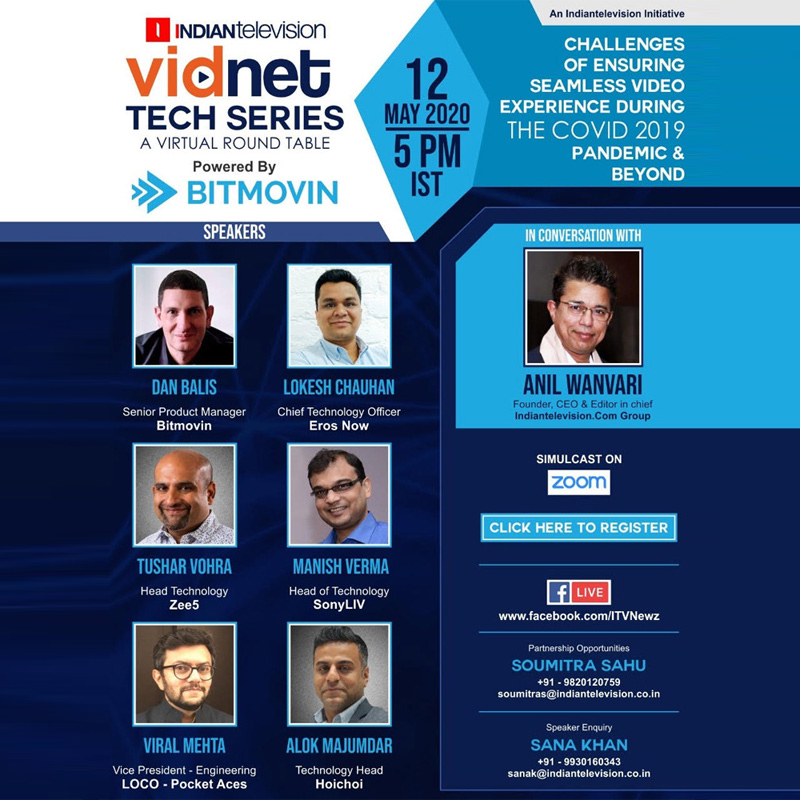
    MUMBAI: The latest roundtable in the Vidnet tech series being organised by Indiantelevision.com will be held today, 12 May, at 5 pm. Powered by Bitmovin, the webinar will discuss the “challenges of ensuing seamless video experience during the Covid2019 pandemic & beyond.”

    The pandemic meant many more people were at home, consuming content, delivered on streaming platforms and television. Data consumption rose to levels not seen before. In India, most of the streamers started delivering videos in the standard definition format as against HD because of the stress on bandwidth. What other lessons has the current crisis and pandemic taught streamers? What else did they do to deliver a better seamless experience to consumers? And going forward what else can be done? The webinar seeks to find answers to these questions, and many more. 

    The virtual roundtable will feature Dan Balis, senior product manager at Bitmovin, and will be moderated by Indiantelevision.com founder, CEO & editor in chief Anil Wanvari. 

    Bitmovin is built for technical professionals in the OTT video market with software solutions to help optimize customer operations and reduce time-to-market. Dan's work at Bitmovin focuses on the Bitmovin Player. He has over 15 years experience launching streaming video products and platforms at scale for media and technology companies that include Viacom, Bright cove, and AOL. His specialties include video platforms, cloud, analytics, SAAS, and ad tech.

    The roundtable will have technology heads of some of the prominent OTTs as delegates. They include: Hoichoi technology head Alok Majumdar, Eros Now CTO Lokesh Chauhan, Zee5 technology head Tushar Vohra, SonyLIV head of technology Manish Verma, LOCO – Pocket Aces VP engineering Viral Mehta, Lionsgate India director of product Mohit Khatwani, and ScoopWhoop Media CTO Vinay Gupta,  

    The event will be simulcast on zoom and Facebook. 

  • The accidental producer: Siddharth Kumar Tewary gets candid on his journey

    The accidental producer: Siddharth Kumar Tewary gets candid on his journey

    MUMBAI: Most popularly known for creating magnum-opus shows like Mahabharat, Karmaphal Daata Shani, Porus, Ram Siya Ke Luv Kush and RadhaKrishn Swastik Productions has successfully managed to win our hearts over the years.  In a virtual fireside chat with Indian Television Group founder, CEO and editor in chief Anil Wanvari, on ‘The evolution of a creator – The maker of the new Mahabharat,’, Swastik Productions and One Life Studios founder and chief creative officer Siddharth Kumar Tewary gets candid about his journey and much more.

    Tewary, who was born and raised in Kolkata, always had a dream of making it big in the city of dreams Mumbai. After quitting his job in advertising, he started working in the marketing department of Sony Entertainment Television. His sheer love for storytelling and writing unique stories inspired him to make Amber Dhara for Sony Entertainment Television. 

    About the idea behind creating Amber Dhara, Tewary said: “A news article about two conjoined twins gave me the idea to speak to Sony Entertainment who I thought believed in unique and progressive shows rather than daily soap operas. Amber means sky and Dhara means earth so they are two distinct characters. The story was about how they are the same but still think differently.”

    Tewary says that he never thought of becoming a producer. The initial idea was to create a story that will be backed by a production house. But later, after figuring out different ways, he and his previous partner Vikas Seth decided to do it themselves, and that gave birth to Swastik Productions in 2007.

    Amber Dhara was a show with a beautiful concept but failed to make money. So, after this show, Tewary went on to make Mata ki Chowki which was aired on Sahara One. The show became a huge success and created new avenues for Tewary. He didn’t have to look back after that; he created another show named Agle Janam Mohe Bitiya Hi Kijo, a story that showcased the issues prevailing in rural India. The show was quite successful. Since then, he has created more than 30 shows.

    On his most favourite television shows Amber Dhara and Mahabharat, Tewary says: “Amber Dhara will always remain close to my heart. We have not even created a set. Because I wanted to write a series where just like human lives you are not stuck in one place. It is a story of two characters that kept moving. My second most favourite will be Mahabharat. In 2009 Vivek Behl from Star Plus called me and said he liked my show Agle Janam Mohe Bitiya Hi Kijo and he wanted me to make a Mahabharat. It took me five years to make that show. Mahabharat has taught me a lot and it has changed me as a person. Porus was the first Indian show that was showcased on the digital platform Hulu in Japan. It taught me to invest more in what you are creating and going around the world to sell your content. We have sold it in more than 14 countries now.”

    Tewary is ecstatic about re-running his show Mahabharat which was made seven years back.

    On parting ways with long-time friend and Swastik Productions managing partner Vikas Seth, he said it was a difficult time. Due to Mahabharat they were in huge debt. But after Mahabharat was launched it did well. “Initially we decided to make 128 episodes, but I was unable to tell the story in those particular episodes so we decided to extend it. Because of the extension Mahabharat did well for us on all fronts. It helped us get back on our feet,” he explained.

    According to Tewary, the formula for being a successful production house is going ahead with your team who share similar ideology. “The sheer passion of the entire team at Swastik Productions kept us going despite the challenges. Me and my elder brother Rahul always dreamt of creating a set, how we will provide shooting facilities. So, slowly we started acquiring land, building set on our own properties. Today we have more than 25 shooting floors which are spread across 25 acres. We have a huge mythological setup in western India. One thing led to the other and we started on investing in infrastructure while we were doing a lot of work on the visual effect front. Where we can have control over the delivery of our own product. That is how One Life VFX came into existence.”

    Elaborating more on One Life, Tewary said that Swastik Productions is a parent company and One Life Studios is a subsidiary of that where they do most of the digital work, syndication, distribution and visual effect work.

    Tewary is currently working on the animation front, where he is busy making a few promos and developing some animation stories. In the near future he wishes to create characters that sustain for much more time. He is also focussing on syndication and distribution where he is taking Indian content overseas and similarly wishes to bring international content in India.

    He adds, “We have acquired some international series that we will be distributing to OTT platforms in India for them to stream. I am also working on an original series called Escape Life for Hostar. I finished the writing; we were about to begin the shoot but due to lockdown things are at halt.”

    He revealed that he has no plans to lay off workers in the wake of the Covid2019 pandemic. "We have deducted salary from April onwards. But there are no plans of furlough or layoffs. Infact, we are taking care of 250 people who are staying at our Umbergaon set in Gujarat," he said. 


  • TV industry needs to come out of old ways: Sanjeev Kapoor

    TV industry needs to come out of old ways: Sanjeev Kapoor

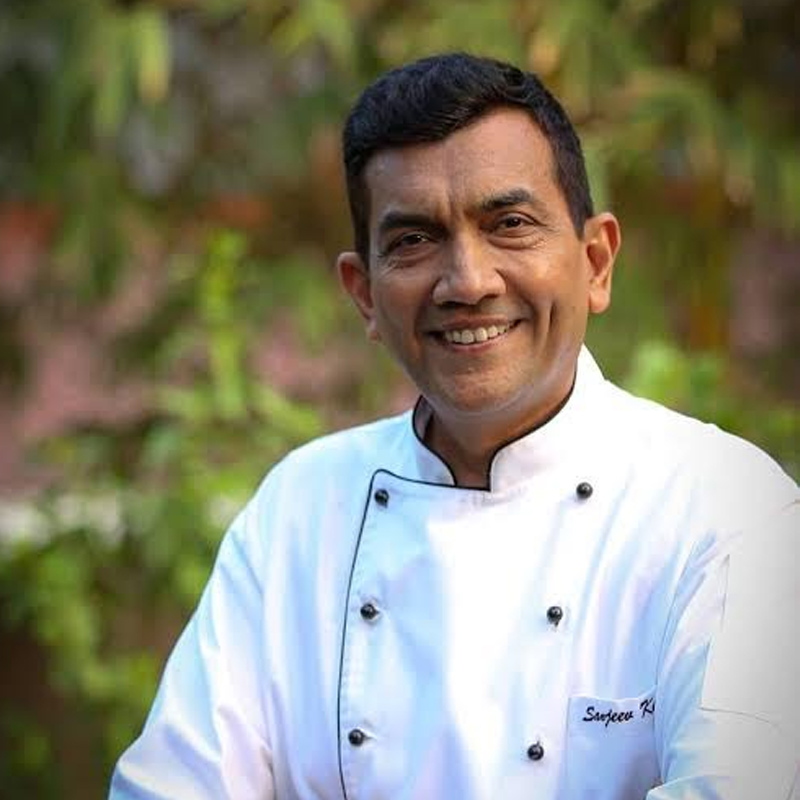
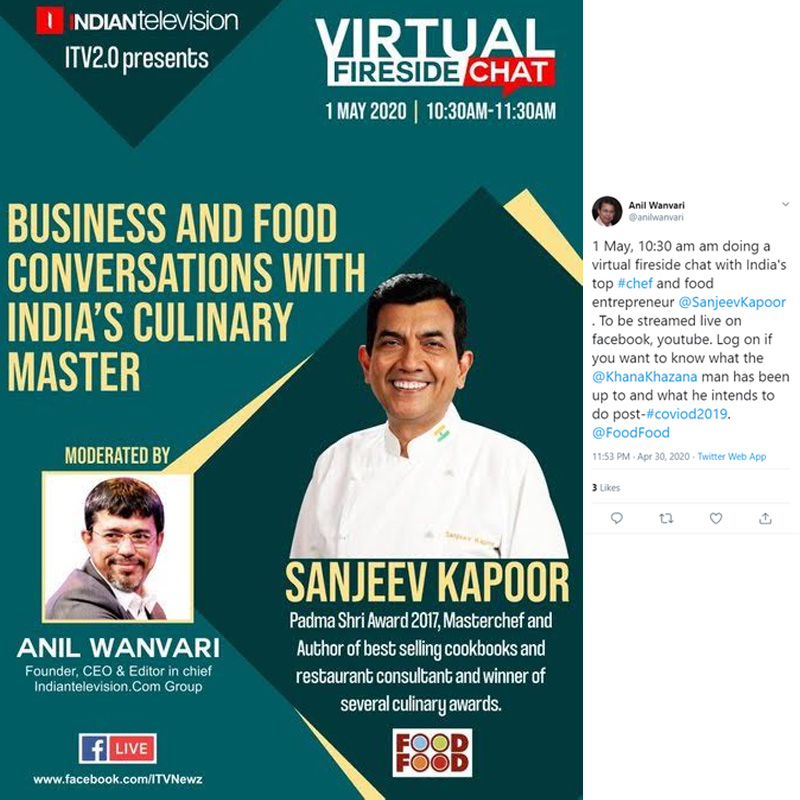
    MUMBAI: A number of brands often advertise on speciality TV channels to reach a specific target audience. But, with the lockdown, advertisers have nearly stopped ad spends on niche channels. Celebrity chef and food entrepreneur, Sanjeev Kapoor, in a virtual fireside chat with indiantelevision.com founder, CEO and editor-in-chief Anil Wanvari spoke at length about his speciality channel Food Food, his company Wonderchef and life after NTO 2.0.

    Kapoor said that in the upcoming times, speciality is going to bring more premium. It is easier to understand target audience in social media. There is more data available to provide brand and advertisers. Whereas on TV, a specialised channel is asked many questions. 

    Kapoor highlights that the premiumisation of speciality channels has already started on digital and all the creamy digital assets are being taken and TV has not understood this concept yet.

    He also gives a warning to TV channels. “I have said this three years ago that the death of TV is coming and I don’t think so it is about consumption. According to data, the consumption of content on digital assets in the last month has doubled which is not the case with TV. The CPMs are also good on YouTube which is not the case with TV. And look at how the world is still living in the old ways."

    According to Kapoor nothing has changed post NTO 2.0 whether you are a paid channel or free. No matter what, you have to pay carriage fees. He feels that if you are a smaller channel there is more arm twisting. 

    India's most-loved chef seems to be upset with the situation for his channel during lockdown. He said, "Even in the lockdown when everyone says be compassionate, there is a ticker that says Food Food channel is not available.  As far as carriage fee is concerned, I am not in that position to pay. Do you think when people want to see content on food this is how television should act? We still believe in the power of content. So, we will partner with distribution mechanisms who are fair."
    He added, "Tata Sky understands speciality. They are our partners for quite a long time. With Jio coming in I see a hope for speciality channels. But the people who think old school have not changed."

    Food Food is currently available on Tata Sky and Airtel. On the cable side it is available on Siticable, GTPL Hathway and small cable networks.

    He also felt that there is a need to change the way advertising works on TV.

    He said, “There should be a mechanism where people will feel benefited from advertising; it should not be shot in the dark. People say that a GEC channel's and a specialty channel like FOOD FOOD’s rate should be the same. That's like saying a general physician and a heart surgeon should charge the same. It doesn’t work like that. Our media has not understood this yet. I think this is the time to change, to respect each and every person and all specialties.”

    Kapoor, who runs a company named Wonderchef and is also the brand ambassador of the same company, believes in spending wisely.

    "If money cannot be converted into sales then it is money not spent well. This is my approach since the beginning.That is why I say variable cost model is important. I am ambassador for many brands. I tell them that I will not take the money if I cannot give you better sales. You can do a percentage sales with me; a royalty kind deal." 

    In the future he looks at investing in artificial intelligence, ML platforms and Google Home. "I would invest more on solutions for bringing better content and better quality in food," he concluded.

  • Restaurant industry can introspect and reinvent during Covid2019: Sanjeev Kapoor

    Restaurant industry can introspect and reinvent during Covid2019: Sanjeev Kapoor

    MUMBAI: The restaurant industry, just like any other industry in the country, has suffered huge losses since the Covid2019 outbreak. India’s culinary master and food entrepreneur, Sanjeev Kapoor, in a virtual fireside chat with indiantelevision.com founder, CEO and editor-in-chief Anil Wanvari talks about the spirit of generosity, lessons learnt during Covid2019 and his personal evolution. He also explains how the restaurant industry needs to reinvent itself in order to grow ahead.  

    Explaining about his work during the pandemic, Kapoor said, “In Mumbai we have partnered with Taj Group to distribute food to 45,000 people every day and same is the case in Delhi and Bangalore.”

    As people will not stop eating food, there is a significant growth in the consumption of digital content where audiences are looking up their favourite chefs to acquire cooking skills. Hence, Kapoor is keeping himself busy looking after his specialised channel Food Food and also creating content for his digital platforms where he is creating content and live shows with the help of his family members who have turned into sound and camera persons.
    According to Kapoor, reviving restaurants during this pandemic is very essential. Because people's need to eat is still there. What they will eat or where they eat may change. Which means that skills are still required. He added, “If you want to eat a rumali roti you cannot eat at home.You need skilled people to do that. I have been advising people in the restaurant industry to bring in new concepts, new thoughts to sustain and grow.  Also, this is the time to look at what was going wrong in the industry.”

    Kapoor is of the opinion that the fixed cost in the restaurant industry is very high. He notes businesses should look into compensation based on the work being done. They should create work that functions on a variable cost model in order to survive.

    The one positive outcome of the pandemic will be a chance for the restaurant business to refurbish itself.

    Kapoor feels that the restaurant industry will have to go in for some major modification in the coming future. When the business starts, it is important to let go of outdated business practices and develop new concepts, thoughts and more innovative ways to feed people.

    According to Kapoor, the hospitality industry is a very resilient sector, but going forward, will they change their traditional model of doing business? He said, “Meal kits are going to be the next big thing in the industry. We have already started our meal kits. I will include primary ingredients, a recipe card along with a cook along with Alexa, where you scan the QR code and the cook will guide you. It is about changing the model and creating opportunities.”

    Kapoor, who closely works with Akshay Patra, serves 18 lakh meals every day. The food is prepared at 50 large kitchens. According to Kapoor, the restaurant industry was not looking at sectors like that as an opportunity. Institutions like Akshay Patra have interns from top universities including Harvard and Stanford whereas top Indian colleges do not even go there. He thinks that a food service solution needs people who understand processes and taste.

    He says, “If today you want to eat Thai food at home and if you are vegetarian, you don’t want something with fish oil and shrimp paste. You want an Indian solution for that. There are many such opportunities in the market like I closely work with, such as pharma companies. Has anyone thought if medicine tasted good what miracles it would create? There are nutritional and functional foods which need to be healthy and tasty. So, many companies need that intervention. This is the time for specialists and there are many opportunities. We just have to keep our ears and eyes open. I have always advised people to look beyond the standard option.”

    About the options available for a corner-side restaurant, Kapoor said, “They are way better warriors than us. I know many people who are supplying food to a hospital chain. There will be two kinds of people: one who will fight and another who will wait. The ones who are fighting will survive and those who are waiting will also survive but they will need much more time.”

  • ITV conducts webinar on content production during lockdown

    ITV conducts webinar on content production during lockdown

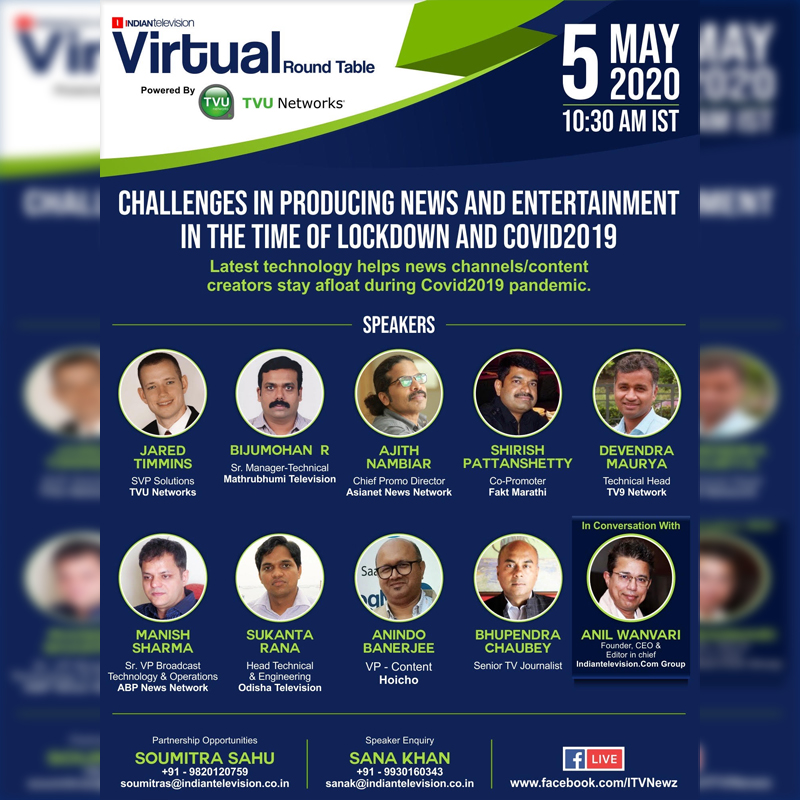
    MUMBAI: Broadcasters and OTTs are trying their best to keep the show running amid the restrictions of social distancing in the wake of the Covid2019 pandemic. In this context, indiantelevision.com  organised a webinar on 5 May, 2020 to help the fraternity to tide over the current crisis in production. The theme of the webinar was ‘Challenges in producing news and entertainment in the times of lockdown and Covid2019'.

    The webinar featured TVU Networks, a technology and market leader in IP- and cloud-based live video solutions. TVU demonstrated how remote and effective TVU technology can be used as a production tool to run news bulletin/shows from remote locations, without having to use a studio.

    The webinar enabled programme heads/CTOs to share ideas and acquire industry-leading knowledge, insights, knowhow and expertise.

    Those who attended the webinar are:

    Jared Timmins, SVP Solutions, TVU Networks,

    Devendra Maurya, technical head, TV9 Networks

    Sukanta Rana, Head technical & engineering, Odisha Television

    Hoicho VP – content Anindo Banerjee

    Ajit Nambiar, chief promo director, Asianet News Network.

    Senior TV journalist Bhupendra Chaubey

    Manish Sharma, Sr VP broadcast technology and operations, ABP News Network

    Fakt Marathi co-promoter Shirish Pattanshetty

    Bijumohan R from Mathrubhumi Television

    The session was moderated by Indian Television Group founder, CEO and editor-in-chief Anil Wanvari.  

    The Mountain View, California-headquartered TVU has been working is technology and market leader in IP- and cloud-based live video solutions. It is working with India broadcasters through its Business Continuity Initiative to help identify and offer the tools needed by customers to help sustain businesses while supporting the larger local community during this unprecedented time. As a part of this initiative, TVU is providing TV stations with the TVU Anywhere mobile app for reporting and anchoring, TVU Producer for cloud-based production and TVU Grid for video pool feeds and cross-sharing of video content for free through the end of May 2020.

    TUV associates with news stations and government offices in certain countries, including the USA, to set up video pool feeds using TVU Grid, TVU’s IP switching, routing and distribution solution, to streamline the sharing of critical information on Covid2019.

    Follow Tellychakkar for the consumer facing news & entertainment

  • Ekta Kapoor leads TV frat to make inspiring COVID-19 film

    Ekta Kapoor leads TV frat to make inspiring COVID-19 film

    MUMBAI: You have to hand it to creative czarina Ekta Kapor. If she does something, she does it in style. Like her latest effort at assuaging the ennui that some might be going through thanks to being boxed in their homes courtesy the long-drawn lockdown on account of COVID-19. She has got together more than a score of actors, a bunch of leading TV producers from the Indian Film & TV Producers Council, and put out a short film labelled Quarantine which not only educates, engages, but also entertains about how we can deal with the pandemic.

    It was sometime around the end of the first week of April that she mentioned on the IFTPC WhatsApp group that the TV industry should make a film that would be TV-centric  and that she had a concept which could be fleshed out.  The Amitabh Bachchan Covid2019 short  film  Family with several leading actors had just been released and the view was  that the TV frat should also be doing something to keep viewers entertained and positive.

    She sought volunteers from the group who would work with her to make it a reality. Almost immediately, Binaifer Kohkli, Fazila Allana (Sol India Banijay), Anil Wanvari (The Indian Telly Awards – and the indiantelevision.com group), Abhishek Rege (Endemol Shine India), JD Majethia (Hats Off Productions), Gul Khan agreed and came on  board as executive producers. (Tanushree Dasgupta came in a couple of days later as executive producer).  Dheeraj Sarna – a producer in his own right –was roped in to write the script for the short but entertaining film, with dialogues being penned by him and Anukalp Goswami.  Prolific TV music director Aashish Rego hopped on board to do the background music for the film.

    Full House Media MD Sonali Jaffar was assigned with the creative responsibility, while Guroudev Bhalla was given the task of directing the video, disclosed  actor and producer JD Majethia.

    Another Whatsapp group was formed with those who had volunteered.  “We connected on a Zoom call where the ideas were discussed,” he says. “After brainstorming and discussing with fellow producers a collective call was taken on how this video should be light hearted and yet conveying the important message of staying home. The basic premise was that the actors would simulate as if they were in the Big Boss house and not forcibly locked down in their homes and the story would take off from there.”

    He adds, “After getting the final script the next stage was the casting.  Few were mentioned in the script and few names of actors were discussed who could participate in the video. Some were available and some were not but most of them did their best to make it happen.  It was the collective effort made by the producers, actors, editor and director to shoot this video. Because technically speaking it was not easy to shoot this video on your phone. Guroudev Bhalla did a fantastic job of putting this together. He and along with other executive producers constantly coordinated with actors for every frame of the video. He coordinated with them regarding props or lighting, how their lines should be, who should say what. He coordinated with the editor Vikas Sharma.”

    Binaifer Kohli was one of the executive producers. She mentioned that Ekta Kapoor approached Sonali Jaffar to look at the creative aspect of the film. Kohli assisted Guroudev Bhalla in the direction. Kohli’s primary job was to ensure proper coordination between director, actor and the editor. According to Kohli, the actors did a phenomenal job of pulling this off. As it was not that easy to shoot just with their phone. Ensuring the proper angle and lighting. The entire shoot was done in five days as each actor was allocated different lines.

    She echoes, “Some of the actors shot the video by themselves on their phone, others took help of the family members. It had moving shots where eye level had to be maintained. Lighting was a very important aspect. Whenever the changes were required actors reshot the video there and then. They sought help from the editor on uploading it. We also changed the script according to the person.”

    Ekta Kapoor who spearheaded “Quarantine” says, “This video is an initiative of the television producers association of our country and we got all the top television actors to participate in this video, which was conceptualized over numerous conference calls! It is an effort from all of us in encouraging people to stay home. We hope this reaches far and wide.”

    The entire concept of making this video was to keep it casual, entertaining yet focusing on the importance of staying at home. Says SOL India-Banijay Group founder & MD Fazila AllanA: “In these unprecedented times it’s just nice if one can bring a smile to people’s faces and this was a small endeavour by the TV fraternity to do just that.”

    Full House Media MD Sonali Jaffar instructed the actors about their dialogues and in which manner they have to shoot. She adds, “Shooting at home was quite challenging also as a lot of prop exchanges were going on with the broom. Everyone was instructed to use a plain background as it would be difficult to match lightings. Because some were standing in the balcony some were having other backgrounds so we had to tell them to keep the same background. The other option was to use black and white background but it would have been difficult.”

    “The important thing was whenever we were shooting we shared the clips with the director there and then so that the changes could be made before editing the video. I thank all actors and producers for coming together and creating this beautiful video,” she further added.

    Adds Wanvari: “What is amazing how all of us worked as a team without shying away from whatever we  were asked to do. Even the actors immediately caught on to the idea that was shared with them by the creative director and Guroudev Bhalla. And they were also more than willing to do their bits to help Indians at home. They have all done a fantastic job, the results are for you to see.”

    According to Majethia two versions of the short film have been created, one featuring sign language for the hearing and speech impaired and one without it. He adds, “I think this is the beauty of this video. The idea I personally loved the most.”

    The video is being promoted across all social media platforms Majethia also mentions that the producers are in talks with television broadcasters to play it on national television.

    Follow Tellychakkar for the consumer facing news & entertainment

  • Shifting consumer communication strategies by brands during COVID-19

    Shifting consumer communication strategies by brands during COVID-19

    MUMBAI: The COVID-19 pandemic has created an unprecedented situation for everyone around the globe. As far as brands and marketers are concerned, they are unsure of what they should be communicating to consumers. Though there is no fixed strategy, companies are coping in different ways.

    Follow Tellychakkar for the consumer facing news & entertainment

    To seek the answers, indiantelevision.com arranged a virtual panel discussion including Timex Group India Head market Ajay Dhyani, Duroflex Mattresses India VP-marketing Smita Murarka, Mirum India joint CEO Sanjay Mehta and FBB future retail CMO Prachi Mohapatra. The panel was moderated by Indiantelevision.com CEO, founder and editor-in-chief Anil Wanvari.

    According to Mohapatra it is not a time for any brand to implement push or pull strategy but to stay relevant to its brand ideology and think from the point of view of a consumer. A lot of brands and agencies are taking help from influencers and social media to engage with consumers.

    She also mentioned that from a brand perspective this is not a space to be marketing everything. Mohapatra also believes that before becoming marketers they are consumers. “For example, from a fashion perspective, all I am going to do is keep my customers engaged. There is no push or pull going to happen from the brand," she said.

    Understanding the importance of fitness and mental health Timex group has found a perfect way to tell consumers how much the brand cares for them. It even extended the warranty period of its watches through a push notification.

    “We have one segment of watches which is focused on health and fitness. The communication slightly shifted towards communicating with our consumers, talking more about health and fitness tips. There are a large number of applications installed on the handsets of our consumer. We also have an app for registering people with quarantine. Apps were used to give push notifications to our consumers, and inform them about health and hygiene,” said Dhyani.

    Mehta said that they did not have very high exposure to some of the sectors which are more impacted like travel and hospitality. They have faced a huge loss from the revenue front.

    He added that a lot of clients have had to cut down on media spends, which is a large vertical that took a hit. Some of the conversations were around retailers choosing to pause marketing completely.

    Mehta points out that if something is going to resume it is going to be e-commerce and delivery of all products with digital enabling that change. He believes that there won't be many people mingling in the future.

    Murarka notes that before the COVID situation, there was an influx of brands, discounting and sales mechanisms. For Duroflex Mattresses, Covid 19 has been a good time to talk about what the brand stands for: sleep solutions.

    She added, “We started looking at people with an intention of what relevant communication we can make during this time. So, we stayed true to our purpose and without commercial gains. I think that is when the real hallmark of longstanding trustworthy brands happen when there is no commercial gain involved." It has also tied up with a influencers to create awareness about sleep solutions.

  • Visuals go hand-in-hand with storytelling for compelling content

    Visuals go hand-in-hand with storytelling for compelling content

    MUMBAI: It takes massive effort, time and investment but delivers great result for producing high-quality content in terms of visuals, said Travelxp’s creative director Kamakhya Narayana Singh while sharing the advantages of 4K and 8K format during the fourth edition of The Content Hub 2020 hosted by indiantelevision.com.

    Travelxp is the first Indian travel genre broadcasting channel to provide high-quality viewing experience of 4K and 8K to the viewers. It began its journey to create 4k content in 2015 and 8K in between 2016-17.

    “Two things make content great: storytelling and visual quality,” said Singh. “Storytelling is important but at the same time visuals are also important as it increases the viewing experience of the consumer.”

    From scratch to the final product, Singh points out that content creation in high-quality visual may be tiresome but the final output is beautiful and enriching. He said, “The concept of 4K is not just about increasing pixels but making the pixels, screen and viewers' experience more beautiful.”

    “Producing content is a futuristic process; we don’t produce content for one day; rather it’s done for the generations to come. And because of our futuristic approach, it took us time to understand the value of high-quality filmings such as 4K and 8K,” he said. 

    Singh said, “70 minutes of an HD shoot takes 52 gigabytes (GB) storage, whereas a 32-minute 4K shoot requires 512 GB storage. Similarly, it takes 2 hours to ingest one terabyte (TB) data, while for 4K data it takes 24 hours to ingest at the same duration.”

    “Even the last stage to get the final product takes time: 24 hours to render 30 minutes of 4K show, and 36 hours to render 8K. The time for rendering may increase subject to glitches in the first attempt'" added Singh.  

    The advantage of shooting the content in raw format and increasing the frame-per-second (FPS) from 25 to 55 gave producers a lead in visual experience. However, the major challenge they faced was storing the data they shot in high-quality like 4K and 8K as the budget increased four-fold.

    Singh said that the channel started receiving respect in the broadcasting industry because of the quality of its content (4K and 8K).

    During his 20-minute conversation with the audience, he explained how visual quality is important along with content, to give 360-degree experience to viewers. 

    The Content Hub 2020 witnessed over 900 registered delegates, more than 110 speakers and 19 partners. The two-day event saw at least 35 sessions for the content creators.

    The Content Hub’s main goal is to bring individual creators, professional storytellers, producers, streaming platforms, broadcasters and film studios under one platform to connect with a mission to broaden the knowledge pool of the content industry. “It is all about learning, networking and collaborating towards building a roadmap for a better content ecosystem,” said Indiantelevision.com group founder, chief executive officer and editor-in-chief Anil Wanvari.

  • ZEE5’s content strategy is customer-centric: Aparna Acharekar

    ZEE5’s content strategy is customer-centric: Aparna Acharekar

    MUMBAI: The core values of Zee’s digital platform are based on three Cs – compelling content, the convenience of viewing  and consumer experience, said ZEE5 programming head Aparna Acharekar while giving a presentation at the fourth edition of The Content Hub 2020 organised by indiantelevision.com.

    Explaining about the three Cs, Acharekar said, “We want to create compelling content, which can be watched as per the convenience of the audience, anywhere and eventually, that increases the viewing experience of the consumer while giving value for their money.”

    She added, “We want to ensure that a 40-minute each 10 episode-long series or 90-minute long digital film become compelling enough to binge-watch. Similarly, we give the power of convenience to consumers of what to watch, when to watch and with whom to watch the content. And the consumer experience to view content on various platforms be it subscription or advertising-based.”

    “Our main theme is being customer-centric,” said Acharekar. “We have kept the customer at the heart of everything we do, and which is exactly why, we are able to entertain the young boy in Colaba, Mumbai and a person of the same age living in Chhapra, Bihar.”

    “Relatable content that is real and resonates with the audience is going to work,” Acharekar said. She believes convenience is the basic reason we see the shift of audience towards over-the-top platforms.

    “ZEE5’s content strategy has relied on the understanding of consumers, who are divided in a huge number of content clusters,” Acharekar said post the audiovisual screening, which had glimpses of the original shows and films the platform possesses.

    “It’s important to indulge in perfect science and art while creating content – the science of making the content and the art of how you execute it,” pointed out Acharekar. “We are in the era of content creation wherein even an antagonist, who has made a star in the state, is enough to attract eyeballs.”

    The Content Hub 2020 witnessed over 900 registered delegates, more than 110 speakers and 19 partners. The two-day event saw at least 35 sessions for the content creators.

    The Content Hub’s main goal is to bring individual creators, professional storytellers, and producers, streaming platforms and broadcasters, film studios under one platform to connect with a mission to broaden the knowledge pool of the content industry. “It is all about learning, networking and collaborating towards building a roadmap for a better content ecosystem,” said Indiantelevision.com group founder, chief executive officer and editor-in-chief Anil Wanvari.