NEW DELHI: Covid-2019 pandemic has had a severe impact on the business of print publications; the initial months witnessed a complete clampdown on supply chain which consequently limited advertiser movement. However, with other industries gradually reviving and the festive season opening the door for better opportunities for advertisers across the board, it seems like a good time for the print publication industry to pull up its socks. Big brands like Amazon and Flipkart have already reclaimed the front pages to trumpet their seasonal sales, and several other categories are looking to return to the broadsheets.
There are some visible changes in advertiser behaviour across media, however – budgets have shrunk, expenses are being deferred, the plans are different from pre-Covid times. In such a scenario, it is imperative that the industry begin working with newer, sharper business models, modified offerings, and monetisation strategies.
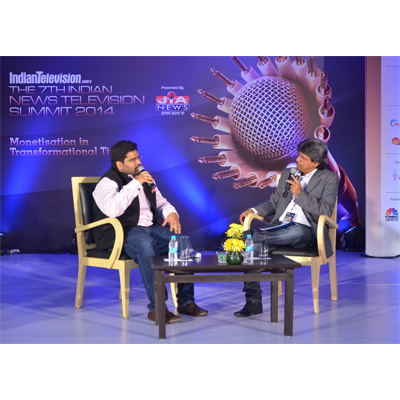
To shed light on the new rules of the ad game, Indiantelevision.com is calling in top industry players on a common platform with the print edition of its virtual roundtable “Pubnation — Monetising it Right” on 21 October 2020 at 5:00 pm.
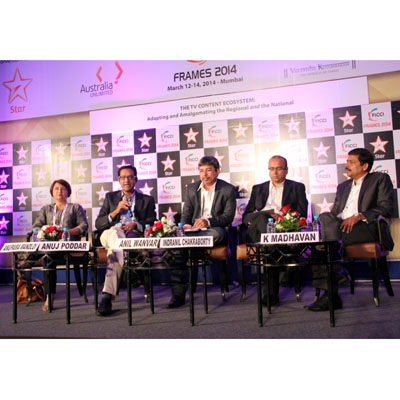
Moderated by Indiantelevision.com founder, CEO, and editor-in-chief Anil Wanvari, the panel will witness the presence of The Hindu chief revenue officer Suresh Balakrishna, Malayala Manorama VP marketing and ad sales Varghese Chandy, Punjab Kesari Group director Abhijay Chopra, Sakshi Media Group ED and CEO Vinay Maheshwari, Amar Ujala Publications president – marketing Rajiv Kental, and HT Media Ltd ED Rajeev Beotra.
The discussion will be around what monetisation trends the industry is witnessing, the early signs of revival and strategy for various markets. The panel will also delve into advertiser sentiments, agency relationships, and the role of their digital offerings in the revenue cycle.
MUMBAI: Mipcom began its virtual edition of the annual content syndication get together on 12 October. Titled Mipcom Online+, it is based on a high end artificial intelligence driven platform called Grip, developed by a sister tech firm under Relx group, of which organiser Reed Midem is a part.
The virtual exhibition has proved to be a smash hit with more than 6,000 professionals – including 800 virtual exhibitors and 26 country pavilions – and 2,200 buyers participating virtually from 100 countries.
Reed Midem was initially considering to run both digital and physical versions in Cannes like it has done for decades, but dropped the idea because of the continuing Covid2019 menace. It pivoted quickly and, over a month, attracted sizable participation – probably the most by a trading market in its online avatar in 2020.
“We are very pleased to be receiving strong support from the industry which is quite excited about meeting online in the current international environment when meeting in person from around the world is not yet possible,” said Reed Midem TV division director Laurine Garaude. “We are, of course, sad not to be meeting in Cannes for the 36th Mipcom. But we are also excited about the new Mipcom experience that we are creating online.”
Mipcom Online Plus has attracted several initiatives and partners such as Korea Country of Honour, A&E Networks, Nippon TV, Sony and Televisa.
The highlight of this year’s edition is the continued presence from the Services Export Promotion Council (SEPC) virtual pavilion, with more than 12 companies coming under its umbrella and taking advantage of the cost benefits it offers.
“Mipcom is one of the important markets we have identified to help push Indian entertainment exports,” says SEPC chairman Manek Dawar. “We wanted to be aggressive, but we will wait for next year’s edition in Cannes and really fire on all cylinders.”
SEPC has roped in content export veteran Hirachand Dand to spearhead its entertainment division. The online SEPC initiative is being headed by SEPC deputy director general Abhay Sinha.
Overall, more than 70 executives from India’s media and entertainment sector – covering TV, TV production, animation, distributors of TV shows and films, dubbing services – are taking part in Mipcom Week which is slated to end on 16 October. However, the platform will be open for screenings, virtual meetings, networking and matchmaking till 17 November.
“I am really delighted with the India presence at Mipcom Online Plus,” says India, Pakistan, Sri Lanka, Bangladesh representative Anil Wanvari. “Content syndication and trading has been at a low because of Covid2019. For many companies it is a crucial revenue stream. I am really hoping the next few days and weeks will help kickstart this engine for India’s content folks.”
MUMBAI: Live streaming technology has come a long way since its inception, and live stream viewers in India are on the rise. From conventional mainstream sports to e-sports, gaming, and online entertainment, live streaming has been used successfully in India in order to bridge the gap between new technology and traditional formats. There are about two dozen streaming services in India like Twitch, Mixer, YouTube Gaming and Hitbox, to name a few; digital subscriptions had risen by 50 per cent to Rs 3.9 billion in 2017, and are expected to hit Rs 20 billion by 2020.
Watch the session here:
During GEMS 2020, industry leaders and experts – Pocket Aces founder Anirudh Pandita, Rooter Sports Tech founder & CEO Piyush Kumar, game caster Raman Chopra and The E-sports Club co-founder Ishan Arya – discussed the future of live streaming in India.
The rise of live casting
Live streaming took off when Hotstar began streaming the IPL live in 2016. It has quickly gained ground since then, with the rise of popular game casters like Dynamo, CarryMinati, ScoutOP, and others. What started as a hobby for these YouTubers soon helped them rack up millions of followers, while also spreading the live streaming bug far and wide.
Raman Chopra started doing live streams by watching gamers on YouTube and Twitch. From being on the platform just two days a week, he started playing games every day. Initially, the gamer had a minuscule audience but it grew quickly and today, he has over 2 lakh 74 thousand followers. Just like Chopra, there are many gamers in India who have made live streaming a fully-fledged career.
With the growing popularity of live streaming, digital entertainment companies like Pocket Aces are helping streamers build their careers and make a profit. Founder Anirudh Pandita said the company has witnessed a whole new breed of content creators cropping up. For instance, there has been a marked rise in the number of game casters on YouTube in the last few years.
To cater to this segment, they’re focusing on building interactivity between gamers, streamers, and audiences through their digital streaming platform Loco. The challenges are many, but so are the rewards, and the team’s developing features and tools around it, said Pandita.
“We know talent very well; we have built some of the biggest live streams on our platform. We also know how to monetize the content, that is how we have built Pocket Aces. It was a very natural offering that we could provide to game streamers,” he further added.
Boosting viewership and scaling
In the live streaming industry, tournament organisers play a big part when it comes to promoting competitive multiplayers. E-sports platform The E-sports Club believes in building an ecosystem where gaming is conducted in a sustainable and scalable manner that is ideal for both sponsors and players.
The Esports Club co-founder Ishaan Arya highlighted that the viewership and excitement level around game casting has increased. As an e-sports organizer, Arya found out that the only way to encourage gamers to participate is by giving them real-life experiences. The company has grown from one event at a time to organising events on a daily, weekly and monthly basis.
Arya said: “The daily-weekly engagement for our content is growing massively. For instance, a campaign we did six months ago fetched us over half-a million views, and on the other hand, for another campaign that we did three weeks ago, we have already touched a million views.”
‘Live streaming next best option to real-life experience’
On similar grounds, Rooter Sports Tech is a social platform that connects sports fans and engages them during live sporting events. It launched its audio and video feature with the start of IPL and world cup matches in 2019. And for the company, the streaming business has been building up for the past 18 months.
Rooter Sports Tech founder & CEO Piyush Kumar said 2019 was a challenging year as the company was deciding to move into sports content. He focussed on building a technology that works in real-time and streaming appeared to be the best option. The reaction of fans that happens in real-time is altogether a different experience because the maximum reaction comes when the match is live.
“YouTubers and Instagrammers used to do commentary here and there to develop some audio-video content so they reached out to us. We built a set up where there are ten languages and different sets of commentators, which has now grown to 100 current commentators while the match is ongoing. It all happened with the help of UGC (User Generated Content),” he explained.
The Covid2019 pandemic led Kumar to think that the logical extension of this product would be to get into the gaming content. He pointed out that 70 to 80 per cent of content in gaming comes through streaming. He built the entire technology in the month of June, and in the last three months, it has scaled massively. The company has added 1.5 million users on its app on a monthly basis.
Monetising content: Experts debate
In Kumar’s opinion, streaming has a well-developed monetisation model. 90 per cent of the revenue made by all the key players is through monetization and the rest 10 per cent is through advertising.
“The system works by paying good publishers to create content for your platform. Firstly, we monetise through advertising which we started last year. So, we have a certain pipeline, brands and partnerships. Post this you provide them the distribution model; it could be on both apps and websites. Like Paytm and Samsung are some of your partners so we decide how to distribute them there. Eventually, take them to a level where they can monetise their content,” he said.
He went on to say that though YouTube has lots of features, it is not customized for Indian audiences.
Reports state that in the next three years, streaming will become 10 to 15 percent of revenue share of the overall gaming market. But more than monetisation, it is important to create engagement that attracts advertisers, put in Pandita.
In a similar vein, Arya said that he believes it is about giving value to sponsors who are investing money. In fact, he has increased the prize money of players by 33 per cent to motivate them.
The panellists came to a common conclusion: that e-sports and gaming is completely different from entertainment, where content could be published weekly. But when it comes to live streaming, the content needs to be created on a daily basis.
MUMBAI: Perhaps because people have been stuck in their homes due to the Covid2019 pandemic, the e-sports industry is bigger and bolder than ever before. For many gaming platforms, user engagement was at an all-time high during the lockdown and even now, the revenues are continuing to pour in.
Nodwin Gaming MD Akshat Rathee, an avid e-athlete himself has revolutionized the e-sports industry in India and has almost single-handedly expanded the company to the middle east and south Africa. In a virtual fireside chat with indiantelevision.com founder, CEO and editor-in-chief Anil Wanvari, Rathee spoke at length about e-sports in India and the international market and the challenges faced by the industry.
Online games have three key segments: casual games, e-sports, and real money games (RMG) that are basically skill-based online games played for stakes. However, Rathee said that there is no clear bifurcation between games in India, anything that is digital and has competition is termed as e-sports by people. This is not the case in the US or UK.
He also highlighted that outside India, the law is clearer on what constitutes gambling, skill-based games and real money gaming. He explained: “In terms of practical implications, an American or European customer is worth far more than the Indian one. But during the pandemic, physical events were cancelled and that impacted the value of sponsorship more in the western world.”
In India online viewership counts for a lot, said Rathee, citing PUBG live streams that millions tune into. “Even after the ban, the entire segment has grown… In the 45 days since the downfall of PUBG in India, a lot of other games have cropped up,” he observed.
According to Rathee, game publishers did really well during the Covid2019 pandemic. “New games were being discovered, games like The Fall Guy started becoming very popular. Apart from this, game casters benefited a lot but the algorithms did not favour the smaller players in the market,” he added.
Answering Wanvari’s question on how to clear the clutter and mess that has mucked up the e-sports and gaming ecosystem, Rathee opined that bringing in clear and well-defined regulatory measures is the only option.
“Having a differentiated definition of the word e-sports that is as per Indian regulation and doesn’t apply to the rest of the world will not work. E-sports is a speed competition. Just because a person has more money doesn’t mean he can play twice. The e-sports game needs to be fair as well so that everyone gets equal opportunity to win the competition,” he explained.
Rathee defined e-sports as something that has physicality of results. It is the physicality of moves and actions that is the differentiator between the results of the participants. For instance, chess.com clearly mentions that chess is not a sport but a game. He further added,
“E-sports are and need to be dependent on publishers. We are the world’s first sports category that is owned by someone from the very beginning. Owner of Kings belongs to Tencent, Bluehole owns PUBG, while Call of Duty is an Activision entity. So it is someone’s property – everything about the game, from the IP, data, rules, players and to the systems belongs to them,” he clarifies.
Rathee went on to say: “Another important thing is to understand the business of sports. The question arises – is e-sports a B2C business anywhere in the world without the publisher?” In his opinion, e-sports has always been a B2B business, for the simple reason that a sports organization is making money from sponsorship and media rights.
The gaming industry is at a watershed moment where the youth, information and technology, finance and IT ministry are actively making plans to regulate the sector. But there exists the roadblock of censorship and data privacy. The gaming industry is also stuck between the state and central government over GST issues. Rathee asserted that while the gaming industry is valued at less than Rs 10,000 crores, it’s like the goose with the golden egg for the government – precisely because it holds sway over the millennials and Gen Z, as well as the future of social media.
Rathee argued that it is not easy to remove one country from the ecosystem. China also has a regulatory body that makes it mandatory for companies to license the games.
“China is in a position to ban many e-sports and games because they run the ecosystem. China already has a regulatory body which could say that you have to license games through us without which we won’t let you do it. Due to the fragmentation of the internet, the Middle East is raising concern over their cultural sensibilities. So, it is a very thin line if you put a regulatory framework in place that can be exploitative,” he shared.
At the end, the question raised is whose interest you are working for. “It is important to have a proper regulatory body in place so that the industry grows,” he emphasised.
It is high time the industry developed a strident voice of its own, declared Rathee, because most of the world outside India often looks at mobile gaming and mobile e-sports as second-class citizens to the e-sports ecosystem.
KOLKATA: Digital piracy is nothing new. But it has registered a massive uptick as millions of people have been forced to stay cooped up in their homes because of the Covid2019 pandemic. Illegal streaming could cost the industry around $12.5 billion by 2024 and the only way to curb the threat is a concerted effort by policy makers and service providers, according to experts.
In a webinar hosted by Indiantelevision.com, panellists agreed that a 360 degree approach can help win the battle against piracy. ZEE5 India technology head Tushar Vohra, SonyLIV technology head Manish Verma, Synamedia intelligence and security operations VP Avigail Gutman participated in the discussion, which was moderated by Indiantelevision.com founder, CEO and editor-in-chief Anil Wanvari.
Gutman elaborated on how piracy from streaming platforms has come to be the most significant problem in the last five-ten years. Content is being extracted from the devices from where it is legitimately supplied, says Gutman. Along with that, another kind of copyright violation has emerged including identity theft and skimming of customer credentials. While there are many security solutions that prevent older forms of piracy, streaming is now “the lowest hanging fruit” for pirates.
Security Challenges of OTT platforms & Content Owners & how leveraging solutions can reduce piracy https://t.co/UxmRJPOqKs
With more and more people switching to digital platforms, piracy is also increasing in tandem, states SonyLIV’s Manish Verma, agreeing to the fact that the issue is ever-evolving. He explained that it started with a very simple process like deep linking of content. It went one step further when people started using proxy and VPN to stream content illegally. This gradually devolved into credential theft, identity sharing, screen mirroring and copying the content on screen.
Verma believes that the rise in content piracy has a lot to do with malpractices on social media platforms like Telegram, which allows people to share large multimedia files without supervision. The messenger app became immensely popular after the government crackdown on peer-to-peer file sharing sites, better known as torrents. While the company behind the app claims to have a zero tolerance policy on pirated content, its encryption makes it nearly impossible to find out what users are sharing.
“With content acquisition and content production costs increasing – whether it is for original content or live sports events –it is very important for us to see what all we can do to stop piracy,” he added.
ZEE5’s Vohra pointed out how they witnessed a big spike in piracy in the wake of Covid2019 crisis. As TV content dried up with the beginning of lockdown, the platform saw a huge increase in credential theft, and original content getting pirated. This is only going to increase as people have now already tasted original premium content, he warned.
“It is easy for pirate services to lure audience as they combine content from several platforms and offer it freely or for a much lower price,” Vohra said. Clearly, 360 investment from content owners, communities, governments and lawmakers is the need of the hour to tackle this challenge.
With the evolution in the nature of piracy, security solutions have also changed. Verma said that at the outset, the platform used to take basic steps earlier as the volume of traffic and impact wasn’t very high. Then they went from encrypting content, user URLs, using DRMs to blocking proxy and VPN access. Now, they’re looking at more advanced measures at different layers to make the service completely watertight against piracy.
On the other hand, ZEE5’s Vohra said that the company believes in creating a barrier. It is trying to warn pirates that ZEE5 can catch them by figuring out their IP, user id, device etc. The platform is working on a forensic watermark to be launched on the web player in October. Later, it will be launched on all applications expect for KAIOS by end of December. He is optimistic that the OTT service will be in a better position after six months.
“We were engaging with the government of India for data protection laws and we stressed content protection as one of the most important clauses that the lawmakers should take up. We are seeing good results from that engagement. We are hopeful that a new law that doubles down on copyright protection will be introduced by April,” Vohra added.
Gutman concurred that there is great need for stricter law enforcement as hackers are attacking DRMs exploiting the loopholes, legitimate CDNs, video services. As piracy becomes increasingly sophisticated, it demands equally progressive regulations to check it.
KOLKATA: Taking ahead its virtual fireside series with eminent professionals of the media and advertising industry in India, Indiantelevision.com will be hosting Eros STX Global CEO-India Pradeep Dwivedi on Friday 18 September at 11.30 am. The session will be helmed by our founder, CEO, and editor-in-chief Anil Wanvari.
Dwivedi is an industry veteran with nearly three decades of experience across media, marketing, publishing and advertising. He has worked at multiple brands and publishing houses in different capacities and played a key role in the growth. Dwivedi started his career with Eicher Motors, and went on to work with GE Capitals, Standard Chartered Bank, and American Express. His longest stint has been with Tata Tele Services which extended just a little over eight years. Post that he served with Dainik Bhaskar Group as chief corporate sales and marketing officer and later served in the capacity of chief executive officer with Sakal Group.
Eros International recently changed its corporate name to Eros STX Global Corporation recently following the completion of rare Bollywood-Hollywood merger. The opportunities are flaring up for both sides of the business – OTT and studio segment. At this crucial juncture of the business, Pradeep Dwivedi is spearheading the Indian market of the newly merged entity.
Dwivedi will be sharing his experiences of sailing through the times of pandemic, the changing landscape of the media environment, new trends and developments in the content space, merging of Bollywood and Hollywood at Eros STX Global and leadership & life lessons.
NEW DELHI: There is no denying the fact that Arnab Goswami today is one of the most successful entrepreneurs in the Indian news media space today, having taken his labour of love Republic TV Network to number 1 spot within a span of a few years of its launch. But it certainly wasn’t an easy journey for him to achieve that.
However, he learnt a great many lessons on his way to excellence. And as he takes on the next step in the trajectory towards diversifying his digital reach, he recently shared his tips for budding entrepreneurs in the new media space during a virtual fireside discussion with Indiantelevision.com founder, CEO & editor-in-chief Anil Wanvari.
Goswami pointed out that a journalist can retain his/her independence only if they are not dependent on someone else for the constant flow of money. He insisted that the money could be arranged through debt, equity, or donation.
“I will advise that one should avoid going into debt and not rely on donation. There is nothing called a free lunch. Do not accept any strategic investment if you are not sure about being able to give the investors an exit in the near future. You should ask yourself the question if you can’t give them an exit, will they be deciding your editorial content in future,” he noted.
2. Break-even
Your initial focus should be on breaking even in the initial months of the business. The most important thing for any digital business is to break even.
“The mistake that many entrepreneurs in the digital space make that they get excited with the initial rush of money but they should be very careful where they spend it. Ask yourself if you can break even in one month, and if you can’t you should not be taking away from your co-workers and essential resources. Don’t splurge on vanity,” he explained.
3. Don’t launch a content strategy based on seasonality
One must not be creating a content strategy based on seasonal issues. The same editorial angle might not work in the long run as the audience's thought process might not sustain. Therefore, a content strategy should be independent.
“You should only be answerable to viewers who have faith in you. Do not change your editorial stance based on social media commentaries. The beauty of the media lies in the very fact that the people criticising you for one story might start supporting you for others,” Goswami quipped.
NEW DELHI: With media channels multiplying and magnifying, communication agencies and departments will have a bigger role to play in the corporate structure of any organisation, a virtual panel, comprising of some of the leading communications and public relations personnel, discussing “communicating in the times of crisis and revival” with Indiantelevision.com founder, CEO, and editor-in-chief Anil Wanvari, noted.
The participants included Communicate India founder and CEO Akshara Lalwani, Spag Asia managing partner and co-founder Aman Gupta, Genesis BCW India CEO Deepshikha Dharmaraj, Piramal Group VP and group head-corporate communications and PR Dimple Kapur, Golinopinion, Mullen Lowe Lintas Group executive director Kavita Lakhani, Amazon India director public relations Minari Shah, MSL India executive director strategy and insights Parveez Modak, Weber Shandwick managing director strategy and consulting Rohan Kanchan, and Flipkart associate director corporate affair Sheetal Singh.
The panel insisted that they all are ready and prepared to mould themselves with the rapidly changing and demanding media ecosphere and Covid, in fact, has accelerated the process for them on many ends.
Answering the question on how they will be finding a balance between the paid and the earned media, as the lines have started blurring between the two, the panel noted that messaging sits at the core of all these functionalities and the right communication is going to be their focus.
Modak noted, “For us, it will always be a combination of paid and earned media. I think both of these serve different purposes. Also, content for us is media-agnostic. It will always depend on what we want to achieve with that content.”
Shah supported him sharing some examples from Amazon diaries, including their own blog, which they had started almost 4 years ago. “Last Diwali, we ran a campaign called House on Wheels, which worked fabulously for us. We also did another organic campaign for Alexa on Valentine’s Day. I want to say that we have to own this space about creating authentic content and getting closer to all the stakeholders, be it our own employees or consumers or partners.”
She added that it is no longer about earned media and paid media and the agencies will have to work towards more holistic servicing and building strong narratives for brands.
Dharmaraj pointed out that PR is not only about press relations anymore and communication transcends over media today. They have learnt to be more agile and nimble to adapt to the changing client needs and their role in the client cycle.
“But I think the first part of creating that content using technology to create some compelling content. That’s exactly what we’re going to be doing more and more of it. Also, we need to start thinking beyond the English speaking mainline business,” she added.
Kapur shared that the agencies and internal communications departments will have to work hard and evolve the way they analyse the matrix right now. “Most agencies that send out coverage reports at the end of the month, in small clippings (filed); those will perhaps have to really reinvent themselves. What will really make sense is how we are creating an impact with those coverages. What does it really mean in terms of business income? And therefore you will work with many more agencies and much more support function will actually emerge for prompts”
For Lalwani, the three things that will become more valid and important in the coming days are going to be clarity, collaboration, and communication. She insisted that macro will have to be kept in focus and not micro as there as businesses will be pointless without people. ;
But with more brands and agencies building up in house support agencies, like social media teams, will the role of corporate communications remain valid?
Gupta mentioned that they are well-positioned and well prepared to fit into every scenario that comes up.
Singh shared, “The difference between marketing and communications is that the latter’s purpose is to build corporate reputation and that will always remain. Obviously, we do play a role in driving sales too, but the main part of our function is to build brand reputation.”
Lakhani corroborated, “At the end, mediums really don’t matter. We might take them into consideration but the customer doesn’t care. The messaging is what that matters and that’s what all the brand partners need to do; come together around a problem or an opportunity and be ready to serve the best solution. Evolutions will keep on happening.”
Kanchan noted that similar questions were being asked to the industry a few years back too, but they still remained relevant and modified them to the changing needs. “Learnings have already begun now as well. Models will keep evolving and we are really far ahead on the learning curve.”
NEW DELHI: Some might revere him as one of the most prominent and successful journalists of modern times, who revamped the English News genre in India while some might be critical of his loud anchoring style and his way of handling prime time debates, but none can ignore him when he comes on screen. The favourite fodder of the meme police and the managing director and editor-in-chief of Republic Media Network, one of the top news networks in India, Arnab Goswami is nothing short of a phenomenon in himself.
As much as surrounded by controversies as much as he is liked, the journalist has a sharp stance on stories, and he doesn’t hesitate to admit that he holds his own biases too when reporting.
In recent times, he is gaining widespread attention and criticism for his coverage of Sushant Singh Rajput’s death case. To talk more about the same and his journey into the media world, how he is handling criticism, and the many allegations of being a pro-g0vernment journalist, Goswami will sit down for an exclusive virtual fireside chat with Indiantelevision.com founder CEO and editor-in-chief Anil Wanvari, tomorrow 11:30 am.
The live video will be simulcasted on Indiantelevision.com, Tellychakkar.com, and their social media handles.
Mumbai: The Disney Star India (read: Star Sports sales) team seems to have done it again: breasted the broadcast sponsorship tape for the IPL 2020 in good time, even as the Board of Control for Cricket in India (BCCI) has yet to close many of its deals.
The roster of sponsors, which was revealed in the first IPL promo look pretty healthy, clearly showing the confidence that brands have in the success of the tournament which is slated to flag off on 19 September in the Dubai International Sports Stadium in the UAE.
It’s digital first brands, as expected and predicted, that have come on board as co-presenting broadcast sponsors. This includes fantasy sports app Dream 11, online shopping major Amazon, digital payments company PhonePe, and edutech unicorn Byju’s.
Amongst the associate sponsors figure some old sports backers and some new ones: Cadbury Dairy Milk, Sunfeast, Coca-Cola, Polycab, Rummycircle, Kamla Pasand Masala and McDowell’s.
For this year, Star Sports claims to have already sold out 75 per cent of the IPL inventory. There are over 60 advertisers, including FMCG, auto, BFSI, online shopping, edutech, and other new-age brands, for spot buys, PPL shows, and features. Some of the brands in this list include Coca Cola, ITC, Mondelez, P&G, Nestle, Colgate, Britannia, GSK, and Reckitt. Star has also indicated that the number of advertisers and the amount of ad spends is higher than the usual. The network claims to have witnessed heavy demand from brands as Dream11 IPL cuts across gender and ages
The broadcaster reveals that brands from BFSI categories have shown great interest in this season of Dream11 IPL. They are seeing it as a unique combination of festive and a high impact opportunity to engage and influence consumers whose buying behaviour has been disrupted.
On the programming front, Star Sports has increased its content for pre-shows thus making more inventories available for this popular asset for brands that want to participate in this high impact property during the festive season.
IPL is the biggest live sporting event happening in the subcontinent after a hiatus of nearly five months. People are keenly awaiting the tournament to begin. It is expected that the viewership of the game will be higher as audiences have sorely missed live sports. As per BARC, currently, TV consumption is higher over pre-Covid2019 times as people are restricted to their homes. The matches, this year start at 7:30 pm and will increase audience availability by more than 20 per cent, as per BARC.
Over the years, the league has been regarded as the biggest platform reach and engagement for brands as it has continued to set viewership records across demographics year-on-year. The twelfth edition of the league witnessed 613 million viewers (consolidated + PPL + Surround). The broadcaster will continue with its focus on regional channels. IPL 2019 also saw some record-breaking numbers through women viewership. Nearly 175 million women viewers aged 15 years and above watched Vivo IPL across India between 23 March and 12 May 2019. As per the data from the broadcaster, the top 50 shows among women include cricket and IPL dominates primetime with 3.5 per cent leadership margin.