Tag: Anil Wanvari

  • In no time you would see connected TV crossing over the HD numbers or outgrowing it.

    In no time you would see connected TV crossing over the HD numbers or outgrowing it.

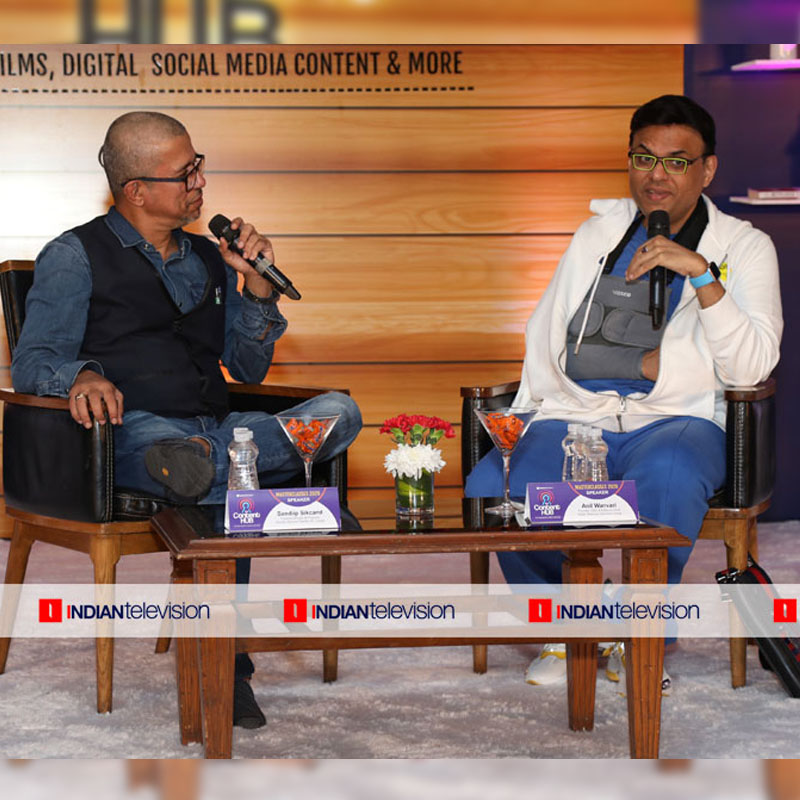
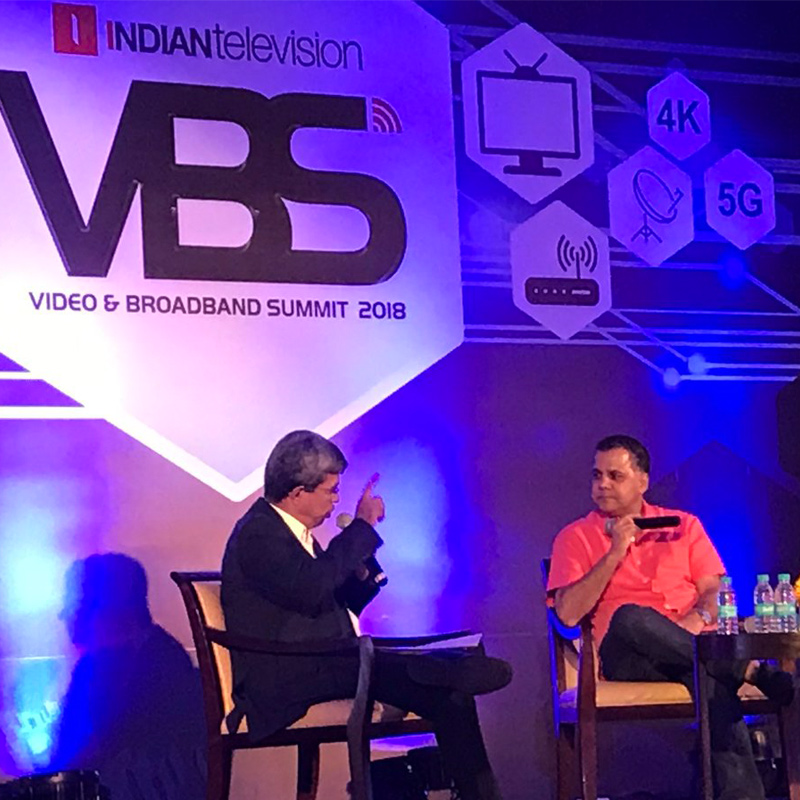
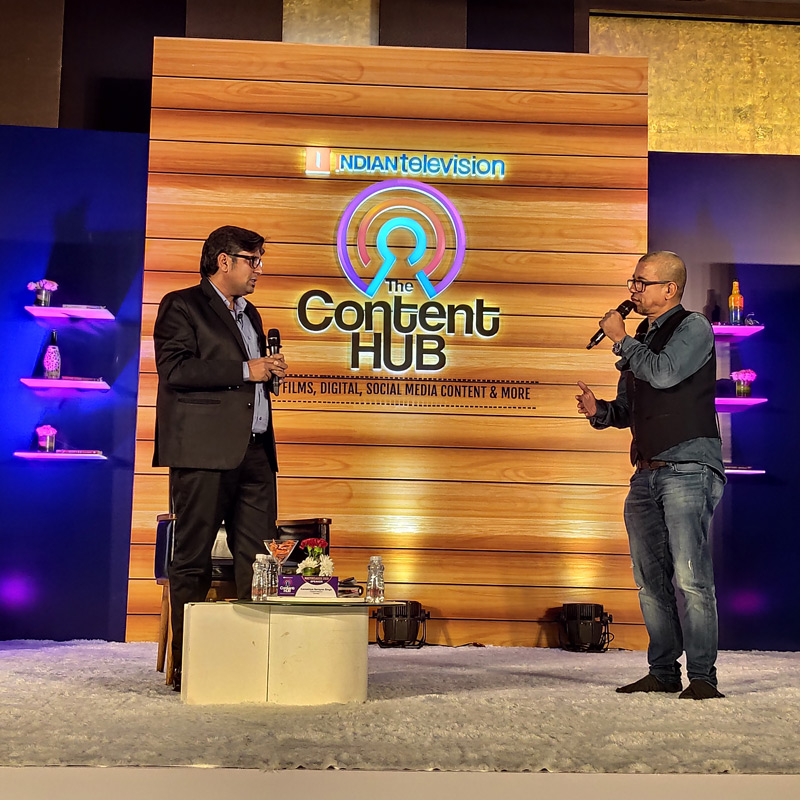
    Mumbai: Anil Wanvari in conversation with Vishal Chinchankar on Connected TV and its reach. Why advertisers and marketers are gung-ho about connected TV?

    Connected TV is the latest buzzword, why and what is so exciting about connected TVs?

    The whole ecosystem is changing with the invention of smart TVs and broadband connections are moving faster, the hardware itself is a piece of an asset as you get 4K content or HD content by itself and the beauty of it is, it is linked to broadband and you can watch it at your convenience, whether it is Netflix or Amazon in the walled garden as compared to YouTube or the other apps and other Apps. 

    In my sense this is the new kid on the block, I wouldn’t call it a kid any more, it’s a growing kid, the Complan boy and growing much faster. The adoption of this is also faster. To put things in perspective smart TV quarter-on-quarter is showing an 11% import growth and that is the kind of consumption that is happening at the end of the day. You are talking about a consumer who can afford a smart TV, afford some great content which is subscribed content and has a high broadband connection. Net, net there is a significantly large size audience which is A++ which is available for brands.

    On the reach 

    Various numbers are floating around but to my knowledge, it is 22mn households and if we go by the BARC data with a multiplier of 3.2 or 3.6, we are talking about a significantly large size of household penetration right now. A comparable may not be linear TV but HD TV which claims to be at 45 mn households, but that has stagnated and this is growing. In no time you would see connected TV crossing over the HD numbers or outgrowing it. 

    On TVs with connected devices or built-in Apps

    There are about 10 mn sticks in the market, and the usage of the stick is just 10%, it is a snack in snack out kind of phenomenon. This number is growing. The combination of these two things is helping this particular medium Connected TV to grow faster.

    Last year in the Pitch–Madison report I presented a paper on why connected TV is bigger, there is one data point, last year the whole ADEX of 80,000 Crores was equal to the amount of money invested in connected TV Universe so that is how huge connected TV is in the US and there is no reason as why India will not move in that direction.

    On hot spotting 

    Casting is picking up very fast. Jio is now launching these cables where you can cast your mobile on screen, whether it is a smart TV or that old TV with the red, yellow and white three-pin wires. It is helping the ecosystem to move faster.

    On has the penetration down the NCCA strata  

    We have done a lot of campaigns on connected TV, and a lot of inventory from Tier 2 markets, not purely a metro-centric phenomenon right now but it is surely moving into these tier 2 markets. It is not getting into tier 3 & 4 markets right now but at the pace, it is growing it should reach these markets with the help of sticks or with the help of new TV at affordable prices.

    On recommending Connected TV to your brands 

    They are because the beauty of this medium is that it addresses the top of the funnel i.e., the A++ audience I had defined earlier. Niche brands which want to target or reach out to those audiences, it is a perfect match. We have done a lot of campaigns and I think we have seen great performances in terms of measuring the VTRs or the soft measures like the pre- and post-studies we have done on that particular campaign and it showed significant growth. I am bullish about connected TV as a platform. 

    On getting the bang for the buck and how difficult it is to convince brand marketers’

    Connected TV today is neither TV, it is largely tilting towards the side of digital. It is the more digital side of inventory now because it is all about my consoles and wherever there are digital. Maybe it is tilted more towards digital and not towards Linear TV. I don’t think it is the right comparison to compare connected TV with Linear TV, because CTV is still small and Linear TV is still a reach builder. I would probably compare it with HDTV rather than just SD or linear TV.

    Are the brand managers, Marketers aware of this, in some cases, we need to educate them and tell them what the numbers look like, even when it comes to RMF for that matter for a particular audience, but more or less I think in today’s day and age most of the mature advertisers are quite aware and they have started building on the brands, though it is a long way and a pilot and then an up approach always works for most of the brand managers. 

    On the IPL and the spending on CTV and digital

    It is going to be fun to watch this IPL because both the publisher and the broadcaster are going to be very aggressive. Both have their own merits and advantages. But let us talk about the digital, earlier if I had to a comparison, Hotstar had about 50 -60 mn subscribers and there was this 5 minutes of snack in snack out consumers. But this year  Jio is streaming it free for all customers whether they are on Airtel or Vodafone. That is a big advantage for Viacom sports as a broadcaster. Having said that building on a lot of reach and efficiency for most of the brands, whoever wants to build on it respectively of the market. Viacom comes with less wastage because there is an accuracy of targeting that they are bringing to the table which is not possible on television. In certain categories, there may be a spill but works for certain categories. But here there is no spill, so you are reaching out to the right audience you want to target.

    The other point is the way it is getting marketed, with those tables, language commentary, whether it is Bhojpuri or Punjabi is an added advantage and it is going to attract a lot of audience. The best part is they are going to have shows in 100 cities, colleges, and housing complexes. There is a lot of promotion and the surrounding effect going around it, is making it much larger. 

    CTV

    I am just talking about digital as an IPL property. If I have to give you a sense of CTV I look at it this way, as per TRAI there are close to about 26.8 mn broadband subscribers in the country who are using broadband, not everybody has a Smart TV but my guesstimate is it should be around 22 – 25 mn because Jio fibre is about 7 -8 mn.  

    customer

    Airtel is also very aggressive and the packages they are coming out with are very lucrative for a customer compared to a cable connection. As a consumer, if I add up all my costs of cable plus Disney Hotstar plus the other channels it becomes very expensive. At this point, there is a shift happening and the telcos are getting aggressive in that space.

    As I said CTV is a need as an HNI I would love to watch my cricket on CTV when I am at home and when I am travelling on my smartphone. There are a lot of merits that IPL on digital is going to add this year. I think we live in this nature of advertisers who believe in reaching the frequency so they build their brand on the back of reaching one plus, and other advertisers build on high-impact properties.

    There are a lot of brands that are purely built on the back of cricket and they swear by it. Cricket gives an unparalleled reach and IPL much more. Now with 2 publishers coming in we don’t know if Star would want to add it to their FTA or how Viacom is going to promote it extensively. I don’t think there is going to be a compromise on reach or impact. The question is who gets better efficiencies and that is the game brand managers are going to look at.

    On interactivity on Connected TV, is JIO offering any for CTV 

    I don’t think there is interactivity on CTV now apart from the fact that you get to see from a different lens. The interactive engagement is going to be on mobile which hopefully most of the brands would want.

    On any other salient points 

    I think the good part is that competition is always healthier and everyone is going to work harder to make sure that they attract a lot more dollars. It is good for most advertisers and good for most consumers because the interest level in the games is going to go up. It’s a wait-and-watch now, but to the best of my knowledge, I would love to call it that this will be value for money and cricket is value for money. 

  • TCH 2022: Will the 2020s decade drive an insatiable demand for content?

    TCH 2022: Will the 2020s decade drive an insatiable demand for content?

    Mumbai: The world is undergoing a fierce transformation courtesy the pandemic, streaming services, new content forms and formats and changing work and entertainment consumption habits. The excitement and expectation are palpable amongst those in content creation and distribution – TV, film, streaming, short format, audio series, games, metaverses and what have been to serve those emerging needs.

    The transformation leads to a lot of questions such as will the 2020s see a further revolution and exploitation of the opportunities the decade offers? Or will there be a cooling off? Will Indian content follow the trajectory of the Korean Wave? And how? Will the 2020s prove to be India’s roaring twenties?

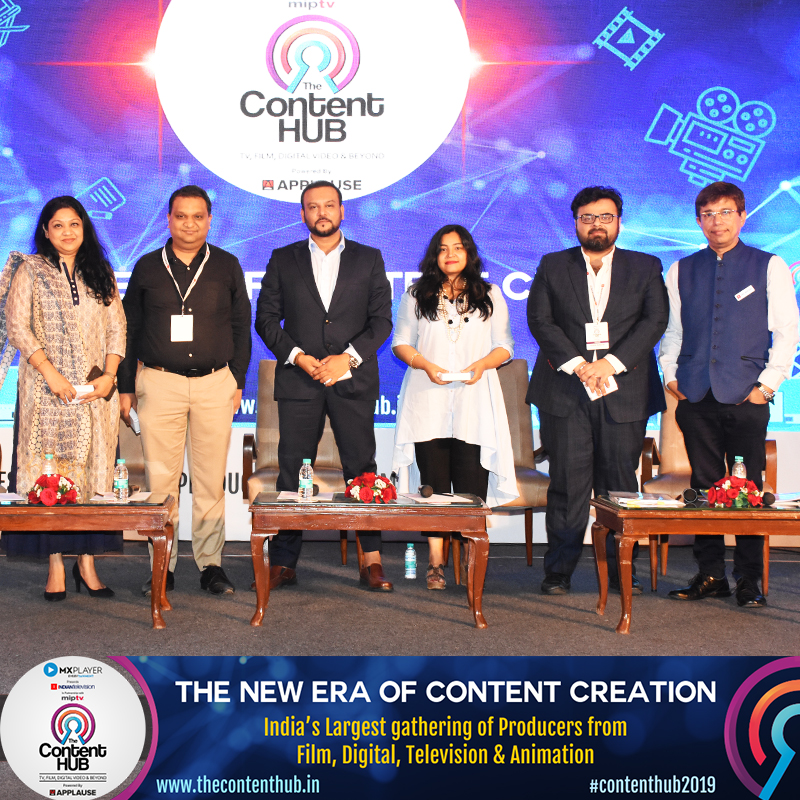
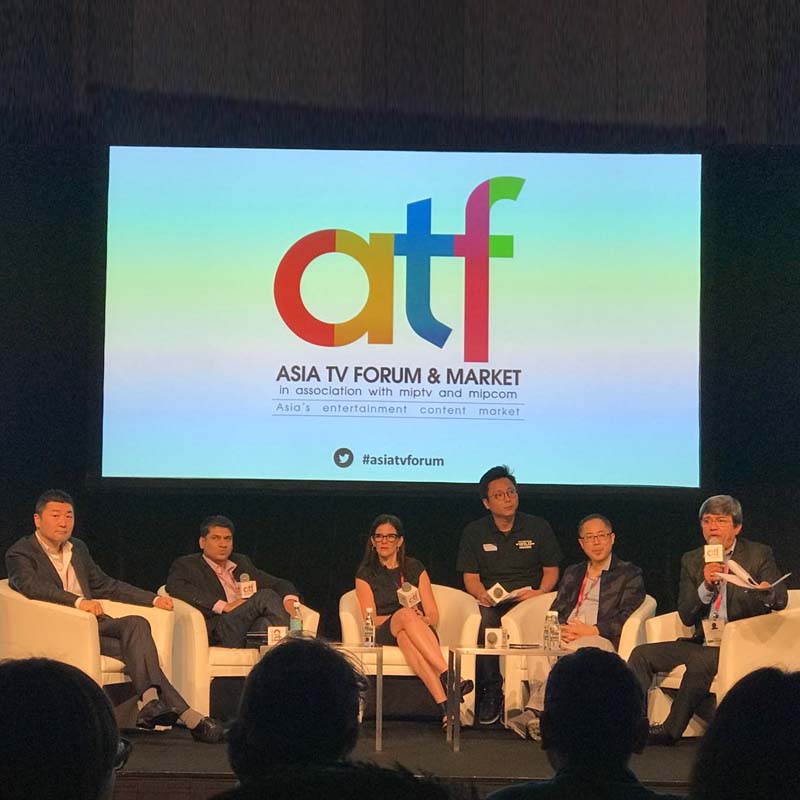
    Finding and discussing the answers to these questions, the first panel of the sixth edition of Viacom18 presents Indiantelevision.com’s The Content Hub Summit 2022 saw an insightful debate on the theme ‘The Roaring Twenties: Repeating The Successful Era Of Content Explosion.’

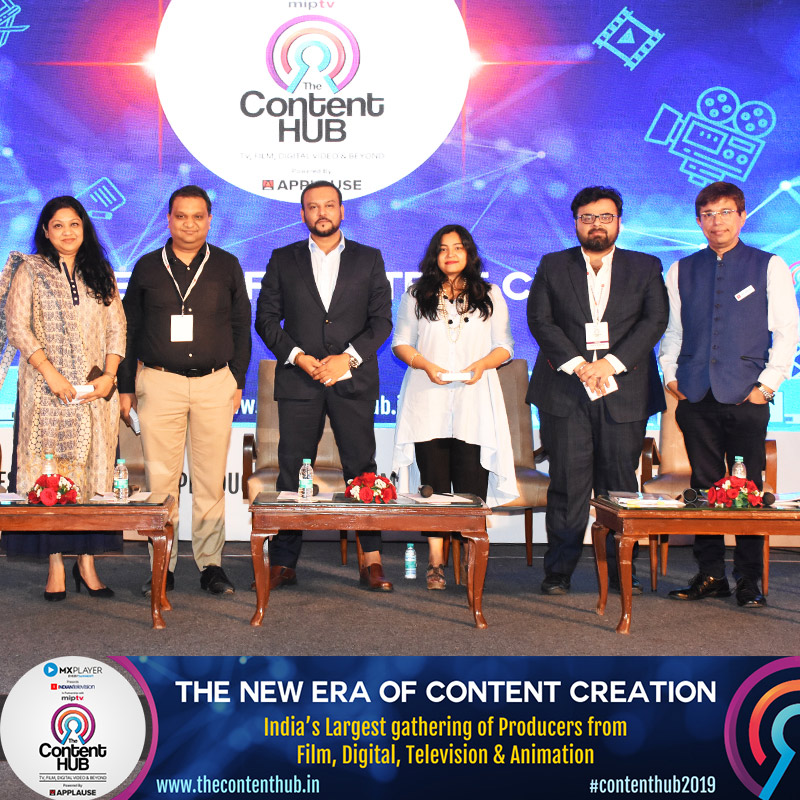
    Moderated by Indiantelevision.com Group founder & CEO, the panel included Indian screenwriter, director and producer Alankrita Shrivastava, Indian Film Director Arif Ali, Pratilipi  head, IVM Podcasts Amit Doshi, Neela Films Productions founder and managing director Asit Kumarr Modi, Balaji Motion Pictures creative producer and executive vice president Ruchikaa Kapoor and Zee Studios chief business officer Shariq Patel.

    The industry event is co-powered by Applause Entertainment and IN10 Media Network. Aaj Tak Connected Stream is the association partner. Industry partners are Fremantle India, Hill+Knowlton Strategies, One Take Media, Pratilipi, Pocket FM and The Viral Fever. The Indian Motion Pictures Producers’ Association (IMPPA) is our community partner.

    A century ago, after the global pandemic known as the Spanish flu, much of the world enjoyed a boom period, later immortalised as the ‘Roaring Twenties’.Opening the discussion, ITV founder, CEO & editor-in-chief Anil Wanvari asked the panel, “Are we about to experience another Roaring Twenties?”

     Pratilipi head, IVM Podcasts Amit Doshi said, “we’ve barely scratched the surface in terms of what exactly kinds of content we’re going to see in future.”

    “Technological transformation over the last ten years has already unleashed creativity in this country and it is going to continue,” he added.

    Further, Wanvari asked Neela Films Productions founder and managing director Asit Kumarr Modi, who has successfully run over thirty-five hundred episodes of ‘Tarak Mehta Ka Ooltah Chashma’, how he sees this remarkable show in the 2020s?

    “We started back in 2008 where technology was way behind than where we are today and we have seen it all changing over the years. Now, things are developing rapidly, it might be more challenging but we are more excited to create stories in the new age of technology,” answered Modi.

    Taking the discussion further, Zee Studios chief business officer Shariq Pate said, “pandemic has shown that all of us have this insatiable amount of content that all of us could consume and this prompted platforms to step up on investments.”

    “We can expect a roaring 2020s with huge amounts of content to be created which is definitely far more than what the existing platforms can digest at present,” he added.

    Sharing her outlook for the roaring 2020s, Balaji Motion Pictures creative producer and executive vice president Ruchikaa Kapoor said, “the big realization about this changing content landscape is that there’s an audience for every genre, however the size of the audience differs.”

    She added, “the content consumption has increased dramatically over the last three years. But as far as movies are concerned, the urgency of going to the theatres has come down drastically due to the growth of OTT.” Talking about the future, she said, “we expect exponential growth in the 2020s too.”

    Agreeing with what his co-panellists had said, Indian film director Arif Ali said, “being behind the doors for so many months during the pandemic has actually opened a lot of doors for content creators.”

    “Pre-pandemic there was more focus on making money, but now content creators want to have a legacy and it is going to lead to a thrilling 2020s,” he asserted.

    Further, highlighting the challenges that the transformation in the content space brings, screenwriter, director and producer Alankrita Shrivastava said, “today the major challenge is to go back to the core of storytelling and not get overwhelmed.”

    Watch the complete video of this insightful session here.

  • Why TV remains the preferred mode of advertising for brands

    Why TV remains the preferred mode of advertising for brands

    MUMBAI: Cord-cutting may be a thing in the west, but in India, television still rules the roost when it comes to at-home entertainment. Consequently, there’s a tremendous amount of money spent on TV content and advertising on the medium. However, the Covid2019 pandemic altered this TV-centric state of affairs; now, with changing world scenarios and consumer behaviour, we have already seen and can expect further shifts in the way viewers and advertisers interact with content on TV. 

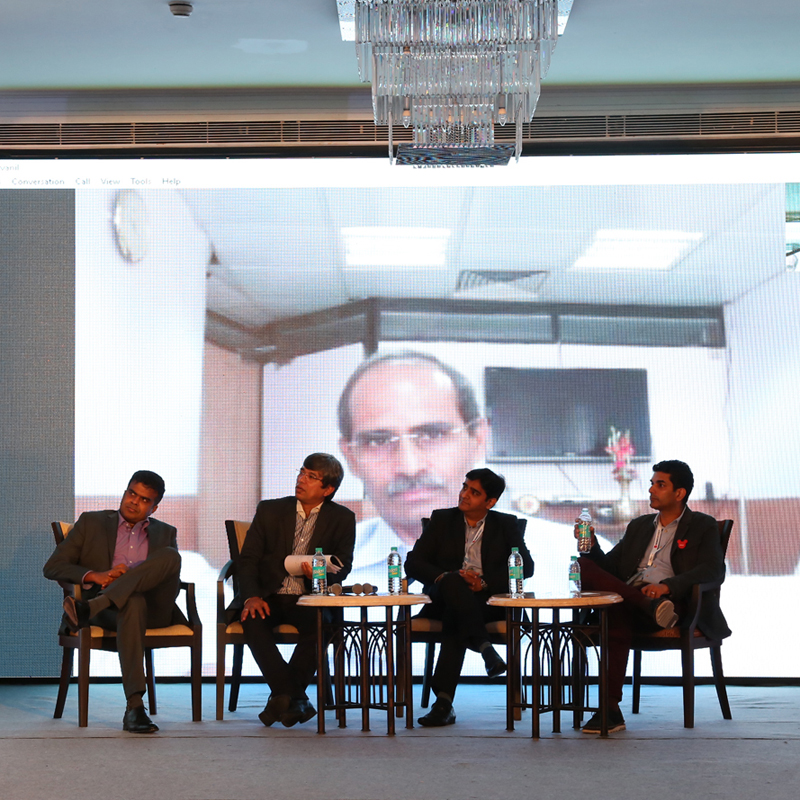
    Indiantelevision.com organised The Television Boardroom- a virtual panel discussion that explored how to fully understand TV audiences as well as the brand journey through TV today.

    The panel comprised esteemed representatives from the industry – Kotak Mahindra Bank joint president-consumer, commercial & wealth marketing Elizabeth Venkataraman, PepsiCo India head media and partnerships Om Jha, id Fresh Food chief marketing officer Rahul Gandhi, ITC chief operating officer- dairy and beverages Sanjay Singal, Maruti Suzuki India executive director – marketing and sales Shashank Srivastava and Indiantelevision.com's founder, CEO and editor-in-chief Anil Wanvari presided over the session.

    Why TV takes biggest slice of brands’ adex pie

    Maruti Suzuki’s Srivastava took the discussion ahead, sharing the company’s advertising spend – the auto-maker blows 40 per cent of its budget majorly on print, television is a close second at 30 percent and digital is at 25 per cent with the balance being split by radio, OOH and cinema.

    “We are using TV at the top end of the funnel for the reach, brand awareness and brand salience KPIs. Clearly television stands out as a huge medium of importance when it comes to these points,” he added.

    The executive director also shared how the growth in TV audience has been all-encompassing – not just in rural but also urban regions. Citing the example of how e-commerce giant Amazon was the third largest spender in advertising on TV in 2017-18 in India, he asserted that India is proving to be different from other countries when it came to the reach of television.

    Id’s Rahul Gandhi spoke about how the rhetoric question of ‘Who even watches TV?’ should be done away with because “out of the 133-crore people in India a sizeable 100 crore use TV as their primary source of entertainment still”. Thus, “there are many Indias within India with different indicators, which could come as a shock to the naysayers.”

    Also, with television reinventing itself by evolving into Smart TVs, which can be connected to the home wifi or an amazon firestick, it will continue to remain relevant to consumers and the viewership can only grow from here, was Gandhi’s opinion.

    Pepsi’s Jha agreed that “TV remains indispensable to not only consumers but also to marketers” who wish to leverage their brand’s advertising. A large part of marketing that happens in India is centred around TV, for most of the brands and product categories. Speaking about the soft drink brand, Jha said they cater to both spectrums of consumers- from the lowest socio-economic strata to the deepest pockets of our society. And television helps them to reach the last mile of this wide-ranging audience from the two ends of the spectrum. Hence the bulk of the beverage company’s spends would remain in television, he said.

    Where would a brand prefer to advertise on TV

    Recently released BARC stats have shown an upward mobility in TV viewing. The panel theorised that the pandemic seems to have increased the value consciousness of the average Indian. Jha pointed out that “if one had to communicate with 90 per cent of the audience in this country” you will have to go to a mass-heavy medium like television. And that this will only further improve with improving affluence of societies in lower GDP markets like Jharkhand, Bihar and Orissa – which presents a great opportunity for brands like Pepsi for which these are untapped markets.

    Even when it came to high value items like automobiles, Srivastava said that they still prefer television for more strategic brand building, launch and reaching even the interior vernacular regions, while print would be for tactical and lower end of the funnel. All agreed that these stats are highly encouraging, even for high value products. As, not only have the numbers but also the viewing time has spiked.

    “Which is a big vindication of the automaker’s investment of 300 crores currently in television- of which GEC takes up 100-120 crores,” Shashank shared, referring to the IPL viewership touching a high of 400 billion viewing minutes.

    Kotak’s Venkataraman made note of the unusual consumer viewing behaviour in the year gone by, which needed to be watched carefully to learn whether it sustains going ahead, as we come out of the pandemic. So while all agreed, TV viewership will be higher than 2019, but it will probably not remain at the levels that we see now.

    Perspective on TV advertising in 2021

    The jury is out on how many more covid waves the world has to contend with, before it can settle back into pre-Covid “normalcy”. It is apparent we need to learn to manage the waves, while learning to live with it without letting economic activity come to a complete standstill.

    The outlook for 2021 is more optimistic, that it will be more like 2019 rather than the previous year. Herd immunity or vaccination impact also bodes well for settling in by mid-2022. So both viewership and marketer’s spending should improve this year on, was the general opinion.

    “Projections for spending on TV adverts this year is 12 to 13 percent higher than previously,” Srivastava shared. There was overall hope and optimism from 2021 that it will not be an out and out disruptive year like the year before.

  • Audiences realise that they need to pay for quality news: Alistair McEwan

    Audiences realise that they need to pay for quality news: Alistair McEwan

    NEW DELHI: 2020 has been an interesting year for news organisations, their journey marked by various peaks and troughs. It was no different for the global news outlet BBC, too. From gaining the highest spike in audience numbers on both TV and digital format to struggling with lower ad revenues, the firm managed to clock in a rather productive year. In a recent chat with Indiantelevision.com founder, CEO, and editor-in-chief Anil Wanvari, at the recently concluded Pubnation (print & digital), BBC Global News SVP – commercial development for Asia & ANZ Alistair McEwan talked in details about the same. Edited excerpts follow: 

    On how BBC tackled the Covid2019 lockdown

    Our experience was, probably, not dissimilar to many publishers around the world, where we have been on a roller coaster. I think there is a sweet irony in the fact that we’ve never seen bigger audiences coming to our platforms, whether that’s television or digital. And that has pretty much sustained through the year. We saw about a 180 million unique visitors coming to BBC.com in March and we have just beaten the figure in November with the US elections. 

    But whilst the audience flocked to BBC in millions, advertisers who were deeply impacted by the lockdown remained cautious. So, in ordinary times, you would hope to be able to monetise that effectively but of course, at the moment, that has not been the case. 

    On how they managed to deliver to the audiences 

    We have seen massive audio and digital growth this year. For us, TV production remained a challenge with lockdown norms and 
    health hazards. Albeit, one good thing that this crisis promoted was the agility and the ability of the people to pivot into new processes. And that’s what we have exactly done at BBC. It has driven high levels of productivity. 

    For example, on the news side, we’ve been creating a lot of Covid-related content. And it is not just reporting but also solutions-oriented stories and non-news reporting. That’s where we have seen, probably, the biggest growth levels coming across all the verticals. So, from a consumer consumption perspective, we have grown immensely. 

    Read more on BBC News 

    On Indian audiences

    Indian audiences have stayed very true and loyal to us, certainly through the early stages of Covid. We saw significant growth on both television and BBC.com. We saw a 5X growth in our audience. We have 18 to 20 million unique audiences on our digital side and through our television channels. We have over 300 journalists across the BBC World Service Group, including our Delhi bureau. We prioritise our investment into India as a market – we now publish in eight different languages in India in addition to our English language output. 

    On virality and its rules

    My personal line on virality is that it's almost completely unpredictable anywhere in the world. There are so many different levellers that are variables to it but there are certain sort of formats that you can use to try to encourage it; for example, ensuring the format fits the devices, the context is right, and you are having a singular message across the products. With respect to BBC, we are globally producing world-class output that becomes highly emotive and highly shared. 

    It is much more difficult to achieve that kind of virality effect with branded content, which is why we always sort of try to pin our branded content style right back to what we do in the editorial. 

    On offerings to the advertisers

    For advertisers, we bundle and package our offerings across TV, radio and digital media. All of these have a fundamentally important part in the way you bring a holistic solution to an advertiser. And, of course, audiences exist independently in all of those different areas. So for us on the commercial side, it's really all about where the target audience is, discovering those audience insights and then being able to deliver to those custom targets across group assets and really utilising all of the data insights. 

    The media industry, so far, has not been able to drive empirical measurement of the content it produces; how the audience feels about it and how it impacts society. We are using a variety of neuroscience technology, eye-tracking, and facial decoding to be able to track emotional engagement. That's actually allowed us to measure all the different suites of platforms that we have there. 

    On taking news industry behind the paywall

    The industry has reached a tipping point and it has been a while back that we have consumer acceptance towards paying for quality news content. Take the New York Times, for instance. They have been the benchmark international news organisation in this space. They started way back in 2008 and the initial commentary was that they would struggle to survive post this move. But today, they are earning 64 per cent of their revenues from paid subscriptions. So that boat has sailed. Audiences have been conditioned to understand and accept the need to pay for quality news. We have to fund it. You can be the Guardian and ask people to fund it out of goodwill and love for the brand or whether you are requiring people to pay through a paywall; you need to figure out a sustainable way to go ahead. In India, it will take some time to evolve. 

  • Marketers want news channel viewership data to be more frequent

    Marketers want news channel viewership data to be more frequent

    NEW DELHI: The Broadcast Audience Research Council (BARC) and the representatives of the news genre have often been at loggerheads; the latter having several complaints regarding how the measurements work. From sample size to data points, everything has been a cause of concern for most of the channel owners and editors. Now, several marketers have raised another important point in the narrative, expressing how they would like the industry ratings, including the IRS ratings, to be more frequent. 

    At a recent webinar on brand safety hosted by Indiantelevision.com, presented by BBC World News and BBC.com, Future Group CMO – FBB Prachi Mohapatra pointed out that ratings remain at the basis of all the math they do to create their marketing strategies and decide their marketing pies and it would really help the cause if they are more regular. 

    “I really want to have data that I can rely on completely and not have to act on my gut feeling basis the data of the past week or the past few months,” she said. 

    PolicyBazaar head of marketing Samir Sethi also insisted that the data should be as real-time as possible so one doesn’t have to wait for the completion of a campaign to gauge its success.

    “I think all advertisers and agencies would want the data to be as frequent as possible because that will aid in instant decision making. If I know about the ratings six months later or two months later, it gets less valuable,” explained Wavemaker CEO – South Asia Ajay Gupte.

    He went on to add that TV channels could potentially lose out to digital modes of marketing, where the data can be tracked and measured practically instantaneously. “It's about having data which is relevant and which is robust and which is to the day because the channels today are also competing with Google, Facebook, YouTube, and Twitter, where the data is almost real-time.” 

    Parle Products senior category head – marketing Krishnarao S Buddha agreed that there is a dire need of a frequent matrix but he highlighted that content should also be taken into consideration to create a differentiation when it comes to picking channels to put ads on. 

    Initiative CEO Vaishali Verma, while acknowledging that there are certain brands that prefer buying news as a commodity and plan their spends basis TRP, said there are some that also see the content and its authenticity. 

    Mohapatra added that along with the individual content of the channel, another factor contributing to their marketing decisions are the fellow brands that are present on the channel. “Looking into the adjacent space helps us create a multiplier effect for the sales. Therefore, it is very important to put your brand in a space that is relevant for you and your category.” 

    However, when it comes to picking content to put ads on, Sethi emphasises that brands should be non-partisan. “If somebody believes in a certain media outlet, he is still a potential customer. Toxicity is a different thing, but when it comes to the leaning of a channel, I think businesses should not pick a side. The world has always been divided and it will continue to be. Our aim should be to be present where the customer is.” 

    The panel also discussed other hot-button issues like the need for 24-hour news channels, and how advertisers are seeing the current news media. 

  • Do we need 24-hour news channels?

    Do we need 24-hour news channels?

    NEW DELHI: The news television industry has been getting a lot of negative publicity these days, the prime reason being the inflammatory content they are airing. Not just viewers, but several advertisers and marketers have also highlighted their discontent with the journalism these channels are doing and some brands have already started pulling out their ad monies. While most people put the blame for this on the rat race for TRP and viewer interests, Parle Products Pvt Ltd senior category head – marketing Krishnarao S Buddha voiced an intriguing thought – do we really need 24-hour news channels these days?

    “I don’t think that the content degeneration on news channels happened recently. It’s been worsening for a few years now. I think the days when we had just Doordarshan, which had only three bulletins running, we had more semblance of propriety in the news content. I really want to understand whether there is a need for 24-hour news channels, from a programming perspective. If there is enough news happening across the globe that it requires multiple 24-hour news channels to cover,” he pointed out. 

    He added that this “mad requirement” of filling content slots for 24 hours has forced news channels to go overboard and serve content that is not only toxic but is also non-relevant. 

    Buddha was speaking at the recent brand safety webinar hosted by Indiantelevision.com in partnership with BBC World News and BBC.com. Other speakers on the panel – moderated by Indiantelevision.com founder, CEO, and editor-in-chief Anil Wanvari – were Wavemaker CEO – South Asia Ajay Gupte, Future Group CMO – FBB Prachi Mohapatra, BBC Global News MD India Rahul Sood, PolicyBazaar head of marketing Samir Sethi, Accenture MD supply chain, network, and sales operations Shekhar Tiwari and Initiative CEO Vaishali Verma. 

    Contrary to Buddha’s view, Gupte stated that he doesn’t feel that there is more supply than demand for news in the current scenario, and it makes complete sense from a business perspective to have multiple 24-hour news channels. 

    Said he, “At the end of everything, this is a marketplace, which functions on the basic objective of demanding profitability. To achieve that, there needs to be an equilibrium in demand and supply, so that the pricing remains fair. I believe that there is really not more supply than the demand in the market right now. This is only from the business perspective and how the market forces generally work.”

    Buddha insisted that in that case, channels really need to work on their content strategies and come up with smart fillers based on investigative journalism. 

    “There is a stark need for creating differentiators within news channels based on content. If there is virtually the same telecast happening on each channel, then there is nothing much to differentiate them,” he interjected. 

    Gupte too agreed that news has a responsibility to serve and it defines the culture and thinking of any nation. “It is definitely important for networks to ensure that the content is right. It will create a better market too, in terms of delivery. People will then have the option to consume the content that suits them better. I would leave it to the channels to decide the content.”  

    Tiwari added that channels need to have the right strategy, the right talent, and the right investors to ensure great content. “There is a need for a good 24X7 independent news channel that covers current affairs, sports, entertainment, and everything else. Then we will have better content provided. It shouldn’t be working under the pressure of its investors or a government for that matter.”

    The panel highlighted several important factors that are contributing to the erosion of faith in news channels by advertisers and marketers. Vaishali Verma also highlighted that three out of ten clients of her agency have already said no to advertising on news channels, and the industry is in dire need of a course correction. 

  • ‘3 out of 10 brands are saying no to advertising on news channels’

    ‘3 out of 10 brands are saying no to advertising on news channels’

    NEW DELHI: News channels have always been a big part of the media mix for any advertiser; they enjoy a sizeable share of eyeballs and have been known as a brand-safe space to be present on. However, in the past few months, advertisers have become gravely concerned by the controversies around news content, as well as the TRP manipulation scandal that has come to the fore. The existing news space, especially on TV, has called for a strong inspection on advertisers’ part, and a few of them have already pulled out ad money from some channels.

    In a recently concluded Indiantelevision.com webinar called “Is Your Brand Truly Safe: Decoding The Right Brand Equity With The Power Of Trust” — powered by BBC World News and BBC.com, and moderated by Indiantelevision.com founder, CEO, and editor-in-chief Anil Wanvari – leading marketers and advertisers unanimously agreed that their faith in news television has eroded to a great extent.

    Sitting in the panel were Wavemaker CEO – South Asia Ajay Gupte, Parle Products Pvt Ltd senior category head – marketing Krishnarao S Buddha, Future Group CMO – FBB Prachi Mohapatra, BBC Global News MD India Rahul Sood, PolicyBazaar head of marketing Samir Sethi, Accenture MD supply chain, network, and sales operations Shekhar Tiwari and Initiative CEO Vaishali Verma.

    Verma claimed that three out of every ten clients of hers has already said no to advertising on news channels.

    “As a consumer of news, I can say that the content has been sensationalised, there is no investigative journalism left, and as a result, we are seeing brands taking a different route when it comes to their media mixes. There definitely has been a loss of credibility,” she said.

    Tiwari noted that news is not news if one needs to go and validate it, but today the consumers are forced to do that. This has resulted in the lack of credibility that advertisers are also taking into account.

    Sood added that the environment around news television has been such of late that he can no longer proudly flaunt his association with the industry. “This says a lot about the state of media right now.”

    Buddha, whose Parle products will no longer advertise on some of the top news channels in the country, said, “News channels are going overboard, the content is toxic and the news they show is really not relevant. I do not want my brand to be seen with the content that these channels are peddling.”

    Earlier, news channels used to be a big part of their media mix given the credible and brand-safe environment that they created, shared Mohapatra. “The two core factors for us have been the viewership the news genre generates and the credibility it has, but if that is being compromised, we will definitely rethink our media mix.”

    However, not all brands are wary of their presence on any form of content, be it good or bad, in news media.

    Verma highlighted that every brand has its own lakshman rekha (boundary) that it follows. “Some brands have taken out their ad monies and that was absolutely right on their part. Some are still continuing to advertise and it is only because the medium is still relevant to them. They have their audience consuming that content.”

    Gupte, in the same vein, reflected that each news channel serves the content that their audience likes viewing. “It is delivering what is being consumed. And if there is a collective movement where people dismiss this kind of content and stop viewing it, the viewership will go down and it makes sense from a business perspective.”

    PolicyBazaar’s Sethi agreed and pointed out that news is a competitive genre and there is significant advertising demand there. “For a product category like ours where primary customers are male, we get that reach from news channels.”

    However, he added that news channels cannot shy away from their responsibilities of being a credible and trustworthy source of valid information.

    But could the continued association with ‘problematic’ news content impact the brand equity at large?

    The panel agreed that it has a long-lasting impact on any brand’s image and equity as customers are more sensitive and sensible these days. At the same time, it also depends on the level of association the advertiser has with the channel or a particular piece of content.

    Gupte stated, “The impact on brand equity hugely depends on the level of association. For example, it’s more difficult on platforms like YouTube where a single advertiser might be visible on the whole duration of the content. Also, it depends on the brand too.”

    Sethi added, “Obviously a sponsor is much more deeply associated with the content than someone who is doing vanilla spot advertising with maybe 20 other brands.”

  • 22nd DigiCon6 Asia awards: India’s Neeraja Raj bags Asia silver

    22nd DigiCon6 Asia awards: India’s Neeraja Raj bags Asia silver

    MUMBAI: At the 22nd DigiCon6 Asia Awards, which recognises and rewards talented creators throughout the region, India’s Neeraja Raj bagged Asia silver for her submission – Meow or Never – in the category of best animated technique. 

    Meow or Never is a nine-minute-long animated comedy short. It tells the story in a madcap musical, where a catstronaut travels the galaxy looking for the meaning of life, but when she encounters a space pup eager to help, it only gets them into trouble at every turn. 

    AnimationXpress is the India partner of Digicon. Ecstatic about Raj’s achievement, Indiantelevision.com group founder, CEO & editor-in-chief Anil Wanvari said, “We, at AnimationXpress.com which is part of the Indiantelevision.com group and is the Indian partner of Digicon, are delighted that 26-year-old Neeraja Raj's Meow or Never got awarded a silver for best technique. She is a young emerging talent who managed to best many other Asian professionals who are very much senior to her."

    Sponsored by Japan’s TBS broadcast network, the awards ceremony was held on Saturday, 28 November at the Marunouchi Building Hall in Tokyo. With this year’s new participants, Laos and Mongolia, the number of members has increased to 16. Due to the Covid2019 outbreak, this year the regional award winners participated online and the award ceremony was broadcast live. The awarded trophies were drawn in CG and broadcasts made from six points in Asia. Care in the production was taken to make the event enjoyable for all the Asian participants. Hong Kong's work Dragon's Delusion: Preface by Kong Kee (43) was selected for the top grand prize from among the works of the 16 regions. 

    Dragon's Delusion: Preface is an animated work that depicts the world where cyborgs and androids coexist with humans, as the ambitious Qin Shi Huang works on the development of secret technologies that enable immortality by combining humans and machines.

    The DigiCon6 Asia awards encourages outstanding content creators and promotes mutual understanding. The film contest has been held annually by TBS since 2000 for this purpose. It is open to both professionals and amateurs of all ages. There are no restrictions as long as the films are works within 15 minutes. Winners are chosen after a strict screening. In 2006 the festival was expanded to include other areas in Asia. This yearʼs participants are Cambodia, China, Hong Kong, India, Indonesia, Laos, Malaysia, Mongolia, Korea, Singapore, Sri Lanka, Taiwan, Thailand, Uzbekistan, Vietnam and Japan. Creators from DigiCon6 are active in various content production sites throughout Asia.

    Here is the 22nd DigiCon6 ASIA Awards winners list :-


  • Indiantelevision.com strives to decode brand safety in association with BBC World News

    Indiantelevision.com strives to decode brand safety in association with BBC World News

    NEW DELHI: Brand safety has emerged as a serious concern for the advertising industry, especially in the past few months, with content on television and web getting more controversial. From racist, misogynist, to inflammatory communal content, various publishers and broadcasters are facing flak from viewers and advertisers alike. In recent days, we also heard about several advertisers taking their money out of many news channels. 

    This has sparked a great deal of conversation, within all stakeholders involved, on how a trustworthy environment can be created for the advertisers and ensure them positive brand equity. From content operations to weighing in what other advertisers are present in the realm, everything is garnering a closer look. 

    To shed light onto the same and discuss the way ahead with leading advertisers and agencies, Indiantelevision.com, in association with BBC World News and BBC.com, will be hosting a webinar titled “Is Your Brand Truly Safe: Decoding The Right Brand Equity With The Power of Trust” on Wednesday, 2 December 2020 at 11:30 am. 

    The panel will include worthies like: Wavemaker CEO – South Asia Ajay Gupte, Parle Products Pvt Ltd senior category head- marketing Krishnarao S. Buddha, Future Group India CMO – FBB Prachi Mohapatra, BBC Global News MD Rahul Sood, Accenture director – supply chain, network and sales operations Shekhar Tiwari, and Initiative CEO Vaishali Verma. The panel will be moderated by Indiantelevision.com founder, CEO, and editor-in-chief Anil Wanvari. 

    Register now at https://lnkd.in/eyWJ8Bk 

  • Indian news industry needs mid-course correction: Zee News’ Sudhir Chaudhary

    Indian news industry needs mid-course correction: Zee News’ Sudhir Chaudhary

    NEW DELHI:, Zee News CEO and editor-in-chief Sudhir Chaudhary expressed his discontent towards BARC ratings and the news channels flaunting them on a weekly basis during a virtual fireside chat with Indiantelevision.com founder, CEO, and editor-in-chief Anil Wanvari on the concluding day of News Television Awards Summit 2020. 

    “I think the main problem with BARC ratings is that the sample size is so small. Statistically speaking, we are a 32,000 crore industry and BARC has its meter in just 44,000 homes. As we traditionally say that of the overall sample size only 10 per cent watch news, we are left with just 4,400 boxes, which is very less for a huge market like India,” he elaborated. 

    He added that it is probably the reason why the Indian news industry is failing to grow and getting monotonous in its programming too. 

    Read more about Zee News 

    “You see each GEC has a different programming structure, each channel has a distinct identity. Similar is the case with every other genre, be it kids or sports. But in news, you see all the news channels have a similar programming line-up. They have a bank of 10-20 similar issues that they cover. BARC ratings confuse the editors so much that sometimes I question if an editor is really the editor or a producer, and for that matter, if the anchors are really actors,” Chaudhary commented. 

    The Daily News and Analysis host also blasted the news channels that flash BARC data every Thursday in a bid to lure advertisers and viewers. “As per BARC Guidelines, no channel is allowed to declare themselves number one based on only a week’s data. One needs to have at least four weeks of data to call themselves number one. But which channel is following this guideline? BARC data was never meant for the audience but the news channels are using that to influence them.”

    He further stated that to move past this, advertisers will themselves have to make their own investments in time, efforts, and technology. “I agree that no single technology will be acceptable to everyone. We may start using some tools for measurement but my clients or advertisers might not agree to that. Therefore, it is important to agree on a uniform tech tool for measurement.”

    Chaudhary emphasised that the whole news industry needs a mid-course correction otherwise the audience will start taking news channels as entertainment channels. 

    On being asked by Wanvari if the break on TRP ratings of news channels implemented by BARC in the wake of the recent TRP manipulation scam will change the industry, Chaudhary replied, “If I look at my own experience, I still feel nothing is going to change. But as an optimistic person, we are trying to change the programming of our own channels.”

    He continued, “When this break was announced, I told my teams that this is a constructive window of three months and we can use that to our advantage. I also asked my viewers what sort of content they want to see from us and got thousands of responses. The top suggestions we got were news on employment, education, healthcare, and local heroes. So, as an experiment, we have already started a special programme that talks all about job opportunities, hiring, skill development, etc.” 

    Chaudhary went on to reveal that Zee News earned a 100 per cent increase in its digital audience during the Covid-2019 period.

    “I cannot clearly talk about the numbers on the broadcast side because there is not much clarity but we have seen a hundred per cent spike on our digital platforms. Even if we come down from here (in post-pandemic times), we will still retain 70-80 per cent of our new audience,” he said.

    But what the news space needs the most right now is good, solid editorialised content, insisted Chaudhary. News channels really need to buck up when it comes to creating valuable news content, and establish their own distinct identity.