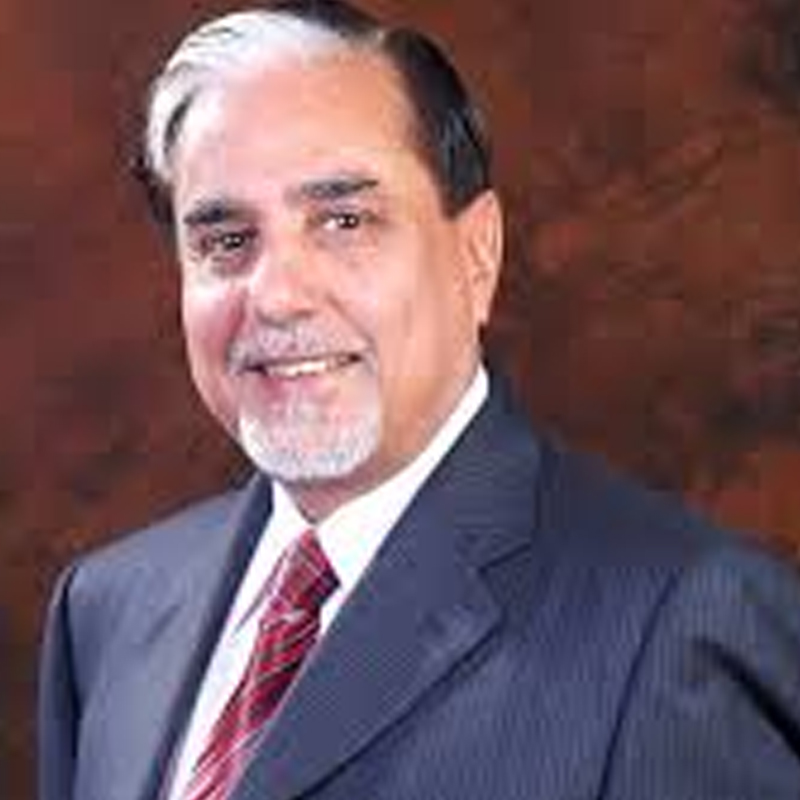
Tag: Anil Wanvari

  • Government not forcing regulator on broadcast media: Swarup

        
    NEW DELHI: Ministry for information and broadcasting secretary Asha Swarup today reiterated the fact that the government had no intention of forcing checks on broadcasters in the country and that the aim of the Broadcast Regulatory Authority Bill (BRAI) was only to set up an independent regulator.

    She also denied reports that there was any proposal under the proposed Bill or Content Code to bar television channels from conducting sting operations. However, the aim was to ensure that there was no violation of the right of privacy of any individual, as had been seen in some sting operations.

    Swarup was delivering the keynote address at the Indian News Television Summit organised by Indiantelevision.com in the capital. The day-long meet culminating with the NT (News Television) Awards in the evening has been endorsed by the ministry.

    The secretary expressed optimism that the Broadcast Bill would be introduced in Parliament during the monsoon session. She said incorrect reports about the Bill in the media only resulted in more delays in finalizing the draft of the legislation.

    She said in reply to a question that the public service broadcaster Prasar Bharati would also be brought under the ambit of the Bill.

    Both the legislation and the Code were being drawn up keeping in view the sensitivities of the Indian viewer, she said. It was therefore in the interest of the industry that there should be a Bill and a Regulator who is independent and impartial.

    She urged private news channels to share the duty of the public service broadcaster by showing some public service programming. There was need for more positive stories which could motivate people. 

    She noted that there were almost 90 to 100 news channels in the country if one counted all regional channels and those that have news bulletins. There had been an annual growth of 18 per cent in the television industry. But all this gave rise to the basic question – what kind of news do Indians deserve?

    She also said that while there was need for news channels to show care and sensitivity while presenting news, she said accuracy and impartiality should also not be given a go-by. She said that there was also need to help in the maintenance of public order. Repetitive telecasts of old clips of violence only sent out wrong messages. 

    Answering a question after her presentation, she said that the Content Code was being shown to representatives of associations of various stakeholders on 20 July and would then be finalised for being put on the ministry site mib.nic.in for eliciting the views of people.

    Earlier, Indiantelevision.com CEO and editor-in-chief Anil Wanvari said that the future of the television industry was very bright with more entrepreneurs getting into the industry, both in India and overseas. He announced that indiantelevision.com would be organizing a Digital Summit in October.

    Indiantelevision.com editorial director Thomas Abraham said in a presentation that news channels had earned Rs 9.8 billion as revenue from advertisements during 2006-07. He said that this was expected to go up to Rs 12.5 billion this year. India today had 116 million television homes of which 75 million were connected to cable and satellite.

    Asking if the news broadcasters were being able to reach out to specific genres and segments, he observed that news has to be more interactive and has to find ways to reach out to all communities.

    In a presentation giving the Citizen’s Voice, ICICI Bank executive director V Vaidyanathan said that a total of 51.9 million mobiles were being added every year and one in every Indian today owned a personal computer. And now people were taking to web phones. Growth was no longer an option, it just had to happen. He said that communication methodologies were changing both for the urban and the rural Indian.

  • Stage set for the sixth ‘Indian Telly Awards’

    Stage set for the sixth ‘Indian Telly Awards’

    NEW DELHI: The stage is set for the sixth edition of the Indian Telly Awards, the oldest and most credible annual celebration of creative excellence in the Indian television industry.

    The glittering ceremony, host to the who’s who of the Indian television firmament, will be held tomorrow at the Chitrakut Grounds in Mumbai’s western suburb of Andheri.

    The brainchild of indiantelevision.com founder Anil Wanvari , the awards celebrate excellence and are given out to the best performances, programmes and various other important categories which determine talent in the television industry during the year.

    Labeled as the Oscars of the Indian television industry, the Emmys of India – the sixth Indian Telly Awards are this time going to honour winners who have been nominated in more than 30 popular categories.

    Various TV celebs have been roped in to render performances on the night of the event. To name just a few, TV actor Sangeeta Ghosh would be delivering an inaugural performance and the team of the TV show Left Right Left would also be presenting an act.

    Akashdeep Saigal (Ansh of Kyunki…) and Ejaz Khan (Kavya of Kavyanjali) are all set to keep the audiences wanting for more with their dance performances and Naveen Prabhakar of The Great Indian Laughter Challenge fame will keep the audience rolling with his completely new and never seen before comedy act.

    Nominees of the top three popular categories are:

    – Best Television Personality:
    Javed Jaferi
    Rajdeep Sardesai
    Navjot Singh Sidhu
    Ram Kapoor
    Ronit Roy

    – Best Actor (Male)
    Rajeev Khandelwal – Left Right Left
    Eijaz Khan – KKavyanjali
    Ronit Roy – Kasautii Zindagii Kay
    Shakti Anand – Ek Ladki Anjaani Si
    Ram Kapoor – Kasamh Se …
    Arvind Rathod – Thodi Khushi Thode Gham
    Hussain Kuwajerwala – Kumkum.. Pyara Sa Bandhan
    Pawan Shankar – Siddhanth

    – Best Actor (Female)
    Sangeeta Ghosh – Viraasat
    Aamna Sharif – Kahiin To Hoga
    Anita Hansnandani – Kkavyanjali
    Saakshi Tanwar – Kahaani Ghar Ghar Kii
    Smriti Irani – Kyunki Saas Bhi Kabhi Bahu Thi
    Shweta Tiwari – Kasautii Zindagii Kay
    Kanchi Kaul – Ek Ladki Anjaani Si
    Sarita Joshi – Baa Bahoo Aur Baby

    The entire list of the nominees is available at www.indiantellyawards.com.

  • Regional television struggles to find its voice

    Regional television struggles to find its voice

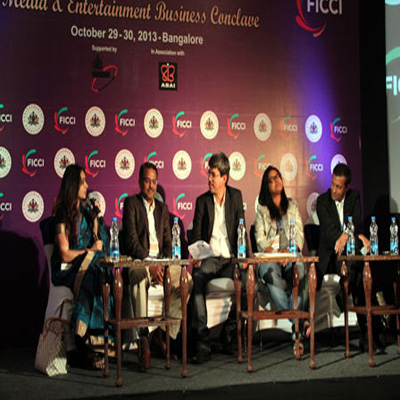
    BENGALURU: What good would a FICCI MEBC event be in Bengaluru without a discussion on the current status of regional TV, ratings, content and formats? The session moderated by indiantelevision.com CEO and editor in chief Anil Wanvari saw four personalities – TAM CEO L V Krishnan, Asianet and Star Suvarna Business Head Anup Chandrashekaran, TV serials director Shruthi Naidu and actress Malavika Avinash – talk about the evolving genres in the south TV market and the tussle that that the industry has with the TAM ratings.


    According to the FICCI Deloitte report, the south Indian TV industry was valued at Rs 13, 470 crore in FY 2013 and is set to grow at an estimated CAGR of 20 per cent over the next four years. TAMs Krishnan added that it also accounts for 20 per cent of national viewership. To top it all, south Indian viewers are glued to their TV sets almost 30 per cent more than their northern cousins. The former spend 150-200 minutes a day watching soaps, series, movies, drama and non-fiction as compared to HSM viewers who spend 100-110 minutes disclosed Krishnan.


    Kannada TV is in a strange predicament and its viewership is eroded because of the fact that the state shares its borders with others such as Tamil Nadu, Andhra Pradesh, Kerala and Maharashtra which means viewers in these regions watch TV shows in the languages prevalent in those states. To make matters worse, only 35-40 per cent of Bengalurus populace speaks Kannada. This despite, Krishnan is optimistic that Kannada TV will do well. It has grown by 25 to 30 per cent in the last five years in terms of engagement and the next four years will see the viewership increase by 20 to 25 per cent, he says.


    Chandrashekaran said that the south TV industry is experiencing changing consumption patterns. Fiction consumption is growing here as compared to HSM where non-fiction is taking over, he said. There has been de-growth of film consumption in the states of Karnataka, Andhra Pradesh and Kerala. Movies are unviable on TV today everywhere else except in Tamil Nadu, he said. We pay Rs 2.5 crore to acquire a title; but we spend around Rs 70,000 to Rs 80,000 an episode for fiction and we get the same or better viewership. Then, big ticket formats are also slowly spreading such as the Kannada and Tamil versions of KBC, he added. Then ETV produced Bigg Boss in Telugu and Kannada.


    Both Avinash and Naidu bemoaned the fact that budget restrictions in Kannada have led to creativity and innovation being stifled in the region. The protagonists in most shows are becoming younger – in their late teens or early twenties, which leaves limited scope for actors like us who have been around for 15 years, wailed Avinash. She, however, added that her Oprah Winfrey-like conflict resolution show has given her a good platform for her to exploit her creativity.


    Chandrashekaran said that the younger protagonist strategy is being resorted to because broadcasters are trying to draw in younger audiences – apart from the plus 45 year olds – to watch television. Krishnan pointed out that the broadcasters strategy is on the button as TAM Media research has shown that boys 14 and above tend to follow what their fathers are watching, mainly sports while girls follow their mothers and watch serials.


    Chandrashekaran said the economics of programming dictate that higher budgets for shows will work in a broadcast network scheme. If we can produce and amortise our costs over various languages like Tamil, Telugu, Malayalam and Kannada it will make our shows viable, he explained.


    Naidu agonised over the fact that Kannada broadcasters are increasingly resorting to making adaptations of successful Hindi shows rather than encouraging and experimenting with original stories from Karnataka. Chandrashekaran said that this was happening because there is a paucity of scriptwriters in the region and the novelists and literature writers from the state tend to look down on TV as below their creative dignity. We do a lot of interactions with our viewers and we only focus on filling whatever our focus group studies throw up as viewing need-gap. Avinash pointed out that emotion and drama work very well with TV audiences which is why adaptations of Hindi shows in the form of soap, drama and series are working on regional television.


    The topic also shifted to the credibility of TAM with her asking whether TAM data is rigged due to inconsistent ratings as compared to the popularity and visibility of shows. To this, Krishnan said that they have checks and balances in place to prevent any penetration or doctoring of the data. Yes, I am honest enough to say, one can reach out to our people meter sample, but we have policing mechanisms in place which will immediately penalise anyone who is trying to do that, he emphasised.


    Niche genres are missing in the south with most of the channels being GECs or film channels. But Chandrashekharan says that the potential to harvest niche genres is there.


    With the 10+2 ad cap coming in, we will see a lot of advertiser funded programs (AFPs) specially in Tamil Nadu because its base is huge, he said. I am very optimistic about our future and I can only see rosy pickings for everyone.

  • Chandra exhorts industry to sink differences

    Chandra exhorts industry to sink differences

    NEW DELHI: While exhorting broadcasting industry to sink differences for collective benefit, Zee Telefilms chairman and maverick media entrepreneur Subhash Chandra today posed several issues before the government and sector regulator, including level playing field vis-à-vis telecom companies.

    “Let us all work together for long term benefits as blaming each other will not help. Let us work in partnership,” Chandra appealed to various constituents of the industry while delivering a keynote address at the India Broadband Digital Networks Forum organized here by Indiantelevision.com and Media Partners Asia. 

    Citing the example of CAS, Chandra wondered if all the stakeholders felt that addressability is good for the industry, how come it hasn’t yet become a reality in India.

    “Simply because vested interests (including broadcasters and cable fraternity) worked against CAS’ implementation since 2003,” Chandra said.

    Though he sought a more liberal regulatory regime both in terms of pricing and policies in the presence of I&B secretary and Trai chief , he agreed with both of them that comparison of the Indian market with the likes of US and UK is uncalled for as the former has its own needs and peculiarities.

    “If we had followed the American model, it would have needed investments worth $ 150-200 billion to bring the cable TV market to a level it now enjoys in terms of penetration, revenue and employment generation in India,” Chandra said.

    Earlier, information and broadcasting secretary SK Arora in his keynote address made a fervent pitch for digitalization of broadcasting services, which is imperative to keep pace with global trends and changing business models of media companies.

    “In terms of size and magnitude, the potential of the Indian broadcasting industry remains…and it’s quite a challenge to identify the impact that emerging technologies would have on business models of companies,” Arora said.

    Pointing out that India needs to design its own “solutions” keeping in mind the socio-economic scenario (read good services at low prices), Arora said regulations would be guided by the principle that “consumer is king.”

    According to the government official, in the 11th Five-Year Plan, the work on which is presently underway, the government is attempting to address the issue of digitalisation through “public-private partnership.”

    “We are encouraging and nudging them (the industry players) to move towards digitalisation,” Arora said, adding the first phase of it is expected to be completed by 2010 coinciding with Delhi playing host to the Commonwealth Games.

    Concurring with Arora, Telecom Regulatory of India (Trai) chief Nripendra Misra said arrival of digital technology, which gives more choice to consumers, and rapid convergence of services like telecom, infotech and broadcasting were two major trends of the television industry.

    However, Misra admitted that unregulated growth and lack of addressability had thrown up its own problems for the broadcast and cable industry.

    In such a scenario, DTH and CAS will have far-reaching impact on the industry, Misra said.

    Unfazed by widespread criticism of some pricing diktats of Trai earlier, Misra said that the regulator’s endeavour is to spread level playing field for all and formulate policies that are based to encourage efficiency, financing, development and equality.

    Though he admitted various legal lacunae is hampering a move towards unified licencing (whereby one single licence would enable delivery of telecom and broadcast services) at present, he envisaged in future cable networks might provide telecom services and give competition to telecom companies.

    “Convergence is being seen as an opportunity (in India)…but any development globally has to be seen in the Indian context,” Misra said, adding Trai will be coming out soon with a consultation paper on IPTV again.

    Meanwhile, at the start of the event, Indiantelevision.com founder and editor-in-chief Anil Wanvari and MPA executive director Vivek Couto gave a snapshot of the Indian broadcast industry and the trends that have emerged over the last few years increasingly leading towards convergence.

    The morning session was attended by industry luminaries and senior government officials, including John Malone-controlled Liberty Media board member Shane O’ Neil.

  • Judging rounds for 6th Indian Telly Awards completed

    Judging rounds for 6th Indian Telly Awards completed

    MUMBAI: Honouring the best in television is what defines the Indian Telly awards. As the awards enter its sixth edition this year, it continues to evolve with the television industry. And this year the awards get even bigger.

    New categories have been introduced this year in the technical category, which means more recognition and honour for people who are considered as the unsung heroes of television.

    And for the awards this year, the jury members have already given their verdict on who is the best in each category. You will have to wait with bated breath to know which of your favourite star, favorite dialogue writer or your favorite programme have won accolades from the jurors.

    Cinematographer Dharam Gulati watching the nominations
    The jury meetings of the programming and technical categories of the awards concluded on 22 September. It spanned over a week’s time with the members comprising of who’s who of television industry, right from directors, actors, cinematographers, editors to animation specialist.

    The jury for the programming awards category included distinguished names from the industry like Gitanjali Rao, Ishan Trivedi, Nitish Bhardwaj, Priya Singh Paul, RD Tailang, Rakesh Sarang, Rathikant Basu, Rakesh Sharma, Rekha Nigam, Reena Wadhwa, Sarita Tanwar and Vinod Ranganathan.

    Some of the jury members of the Indian Telly Awards 2006
    Whereas, the jury for the Technical Awards consisted of Animation specialist Yunus Bukhari, Film Editor Ashmit Kunder and Cinematographer Dharam Gulati.

    The awards this year has been classified into six broad categories:

    THE TRADE AWARDS
    Comprising 4 categories

    THE TECHNICAL AWARDS
    Comprising 22 categories
    THE CHANNEL AWARDS
    Comprising 10 categories
    THE PROGRAMMING AWARDS
    Comprising 17 categories
    THE POPULAR AWARDS
    Comprising 25 categories
    SPECIAL AWARDS
    Comprising 5 categories

    With the television industry witnessing a rapid growth as a medium of information and entertainment, the jurors have evoked a mixed feeling about the content and quality of the program shown on television.

    Jury members watch the nominations
    Scriptwriter RD Tailang, who has written game shows like KBC and Khul Ja Sim Sim and was one of the jury members, feels that the standard of programming and content in Indian television has undergone a drastic transformation. “I have judged about ten categories for the Indian telly awards and I think that awareness coupled with exposure has taken the Indian TV industry to a higher platform. I have judged Emmys and I feel that our programmes are way ahead as compared to theirs. And honouring the best among them is a great step taken by Indiantelevision.com,” said Tailang.

    Writer Director Ishaan Trivedi, who judged the nominations for non-fiction shows on news channels, echoes Tailang’s views. He says, “News Channels are doing a good job, with indepth reporting. There were some programs which are for the common people, and for the viewers.”

    He added, “There are only two award functions honouring thepeople working in the television industry and the Indian telly award is doing a commendable job in this arena. A special mention goes to Anil Wanvari, who is making these awards as the Emmys of India.”

    Director Rakesh Narang in a pensive mood
    Whereas director Rakesh Sarang says, “There are so many things happening in the Television industry. News channels are also diversifying. With innovative ideas and concepts being worked upon, competition has definitely increased, but competition of this kind always yields better results.”

    But at the same time he seemed disappointed with the content and quality of fiction shows, despite the fact that he has directed serials like Aashirwad. He says,”The storyline along with direction and technical inputs is the same. There is no difference in the treatment. There should be more innovation in terms of content.”

    Its not only Rakesh Sarang, also the jury members judging the technical categories have been disappointed with the quality and content of programming in television. They feel that there has been a gradual decline in the quality of programs being made, which can either be attributed to the growing competition or the lack of creative ideas.

    Let’s take a break! Jury members having lunch
    “Focus of the program aired on various channels has seen a paradigm shift. The technicians have lost their creativity. Editors are no more editors, they are simply machine editors, the directors are not serious about their work,” said Cinematographer Dharam Gulati.
    Gulati however pins his hopes on the churning happening on the television front with more channels planning their entry.
    Ashmith Kunder, who is a film editor added, “India has a lot of talent. And technical improvisation is the need of the hour besides the content.”

    “People have experimented with new concepts and have been successful. It’s not what people want, it’s about giving them what they require,” asserted Kunder.

    Animation specialist Yunus Bukhari in the process of judging
    Yunus Bukhari, who is an animation expert lauded the effort that Indian animators are taking into promoting the animation industry, but says Indian animation industry is at a nascent stage and has a long way to go.”Animation is a 60 billion dollar market with India contributing only 3-5 percent. The industry not only requires seriousness from the aspirants but government should also take concrete steps to promote the industry and regulate software piracy,” said Bukhari.

    He further added,”Entertainment channels and production houses are not justifying the content that goes on air. If you look at most of the programs on air, the storyline is the same, technical improvisation has been nil and animation is way behind.”

    Despite their critical views, the jury members applauded the Indian Telly Awards for its initiative to honour people in the industry.

    Indiantelevision.com’s founder Anil Wanvari at work
    The brainchild of Indiantelevision.com’s founder Anil Wanvari, the awards was envisioned in 2001 to honour people in the television industry and since then has grown with more categories and more people receiving the awards. What started as awards for select performances has moved ahead and now covers almost every category in television. Winners are decided through a process wherein several jurors go through the nominations and give their verdict on the most deserving candidate.