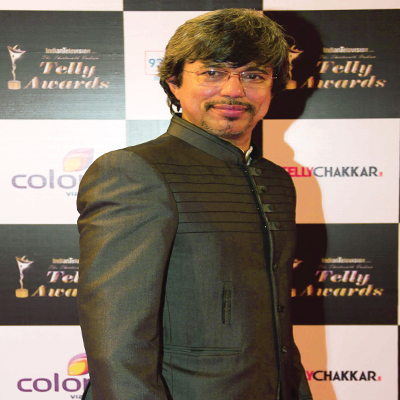
Tag: Anil Wanvari

  • 7th Indian News Television Summit: Innovation for higher ad revenue

    7th Indian News Television Summit: Innovation for higher ad revenue

    MUMBAI: ‘When the going gets tough, the tough get going’ is an age old adage. Operating in a cash crunch environment, this seems to be just what Indian news broadcasters will have to do  if they want to continue to beam into homes. 


    The Indian TV news business has been grappling with several issues. Close to 400 channels account for a small per cent of ad spends. High carriage fees and cutthroat competition for the ad rupee have made the going really tough for those in the news business. 


    With this as the backdrop, comes leading Indian media service Indiantelevision.com’s Seventh News Television Summit entitled ‘Monetisation in Transformational Times” on 28 October at the Radisson Blu Hotel in Noida, Uttar Pradesh.  It seeks to address how those in the news TV ecosystem can develop more robust or new business models, including new revenue streams such as digital online video, syndication, off the air ground activities, advertiser driven programming solutions, among many others. 


    The highlights of the half day premier news television industry confab  are a keynote by News Broadcasters Association president and India TV chairman and editor in chief Rajat Sharma followed by a discussion on ‘Meeting the challenge for today’s TV news networks, a one-on-one with ITV Network MD Kartikeya Sharma and then a keynote from leading media agency Group M south Asia CEO CVL Srinivas.  .


    The session ‘Content monetisation through conventional and digital platforms of news channel’ will see a reveling discussion on how business heads are meeting the challenge of low ad rates and near zero subscription revenue with rising cost through alternative options such as syndication of news, events, digital etc. Included in this session are NDTV group CEO Vikram Chandra, TV Today Network CEO Ashish Bagga, IBN18 Network CEO Avinash Kaul, Doordarshan ADG News Mayank Agarwal and Focus News Network group CEO Neeraj Sanan.


    ‘Innovation in news selling’ will explore novel ideas for media agencies and brands to increase their ROI from their investments on news networks and what innovative methods can be drawn for both to achieve a win-win business model. Opening the session is Srinivas’ keynote followed by a discussion with IPG Mediabrands India CEO Shashi Sinha, CNN-IBN and IBN7 national revenue head Vishal Bhatnagar, India TV senior VP and country head – ad sales Sudipto Chowdhuri and Zee Sangam national sales head Harsha Vardhan Dwivedi. The sessions will be moderated by Provocateur Advisory principal Paritosh Joshi.


    Editors of networks will discuss how far they will go to allow money to drive content in the session titled  ‘Monetisation for editorial independence’. ITV Network editor in chief Deepak Chaurasia, former India TV editorial director and veteran journalist QW Naqvi, Mi Marathi consultant Nikhil Wagle and moderator Aaj Tak and Headlines Today editor at large Rahul Kanwal will take the stage. In a separate discussion,  Amagi co-founder KA Srinivasan will discuss how it can offer solutions to advertisers and news networks to further ad revenue.


    Says Indiantelevision.com founder, CEO and editor in chief Anil Wanvari:So far the news television industry has not been able to harness substantial subscription revenues, even as carriage fees look set to rise with digitisation being delayed. Hence, it needs to look for solutions to hike revenues from the advertising inventory – the threat of the reduction of this has been staved off at least for now – they have, apart from working closely with advertisers and agencies to offer solutions that opens up the revenue pipeline for them further. The challenge is to increase their yields while increasing the ROI for advertisers. I believe the seventh news television summit will help give both advertisers and news channels some pointers as to how they could achieve this jointly.”


    The presented by sponsor for the event is Jia News, silver partners are Akamai, India News, NewsX, Sakshi TV, TV9, growth partner is SureWaves, Amagi is lanyard partner, support partners are CNBC Awaaz and CNBC TV18, online media partners are radioandmusic.com and tellychakkar.com. The event is executed by ITV 2.0 Productions.
     

  • IDOS 2014: How can the pay TV industry be made better?

    IDOS 2014: How can the pay TV industry be made better?

    GOA: India Digital Operators’ Summit 2014 kicked off at The Leela in Goa on 25 September. Opening the conference, Indiantelevision.com CEO and editor in chief Anil Wanvari and Media Partners Asia (MPA) executive director Vivek Couto gave a brief on the state of the TV nation and transition to the broadband digital economy.


    Wanvari highlights how the state of the industry was a few years ago and what it has become now after the advent of conditional access system (CAS) and digital addressable system (DAS). Content makers aka broadcasters have been demanding more revenue from the pay TV industry. While the capex and opex for them has been high, the return continues to be low. The MSOs and DTH operators have been investing to expand their headends and build subscriber base respectively. “While it is a good business now, the real question is if each one of us is willing to make it a great business?” he asks.


    In order to strengthen the business, Wanvari recommends a few suggestions that could help grow the industry. The first thing is to look at digitisation and pay TV with a changed mindset that it will be beneficial to all. The government could look at setting up a digitisation transition fund that will help educate, train, seed capital and reward people who follow the rules and ensure strict penalties for those who don’t.


    Subscriber management system (SMS) should be set up with correct details and billing of the services provided to customers. The government could also look at laying down minimum standard rules for set top boxes (STBs) to ensure quality control. His final suggestion is to leave pricing to the market rather than initiate 10 to 15 per cent price rise every now and then.


    Providing a glimpse into MPA’s study on the pay TV industry in India, Couto says that out of the 262 million households in the country only 162 million houses have a TV. In this, 27 million is taken up by the free to air service providers such as Doordarshan and Freedish while the rest comes under cable and satellite.


    Couto highlights that over Rs 32000 crore has been invested in digitisation since 2005 with a bulk of the investment coming from the DTH operators followed by the MSOs and LCOs since 2011. Out of this, over Rs 11000 crore in the last 24 to 30 months has been invested by MSOs and LCOs. “India offers scale but limited monetisation,” he says. What digitisation will do primarily is increase transparency, addressability, tax collection and employment. Over 120 million STBs are needed over 10 years and nearly 47 per cent share of the total market will come through broadband.


    The tiff between the three stakeholders continues with the LCOs fighting for revenue share, MSOs facing crash crunch and broadcasters worried about increasing carriage fees which the MPA report stated as having increased by nearly 14 per cent in Q1 FY2015.


    In terms of scale, India struggles as the country with the lowest average revenue per user (ARPU) but it has one of the best channel services. Couto says that it is time for the industry to move to retail pricing than stick to wholesale tariff because the competition will keep the prices low. The need of the hour is for MSOs and broadcasters to come together and design packages, incentivise upselling, indentify opportunities for sub segmenting and create new genres. The key to which lies in raising prices to consumers.

  • IDOS 2014: India’s broadcast, DTH & cable television industry’s captain congregate

    IDOS 2014: India’s broadcast, DTH & cable television industry’s captain congregate

    MUMBAI: Heads of India’s pay TV, distribution and broadcast sector are headed for Goa between 25 and 27 September 2014 for the industry’s annual confab – The India Digital Operators Summit (IDOS) – 2014. In its third edition, IDOS 2014’s theme is ‘Digitisation: The Next Big Push.’ 

     
    Organised by IndianTelevision.com and Media Partners Asia (MPA), it unites stakeholders across the value chain to drive meaningful dialogue and facilitate practical solutions to drive the content and distribution markets forward.


    The three day summit will kickstart with HBO hosting the most awaited party of the season on 25 September at The Leela in south Goa. 


    The highlight for the three day conference is TRAI chairman Rahul Khullar who will address the gathering on ‘Policy, practices and the way forward – The Next Five Years for Indian Television.’

    Day two of the summit will commence with a keynote on the ‘State of the TV Nation’ by Indiantelevision.com founder, CEO and editor in chief Anil Wanvari and MPA executive director Vivek Couto. 


    A panel comprising leading investment analysts and investors will next discuss the key drivers of industry economics and value creation and if digitisation extension dates will cause concerns for investors and ROI.


    ‘Unity and The Way Forward for the Next Five Years’ will be another topic for discussion at the upcoming summit. During the session, industry leaders will be seen discussing on how there is a need to converge upon and the urgency of proper execution in the coming months. The other sessions will see brainstorming on ‘Specialized content and channels in the digital ecosystem’, ‘Broadband and the digital economy – A focus on ground deployments’, ‘In focus: The growth of alternative video platforms’ and ‘Technology shifts in Indian Pay-TV’ among others.


    Amongst the headline names who are slated to attend and speak include: Star India CEO Uday Shankar, Zee TV CEO Punit Goenka, TRAI principal advisor N Parmeswaran, FoodFood promoter Sanjiv Kapoor, Dish TV CEO RC Venkateish, Videocon d2H CEO Anil Khera, Hathway Cable & Datacom MD and CEO Jagdish Kumar, Siti Cable CEO VD Wadhwa, DEN Networks CEO SN Sharma, Mybox CEO Amit Kharbanda, Scripps Networks Asia Pacific head Derek Chang,  Ortel CEO BP Rath, among others. 


    Says Indiantelevision.com founder, CEO, and editor in chief Anil Wanvari: “For decades, it has been seen as a land of promise. But India’s $7.5 billion television industry has somehow or the other belied that potential. Forced by the government to digitise, India’s TV distribution ecosystem has been struggling to get its act together. While set top boxes (STBs) have been rolled out, transparent customer billing, pricing deals between content owners and distributors, and conditional access have yet to occur seamlessly. This has left industry precisely at the same spot it was at before digitisation was mandated.”


    Adds Media Partners Asia executive director Vivek Couto:  “Revenue leakages continue, and industry discord has only heightened, amongst broadcasters, cable and DTH satellite operators. Clearly, key changes are required with the Government recently calling for an extension to the digitisation deadline to December 2015 for phase III and December 2016 for phase IV. It is in this perspective we expect IDOS to play a key role in getting likeminded  professionals from industry to come together to analyse the just completed phase I and phase II of digitisation and brainstorm for a better phase III and phase IV.”


    The title partner for the event executed by ITV 2.0 Productions is Star India. The summit partners are BBC World News, Cisco, Discovery Channel, HBO Defined HBO Hits, SES, Surewaves and Videocon D2H. The associate partners are Akamai, Asiasat, CSG International, DEN, Hathway and Scripps Network. Broadband India Forum is the support partner, while 24 Frames Digital is the webcast partner. The media partners for the event are Avishkar, Cable Quest, Radioandmusic.com, Satellite @ Internet India and Tellychakkar.com


    IDOS is to be held at the Hotel Leela in south Goa between 25-27 September 2014.

  • Indiantelevision.com introduces ‘Best Sound’ category in the 13th Indian Telly Awards

    Indiantelevision.com introduces ‘Best Sound’ category in the 13th Indian Telly Awards

    MUMBAI: Indian Television Dot Com and Dolby Laboratories have announced ‘Best Sound’ category in the upcoming 13th Indian Telly Awards. With the onset of digitisation of television services, high quality sound has increasingly become an important aspect of television content. Recognising this important industry change, Indiantelevision.com’s much acclaimed Indian Telly Awards has announced the inclusion of the ‘Show with the Best Sound’ category in its 13th edition. The sound category is being instituted in collaboration with Dolby Laboratories, a pioneer in audio technology.


    “Indian consumers have become more discerning today,” said Indian Telly Awards founder and creator Anil Wanvari, who is also the member of International Academy of Television Arts and Sciences (International Emmy Awards).


    “While watching a show at home, these consumers want a similar sound experience to what they get in a cinema hall. And this has become more important with over three million HD TV subscribers in India. With an aim to meet this need of discerning viewers, broadcasters have started investing to make shows sound much better. This trend is bound to increase with the spread and increase in the number of HD channels, digitisation, DTH and digital cable TV. We at the Indian Telly Awards are extremely delighted to introduce the sound category and are grateful to Dolby for collaborating with us on the initiative,” he added.


    A jury consisting of top names in the sound industry will take into consideration the entire gamut of the sound production process—location recording, sound design, mixing, rerecording, editing—to give the award to the one TV show with the best sound design and mixing. The jury will include Academy Award winning sound mixer Resul Pookutty; National Film Award winning sound designer Bishwadeep Chatterjee; Dolby Content Services Engineer Bhaskar Pal and Anil Wanvari.


    “It gives me immense pleasure to know that sound is being recognised as an award category in the Indian Telly Awards,” said Bishwadeep Chatterjee. “This would not only give a huge morale boost to the sound technicians but sensitise the producers, directors, actors and the public by and large to a relatively much lesser known yet very important aspect of television. Thanks to the initiative by Dolby, we can look forward to great sound quality, which will hopefully enable the producers to keep a substantial budget and time for the sound department.”


    Resul Pookutty commented, “Being a sound designer, I am very glad that the Indian Telly Awards and Dolby together are giving sound the due recognition which it very well deserves. I truly believe that this initiative will help raise awareness about the importance of good sound in television, which in turn will make audiences more interested in newer TV shows. I hope to see more such initiatives and importance being given to sound in Indian television shows going forward.”


    Dolby Laboratories India country manager Pankaj Kedia said, “We are very excited about this announcement, as this award will give the due recognition to sound in the broadcast industry. Dolby has participated and contributed in the transformation of sound in the Indian cinema and television industry. It gives us great pleasure that the role sound plays in storytelling and engaging the audiences is being given the due importance and recognition.”


    The Indian Telly award for the category of ‘Show with the Best Sound’ will be announced at the gala event on 9 September 2014, at Mumbai’s Film City.

  • Regional audiences are not second class

    Regional audiences are not second class

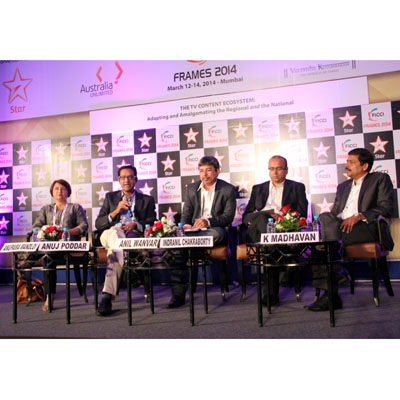
    MUMBAI: Two big regional broadcasters and two big production houses got together to discuss ‘TV content ecosystem: Adapting and amalgamating the regional and the national’ at FICCI Frames 2014. The session started with a keynote by Asianet Managing director K Madhavan and was followed by a discussion among panelists that included Viacom18 regional channels EVP Anuj Poddar, Fremantle India MD Anupama Mandloi and BIG Synergy COO Indranil Chakraborty on the opportunities in the regional entertainment space. The discussion was anchored by indiantelevision.com Founder, CEO and editor-in-chief Anil Wanvari.


    Madhavan started off by predicting that in three years, the ad revenue coming from regional channels will be equal to that of the national channels. He also highlighted that the biggest problem for regional broadcasters is carriage fees.


    “The regional market is about Rs 5,000 crore in terms of advertising revenue and we are the second largest in ad revenue as well as viewership after the Hindi GEC genre,” said Poddar. He also stated that there is a misconception that regional means language while it actually is a reflection of the culture. “Even Hindi television has its stories based on regions – for instance Ballika Vadhu was based in Rajasthan but adapted for national Hindi television.”


    Chakraborty said BIG Synergy entered the regional space five years ago and found that the regional audience was considered as second class as against the Hindi GEC audience. But that mindset is changing. “The word ‘adaptation’ is wrong. You need to redefine content to make it relevant to that audience,” he said. 


    He said he was happy that regional viewership that TV channels generate is getting its due in terms of ad rupees. “Earlier, regional TV channels had higher share of the overall  national viewership but the advertising expenditure on them was much less than that share. In 2013, ad expenditure on regional has gone up and and share of viewership is matching with share of advertising if you check out the latest Ficci report.”


    Added Poddar:  “This change clearly shows that advertisers and media agencies have understood the value of regional television and are willing to pay more for air time as they get targeted viewers. Even the coming elections are seeing a large amount of political advertising expenditure being shifted towards regional TV.”


    Regional channels seem to have taken the 12 minute ad cap very happily. “Sun raised its ad rates by 60 per cent and we (Asianet) raised it by about 20 per cent,” said Madhavan. He revealed that while earlier the ad rates of regional channels were one tenth of a national (read Hindi GEC) player, today they are up to about  25 per cent.


    The good part about regional television is that budgets for shows are rising, explained Chakraborty. An example of this is the regional adaptation of Kaun Banega Crorepati, which saw its budget going up 10 times as compared to what was being invested in other regional non-fiction shows.  This happened at a time when the Hindi version was being subject to budget cuts.


    As far as regional contributing to national and vice-versa in terms of show concepts, formats and storylines is concerned, Wanvari cited several instances where this has taken place in the Indian context.


    Said he: “Dance India Dance that super franchise from the Zee Entertainment stable began from Dance Bangla Dance produced for Bengali audiences. Today it has spawned several sub-franchises – Dance India Dance Lil Champs, Dance India Dance Super Moms, Dance Maharashtra Dance. Similarly with Big Boss which began on Colors and has since then been produced on its sister ETV channels in  Bengali and Kannda. KBC gave birth to editions on Tamil, Telugu, Malayalam on the Star network even as it aired in Hindi on Sony Entertainment TV and in Marathi on ETV Marathi. Ballika Vadhu was remade by the Network 18 group in Tamil, Telugu and Kannada, even as Uttaran has been remade in Marathi.”


    Wanvari pointed out that the reverse has also happened with shows from regional television being adapted to Hindi TV. “The Telugu soap Shravanti came on air as Dil Se Di Dua Saubhagayvati Bhava; Tami serial Kolangal was remade as Maayke Se Bandhi Dor; Tamil soap Thirumathi Selvam gave birth to the long running Pavitra Rishta; Idhayam turned into Dil Se Diya Vachan; Telugu show Ratha Samptamai  resurfaced as Rakht Sambandh; Bengali series Khela as Badalte Rishtey Ki Dastaan and then of course  the Ravi Ojha produced super successful show Sasural Genda Phool which emerged from the Bengali series Ogo Bodho Sundari,” highlighted Wanvari.


    He went on to further state that Star India has been working on reaching out its Hindi productions  to regional audiences, by dubbing shows such as Satyamev Jayate, Mahabharat and Mahadev in other languages such as Tamil, Telugu, Bengali, Marathi, and Malayalam and airing them on its regional language channels under the Asianet group and Star Pravah.


    “Taking a national product to regional is called revenue optimisation,” said Chakraborty talking about dubbing of national shows to regional languages.”For an adapted  show to work it needs to be locally adapted to suit the culture. “


    Poddar emphasised that it is not enough to dub regional shows, regional adaptations of Hindi national shows requires a lot of research and localisation to suit  cultural tastes and emotions. “When we had to remake Ballika Vadhu which is about a child bride for our Kannada channel, we looked around for a district in Karnataka where child marriage is prevalent and based our story there as the rest of the state does not have it as a practice as it is in Rajasthan. Also the pacing of the storyline in the Kannada version was faster.  Similarly, for the Marathi adaptation of KBC we went for a couple participant concept in the show and had Sachin Khedakar host it. “


    Chakraborty highlighted that there are benefits which accrue from Hindi show adaptations to regional languages and the other way around too. “Initially, we had to instill best practices and skillsets we had picked up while producing the Hindi version when we decided to go regional. Now the best practices and skillsets we got while producing the regional shows are being brought to Mumbai and  instilled in our crew while producing the Hindi version.”


    Fremantle Media India MD Anupama Mandloi confessed that her production house – which produces the successful formats Indian Idol and India’s Got Talent – has not yet taken the plunge into regional television but it is something which would be of great interest to her. “We have the experience of producing an international format and localising it in several countries, languages, cultures,” she said. “And we have done it successfully. We would like to  make some further inroads in regional television soon.”


    Madhavan added that Star Plus’ show Satyamev Jayate had realised the potential of regional which is why it was dubbed in so many languages and regional stars were roped in to promote it. He pointed out that Mahabharat dubbed in different languages has not proved as popular as Mahadev. But he revealed that even then the show has been a profit generator for his network. 


    “Simulcast is driven by commercial imperatives as a business model,” said Poddar.


    When prompted by Wanvari as to why don’t regional channels add subtitles to their shows, he said it is an option he is willing to consider.

  • First Indian Digital TV Honours on 28 Jan

    First Indian Digital TV Honours on 28 Jan

    MUMBAI: 2013 was a watershed year for the cable TV and DTH industry, what with the the entire TV industry – cable TV operators, MSOs, DTH players –  working on going into overdrive, pushing the government’s digital addressable system (DAS – digitisation) mandate. There were big developments and even bigger initiatives, and it is with a view to recognising and rewarding such endeavours as well as the individuals and organisations behind them that Indiantelevision.com has instituted a first-of-its-kind initiative called ‘The Indian Digital TV Honours’, to be held on Tuesday 28 January at The Lalit, New Delhi.


    The list of best practices and worthy winners has been compiled by an advisory board comprising senior executives, industry veterans and the indiantelevision.com editorial team led by founder, CEO and editor-in-chief Anil Wanvari.


    According to Media Partners Asia executive director and co-founder and member of the advisory board Vivek Couto, The Indian Digital TV Honours is a laudable effort as it will go a long way in encouraging individuals to accelerate the development of the industry.  “That’s because it seeks to recognize the achievement, innovation and vision of the stakeholders,” he says.”


    Media observer and consultant and member of the advisory board Sanjeev Hiremath adds: “It is an encouraging initiative by Indiantelevision.com. It is a way to both support and encourage the implementation of DAS. I am glad that a platform like this has been set up by the Indiantelevision team.”


    BCCL president corporate development (and member of the advisory board) Sunil Lulla believes there was a need to acknowledge the manner in which television distribution is changing. “I am glad that there is another first from Indiantelevision.com. Acknowledgement is needed. Though the switch from analog to digital will take time, encouragement is needed.”


    Chrome Data Analytics and Media founder and MD Pankaj Krishna joins his peers in lauding the effort. “I am sure pretty soon, others will follow it too. One must remember that digitisation is very critical to us now and with the change in wind, the transition from analog to digital is going to become crucial. In short, it is like the change from Kodak film roll which we used 10 years ago to a digicam, which has become a part of our lives now.”


    So how did the advisory board select the winners? Says Wanvari: “We had detailed discussions with various stakeholders in the industry, to come up with a filtered list of top achievements to which the advisory members also contributed.”


    Adds Lulla: “A list was given to us comprising names of people and companies that have made a difference to digitisation from various points of view like preparedness, initiatives taken, consumers, success etc. So, I looked at these from various perspectives like who made it simple for consumers, who followed the regulations, which company or person drove the change and so on…”


    What were the criteria for selection? Couto anwers: “The criteria were simple. Any stakeholder or regulator who has ushered in development through investment, leadership or a combination of both to accelerate quality content and infrastructure for consumers will feature in the list.”


    The entire selection process took almost a month for the advisory board. Hiremath, who identified categories to honour key initiatives, says: “This is going to be an exciting and interesting event.”


    According to Hiremath and Couto, while the first edition will honour well-known names from the industry, the awards will only get bigger and better with time.


    “We will see OTT players, software developers, app developers and many others entering the ecosystem in the future,” Couto rounds off.
     

    The Event is: 

    Powered by Partner:  Den

    Associate Partners: Hathway, Surewaves, Videocon D2H

    Support Partner: SES, The One Alliance

    Media Partner: India News

    Thanks to HBO Defined and HBO Hits for the support

    Online Media Partners: Radioandmusic.com, Tellychakkar.com

    Event Executed By: ITV2.0 Productions

    An Initiative By: Indiantelevision.com

  • MipTV roadshow to hit Chennai on 20 January

    MipTV roadshow to hit Chennai on 20 January

    MUMBAI: Paris-based Reed Midem, which produces the world’s biggest and most successful content markets MipTV and MipCom in the French Riviera seaside town of Cannes, is all set to begin a series of road shows in India which will feature seminars and interactions in three cities  – Chennai, Bengaluru and Mumbai – explaining how India’s content community can build its international sales and presence.


    The first of these will be hitting Chennai on 20 Januray 2014. To be held at the Hotel Benzz Park in the T. Nagar business area,  it is slated to be attended by a select group of invited professionals  from the southern India city’s animation, TV, film distribution and value-added services sectors.


    The theme of this year’s roadshows is “Content without boundaries.”


    Down for the second time in about six months from the Paris headquarters  of Reed Midem are director of new market development Ted Baracos and Asia sales head Paul Barbaro. Accompanying them is Indiantelevision.com founder, CEO Anil Wanvari, who is MipTV, MipCom and Midem India representative.


    Says Baracos: “We were quite delighted with the response from  India’s talented content creators when we had road shows in Delhi, Hyderabad and Mumbai last year.  Our theme then was: Can Indian content leave its stamp on the world? And India responded with a big yes. Attendance from the country was up almost 20 per cent as Indian companies came to MipCom in October 2013 to strike deals and pursue international market opportunties. So we decided to come back once again to connect with the community here.”


    Adds Barbaro: “Several Indian companies such as Shemaroo, Green Gold, Viacom18, Zee TV, DQ Entertainment, AVCGI have understood the power of MipCom and MipTV and have  successfully been using the platforms we provide to expand their content syndication, production and co-production businesses. We would like India’s  new content creators to understand, be a part and exploit the new entertainment economy in which content is likely to cease having borders, it will travel everywhere. Hence we  are here continuing our conversation with them through these road shows.”


    “I have been attending Mipcom and MipTV for more than 14 years and have seen Indian broadcasters, animation studios, service providers simply grow thanks to the contacts and deals they strike there,” says Wanvari. “The entrepreneurialism and hunger to conquer new markets can only see India’s content being consumed and even co-produced in markets never thought about before. It is important that more and more Indian firms understand and exploit this opportunity. It can bring home hundreds of millions of dollars in much needed forex into the Indian economy and probably grow the next Endemol or Fremantle out of India.”


    From Chennai, the team will then move to Bengaluru on 22 January and to Mumbai on 24 January. The entire road show has been put together and organised by Indiantelevision.com’s ITV 2.0 Productions division.

  • Alternative distribution plans for indie films

    Alternative distribution plans for indie films

    MUMBAI: There are nearly 1,000 movies that are made in India every year, but only about 35-40 per cent actually mange to get a proper release across the nation. This is one of the major obstacles for small time independent filmmakers who work on a shoe-string budget on their dream projects.


    The Mumbai Film Festival in its fifteenth edition is trying to plug that hole. In what could have been termed as an intellectually and thought provoking discussion, a panel of dignitaries from the media and film space came together on one stage to show the way to independent filmmakers.


    The session held at Metro Cinema, was moderated by AV Pictures MD Chris Hainsworth and discussed the various alternative distribution avenues for independent films and filmmakers. The panel consisted of Guneet Monga, a film producer and CEO with Anurag Kashyap Films since 2009; Isabelle Dubar, head of distribution at Hapiness Distribution based in France; Anil Wanvari, Founder, CEO & Editor-in-Chief at indiantelevision.com; Nandini, a film producer and finally Shubhra Gupta, a film critic with Indian Express over the past two decades.


    The discussion kicked off with Guneet Monga who briefly started out by talking about her journey so far. “I started producing movies nearly six years ago, but started taking movies to festivals only with That Girl in Yellow Boots. I had no clue how to go about looking for buyers for the movie. But gradually, I realised that the deliverables that we have here in India is nowhere close to the scale at which films are marketed in the international film circuits, and I have learnt things the hard way.”


    On being quizzed on what would be the right place to look for buyers in the overseas market, Monga quips, “Why go anywhere when we have two very good home grown festivals – The MAMI (Mumbai Academy of Moving Image) and the Film Bazaar held in Goa every year – but yes, the scope for buyers is in plenty overseas as well. It’s just about delivering the right mix of content that is of universal appeal. And it is also important that those in the business get to know you and take you seriously because you are meeting them again and again.”


    Isabelle Dubar steps in while speaking about distribution of films. She was the one to take Gangs of Wasseypur (Part I & II) to the French market. “The French market is very outhouse in nature, with approximately 600 films from all over the world coming to the market every year,” says Dubar.


    She further clarifies that the French market is still not that open to Bollywood films and it never really caught on it in a big way, but after observing the response for Gangs of Wasseypur (GOW) at various festivals world over and the appreciation it got at Cannes, she was egged on to give it a shot.


    “We didn’t want to risk releasing both the parts together as a six hour long single feature film and thus adapted to how it was released in India. So, the first part was released around July and we promoted and marketed it like a contemporary Indian take on The Godfather,” Dubar remarks. The results were very pleasing. Though the expectations were high they still managed to get people to watch the movie.


    Dubar says, “We expected nearly 30,000 admissions, but we got 15,000 which is still a sizable number. The second part that we released during Christmas the same year didn’t get much favourable response with only 5,000 attendees. But Anurag Kashyap’s work has been appreciated and the market is open to more Indian films now, so that’s a positive sign.”


    Dubar further threw light on the fact that Kashyap’s Ugly will also be distributed by Hapiness Distribution in and around the French market. “We are also releasing The Lunchbox – a co-production with a French producer – on 11 December in France,” adds Dubar.


    Dubar finally went on to say that be it any language or genre what matters at the end is that the story and the characters should be able to have an universal connect and nothing can stop the film from being accepted and doing well globally.


    The point in question now is how will a film get the right platform to get buyers? “There are bigger markets than just festivals to be tapped into by independent filmmakers. There is Mipcom, Mip Doc and Mip TV, where nearly 11,000 people spend 1,300 Euros a piece to look for buyers or sellers of content, It’s the biggest content trade market in the world,” says Anil Wanvari.


    He further urges the independent filmmakers’ community to unite and pitch for more funding from the government in their distribution efforts. He gave the example of the UK where 50 per cent of all costs to market films and TV shows internationally at markets are paid back to the filmmakers to encourage them to find alternate streams of revenue while pushing the British  perspective and culture. “Even the Andhra Pradesh and Karnataka government offer incentives to producers of animation and gaming to attend markets worldwide to find new customers for their offerings,” he said and added, “Other state governments should be urged to do the same.”


    “Earlier, Prasar Bharti used to screen movies on Sundays from independent filmmakers, maybe that is one thing that needs to be started again. But the need of the hour is for the filmmakers’ community to get together and help raise awareness for these films. Use of social media to bring the importance of independent cinema to the government’s notice and also to transform it into a movement is very essential. More importantly, filmmakers and producers should be aware of the rights they should retain with themselves whether it is SVOD or PPV or NVOD or online or airline or shipping or DTH or whatever right. Never give away all the rights for the movies at once just because a distributor demands them and because you are a first time filmmaker struggling to get your film on the screen. You need to learn to monetise and keep monetising from the product you have created,” Wanvari expounds.


    Film producer and founder of Idyabooster.com Nandini Masinghka too thinks that the need of the hour is to get more clarity as a filmmaker whether the film he is making is for artistic pleasure or for monetising it. “Be clear about your audience; be clear how you will market, how will you distribute. Don’t just put all your money into creation and production,” she highlighted. “If you don’t have the expertise to manage this, then bring in someone who does. Thus, the industry needs more independent producers, who don’t just finance the project but are also responsible for monetising it rightly,” Nandini explains.


    After patiently listening to the conversation, film critic Shubhra Gupta says, “I am surprised that we are discussing the business of cinema without considering the art of it. If the movie is not made artistically, you anyway won’t get buyers for it.”


    Gupta also points out that after the emergence of multiplexes not many films from the independent space get their due at the box-office. “I am forced to see a Besharam on a Friday, when the movie I so wanted to see has been removed. So how will these movies get their due,” Gupta quizzes. She refers to the situation in Chennai where individuals backed and pushed the cause of independent cinema such as Pizza and made it successful.


    Monga highlighted one case in point during her early days as a film maker. “My first film was on cricket and the prints were in the theatres when news emerged that India has been eliminated from the World Cup in 2007. Immediately, the exhibitors sent me back my prints. So I took up the cause of distributing the film myself in Delhi and encouraging schoolchildren to watch it in their schools. I also sold the tickets to universities myself. I then moved this concept similarly to Punjab and made money there. I even made money on the DVD which a home video company had given up on by selling them in the foyers of the theatres where I screened the film. I never gave up on my dream and pursued monetisation from every angle.”

  • IDOS 2013 to kick off in Goa on 27 Sep

    IDOS 2013 to kick off in Goa on 27 Sep

    MUMBAI: The countdown to the ninth edition (and second under its current
    nomenclature) of the annual India Digital Operators Summit (IDOS) has begun with the two-day event kicking off tomorrow at The Leela in Goa.

    A joint initiative of the Indiantelevision.com Group and Media Partners Asia, the summit will discuss and debate the hot-button topic of the digital television opportunity in India, what with the implementation of Phase II of digitisation nearing completion in three major metros – Delhi, Kolkata and Mumbai and in another 38 cities all over India.

    IDOS 2013, themed ‘Harvesting the fruits of digitisation’ will highlight pertinent issues faced by industry and offer valuable insights into how other key Asian markets have succeeded in their digital transition.

    Participants include leaders from regulatory, cable distribution, DTH, broadcast, TV distribution and technology segments as also content providers and investors in the broadcasting and pay TV industries.

    Flagging off the summit will be Indiantelevision.com Group founder, CEO and Editor-in-Chief Anil Wanvari, who will share the vision behind the event. Following suit will be Media Partners Asia executive director Vivek Couto with a presentation on India’s digital TV ecosystem and lessons learnt from other global markets.

    Day one’s inaugural session titled ‘Opening Keynotes and In Conversation’
    will discuss how digitisation is no longer a goal but the means to a critical end, where national economic benefit, advanced infrastructure and content democratisation converge to create a win-win for all. The panelists include TRAI principal advisor N Parameswaran, DEN Networks chairman & MD Sameer Manchanda, Tata Sky CEO Harit Nagpal and Star India president & general counsel Deepak Jacob. They will share their views on the progress so far in Phase II of digitisation. The session will be moderated by Couto and Wanvari.
        
    The second session, ‘Cable 2.0 – Profits across the pipe’ will see leaders across the cable and distribution industry share insights into the key challenges faced by industry as it moves into billing, tiering and rolling out of new services. The session will be moderated by NDTV head-affiliate sales & network distribution Rahul Sood while the panellists include Hathway Cable and Datacom MD & CEO Jagdish Kumar, Den Network CEO S N Sharma, HSBC Securities lead analyst – telecom & media Rajiv Sharma, Media Pro COO Gurjeev Singh Kapoor, Digicable MD & CEO Jagjit Singh Kohli, SITI Cable Network ED & CEO VD Wadhwa and Indiacast Group COO Gaurav Gandhi.

    Next up, ‘DTH – Driving the value equation’, will be moderated by Couto with panelists including Dish TV India’s Gaurav Goel, Videocon D2H CEO Anil Khera, Kotak Securities senior analyst Amit Kumar and Macquarie Capital Sr
    VP Ausang Shukla. The session will seek to answer the question: What are the key catalysts for the next phase of DTH’s value creation story?

    Titled ‘The business of specialised and premium channels’ and powered by BBC World News, the fourth session will study the proliferation of niche channel launches. To be moderated by BBC Global News COO – Indian Operations Preet Dhupar, the participants include Viacom18 SVP & GM – English Entertainment Ferzad Palia, Discovery Networks Asia-Pacific SVP and GM -South Asia Rahul Johri, FoodFood promoter & director Sanjeev Kapoor, Disney UTV Media Networks MD MK Anand and HBO India MD Monica Tata.

    This will be followed by a session on ‘HD as a mass driver for distribution platforms’ chaired by Castle Media director Vynsley Fernandes along with Videocon D2H deputy CEO Rohit Jain, Times Television Network CEO – English Entertainment Channels Ajay Trigunayat, Dolby Laboratories India country manager Pankaj Kedia and Chrome Data Analytics & Media founder & MD Pankaj Krishna.

    The next session, ‘Hidden gems riding the digital wave’ will look at how on the back of digitisation, distribution majors (MSOs and DTH) hold the promise to create ample value. The panelists include What’s-On CEO Atul Phadnis, Amagi Media Labs co-founder Srinivasan K A and Cisco Sr. business development manager – APAC Fabien Gauthier with Castle Media director Vynsley Fernandes as moderator.

    Day one’s closing session, ‘New media monetisation’ will discuss how Hindi GECs and youth channels are increasingly making content available across newer media platforms. Chaired by Wanvari, the discussion will see participation from Zenga TV CTO & MD Shabir Momin, IBM India ED & partner Raman Kalra and Exset global head – sales and marketing Rahul Nehra.
        
    Day two will start with a presentation on ‘Sports & Pay-TV – The Path to Value Creation’ by Couto followed by a Q&A session. The Last mile operator community will be represented by a presentation by Maharashtra Cable Operators Federation head Arvind Prabhu, who will talk about their role in a digitised ecosystem.

    The closing session ‘Driving digitisation deeper’ will be moderated by Wanvari and Couto and will analyse how action is going to shift next to India’s heartland which houses nearly 70-80 million TV homes among other key issues. The panellists include DEN Networks CEO S N Sharma, Hathway Cable and Datacom MD & CEO Jagdish Kumar, TRAI principal advisor N Parameswaran, Indian Broadcasting Foundation secretary general Shailesh Shah, Chrome Data Analytics & Media founder and MD Pankaj Krishna, Founder & MD, Magnaquest CMO Ramakrishna Mashetty and HSBC Securities lead analyst – telecom & media Rajiv Sharma.

    “As organizers of IDOS, our aim is to provide unity and strategic vision to drive forward digitalization and bring new value, profit and sustainable growth across the television ecosystem,” read a joint statement by Indiantelevision.com group founder Anil Wanvari executive director and cofounder Media Partners Asia Vivek Couto.

    “The next year is critical as the cable industry steps up on its B2C execution with billing, tiering and subscriber management,” added VivekCouto.”IDOS will explore the issue of co-operation with last mile local cable partners to create a valuable ecosystem for the consumer; one in which differentiated content, customer service and value added offerings are at the highest level. That will be worth paying more for and will drive ARPUs higher.”

    “It’s an important evolution,” said Wanvari, “as it helps scale and grow the cable industry and enables broadcasters and content providers gain the ROI they so desperately need to invest. It also eases the burden on the DTH sector and provides effective competition at the ground and consumer level And the entire evolution gives the regulators to mull over deregulating pricing.”

    *IDOS 2013 is powered by Star India, while summit partners include Discovery Channel, Dolby, CISCO, Hathway Cable and Datacom, SES, and Videocon d2h. The associate partners are BBC World News, Exset, Indiacast and Media Pro. 24 Frames is the webcast partner.

  • International Emmy Awards judging held in Mumbai

    International Emmy Awards judging held in Mumbai

    MUMBAI: Judging is not an easy task and especially when it is for the International Emmy Awards which are considered as the Oscars of the television world.

    Indiantelevision.com founder Anil Wanvari once again – for the ninth year – hosted the semi-final judging round of The International Emmy Awards for the New York-based International Academy of Television Arts & Sciences. A bevy of Indian television professionals – 12 of them from both on screen and off screen – descended on to the Raheja Classique Club, in the Andheri suburb of Mumbai on 23 August to decide which of the entries – from two categories, comedy and telenovellas – would get into the final round of the International Emmy Awards 2013. The International Emmys had a healthy response from television content creators and broadcasters world wide with more than 1000 entries pouring in, but the Mumbai leg of judging saw seven entries for comedy and four entries for telenovelas being judged.

    The jury comprised of producers, directors, actors and writers. The ones judging comedy were: Anita Basu, Amit Aaryan, Harshad Joshi, Prabal Baruah and Divyanka Tripathi. On the other hand, Meghna Malik, Ashka Goradia, Shruti Ulfat, Rajan Shahi, Yash Patnaik and Sudhir Sharma were judging the telenovela category.

    Founded in 1969, the International Academy of Television Arts & Sciences promotes excellence in international television programming. With more than 700 members from 50 companies in the media and entertainment space in 500 countries, it is the International Emmy Awards are the premier recognition for those involved in content creation in television, internet, and mobile.

    “It is always a pleasure to have India as a part of our judging which is taking place in more than 20 countries worldwide this year,” says The International Emmy judging director Nathaniel Brendel. “And we are delighted to have indiantelevision.com and Anil Wanvari as our hosting partner, like we have done for so many years.”

    “The International Emmys is a recognition producers and broadcasters and creators globally aspire for,” says Wanvari. “By hosting the judging we continue the very good relationship we have with the International Academy and we also become a part of a global initiative. This apart, it gives me and my company a good opportunity to give the Indian creative and production community exposure to the best in global content. We are grateful to the Academy.”

    After the first round of shortlisting and filtration, six to seven entries for each category make it to the semi-final round. Following this, the entries are posted online for final jurors to decide on the final nominees and winners. The main two criteria of judging are content and execution. Indian industry professionals were more than happy with Wanvari’s initiative to host the judging and on being called to do International Emmy jury duty.

    Says comedy juror Big Synergy director / producer Anita Basu: “This is my third year with the International Emmy, and it is a fantastic experience to see a lot of rich and good content and be exposed to a lot of innovative content outside India.

    ”Telenovela juror and Beyond Dreams Entertainment producer & creative director Yash Patnaik says being on the jury is a time for him to get away and chill on the best of international content. “Judging the International Emmys is a wonderful experience. This is my second year with Emmy and we get to see a lot of good content and you get to know what kind of effort they put in. Their style of working is very different from ours. The storytelling, cameras, scale is different.”

    “It is always very good and educational to come and watch different programs and this time it is the international platform and watching good shows from all over the world. The telenovelas are brilliant and it’s a good experience and you get to see good work and good content of international quality,” says director and producer Rajan Shahi.

    “It was a very different experience judging the telenovela category,” says respected actor Meghna Mallick. “The entries were of a very high order, and a couple of them, well they blew me away.”

    What surprised the jurors was the absence of entries from India in the categories they were judging. Say Brendel: “The fact is Indians would not get not judge entries from India; they would be judged elsewhere. Going by the huge production base India has entries can only go up, I believe that Indian producers should compete in the International Emmys because it is the only way that their shows can be judged and be seen by the best producers, networks. These may then be interested in buying their shows.”

    Agrees Patnaik says: “Yes of course Indian shows should compete, because there is a lot of original content in India. Our programs are quiet popular in the US and UK and we have Indian audience everywhere. It will be good refreshing change for them to see Indian content which are original and go beyond self-zone.”

    Anita Basu chips in: “Production and technical wise we are much ahead and there is a lot of good content here. We are way ahead of the curve, and I think we need to make an effort to represent ourselves in a very big platform like the Emmy awards.”

    “There are two reasons why we don’t see Indian entries in Emmys is a lack of information and I think Indian television industry is still evolving. And you never know maybe next year we will see entries from here as well. Indian content is improving every year so we definitely stand a chance to showcase out talent in the international platform,” adds Sharma.

    The gala event is slated to take place on 25 November in New York. The next competition will start early this December and the deadline is till February 2014 to submit their shows.