Tag: Anil Wanvari

  • MipFormats, Cannes: Demystifying India’s content formats space

    MipFormats, Cannes: Demystifying India’s content formats space

    CANNES: How do you work with India? Is it a new TV and digital formats’ paradise? These  – among others – were some of the questions raised and answered in the Producer’s Toolbox at MipFormats in Cannes on 3 April in Auditorium A in the famed Palais des Festivals.

    The session began with IndianTelevision Dot Com Group founder, CEO Anil Wanvari giving the 100 strong audience from about 25 countries a quick snapshot view of the Indian television industry.

    He estimated that the TV content creation business is about $620 million with about $500 million of this being accounted for by the Hindi General entertainment space. While soaps, drama, Bollywood films and songs account for a major chunk of the spend, around $90 million (including the format licence fee, production margins, and production and talent costs) is spent on TV formats.

    Wanvari also pointed out that almost all the European majors have set up shop in India, including Endemol Shine, Zodiak, Fremantle, BBC WorldWide productions.  And they have managed to build robust business.

    Wanvari highlighted the potential for new content ideas that has popped up courtesy the proliferation of platforms in the OTT and VOD space. The last couple of years have seen the entry of Hotstar (with about 40 million users; targeted to hit 100 million by end this year), Hooq, VuClip, Voot (from Viacom18), Ditto TV, OZee (from the Zee TV group), ErosNow, ZengaTV, and Netflix. Others like AltDigital (from Balaji Telefilms) are firming up plans for a launch. And the digital opportunity is only going to explode further with the impending launch of 4G services from the Reliance group which is investing about $22 billion on its broadband and 4G mobile play.

    CA Media-backed OML (Only Much Louder) COO Ajay Nair was pretty gung-ho about the Youtube promise. “We are about to launch six new shows – four of which are  formats –  with India’s top comedy talent with the support of brands. As most youth are on mobile devices, brands are willing to support any fruitful engagement they can have with them.”

    GoQuest Media CEO Vivek Lath announced the formation of GoQuest Formats a new company looking to acquire formats – even paper ones from all over the world to market them globally. “We are looking at travel show formats, convergence formats,” he said.

    Grey Matter Entertainment co-founder Rahul Sangari spoke about his music format The Remix which was produced in Vietnam and became the no 1 show there on VTV. “We are going into production in three weeks in China too,” he said. “We are looking forward to closing deals in 16 territories and hope  to do signups in the UK and the US too,” he said.
    Sangari was also pretty oprtimystic about a TV and app integrated show called Street Stars which focuses on street performers which is represented by Dentsu StoryLab at Mip.

    Zee TV’s Yogesh Karikurve opined that foreign companies wanting to explore the format opportunity in India would do well to explore licensing their formats, preferably before opting to set up a full fledged production operation.

    Nair emphasized that any international company needs to find a local partner to do the production and also liaise with the telecast partner, rather than just licence a format.

    Sangari’s view was that the need for an Indian partner arises because “India is a very different country; the cultural sensibilities and nuances have to be born in mind while creating, developing and selling a format in the country is concerned.”

    Lath said that music and dance shows have been rating well in India. “But formats targeting the new millenials  will have legs,” he said.

    Sangari agreed that India had yet to develop in terms of forking out large licensing fees for formats.  Lath interjected and said that should not be a worry for any large format distributor or creator. “Collectively if it is licensed on the regional language channels along with the mainline Hindi channel , then the licence pad can expand,” he stated.

    Karikurve talked about the potential for  factual entertainment  formats as that is a genre that ithe Zee TV group is investing in greatly in that genre. Nair agreed but added that ‘dating,’ extreme sports, music and comedy formats were becoming relevant. He ended the discussion  forecasting that around 40-50 international formats could make their way into India on digital and traditional television in the not too distant future as the appetite is definitely there. .

     

  • MipFormats, Cannes: Demystifying India’s content formats space

    MipFormats, Cannes: Demystifying India’s content formats space

    CANNES: How do you work with India? Is it a new TV and digital formats’ paradise? These  – among others – were some of the questions raised and answered in the Producer’s Toolbox at MipFormats in Cannes on 3 April in Auditorium A in the famed Palais des Festivals.

    The session began with IndianTelevision Dot Com Group founder, CEO Anil Wanvari giving the 100 strong audience from about 25 countries a quick snapshot view of the Indian television industry.

    He estimated that the TV content creation business is about $620 million with about $500 million of this being accounted for by the Hindi General entertainment space. While soaps, drama, Bollywood films and songs account for a major chunk of the spend, around $90 million (including the format licence fee, production margins, and production and talent costs) is spent on TV formats.

    Wanvari also pointed out that almost all the European majors have set up shop in India, including Endemol Shine, Zodiak, Fremantle, BBC WorldWide productions.  And they have managed to build robust business.

    Wanvari highlighted the potential for new content ideas that has popped up courtesy the proliferation of platforms in the OTT and VOD space. The last couple of years have seen the entry of Hotstar (with about 40 million users; targeted to hit 100 million by end this year), Hooq, VuClip, Voot (from Viacom18), Ditto TV, OZee (from the Zee TV group), ErosNow, ZengaTV, and Netflix. Others like AltDigital (from Balaji Telefilms) are firming up plans for a launch. And the digital opportunity is only going to explode further with the impending launch of 4G services from the Reliance group which is investing about $22 billion on its broadband and 4G mobile play.

    CA Media-backed OML (Only Much Louder) COO Ajay Nair was pretty gung-ho about the Youtube promise. “We are about to launch six new shows – four of which are  formats –  with India’s top comedy talent with the support of brands. As most youth are on mobile devices, brands are willing to support any fruitful engagement they can have with them.”

    GoQuest Media CEO Vivek Lath announced the formation of GoQuest Formats a new company looking to acquire formats – even paper ones from all over the world to market them globally. “We are looking at travel show formats, convergence formats,” he said.

    Grey Matter Entertainment co-founder Rahul Sangari spoke about his music format The Remix which was produced in Vietnam and became the no 1 show there on VTV. “We are going into production in three weeks in China too,” he said. “We are looking forward to closing deals in 16 territories and hope  to do signups in the UK and the US too,” he said.
    Sangari was also pretty oprtimystic about a TV and app integrated show called Street Stars which focuses on street performers which is represented by Dentsu StoryLab at Mip.

    Zee TV’s Yogesh Karikurve opined that foreign companies wanting to explore the format opportunity in India would do well to explore licensing their formats, preferably before opting to set up a full fledged production operation.

    Nair emphasized that any international company needs to find a local partner to do the production and also liaise with the telecast partner, rather than just licence a format.

    Sangari’s view was that the need for an Indian partner arises because “India is a very different country; the cultural sensibilities and nuances have to be born in mind while creating, developing and selling a format in the country is concerned.”

    Lath said that music and dance shows have been rating well in India. “But formats targeting the new millenials  will have legs,” he said.

    Sangari agreed that India had yet to develop in terms of forking out large licensing fees for formats.  Lath interjected and said that should not be a worry for any large format distributor or creator. “Collectively if it is licensed on the regional language channels along with the mainline Hindi channel , then the licence pad can expand,” he stated.

    Karikurve talked about the potential for  factual entertainment  formats as that is a genre that ithe Zee TV group is investing in greatly in that genre. Nair agreed but added that ‘dating,’ extreme sports, music and comedy formats were becoming relevant. He ended the discussion  forecasting that around 40-50 international formats could make their way into India on digital and traditional television in the not too distant future as the appetite is definitely there. .
     

  • IndianTelevision.com announces scholarship for the Berlin School of Creative Leadership

    IndianTelevision.com announces scholarship for the Berlin School of Creative Leadership

    MUMBAI: IndianTelevison.com is proud to announce its first-ever scholarship for the Berlin School of Creative Leadership’s prestigious executive MBA program. This special scholarship opportunity has been established by IndianTelevision.com to continue encouraging and supporting the creative industry in India, like its other initiatives including the Indian Telly Awards, The Content Hub, Qalam, The New Talent Awards and The Indian Digital TV Honours.


     The scholarship will provide 20,000 Euro in tuition support for a top creative executive from India to participate in the part-time global executive MBA program starting in March 2016.Up to three additional finalists may be eligible to receive 10,000 Euro each in partial-tuition support.


    Candidates should be readers of IndianTelevision.com, the pre-eminent industry platform for TV, advertising and media executives in India. Preference will go to those who are working in India, although applicants do not have to be from the country. The scholarship award judges are seeking accomplished senior executives in the TV-related industries with a strong professional background and track record of creative or leadership excellence. The application deadline is November 16, 2015.


    Speaking about the announcement, Anil Wanvari, Founder, CEO and Editor-in-chief of IndianTelevision.com Group says, “IndianTelevision.com is proud to be associated with The Berlin School and nurture the growth of creative leaders in India. Considering the vast and vibrant landscape of the Indian TV industry, there is immense leadership potential to be tapped and we are looking forward to making this a reality through the IndianTelevision.com Scholarship.


    Berlin School of Creative Leadership Head of Admissions, Gerardo Tejo, comments that “We are thrilled to partner with IndianTelevision.com for this scholarship and equally excited about the prospect to support leadership talent in the creative industries in the growing economy of India.”

  • Is India ready to embrace 4K Ultra HD?

    Is India ready to embrace 4K Ultra HD?

    CANNES: Ever since Star Sports broadcast a few important matches in 4K Ultra HD featuring the Indian team during the ICC Cricket World Cup earlier this year, a question hovering on many a lips is: Is India ready to embrace 4K Ultra HD?


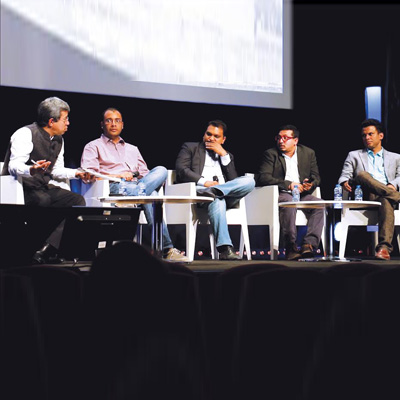
    On Day 1 of Mipcom 2015, a panel comprising Videocon d2h deputy CEO Rohit Jain, Indiantelevision.com founder, CEO and editor-in-chief Anil Wanvari, BT Media & Broadcast VP Mark Wilson-Dunn and Travel XP CEO Prashant Chothani precisely attempted to answer this very question.


    Starting out, Jain gave an overview of how the direct to home industry has grown over the years and also how Videocon d2h has been a frontrunner in the recent past in terms of contributing heavily in helping India become a completely digitised country. “The last couple of years have seen some significant changes in how the television and broadcast ecosystem has evolved. India is among the fastest growing economics, and the biggest advantage is having an audience of 670 million under the age of 25 years,” he stated.


    “India also has the second largest market for Pay TV connections with 150 million homes. There are challenges of over-the-top (OTT) players coming in globally and India in a big way, but that must not be a hindrance for innovators like us to continue bringing about the best changes and continue being thought leaders in our space,” he added.


    Continuing the discussion and bringing a more global perspective to things, BT’s Wilson-Dunn said, “I honestly believe that India is a very strong content oriented market and has the right ingredients to grow as a 4K consuming audience. With the recently successful test of waters with the Cricket World Cup in India, it has certainly given a lot of confidence to us that India and Asia as a whole is ready for 4K consumption.”


    The panel agreed that sports would play a major role in establishing the future of 4K as well along with other live events and movies. “We are currently investing heavily in creating only 4K content and are confident that within the next two years, 4K will be huge in India,” said a confident Chothani. “I am currently also looking for the right partners for the distribution of the channel globally and I can already see the benefits of producing in 4K initially than going back and reinvesting in migrating from HD to 4K.”


    Indiantelevision.com’s Wanvari was more cautious in his approach on how India will embrace 4K. “I am sure 4K is the natural progression from HD, and with players like Prashant already investing heavily on creating the content pipeline, is an encouraging sign for the future of the content roadmap of the country. Although, the transponder space, which is currently available, is a cause of major concern and could be a downer for the spirits of many content distribution platforms like a Tata Sky and Videocon d2h,” he opined.


    The panel also discussed how 4K would ideally be for a niche audience, which would be in a position to generate higher average revenue per users (ARPUs) for distribution platforms that are currently generating anywhere between $3-4 on a monthly basis that could go up to $10-15 with 4K being introduced.


    At the end, the consensus amongst the panelists was that in the next five years, India will see a sizeable growth in the number of 4K content available on linear platforms, but these are still early days and one can only play the waiting game as the bigger challenge that still lies ahead is complete digitisation and accountability of users of content in the country.

  • IDOS 2015: The Broadband Drive

    IDOS 2015: The Broadband Drive

    GOA: The penultimate session of the Indian Digital Operators Summit (IDOS) 2015 was a panel discussion on ‘The Broadband Drive.’ 


    The session was moderated by Indiantelevsion.com founder, CEO and editor-in-chief Anil Wanvari and Media Partners Asia executive director and founder Vivek Couto. The other members of the panel were Maharashtra Cable Operators Foundation (MCOF) president Arvind Prabhoo, Hathway MD & CEO Jagdish Kumar, Ortel Communications Limited head of broadband Servises Jiji John, Lukup Media founder and CEO Kallol Borah and Broadcom India MD, head – business development, India and South-East Asia Rajiv Kapur.


    The session began with Jagdish Kumar saying that earlier, Hathway had positioned itself as a cable company that also offered internet, and now it had started positioning itself as one that offered both cable and broadband. Hathaway had doubled its turnover from broadband as compared to last year. However, the company had yet to firm up plans for OTT, said Kumar.


    Kumar was of the opinion that the government should take the eight per cent revenue share from data revenue of the cable industry only after higher internet penetration levels took place after two or three years. “This has to be looked upon as an infrastructure development,” he added.


    “Average revenue per user (ARPU) is not the driver for broadband to be taken up as a business by MSOs or LMOs. It is margins that actually matter. The reason why MSOs and LMOs have taken up broadband is because there was a requirement,” said John.


    In his view, access devices have multiplied over time and with that the consumer wanted to see videos on whatever device, whenever, and wherever. “While mobile internet is the only option when one travels, it is wired broadband that offers the proper stable throughput. Systems such as DOCSIS 3.0 offered a better experience than television did,” John added.


    For Ortel, broadband was an important stream and DOCSIS 3 was being tested in a limited way. Ortel garnered subscriber numbers in three digits during the pilot phase revealed John. “We have now started offering video free to broadband customers,” said John.


    The company is looking at charging a customer approximately Rs 1000 – 1200 for 10 mbps broadband and Rs 1999 for 50 mbps. “This will subsidise content charges to broadcasters for the free video offerings to subscribers,” he said.


    Similarly, Hathway was also considering bundling of HD content free along with broadband, according to Kumar.


    India has its own unique business and environmental challenges, which include unpredictable power and last mile cable laying amongst others. However, technology was available to serve India and/or China specific solutions, said Broadcom’s Kapur. “On the subscriber side, PC penetration is low and operators saw the STB only as a live video delivery necessary evil. Some operators would proactively drive broadband, while others would react only,” he said.


    Emphasising that if broadband was considered as a ‘use case’ as opposed to a pipe, Kapur said that services delivered to the consumer could be quite game changing. “Broadcom is very bullish about broadband in India. Broadband is the only answer for a cable operator to retain customers as well as raise ARPUs. Progressive minded cable operators will take advantage of the fact that networks could be two way and will establish a service that would retain a customer with a higher ARPU. The higher ARPU customers were in turn needed to subsidise the lower ARPU customers. Rather than government driven, a private sector sustainable business and profitability driven long term sustainable business model is required,” Kapur opined.


    The pipe is already in place said MCOF’s Prabhoo. “The question is about how one utilises it. There is enough fibre waiting to be exploited for Phase III of digitisation. MCOF is educating its members about the ways to monetise the pipe. On an experimental basis, MCOF tied up with a PSU, a national ISP that brought the pipe to a particular place, and from there, over the last 20 days, we have connected 25 branches of a nationalised bank with secured leased lines. This would be scaled up to about 125 over the next few days. Over the next three months, this would further be scaled up to 525 branches across the state of Maharashtra,” he informed.


    This would help build LMOs confidence that they could deal with a PSU explained Prabhoo.


    Also, some MCOF members had established WiFi service hotspots, which had initially offered high speed internet free of charge for the first six months, and now could be availed though a voucher at a small price of Rs 5 for three hours, or Rs 10 per day from small vendors such as a ‘paan shop.’ Prabhoo claimed that through the commissions on voucher sale alone, a paan shop owner’s earnings had gone up by Rs 8000 per month. 


    Bullish on the broadband sector in India, Prabhoo said that he envisioned a number of innovations coming into the business.


    Explaining his company’s product, Lukup Media’s Borah said that it offered on-demand multiscreen TV service and operates as an OTT platform through a multiscreen home gateway that brought internet delivered content to television and other consumer devices. In the coming months, Lukup also planned to bring linear broadcast TV channels and internet access though a single connection.


    Questioning as to why cable companies were not sharing infrastructure in the way telcos were, Wanvari of the opinion that cable companies could compete on products. Kumar agreed that there was merit in cable companies sharing infrastructure for a lot of backend processes and expected this to evolve naturally over a period of time. On the other hand, Prabhoo said that LMOs would be willing to upgrade their infrastructure to work with telcos for providing broadband.

  • TV content creators keen on digital platforms but rue dearth of writers

    TV content creators keen on digital platforms but rue dearth of writers

    GOA: Producers of content for television feel that they are not creating value as the intellectual property rights go to the channels. However, they are ready to invest in creating content for digital networks and over-the-top (OTT) platforms.


    Addressing a session on whether the content ecosystem was ready to serve 2000 channels, these producers said serials made for television gave them money but they did not feel satisfied since they were not the owners of their creations. 


    Contiloe Pictures CEO Abhimanyu Singh said there was little doubt that TV got more eyeballs than cinema, but this was not totally satisfying. Singh was in fact keen to syndicate their content, which the company could then monetize in different languages.


    “One reason why content creators settle for the present position is because the risk lies with the broadcaster and not with the creator,” he said.


    In the session moderated by Indiantelevision founder CEO and editor-in-chief Anil Wanvari, Singh said that he was keen to take up the challenge of creating content for other digital platforms.


    Further stating that the younger generation was not coming to television but taking to other mediums, Singh lamented the shortage of good writers in the industry. “The ecosystem has to change for content creators, and this can happen when the intellectual property rights remain with the creator,” he emphasised.


    Concurring with Singh on the shortage of writers, Colosceum Media CEO Lalit Sharma looked upon the future as an opportunity for new people to come in. He said, “We will be ready to create content for other digital platforms.”


    Beyond Dreams Entertainment Ltd founder Yash Patnaik added, “We have already been doing programmes for other platforms and we have tested audiences for new formats. I am waiting for the market to open up with the entry of OTTs.”


    Referring to the shortage of writers, Patnaik said that the writer was also preparing himself for digital platforms. “It is an investment on losses, which may turn into profits later. Content creation needs money, which in turn will create value, which will fetch more investments,” he added. 


    Wanvari expressed confidence that OTT players will pay well.

  • Change in investor mindset needed for MSOs to chart growth path

    Change in investor mindset needed for MSOs to chart growth path

    GOA: While the direct-to-home (DTH) sector has managed to attract investment from private investors because of its growth, the cable industry will be able to do so only if multi-system operators (MSOs) add broadband to their services.


    This was the general consensus of a session on ‘Investing in Digital assets – Gems and long bets’ at the ongoing Indian Digital Operators Summit (IDOS) 2015 organised by Indiantelevision.com and Media Partners Asia.


    HSBC Securities and Capital Markets (India) Pvt Ltd director of analyst telecoms, media and Internet Rajiv Sharma said that DTH had gained as it has shown growth in terms of average revenue per user (ARPU), and innovation.


    While the stocks of cable industry initially went down, a reading of the figures of both cable and DTH showed that there was some recovery towards the end of the year. “The MSOs have not matched up to expectations, partly because of MSO-local cable operator problems,” Sharma said.


    In the session moderated by Castle Media ED Vynsley Fernandes, Sharma said that broadband can be the catalyst, which can bring in growth but only one or two MSOs have entered the broadband space.


    “The scale of growth is directly linked to attracting investments. If LCOs (local cable operators) can show that they own subscribers, they will get investment,” Sharma said. However, he was quick to add that broadband infrastructure and broadband compliant STBs (set top boxes) would help.


    Asked about collaborations, Sharma said that the media can learn a lot from telecom where networking and collaborations led to the government thinking in terms of letting them sell or share spectrum. “Telecoms focus on revenues to share, while the cable industry wants finance for set top boxes,” he said.


    Replying to a question about the slow growth of broadband in the country, he said, “Anything that is wireline will grow slowly whereas wireless will grow much faster. The consumer is willing to pay but it is for the government to facilitate this.”


    Sharma also added that the quality of management, profitability and network will attract investments. He regretted that the cable industry had failed to learn any lessons from the first two phases of the Digital Addressable Systems (DAS).


    Concurring with Sharma, MPA executive director Vivek Couto added, “Investors reward growth and DTH did exactly that.” However, he was of the opinion that the last mile operator (LMO) will consolidate under the Headend In The Sky (HITS) platform and that may change the situation. “The results will begin to show in the three to four years,” he said.


    Referring to NXT Digital, which was prepared to offer funding, he said that LMOs may now come forward.


    Couto added that while organized MSOs were doing well, investment in broadband in the short term would bring in benefits in the long term.


    In reply to a question, he said that India was the only country where content generation was growing. “But in all this, the cable industry was feeling lost,” he opined.


    Indiantelevision.com founder CEO and editor-in-chief Anil Wanvari had the last word when he said that the mindset of investors had to change as few MSOs in India could today afford the kind of growth their counterparts had shown in foreign countries.


    In another session, Maharashtra Cable Operators Foundation president Arvind Prabhoo and Sagar E-Technologies executive director Sudhish Kumar agreed that the cable industry had to organise itself better if it was to attract investments and grow in the digital era.


    Prabhoo said he had succeeded to an extent in this by getting the LCOs to be seen as the last mile operator (LMO). In an example of how the LMOs can grow, he said, “30 LMOs in Nagpur have joined together to form an MSME and were not prepared to invest in other LMOs,” he said.


    He added that if investors put in money to help create model services, there will be a major change in the next six months or so. “If cable operators offer other services through their STBs, there will be a churn in the industry,” he said.


    Kumar, who has a headend in Bangalore, lamented that finance was a major problem. “One STB cost around Rs 1500, but some of the larger MSOs sell boxes for around Rs 1000 and this forced others to sell at lower rates, which in turn results in a loss,” he said.


    Emphasising on the fact that MSOs were not concentrating on marketing, he said that if they did, it would help in consolidating the industry.


    Citing his own example, he said that he had not lost a single LMO despite having had ups and downs in his company because of the faith reposed in the company.

  • The Content Hub: Education in comedy doesn’t exist in India

    The Content Hub: Education in comedy doesn’t exist in India

    MUMBAI: With the soaps and dramas ruling the Indian television screens, comedy to some extent has taken a backseat. A session on ‘Comedy Fix’  moderated by Indiantelevision.com’s founder, CEO and editor in chief Anil Wanvari and panellists Neela Telefilms director Asit Modi, Optimystix Entertainment producer Vipul D Shah and All India Bakchod (AIB) co-founder and member Tanmay Bhat sought to find if the TV industry is seeing a dearth of writing talent.

    Modi said that in the field of comedy there is not only shortage of writers but producers as well. “Our industry is not ready for new writers. We have a closed mindset when it comes to new writers and tend to only work with a particular set of experienced ones. We don’t give an opportunity to explore,” he said.

    Bhat went on to reason why new writers are not accepted by the industry and what today’s writing lacks. According to him the current state of television writing is very generic. “Right from actors to producers to writers, I have seen ‘just-get-it-done’ kind of attitude where originality doesn’t matter but copy pasting does.  In my early days, when I used to meet television writers  one common thing that I noticed amongst them was that they all had a set pattern of writing in a number of shows,” he elaborated.  

    All the panellists felt that in today’s time everything is scripted and agreed that the attitude towards writing is very poor which needs to be changed.

    Shah highlighted right from the beginning there were no new writers created for TV but the ones making the films ended up writing for the small screen too. According to him, it is difficult to get innovative story writers because it is demanding. “Today, television writing, whether fiction or non-fiction, has a set of dos and don’ts because a channel can demand a change in the plot anytime and we as writers have to be also on our toes to fix it.”

    He went on to say that western formats can never be adopted in India. “Our humour is completely different from the genre abroad. We can’t present dirty comedy here because it will never be accepted. So, to bring the humour, which can be accepted by Indian audiences, we have to create our own talent, which is again very difficult.”

    According to Modi, whose Taarek Mehta Ka Ooltah Chashmah has been running successfully for more than six years, writing a daily comedy is not only a challenge but a task. It is not only the writer’s responsibility to make the show going but the entire teams. “You not only need a good writer but a good performer also. And after getting a good performer/actor, one needs a good producer who can bridge the gap.”

    Showing the silver lining in the cloud, Bhat said that thankfully now humour has started getting the respect it deserves. According to him, comedy education doesn’t exist in India. “We compare ourselves to the shows in the US. But we also have to look at the kind of education and training they have gone through. All writer/comedians one sees in their shows have all gone through a certain level of training. This doesn’t exist in India.”

    The panellists agree that Indian television has always accepted family comedies and this is what will continue in the future as well. From shows like Dekh Bhai Dekh to Khichdi to Sarabhai vs. Sarabhai, they all have catered to the masses.  

    Is there fatigue coming in comedy? “No, not at all,” said both Modi and Shah. “There will be always space for comedy. Shows like Comedy Nights with Kapil, Comedy Circus, are making everyone laugh today. And everyone loves to laugh, so comedy is and will always be audience’s first choice,” added Modi.

    Wanvari further delved to find out that apart from family comedies if there is a room for sitcoms on television? “It will change, because comedy has just started its journey.  I am seeing a lot of scope as more comedy channels are being launched. In comedy more than the story, character development is important. So once the characters are developed, the task will be simple,” said Modi.

    According to Shah, whose Comedy Circus ran for seven and half years, a show never feels the fatigue. “Yes, at times a few episodes works and a few don’t. Comedy sometimes backfires as well. But overall as a genre, there is no fatigue coming in,” he further said.

    Coming from a digital background, Bhat feels that television needs to start catering to the youth a lot more. “They are still catering to the families and not the youth. So, young people will stop watching television at some point of time unless channels keep re-inventing.”

    As for Bhat, re-invention should start from the writers’ room. “I don’t see enough young people picked up from the colleges and groomed. It is essential to grab someone at 16 and groom them to get good comedy in place. Any college kid would want to write for television but there are no platforms.”

  • The Content Hub: Segmented channels predict good future for themselves

    The Content Hub: Segmented channels predict good future for themselves

    MUMBAI: The Indian television industry is undergoing a sea change in terms of the content that is being created, both on television and online, long as well as short format. With an increasing need for dynamic creators and scriptwriters, Indiantelevision.com’s first edition of The Content Hub aims to bring together writers, creators, producers, artistes and broadcast executives to discuss with those involved in the content creation process.


    Opening the session was Indiantelevision.com founder, CEO and editor in chief Anil Wanvari, who spoke about how current Indian shows run for more than 1000 episodes while the audience and time spent on digital is shooting up. “We need to create engaging content by rethinking whether we need a time shift, seasonal shows, social programmes or younger producers,” said Wanvari.


    The first session dealt with the risk taking broadcasters of the industry in which Madison World chairman Sam Balsara spoke to Epic Television Networks CEO Mahesh Samat and Reliance Broadcast Network Tarun Katial.


    Balsara started off the session by asking the two about their attempts to disrupt content in the traditional general entertainment channel (GEC) space. Samat said that over the years, the GECs have seen a very few changes and it is only in the last two or three years, due to some impact of digitisation, there has been a little shift.  He compared the current television industry scenario to the film industry where earlier only one type of movies were produced due to single screens and now due to proliferation of multiplexes there is a variety.


    Balsara said that every GEC has the type of content that Epic is trying to segment into its channel. “I am told that people watch shows, not channels?” he questioned. To this Samat took up the example of the US where in the last 25 years all the channels that have come up are segmented. To this, Katial said that the top three GECs could afford to do general content while channels beyond that have to think differently. “Truly there are only three GECs in India- Star Plus, Zee TV and Colors while Sony is largely crime and similar to that is Life OK. Sab is segmented for comedy and so is Big Magic. A lot of our growth has come from geography segmentation,” said Katial.


    Balsara pointed out that the time where people in India will pay to watch good content is still very distant, so what will be a viable model? Katial said that he doesn’t feel there is space for niche segmented content because the investment needs to be if not more then as much as what a Hindi GEC can put with also a good amount of distribution cost. “Abroad, large GECs are terrestrial and free to air. Here to create content that needs to fill three hours daily can hamper the economics and to reach 50-60 GRPs you have to play the lowest common denominator game. When you segment and get to 15-20 GRPs, no Madison will pay you the ER,” he pointed out.


    Balsara with his years of experience said that ad revenue is limited due to limited viewership because while segmented channels ask for lakhs of rupees, GECs have a CPRP of about Rs 20000 to Rs 25000. “Why would a brand buy something at five times the cost if it is available at one fifth the price?” he questioned.


    The way forward according to Katial is actually the viewership but if original content needs to be created then high investment is needed. “Channels such as FoodFood and Discovery have content with limited cost and limited distribution (restricted to urban areas) but for original content the P&L gets to Rs 300 crore,” said Katial. Answering Balsara’s question of high a-la-carte rates of channels, Samat said that a certain amount of reach and GRPs are needed before the channel can be made affordable.


    “10 years ago people laughed at DTH and look at how things are now. So subscription isn’t far off. If you make the right content with limited episodes, syndication will get you money,” highlighted Samat. He added that current long format shows don’t allow syndication.


    Balsara highlighted the language difference between English and Hindi wherein English papers command high ad revenue while English channels are almost inconsequential. To this Katial said that English papers create influence while English channels sell products. “The English viewer is hooked to other screens but not set for standard TV viewing format,” he stated.


    With several growing mediums, Balsara asked if today content is created with only TV in mind to which Samat said, “We are developing content ‘forever’ that can make money even afterwards. More than screens, we should now look at longevity.”


    In response to Balsara’s question of adapting several international formats Katial said that there is no shame in legally doing so since it has a success track record. “When you put Rs 1 crore or Rs 2 crore behind such shows, every management wants to see it has worked before and so do advertisers,” he said. Samat said that the option of creating or adapting a format lies totally on the economics of the channel.

  • “I don’t see a revenue stream from digital for 2-3 years”: Kartikeya Sharma

    “I don’t see a revenue stream from digital for 2-3 years”: Kartikeya Sharma

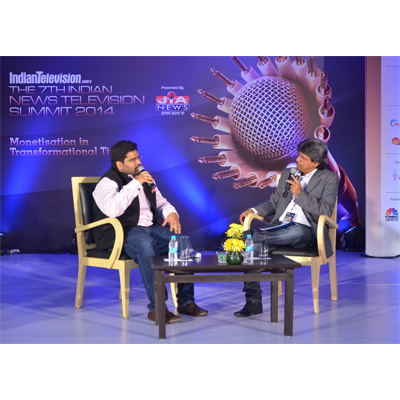
    MUMBAI: At the Seventh Indian News Television Summit, ITV Network managing director Kartikeya Sharma took the stage to speak about the success of his network and the future plans. Hailing from a political family, Sharma was adamant that he did not want to get into politics.


    It was while he was studying in London that he got attracted to the media industry. “When I was studying, the only way of being in touch with home was television with the first channel that came on Sky. That drew me into the space,” he said while speaking to indiantelevison.com founder, CEO and editor in chief Anil Wanvari. He added that what affected him was the rise of primetime during 2004-05 and the way India was reacting to the world while it was fresh off the boat.


    On being asked about the difference in running his hospitality business vis a vis media business, he said that the two cannot be compared. “News is definitely a tough business and there isn’t any particular revenue model that works well. You have to improvise. Circumstances are also important. So at what point a channel is being launched and the policies at that time is crucial,” he said.


    Speaking about the growth of his Hindi News channel, India News, Sharma said that the initial projected benchmark was 6-7 per cent market space but it actually went to 11 per cent within a span of six to eight months. “We don’t fight for filling ad slots on the channel anymore,” he said.


    The growth of the ITV Network has been a combination of both internal accruals and external debt. It will be going after a few more acquisitions and product launches in the regional space in the coming months. “By 2016 we want to be the largest and most profitable news network in the country,” he added.


    Responding to Wanvari’s question about whether syndication of news was an alternative means of revenue for sustaining the business, Sharma said that surely that will bring in a new source of revenue. “There is enough content floating around with 400 channels but the true value of syndication is debatable and I don’t think you can look at it vis-?-vis subscription or ad sales,” he said.


    While digital is touted as the ‘next big thing’, according to Sharma it is still too early to predict its fate. “In foreign countries, people aren’t able to monetise the digital platform as expected. There has been very little work done in research and development. I am not very optimistic about a revenue stream coming out of digital for the next two-three years,” he said adding that there is a need to look at digital as a synergy between evolution of content and technology.


    According to him, evolution of digital does not mean the old world will end. “I am a big fan of digital myself but we are being bullish when we talk of this medium. It is a matter of fact that it is the future but the timing is important. We have made huge errors of calculating that in the past and we are doing the same again,” he said.


    Talking about his tenure as Association of Regional TV Broadcasters (ARTB) president, Sharma said that the main aim was to help regional broadcasters since he realised that they needed a voice. “I managed to get 40 per cent of revenue for broadcasters from the government,” he stated.


    For the industry to progress, Sharma said that unity was necessary but collective decision doesn’t last long. “DD Freedish has pushed up its rates from Rs 50 lakh to Rs 5 crore in five years because of GECs wanting to get onto it. We all decided that we won’t go on the platform but then some of us ended up breaking that decision,” he shared with the audience.


    While the news space was cluttered, he believes that there is space and chance to be a number one in news.