Tag: Anil Wanvari

  • Balaji Telefilms’ matriarch Shobha Kapoor finally gets her due at Indian Telly Awards

    Balaji Telefilms’ matriarch Shobha Kapoor finally gets her due at Indian Telly Awards

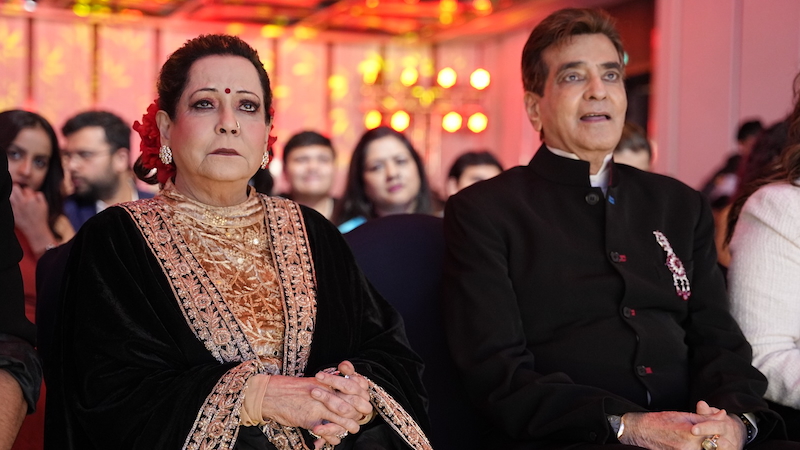
    MUMBAI:  It was a night to remember at the 25th edition of Indiantelevision.com and TellyChakkar.com’s Indian Telly Awards, as Balaji Telefilms’ managing director Shobha Kapoor was finally recognised for her silent yet towering contribution to the Indian television industry. 

    In a long-overdue move, the editorial board of the Indiantelevision.com group conferred her with the Ramanand Sagar Lifetime Contribution Award — a decision taken after much deliberation and unanimous agreement. 

    The emotional high point came when her husband, veteran actor Jeetendra Kapoor, took to the stage at JW Marriott, Mumbai, to receive the award from Indian Telly Awards founder Anil Wanvari. But instead of keeping it, he stepped down from the stage and handed the trophy to Shobhaji, who was seated in the front row — triggering a wave of thunderous applause and emotion across the ballroom.


    A post shared by TCX.official (@tellychakkar)

    What followed was a heartfelt video message from daughter Ekta Kapoor, currently in the US: “Mom, you deserve all the awards we’ve ever got. Balaji is nothing without you. I am nothing without you. You’ve always worked behind the scenes, never seeking credit. Today, finally, someone has given it to you..” 


    Trying hard to hold back tears, Shobhaji accepted the tribute with poise and composure. “It was an evening to remember! I’m honoured to have received this award and specially from my husband who has been my biggest support throughout the 30 years of my career! Above all my daughter and partner Ekta kapoor who has been and is the driving force ! Thank youu Indian telly awards ?,” said Shobhaji. 

    “Shobhaji has been Balaji’s rock — in its highest highs and darkest lows,” said Wanvari. “She allowed Ekta to blossom as a creative force, while herself building the operational backbone of the company. Together, they’ve created a powerhouse that has trained and mentored scores of television professionals across the industry.” 

    He added, “Ekta has been showered with accolades over the years. It was time Shobhaji, one of Indian TV’s real heroes, received her moment in the spotlight.”

    (If you are an Anime fan and love Anime like Demon Slayer, Spy X Family, Hunter X Hunter, Tokyo Revengers, Dan Da Dan and Slime, Buy your favourite Anime merchandise on AnimeOriginals.com.)

  • Customer experience is king, but AI might just be the sneaky new prince of modern commerce

    Customer experience is king, but AI might just be the sneaky new prince of modern commerce

    MUMBAI: At a time when the average consumer can scroll through 600 metres of content with a flick of their thumb, customer experience (CX) has become the new battlefield for brands. At Indiantelevision.com’s Media Investment Summit 2025, the panel titled ‘The Experience-Driven Commerce: Why CX is the New Brand Differentiator’ proved that tech, touchpoints and taste all matter-but timing is everything.

    Moderated by Indiantelevision.com’s founder Anil Wanvari, the session brought together Sujay Ray (L’Oréal India), Anjali Dutta (Tech Mahindra), Namita Bohara (Hindalco Industries), Amruta Pawar (Hafele India), and Durgesh Singh (WebEngage), who revealed that when it comes to CX, the devil isn’t just in the details—it’s in the data.

    Kicking off the session, Sujay Ray of L’Oréal India emphasised the need to create a “seamless experience across touchpoints”. Whether in a salon, an e-commerce app or an Amazon product page, Ray argued, “there has to be a value exchange”. From virtual hair trials using AI to beauty advisors guiding customers in-store, Ray believes true brand loyalty comes from creating consistent, context-aware moments.

    “CX is not about adding glitter to one channel—it’s about synchronising the entire journey”, he said. And for L’Oréal, that meant building “Plus Plus experiences” across every brand interface.

    Representing Hindalco Industries, Namita Bohara unpacked the duality of B2B and B2C engagement. “For a carpenter, it could be a sample kit. For the end customer, it’s about the finish and touch”, she noted. She called attention to Hindalco’s clear demarcation of ‘partner customers’ and ‘end customers’, urging brands to rethink standard definitions.

    “For us, every partner is a customer”, Bohara stressed, adding that her organisation has instituted design centres and standardised brand touchpoints to ensure a coherent experience across product categories like furniture fittings and appliances.

    Anjali Dutta from Tech Mahindra painted a broader canvas—marrying technology with empathy. “I want to get a small space in my customer’s subconscious mind. That’s what CX means to me”, she said. Dutta urged brands to go beyond vanity metrics and embrace ethical AI.

    “CX isn’t only digital—it’s physical too”, she said. She cited scenarios where in-store agents equipped with purchase history can offer a personalised recommendation. “That’s the new CRM: remembering who walked in and when”.

    At Hafele India, general manager Amruta Pawar believes that physical contact still trumps virtual bells and whistles—especially in the business of soft-close drawers and modular furniture. “Our industry needs customers to touch and feel the product. That can’t be virtualised yet”, she said.

    Hafele’s CX strategy includes design centres, live demos, and QR-based packaging systems that allow customers to scan for specs instantly. “Digital helps nudge a customer down the funnel, but final conversion often happens offline”, she explained.

    Durgesh Singh of Webengage added the sharpest edge to the panel, diving into lifecycle mapping and predictive analytics. “Every customer is on a different journey. Our role is to ensure each touchpoint adds value”, he said.

    Singh highlighted how AI helps brands send the right communication at the right time—citing models that predict whether a lipstick buyer will next purchase sandals and when. “We use LSTM, next-best-action models and AI-driven time-of-day messaging to improve conversion by as much as 25 per cent,” he said.

    All panellists agreed: AI can’t replace intuition, but it can scale it.

    While all brands had embraced technology in varying capacities, the panel made it clear that customer experience isn’t a one-time campaign-it’s a constant calibration.

    Ray put it best: “Today, you might feel like you’ve hit 30 per cent, but the next challenge resets the goalpost. It’s a journey, not a destination”.

    And with the audience nodding along, it was clear: if you’re not obsessively refining your customer experience, someone else is doing it better.

  • Innovation in content distribution: FAST channels, streaming, and more

    Innovation in content distribution: FAST channels, streaming, and more

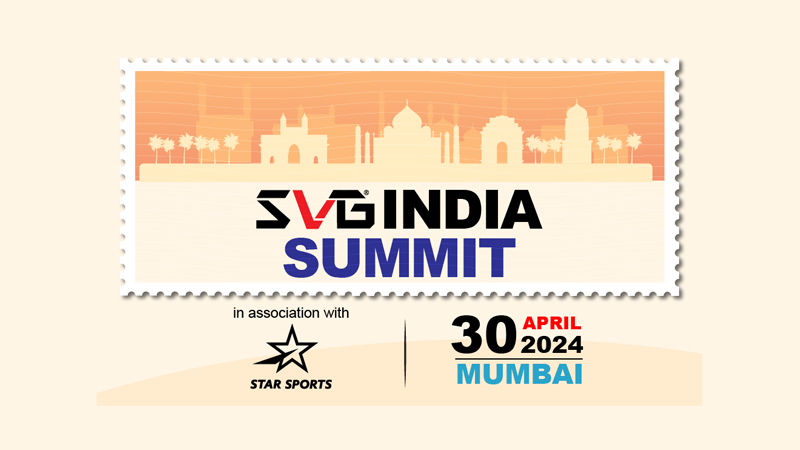
    Mumbai: The Sports Video Group is held its first event in India on 30 April 2024. Hosted by Star Sports in Mumbai, the event brought together top-level executives from the TV sports production community for a day of networking, tours, panel discussions, technical presentations, and much more.

    FAST (free ad-supported television) is a global phenomenon and for sports leagues, networks, and even teams it could be a new way to reach fans in an efficient way. The panel dived deep into the world of FAST channels and streaming platforms to learn how they are innovating in this ever changing world.

    The panel was moderated by Indiantelevision.com and founder, chairman, and editor-in-chief Anil Wanvari, and had panelists including AWS, principal and business development manager, global sports Paul Devlin; Amagi, director of sales Imran Khan and Disney Star India, head – broadcast technology and operations (BTO) Gajendra Tijare.

    Wanvari began the session by asking, “What is the best FAST sports channel?”

    Devlin replied saying, “I’m a massive sports fan, and have been working in sport full time. I’ve been in sport my whole life. What makes a good FAST channel for me, for sports is, I heard a lot today and I’m really impressed by it. On Amazon we talk about working backwards from the customer, working backwards from the fan.”

    He added, “I think, let’s call it a world class FAST channel, to use a sporting metaphor, is the one that I want to watch. Which is probably different from the one that each of the panelists wants to watch. So I think it’s a personalised FAST channel, that is kind of world class, that would be my opinion on it.”

    Answering Wanvari’s question, Khan said, “A linear FAST channel which is live, it won’t be relegated to the Star Sports HD channel. It would be somewhat like, I just want to watch fourth and sixth, that’s it. I’m more interested in pre-match and post-match. I don’t want to watch that seven hours of live match or three hours of live match. So I need something personalised, that’s number one.”

    Imran added, “When you see FAST, that ‘A’ stands for advertisement and that’s not a random advertisement. So based on my preference, I would like to see the ad which is based on my preference, be it automobile, technology or apparel. I’m not just seeing any random advertisement. For me, the FAST channel, well curated for me, which is only pre-match, post-match with some highlights and with the ads that I want to watch. FAST is all about advertisement. The only source of revenue for FAST channel is advertisement. There is no paywall behind that. I’m not talking about a premium channel which is the source, I mean revenue generator for this. I would rather make money from the advertisement rather than asking someone to pay for subscription.”

    Replying to Wanvari, Tijare said, “I think before we say which is a good fast channel for sports. We should understand the entire reason why FAST came to me. It’s a question between linear TV subscription and streaming. Honestly, it’s a late mover in the business of fast channels. But if you look at FAST on the entertainment way, it has actually made quite an impact. It’s a billion dollar plus industry and we’ve seen that most streaming platforms are now looking at ad, whether it’s Amazon or Netflix, etc.”

    Tijare added, “What we’ve seen over the period is that on FAST, there is a lot of legacy content that’s played. It’s curated to the user by content being curated automatically. You have advertisements that can be curated; you have return path which gives you information about who’s watching and what are their preferences and accordingly you can do a lot of curation of content. When it comes to sports, it’s not that simple unfortunately. Firstly, because while there is an opportunity, there is also a disadvantage as most of the live main events are rights driven. And live of a big game like Super Bowl won’t be possible because it’s already given as rights. But the opportunity lies in the pre, the post, the build up towards that game, the personalisation. There’s a lot of opportunity in creating content and putting it out on platforms which can aggregate consumers, which can build that traction towards that event, which will actually get a lot of stickiness towards that event. This can be used for that ‘A’. So I think that’s one great opportunity. The bigger opportunity I think is what now D-Zone.”

    Tijare further went on to add, “There are sports that are in the making, that don’t see the light of day. Where you have channels that could see light of day using FAST. There are sports that can be curated which can not be on the big four or the big five networks, but they can be curated through FAST channels and you get a lot of new sports that can come on platforms like that.”

    Talking more about what’s a world-class FAST channel, Devlin said, “It allows that linear broadcaster to collect data on what their audience likes. That’s the key to personalisation is data, knowing what they want, what they’ll watch, and actually, potentially opens doors to sports rights within a certain market that you didn’t realize you’ve got an audience for. Again, consciously, it could be the Olympics.”

    Talking about FAST rights, which is another layer that the federation will start demanding money for, Wanvari asked Tijare if he’s happy with that.

    To which Tijare said, “The good thing is I don’t know how that works, because usually highlights are also bundled up into the live events. But it depends on sport to sport. However, I think that’s something that can be a possibility. Platforms will give the services but at the end of the day, FAST channel is, or any other thing, as technologists, we are supposed to give opportunities where we can monetize. These are new ways of monetizing content and at the same time, you create a spot. You have an opportunity to build a spot.”

    He added, “In fact, in Australia, I was reading there was this FAST channel called acTVe. They’ve got a surfing channel on board right now. Who wants to put surfing on TV in India? But as a FAST channel, there would be few surfers who are really interested and they could get that on a platform. There are sporting events that are not really seen openly. That’s the opportunity. That’s what we can see that can come on and we can make money, obviously.”

    Moving on, Wanvari asked Khan, “You’re working with a lot of companies that are launching FAST channels in India. So what are some of the new developments you’ve seen as far as fast is concerned in India? And what can and what cannot work in India and in the area of FAST?”

    Khan replied saying, “In India, the biggest growth which we have seen is in news channels. Right now, it’s around 17 news channels across different languages, which is live on fast platforms and hey have started making money. Initially, we always had this question that everybody is on fast, but nobody is making money. So I’m putting it on record that everybody is making money from news channels. So the way I said, they’re making money, for entertainment channels, they are the second mover.”

    Khan added, “India has always been a difficult market when it comes to sports. So the way we look at the US market or Europe market is completely different. Even if we talk about the ad spend in the entire ecosystem of TV, in the US, it’s 29 percent, in Europe, it’s 21 percent. In India, it’s surprisingly 22 percent including IPO. That’s the ad campaign report we just got published yesterday (29 April). So there are a couple of levers which we have been in discussion with the team. It’s not only the lines which we can take advantage of. You have a plethora of content sitting idle somewhere, which is not very monetised. So the way we do it in the US is like Super Bowl of 70s, 80s, 90s, a particular season, just highlights of corners, highlights of this course. So we can create something like that because cricket is not just a sport in India. It’s a religion. Wherever you invest, you will get the audience and you get real time analysis. So you can always see what’s working, what’s not, and based on that, you can see whether you create more channels or can you add some like tier 2 sports, tier 3 sports, because those are something which are really happening across the world.”

    Khan further said, “There are players who have been game changers in this part of the world. Fancode is one,  SportVot is another one. One doesn’t need to be in the tier 1 segment. A district level player can be a famous player. In terms of technology, we have made it more flexible. Initially there was only one version. So irrespective whether you use it or not, you are going to pay some. Now we have made it like different tiers. If you are a content owner, your content is sitting somewhere in the library. We need to curate the content. There is no live and no heavy graphics. The channel can be made in a very economically viable.

    Then you have some channel which is only for a certain duration. You can come up with a documentary or an infotainment channel just for the election duration. I can only charge you for two or three months. So that is a pop-up channel which is very common in the US. For instance, during the election time or Christmas time, you can come up with a channel, run it for three months, then you shut it down. That product got awarded the first Emmy award for Amagi, which is called DYNAMIC. So you can only pay for the amount of hours you have used.

    Wanvari then asked Devlin, “Where do you guys come into play in terms of delivering content production on the cloud? What about distribution on the cloud?”

    Devlin replied, “Well, we work practice from customers and so live production in the cloud has advanced in two years. I’ve been speaking at SVG events for two years. We were talking about the art of the possible with live cloud production, and I enjoyed this morning’s sessions talking about potential and challenges around running live production in the cloud. But there’s undeniable progress we’ve made over the last two years, and I love hearing about the experimentation. A great quote actually from our CEO, Andy Jassy, is ‘Innovation requires two things. The ability to try a lot of experiments and not living with the collateral damage of failed experiments’, which I really like.

    ‘In sport, you know, today’s home run, won’t win tomorrow’s ball game.’ – it’s a Babe Ruth quote. You have to constantly look for better ways to do things and in sport, that happens all the time. In the high performance teams, the world that I came from, we’re constantly looking for a better way to do things. I’ve been so inspired by today’s sessions that nothing is perfect. But what we’re looking for is, is there a better way to do certain things? And we’re certainly working with lots of our customers around the world and trying to find a better way of doing things. When I say better, better means a lot of things. It could mean more climate friendly, it could mean the ability for people who’ve got, who are exceptional, an example is a customer in the US – Media Monks who do some remote and live cloud production.”

    Devlin added, “Their CEO told me that they had one of the best audio switches in the world. They did nothing in the UK, but was able to stay at home whilst they were producing in the cloud, basketball in the US, which is great. So when I say a better way of doing things, it doesn’t mean perfect and flawless. One thing that COVID did teach us is, people mobility, and when there’s a lack of that, when the net comes around you and you can’t move, it forces you to innovate and look at different ways of doing things. So I suppose in summary, we’re really keen to help customers continue to innovate, be it through live cloud production or be it through fast channels. Collect data on your audience to be able to personalise for lots of other innovations.”

    Wanvari then went on to ask both Khan and Tijare, “What are the challenges in terms of FAST channels in India? Are the CPMs low, or programmatic is not delivering that much revenue, or is the technology in place? Are the device manufacturers, whether it’s TV sets, whether it’s Roku, all of them, is it working out right?”

    Khan said, “ I don’t see any technical challenges. AWS has been very cooperative, especially for markets like India”

    Wanvari immediately asked if they are giving Indian prices. To which Khan replied saying, “Yeah, obviously. We have a different pricing structure because one number is equal to 23 rupees. It’s a different volume altogether. But having said that, when I’m talking about 29, 21, 2 per cent of the total adder’s expense, we need to consider the CPM rate cycle. In US, the worst case, your CPM is $3. In India, the best case is about $2, $2.5. Your tech cost, even after having a special pricing for India, it’s not justified. But over the last 12 months, we have seen a lot of improvement. The technology cost has gone down.

    There is CPM pricing, which is really attractive for larger broadcasters. At the same time, the advertisers have started looking at CPM, because of the real-time analytics.”

    Interjecting him, Wanvari asked, “Do you think the advertisers are looking at a time when the market is shrinking, the ad market?”

    Khan said, “No, it’s not shrinking. There was a conference two weeks back in Mumbai, where Maruti’s CEO was there and he was talking about why he’s spending more money on digital than traditional broadcast. He said, if my ad, like Nexa ad, is getting watched in a tier 4 village, I’m 100 per cent sure that nobody’s going to watch my Nexa ad in that village. So that’s $1 spent, which is waste. So rather, I’ll put something which is like a true value.

    When you go on CTV, or you go on any digital platform, you at least have the visibility that people are watching your ad. You can understand that if you have spent $100, what was the return on that. That is something which is working really well. Based on that, there are a couple of leading fast platforms who have led the way with contextual ads, digital brand information, personalized ads. So within the same household, we four have different preferences. Though we are watching the same content, I’ll be getting a different ad than the other person. So these are the different challenges, actually.”

    Khan went on to add, “In India, the study market, which is for ad duration, it traditionally has been the longest across the globe. The minimum ad duration for an ad in a news channel will be seven to eight minutes. Internationally, it’s two minutes. So you need to come up with the technology so that you can recover that. What we did, we didn’t shrink the study, we put more ad spots there so that you can go and search for more and more ads so that it can bring you more revenue. These are additional things which we have been doing for Indian platforms. But at the same time, we are trying to experiment it in US market as well, which is working really well.”

    Tijare said, “I think Imran touched on one point, the cost of technology. I think that’s the biggest challenge. Also, I think when we talk about FAST, we have to be very clear about the genre we’re talking about. There are three large or four large genres that we can talk about. There’s sports, there’s entertainment, there’s news, and there’s infotainment also. I think Imran is referring more on news.

    I think the COP is not as high as what you would go to curate a movie or a show where the cost of production is very high. Hence, the return on that is very low or significantly low to what you would expect. So that’s one of the bigger challenges.

    Also, what’s happened is it’s a learning curve. The initial way of being or launching a FAST channel was taking a channel and launching a fast channel. That’s not the perspective anymore.”

    Tijare added, “In entertainment, we realize that it’s not the channel to launch FAST, but it could be events, it could be sequences, it could be situations. These are things that we need to curate to actually get more revenue. What we’ve seen in launches is that yes, there are many other mediums. YouTube could be one. It is profitable. There is a demography. We are exploring all those. But in fact, India per se has been a really, really slow starter for us to be very honest. Whether it’s on LG, Samsung, the other platforms are largely in the US. And we are looking at that because even in the US and Middle East, which are our international markets, that’s our priority. We see that the return on the investment is looking better now. And as we speak, we are in the process of probably launching on a few platforms. At the end of the day, FAST channel stand-alone versus FAST channel being on a platform which has that reach, which has to get further diced and sliced into the demography. What you give is an Indian dice for a cricket as a game or football. I’m just saying, it won’t go. But even if it has to go, you need to have in a market like US, how many people really look at cricket? What is the slice and dice? What is the reach? Which platform gives us that reach? So all that information is being collated as now and we are making slow and steady steps into that.”

    He further said, “In terms of cost of getting activated on that platform, these two gentlemen here have to support us even more. Because if the hunger is on our side, I think the ask is also from their side. I think the ROI at this point in time is really the concern. It’s not a major issue, but I’d see in the next couple of months or maybe in less than a year or a year or so, we should be on a few platforms.”

    Wanvari then asked, “Are we seeing more sport-influencer-driven FAST channels coming into being? Are we going to see more of metaverse VR experiences with Apple Vision Pro coming up, What do we see in the future for FAST?”

    Devlin replied saying, “I am from Northwest England. I support Everton Football Club in the Premier League for those who may not like football or soccer, depending on where they’re from. I would personally love to see an Everton FC FAST channel that shows the content I want to see in short form. So hopefully there’s more FAST channels coming for that. To tell everybody who are listening about this, so for a long time I wanted to come to India and the second thing I wanted to do was go to an IPL game when I was here. Really frustrating that there isn’t one on in the next three days whilst I’m here. But it takes me back to, again, related to Everton Football Club, the remote fan experience.

    So when the Apple Vision Pro came out, my first thought was, maybe finally we’re going to get to the point where someone is going to be able to enable me, as a massive sports fan who just cannot get to those games, to put on those goggles and be in an IPL game.”

    He added, “I remember thinking about cricket. I was telling someone earlier about the India versus Pakistan game at MCG. That made a lot of headlines. I think it was two years ago. Absolutely unbelievable game. But you fill that MCG, biggest stadium in Australia, it’s like 100,000 people. But actually, in talking to the people involved, they could comfortably have filled it multiple times over, and so that’s impossible. You can’t just keep building stadiums significantly bigger than 100,000. But it feels to me like we’ve still not got to the point of being able to genuinely create a remote fan experience that is truly immersive. I think that would be fascinating. Again, we hear a lot of stuff around the ability to project data and analytics, which is another passion area of mine.

    For people in stadiums, and I think I’m not sold that’s something that the fans would love at the end of the day. It’s the atmosphere. Can you imagine pulling your phone out for anything other than recording? But certainly to access stats and data in the last over in that game at MCG, you probably wouldn’t. But if you were in a remote fan experience, you might be able to just slide it across and have it there, and you don’t need to take your eyes off the game. I’d love to see that. I was hopeful a number of years ago when Metaverse became a big deal. I was thinking, here we go, we’re on now. We’re going to be able to do that and got close. I do think it will come back, because I think it’s not that far away. But yeah, I’d love to see that in the future as a tragic sports fan who unfortunately can’t fly around the world at major sporting events.”

    Wanvari  then asked “Would you like to see fan-based commentary on influencer-driven FAST channels?”

    Devlin said, “Yeah, I love some of the stuff that some of the presenters earlier talked around the use of Gen-AI and AI for commentary. I think that’s really cool. Another thing I found really interesting, and again, I’m sorry about Gen-AI too much, but one of the really interesting ways I think, and we’ve actually run a few proof of concepts with a number of sports in APJ at the moment on this, is when you’ve got all that archived data on data analytics from name your sport, and then you’ve got a live feed coming in. Gen-AI is really good at creating insights from that data. Now, facts are that some of them actually aren’t on context because it requires a human to apply context to it. But a really interesting way of improving the ability of the talent, the amazing talent that we use in live broadcasts to tell stories is by making those insights available to them. In Australia, they talk about the great Shane Warne and how unbelievably he was able to predict what was going to happen in the game and then tell a story around why. We can’t all be like Shane Warne, unfortunately. He is a one in a million genius. Maybe Gen-AI can enable some really, really world-class storytellers and talent to tell even deeper stories that they wouldn’t have been able to create otherwise.”

    Devlin added, “The way I describe it when I talk to sports is having those data scientists and data analysts looking for what they think matters. Actually, it’s having machines creating insights that they can just filter instead. Actually, this one is really interested in a lot of that storytelling and then obviously, through the natural language screen, you can dive into it and start to expand upon it. I think that’s a potential in the near future. That’s quite cool. I mean, around commentary and helping humans to tell better stories. But I also love some of the innovations around language, which I thought was fascinating.”

    Wanvari then asked Khan to share hi thoughts, to which he replied saying, “We are already doing a lot of things on regionalisation, personalisation, localisation. But there is one thing which is my personal interest. You see that based on your mood, it’s 45 per cent of the song. If you can get the accent of the entire archival of a song, based on my mood, something comes up. So that is something I would like to see.”

    Moving on, Tijare said, “Kudos to the Star Sports lab team, including Harshad and Rahul, for their continuous efforts in exploring new possibilities. They’ve been instrumental in pushing boundaries and finding innovative solutions across various platforms, whether it’s Hotstar, TV, or now with Fast. This additional channel offers a unique blend of features, bridging the gap between OTT and linear platforms while providing valuable data insights.

    You can actually have a platform to curate that using all the new gadgets and the toys that are available, you know, to create that kind of an experience which could mean influencer, fanbase, or whatever you said in Everton. I think the opportunity is huge. How do you personalize this? Sky’s the limit. It’s just about putting on your thinking cap, using partners like AWS and Amagi to see how you can bring it to life. I think also we need platforms to really support and take that to the players.”

    Khan added, “There is a myth that whenever we meet any broadcaster who are into live broadcasting and they want to migrate to cloud, they say, we want exactly the same thing which you see today. So when you go on CTV, people don’t like Elban. They don’t like zigzags. They want to have a neat and clean view. So when we go and try to convince the broadcasters on that front, they’re like, ‘okay, so you’re trying to cut the cost’. But in reality, in CTV, that’s the way. I mean, you guys are doing so many things on Disney Hotstar app. Look at the feel, it’s so soothing. There is no distraction. So CTV is a completely different world.”

  • “We are happy the way Kia has been accepted in India for all their cars” B. Shridhar

    “We are happy the way Kia has been accepted in India for all their cars” B. Shridhar

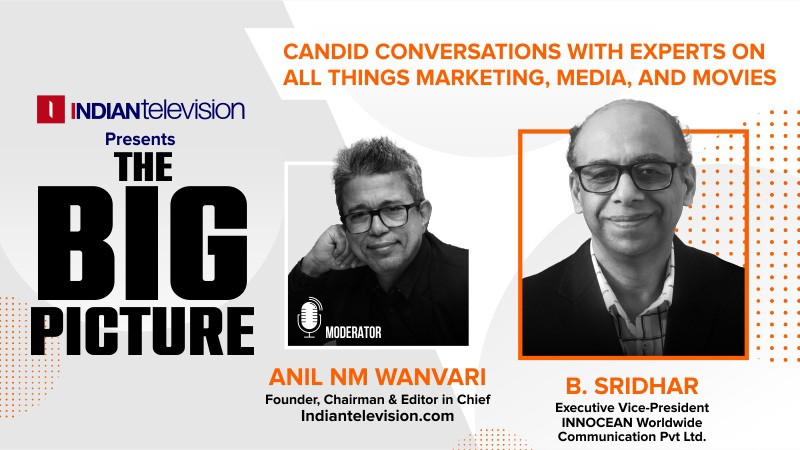
    Mumbai: The power of movies on television, often referred to as “The Big Picture”, has impacted how we consume entertainment, making it an essential part of our lives. Not only that, the synergy of Movies and TV has also proven to be lucrative for brands who want to reach India at large and impact their daily lives. In a series of chats with marketers and media veterans, we discuss all things related marketing, media and especially movies. Indiantelevsion.com founder, chairman & editor-in-chief Anil Wanvari, discusses all things related to marketing, media and especially movies with Innocean Worldwide Communication Pvt Ltd executive VP B. Shridhar.

    Edited excerpts

    On your early life, educational qualifications and extra curricular activities

    I was born in Delhi in a Tamil Brahmin household and spent my whole life in Delhi. My parents always emphasized the need for education but I was little better than an average student. Sports were a big deal for me. It was an escape from Mathematics especially. I studied at the Kirori Mal College, Delhi University and did BA Honors in Geography with the objective of appearing for civil services. Few of my friends got involved in the bandwagon of MBA so I also followed them because I was told you would be needing Maths at a working level rather than a scientist level. I also went into doing an MBA in marketing. When I was growing up in the late 1980’s, it was a great period for Indian advertising. I got a sense of freedom while working in the industry rather than getting clogged in a corporate suit. That’s me in a nutshell and I can say that despite being raised with old school values, I would say that sports have been a big deal in my life.

    On your journey and milestones

    When I started my career in 1984, I actually wanted to be a part of Account Planning because Mr. Santosh Desai used to be a faculty. Once he called me in his office while he was in Mudra and he said we have an opening in Media Planning but I said I wanted to do Account Planning. He said that taking Account Planning in the initial year is about going and doing research left, right, center. He reckoned that I will do better in media planning. So at the end of the day, I thought about doing some planning and I got pretty latched on to it, starting my career in Mudra. I used to mainly work on Nestle. I carried on and moved to McCann for a while. Then again I came back to do a second stint with Mudra and used to work mainly for Samsung. I was very happy that I was part of a company that was launching product after product every half year.

    After a second stint with Mudra, I got an opportunity to work in Ogilvy. I used to have similarities in the work culture and the environment as such. The whole thing which I started of in my career as a lifestyle that the advertising professionals lead and I thought that would go to the next level. At Ogilvy, I used to work at Electroluxx and Dabur. GroupM came into India and the media divisions of Ogilvy contract, HTA etc got merged into the entity of GroupM. I also worked with Initiative Media where I used to work for many brands of ITC. 2006 is when I joined Innocean and worked in 2 parts. It was Hyundai’s group company. I used to drive the media functions for Hyundai Motors. I worked till 2015 for my first avatar in Innocean and then I went away for one and a half years where I was driving the strategy & insight lead for Initiative Media. Towards the end of 2017, I returned to Innocean this time to head the media function for KIA Motors. KIA Motors was just about to come in India, and they ultimately rolled out their first car in the middle of 2019 but all the proprietary work including building of the launch and corporate campaigns, I was like part of minus two years of KIA in India and it’s been a great journey.

    On work life balance and initiatives which you are proud of

    I had a good work life balance working at Innocean and it depends on how you understand the needs of clients so somebody is more strategy oriented and someone is more proactive or a good organiser, a good manager. The point is strategy is something we would tend to do together but depending on the domain of expertise. The other thing is that both Hyundai and Kia Motors need the efficiency and executional brilliance because at the end of the day proof of the pudding is being able to serve your audiences in their way. I would say stuff that works in the marketplace and not necessarily with the jury of XYZ awards. I am absolutely proud to say that I worked on many of the Santro campaigns and launches. Going forward from there, they also launched many products which worked well with the audience in terms of creating positive brand disposition towards the products of Kia. Point is like doing things efficiently that’s the way it has been for both Kia and Hyundai.

    On initiatives which you are proud of

    This is going back to 2007 and when IPL was going to start in 2008. At that time, people really didn’t think the IPL was going to be glorified domestically. I am very happy to say that I could get a sense of what this is because I had an interest in football and watching the English Premier League etc. I thought that this was something to be in that zone. I was able to recommend that to folks at Hyundai to buy into it and really walk into the hearts of Indian audiences because in India there’s cricket and there’s Bollywood. I am happy that I could push this through and get them to invest in the IPL. I felt that nobody knew how to price this at that time because nobody has sense of what it could turn out to be. We also took it to the next level in terms of associating with ICC. Hyundai was a partner with the ICC for a good five years starting with the 2011 World Cup which after the rest of the 4 years it went into global association. If you could go back to the time when Dhoni had hit that six to win the World Cup, as the ball goes to the stadium, just at the nick of time, you can see a digital poll which pops up Hyundai. These are a couple of things which I have been part of. Going forward from there working on Kia which came as a late entrant when the market was very mature with big players in the market, a way dominant. Here comes a challenge for the brand. The thing that they backed themselves was the product quality and design as the big deal and turned it around into business success. I have been a part of each and every thing of Kia since they came into India to roll out their first car. So we are happy the way Kia has been accepted in India for all their cars. I am glad that I am gonna continue the journey with Kia even for the next few years.  

    On marketeers leveraging the box office success movies like Pathaan, Gadar 2 etc and strategies they can use for the growth of their brands

    Integration into content is the most important thing. Because you can do stuff over the promotion but being actually part of a movie and building synergy with the brand’s proposition and the movie’s plot. I dont watch many movies, but I remember one movie very vividly called ‘Road’. The car was such an integral part of the movie it seemed like a subject in itself. Therefore to be able to integrate meaningfully with the movie and it’s not so much about the screen time, it’s about the synergy.  Then it’s about magnification of collaboration by way of promoting it together. To create a lot of shoulder content to it and create anticipation both for the show as well as the brand and depending on the life stage of the brand whether it’s gonna be a tease for the audience or showcase what a product can do. Those things can come alive with a lot of shoulder content that can happen around it. Secondly, creating a ripple effect to content like post production, audience engagement. These are the buzzwords for leveraging a movie.

    On co-branding on promotional outlets whether its in retail outlet or digital-outdoor

    If you can do this exclusively, that’s the best thing. You can possibly take it into the realms of AFP (Advertiser Funded Programs). If not, there has to be some kind of synergy between the brands also wherein you are pulling in together. For example Coke and Adidas have better synergies and Pepsi and Nike have better synergies rather than vice-versa. So even if there are other brands coming into picture, we have to see whether they compliment each other or crossover with each other. Exclusivity is best but if not synergy is important in any case.  

    Between Hyundai and Kia, Hyundai is a little bit formal, more reaching out to the demographic kind of audience, not going on the edge kind of brand. Similarly Kia, being a late entrant, being salient is more important so therefore going more to the edge and kind of collaborating with people who personify the identity of Kia. I would define Hyundai as more functional plus lifestyle, Kia is more attitude. Kia could host Elon Musk and Hyundai could host Mr. Tim Cook better if we put it that way.

    On TV and OTT aggregating large audiences and brands leveraging big titles coming on TV.

    Being able to be there as a presenting partner or co-presenting partner and therefore using the brands own assets and creating a post production content piece and thereby engaging with the contest and gamification can work well. In any case they would get eyeballs because people definitely value a content that is two months old after theatrical release and doing well in the theaters. As I said, presenting partnerships, being a part of backend part stories, doing joint production. That can be a good way of leveraging WTPs.

     On strategy for movie genres and your ideal winning mix.

    You will have a scenario as in your max investment goes into the hero movie of the month, but you can also have a sprinkling of surround inventory to that movie and catch audiences also and in any case even if you didn’t want to invest more on hero movie, you will get peripheral content also, therefore you will have presence in ROS so far which is fine ultimately when you do post campaign analysis of any metric of ROI, Hindi movies tend to do very well and besides only focusing on hero content, if you take a package, it becomes much more efficient and greater amount of GRPs on any metric. In a nutshell, I would say diversify the mix.  

    On TV playing important role in building brand awareness

    Awareness is one point related to the mind metric to an audience. It’s not important that you know me or I know you but how well do I know you or how well do you know me that matters. Which means to say that awareness is one thing but do you build trust? Do you build confidence? Good amount of research has shown offline media, linear TV, newspapers, radio have greater trust and credibility than that in the digital space. Having said that, TV brings a lot of things other than basic awareness. It is trustworthy and credible. Therefore you will have a scenario of an influencer and the consumer of the product are all consuming the content at the same time. TV goes beyond the space of credibility and those kinds of mind metrics. Research has actually proven that it works very well from a brand’s lifecycle perspective also. Within the offline media space, TV was always a big thing. It is even bigger now. I would say generally even from my own practice, TV does continue to have its own importance and it’s not going anywhere.

  • VBS 2024: Driving distribution success with NexC

    VBS 2024: Driving distribution success with NexC

    Mumbai: India is in the grips of seismic changes as far as video and broadband consumption is concerned. Pay TV cord-cutting is rampant even as free TV subscriptions are on the rise and OTT buy-ins are churning with the signs up for certain platforms stagnating even as others are seeing rapid increases and some are seeing cataclysmic drops. Aggregators of OTTs are popping up on the horizon promising cheap bundles along with value-added services for cable TV and DTH. There’s a rush to set up free advertising-supported TV channels by TV set manufacturers and smart TV device makers. There’s the Jio factor where it is seeking to convert most pay TV customers to free streaming of video content by offering access to consumers at no cost. The consumer continues to demand bandwidths higher than ever imagined even as prices are dropping. Margins are under pressure as every player goes one-up on each other to acquire and retain customers.

    Clearly, the video and broadband distribution landscape has not been as vibrant as it is now… How long will this pot-boiling continue? What will the magic potion of video and broadband look and taste like? And what’s the end game? Indiantelevision.com held its 20th edition of Video and Broadband Summit better known as VBS at Sahara Star Hotel, Mumbai.

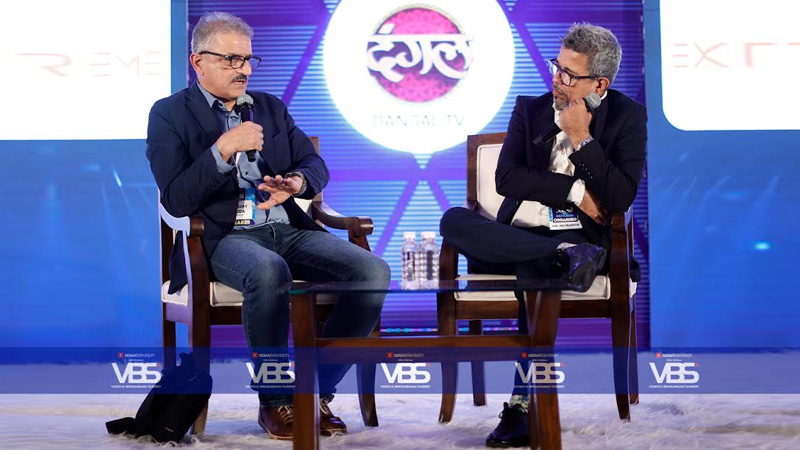
    The fireside chat on the topic: ‘Driving Distribution Success with NexC’ had Planetcast CEO Sanjay Duda in conversation with Indian Television.com group founder, chairman & editor-in-chief Anil NM Wanvari.

    Wanvari began the conversation by asking, “What are the major trends that you all see in terms of the workflows that are going on in production, acquisition, creation, and distribution?”

    Duda answered, “Largely what we’ve seen in the last 25 years and more so in the last seven years, most of the trends are being driven by the fact that on both sides, production and consumption, the creation environment is exploding. There are large, medium, and very small content creators, and they need to deliver ever-increasing profiles of people, and viewers who are viewing across multiple devices. So there are multiple options for delivery and there are multiple creators on this side. This actually is what is creating most of the pressure, it’s creating most of the direction to development. Clearly, content will always be king. It will always be the most important determinant of success. The stress right now is, how do you get your content to the right cohorts of viewers? How do you monetise your content? How do you get your money for the content that you’ve created in the most effective and efficient way? And how do you retain your viewers time after time? Slowly earlier, this whole pipeline had multiple stages, multiple players, there were three or four middlemen, so to speak. There were content creators used to provide the content to a large broadcaster and aggregator. Then they used to process that and then deliver it to the next stage for maybe creating linear channels for playout and slowly creating VOD assets. It then used to go to the next digital platform or cable platform, cable head-end or DTH head-end from where it was then distributed to final consumers who were managed by local cable operators or a DTH operator. This whole pipeline was well-oiled. There were clear business models, people were making money. But now what has happened is everything has been disrupted by the fact that the entire environment has become digital. And we are seeing that the content creator is increasingly able to see who’s viewing the content. Everything is getting driven by data. Information on who is viewing the content, how long they’ve been viewing the content, and that has created avenues for many technologies to come in. Like advertising or targeted advertising, so that you can even earn more for every viewer that you’re reaching. So this is how the overall ecosystem has changed.”

    He added, “From a production perspective, how this has now forced people, forced creators to think, innovate on how to produce your content. Content is of two to three types. One is the live content, which is actually driving this pipeline. Then there is the episodic content, user-generated content. The UGC content technologies are driven by the fact that users should be very easily able to create, curate, and deliver the content. The GECs or the episodic content or the movies, which is the library content, has its own non-linear production behaviour. There too technologies have changed. There’s a lot of VFX, a lot of virtual productions. The world is changing so that you don’t have to create one studio and then break it down and then create it for the next show. And in-between this, is the live. In the live content aggregation, there are a lot more changes. There’s a lot immersive content coming in. Now people get 360 degree cameras at the venue, creating a kind of remote viewer or an e-viewer kind of situation. Also now, data regarding the content that’s going in is also traveling with it. So there’s for sports, for example, all the information about the players is traveling along with it. A lot of the time, you can create a game. Already it’s happening, based on the performance of the players, the rating is determined on a daily basis. There’s a whole gaming industry. So these are the things that are driving the production technology at this end.”

    Wanvari then asked, “Where does your company come into play?”

    Doda replied saying, “I think all the players in this industry have seen change. Initially, there was some amount of denial and then acceptance, innovation, and then change. So we started our journey, providing essentially, distribution over satellite, bringing live videos from the arenas, be it news or sports. But largely satellite driven. We created a huge infrastructure for uplinking, DSNG services. We set up the first commercial teleport in the country and then as the media industry was growing rapidly in the country, our only thought was how do we create more teleports? How do we set up more facilities at that point of time? Then we saw that there are two things that are happening. A: people were going into a zone where they were not too sure. Earlier, most of our services were, because we needed to invest a lot of money to set up this infrastructure to provide services to our four or five customers, we used to always say five-year agreements or 10-year agreements. But as we all have stepped into a world where people have to keep trying. The viewers or the consumers have become very choice-oriented. They don’t want to watch a particular channel or a particular platform all the time. They need the right to stop the subscription and go somewhere else. Similarly, all the broadcasters, therefore, they would also like to experiment, but if they have to be tied down with three-year, five-year contracts, they won’t go there. Therefore, we also realised that we need to create solutions, which are flexible in terms of commitment from customers. And eventually, as some of these services have become robust and they’re accepted, then you’ll automatically see long-term commitments.”

    Doda added, “What we did was we expanded from very infrastructure-heavy services to a set of platform-driven services. We are moving from our on-prem to cloud. What that has done is, on cloud, there are two things you can do. One is that even your services can be flexible in terms of commitments from the customer and you can even deliver services globally anywhere. It connects the entire world and opens it up to you. Whereas infrastructure-based services are you need to set up something and they’re very regional in their influence. What NexC does is, as we have seen over the years, the content journey has four individual stages. One stage is the creation, where you’re creating the content, once you’ve created the content, the content needs to be made addressable. There is a lot of data that has to be attached, meta tagging has to be done, content has to be prepared for consumption, you’ve to check it for quality, technical quality, and SNP, to make sure it meets the content rules and regulations based on where you want to sell the content. You also then create another layer of it, which is localisation. If I’m creating content in India, and the broadcaster or the other publisher wants to deliver it in Korea, or Middle East, or Malaysia. So there’s a requirement for subtitling, dubbing, and SNP. So these are the localisation inputs that go into the client. So that part is essentially content management. Then when you’ve made the content, there is a need to create promos around it so that you’re able to market your content. Then we have the post-production, where you do on-air promotion, creating OEPs or teasers. That’s the second part of the stage that the content goes through these days.”

    Duda further added, “Once that is done, your content is essentially ready for consumption. Either it will go as a VOD asset, which is then delivered to an OTT platform or it could be archived for later use or it will be sent to a playout solution where it is converted into a linear stream. So, that is the third stage. Once it’s created into a linear stream, it is then delivered either directly to customers, or it can be delivered to a cable operator or a digital head end, or a FAST TV channel or FAST digital head end. Delivery is the other aspect of it. So essentially, the content once it’s created, moves from one stage to the other and then the to final destination, which could be your handsets where you’re watching it either on Instagram, YouTube, or Meta. So every platform has its own, technical specs, and you need to create the content for each spec, or it can be delivered to a teleport from where it can be uplinked, or it can be delivered to a digital head-end from where it is delivered through an OTT platform. These three main solutions or you can say modules. We have been involved with all of these three modules over a period of time. First, we started with essentially, delivery, then we did playouts. Maybe six to seven years ago, we got into the post-production domain. Now since we realised that we need to go global, we need to go on cloud, the need was to put it all together under a single umbrella, so to speak. What we found was that it missed only the last stage, which is the OTT. Why we did not go very aggressively initially for OTT because everybody wanted to set up their own OTTs. But we have seen over the years now and we know that it’s going to happen sooner, people will eventually want to outsource the OTT function as well. Right now every OTT has different feature sets. Every OTT player believes that their OTT is something very special, that only they know, they have created. Eventually, all OTT technology will become quite standard, and all features offered will be quite standard. That is where everybody will want to outsource it. It is just a technical platform and that’s what it is. So we therefore put together the entire set of solutions, right from acquisition to delivery to consumption, and this we’ve named NexC, where C stands for comprehensive. Incidentally, it rhymes with sexy.”

    Moving on to his next question, Wanvari asked, “Have you found customers for it so far within India and overseas?”

    Duda replied, “Yes, in fact, we had customers who were using each of these modules, anyway. So as we have started evangelizing the NexC concept, it becomes automatically an upgrade for them. We are able to upsell the other stages, and other services on either side of what they’re using. A playout or customer is ready to utilise the content aggregation. A content aggregation customer is happy to do post-production with us. So that we find a very easy-to-sell, easy-to-manage platform. In almost everything, in all these technologies, what you’ve seen is, that you think of all the problems that you’re solving, and you create a product, and once the product is used, it starts generating its own workflows, its own advantages, and it creates another set of development requirements on top of it. We are already seeing that, because everything is on a single platform, you’re saving a lot of multiple functions, be it a single sign-on, or a common database. We are able to pull a lot of metadata from various stages and eventually, it’s a part of our development plan. We will enable AI-based analytics based on all the data that we’re collecting, and that will automatically give you reports or give you advice on which content is selling better, and which content needs to be sent to which platform, and you can get literally get a real-time feedback on what is happening here.”

    Adding on to that, Duda said, “The idea is that it saves money because you are cutting out a lot of repetition of processes and at the end of the day, it is a solution you can use as long as you want. It takes in all formats. The input formats can range from MXF to MOV to any movie to any. In fact, we are using it for one of our customers, who brings in live feeds from outside. They sometimes bring the worst quality feeds and we are able to stabilise those feeds and put them back into the system. The fact is that this is nothing new. It is well tested, well used by our customers. So it’s nothing new. It’s just putting things together so that people can make better sense of what they’re doing. You’ve seen that there’s so many more questions than answers that are coming up these days. The least that you can do is make things easier and simpler.”

  • VBS 2024: OTT aggregation and beyond

    VBS 2024: OTT aggregation and beyond

    Mumbai: India is in the grips of seismic changes as far as video and broadband consumption is concerned. Pay TV cord-cutting is rampant even as free TV subscriptions are on the rise and OTT buy-ins are churning with the signs up for certain platforms stagnating even as others are seeing rapid increases and some are seeing cataclysmic drops. Aggregators of OTTs are popping up on the horizon promising cheap bundles along with value-added services for cable TV and DTH. There’s a rush to set up free advertising-supported TV channels by TV set manufacturers and smart TV device makers. There’s the Jio factor where it is seeking to convert most pay TV customers to free streaming of video content by offering access to consumers at no cost. The consumer continues to demand bandwidths higher than ever imagined even as prices are dropping. Margins are under pressure as every player goes one-up on each other to acquire and retain customers.

    Clearly, the video and broadband distribution landscape has not been as vibrant as it is now… How long will this pot-boiling continue? What will the magic potion of video and broadband look and taste like? And what’s the end game? Indiantelevision.com held its 20th edition of Video and Broadband Summit better known as VBS at Sahara Star Hotel, Mumbai.

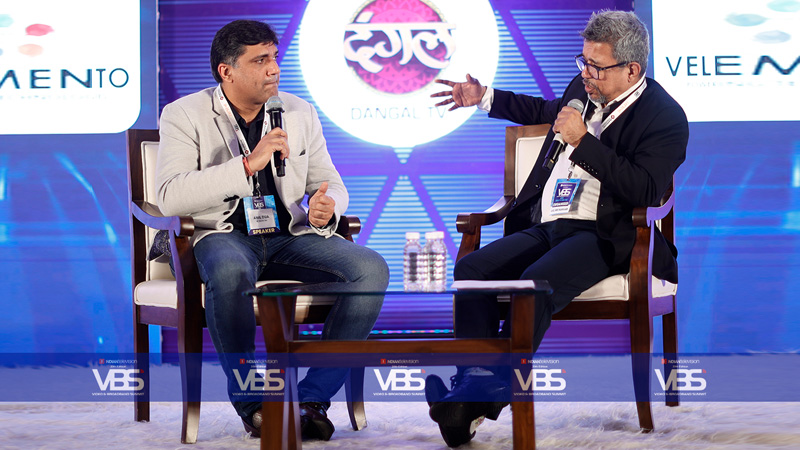
    The fireside chat on the topic: ‘OTT Aggregation And Beyond’ had HT Media Ltd chief revenue officer (HT Labs) Anil Dua in conversation with Indian Television.com group founder, chairman & editor-in-chief Anil NM Wanvari.

    Beginning the conversation, Wanvari asked, “How is OTTplay overcoming the challenge faced by consumers who seek ease of use?”

    Dua replied, “Now you don’t need to go to different apps. we have possibly the largest OTT aggregator platform in India called OTTplay, which covers more than 35 apps containing live TV channels. Gone are the days when you have to worry about the hassle of going from one platform to another to check what exactly you want to watch. So we have solved the problem of what to watch, through our recommendation engine, and also the proper way to stream it because in one app, you will get all the apps together. So that’s OTTplay. Maybe this is a good time for us to show you what our platform looks like.”

    After an AV of OTTplay was played on the screen, Wanvari asked, “You’re aggregating and you’re serving to telcos, you’re servicing to ISPs, cable. So what’s the percentage distribution between them?”

    To which, Dua replied saying, “So we have a very good mix of the internet service providers with whom we do the bundling with the broadband plans. We also have cable operators, through whom we reach out to our customers. We also have a direct-to-customer channel through our digital landscape, which helps us reach out to our clients.”

    He added, “If you look at our content, we have a very good balance across regions. That’s one of the big USPs that we bring to the table. Let’s start with the South. If you go to Coimbatore, their number one OTT Sun NXT is with us. If you come to AP or Telangana, their number one and two OTT and TV, aha are with us. When you go to a Hindi heartland, we have Bhojpuri, for Ludiana we have Punjabi, We have, of course, the large Hindi OTTs, i.e., ZEE, Sony, Lionsgate, etc. We have most of these OTTs. So we are relevant across a spectrum of customers. I believe we are relevant to everyone”

    Wanvari interjected, “I’m not talking about relevance. I’m talking about penetration so far. My understanding is, that you’ll have been pushed so aggressively in the west. You’ll have been more aggressive up north, and possibly down south, rather than the west and the east.”

    Dua answered, “You’re right! So far, south is obviously the leading market for us, followed by the north, west, and then the east.”

    Wanvari then asked, “What’s the kind of watch time that people are spending across your apps?”

    Dua replied, “By DNA, we are a tech company. We have customers at the middle of everything that we do. We track watch hours, average time per user, and average time that each user spends. I won’t be able to share the exact numbers, but it’s pretty good. We have seen that in tier two and three cities, our average time per user goes up significantly. So that’s one of the insights that we have got with focus on the regional content that we have done.”

    Wanvari said, “What is that? Are those areas TV dark?”

    Dua answered, “Things are changing in this pandemic industry. I believe that so far the OTT penetration has largely happened in the larger towns, and there’s a lot of scope in tier two and tier three for both OTT platforms as well as aggregators like us.”

    Moving on to the next question, Wanvari asked, “Are the other lower tier of society picking up your app because of your long package with all 35 plus all the 400-500 TV channels? That’s pretty affordable at Rs 3000/year. But people can pick up regional packs at 100 rupees, etc. So what is finding the most takers and where is it finding, in tier two, and tier three? Is it the upscaled customers or is it the lower ones? Is it mobile or is it Smart TV?

    Dua answered, “So first of all, by design, we are a TV-first app. We want more and more customers to be watching us on television., When I say, TV, it is TV and mobile by default. That’s the first thing. The second thing as you talked about the packs. We have packs ranging from, as high but like you rightly said you said, as affordable as 250 rupees a month for 32 OTTs and 350 plus five TV channels a month. If you come to the regional packs like the Hindi heartland pack or a north pack or an east pack, that starts from as low as Rs 100 a month. So they’re very affordable. The high-income strata in tier two are the most takers. The metros are more around the larger packs.”

    Wanvari further asked, “Do you have specials coming up from time to time, special promotions? Secondly, do you also have special price promotions for the content that has been put out there by your partners?”

    Dua said, “We belong to the HT Media group. We are a media company ourselves. We have our reach through our newspapers, through our digital landscape that we have. One is that we use our own media to reach out to the customers. And we have the content nudges that go to the customers who subscribe to us.”

    He added, “The answer to both your question is yes! If you look at our digital reach across our basic platforms, hindustantimes.com or live mint or live Hindustan, we have 300 million plus, on a monthly basis and use. So we use that, to reach out to our prospective customers to start with and to the subscribers who are already with us. There are time-to-time content nudges that go to them, the new arrivals coming in and reaching out to them to not only continue to be with us but also watch and use us, so that we can offer value to our customers.”

    Wanvari immediately asked, “ Are you EBIDTA positive or are you bleeding?”

    Dua answered, “We are right now in the start-up mode. We are in our third year running. We are now very close to coming to a place where we can start generating revenue.”

    Wanveri further asked, “Is the capacity full or do you see more partners coming in? How do OTT players partner with you all?”

    Dua replied, “Today, we are 32 OTTs. Very soon, by June, we should roughly be at about 43 to 45 and we clearly see that in the short term. In the short to medium term we should be at 50 plus OTTs. So there is no limitation with respect to the capacity. Partnering is simple. If the content is relevant to our customers, we are willing to discuss and partner. There is obviously a different discussion with each of our content partners that we have.”

    Wanvari quickly asked, “So, how long does it take to come up with a partner, to conclude a partnership? Is the process quick or prolonged?”

    Dua answered “My experience has been that gently the closure of the commercial discussion in this kind of business takes about 30 days and then another about 30 to 45 days. In about two and a half months we are GTM ready.”

    Asking a question about their subscriber base, Wanvari asked, “Where do you all see yourselves two to three years down the line? Do you think the appetite will continue in the space when it gets competitive?”

    Dua replied saying, “If you look at the growth of broadband, today we have roughly 50 per cent plus penetration in rural India. The smartphone penetration itself is growing into tier two and tier three by more than 25 per cent every year. So growth is not going to be an issue. Talking about the large telcos, remember that still one-third of the market is with non-telco broadband providers. That market is not only there today but it is also growing. We clearly see that as the market for us. And with bundling with their proposition is how to we want to reach out to the customers. On top of that, we have our D2C channel, which caters to the first two-thirds part of the customer base. A lot of customers of large telcos who have not used the content that is provided by them. So they keep looking for the right platform, and the right value proposition. So that’s how we’re building this whole mix.”

    Wanvari then asked, “You said discoverability is very easy for your customer. How different are you all from Netflix, which is supposed to be the gold standard, in terms of recommendation, search, discovery, and all of that?”

    Dua answered, “We talk about the four pillars of our business. The first pillar of our business clearly is the user experience and the user interface that we bring in. We have single sign-on for most of the apps. If you have, for example, OTTplay with you, and you want to watch Scam 2003 on Sony LIV, because you don’t need to have a Sony LIV app. So it’s deep integration. You can just move from one platform to another within OTTplay without having those apps. That’s the first thing. The second thing that we bring to the table. You talked about Netflix recommendations. If you are a customer or a subscriber of OTTplay, you get AI-based recommendations from all 32 platforms and not just one. So if you’ve watched an action movie or content on one of the platform, the next time you come to OTTplay player you will get recommendations across. The third thing is we are extremely regional in the content that we bring in. Fourthly, of course, is the affordability. We want to reach out, we want to be affordable to the masses of India.”

  • VBS 2024: Evolving content distribution landscape

    VBS 2024: Evolving content distribution landscape

    Mumbai: India is in the grips of seismic changes as far as video and broadband consumption is concerned. Pay TV cord-cutting is rampant even as free TV subscriptions are on the rise and OTT buy-ins are churning with the signs up for certain platforms stagnating even as others are seeing rapid increases and some are seeing cataclysmic drops. Aggregators of OTTs are popping up on the horizon promising cheap bundles along with value-added services for cable TV and DTH. There’s a rush to set up free advertising-supported TV channels by TV set manufacturers and smart TV device makers. There’s the Jio factor where it is seeking to convert most pay TV customers to free streaming of video content by offering access to consumers at no cost. The consumer continues to demand bandwidths higher than ever imagined even as prices are dropping. Margins are under pressure as every player goes one-up on each other to acquire and retain customers.

    Clearly, the video and broadband distribution landscape has not been as vibrant as it is now… How long will this pot-boiling continue? What will the magic potion of video and broadband look and taste like? And what’s the end game? Indiantelevision.com held its 20th edition of Video and Broadband Summit better known as VBS at Sahara Star Hotel, Mumbai.

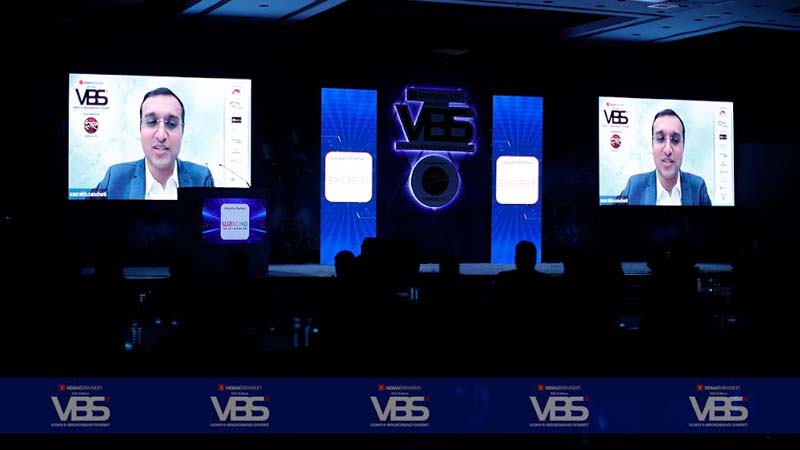
    The very first fireside chat of the event, on the topic: ‘Evolving Content Distribution Landscape’ had Jio Platforms group CFO Saurabh Sancheti as the speaker in conversation with Indian Television.com group founder, chairman & editor-in-chief Anil NM Wanvari.

    Wanvari began the chat by asking Sacheti, how he has seen the content distribution landscape evolve over the past few years.

    Sacheti answered, “I think India is a very exciting market, and content distribution and media is like a market no other. Definitely, the last five years have been a big revolution on all fronts. So let me tell by seeing how the market is today and versus what it will be tomorrow. So today, yes, largely, even today, whatever people may say cable and DTH are very prominent platforms, they have the highest reach, they reach more than 100 million households and there’s a very big proportion, which they are serving directly as a pay TV. There’s a big business, which obviously, the free dish is having and the whole revolution on connectivity, which has changed not just the mobile, but the whole technology around, i.e., connected TVs, and large screens is there. There, we are just scratching the surface. So if I look, actually India had 350 million households, the last bottom 100 and 250 million don’t have a TV, and their only access is low-cost smartphones, for the content. If I look at the top tier, the top 50 million homes have connected TV, and many of them have a pay TV as well, which is where there are two products to the same segment, about 100 million pay-TV homes. So, the distribution landscape is changing very fast, because the numbers are not consumer time and attention is. That is what is leading to a lot of change in the mix of more choices, the customer time, definitely is now getting into multiple channels. So it’s an exciting time. I think the future is exciting for all the mediums of content distribution. Overall as the economy grows more prosperous, definitely the number of users and consumption is there to rise.”

    Moving on to the next question, Wanvari asked, “What are some of the key factors that have driven these changes in content distribution?”

    Sancheti replied, “One good thing that has happened is, definitely a lot of ecosystems are coming together. The access which was earlier very difficult is something which has been made easy. So earlier, we had it in mobility where, as a mobile subscriber, you had to pay 250 rupees a GB and therefore it was criminal to watch video on your mobile phone to now having very affordable tariffs that are less than 10 rupees a GB and everybody can afford a mobile phone with content and that opens up a huge audience. The same revolution, by the way, is also happening in phones, now almost touching 40 million internet users. It’s a very big market which is happening. What connectivity does is because it’s like the baseline infra but what it does is, it definitely changes the overall proposition. At the same time, with this opening up of the market, people are able to take exciting bets and make it really large. I mean, for example, just look at JioCinema and what has happened with digital watching on IPL, it’s like the whole model is pivoted, the whole attention has gone there. Therefore a lot of interesting experiments are happening, which is a very good thing to happen for the overall industry, because that is what maximises the consumer surplus and that really generates a lot of value for everybody in the ecosystem, not just the content producers, distributors, but the consumers as well. So it’s really exciting.”

    Wanvari then asked, “In your experience, what role do the new and emerging platforms play in reaching diverse audiences? How do you identify such platforms?”

    Sancheti then answered, “I’ll break the question into two parts. One is obviously as a content producer and then as a distribution channel. As a content producer, the good thing as I said, in India is there is no one India, there are many Indias, and overall, India is so big that even in the three Indias that I was discussing earlier, you have an opportunity of a global scale. Now, coming to the content producer angle, which is very interesting in India. So, D2C is the buzzword, that everybody’s trying to grapple with it, but the Indian consumer is kind of a high-touch consumer. So, existing relationships definitely prevail and across industries our learning is, that is definitely a winning point. Therefore, wherever you have a distribution channel, whether it be wire, a local cable operator, or a telco distribution, or any other distribution, where you have some touchpoint with the user, you have a lot of chance of getting him converted, and at least sample and if the content is of quality, definitely consume it. So, as a content producer and distributor, like I said, India is moving very fast, shifting fast, the market is growing, and it’s quite an exciting time to see how things are evolving. And if you have a great product, there is no dearth of consumers that clearly this market is showing.”

    Wanvari then added, “These days, we don’t look at a customer, we look at the lifetime value of a customer, how is that? What kind of role is that playing in terms of customer acquisition?”

    Sancheti commented saying. “I think that’s a very relevant question. The good thing is that consumers today have choices, and the bad thing is consumers ‘have’ choices. So if you are not able to take her attention at the right time with the right content, you’re lost. And that’s where I think, affordability, access, and the size of the market is a given, which everybody talks about. But content personalisation is the real secret sauce, which very few people talk about, and are working towards. I think one very important thing is unlike a lot of other categories, where the consumer is very involved in the purchase, and likes to go through the process of making the decision, entertainment is always a lean-back experience. The consumer may like to play around a bit, but the consumer doesn’t want to do a bit of big research to find the right piece of content. That’s where if you have the right content dished out at the right time, to the right consumer, the consumption obviously goes up. What I always try to remind my team is that choice is not actually a boon, it’s not certainly a gift, it’s a tax to the consumer. So the more you are making the consumer choose, you’re making them want variety. So in that sense, your variety of platforms is required but don’t expect the consumer to put a lot of effort in discovery. It should be seamless, the right content should surface and clearly, the who’s who of the world, the best people globally have this as the secret sauce. I think this is what in the whole Jio ecosystem, we have been able to do well. We have been able to segment the users, understand their needs, know what kind of content they need, and give them at the right time and price. And I think one more thing, which, I was talking to a large global techfin a couple of days back over dinner. One of the common pain points that came to them was, that digital is the sexy thing, everybody talks about it. But it’s really painful as a user because I don’t know what piece of content will appeal me where. Even if I have something in mind, I don’t know what platform it is available. It’s a lot of research. That’s I think, when we were just discussing what we have done in India, they were really blown away apart from that. So to summarise, I think the whole personalisation aspect is the aspect that is changing and which will differentiate, which will make the winners from the losers.”

    After that, Wanvari asked, “How important is the lifetime value?”

    To which Sancheti answered, “Let me explain it in a two-part equation. One part of the equation is the value derived from the users. But our principle in the business, and what I’ve learned through my own experiences here is that you should focus on the other part, which is what value you give to the user. If your product is valuable enough, and value is not only in monetary terms, it’s value in terms of giving the right thing, without the consumer having to put effort, giving it at the right price, giving it to the right user. What it does is, it adds a lot of value to the user. So the way businesses should look at it is to go beyond the LTV. That’s the internal control metric they should use, but focus more on giving and acquiring the right kinds of customer metrics. A lot of times what I’ve seen, a lot of people do is the whole process is more on vanity metrics of acquisition, and just trying to get the consumer in, and not figuring out what his or her needs are. So focusing more on the extracting part from the consumer, and focusing less on the giving part. And over a longer term, usually, the giving part is what makes the consumer stick around and, generate value. So focus on adding consumer surplus as I began with.”

    Wanvari then asked Sancheti about the challenges they have faced so far, as they’re not just looking at one port of distribution but at multi-channel distribution.

    Replying to this, Sancheti said, “I think the challenge, as I said, is that there is a large set of users today who have access to multiple channels. So it’s because a lot of things are in motion, like I explained. So it’s not like there’s only one channel, there’s only one way in which the consumer was. So if I zoom or go past 10 years back, life was very simple, because most of the consumers are either or. It’s either this kind of consumer or that kind of consumer, and when the choices are limited, it’s easier to get and retain the attention of the consumer to make him or her happy. But when there are too many choices, it’s important to first get the attention of the user and then make him or her happy. So I think what we have been trying to do is, figuring out what consumers need and at the same time, enable multiple products across the value chain for each of them. That is something that is working well for us because we have realised that rather than trying to compartmentalise the user that ‘okay, she is X kind of person, and they would need only Y kind of thing’. We are trying to give them a combination and figure out how to just serve what they want. So their attention is our currency, which we deeply track across businesses.”

    Wanvari then asked the next question “The consumer is more used to using mobile internet rather than internet at home. Is that true? Also, the fact that connected TVs are growing. Then apart from that, there’s a lot of competition amongst cable and DTH right now. There’s also free-to-air television. So what does this all mean for you? What kind of challenges do these factors pose to you?”

    Sacheti answered, “As I said, the part where we focus most on is delivering value to the user. And value is definitely dependent a lot on figuring out what the consumer wants. So at the end of the day, what you want is, the basic currency is attention of the consumer. Is the consumer spending more time with you, more attention to you, or staying with you longer, that’s all. That is the basic currency, everything else is the resultant. Therefore that is the lead indicator that we work on and analytics plays a very big part in it. So what analytics does is, in all our businesses, it plays a very important role. It helps us identify the right content for the right consumer and hypothesis testing and combine it with our tech capabilities. A lot of personalization and the whole consumer cohort strategy and dynamic cohorts are being created all by AI now. There are no longer a product manager who is standing up and saying, ‘Hey, I have five ideas, let’s test it out’, it’s the machines who are driving it, and which is helping us understand the customer better and serve it better. So if I go back to the previous one when I was talking about a multi-channel distribution strategy, a consumer has many choices. Getting their attention today is not easy. We are adapting for the new world by deeper analytics and serving them better.”

    Sancheti added, “I’ll tell you the fundamentals of business, which I have learnt. I think only one part in which people realise how to increase demand. So demand is what consumers demand. There is one part that people are overly fixated on, which is that if you make something cheaper, it increases the demand. But one thing, which is very rarely appreciated, is if you make something easier, that also increases demand. It’s not only the price thing, it’s easier and what is easier, personalised content, personalised product, something which understands me, I’ll be happy to lap it up. So that second part of the equation is often underappreciated. I’ve seen that by multiple people. That is what we focus a lot on.”

    Wanvari then asked, “In terms of content, what trends have you found that have been particularly effective in the current landscape?”

    Sachetio replied, “I’ll start with a global trend, and that is not unique to India. But what I realised is that people call some extrapolate two points and try to call it a trend. A trend is an underlying phenomenon, everything else is a resultant. So if I look at, just the underlying phenomena, for example, one thing which is given is what social media has done over the past 20 years is people’s attention spans are becoming shorter. There’s a whole boom of content and choices available. Therefore the need for gripping storytelling, something that captures attention is there. Now everything is just vying for attention. So attention span is smaller and the important or a different storyline is important. If I just extrapolate that to India, how I see things happening, I think, 10 years, if you talk about a concept, which was in the US, but you talk about in India, i.e., one season 24 or 30 episodes, the story ends and something else begins, was unheard of, and unthinkable, and it’s working very well. Or, say I think there’s a big digital audience, let me do a movie premiere on OTT people would laugh, it was not even thinkable. So all those kinds of things are definitely bringing new types of products, varieties to bring people in. I also think that, all the new formats, that have come in, and some of them are global formats, and all the new content formats, in a gripping storytelling way, which just captures the attention and imagination is there. This generates a lot of consumer surplus, because the whole consumer, which was posed to only a limited genre of content today has at least 100x more choices, if you just explore by types of subcategories. So the whole choice has exploded, the format has become shorter, and the storytelling is better and more gripping. So these are the trends and these are going to continue for the next 10 years as well.”

    Adding on to what Sancheti’s response, Wanvari said, “The audience has started participating a lot more and they’ve almost become a part of the content themselves. A lot more, as compared to if I watch what you do on JioCinema during the cricket tournament during the cricket tournaments that are going on, if I’ve watched what’s going on on Shark Tank, if I watch that the audience can actually also invest in, in those in the startup or whatever offerings they have.”

    After which, Sancheti said, “If you look at the overall piece, today audience is much more connected much more wanting to identify themselves personally with the content. And they are also very conscious about what they are about. So therefore, again, a larger variety of audience and more important, therefore to serve the right content to the right person, otherwise you end up taking away the attention or at least upsetting the consumer.”

    Wanvari then asked, “How is the entire Reliance Jio Group making sure that it stays ahead of the trends and it also stays relevant?”

    Sancheti replied, “This is something like we always remind ourselves, every day in the morning when we walk in. It’s not about what we have accomplished, but what is yet to be done. It’s still day zero. There’s a good saying which which we have in our team, that the best teacher in the universe is consumer, because especially when we are product managers, business folks, we think that we know the consumer, but consumer is the one who teaches us. Usually, those teachings come very late because we don’t realise it. So one thing which we do very rigorously is take the feedback and listen to consumer very, very intently, and look for signals where we are wrong. It’s important to know that consumer is right, and you will be wrong in multiple places. That is what we always look as a signal. We humbly accept it wherever it’s not working and we change our strategy and go ahead with that learning. So learning is is an integral part, it has always been important, but never as much as now, given the pace at which the whole industry is shifting. If you don’t learn, if you rest on your laurels, this is such a fast changing world, it will soon become mainstream. So we just keep reminding this to ourselves, and keep on putting ourselves the promise that consumer is right, maybe we are not getting it right and look for signs where we can improve.”

    Wanvari further asked, “Do we see pay TV and cable TV as well as DTH having legs because of the disruption that you’ll have been putting forth in the industry as a whole.”

    Sancheti answered, “Typically what happens is, a lot of times, people are quite pessimistic about things, but don’t see the overall opportunity and the size. So like I said, let me again, zoom into 10 years later, how do I see the market and what is going to happen in the market. 10 years later, India would have 400 million households and India would reach a per capita income of average of $5,000. That kind of per capita income, there would be a 90% penetration of TV, that’s like globally proven macroeconomic fact, which means that about 360 million households should own a TV at that point of time. Now, where are these people today? Today, those homes in contrast, are close to 350 million and 200 million only on TV. This means the overall homes which can be serviced by entertainment is going to expand significantly. I think there will be a top tier which is significantly large, which will be like about 120-150 million range, which will be fully digital, because at the end of the day, the choice and the personalisation, which can be delivered on digital will be unmatched. However, I still believe that out of the bottom 250 million left after that, or 210 million to be precise, left after that, pay TV universe would still be 100 million. The only challenge that pay TV will have will be the users who don’t have any touchpoint with the consumer. I think cable has a fantastic opportunity because you have a guy who has known the consumer for not just years, but decades. And therefore the kind of personalisation, adaptation, listening to consumer that you can do, is like nothing else. So cable definitely has a very bright future. DTH will have to reinvent itself a bit. At the end, obviously, there’s a big bottom tier about 50 to 100 million at least which will be on free dish or pay TV kind of offering. The beauty about Indian market is, it’s so big that any fun business you pick up, it’s still 100 million kind of scale, which is what you don’t even get in large countries. So the relevance definitely I see. The need for reinvention is also there. What I keep on reminding, across businesses to all our teams that, our past laurels are past laurels, but the way in which industry is changing, we need to reinvent ourselves. But I’m sure Indian organisations, our competition, or lot of people, especially Indian businesses are very smart. They will move and adapt quite quickly and we see a big market in it.”

    Wanvari then asked a question on forecasting the future, “How do we see the world of media and entertainment being aligned? Do we see three or four large players who are integrated like they are in the US, but the US has a lot more players now, because the tech giants are really driving the agenda. So what do we see happening in the marketplace as far as media and entertainment is concerned? We see a similar kind of play happening are we see telcos or do we see a software giant tech solution providers like like in the US?”

    Sacheti replied, “Out of 400 million households, 360 owning TV, I see three large markets. One is the digital-first market, which will be connected largely by telcos, who are obviously putting in a lot of money in fixed investments as well. That revolution is about to happen because even at 120 million out of 400 million, we’re at barely at 30 per cent penetration. Today, any country, of $5,000 per capita income goes higher, so that is bound to happen. Telcos will lead the distribution and digital companies, both the OTTs as well as the Internet giants, would be the media engines to them. I think the media engines of pay TV and free TV will serve the other 200 that will be there. The opportunity is so big, I do see a lot of space for everybody. That’s the beauty about India. Even if you pick up a niche, it’s 10s of millions. So the addressable market is large. The market is up for grabs and I’m extremely bullish on the future.”

    Adding on to Sancheti, Wanveri added, “India is this kind of a market, which is leapfrog a lot of things now. It’s very fertile, it’s very virginal. It’s very fertile for companies like Amazon, Microsoft, and Google to come in and make up a strong play and with the larger market that we have to come in, try to read up on acquisition strategy going forward. Do you see that happening?”

    Sancheti said, “All the global Internet giants will definitely make a mark. They have already made a mark. So it’s nothing like that. But having said that, isn’t there enough and more for Indian companies? I think the opportunity is so big that no one player, no one set of industry can take it over. It’s so big that everybody has a huge opportunity. Everybody has an opportunity to grow multi-fold from where we are.”

    Wanvari then asked, “Do you have anything to tell the cable TV or the pay TV fraternity as well as operators? Should they focus on broadband? Should they deliver video?”

    Sancheti answered, “What has been happening is, there has been a lot of pessimism and that happens in any inflection point. Anytime when things are not going as well as things are getting shaken up. A lot of self-confidence loss happens, whether it be cable fraternity or the pay TV. I think this is short-lived. This is an inflection point, this is where we can really build on our strengths. So the only thing which I’m working towards myself and my advice would be to reinvent ourselves be closer to the consumer, because there is a very big opportunity.”

    Wanvari commented saying, “But do we see the pipe or do we see wireless?”

    Sancheti said, “Everything will coexist. Look at the kind of consumption levels in India, you still are talking about a very little penetration even in wireless, the penetration levels are not the level that similar countries per capita will have when when we reach $5,000. So even wireless consumption, wired and I’ll even say the one-way medium also has a lot of flex because India has all the tiers available. When you think of yourself as a consumer, you also try to think that you are the only archetype. We are only one small portion of the archetype, there are many multiple archetypes. I have traveled to households in 75 villages and their outlook on how they consume media. That is what has opened my eyes. I found all sorts of contrast, people who move from one medium to the other. So yeah, it’s quite exciting.”

    Wanvari then wrapped up the conversation with his final question, “I think hyper localisation of content is what’s going to keep cable TV very relevant going forward apart from the bundle offerings and also even OTT is relevant at the same time. Whoever delivers more hyper localisation will also benefit apart from offering a wide diverse content offering.”

    Sancheti answered, “I couldn’t agree with you more. At the end of the day, the trend is that human beings are social animals and anything you get to them, which can correlate with their communities is going to help you. Communities are smaller, communities communities are local, they will be able to relate more they will be able to know more. I think what has not been cracked so far is a kind of economic model in which low-cost production can happen and be also telecasted or broadcasted locally, and regionally. But local and regional events is one of the key things which which will happen because that is where technology is going. It’s again a trend that is going to happen. So that suddenly will change the fortunes of cable.

  • Welingkar Institute and indiantelevision.com partner on career guidance seminar

    Welingkar Institute and indiantelevision.com partner on career guidance seminar

    Mumbai: There’s a tremendous opportunity for new entrants in the media and entertainment sector, despite the transformation it is undergoing and the pressure of revenues it has been facing. That was the conclusion of senior industry leaders who were part of a half-day conclave We Communique that Mumbai-based MBA institute  We School  – aka Welingkar Institute of Management – organised in partnership with Indiantelevision.com  on 17 January for postgraduate students of the media and entertainment course.

    Among the leaders who took part in panel discussions and a fireside chat included:  Cosmos Maya India CEO Megha Tata, Enterr10 director Akshat Singhal, Shemaroo broadcast business head Sandeep Gupta, Elara Capital media analyst Karan Taurani, Friday FilmWorks CEO Devendra Deshpande, Madison Media Sigma COO Vanita Keswani,  Wavemaker general manager Sejal Lodaya, Lodestar UM IPG Associate vice-presidents Shrikant Shenoy and Bhavesh Shah,  Disney Star India’s Prashant Khanna and Carat India director integrated media planning  Swarali Halepati. Indiantelevision.com founder, CEO & editor in chief Anil Wanvari chaired all three sessions.

    The speakers were spread across two sessions  “Evolution of Media, Sports, and Entertainment Trends” and “Media and Marketing in 2024. ”

    Almost all the speakers agreed that students need not be demotivated by news reports of doom and gloom that the media and entertainment industry are facing. “Yes, 2024 is going to be a year of consolidation with mergers and acquisitions seeing the course of conclusion,” said Taurani.  “Jobs are evolving but you have to get the basics right,” said Shenoy in the marketing and media session. “Learn about viewership trends, GRPs, reach etc and continue keeping abreast of developments.”

    “There is no shortage of jobs in media,” said Shah. “We are always hiring in media,” added Lodaya.  According to Keswani, the media executive’s job is becoming more about numbers and this can be fun as well.  Both Lodaya and Halepati emphasised that longevity in an organisation works very well as far as an executive’s career progression is concerned. “You should not be hopping around every few years for that marginal increase in salary,” they opined. “As long as you are learning and growing stick to the job.”

    The television panel opined that even though there is a shrinkage in the broadcast sector on the advertising inventory front (read: ad revenues), the television industry has a lot of legs. “Free TV is growing,” said Singhal, “Though pay TV is  struggling..”

    “Yes, production budgets are also slimming down,” explained Deshpande. “As are OTT series budgets.”

    He added that producers have to thus work within these budgets, and extract profits without compromising on quality through efficient production pipelines.

    Gupta extolled the student and WeWork alumni audience to learn as many skills as they can, but they need to focus on only one.

    Most of the panellists concurred that animation, gaming, VFX, AI, and ML are the most promising verticals that students should keep an eye on. “VFX studios are popping up everywhere in India and they will need talented individuals to work with them,” highlighted Taurani.

    The conclave was extremely well received with students rating it high on the knowledge enrichment chart.

  • Cricket World Cup 2023: Where advertisers hit a six with viewership soaring high

    Cricket World Cup 2023: Where advertisers hit a six with viewership soaring high

    Mumbai: The festive season brings a double whammy for advertisers and brands as the Asia Cup and the much-awaited World Cup (Hosts – India) is set to take the country by storm. With a potential reach of 600+ million, the World Cup on television is the place to be for advertisers looking to capture the attention of viewers during the festive season. The interview series “Pitch Perfect” discusses with leading marketers their thoughts about the World Cup and how advertisers can best leverage the mega event on television.

    Indiantelevision.com’s Anil Wanvari in a fireside chat with Bimlendra Jha, Navroze Dhondy on the Jindal’s association with Cricket on Live TV.

    Edited excerpts

    On associating with cricket

    Jha: Well, there are two religions in India, cricket and Bollywood. If you really look at it, somebody had the brilliant insight to combine the two in the form of IPL. IPL has become the greatest sensation because of this unique combination that works so well in India. Getting associated with this large number of viewership where particularly any brand that gets associated with sports, always gets more positive vibes compared to anything else, that is what the research says. Missing action in this one is not a great thing for any brand that wants to really establish itself at the national level.

    On associating with cricket for the first time

    Jha: It was last year and we started getting associated with many other sports also. We have been supporting sports at tribal level. Wushu, which many people would not have even heard about, we produced international champions out of that from the tribal boys and girls. We are into kickboxing, hockey, and we are supporting a lot of sports including kabaddi, we have been associated with different sports. And I do believe that when you are trying to become the number one brand at that time, having higher visibility, particularly through the sports channels, is a great way to connect with audiences.

    On approaching mass media communication and not going for trade advertising

    Dhondy: That’s a very interesting question. Jha and I had this discussion since last year. So as Jha just mentioned, this whole association with sports began last year, with the Pro Kabbadi League, moving on to the ISL, Women’s World Cup, and of course, IPL and now Asia Cup and the World Cup. If you look at the essence of the brand, for eg. Jindal Panther, the brand name itself evokes a certain personality. So when you have a brand, which has a very strong brand personality, you have to find the right kind of fit in terms of the media opportunities too. Sports, interestingly, is a perfect brand fit, because it talks about speed, talks about strength and flexibility exactly what the brand stands for.

    Jha: To answer your question on why approach mass media communication for what could potentially be only a B2B brand. But India is a very unique place, you would not imagine rebars being retailed in any other country like India. And if you really go across the country, you would find retail outlets for rebars and cement. Now these retail outlets are the ones which are catering to really small demand and a large proportion of steel through the rebar route and cement gets consumed in retail. So creating these footfalls is a very important element of strategy, particularly if you want stability in your supply chain. Retail provides the highest amount of stability compared to B2B sales. In fact, B2B sales may have large variations in prices. Retail gives far more consistency in prices. So anybody who wants to really sell his rebar well, would do well to consider the retail segment in their strategy.

    If you look at the pyramid of the rebar business, right on top are the B2B businesses. So, big builders, big developers like DLF etc, do you buy a flat and you don’t know what rebar and what cement is gone into it. But when you come down the pop strata and you go into smaller towns, that’s where people like me, when I came from from Alabama, we all need our own homes, and those other small towns where a lot of construction is happening, either making your own shop or your own factory or your own home. And that is where a brand connected with B2C is also as important as it is for B2B.

    On the retail constituent of your entire sales

    Jha: At the moment, it has been a lower percentage. Pure retail has been about 25 per cent. But we want to take it to 75 per cent.

    On what does it mean for being an advertiser, having a massive national distribution network and associating with a sport like cricket

    Jha: I think you have to be smart about the money that you spend. If you take a titled sponsorship, it has a completely different connotation, it has completely different viewership. And it allows the viewers to soak in with this kind of a title sponsorship. So, we have been smart about what we are wanting to do, and we do not want to burn the money and use it in a manner where it does not give us the proportionate returns. So we have done our own evaluation and we have actually cherry picked some of the events that allow us to get more miles for our buck.

    Dhondy: You will have very large investors in cricket, we have heard the story about dream 11 and all the various dot coms and gaming, investing large sums of money being thrown into cricket.  But what we need to do, the word which is very important, is smart and making sure that we stand out of the clutter whether it is a one day match or in a T20 match.

    The choice which Jindal made and what we all worked together to create Jindal Panther cricket live made it stand apart. It actually had a unique spot, a unique position in the entire broadcast ecology and therefore we got that standard part to the extent that literally within the first three or four days, I remember we were having a discussion with our trade partners and the word they use was Jindal Panther ‘Chaa Gaya’.

    On collective viewing experience helping getting the word out to your viewers and targeted audience

    Jha: There are multiple ways like being visible.Visibility is not in short supply as far as Jindal Panther cricket live is concerned, it gets mentioned every now and then. It is constantly there in front of your eyes, as you’re watching that program pre match, mid match and post match. Much more than that, what we have also done and that is where Navroze has helped us a lot in creating some crucibles of experience, where we have taken our channel partners to the studio to get them to experience it. And they can’t get over themselves about these kinds of experiences. This is what by word of mouth further spreads into the channel. Now people look forward to the opportunity of being selected to be able to get into that exclusive group of people who would be chosen for these kinds of relationship building exercises, I think this is invaluable money can buy.

    Dhondy: Along the way, we realised that viewing sport happens in three different ways. One is a very individualistic one, when you’re on your mobile, and you’re just watching it one on one. One is in a family environment where you’re at home, and you’re watching with three or four or five people and one is on a much larger scale. It could be in a bar or a pub where you got to 300-400 people watching it together, or a larger place where they put up a huge screen and you got 500 to 1000 people watching it together. In all these cases, interestingly, from that small four inch mobile to that 100 foot screen, when the brand is being visible across, the best part is you are not missing out any target view, you are not missing out any opportunity. The large screen with those big speakers almost transforms the person sitting over there into a real stadium kind of an environment, which actually helps and has a halo effect and rubs off on the brand. So many things are very intangible. But they have their own magic, which they create for the brand.

    Wisden, better known as the bible of cricket, is an almost 150 year old brand and they were collecting data all the time. But it was just one book published every year. It’s only in India, that from the year 2002 onwards, the last 20 years, we were the pioneers of something called the pre, the mid and the post show which is what Jindal Panther cricket live is all about, you know the interesting insight about this. We as Indians love statistics, we love records, we love discussing and debating and that is why the eyeballs are sticky eyeballs, even for non line in most of the countries the moment they gave us over, telecast is over. But in our country, the game carries on to almost half an hour 45 minutes so that is where the magic of the Indian madness statistics lies.

    On the association helping in terms of getting your customers to really buy further into the product

    Jha: One of the constant themes of all our interaction with our retail channel partners has been that we are not visible adequately. That was the pre Jindal Panther cricket live. And one big difference that has already happened is that our channel partners are absolutely cheering this entire sponsorship because they have seen that now people ask for Jindal Panther by name. There is still a bit of a brand association of Jindal that rubs off on some spurious other brands who try to claim the same kind of stature as a result. So that’s a good problem to have, because imitation is a form of flattery. Of course we can use the same channel to also communicate to the people, to be careful about not getting duped by look alike brands.There is a lot more that can be achieved compared to what we have achieved. We have occupied the top of the mind slot. The next is to also educate people on being careful about what they choose.

    On being important to be consistent in your associations with cricket orbit

    Jha: I said earlier that cricket is a religion in India and it is likely to remain a religion in India. There are more sports that are coming up in India and I think the time has come when there is adequate support for sportsmen. And we would like to continue our association with sports not just for cricket, but also for other sports which do not sometimes get that kind of money visibility etc. We are very happy to see for example, the premier Kabaddi League, after IPL has got the maximum amount of eyeballs and we felt that getting associated with Kabbadi which is a quintessential sport invented in India and once again, the speed strength flexibility are the values that are very core to the sport of kabaddi there. We also find that there is interest in some pockets particularly West Bengal and Kerala, around football more than anywhere else. But increasingly it is finding an expression and viewership as well as coming into the collective consciousness, both soccer as well as hockey, and these are the sports which are coming up. And we would like to definitely remain associated with them as well. So it is not just cricket.

    On the meet and greet with the cricketing partners and the change they brought in

    Jha: The very first thing is that the partners feel valued when you bring them to an event, whether it is a meet and greet, but it is not just a meet and greet with the company officials. They idolise these heroes from the cricket world, the commentators and the whole experience actually takes them to another platform. They start associating with the company, a far greater positive image, and about themselves as well, because they are visible on TV, this is their moment when they are visible to a larger audience. It also helps those who have not been selected, let’s say in the first round, to be a bit aspirational about the achievements that they should have, so that they are considered for the next round. So it’s a win-win win for everybody. An association that has helped us build the brand, the channel relationships, and create a positive mindset amongst those who want to be there.

    On the upcoming World Cup & Asia Cup and expecting new milestones, putting more money etc

    Jha: We would always prefer judicious spending of money over anything else. It is a value for money that we evaluate in each and every case. And we are very conscious of the fact that things like India Pakistan match, they get the top ratings compared to anything else. And both Asia Cup and World Cup does create multiple opportunities for this kind of an interaction to take place. How can you be missing in action on those? So of course, we see value for money. But we also want to bring to the people the whole excitement in a manner that they associate themselves with a brand. It is that positive association that we are looking forward to.

    On Cricket Live going forward in the World Cup as well as in the Asia Cup

    Jha: Anything that does not change will become stale. Innovation requires us to constantly change and make things more and more interesting. From a viewership perspective as well as those who we put forward for participation. So we would of course be looking for more and more innovation through this platform that we have created for ourselves. It is important to realise that one is that sports is a way of life, and our chairman himself is a sports lover. He is not just a sports lover, he actually excels at doing things for example, in shooting or in polo, he plays at national levels and therefore, it is a way of life that we have adopted for the company, there is a lot of focus on fitness etc. As far as sponsorship is concerned, apart from mass media, the very powerful medium is that of digital. We are still far away from an iconic brand like Amul, where they get quoted so many times, how do they come up with such brilliant lines, which can be seen in less than five seconds, and can be replicated. So there is a lot more that we have to do as a brand. But sports is a good start, how we’re building on it, with the power of such catchy phrases and things that we can connect with the audience and remain contemporary. That remains our challenge. And we would like to work in that and continue to make the world a better place to live with the quality of products and services we give.

  • Connected TV is going to be a key medium for advertisers and brands

    Connected TV is going to be a key medium for advertisers and brands

    Mumbai: Anil Wanvari in conversation with Sonam Pradhan on Connected TV and its reach. Why marketers are gung-ho about connected TV? 

    On having a Connected TV at home

    Not a conscious decision it was probably an evolution that happened during the corona days and I just never realized it but we switched over to the connected TVs and since then we’ve never turned back

    Connected TV in small towns

    When it comes to towns that have deep penetration of smart TVs of the internet, it will be something that will be visible now in Mahindra; we do a lot of visits to different dealerships in different towns. We get to meet a lot of customers over there and what we get to see is that people are aware, people have Smart TVs but I think the question there is not about having Smart TVs or having the apps that are there, they use those apps on their mobile phones. Over there the bigger question is the internet penetration and what is the rate of internet connectivity that they use for the data cost becomes a major factor.

     Excited as a marketer about CTV

    Today I can watch whatever content whenever I want to. I think that gives me a lot of empowerment in terms of being a viewer, in terms of knowing exactly what I want and the decision instead of how regularly we used to watching TV and had to wait for an appointment viewing for a certain channel for a certain program but with connected TVs and the way it has been growing I think the growth has just been phenomenal. 

    Infrastructure, if it is supported can penetrate the remotest places as well so very quickly we will see that all TVs are technically converted into Smart TVs anyways as mobile penetration is so high that it’s only a matter of fact to move the viewer from the mobile handset onto a bigger screen

    How do you see CTV from a marketer’s point of view? 

    When it comes to Connected TV I’m not reaching one individual I’m reaching a household and in that household, I’m assuming there are at least four people tuned in and co-viewing whatever content has been presented. 

    So for me, it is very critical to be present in that household and reach out to four people at the same time and when I talk about households I’m talking about households that have a certain propensity to buy products and those are exactly the kind of houses where I want to be seen and therefore connected TVs going forward is going to be a major medium for me.

    On market studies and lessons learnt

    We had recently partnered with the leading football tournament that

    happened and when we saw to it that there were certain places where connected TV reach had helped us in terms of brand recall, all of this tells us that this is the medium that’s going to be pivotal for the growth of the EV category and therefore definitely, connected TVs are going to be something that’s going to be a part of our plans going forward

    On ROI 

    I will leave that question for the agencies to answer but we have received much

    more than the buck that we are invested in, if I may put it whatever is

    going to be our ratio and skew for going forward on our plans connected TVs is going to be a conscious decision where we would increase our spending.

    On investing in the sports category 

    I’ll take a step back when I mentioned being partners with the leading football property the reason we partnered with it is that we needed to create an impact with the kind of products that we were launching during that time. It’s not that we have only taken the sports property we have consciously taken other entertainment as well.

    There have been other OTT players also with whom we have partnered where we’ve taken a combination of different packages whether it’s an impact property such as a reality show or some fiction properties as well with sports being the leading investment that we make for us in terms of our product category. 

    Sports play a major role because they become our launch platform whether it is a new product whether it is a refresh of a product. Sports have the highest reach when it comes to this kind of platform but efficiencies also come into play and that’s where we end up with a package when it is fictional shows and reality shows so therefore not restricting us in terms of context.

     On IPL 2023

    I think when I have to say about IPL any kid who’s a three-year-old to an 80-year-old I think everybody gets excited about it, whether you’re a male or a female whether you are interested in cricket or not interested in cricket you are still excited about IPL.

     IPL for us Indians has become more of a festival of celebration of sorts. It brings people together, it creates some kind of a discussion point whether it’s in school, whether it’s an office, whether it’s even the local market where you meet up with your neighbour probably everybody has an opinion and India as a country loves cricket and loves having a discussion. So I think for us when it comes to a consumer IPL is going to be the next big thing for the next two months and as a marketer IPL is one of the biggest platforms that I have in the year where I will be able to showcase some of the best products that I have so as a marketer.

    I will say that IPL is one of the most exciting times that I am looking forward to currently with the given situation where we have a different digital partner and a different TV broadcast partner. Both of them seem to be making absolute waves when it comes to spreading the news about how IPL is going to reach maximum audiences. As a marketer I have to look at it with an unbiased opinion IPL is going to be the next big thing and consciously we’ll look forward to investing money.

    On automobile as a category

    I think for us to stand out I don’t have to make a conscious effort our products have been speaking for themselves and if I may say the kind of demand that we have been having post-Corona and the time the kind of bookings that we’ve got in our pipeline that speaks for itself it’s been every month and month we’ve been breaking our records and we have surpassed whatever were the expectations of the previous year as well so I don’t have to make a conscious effort to stand out in terms of media. The product itself is something that sells in terms of media I need to be present where my audience is and I think that is the kind of decision and that is the kind of platform that I need to be wary of when I make my media planning decisions. 

    On media innovations

    My need is not innovation my need is more to be consistent and also to be

    available, to be seen when it comes to new launches so for me those are the

    more critical parts. I don’t need to have anything that is screaming on top of the rooftop because that currently is not my stance I’m already a market leader when it comes to SUVs.

    How are you going to maximise your spending this year?

    Those are points that we are currently and it is all how I and when the marketing plan tells me that whenever the products are ready for certain kinds of big announcements and all are there and that is what will determine which media strategy I use. So currently as I said we are still evaluating it and we will get back to you with a few announcements very quickly.

    On investing in high-decibel property

    I will play both ways if I may see it’s not critical for me as a brand to be seen

    at places where maximum noise is made as I said I’m already a leader for me it’s more to be seen in the right places. Maximum noise is more critical for the ones who are not leaders and for them it becomes critical. 

    For me, the more important point is to have my brand seen at places in the right zone of my customers last year when we were present on IPL we launched it with Scorpio and we had Amitabh Bachchan as the leading voice of the brand so when there are certain things which have a certain stature they have to be seen in places where it is probably equal to them in such and therefore IPL was the best choice of platform. 

    We had to launch the commercial so if there is a certain opportunity that matches the kind of communication and the product that I have then that is the choice that we make. Otherwise, I don’t need to be screaming out of rooftops so therefore answering the question is not critical for me to be seen in places to please the audience it is critical for me to place my brand in such places where the audience is ready to accept the product.

    On where do you Connect TV v/s Linear TV v/s Free TV

    As a closing note, I would want to stress at this point that it does not matter which platform I see, for me content is more important and therefore when it comes to Connected TVs I think probably next year if we are having a conversation during the same time we would not even consider this question because by then connected TVs would have far bypassed linear TV.

    Currently, we know for a fact that SD households on itself is at a declining growth rate and therefore connected TV is going to be one of the next biggest mediums and connected TV is going to scale up in terms of IPL.

    I think every year we have seen a great number of new consumers coming in the reach going much higher and I think I must consciously make a call of mentioning the women’s IPL that is happening this year. I think for the first time let’s give due credit to the Women’s IPL also we’ve got some great players over there as well and it’s going to be a great fun filling March as well because we are going to have a Women’s IPL followed by the Men’s IPL. I think therefore we’re going to see

    some great Cricket happening on television and digitally.