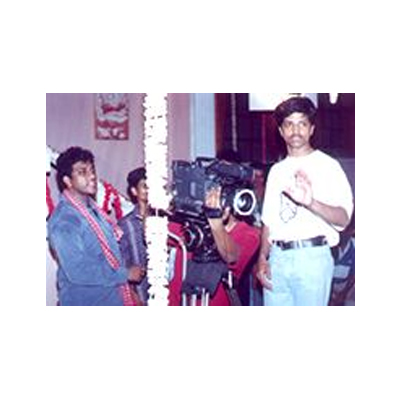
Tag: Anil Vishwa Karma

  • “The Script motivates me”:Anurag Basu

    “The Script motivates me”:Anurag Basu

    He had just stepped into his twenties when he was handed over the task of directing that cult like soap of the mid-nineties Tara by Tracinema’s Raman Kumar and Vinta Nanda. A third year B.Sc student at that stage, Anurag Basu took to it like a fish to water and went on to direct 70 episodes successfully. And gained recognition as a talent to watch.

    A promise he has lived up to. Today, at 27, Anurag Basu, has his hand in several projects: Koshish Ek Aasha, one of the top two shows on Zee TV, a movie with TV’s creative queen, Ekta Kapoor and her brother Tusshar Kapoor. He has tried his hand at several genres, ranging from daily soaps to thrillers (Saturday Suspense on Zee TV), action, drama (Rishtey), and horror (X Zone).

    It was Basu’s passion for theatre and television that led him to drop out mid way from an engineering course and opt instead for a three-year-degree course in Science from Royal College, Mira Road.

    “I quit the five year engineering course so that I would be able to get a degree from FTII sooner,” explains Basu.

    The FTII degree did not materialise. Reason: Kumar told him to get on-the-job training, rather than join some course – a decision he does not regret. “Ramanji told me FTII would be a waste for something which could be learned in a year’s time through on-hand experience,” say Basu. “Imagine I would have graduated in 1999 year had I chosen to join FTII and not done all the work I have done so far,” he adds with an elated look on his face.

    His work has also won him recognition in terms of awards: Koshish Ek Asha recently won best soap opera at the 26th RAPA awards (Radio & TV Advertising Practitioners’ Association of India) show. Basu is additionally joyous about the fact that some of his assistants are doing well. Among them Anil Vishwa Karma (he is directing Kkusum and Kahani Ghar Ghar Ki), and Kaushik who is working on Kyunki Saas Bhi Kabhi Bahu Thi.

    Indiantelevision.com’s correspondent Harsh Khot met up with Anurag Basu to try and understand what is it that makes him tick.

    Excerpts:

    Which projects did you enjoy working on?
    Ajeeb Dastaan one of my least popular serials but it is also one of my favorites. That was my best work, it was for ‘classy’ people not ‘massy’, it never got popular. Aired on Star Plus these episodic serials were based on short stories written by renowned authors like Rabindranath Tagore. These episodes had a classic touch to them, and I enjoyed doing them.

    I don’t think television will ever offer a slot for this kind of a serial. But it could also be that Star was not popular then, and only Saans was a hit on it. I don’t know the reason why but it had to be wound up.

    What brought you to directing? When did you realise that you wanted to take it up as a profession?
    My father was in a theatre group (called Abhiyaan; in Madhya Pradesh) so my childhood passed with loads of drama going around. I used to study in the rehearsal room. Watching my father direct plays sparked a desire. So an inclination towards directing was but natural.

    Until my higher secondary year I was still weighing direction as a career option. I was confused because at that point of time my father’s example stood before me. He had dedicated most of his life to theatre and yet he did not gain much out of it. He used to caution me and did not want me to follow his footsteps.

    However this did not deter me. Even while graduating whenever I used to go to pick up academic books say on thermodynamics or Metaphysics, I would inevitably pick a book or two on theatre. I have even acted and directed plays in college. That’s where it started.

    What does directing mean to you?
    Directing is experiencing the joy of watching the way people react to an entertaining story. It’s like a puppet show where all the strings are in your hand, the better the puppetry the more involved people get into it. It’s a craft.

    What do you think about pilots and series being launched without a full script in place?
    Setting out to make a pilot or a series without a concrete script/storyline was one of the mistakes I made with my first ventures. The script for only two episodes was ready. I have noticed that pilots without the complete script and its progress in place fail to take off – even with me – leaving no trace.

    While approving a project, the channels demand to know how the story is going to unfold after 50 or 70 episodes, so if you don’t have a concrete storyline on paper then it creates a hurdle and blocks the project. And that precisely is what had gone wrong with my first pilot. The channel liked the pilot but since I did not know how the story was going to develop, it was rejected. Similarly another pilot which took off around the same time had to be shelved due to the same reasons.

    What factors do you consider before taking up a project? What makes you say yes to a project?
    Honestly … primarily the set up. How much freedom will I get is of utmost importance because most producers put restrictions like don’t shoot here and there, shoot within this budget in order to save a lot. I feel uncomfortable working with stingy producers.

    Then the theme matters. I avoid taking up projects that are similar to the ones that I already have in hand.

    Basically there are only six kinds of stories that are going around in this medium, romance, revenge….etc. These are considered to be some kind of formulae that are going around. So what really matters is how the story is being woven, who the actors are and the format in which it is presented. … and how much I’m getting paid for it.

    How much do you rely on the script?
    The script is the base of the story. If you don’t have a good script then the director cannot do anything about it. And now I have begun to believe that direction is not about angles, it is about how easily and nicely you convey the story to the audience.

    What things are you particular about in the script? Do you have a say in the script?
    Yes, I have a say, but more than the script, a director has to be in during the screen-play sitting and know where and how the flow of the graph is going to be. A director cannot just take the script and go to the sets and start directing.

    During the screenplay the scenes that are going to stand out are decided and also the flow of the episode graph. Each scene in an episode has to stand by itself. There is the main storyline and within that each episode should have a crescendo and have good points.

    Television has become very competitive; if you are not giving something to the audience between the breaks then your audience will go way from your programme. The viewer has to come back to you and that is what I actually look to do. Every scene has to have that meat to keep viewers glued. Most of the serials have content-less scenes, the absence of which will not make that much of a difference to the episode. I leave them out.

    How do you plan your shoots?
    We are always working against time. I am basically a very disorganised director. That is my one of my weakest points.

    Does it affect your work?
    No. I enjoy it most of the time, besides last minute improvising helps actually.

    Before coming on to the floor what kind planning do you go into?
    Well, I am quite disorganised. I don’t plan. I often reach late the sets late. But I prefer being spontaneous, because if I plan before going on floor then the things are most likely to go haywire.

    How do you improvise on your work?
    I never do short revisions or mull over how will I proceed with the work next day. If you plan according to the scenes on the day of shoot and get to know that that artiste is going to come late, then the whole schedule goes haywire. So I have changed my style. Now I go on the sets, see the circumstances and then execute things accordingly.

    What do you expect from your unit? How is your approach with your unit?
    Honesty and sincerity. There is no hierarchy in the unit and I never put a shot which would be difficult for the cameraman to highlight, because I myself get behind the camera, so through experience I know what the limitations are. Such thoughts need to be given in all directions.

    Why do you think Koshish has become so popular?
    Koshish is not just another story. The character of Neeraj had not come on television before and that’s why I took it up. I was approached with two projects. Both were good but this one had the interesting character of Neeraj. You get to explore the emotion and mind of a mentally-challenged being human. How such a person would think? What must be going in his mind? are some of the issues you have to deal it.

    Then the whole concept of a girl being kept in the dark and getting married off to a mentally-challenged person and how the girl tries to keep the marriage going is quite interesting.

    How do you get the best out of artistes?
    Actually it depends on the whole ambience. If the artiste is scared he/she will never perform. If you yell at the artiste for not giving a good take, than the second take will be worse than the first take. The performance depends on how you encourage them. But then again after 20-30 episodes they get into the skin of the character and you don’t have to do much.

    How do you work on you characters?
    I don’t sit for hours together and mull over them. You generally know your character and I always take a reference from people around me. My close relatives, my chachi (Father’s sister-in-law) or maasi (Mother’s sister) and then mould the character according to them, so you know nuances of the character better and it becomes much easier. Otherwise to create a whole new different character out of one’s imagination becomes a little difficult. If you have a real life character it is much better.

    How much do you rely on TRPs?
    Actually it is very confusing. For instance in Koshish most of my worst episodes have high TRPs. Earlier I would get scared about TRPs slipping down when I thought the episodes aren’t good, but when I saw the ratings I was taken aback, they were actually good and had actually crossed the ratings of Kahani Ghar Ghar Ki and Kaun Banega Crorepati.

    It is actually shocking that my bad episodes get good ratings while the good ones have let me down.

    How do you differentiate the good episodes from the bad?
    When the episode isn’t moving and there is little change. Generally I shoot four five episodes. The first three are normally executed very well. Because I have taken my own sweet time in making them better, the last episode is always shot in a hurry. And then it hits me that one more episode is to be shot and there is just one day in hand. So I rush through it.

    Which genre do you enjoy doing the most?
    All. It like you can’t tell an actor to do only comedy.

    What inspires you?
    Script. If you don’t have a good script then you don’t even feel like going on the floor. But if you have a good script then it motivates and makes you want to create magic with it.

    What are you particular about while on the sets?
    Food. I am fond of eating good food. I won’t bother about what time we have to pack up. But it is crucial that the lunch break has to be at 1.30 pm.
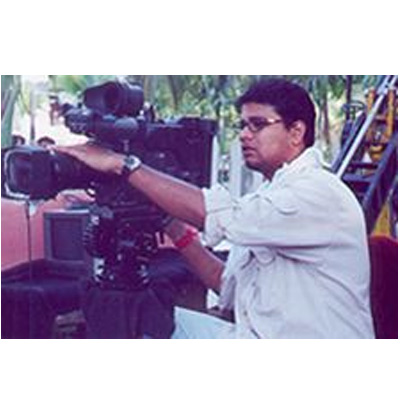
  • ‘My job is to convey the script to the viewer’ : Anil Vishwa Karma

    ‘My job is to convey the script to the viewer’ : Anil Vishwa Karma

    Sincerity, keen interest about work and dogged determination have earned Anil Vishwa Karma the opportunity to direct Kahani Ghar Ghar Ki, one of the most watched daily soaps in Indian television. An achievement beyond imagination for an SSC pass student who started his first job in the line of production as just another spot boy on sets of Filmistan Studio nearly a decade ago.

    Kahani Ghar Ghar Ki a social drama which airs on Star Plus has many ardent viewers. The soap revolves around the Hindu “united” family drama and toys with the idea of the games blood relatives tend to play.

    Born and brought up in India’s northern Bihar state, Karma spent his childhood in the state’s capital Patna. But directing never was on the cards, it came about by default and he took full advantage of it he says. “I would often bunk school to watch movies but never even once did it occur to me that some day I’d become a director,” he recollects.

    By the time Karma finished his matriculation, he was also training under a watchmaker picking up skills to repair watches. Unsatisfied, Karma abandoned studies and left in search of work that would provide a better lifestyle.Earning a living wasn’t easy. Right from selling tea on Delhi’s railway platforms, serving food at a dhaba (roadside eatery) on the Lucknow-Kanpur highway (cities in northern India’s Utter Pradesh state), to selling belts in Mumbai locals, he has done it all. Mumbai’s horrific riots of ’92-’93 changed life for him but for the better. With the atmosphere in the city tense, Karma sneaked into Film City through the unguarded back area to seek refuge from the communal violence.

    In Film City, its unorganised ways of functioning turned out to be a boon for him. “Unlike the pay card that you get in an organised production house, a few contractors generally hire people outside the film studios where people are willing to do the job for Rs 50 a day, a remuneration way below what is actually to be paid. Generally an employee should be paid Rs 150. But since it is unaccountable the difference is pocketed,” he reveals. Nevertheless, the job of a spot boy not only got him a living, it also marked a step into the world of light, camera and action.

    Nearly seven years later at 25, Karma is directing what is among Balaji Telefilms Limited’s most prized serials: Kahani Ghar Ghar Ki and the soon to be released Kusum.

    Indiantelevision’s correspondent Harsha Khot caught up with Anil Vishwa Karma at the shoot of the eagerly awaited forthcoming daily soap Kusum that is going to be on air towards the end of April on Sony Entertainment Television.

    Excerpts from the interview:

    From a mere spot-boy to directing of one of most talked about daily soaps. What has made this possible?
    Director Raman Kumar and Vinta Nanda (scriptwriter) of Tara and my own sincerity and keen interest. Raman Kumar sparked the hope in me by suggesting the possibility of me becoming a director some day at a time when I was just his personal assistant and Vintaji Nanda who guided me towards making it a possibility.

    What was the turning point that got you on the road to directing?
    It happened while working as a personal assistant to Raman Kumar. He was searching for a script of a particular scene that had got mixed up among many others. Though I wasn’t in any way involved with the production of the serial, I had a slight idea about what the next scene would be and that helped me locate the script that Ramanji was looking for. Impressed with my alertness and involvement, even though I wasn’t directly involved with the production, he encouraged me, saying: “If you keep doing good work maybe you’ll assist me in directing someday. Those words did it. Then onwards nothing came second to directing. I would observe the camera movement, lighting, actors, the way Ramanji directed very closely. Many times I would get extremely engrossed observing the production process and even wander off the sets itself forgetting all about Ramanji’s personal work. Fed up with my wandering off the sets, one day he finally asked me to assist him (smiles).

    After pre-production preparation, what kind of things, what thoughts cross your mind while proceeding for the shoot at the beginning of the day?
    Before shooting, during the script discussion sessions, the outline of the character is clearly sketched out. I have an idea about what kind of scenes are to be captured on camera, the graph that has to be attained from the shoot of the episode. I have an outline for the forthcoming episodes. That clarifies a lot of things. Which actor is going to be there for the shoot, the general outline. Which scene is going to be shot and how we’ll be going about it. The only thing that remains unknown is how the day would go.


    Camera man Anil Mishra & Anil Vishwa Karma on sets of Kahani Ghar Ghar Ki

    How is your approach? Are your directing techniques different from other directors?
    I wouldn’t want to differentiate my work from others. My only aim is to convey the script to the viewer in the best way I can. All I do is try to capture what the producer and the writers have etched out in the script, and I try to convey that across to the viewer.

    Talking about conveying the character, how do you go about sketching the character? If the actor is unable to convey it the way you want then how do you approach the situation?
    In fact, the actors themselves know how the character is. We sit and go into the details of the role beforehand. While discussing the characters with the actors they come up with suggestions, since they often have done variations of the character, say as a sister or mother for instance, they share their thoughts on the character that they have etched out. Once the shoot begins the actor and the production crew gets accustomed to the script character and know it well, only initially does it take time to get accustomed to the character. Yes, there are times when the actors bring in a touch to the character maybe from other projects that they are working on. Since I literally play with these characters throughout the month, the minute they go off track a bit I notice and make sure they get it right before the take is okayed.

    What do you do when you face a situation on the sets where, for whatever reasons, the shot has not quite come up to scratch?
    We continue with whatever is present, and try and cover it up during the editing process. I wouldn’t call that a drawback, since given all the things required for the shoot of the serial, anybody can do it. The real challenge and skill is doing the work despite all the drawbacks.

    Isn’t there a budget restriction that you have to adhere to?
    For the two serials I am doing, the budget is not the problem, time is. With Balaji, the budget isn’t problem in either KGGK or Kusum. And since the latter is close to Ekta Kapoor, she has advised us go about the project like one would approach the shoot of a weekly serial. Initially we did that but eventually it will be time that is the restriction. Once the serial goes on air, we will have to complete an episode in a day’s time and we will have to more particular about time then.
    But while directing Kaun for Doordarshan there were budget restrictions, but it also gave an opportunity to explore my creative skills. Working for Doordharshan gives you an opportunity to explore talent but doesn’t give sufficient publicity.

    While shooting, what is your approach to getting work done on the sets?
    I try and keep an amiable atmosphere on the sets. It so happens that if you lose your cool then it tends to affect the work indirectly. For instance the person could be affected and it might hinder how soon the take is completed. There are chances that it would affect the actor, which may be noticeable for those who watch the serial closely

    What do you prefer? A director’s actor or actor’s actor?
    I am always open to suggestions. If they come out with something better nothing like it. There are actors with a wealth of experience behind them whose opinions on how a role should be delineated I respect. Ultimately the effort is to etch the character as convincingly as possible.


    With cast of Kahani Ghar Ghar Ki
    Pallavi, Chaya & Parvati

    In Kahani Ghar Ghar Ki, many feel that characterisations are monotonous and extreme. How come the younger daughter-in-law gets away with her antics while the elder one is always victimised?
    It is a part of the script. In between even I felt that the characters were getting extreme but now we’ve worked it out.

    How important is acting in being able to direct?
    It’s quite essential. Even while sketching out an outline of the character I put myself in the actor’s shoes and ponder how it could be enacted. During the shoot I myself act and show what is required for the scene, to give an idea about what is required for the shot.

    What are the factors that you don’t compromise on?
    Lighting, camera, taking of the shot. That is what my job is.

    Don’t you think that there are too many daily social soaps playing around the theme “allrounder bahu” and that includes Kahani Ghar Ghar Ki?
    Yes, but the TRP’s indicate that is precisely the kind of programmes that people want to watch, even when there are other genres of serials being telecast.

    Has lack of sufficient knowledge in scriptwriting ever been a hindrance?
    It can be a disadvantage at times. More knowledge would have certainly helped, but I don’t let that come in my way.

    How do you overcome that?
    I don’t hesitate to research a particular topic. If I want to know how a managing director of a company would be, to find out about it I spoke to the managing director of the Balaji Production House. I observe their ways of walking, talking, approaching different situations and don’t hesitate to ask them if I feel the need to know a certain thing, however stupid it may sound..

    What about Kahani Ghar Ghar Ki and Kusum appealed to you and made you sign up?
    Kahani Ghar Ghar Ki is a social drama about a joint family. The whole concept gave me good vibes. Basically this serial is in line with the Ramayana. Where the Dhasharata (a character in the epic who had a number of wives) of the serial is Babuji who has two children from his first marriage. He remarries after his wife dies. And Kusum is a story about an ordinary girl residing in a chawl. She works and travels back and forth by bus and locals and at the same time she has to cook, mops floors, washes vessels and looks after her family. A story which every third working woman living in the city can relate to and that is what appealed me.

    What went into making the person you are today?
    My mentor Ramanji. After him, I picked up the nitty-gritty of technical aspects while working under Rakesh Sarang of Umeed and Shataranj fame. Later on I worked with Kushal Nandi for Thriller at 10 , and Saturday Suspense . While doing Mr Gayab a serial based on the character in the movie Mr India, I gained confidence where I got to direct a scene independently for the first time.
    And Vintaji, she took me along with her to restaurants, shopping. Made me watch plays, act in a few of them. Even though I was working in her office at that time she schedule the work in a manner where I could proceed developing acting and directing skills.

    Apart from directing what do you enjoy doing?
    I like to cook. In fact Ramanji and his friend love the way I cook “dal” (lentils). Even today whenever possible I explore culinary skills.


    On the sets of Kahani Ghar Ghar ki

    What inspires you?
    Teamwork and total involvement. If the work is heading in the right direction everybody on the sets gets completely involved. In fact the whole team keeps track of every little thing. If its good they enjoy themselves and there’s an air of camaraderie on the sets which for me indirectly indicates that the viewer too will enjoy the experience. Otherwise, imagine if my own crew doesn’t enjoy what they are doing then how will the viewer? (Smiles)