Tag: Anil NM Wanvari

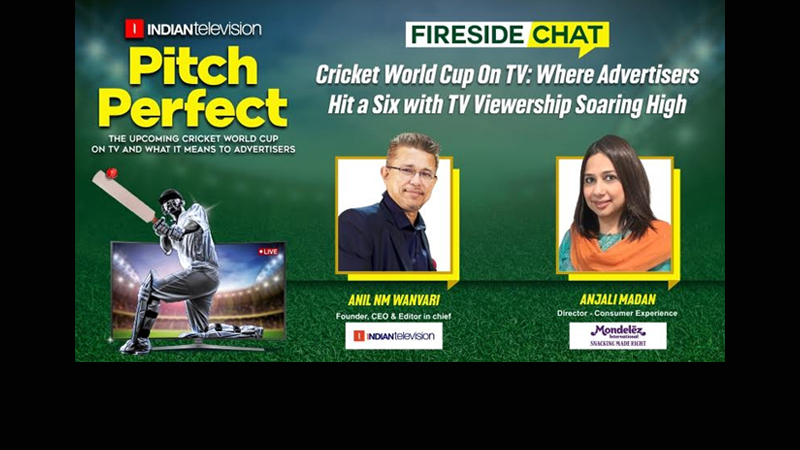
  • Cricket World Cup On TV: Where Advertisers Hit a Six with TV Viewership Soaring High

    Cricket World Cup On TV: Where Advertisers Hit a Six with TV Viewership Soaring High

    Mumbai: With a potential reach of 600+ million, the World Cup on television is the place to be for advertisers looking to capture the attention of viewers during the festive season. The interview series “Pitch Perfect” discusses with leading marketers their thoughts about the World Cup and how advertisers can best leverage the mega event on television.

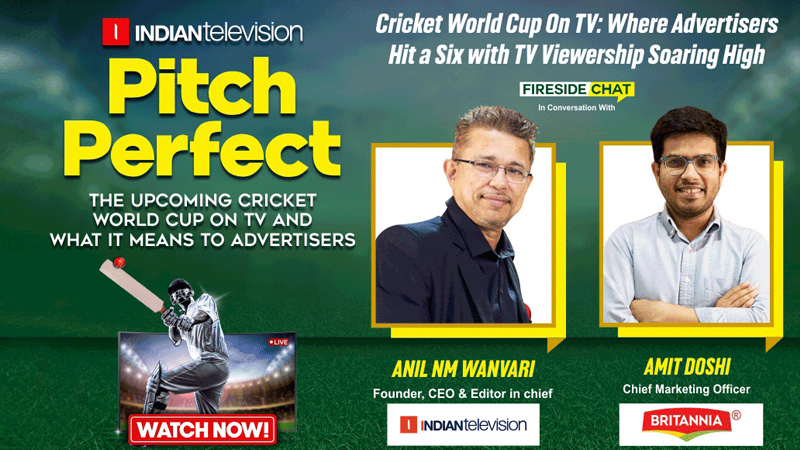
    Indiantelevision.com’s Anil NM Wanvari in a fireside chat with Britannia CMO Amit Doshi association with Cricket on Live TV.

    Edited excerpts

    On live sports role on television as a marketer

    If you look at the Indian landscape, there are a few passions that bind us as a country. Cricket is pretty much a religion for most of the country and it provides those really high-octane eyeballs, and media situations for us as marketers. It’s an opportunity for us to reach out to large audiences at scale in a short period of time. It’s getting proven the world over, while there may be those switches in some parts of the media-consuming population to streaming and to look at, mediums which are beyond appointment viewing. But when it comes to live sports, everyone wants a big screen, everyone comes together and there is an ambience of people really tuned in to what’s playing out. That’s a great opportunity for most marketers, and that’s how we view it. Especially time for let’s say a new product launch or a promotion, which is for a specific period and want to build reach very quickly. Live sports on television is certainly a great vehicle. In India when it comes to live sports, obviously, nothing beats cricket.

    On your association with the IPL and in terms of brand and business impact for Britannia

    There were a bunch of brands that we advertised at that point in time. The good thing about live sports broadcasts at this point in time is the multiple feeds that have been created, which are language feeds, HD feeds, and streaming feeds, and what it allows brands to do today is to be far more intelligent, far more precise about how we’re using media. That has been a big change, I would say, compared to the previous, we did use that feed quite intelligently. So, for example, the Tamil feed, a brand like Milk Bikis has been advertised through it. If there’s a mass brand like Good Day, we had the opportunity to use national feeds going into the Hindi-speaking, and English-speaking markets. So, there were a bunch of brands that we married, the media team did a really smart job of marrying them intelligently with the different feeds. We’ve always seen good results. With live sports on television, it obviously manages to build a quick reach in a short span of time and is able to add so much more fuel and muscle to the media plan. I think it has to be an absolute meeting of two things and I believe it has to be a meeting of the business or marketing objectives with the property.

    On large-scale collective viewing during live sports especially Cricket World Cups helping advertising brands drive impact

    It obviously makes for a great opportunity to increase consumption. I don’t think advertising exactly at that point in time translates into a long-term effect of advertising. So if one has done consistent advertising over the last few quarters, hopefully when the Cricket World Cup kicks off, that brand gets preferred over others. We’re quite confident that with the rate the portfolio of choices, or the new products that we have, not just biscuits, we have croissants, crackers, snacks, and beverages now, which are premium products, which you can munch around this time. So, we’ve got a bunch of different products, not just biscuits, which present the consumer with many options depending on who they are and what the size of the party is at home. 

  • “The uplift in ROI through cricket on TV associations is significant for us”: Mondelez India’s Anjali Madan

    “The uplift in ROI through cricket on TV associations is significant for us”: Mondelez India’s Anjali Madan

    Mumbai: The festive season brings a double whammy for advertisers and brands as the Asia Cup and the much-awaited World Cup (Hosts – India) is set to take the country by storm. With a potential reach of 600+ million, the World Cup on television is the place to be for advertisers looking to capture the attention of viewers during the festive season. The interview series “Pitch Perfect” discusses with leading marketers their thoughts about the World Cup and how advertisers can best leverage the mega event on television.

    Indiantelevision.com’s Anil NM Wanvari in a fireside chat with Mondelez India Anjali Madan association with Cricket on Live TV.

    Your thoughts on India winning the recently concluded Asia Cup which you were a part of on TV

    Well, I was definitely elated and it’s a great thing for the team and Indian viewers with the World Cup coming up. We were at the Asia Cup as a sponsor brand. It’s a great investment for us from an opportunity standpoint.

    On your thoughts about the World Cup 2023 and any plans to leveraging this opportunity

    The timing is absolutely perfect for us. It’s also the time of the year when all our brands are, targeting different sets of consumers for the festive season. We have a large gifting portfolio of brands and chocolates have now become ubiquitous to the gifting category. So we will be going live with some interesting campaigns at that point in time and the timing couldn’t get better.

    On how Mondelez is planning to leverage Cricket World Cup on television

    There is going to be a lot of excitement around it. We are expecting that a lot of people will tune in to watch the megaevent. We have a remarkably interesting campaign that we are launching at that point in time. I cannot reveal too much about it. But it’s a campaign that you will see centered around one of our brands that has a very large share in our portfolio.

    We also have a campaign for Cadbury Dairy Milk. Cadbury Dairy Milk every year comes live on to the IPL. We have a theme of generosity around the brand. So you will see the generosity campaign coming to life again during the World Cup and there’s a lot of engagement planned with the brand. It’s a very new and refreshing take on generosity for the campaign this year. That’s what we have planned in the pipeline. Definitely I think it’s going to be one of those events where everybody is going to be glued to their TV sets for sure or their mobiles to catch the action.

    On how Mondelez has benefited from its continued partnerships with Star Sports on major cricketing events

    Like every year, we have a very interesting campaign that we do with the IPL with the network that we are working with this year for the World Cup. I think one of the big things that we see every year for us when we do IPL is that the ROI uplift for us is significant. We see almost a 3-4X uplift that happens in the brand metrics as well as our ROI numbers when we are on cricket. And that’s a huge impact property for us that we’re building.

    The association also means that they help us get the right talent on board. They also help us with planning out how our activity should happen. We have special content snippets that we have, we have placement that happens at the opportune moment during the sporting season. I would say that they are indispensable partners of ours for all these years. Undeniably, they are the ones that helped us bring the eyeballs in so a very strong partnership over there.

    On the role of cricket on television has played for Mondelez in driving impact

    I think one thing for sure is that television helps you get that quick, rich build-up that you need, especially with a high-impact property, like sports and cricket. You get that build-up almost immediately for your campaign, what also helps us is that there is a lot of peripheral activity that happens as well, apart from the main sporting event itself, right. Apart from just the matches, there’s a lot of other conversations that happen. Those conversations that happen around the matches, what is happening in the back rooms, and what is happening with the players and the commentary and all that helps us build a lot of the storytelling that we want to do for our brand. We leverage that I would say phenomenally well with Star Sports and our association over the last few years.

    Even today, watching a sport on a big screen is an experience in itself. A lot of people who watch sports on their mobile phones probably are catching up on what they have missed between the big events in the activity. Watching the World Cup or watching the IPL or watching any sport on a large television screen has its own charm and the role of television is undeniable in that case. What we did with Star Sports is every year in partnership with them, we work very closely with their content and editorial team to build the central thought or idea that we have around the brand. 

  • IDBF 2023: From Script to Screen: EC Studios Crafting compelling narratives for brands

    IDBF 2023: From Script to Screen: EC Studios Crafting compelling narratives for brands

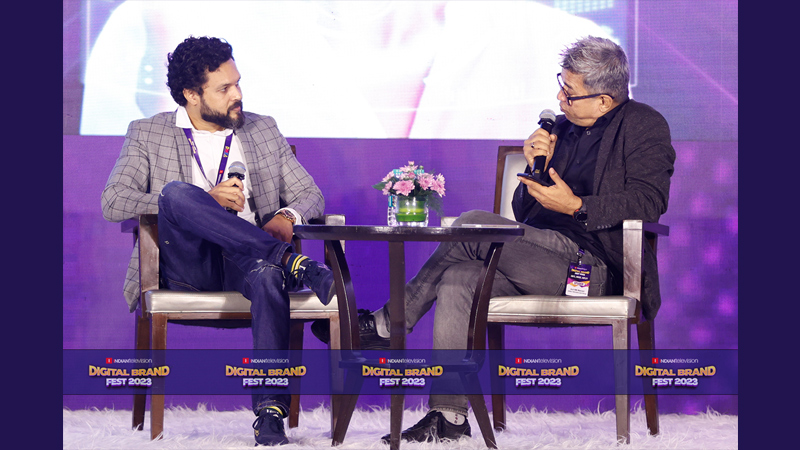
    Mumbai: Beginning the session on a lighter note, Wanvari, who was intrigued by the earrings Bopche was wearing, asked him what was so special about it. To which Bopche said that it was more from a religious point of view, and it was not a fashion statement.

    Wanvari then asked, “There are various studios out there, but what makes EC Studios so special?”

    Bopche replied, “I think the first part is, yes, there are a lot of studios, a lot of content houses but EC is special because it has been owned by an agency. So, it works as a one-stop solution. Also, I think for brands to tell them compelling narratives, not just the creative, but production, post-production end-to-end, we take care of. First of all, this is medium agnostic, agency agnostic, as well as platform agnostic. So that’s one of the biggest USP and that kind of differentiates us from the rest of them. Also, we are web 3.0 already. So, I think that kind of sums it up in terms of the difference.”

    Wanvari then asked Bopche, “How does it work? Does a brand approach you or an agency approach you?”

    Bopche replied saying, “As I said, it’s more like end-to-end. At the same time, it’s piecemeal which is also available. Today, brands are looking for a quicker turnaround time, lower budget, and mostly the ecosystem as you have a creative agency production house, post-production house, and then technically, the content distribution partners. What we focus on is a flexible model. Brands can choose to engage with us for a one-neck-to-grab approach, where we handle everything end-to-end. Alternatively, they may already have an established agency that handles scriptwriting and then passes it on to us for production. There’s also the option for smaller projects, which might involve post-production, including CGI and VFX. So, it’s a matter of offering a full-service experience or fitting seamlessly into their existing supply chain, wherever they see the best fit.”

    Adding on to it, Wanvari asked, ”You have a full-fledged creative team in-house, including scriptwriters and crew, right?”

    Bopche said, “Not only do we have our creative team, which is standard for any agency or content house, but we also have our streamlined workflow tailored towards producing high-volume content. In today’s market, we’re witnessing a surge in live commerce activities and an increasing demand for content from DTC brands. The days of creating a single TV advertisement are behind us. Brands now aim to become content destinations, focusing on continuous engagement across platforms. That’s where we come in with our comprehensive in-house capabilities, encompassing studio setup, creative teams, production units, and post-production. If a script requires an external shoot, we arrange for it, but for the most part, our operations are fully in-house.”

    Moving on to his next question, Wanvari asked, “When working with an agency or brand, how closely do you all work?”

    To which Bopche replied, “Many names in the industry are primarily post-production houses, often comprising just two or three individuals with a set of producers who outsource post-production work. Companies like Famous or Prime Focus are typical examples, focusing exclusively on post-production and not involved in the creative aspect such as scriptwriting. The industry has traditionally been quite fragmented in this way. However, what sets us apart is our one-stop-shop approach. We handle everything in-house, from scripting to campaign development. Whether it’s engagement campaigns, ROI-focused ad campaigns, or any other type of content, we manage it all internally. It’s not about outsourcing; it’s about having everything under one roof, which allows us to pass on cost-efficiency and shorter timelines to our clients. In today’s landscape, content is the currency that brands are dealing in, and we aim to be at the forefront of helping brands optimize their content strategies.”

    Wanvari then asked, “How does being a part of the chain network help you?”

    Bopche answered, “Being part of a larger network is immensely beneficial for us. Countries like Korea and China are well ahead of India in terms of content marketing and production, covering everything from virtual reality to live commerce. We draw inspiration and best practices from these markets. This is one of the reasons why we confidently say we are well-prepared. While the media’s focus has been on meta, we believe that as we transition to web 3.0, there will be a significant demand for content creation in that space. Today, we create content for platforms like Instagram, Facebook, and YouTube, which operate within the web 2.0 framework. Content will always play a crucial role in advertising, just as newspapers, TV, and radio did in the past. Some platforms may coexist while others may fade away over time; the future will reveal this. Additionally, we are gearing up for the Metaverse era, including digital human creation and Metaverse content production. Learning from more advanced markets, such as Indonesia and developed countries, where content is concerned, they are approximately two years ahead of India. This ongoing learning process greatly benefits us.”

    Following the presentation of an AV for EC Studios, Wanvari then highlighted the tagline displayed in the last frame of the video and inquired, “Could you please share some insights about ‘Kaam se hi Naam’?”

    Bopche replied saying, “We believe that our work should speak for itself, much like the approach taken by individuals like Sachin Tendulkar, MS Dhoni, or Shahrukh Khan, who have earned their names through their achievements. While there may be countless others with the same name, it’s the work that distinguishes them. This philosophy is at the core of our values, and with every project we undertake for our clients, our aim is to not only meet their satisfaction but also elevate the pride and satisfaction of our team.”

    Talking further about the pleasant feeling of the video, Wanvari said, “I’m sure clients will also feel comfortable when they come in there.”

    Bopche then went on to say, “We’ve been in operation for the past four and a half years, and we’ve recently expanded with a new facility, including two studios located in Gurgaon. One of these studios is exclusively dedicated to Samsung, where we manage their live commerce operations. While we certainly create entertaining content that engages audiences, we also produce educational content that delivers ROI for the brand. Additionally, we craft content designed to foster engagement and build communities for our brand partners.”

    Wanvari then shot his next question, “What is the one thing that we wished the client understood about the production side?”

    Bopche answered, “While production may appear easy and glamorous to outsiders, it presents a myriad of challenges. One of the key challenges is coordination and collaboration. Production involves managing large teams with diverse skills and responsibilities, making it crucial to maintain effective communication and coordination. Failure to do so can impact costs and timelines, both of which are critical. Staying within budget and adhering to tight schedules are essential in this line of work. Safety is also a paramount concern when dealing with crews of 120 to 150 individuals. Ensuring safety on set is a top priority. Furthermore, client satisfaction post-shoot is vital. In the world of production, there is a significant degree of unpredictability, as we’re experiencing today. This necessitates a team with skills like adaptability, problem-solving, and the ability to make quick decisions on the set. These aspects often go unnoticed but are instrumental in the success of any production.”

    Wanvari then asked, “How does coordination take place at EC Studios? Is it facilitated through cloud-based systems, with clients providing feedback online?”

    Bopche replied, “In today’s fast-paced world, convenience is key. People want to access content with a simple tap on an app, and nobody has the time to deal with downloading links or managing files through WhatsApp or WeTransfer. That’s why we’ve developed a cloud platform that streamlines the approval and feedback process for decision-makers, such as senior CMOs or marketing heads, even when they’re on the move, like at the airport. They can easily provide feedback on content with a few clicks, and it’s automatically relayed to us. We make the necessary changes, and it goes back to them seamlessly. There’s no need for manual link transfers; it’s all automated. This approach not only simplifies content production but also enhances the logistical aspects of the creative collaboration between the brand and the agency. Everyone can work together efficiently on a single platform to achieve the desired output.”

    Moving on, Wanvari asked Bopche whether they welcome clients on their shooting floor. To this, Bopche replied with a laugh, “Obviously, they are the ones putting the money.”

    Adding on to it, Wanvari said that it gets very painful at times after the storyboard is approved and after everything’s approved.

    Bopche then said, “When we have clients on the set, it comes with its own set of pros and cons. Let’s start with the pros. Having the brand or client present on the set allows for quick feedback, as they can see the production in action. It promotes transparency, as they witness the communication firsthand. Moreover, it enables swift decision-making, especially in unpredictable situations. Additionally, client feedback often contributes valuable creative nuances that enhance the final film, from a brand hygiene perspective. However, there are also cons to consider. Having the client on set can sometimes be distracting, adding pressure to the production crew. Excessive interference from the client in the creative process can be challenging, as it may undermine the expertise of the production and creative teams. So, while there are definite benefits, it’s essential to strike a balance when clients are on set.”

    Wanvari asked, “How do you respond to clients’ expression that budgets are constrained but promise significant exposure in return for your services?”

    Bopche answered, “While we always maintain a smiling demeanour externally, internally, we engage in critical evaluation when clients mention tight budgets and the promise of exposure. This assessment considers several factors, such as the state of our business at that time, the value the project brings to our portfolio, and whether it’s worth undertaking even if the financial compensation is limited. Given the choice, we often lean towards managing tight timelines over tight budgets, as it offers an opportunity to showcase our skills under pressure.”

    Pointing out that Bopche didn’t answer the question properly, Wanvari said, “Would you choose to undertake the project, strike a balance between the two by possibly compromising on the budget for exposure, or opt for a different approach altogether based on the demand?”

    Bopche replied, “We need to establish the value of what’s achievable. Content can be created at various price points, and it’s important to convey what clients can realistically expect based on their investment. It’s not a matter of categorically refusing projects; we don’t work for free, as no one can sustain that. We have a track record of successful projects and satisfied clients, supported by testimonials. However, there’s a delicate balance. We always consider whether a project adds substantial value or if it’s worth undertaking. It’s about helping clients understand the value they’ll receive in return. While there’s often humour around client expectations versus reality in memes, in real life, we’re committed to maintaining quality. We believe that, ultimately, people remember the one goal you miss, not the ten you save. So, we uphold our commitment to delivering quality work.”

    Wanvari added, “You’ve worked for a Korean company. Korean companies are known to look at bottom lines.”

    Adding on to the same, Bopche said, “Yes, business is crucial, and everyone in this room, regardless of their role or department, is connected to it in some way. It’s a shared goal. However, it’s equally important to consider how to approach it ethically. Bottom lines hold significance, but there are instances where projects may have tight budgets, yet they are worth pursuing. Not all content will deliver a high ROI, just as not all content will directly impact the bottom line.”

    Wanvari then asked Bopche, “What role does technology play as far as your studio is concerned and production is concerned?”

    Bopche said, “Technology has played a pivotal role in the evolution of film production. We’ve witnessed significant advancements in cameras, cinematography techniques, editing software, and special effects, including the exciting realm of virtual reality. Now, we can pre-visualize scenes with precision, addressing safety concerns proactively. Technology has become an integral part of filmmaking, especially for creating unreleased content and product launches where the product hasn’t been seen before. CGI and VFX have always been present, but its utilization is increasing. They enable us to depict what’s otherwise challenging to capture, and with the rise of OTT platforms and global content consumption, this demand has surged. People are enjoying content from various countries with diverse exposure levels. As a result, we see a growing use of VFX, virtual reality, and technology as a central component of this dynamic landscape.”

    “We’ve formed a partnership with a Korean company specializing in digital humans for the Metaverse. This involves creating a digital archive. A notable case study is the use of a digital avatar to continue filming when a Fast and Furious cast member passed away. We anticipate that Bollywood celebrities, influential figures, and even politicians will establish their digital archives. In this futuristic vision, even after their physical presence has departed, these digital personas can continue to endorse brands, perpetually earning royalties. The concept of royalties is not new, but it’s poised to take on a whole new dimension,” added Bopche.

    Wanvari then asked, “More and more brands are going the B2C route. So how do you see this entire thing?”

    Bopche answered, “In the B2C realm, there’s a notable shift towards increased brand control and awareness. Data-driven insights are becoming central, and content marketing is playing a significant role. As Neeraj mentioned earlier, live commerce, like what we do for Samsung, is a prime example. Many clients are realizing the power of creating content to support their sales efforts, whether through live video commerce or other means. D2C is an exciting space, emphasizing the need for a higher volume of content. It’s no longer solely about crafting a single TV commercial but about producing a plethora of content aimed at educating and engaging consumers to foster brand loyalty. This dynamic landscape has witnessed an abundance of content creation, with even companies like Whirlpool generating thousands of recipe videos to promote a microwave, showcasing the immense potential of this space.”

    Moving on Wanvari asked, “What is your stance regarding clients establishing in-house studios?”

    Bopche answered, “Having in-house studios is always an option, and it’s similar to the earlier concerns advertising agencies had when setting up in-house creative teams. However, this doesn’t eliminate the entire industry ecosystem. This industry relies heavily on talent and professionalism. While some content can be managed in-house, it doesn’t replace the need for skilled production and large-scale expertise. Establishing something like that would typically require significant resources.”

    Wanvari then asked his final question, “I believe you’re doing something special for clients, you have some loyalty programs going on, can you let us know a little more about that?”

    Bopche said, “I’d like to clarify that this is more of a reward program rather than a loyalty program, as loyalty comes with time and usage. We operate in the content creation industry, and we saw this as a way to introduce a unique experiment for EC Studios. Today, we’ll be distributing the EC card, which is essentially a reward program card pre-loaded with 50,000 points, equivalent to 50,000 rupees. My team will be distributing these cards here, and they can be redeemed for any content creation services, big or small. As they continue to use our services, they’ll accumulate more rewards. While reward programs aren’t new, they are somewhat unique in our industry. It’s a way of bringing the concept of rewards, which we see in various sectors from Google Pay to others, into the B2B landscape, which we believe can add value to our clients.”

    Adding on to it,  Bopche said, “This offer is exclusively for companies, and you can utilise it for various services. Whether it’s creating static posts, producing videos, designing motion graphics, or other services we offer, the options are diverse. It’s essentially a way for your organization to save 50,000 bucks.”
  • lDBF 2022: Content marketing to become an extremely powerful tool for brands in future

    lDBF 2022: Content marketing to become an extremely powerful tool for brands in future

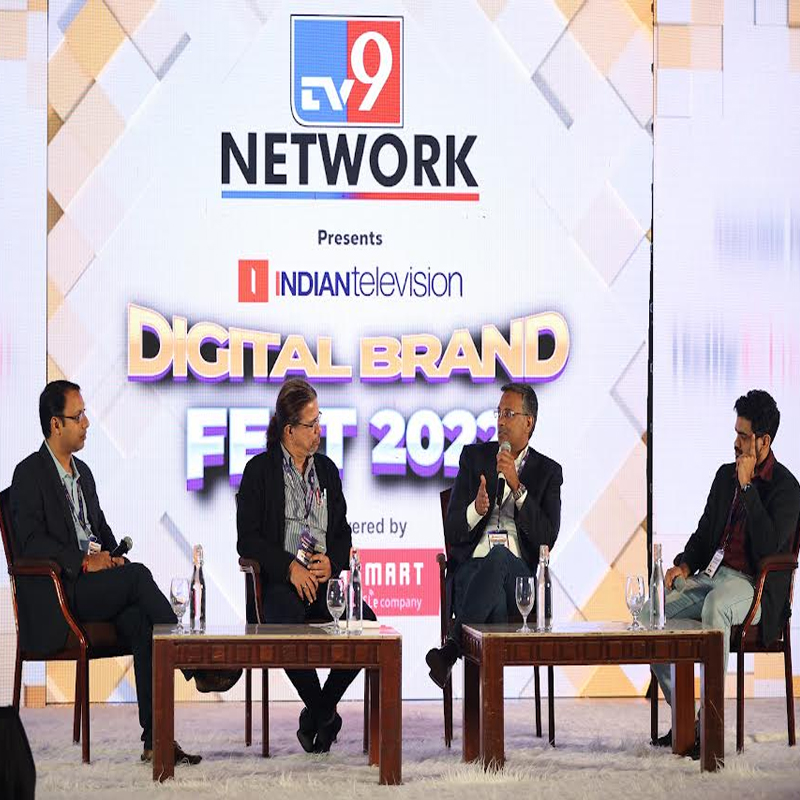
    Mumbai: The second edition of the Indian Digital Brand Fest (IDBF) 2022, which took place on 12 October at ITC Maratha, Mumbai, ran an intriguing panel discussion on the topic “Content Marketing for Web 3.0,” which brought together minds and thoughts on how content marketing is going to be the next big thing and how essential it is going to become to understand the consumer.

    The session was chaired by Indiantelevision.com Group founder, CEO & editor in chief, Anil NM Wanvari.

    Beginning the session and putting things into perspective with the topic of web 2.0, TV9 Network managing editor R Sridharan said, “If you look at the innovation that has happened in web 2.0 is far greater than what we saw much before. Earlier it was static content, then in web 2.0 we saw that it allowed people to interact with content like becoming a publisher on Twitter, Facebook. It became richer in many ways. In that way web 2.0 has done an incredible job in making content an integral part of marketing for every chief marketing officer (CMO).

    “More than advertising, content marketing is important, and for that web 2.0 has done a great job. Web 2.0 has been a great learning experience from a content marketing perspective,” he added.

    However, Madison India vice president Kosal Malladi was of the view, “We have done a job in content marketing, but have we done a good job? I’m not so sure. When content marketing started, we thought that the end consumer wanted to know everything, so initially the content marketing was quite bad. We are getting better; it’s an ongoing learning process.”

    “We got to understand that if there’s too much content and information being bombarded on the consumer, then that’s also a problem,” pointed out HDFC ERGO General Insurance vice president marketing Alok Bhargava.

    Talking about the onset of web 3.0, Sridharan brought out, “No one knows how it’s going to pan out, but some things are very apparent and obvious. Firstly, on the content side, it is going to become far more immersive, and secondly, it’s about privacy. These things are going to change the game, and brands have to understand how to know their customers and how to interact with them.”

    He reiterated, “Content marketing is going to become more important in web 3.0 because, as a brand, I need to build communities and platforms where people will come on their own and share information about themselves.”

    “It is about creating the right content in the first place – if you have created some content which is not engaging the consumer and the consumer is not enthusiastic about it, then you have to have a harder look at what you’ve created. Researching the customer and what would keep them engaged is probably the most important thing,” Sridharan pressed.

    Needless to say, content will become extremely powerful if it is done the right way. He said, “If the customer sees value in interacting with you, he/she will come back to you again and again. You won’t have to persuade them.”

    Bhargava opined, “Content creates a good factor for any brand. If your content is not good, you will have to push it harder to the consumer.”

    According to Malladi, most of the content marketing is paid. Sridharan was quick to add, “When a piece of content is dishonest to the consumer, it’s not going to work. They are able to see through when the brand is not being authentic.”

    Regarding whether digital will overtake TV in outreach, Malladi said, “If you are advertising on digital, it’s not just the reach that happens but your ad is also seen on multiple devices.”

    “Yes, digital will overtake eventually, with connected TV taking over linear TV family viewing habits in India. The content has to be medium-appropriate,” said Bhargava.

  • PR & Communication Aces Summit & Awards 2022: Exploring new trends & opportunities in PR industry

    PR & Communication Aces Summit & Awards 2022: Exploring new trends & opportunities in PR industry

    Mumbai : Goodwill and corporate reputation are the safety cushion against high inflationary and economically uncertain times that the private sector is undergoing currently. As reputed investment banking firms come under the scanner for misleading their customers on their ESG – environmental, social and governance standards, the role of public relations and communication industry becomes apparent in setting the context right on the corporate agenda.

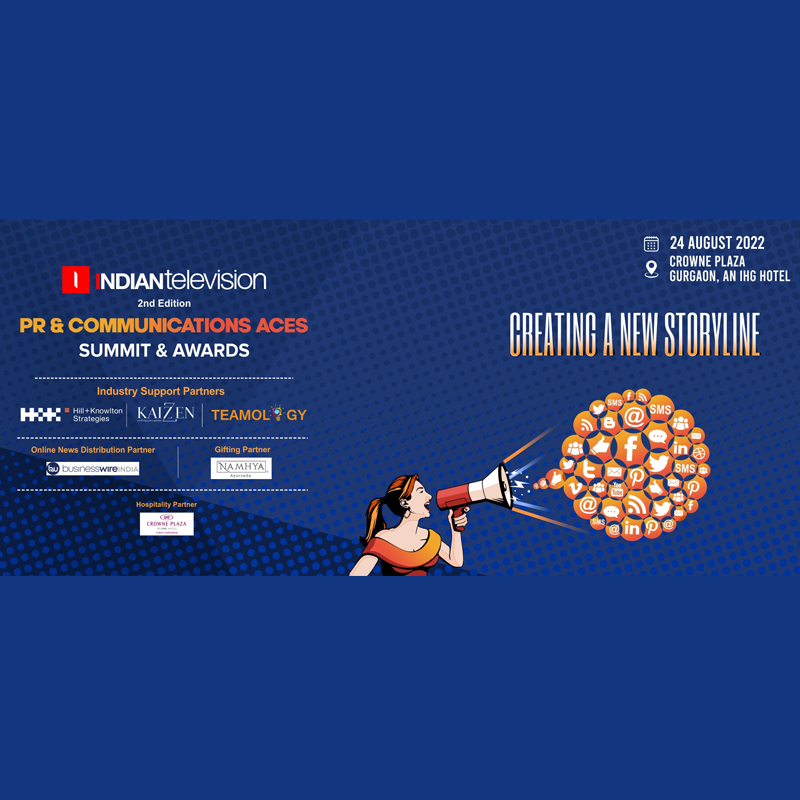
    The second edition of PR & Communication Aces Summit & Awards by Indiantelevision.com group will be held on 24 August at the Crowne Plaza – an IHG Hotel, Gurgaon.

    The main idea of this event is to create more sustenance & look at how the best talent is made available across industry functions, especially the specialized businesses. The summit explores the trends, challenges and opportunities in the PR industry. It will also honour the trendsetter, maverick PR professionals and organisations who unceasingly deliver client outcomes.

    The summit explores how PR firms are consulting leading Indian companies on achieving their environmental, social and governance (ESG) goals and diversity, equity and inclusion (DEI) policies. It looks at how PR agencies are expanding their services to offer influencer communications, measurement analytics, social media management and multimedia content creation.

    The daylong conference allows attendees to learn from the PR industry’s best and brightest minds on subjects such as managing corporate reputation, aligning a company’s purpose with its corporate social responsibility (CSR) initiatives, launching a data science/data analytics practice, mitigating the impact of fake news on brand reputation, and fostering, retaining and expanding the talent pool.

    You will hear from a cross-section of the industry representing the brand side as well as the agency side of the business.

    This edition of the PR & Communication Aces Summit & Awards would not be possible without the support of our partners. Leading PR firms Hill+Knowlton Strategies, Kaizzen and Teamology have associated with the event as industry support partners. Businesswire India is the online news distribution partner and Namhya Ayurveda is the gifting partner.

    The summit will begin with a welcome note by Indiantelevision.com founder, CEO & editor-in-chief Anil NM Wanvari , delivering a special address to the PR and communication fraternity.

    The first-panel discussion of the day will be on the topic ‘PR and the 360 Degree Communication: Trends, Challenges & Opportunities’ will be moderated by Hill+Knowlton Strategies CEO-India Abhishek Gulyani and the eminent panel of speakers will comprise Fortis Healthcare Ltd group head of corporate communication & PR and Fortis Healthcare group vice president Ajey Maharaj; Policy-Bazar’s head of communications & content Apeksha Mishra; PepsiCo India associate director corporate communications Amit Nanchahal; Hero Electric Vehicles head of marketing & corporate communications Manu Kumar and BPCL chief general manager – PR & Brand Syed Abbas Akhtar.

    The second panel will deliberate views on the topic ‘ The Roaring Twenties: Creating a New Story Line’ and will be moderated by SPAG Asia chief happiness officer Shivani Gupta and the panelists will include BharatPe head – PR and communications Akanksha Jain; InterGlobe Aviation (IndiGo Airlines) director- corporate communications & brand reputations Chhavi Leekha; Xiaomi India head- public relations and corporate communications Kasturi Paladhi and SoCheers head corporate communication Aanchal Kohli.

    The final panel will be focusing on the topic ‘PR Tech: The Role of VR/AR/AI & Blockchain in Scaling the Communications Game’. MediaGraphixPR director Vvihan Gulati will be the moderator for the session, and speakers will comprise JIO vice president – corporate communications & advocacy Rohit Dubey; Business Wire India national head Gagan Talwar; Practically VP – marketing and brand strategy Mahadev Srivatsa; NIIT senior VP & corporate communication & marketing Prateek Chatterjee; Teamology head-brand & communications Shagun Sharma and Kaizzen founder & CEO Vineet Handa

    The event will conclude with an award ceremony starting from 7 p.m onwards, where awards will be presented to PR professionals with exemplary work, efforts, innovation, leadership, and inspiration across the PR and communication industry.