Tag: Anil NM Wanvari

  • CTV clicks with consumers as screen time turns into shopping time

    CTV clicks with consumers as screen time turns into shopping time

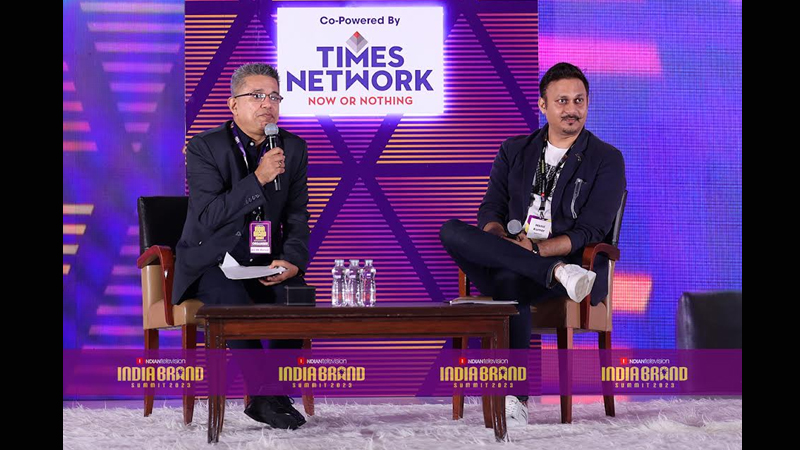
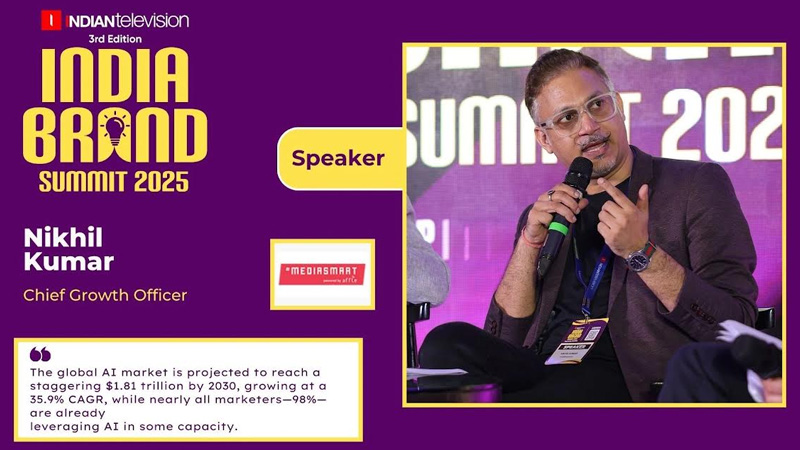
    MUMBAI – From binge-watching to binge-buying, connected TV is rewriting India’s festive shopping playbook. At the 3rd India Brand Summit 2025, Nikhil Kumar, chief growth officer at mediasmart, joined Indiantelevision.com group founder, chairman & editor in chief Anil NM Wanvari to chart how connected TV (CTV) has evolved from a niche experiment during COVID to a Rs 2,500 crore ad magnet today.

    “When we first spoke about it five years ago, we said CTV would change the way the world perceives television,” Kumar recalled. “Back then it was new, almost niche. Today there are dedicated CTV conferences, panels, and players from OEMs and ad tech firms to SSPs and publishers. Everyone knows the power of CTV.”

    The growth numbers back him up. India’s CTV ad spends are projected to touch Rs 2,500 crore in 2025, reflecting 40 per cent growth, as per industry reports. “That’s one of the fastest-growing slices of media we’ve ever seen,” Kumar noted.

    What’s driving this growth? For Kumar, the answer lies in how festive season advertising has shifted. Consumers now hop seamlessly across screens mobiles in the morning, laptops at work, and smart TVs in the evening. “We’ve moved from asking where the ad is shown to who the ad is shown to,” he said.

    Acquired by Affle group, mediasmart has positioned itself not just as a CTV player but as an omnichannel partner. “No consumer lives on a single screen. People are constantly engaging with multiple touchpoints mobile, CTV, even OOH. Our job is to help advertisers minimise frequency fatigue and maximise relevance across devices,” he explained.

    Kumar stressed that AI is now the backbone of ad delivery tracking attention, optimising frequency, and ensuring seamless user journeys from TV to mobile to purchase. From QR codes on screen to shoppable ads and interactive formats, engagement has become more dynamic and measurable.

    “Ads are evolving. A campaign today might prompt a viewer to scan a code, explore an offer on mobile, or engage with gamified elements on their TV. This interactivity is making advertising far more actionable,” Kumar said, pointing to case studies where TV-to-mobile commerce spiked festive sales.

    Brands too have gotten sharper. From weather-optimised ads in Mumbai’s monsoons to contextual integrations in daily soaps, marketers are weaving themselves seamlessly into storytelling. “Consumers don’t want repetition. They want relevance,” he quipped.

    Looking ahead, Kumar sees three big shifts:

    ●    AI-powered personalisation that adapts by region, language, and timing.

    ●    Shoppable and interactive ads that nudge viewers from watching to buying.

    ●    Better measurement, as agencies and OEMs collaborate to unify fragmented ecosystems.

    Kumar signed off with a reminder: “Brands should think beyond ads and impressions. Integrated journeys connecting CTV with offline sync, store visits, and mobile engagement will deliver real festive impact.”

    As the festive season nears, one thing is clear, CTV is no longer just screen time, it’s shopping time.

  • Sequel-itis hits Prime Video, and it’s a good thing

    Sequel-itis hits Prime Video, and it’s a good thing

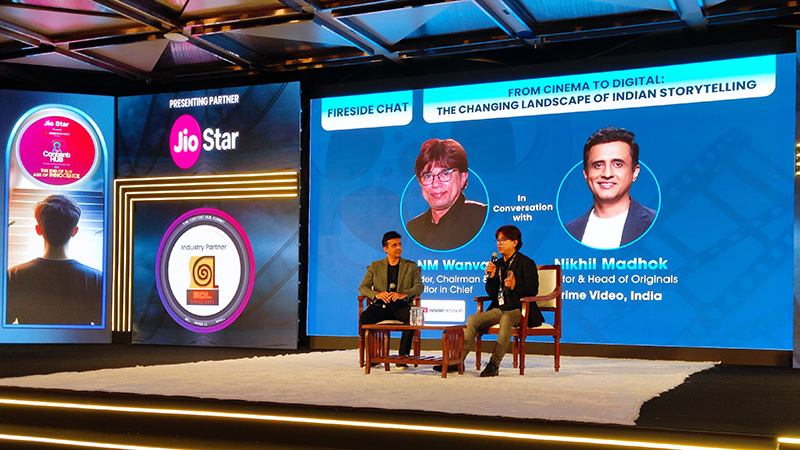
    MUMBAI: As Indian content creators wrestle with legacy media’s slow fade and digital fatigue’s creeping toll, one question rules the reel: how do you keep the eyeballs glued? At the 9th edition of The Content Hub Summit 2025, that was the hot topic during a no-holds-barred fireside chat between Anil NM Wanvari, founder, chairman of Indiantelevision.com, and Nikhil Madhok, director & head of originals at Prime Video India.

    When asked how Prime Video picks potential hits, Madhok laid it out: “This is still a business of creative gut instinct.” While data helps identify audience clusters (young adult horror fans, for instance), final greenlights depend on whether a pitch feels fresh, unique, and emotionally resonant. “You’ve got to spot the right story and the right creator,” he said.

    Apparently, it’s working. Since Prime Video’s India debut, more than 60 per cent of its scripted shows have landed second seasons or are in production. Hits like Farzi, Call Me Bae, and Dupahiya are already queuing up for follow-ups. “We’re doing something right,” Madhok commented.

    Of course, not everything sticks. “Failure teaches,” Madhok admitted. Whether due to weak casting or saggy plotlines, misses do happen. But unless there’s real love for a first season and a compelling new arc, Prime won’t risk a sequel. “It’s unfair to the audience and the legacy of the show.”

    Amazon is now reversing the stream-to-cinema flow. Under its new banner Amazon MGM Studios, it’ll release 4–6 films theatrically starting 2026. “It’s come full circle,” said Madhok. “We’re backing great scripts with box-office potential.” Four titles are already filming; two are in the can.

    A quarter of Prime Video’s Indian content viewership already comes from outside the country, with appearances in weekly global top-10 on Prime Video every week in 2024. But that breakout K-drama-style success? Still brewing. “We haven’t had that one global story yet, but it’s coming,” Madhok promised.

    Meanwhile, Prime Video’s focus remains on home turf. Over 100 projects are in the pipeline, spanning languages, formats, and genres, from Family Man 3 and Mirzapur: The Movie, to new IP like Revolutionaries and the unscripted hit The Traitors.

    AI, Madhok said, should be embraced, not feared. “Like every technology before it, AI can enable storytelling.” Prime Video is also watching the short-form and creator economy space closely though that’s currently MX Player’s turf within the Amazon family.

    As Indian storytelling hits a new stride, Prime Video is betting big on creative instinct, strategic risk and the timeless power of a good story. “Stories drive civilisations forward,” Madhok said. “And that hasn’t changed in a hundred years.”

  • The new paradigm of selling sport…

    The new paradigm of selling sport…

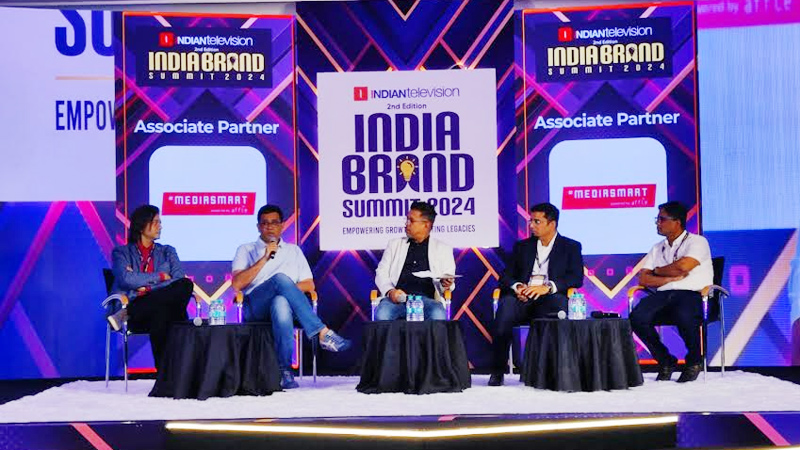
    The India Brand Summit 2024 hosted a riveting panel discussion featuring prominent voices in the sports industry. The discussion explored innovative strategies to market sports content effectively and adapt to the evolving demands of advertisers and focused on how sports marketing has evolved, particularly in attracting advertisers by localising sports content.

    This session was moderated by Indian Television Dot Com group’s founder, chairman and editor-in-chief Anil NM Wanvari, GroupM India, managing director of content, entertainment & sports, Vinit Karnik, Polycab’s lead of category marketing B2C, Amit Sethiya, CricViz India’s Director of Sales, Subhayu Roy and Dentsu X India, senior partner for client leadership, Prabhat Naik.

    Vinit Karnik highlighted the significant growth of non-cricket sports like Pro Kabaddi League (PKL) and volleyball. He emphasised that these sports, which started as niche activities, have managed to sustain themselves for over eight years, marking a shift in the sports marketing landscape. “Things have changed dramatically in sports marketing,” Karnik stated. “The fact that many people are playing and watching these sports—whether on the ground or streaming platforms—indicates a growing interest that attracts advertisers. The market size has grown exponentially, from ₹1,500 crore to ₹20,000 crore in less than two decades.” Karnik’s insight underscores how sports beyond cricket are becoming valuable advertising platforms due to increased viewership, signalling the industry’s wider acceptance of sports as integral to pop culture.

    Amit Sethiya explained how sports marketing has moved beyond simple inventory buying. He pointed out that in earlier days, cricket was the go-to platform for brands. However, with leagues like PKL and Indian Super League (ISL) gaining traction, marketers now leverage rich data to make informed decisions. “Today, it’s no longer about just buying inventory,” Sethiya noted. “The focus is on how brands can utilise the data accumulated over years of these properties. Broadcasters and organisers are helping brands see the potential of connecting with audiences in Tier 2 cities, even with limited budgets.”

    This shift has democratised sports marketing, allowing smaller brands to associate with emerging sports without needing deep pockets. The ability to analyse data and understand audience demographics allows advertisers to invest strategically in sports marketing.

    Subhayu Roy emphasised the role of data in driving value for advertisers. He explained how CricViz collects up to 60 data points during events, offering insights that enhance viewer engagement and inform advertisers. “For example, when Virat Kohli is at the crease, data suggests that Royal Challengers Bangalore (RCB) have never lost a match in the second innings,” Roy shared. “This type of analysis helps retain viewership by keeping fans engaged, thus preventing them from switching channels.” Roy also discussed how data is used to create new monetization streams for advertisers. “From selling ad slots to monetizing player stats, the ability to quantify performance data opens up various revenue avenues for broadcasters and brands alike. This approach allows advertisers to make calculated investments, ensuring their marketing spend delivers the maximum impact.”

    Prabhat Naik highlighted the shift from traditional media to digital platforms, attributing it to the growing trend of on-demand content consumption. “Victory lies in the flexibility that digital platforms offer,” Naik said. “While television demands appointment viewing, digital content is always accessible, anytime, anywhere,” Naik stressed that while television still holds its ground, the future of sports marketing lies in adapting to a more digital-first approach. This flexibility is driving advertisers to focus more on digital, making it an essential part of their marketing mix.

    The discussion at the India Brand Summit demonstrated that sports marketing is rapidly evolving. With new sports gaining popularity, rich data driving advertiser decisions, and digital platforms offering unmatched flexibility, the industry is embracing innovative ways to engage audiences and deliver value to advertisers. As Vinit Karnik summarised, “Sports is no longer just entertainment; it’s a cultural phenomenon. The way we sell and market sports has changed, and it will continue to grow as an essential platform for brands.”

  • IBS 2024: Unravelling the CTV puzzle

    IBS 2024: Unravelling the CTV puzzle

    Mumbai: The second edition of the Indian Brand Summit 2024, held in Mumbai, witnessed insightful discussions on how addressable advertising is transforming personalised marketing, the role of data in driving success, and the evolving landscape of OTT platforms and sports marketing. The event also explored the complexities of CTV and highlighted the rise of local brands to national prominence.

    One of the key sessions, titled “Unravelling the CTV Puzzle,” explored the rapid transformation of content consumption and the rise of connected TV (CTV). Chaired by Indian Television.com group founder, chairman & editor-in-chief Anil NM Wanvari, the panel featured Sujay Ray, L’Oréal India’s head – digital & media professional products division, Ashutosh Sinha, NDTV’s VP – distribution, and Nitin Burman, aha’s head – revenue and monetisation.

    Sujay Ray spoke about the significant technological shift over the last few years, marked by two waves—pre and post Jio, and pre and post COVID. “The first wave saw consumption move from linear and analog formats to digital,” Ray explained. The second wave further emphasized personalized content consumption, starting on smaller screens and gradually moving to larger ones. Ray added that legacy platforms have adapted to these changes, becoming more consumer-centric: “Legacy platforms have pivoted themselves, remaining cognizant of consumers’ evolving choices.”

    Nitin Burman highlighted how affordability and accessibility have driven CTV adoption, with smart TVs becoming more affordable, now available for as low as ₹7,000. He noted that this shift has made CTVs more accessible to both urban and rural markets. “People are switching from handheld devices to bigger connected TV screens for a more immersive experience,” Burman said, adding that this has led to higher revenue for platforms as audiences are willing to pay for better content and viewing experiences.

    Ashutosh Sinha pointed out how connected TV offers new opportunities to reach audiences and make previously unavailable content accessible. “Connected TV allows us to offer content that wasn’t available in traditional formats, expanding our reach to new audiences,” he remarked.

    The session shed light on how CTV is reshaping the media landscape, driven by technological advancements, shifting consumer preferences, and increasing affordability. As content consumption continues to evolve, connected TV is positioned to play a central role in the future of media.
     

  • Vidnet 2024: NexC: Distribution that pays off

    Vidnet 2024: NexC: Distribution that pays off

    Mumbai: The OTT business in India is buzzing with new streamers, niche, and language offerings. However, early players are struggling as heavy content spending isn’t matching revenues, and India-specific low pricing hasn’t spurred subscriptions. Growth has plateaued as consumers return to post-COVID normalcy, preferring to binge occasionally.

    Adding to the churn is the shift towards AVOD by giants like JioCinema, offering premium events like cricket for free, with Disney+Hotstar following suit. This has strained streaming bottom lines. The rise of FAST channels is also causing industry jitters. Vidnet explores the future of the streaming ecosystem. The Vidnet 2024 is being held on 19 July 2024, at Hotel Sahara Star, Mumbai.

    The fireside chat saw Indiantelevision.com group founder, chairman & editor-in-chief Anil NM Wanvari in conversation with Planetcast COO – digital Venugopal Iyengar.

    The fireside chat delved into the evolving landscape of distribution technology and the challenges faced by Planetcast in its 28-year journey of serving media customers. Venugopal Iyengar highlighted Planetcast’s mission to streamline content creation to delivery, emphasising the integration of software programming and AI in transforming processes and improving cost efficiency.

    “We have been in the business of distribution technology, serving media customers for 28 years,” said Iyengar. “Our goal is to pave the path from content creation to the endpoint where viewers watch it on their screens.”

    Iyengar introduced NexC, a unified platform that simplifies the distribution journey by offering a single access point for all necessary products and services. “NexC gives you a single point ingest and seamless access to all the products and services you need in your distribution journey,” he explained.

    Addressing challenges, Iyengar noted misconceptions about NexC being a monolithic product and concerns over transitioning to cloud solutions. “It’s not a monolith. You can enter through any one product and still be part of the platform,” he clarified. To ease cloud adoption, Planetcast offers hybrid solutions, combining on-prem and cloud services.

    Iyengar also discussed differences between Indian and global markets in cloud adoption and highlighted the significant impact of AI. “AI has been fabulous for us,” he said. “Applications like speech-to-text, text-to-speech, and scene-by-scene tagging are now seamless.”

    In conclusion, Iyengar emphasized the importance of embracing technological advancements to meet customer needs effectively. “We must acknowledge the benefits AI brings and continue to innovate in our approach to content distribution,” he stated.

  • Vidnet Summit 2024: The evolving landscape of OTT in India: Regional growth, consumer trends, and aggregation dynamics

    Vidnet Summit 2024: The evolving landscape of OTT in India: Regional growth, consumer trends, and aggregation dynamics

    Mumbai: The OTT business in India is buzzing with new streamers, niche, and language offerings. However, early players are struggling as heavy content spending isn’t matching revenues, and India-specific low pricing hasn’t spurred subscriptions. Growth has plateaued as consumers return to post-COVID normalcy, preferring to binge occasionally.

    Adding to the churn is the shift towards AVOD by giants like JioCinema, offering premium events like cricket for free, with Disney+Hotstar following suit. This has strained streaming bottom lines. The rise of FAST channels is also causing industry jitters. Vidnet explored the future of the streaming ecosystem.

    The fireside session was hosted by Indian Television.com Group founder, chairman & editor in chief Anil NM Wanvari along with host HT Labs co-founder & CEO Avinash Mudaliar.

    The interaction dug deeper into the rapid expansion and increasing popularity of regional OTT platforms in India, and the role of regional OTTs in preserving and promoting local languages and cultures. It also explored how changing viewing habits and personalisation algorithms are shaping Indian OTT content trends, emphasising diverse, inclusive offerings and platform adaptation to technology and user feedback.

    “We’ve navigated through the challenge of finding what to watch, but the next hurdle is choosing an OTT platform. How much do we pay for these services, and can we access them all at once? Our goal is to simplify this with Odd Play Premium. By partnering with major players like Sony, Zee5, Lionsgate, and more, including regional ones like Malayala Manorama and Ahad Mammal Telugu, we’ve delved into diverse language content. Our recommendation engine stands out—it not only suggests based on metadata but also considers thematic preferences. For instance, if you’re watching “Trance” on Netflix, it might recommend similar films or those featuring the same actors,” said Mudaliar.

    He further continued, “We also tackle acquisition costs for partners. By lowering these costs through our distribution channels, we make it easier for them to gain new users. Our platform acts not only as a discovery engine but also as a marketing tool, enhancing exposure for content that might otherwise go unnoticed. Plus, we offer a unified experience across 11 platforms—Android, iOS, and various smart TV ecosystems—eliminating the need for multiple app downloads. This approach not only benefits partners but also offers users a cost-effective way to access a wide range of content.”


  • TCH 2024: Need for sustainability & content creation

    TCH 2024: Need for sustainability & content creation

    Mumbai: The eighth edition of The Content Hub Summit delves into the ever-changing world of content creation. With the consolidation of platforms, creators face new hurdles in gaining visibility, maximizing revenue, and maintaining creative freedom. The event also explored the remarkable theatrical success of Indian cinema and unraveled the secrets behind its unprecedented profits, with a critical eye towards its sustainability.

    The fireside chat saw Indiantelevision.com group founder, chairman & editor-in-chief Anil NM Wanvari in conversation with India GreenSet CEO & co-founder Anupama Mandloi.

    They discussed the critical importance of sustainability in content creation, especially in India, which leads in volume. They highlighted the industry’s potential for influence and the necessity to adapt to climate change. Mandloi emphasized the need for sustainable practices, citing examples like the Mumbai floods’ impact on business.

    Wanvari proposed initiatives like eliminating single-use plastics at events and forming industry alliances for sustainable standards. They emphasized the shift toward sustainability as a cultural change, stressing the industry’s collective responsibility and the need for unity to overcome hurdles.

    Mandloi suggested practical steps individuals can take, urging a bottom-up approach to drive the sustainability revolution.

  • The Content Hub 2024: Audio series: The new blockbuster engine

    The Content Hub 2024: Audio series: The new blockbuster engine

    Mumbai: The eighth edition of The Content Hub Summit delves into the ever-changing world of content creation. With the consolidation of platforms, creators face new hurdles in gaining visibility, maximizing revenue, and maintaining creative freedom. The event also explores the remarkable theatrical success of Indian cinema and unraveled the secrets behind its unprecedented profits, with a critical eye towards its sustainability.

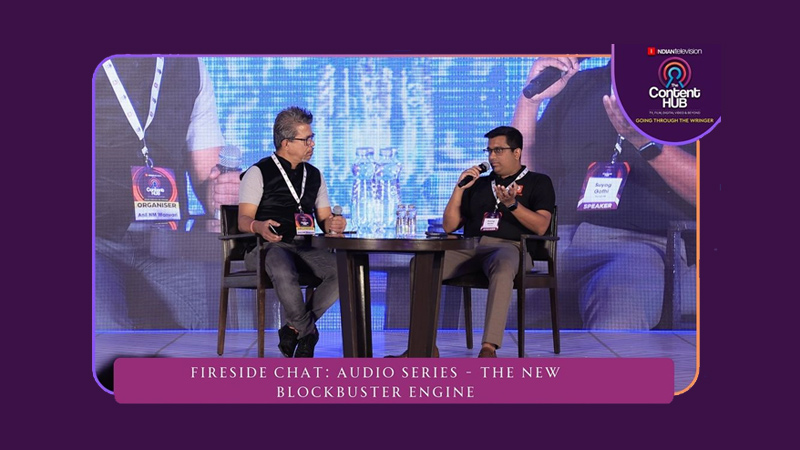
    The fireside chat saw Indiantelevision.com group founder, chairman & editor-in-chief Anil NM Wanvari in conversation with Pocket FM head – India and new markets Suyog Gothi.

    During the fireside chat, Gothi discussed the platform’s journey from humble beginnings to significant success. He highlighted the inspiration behind Pocket FM, the need for longer-form content in the audio space, and the platform’s unique monetization model.

    One memorable quote Gothi said was, “We’re not just competing; we’re creating a niche for ourselves in the entertainment category.” Gothi proudly mentioned that they have had four series crossing the 100 crore revenue mark, with more on the brink, showcasing the platform’s success.

    Gothi emphasized their focus on fostering a strong community of writers and their expansion into multiple languages and global markets. He also discussed the role of AI in content creation and their vision to evolve Pocket FM into a holistic entertainment platform.

  • Jaikishin Chapproo: We will definitely be evaluating the big premieres on TV channels

    Jaikishin Chapproo: We will definitely be evaluating the big premieres on TV channels

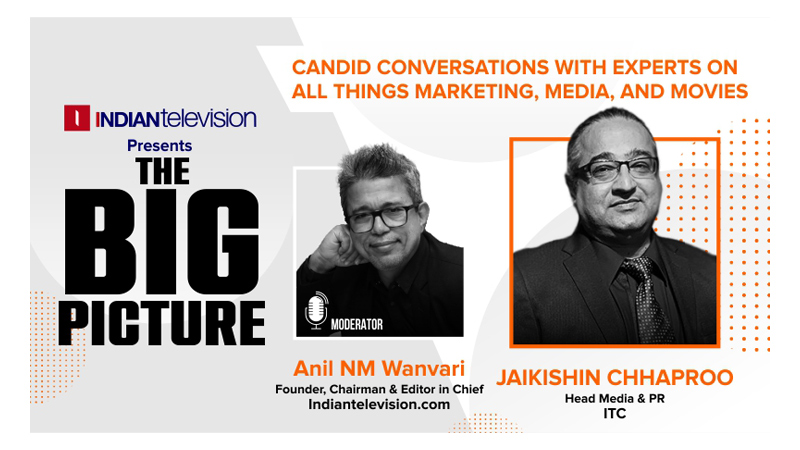
    Mumbai: The power of movies on television often referred to as the ‘big picture’ has impacted how we consume entertainment, making it an essential part of our lives. Not only that, the synergy of movies and TV has also grown to be lucrative for brands who want to reach India at large and impact the general consumers’ daily lives. In a series of chats with marketers and media veterans, Indiantelevision.com founder, CEO & editor-in-chief Anil NM Wanvari discusses all things related to marketing, media and especially movies with ITC Ltd head of media & PR Jaikishin Chhaproo.

    Edited excerpts

    On early life and experiences

    I was born and brought up in Mumbai and did my schooling, and college here as well. I am also an engineering graduate. Then I realised that I can’t do this for the rest of my life. My friends were preparing for MBA and in the office during lunch hours they used to grab their food in 10-15 mins from the window and then they used to appear for the prep test for CAT. Once I was alone and one of my colleagues was doing this test, I picked up a book from the table and gave one aptitude test. When the test got over and this guy started rating me and he was like you have got beginner’s luck and you have scored better than me; also you did one level more advanced whereas I haven’t reached there. So I just took his notes and photocopied them like it used to happen in those days. I then appeared for my entrance exam, got admission and got into my MBA. I cleared from Somaya in ‘97. Somewhere during my MBA course, I decided that I have to make a career in advertising and choose media as a field. Out of 27 years that I have been working almost 17-18 years I’ve been at FMCG. Sometimes in broadcast and sometimes in e-com and telecom.

    The experience is good so far, nothing to complain about. Even today it’s said that if you enjoy your work it doesn’t look like work. For me every day is like a fun time even if I’m sitting at my home and opening up my laptop, the moment I get into my work it’s like I am a different person and for most of my friends, the worst person to call during working hours is me because most of the time my answer is I will call you back later.

    On engineering background helping your media career

    Somewhere education helps you everywhere and aids you in whatever you do. Having a background in engineering helps you be more analytical in numbers. From that perspective, it has been a comfort to be in the media. The newer experience helps you, being the best teacher.

    On your milestones so far

    In the last 27-odd years, I have been lucky enough to work in very good organisations and the bosses that I was put under. So I started with a company called Star Plus Channel which falls into the production of TV serials. I was into backend research and acquisition for new serials that the company would air. It was fun to work on the movies which were aired on Friday nights on DD. Then I moved to Wipro where it was undergoing a change of corporate identity to the new sunflower logo. Then I moved to Godrej, Unilever and then continued with Star in the middle east and continued to work there, moved back to India with Star and then Snapdeal and ITC.

    I remember one statement where one of my ex-bosses used to say that if you are really good at your work then you should work for Unilever. And the day I joined Unilever, I dropped a message to him saying I joined Unilever today.

    On being part of some memorable campaigns

    We did a first-of-a-kind advertiser-funded feature for one of the brands. At that time Surf had a tagline called “Each child has a right”. There was this concept that came from a renowned filmmaker and we just tweaked it around and released a movie around it. That was a satellite release.

    On being a movie buff and watching Hindi cinema

    I’m a hardcore movie buff. There are plenty of times I would pick up references from Hindi cinema, probably people would have watched it but when you kind of narrate that example and you are like “oh ya ya I remember this” stuff like that and I will remember songs on contextual incidents or some situations or stuff like that. Right now the definitions from movies has changed. Long there was a scenario where movies were used to showcase the reflection of the society. So you kind of have a situation where you are kind of taking inspiration from movies, at the same time learning from them. I think it works both ways.

    On leveraging movies in marketing by brands due to record-breaking box office title films

    There are two or three approaches. One is that some of the titles will not let themselves to allow you to do films in time, because some of the stories are cut in some manner that you wouldn’t want the brand to be seen in that space. The other thing is to do an association within the promotional level of the movie wherein you have co-branded promo with your brand, you end up promoting that and you have access to the stars and other things for getting a customized brand message. Then you support it in the cinema screens when the movie is being released.

    On TV being important for creating brand awareness

    Television continues to be an important medium for us. While digital is picking up and gaining traction, television still continues to kind of hold the roof for us. Another thing is, while digital is growing leaps and bounds it is also having its own set of challenges for marketers whether it’s for FMCG or non-FMCG. Everything needs proper syndicated data and ROI calculation to come in. Today on digital one of the key challenges continues to be that the maker, checker, and executor is the same person. If I have a plan to deliver 10 million impressions, I start an activity and I am still dependent on the platform to execute the campaign when it gets over. Also, the moment you start getting into a bit of sharp targeting, the challenges come in terms of frequency because you operate a frequency of 6 say for example, and you end up seeing the frequency reach is going to two or three digits. So those are the challenges that the media keeps facing. However, television over a period of time has evolved and you know that the data is not too wrong.

    On dividing market spends between all of these as prices are not that high

    There is no winning formula or a template for breaking down your spirit because depending on the category you’re operating in, If you’re in a mass category, your mix is most likely to be around 60 to 65 per cent television and the balance would be driven by digital today, you can kind of shave off two – three to five per cent, for some other activities, whether it’s print, whether it’s out of home or whatever. Within television, you can follow basic breakdown, again, depending on your category or breakdown could be parked 10 to 15 per cent for tactical buys, 5 to 10 per cent for your impact buys, and balances for your GRPs if I will put it that way. But as I said there’s no rule for anything. So if your TV spend is 100 rupees in total, ideally about 10 to 12 per cent is parked for an impact. 5 to 10 per cent is parked for tactical buys or something that you want to kind of consume as things happen. So, I would say about 75 to 80 per cent is your regular buys is that your regular plan.

  • IBS: Redefining viewing experiences: The next era of connected TV  innovations

    IBS: Redefining viewing experiences: The next era of connected TV innovations

    Mumbai: The India Brand Summit held on 28 November 2023 at The Lalit Mumbai, convened leaders, marketers, entrepreneurs, and experts to explore current trends, challenges, and opportunities in the dynamic brands and marketing arena.

    Indian Television.com group founder CEO & editor-in-chief Anil NM Wanvari in a fireside chat with mediasmart vice president India, SEA and ME Nikhil Kumar

    Anil began the conversation by asking, “When speaking to industry, they see that the figure we should look at is 22 billion or 20 billion. Where are we at?”

    Nikhil replied “I mean, frankly, we feel the connected TV bases, approximately 18 to 20 million, which approximately means from an Indian context close to 60 million reach. In terms of households, but, the connected TV penetration, the number of activated connected TVs is close to 20 million to 22 million, but it’s growing really fast. By the time we have another panel like this, it could be 24, 28  and we all know Jio IPL is unexpecting and you know what it did or even the year so those numbers are growing really fast, double-digit, and pretty fast.”

    Anil questioned, “What are the innovations we’re seeing in terms of your experiences as far as connected TVs are concerned?”

    Nikhil commented, “Interesting things are happening, I mean, what connected TV has done is provide users with a very interesting way to engage with the television. Now, we all come from an era where you know, we were all growing up, we used to watch television together at home,  we found off watching.TV with a family, there used to be a Shaktiman and Ramayana I don’t know, choose your big night, right or no, or Baywatch, whichever finds your fancy. But we went to an era of personalized mobiles. And then suddenly everybody had a smart screen. Everybody was doing their own thing and the smart screen and then you found your families disintegrated. And then suddenly we were hit by this whole phenomenon called COVID. Where you didn’t have much to do at home, you watched television feed, which was quite depressing, because most of the live feeds were telling you depressing talks about people dying, which was not the most optimistic news you wanted to hear. media feeds led to a decline in what could be repeated and can be watched again, come on, it’s like well, months to 24 months to not have anything being shot. I think that is the time when connected TVs really started to rise and the growth of connected TV during that era actually catapulted the overall growth of connected TV. And when there are so many eyeballs, there are so many uses on connected TV, just the way you consume content itself also started to change. As an Indian, as a starting point, I don’t even need to talk about innovations. You watching Korean content, is that an innovation? Or is it just the way it’s supposed to be? If I asked people how many people have watched Money Heist or Squid games, I’m assuming it’ll be at 90 per cent. Again, none of you are Koreans. None of you are Spanish. But while you’re watching many eyes, I think that in itself speaks volumes of content consumption in terms of innovation,  I mean, there is all kinds of content available. There are 46 plus OTTs in India alone, That speaks volumes of just innovation, and the kind of content now, in terms of consumption and content innovation within connected TV, you can engage with the content you’re watching. Let’s say you can decide where  Ranveer Singh has to jump from the hill or Ranveer Singh has to take a row. We also what Netflix did recently, there are many such contents which are being developed by publishers that are letting users be controlled by Black Mirror one of the episodes you can actually control what the end outcome of the episode will be. Imagine the user in being control of the content.”

    Anil then went on to ask “What are the new innovations it seems to It appears to be that connected TV has kind of hit a pause mode in terms of content. So where is the innovation coming?”

    Nikhil replied, “I think innovations are coming and lots of engagement and interaction. I think your remote today is far more powerful than the remotes that you want it to have. And I think I was interestingly having a panel a couple of days back and what we did was we asked like a young gen Z to come and sit on the panel and really tell us what he wants from connected TV  and the kind of stuff he was saying is I don’t want to go all the way and pick up the remote from there, I won’t hand gestures so the world is moving towards Weiss automated commands. You can purchase the products that you actually want you can say hey, you don’t watch I’m going for a match. Need a Josie now suddenly you can have two TVs, you know tracking you down to a YouTube page or two or probably a website which you can actually view connected you can scan it which it opens up on your mobile the purchase can be made or in developed economy where the purchase itself can be made of the Apple TV because it’s connected to your card, your television experience is no longer the same, the innovation is actually coming a lot from the way you consume content. From the way you look at your television as an alternate screen, which it probably was never, it was only one side earlier, television is giving you content you are consuming. That’s why it was called the idiot box. Today, the smart TV is called a smart TV because it is smart. You can do a lot of things on your mobile, and your TV, you can connect your mobile to television, in fact, and suddenly you realise that my screens are all the same no matter where I watch it only the experience is better on the television.”

    Anil asked “I was watching one of the players Jio actually watching India vs. Australia. And there’s a QR code, which tells me you know, I have to go and that’s where we are at QR codes. When the ad is running, why hasn’t there been much more progress?”

    Nikhil shared “I think I’m a firm believer that everything doesn’t change. India was not built in a day, Rome was not built in a day either. And I think, at the cusp of where our ecosystem is, India has got over 800 internet users, we are 1.2 billion countries, I mean, things are gonna 20 million looks nothing when you talk about some statistics on the right. But look at the growth of it. Now Jio entering, the whole foray of connected televisions, suddenly changing the ballgame. It’s it’s gonna grow really fast. There’s a very contentious debate on whether you should be watching it on Star Sports or Jio, there’s a serious debate about where you should be watching it now.

    if you look at how things are changing QR codes, QR codes are probably a starting point. It’s getting the users a taste of what they can do with their television. Now, at the end of the day, if I get my user remote and tell him that you can buy a jersey of his favorite IPL team, probably he’ll get really confused. And it’s not just the consumer, I can start with the marketer. I mean, the marketer is questioning, how am I getting clicks from a connected television, they are really surprised by calling it fraudulent. But if you look at world economies like us, close to 50 to 60 per cent of the business is performance advertising on connected television. Now I would say connected TV and performance, how is it even met? Yeah, it is a screen. And you can use your remote to do a lot of things, download apps, engage with apps within apps, and do so many more things gaming itself is an ecosystem of connected TV where there’s an entire universe, you can put ads within games being played on cricket, TV connect with users across the globe purchase stuff from a store within that game, which have been delivered to your home, the world is moving really fast. India is taking its early stages of you know the revolution, which is connected to the TV, and if you see how we also started like three years back, vs where we are today, you can see the number of players talking like television, you can see the number of forums talking connected television, you can see the number of players with a connected television ecosystem, whether it’s OEMs, whether it’s smart tech companies, whether it’s publishers, they’re all out there it’s something that’s going to grow really fast.”:

    Anil further asked “What are the challenges that are in their place currently? And how do we get over them? And how do we get a connected TV viewing experience? How do we drive footfalls to stores even more? What is needed to get that to happen?”

    Nikhil commented “I think I sort of tend to agree and disagree that are we moving fast. I mean, we’re growing it 30 to 40 per cent quarter over quarter, I think that’s as good a growth. That’s what smart TV would actually look at. If you look at the factors, India is one of the most penetrated countries when it comes to the internet, we have got the cheapest package in terms of data per GB, if you look at any TV that is produced today is smart. Technically, I don’t remember the last time somebody was making a box TV. Just the accessibility but accessibility part of getting those smart TVs to your homes is well penetrated. It’s not like a tier one tier two phenomenon if you put these factors together, connected TVs only to grow. So technically, most people aren’t using the connected TV, but they probably don’t call it a connected TV the way we are calling it.

    If survive two years. And if you’re employed and you still have a job, I’m sure you figure out what Wi-Fi is. And that’s the factor that I think we are negating a lot how did CTV become so important? Why are why is IPL on Jio why, what’s going on? Why are the set-top boxes streaming set-top boxes anymore? These are all factors which are determined by what’s happened in the last three to four years. Some controllable factors, and noncontrollable factors like who doesn’t have Wi-Fi now today Wi-Fi is not a cost. You all have Wi-Fi most people don’t have Wi-Fi at home even in the remotest villages you would look at if they don’t have Wi-Fi India’s gonna be fine If you can’t read still, as a 5g country, you have well penetrated 5g ecosystems within the ecosystem. And that can very well actually support any kind of content that you want to watch on a connected TV.”

    Anil asked further” What are the innovative ad formats, that are coming in, not just in India, but globally, which which can be really put to use in India going forward? And which marketers can look forward to?”

    Nikhil replied “I think in terms of innovative ad formats, there are many things happening, I think. Just the fact that you can engage with the ad, just the fact that you can talk to your ad, just the fact that he can tell you the ad that I don’t want to see you. And itself is I think new in terms of innovation, when it comes to the large screen television, I think a lot of the comparative start to come with mobile, because there’s so much happening on mobile, but we need to understand the screens are different. They’re both digital, but just the way you consume anything, even as an ad on a large screen television versus where you are in itself is like ten steps ahead,  We come from an era where it used to be pushed down our throat, we could change channels, but we couldn’t escape an ad till the body had to step in says only 15 minutes of ad within one hour. Still, you can’t escape ads to now you deciding what ad comes to you? Can you engage with the ad? Can the ad really translate into you making a purchase? In fact, the innovation is not coming from just advertising innovation is also coming from ads transforming into a metric because any advertising is not done for the purpose of making a great ad, I as a marketer never made ads, because I loved making ads.

    I think most marketers have made ads for the share purpose of ROIs. As for ad spend, she would go back and say what’s the business? Where is the needle moving at. And connected TV today is able to serve that metric not as a post-mortem. So you’re not looking at the share of investments in advertising on television and looking at your market shares next month. With connected television, you can look at your investments in television in terms of TV ads being served in large screen format, which we love the TV ad and tracking it down to a metric right in terms of purchase website,  brand score search indexes on a real-time basis. Now from a marketing scenario, imagine that this is a best-case scenario because technically you’re not looking at a post-mortem which happens next month after your spending has been done because the body is lying there whether it was good or bad. I mean, you’re just finding out later with connected television or advertising and finding out real-time. you can down the funnel all the way to purchase remarketed re-retention reordered referred to my family. Imagine suddenly you have a metric which is the best-looking triangle, obviously upside down and you’re saying I showed an ad to a user. This guy engages with the ad. He filled out a form for a driving test driving a BMW. The BMW came to his house. It took him free he has gotten converted from the ad that he saw on television he is actually a purchaser of the BMW etc best case scenario.”

    Anil asked “I wish for a seamless content experience—starting a show on my connected TV, continuing in my Wi-Fi-connected car, then on my phone in the elevator, and finally, back on my office TV. Why isn’t this integration more widespread across platforms?”

    Nikhil commented on this “That’s already here, glad you brought it up, I think while content syndication needs to happen, I think from an ad tech lens from an advertising lens, this technology already is out there. I think I was talking to my earlier panelists that eventually, you want to use the reach the user at multiple levels, right, you want to reach them on their pistol on a phone screen, while they’re entering the left exactly like you said, you want to reach them and they are driving across the busy Bandra ceiling and a fancy holding. You want to reach them and reach home and switch on their television and watch their content of, I don’t know Annapurna whatever they want to watch a cricket match on the connected television. And eventually, it was sleeping at night, looking at the mobile going down to sleep now you want the user to see your ad in all these locations. But if you choose to be operating at multiple levels, with multiple partners doing multiple things, and at a certain frequency, which you believe is good, what are you creating? Are you making a little series ad 12 times 14 times where he’s saying, Why are these guys spending so much on me like, or could you create an environment where the multiscreen touch points are engaging with each other? We know this is the same. We need to catch him on maybe 12 times, no, maybe nine times or six times across the screen. So he suddenly realises Oh, yeah, I love the ad man. I’m seeing it everywhere. It’s not fatiguing me.”

    Anil asked further “Hotstar has been doing they had maximum mode, and vertical mode during the Cricket World Cup this year. That calls for content to be reimagined, it does not score for the app to be reminded. “

    Nikhil shared his opinion “Absolutely. You know, I think there the advertisers have the power to do it. Now. You know, it’s we live in a world today where ads can be shot on iPhone movies, it can be made on an iPhone. So we have evolved from an era where you shot an ad spent a bomb, and then you couldn’t change your advertising strategy or tank it. Now India has one that’s a sentiment and if your ad is coming during that sentiment, it will have a positive. Hopefully also be repercussions. India is lost. There is a certain sentiment on a Sunday, and you are bombarding the user with a very different happy ad of India very much. I don’t know what emotional outcome it could lead to.”