Tag: Anil Kumar Lahoti

  • TRAI rings the spam alarm as digital consent and 1600-series plans take charge

    TRAI rings the spam alarm as digital consent and 1600-series plans take charge

    MUMBAI: Spam beware, India’s digital regulators are tightening the screws. The Telecom Regulatory Authority of India (TRAI) convened the 9th Joint Committee of Regulators (JCoR) at its New Delhi headquarters on October 16, 2025, marking another decisive step towards a safer, cleaner digital ecosystem.

    The high-level meet brought together representatives from the Reserve Bank of India (RBI), Securities and Exchange Board of India (SEBI), Pension Fund Regulatory and Development Authority (PFRDA), and the Ministry of Electronics and Information Technology (MeitY), alongside officials from the Department of Telecommunications (DoT), Ministry of Home Affairs (MHA), Ministry of Consumer Affairs (MoCA), and the National Payments Corporation of India (NPCI). Industry heavyweights including Google, Meta, GSMA, and COAI were also present to discuss collective measures against spam and cyber fraud.

    Central to the deliberations was the progress of the Digital Consent Acquisition pilot, currently underway at 11 banks under joint supervision by TRAI and RBI. On track for completion by February 2026, the pilot aims to ensure consumers have greater control over consent for commercial communications, a key tool in fighting spam.

    Meanwhile, TRAI pushed ahead with plans to fully adopt the 1600-series numbering system for banking, financial services, and insurance (BFSI) communications, with a phased sunset timeline agreed in collaboration with sector regulators. The committee also flagged the need for flexibility for small-scale businesses, with TRAI set to issue guidance soon.

    Other significant outcomes included mandatory whitelisting of all URLs, OTT links, APKs, and callback numbers used in SMS communications. This initiative, paired with a crackdown on shortened links and blacklisting errant entities, aims to curb fraudulent messaging at scale. The committee also discussed enhanced PE-end security measures, including real-time credential validation and CAPTCHA enforcement for OTP systems, to bolster trust and safeguard users’ digital interactions.

    TRAI chairman Anil Kumar Lahoti highlighted the importance of collaboration. “In a digitally connected economy, cooperation among regulators for digital services, financial services, consumer protection, and law enforcement is paramount. The JCoR continues to be a crucial platform for ensuring orderly digital connectivity and cracking down on spam and cyber fraud. Today’s decisions underscore our shared commitment to a secure and transparent digital communication ecosystem,” he said.

    The committee’s discussions also reflected an emphasis on public deterrence, with plans for TSPs and TRAI to publish blacklisted entities involved in spamming activities. Such transparency is expected to reinforce compliance while warning potential violators.

    By combining regulatory oversight, technological interventions, and industry collaboration, TRAI and its partners aim to transform India’s digital messaging landscape making spam less profitable, fraud less frequent, and user trust more robust. With these initiatives, the 9th JCoR meeting set a precedent for proactive governance in India’s rapidly evolving digital communication space.

  • TRAI chief Lahoti charts bright future as India’s media waves hit full stream

    TRAI chief Lahoti charts bright future as India’s media waves hit full stream

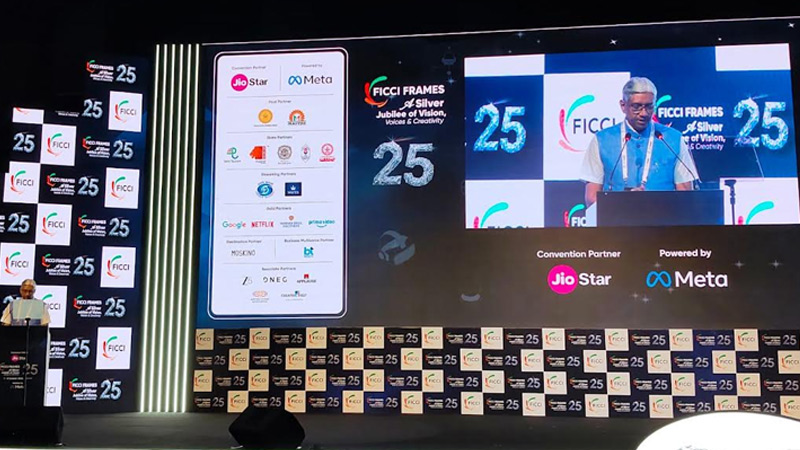
    MUMBAI: When it comes to India’s media and entertainment sector, the waves are getting bigger and TRAI Chairman Anil Kumar Lahoti is steering them with both vision and precision. Addressing the 25th Ficci Frames 2025, Lahoti delved into the vibrant evolution of broadcasting, distribution, and regulation in India.

    Lahoti highlighted that the media and entertainment (M&E) sector contributed Rs 2.5 trillion to the Indian economy in 2024 and is projected to grow at a CAGR of 7 per cent, crossing Rs 3 trillion by 2027. Within this, television and broadcasting alone generated nearly Rs 680 billion last year. He reflected on how the past 25 years have seen phenomenal transformation from analogue to digital transmission, standard definition to high definition, and now 4K video. Advances in audio quality and the proliferation of smart TVs have multiplied consumer choice, making content more accessible than ever.

    Yet while home screens have expanded to 40–50 inches and beyond, smartphones and 4G/5G broadband are opening new frontiers. OTT users now exceed 600 million, around 41 per cent of India’s population, yet linear TV remains central, with roughly 190 million TV households, 160 million linear subscriptions, and over 100 million households yet to enter the ecosystem many of whom will start with linear TV.

    The broadcast ecosystem is vast: 300 plus broadcasters, 900 plus TV channels, 388 private FM radio stations, and numerous national and international streaming platforms. Distribution involves 800 plus MSOs, 4 DTH operators, 1 HIDS operator, and a rapidly growing IPTV network, alongside 80,000 plus local cable operators. Public broadcasters Doordarshan and All India Radio operate 35 TV channels and 591 radio stations, respectively. While TRAI regulates linear TV and radio, digital content over the internet falls under the IT Intermediary Guidelines and Digital Media Ethics Code Rules 2021.

    Lahoti emphasised the complexities of linear TV’s multi-player ecosystem. “Our challenge is to ensure fair, non-discriminatory deals for all players, large or small, across geographies, while balancing innovation and regulation,” he said. TRAI has been proactive, recommending policy reforms, simplified licensing under the Telecommunication Act 2023, and a regulatory framework for ground-based broadcasters, enabling transmission through non-satellite means, a significant shift from the existing satellite-only mandate.

    Financial stress in FM radio has also been addressed, with TRAI recommending the rollout of digital radio services in 13 A-plus and A-category cities. Lahoti noted that rapid technological advancement from wired and wireless broadband to AI and cloud computing is reshaping content creation, distribution, and consumption. With India’s linguistic diversity 22 major languages and hundreds of dialects the opportunities for content creators are immense.

    He also referenced the prime minister’s recent Waves Summit speech, highlighting the Orange Economy, powered by creativity, culture, and content. “Dream big, tell India’s untold stories, and invest not just in platforms but in people,” Lahoti quoted. The message was clear: the screen may be getting smaller, but the content’s impact is enormous.

    As India’s M&E sector continues its remarkable growth, Lahoti stressed collaboration among stakeholders as essential to realising this vision. TRAI, he said, is committed to enabling orderly growth, simplifying compliance, and fostering innovation, ensuring a competitive and inclusive broadcasting ecosystem.

    Wrapping up, he wished Ficci Frames continued success, expressing hope that the debates and discussions at the forum will guide the industry toward a brighter, smarter, and more connected media landscape.

    In a sector worth Rs 2.5 trillion today and poised for Rs 3 trillion tomorrow, with 600 million OTT users, 190 million TV households, and a dynamic mix of technology and creativity, India’s media waves are indeed at full stream and TRAI is firmly at the helm.
     

  • TRAI dials up a united front as regulators join forces to fight digital spam

    TRAI dials up a united front as regulators join forces to fight digital spam

    MUMBAI: If spam calls and scam messages are the villains of our digital age, India’s top regulators are teaming up like superheroes. On 25 April 2025, TRAI hosted a meeting of the Joint Committee of Regulators (JCoR) at its New Delhi headquarters, bringing together heavyweights from RBI, IRDAI, PFRDA, SEBI, MoCA, MeitY, and special invitees from DoT and MHA to chart a stronger, cross-sector response to unsolicited commercial communication (UCC) and fraudulent activities.

    Opening the session, TRAI Chairman Anil Kumar Lahoti stressed the urgent need for a collaborative approach. Highlighting the mounting threat to citizens, particularly senior citizens, Lahoti praised the JCoR’s progress but warned that “the challenges ahead demand even greater synergy and vigilance.”

    Key issues topping the agenda included the nationwide rollout of 1600 series numbers for transactional and service calls from government and financial entities. Members agreed to push for swift onboarding within their respective sectors and monitor progress closely. The Council of Administered Telecommunications (CoAT) also presented a solution offering a unified 1600-series CLI for seamless call identification across networks.

    Another major move discussed was the onboarding of commercial communication senders onto the Digital Consent Acquisition (DCA) platform. Regulators pledged to work with principal entities to ensure compliance, aiming to empower consumers with more control over who contacts them.

    Fraudulent communications and the rise of “digital arrest” scams were a serious point of concern. I4C proposed measures including deletion of unused SMS headers, swift action on fraudulent SMS identifiers, and blocking of mobile numbers and IMEIs used for scam messages. Members pledged to develop clear modalities for rapid action.

    Emerging threats from OTT and Rich Communication Services (RCS) platforms also grabbed attention. Recognising that spammers are shifting to newer communication channels, the committee decided that MeitY would engage with stakeholders to roll out spam mitigation strategies mirroring those in traditional telecom.

    The session closed on a determined note, with JCoR members agreeing to intensify collaboration across sectors. The goal? A safer, more secure digital communication ecosystem for India’s consumers, one where fraudsters find it harder to hide and trust travels faster than spam.

  • TRAI-RERA collaborate to make buildings digitally ready

    TRAI-RERA collaborate to make buildings digitally ready

    MUMBAI: The Telecom Regulatory Authority of India (TRAI) took a step towards better digital connectivity inside buildings by hosting a webinar on 30 January. Led by chairman Anil Kumar Lahoti, the session brought together 116 representatives from Real Estate Regulatory Authorities (RERA) across 24 States and Union Territories, alongside senior TRAI officials. The discussion focused on TRAI’s new regulation for rating properties on digital connectivity, aiming to improve seamless network access in modern real estate developments.

    In his opening remarks, Lahoti highlighted the crucial role of RERA in improving digital connectivity in real estate projects. TRAI advisor Tejpal Singh presented an overview of the regulation, covering registration procedures for digital connectivity rating agencies and property managers, rating criteria, and evaluation steps. TRAI officials also addressed queries from RERA representatives.

    The webinar explored potential collaboration between TRAI and RERA to enhance digital infrastructure in real estate. Participants appreciated the initiative and expressed interest in further stakeholder discussions to strengthen digital connectivity standards in buildings.

  • TRAI convenes meeting of Joint Committee of Regulators (JCoR)

    TRAI convenes meeting of Joint Committee of Regulators (JCoR)

    Mumbai – TRAI convened a meeting of the Joint Committee of Regulators (JCoR) on 27 August 2024, at its headquarters in New Delhi. Members  of the JCoR from IRDAl, PFRDA, RBI, SEBI, MoCA, MeitY, and TIAI attended the meeting. Additionally, DoT and MHA representatives joined as special guests. The JCoR serves as a collaborative platform to examine regulatory implications in the digital age and work collaboratively on regulatory frameworks.

    In his address, TRAI chairman Anil Kumar Lahoti stressed the need for a joint effort to tackle the problem of spam messages and calls. He urged the regulators to discuss and enable implementation of (i) whitelisting of URLs, APKs, O’IT links and call back numbers to be sent in SMS, (ii) migration of existing telemarketers making promotional calls to 140 series on DLT platform, and (iii) declaration of entire chain of telemarketers engaged by them for PE-TM chain binding.

    The meeting explored potential collaborative efforts and strategies to address UCC and fraud through telecom resources. The key issues discussed are as given below-

    “Role of Entities in Whitelisting of URLs, APKs, OTF links, and call back numbers in the content templates and ensuring the traceability of all the messages from senders to recipients – Many instances of misuse of headers and templates have been observed. Fraud takes place through the transmission of malicious links using the variable parts of the messages. In case of misuse of headers and content templates, it is difficult to find the entity that pushed the traffic. Therefore, mandatory whitelisting of URLs, APKs, O’Vl’ links, or call back numbers, and declaration of the entire chain of telemarketers engaged by them for PE-TM chain binding as per the timelines fixed by TRAI’s latest Directions needs to be enforced.

    “Addressing the issue of entities using PRI/ SIP channels for making unsolicited calls – Many business entities make commercial voice calls using SIP/ PRI lines with hundreds of indicators in violation of TRAI’s regulations. These entities should be migrated to the designated 140 series for making promotional calls. Also, there is an urgent need to take firm action, without further delay, on spammers who are using PRI/ SIP/ bulk connections for making promotional voice calls! Robo calls! Pre-recorded calls. 

    “Leveraging the DCA system established by digital service providers to obtain digital consent from consumers – DCA system will be of great value to the entities, not only for messaging services, but also for voice calls. It permits the delivery of messages and calls to the recipients despite their DND preference. The technical infrastructure for DCA is now in place. Regulators were requested to ask the entities under their jurisdiction to start using this facility in a time bound manner.

    “Use of 160 series by the Entities for making service and transactional calls for easy identification by the consumers – 160 series has been allocated exclusively for Service and Transactional Calls. A Pilot Study was commissioned by TRAT and RBI to determine the technical feasibility of various options, the outcome of the same was discussed. Enhancing information exchange among regulators to control frauds using telecom resources – Emphasis was given to exchange information available with various regulators on their platforms and for its effective utilisation to control frauds.

    By addressing these issues collectively, the JCoR aims to protect consumers from the harms of spam and fraud while ensuring a more secure and efficient telecom ecosystem.

  • TRAI delegation attends GSMA Mobile World Congress in Spain

    TRAI delegation attends GSMA Mobile World Congress in Spain

    Mumbai: A high-level TRAI delegation led by TRAI chairman Anil Kumar Lahoti participated in the GSMA Mobile World Congress (MWC-24) held at Barcelona, Spain. The chairman was accompanied by member Meenakshi Gupta, secretary V Raghunandan, and advisor Vandana Sethi.

    This annual GSMA Ministerial Programme is the world’s leading forum for policymakers and global industry leaders from across the mobile ecosystem and adjacent industries to convene in pursuit of building a stronger digital future for all. This year, 196 delegations represented 151 countries and 45 intergovernmental organisations participated in the event and shared experience, identifying best practice and fostering partnerships to drive a digital and green transition across all sectors of their economies.

    The event focused on current priority topics, such as 5G expansion, artificial intelligence, digital inclusion, and climate action – to fuel the growth of our digital economies and societies. In addition, a new focus stage will delve deeper into the topics and challenges that are dominating globally.

    TRAI chairman AK Lahoti participated in the high-level panel in the session titled “Unlocking Opportunity through Digital Inclusion”, which is a part of prestigious ministerial stage program. He shared his views on the importance of digital inclusion for nation’s overall socio-economic growth and the initiatives taken in India for digital inclusion.

    TRAI member Meenakshi Gupta participated in the roundtable discussions titled ‘Women Leaders Roundtable’ and ‘Digital Nations in Asia Pacific: Shaping the Future through Strategic Policy and Collaboration’.

    TRAI delegation visited technology demos of leading technology companies who had their pavilions at the GSMA Mobile World Congress 2024. The delegation also had bilateral meetings with international regulators at the sidelines of the event.

    One of the important highlights of this visit was signing of a bilateral agreement in the form of Letter of Intent (Lol) with South African Regulator ICASA (Independent Communications Authority of South Africa) which was signed on 27 February 2024. The main objective of this Lol is to strengthen the existing bilateral relations between two regulators in the areas of regulation of telecommunications markets, Consumer protection in relation to telecommunication services, promotion of technical innovation in the telecommunications field, international cooperation especially in the framework of ITU, ICT Regulatory framework in sustainable smart cities, regulatory framework for M2M communications etc.