Tag: Anil Khera

  • FY-2015: Subscriber growth, ARPU drives up Videocon d2H revenue by 32.5%

    FY-2015: Subscriber growth, ARPU drives up Videocon d2H revenue by 32.5%

    BENGALURU: Videocon d2h Limited reported 25.2 per cent growth in gross subscriber addition and 20.6 per cent growth in net subscriber addition in FY-2015 (year ended 31 March, 2015). Coupled with higher average revenue per user (ARPU) for FY-2015 at Rs 196, and Rs 202 in Q4-2015, the company reported 32.5 per cent growth in revenue from operations in FY-2015 at Rs 2337.7 crore as compared to the Rs 1764.4 crore in FY-2014. The company’s subscription revenue increased 38.3 per cent in the current year to Rs 2058.1 crore from Rs 1487.7 crore in the previous year.


    Videocon d2h says that it was able to push through an inflation linked ARPU increase in February 2015. As a result, Q4-2015 ARPU was Rs 202, a 11.7 per cent increase over FY-2015.


    Note: 100,00,000 = 100 lakh = 10 million = 1 crore.


    “We are pleased to announce that we successfully listed American Depositary Shares on NASDAQ in April, becoming the most valued Indian company to be listed on the NASDAQ. We are happy to share our results for fiscal 2015. We maintained our market leadership in subscriber growth and reported key financial metrics ahead of the guidance provided during the listing process. We believe, with our strong balance sheet and continued momentum, we are well-positioned for the future,” said Videocon d2h executive chairman Saurabh Dhoot.


    Videocon d2h CEO Anil Khera added, “The Pay TV segment in India is positioned for extraordinary growth over the next few years with millions of new TV homes being created on account of the strong economic outlook in India as well as the Government of India’s initiative to roll out its digitalization mandate across the country. We believe that 90-100 million homes will be making the switch to digital platforms, which will be available to the DTH and digital cable operators. We are well positioned to benefit from this and we believe we will take the largest share of this opportunity, as we have in the past. With strong economic growth outlook for India, overall media sector is expected to grow in the years to come. We believe this will help grow ARPU, TV penetration and increase HD uptake leading to stronger revenue growth for Pay TV in general and Videocon d2h in particular.”


    Loss down, EBIDTA up in FY-2015


    Videocon d2h reported lower net loss in FY-2015 at Rs 272.7 crore as compared to the Rs 319.5 crore in the previous year. Adjusted EBIDTA increased 55.3 per cent in the current year to Rs 609.1 crore (margin 26.1 per cent) from Rs 319.5 crore (margin 34.1 per cent), the company said in its earnings release on NASDAQ. 


    Subscriber numbers, content cost


    Gross subscribers increased 26.4 lakh in FY-2015 to 130.9 lakh from 104.5 lakh in FY-2014. Net subscribers increased by 17.4 lakh to 101.8 lakh in the current year as compared to 84.4 lakh in the previous year. Subscriber churn per month increased fractionally in FY-2015 to 0.8 per cent as compared to 0.76 percent in the previous year. The company says that almost 30 per cent of incremental net subscribers opted for the HD service. Videocon d2h says that its HD subscribers base now represents almost 10 per cent of the total net subscriber base, up from five per cent in FY-2014. The company expects HD penetration to increase in the coming fiscal year, with an attendant impact on ARPU. 


    Videocon d2h reported higher content cost at 36.2 per cent of revenue in FY-2015 as compared to the 34.1 per cent of revenue in the previous year.


    Videocon d2h has a market share of roughly 20 per cent of the DTH net subscriber as on March 2015, up from nine per cent four years ago.
  • Anil Khera replaces RC Venkateish as DTH Operators Association president

    Anil Khera replaces RC Venkateish as DTH Operators Association president

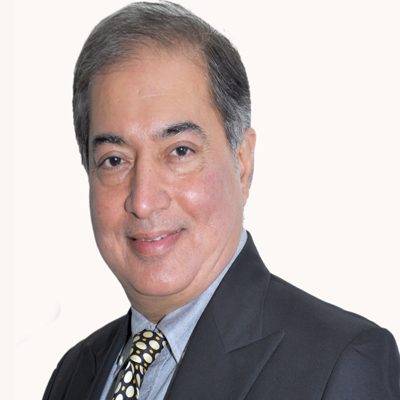
    MUMBAI: Videocon d2h CEO Anil Khera has replaced Dish TV CEO RC Venkateish as the president of DTH Operators Association.


    Khera said, “We will be working together to resolve the issues pertaining to DTH industry. We will take up the issues of DTH operators with the relevant government authorities.  I hope that we will be able to resolve all issues of DTH operators amicably with all the stakeholders. I thank all the members for showing faith in me.”


    Khera was chosen unanimously by the members of the association as Venkateish’s replacement to represent the six direct to home (DTH) operators namely Tata Sky, Dish TV, Videocon d2h, Sun Direct, Reliance Digital TV and Airtel Digital TV.


    In June 2014, Venkateish  was unanimously elected as the president for a term of one year, where the association had also decided to hold regular meetings every quarter to address issues concerning the DTH industry.


    Prior to Venkateish , Tata Sky CEO Harit Nagpal served as president of the DTH Operators Association for three years. After the conclusion of Nagpal’s tenure last year, the association had decided to elect the president for a one year term.

  • “Disorganisation of analogue cable in Phase III & IV will help DTH”: Harit Nagpal

    “Disorganisation of analogue cable in Phase III & IV will help DTH”: Harit Nagpal

    MUMBAI: While India has witnessed Phase I and Phase II of digitisation, the remaining two phases (i.e Phase III and IV) will go a long way in aiding more transparency. Direct to Home (DTH) platforms too are an enthused lot, hoping it will help them gain additional subscribers. 


    Speaking about the expected development Tata Sky CEO Harit Nagpal said, “As digitisation rolls out, we are hopeful that a large number of consumers will move to DTH because analogue cable is little less organised in Phase III and IV of digitisation.”


    Nagpal said that the first two phases impacted approximately 15 per cent of the TV population. According to him, when it came to the process of conversion from analogue cable to digital, about 40 per cent of the analogue subscribers picked up DTH.  Nagpal was speaking at the Asia Pacific Operators Summit (APOS) held in Balli recently.


    Speaking about net additions, he said that the pace had not slowed down. “Even when we were acquiring close to 10 million subscribers as gross, we were getting three to four net additions. Today, the industry picks six to seven million gross, it still makes three to four million net.” Nagpal further added that this would be facilitated by digitisation in places where the first two phases were complete.


    Nagpal believes that the top four DTH players will become cash positive very soon. “It’s on the horizon now. We have already been covering our operational costs. The investment that is really going into the business is going to fund the growth,” he said.


    According to Nagpal, an investor wouldn’t mind finding the growth because on a 10-12 per cent churn, the life of a customer is seven to eight years. As such if the pay back is three years, then an operator has about six to seven years cash life with the customer.


    “Thus an investor is happy to invest and add the gross adds faster and does not mind paying for the investment,” he added.


    While on the one hand, Videocon d2h CEO Anil Khera expressed his displeasure over premium content being distributed for free by Over The Top (OTT) platforms, Nagpal explained his point of view. “I treat myself, i.e. a content access provider, as a grocer. We buy soaps and cereals in bulk and sell them in small packets. If three generations in a single family want to consume bread, rice and pasta we have it stocked. Secondly, if these three generations ordered the food respectively via in shop, over the phone or placed an order online, I have to cater to that and make it convenient for customers.” 


    He further said that he would not go about cursing people as to why content is being given out for free. “I have to make it convenient for the customer to find everything at one place,” he stressed.


    On the added service of video on demand (VOD), Nagpal said that four years ago when Tata Sky launched VOD, it had seen an investment of close to $10 million. Currently the operator was just breaking even on operating costs. “But we know it’s a long term play. It’s not necessarily a play of premium content. In fact, on our first VOD we made available Hindi movies and not English. The reason being English movies’ rights holders were sceptical and insisted on minimum guarantees.”


    On the issue of broadband bandwidth, Nagpal stated that going by the current world wide web phenomenon it was obvious that  video cannot be carried by over the air as the last mile has to be connected by at least some form of wire. He hoped a new entity would cater to this business very soon. 


    “Currently there are a lot of entrepreneurs who provide broadband very well in some areas. They have just been constrained by expansion. We are hoping that in a year’s time the landscape will change. Some funding will come in and then they will expand,” he concluded.

  • Videocon d2h to phase out SD STB manufacturing by 2016

    Videocon d2h to phase out SD STB manufacturing by 2016

    MUMBAI: Sensing a strong business opportunity, Indian direct to home (DTH) operator Videocon d2h is augmenting a new strategy. With the number of High Definition (HD) channels set to increase in the coming years, Videocon d2h, which also manufactures set top boxes (STBs), will be phasing out its Standard Definition (SD) STBs over the next year or so. 


    Videocon d2h is looking at 50 to 60 per cent acquisitions in HD STB space from the current 30 per cent. 


    Speaking at the Asia Pacific Video Operators Summit (APOS) held in Bali, Videocon d2h CEO Anil Khera said, “The cost of difference between SD and HD set top boxes for us is only one and half dollar.”


    It may be recalled that as per the 2013-2014 annual report of the Telecom Regulatory Authority of India (TRAI), the number of HD Pay TV channels has shot up to 34 in 2014 as compared to three in 2010. Indeed the HD feed is a precious value added service for broadcasters and DTH operators. 


    Khera also shared some insights and trends that he has been witnessing in the Indian DTH sector. “In terms of gross adds, the market has been consistently growing and we have seen a growth of eight to nine million new additions in a year. Net additions has been a challenge, and the industry has been able to get net addition of five to six million. As far as the rotation churn is concerned how one retains customers and provides additional services, is a big challenge,” shared Khera.


    Highlighting the biggest hurdle for the sector, he opined that carrying HD channels with a limited satellite bandwidth posed a grave challenge. Projecting that there would be at least a hundred HD channels over the next one and a half year, Khera said, “All the Hindi and English general entertainment channels and movie channels will have a HD and SD feed.”


    A sizeable growth of electronic HD TV sets would compliment this trend further, he said.


    Speaking on Over the Top (OTT) platforms, Khera said that they were not to be seen as a threat but rather as something that can compliment TV services. “However, one disturbing fact is that premium content is available free of cost to customers. If it becomes pay, then it will definitely help the industry because we pay a premium to buy the same content,” Khera opined.


    He also said that the platform, which currently offers Bollywood movie channels on its video on demand (VOD) service is also in talks with Hollywood studios to offer English movies. However, he said that after rolling out its first 4K channel, it will now add Hollywood movies in 4K on the channel soon.

  • Media fraternity welcomes GST; few pose doubts over implementation

    Media fraternity welcomes GST; few pose doubts over implementation

    MUMBAI: Amidst strong controversy, Arun Jaitley led finance ministry of India tabled the Goods and Service Tax (GST) in the parliament for further debate. GST is often termed as India’s most ambitious indirect tax reform plan by economists, which aims to stitch together a common market by dismantling fiscal barriers between states. It is a single national uniform tax levied across the country on all goods and services.


    The indirect tax system in India is currently mired in multi-layered taxes levied by the Central and State governments at different stages of the supply chain such as excise duty, central sales tax (CST), value added tax (VAT) and octroi tax, among others. In GST, all these will be subsumed under a single regime. 


    Even as the entire opposition party, led by Sonia Gandhi, posed a walk out from the Parliament in protest against the procedure and particulars of the amendment, Indiantelevision.com took the opportunity to seek reactions of the vanguards of the media, cable and Direct-to-Home (DTH) industries on GST. While industry stalwarts welcomed the thought behind GST unanimously, a few posed doubts over its successful implementation.


    Dish TV CEO RC Venkateish says, “It will be good for the DTH sector. At present we are victims of multiple taxation system where we pay various taxes in entertainment tax, service tax etc. With GST, it will all get rolled under one. If the GST is approved and rolled out, we will have a tax reduction of three to 3.5 per cent and hence it will be a good move for the sector.”


    Welcoming GST wholeheartedly, Videocon D2H CEO Anil Khera opines, “GST is a welcome move. It will help the DTH sector to prosper. DTH is the biggest victim of multiple taxation policy and GST will simplify that. The industry needs a uniform taxation system and the sooner it comes the better it is.”


    Explaining why GST is good for the economy in the long run, Times Network CEO MK Anand says, “GST brings uniformity and transparency and therefore better administration. However, in the short term, there are expected to be issues. Broadcasting will move from CST, which we believe will be lower than GST as we expect and that is going to put pressure on our pricing. The broadcast ecosystem at the bottom end has elements like consultants or local operators, who may try to push for absorbing into prices. The other thing is the state wise registration and filing of GST as against the current centralised filing. This is also an additional activity that we will now have to account for and so it increases costs to some extent.”


    GTPL Hathway COO Shaji Mathews supports the concept behind GST but has doubt on its successful implementation. He explains, “Taxation has been the biggest issue when it comes to digitisation. With digitisation, often only three stakeholders are associated namely: multi system operators (MSO), broadcasters and local cable operators (LCO). However in actuality, there are two more parties involved – the government and consumers. Government has been the major gainer so far from digitisation and they have been trying to shift the tax burden on to the consumer. However the consumer is not ready to take it and hence operators have been bearing the brunt of it all. With GST, the concern is over entertainment tax, which varies from state to state. No clear information is provided whether entertainment tax will be included in GST and if yes, then at what slab. So overall, while the thought behind GST is good, there are a lot of question that are still unanswered. Moreover, since the government hasn’t made any efforts to rationalise taxation, the implementation is something that remains to be observed closely. The problem is with the mechanism that the government follows, where they don’t consider the tax payers’ point of view while implementing an amendment.”


    Another senior official from the cable fraternity asserts, “GST has the potential to emerge as a blessing in disguise. As we proceed with digitisation, uniformity in taxation is the least that we can expect. It has been very harsh on us, as we operate across different states and at times we end up paying tax for an already taxed item, which is not something that we should be facing. Overall, I welcome GST and see it as an encouraging move though only time will unfold the real story.”


    NDTV executive vice chairperson KVL Narayan Rao adds, “Frankly, GST deals more with Goods and Service providers and doesn’t impact us directly but I consider it as a beneficial move. For example, if I have to set up a new studio at a new location, GST will help me as I won’t pay multiple taxes and hence it affects the pricing.”


    Backing GST, entrepreneur Ronnie Screwvala opines, “A business friendly environment had to be developed in India and taxation is a key element to that. With the Goods and Service Tax, service tax will come down to 16 per cent, which solves many problems. Hence GST is a firm step forward towards developing a business friendly scenario in India and it will surely help the country to ensure economic growth.”


    As per information available, the government is expected to rollout GST by April 2016.With absolute majority in the Lok Sabha, it will not be a challenge for the government to pass it through in the lower house. However the bigger obstacle will come from the Rajya Sabha as Jaitley and company will have to penetrate through a larger opposition. The entire business fraternity will keenly observe the next few days of proceedings in both houses of the Parliament.

  • Videocon d2h withdraws IPO application; Dhoot to visit Nasdaq

    Videocon d2h withdraws IPO application; Dhoot to visit Nasdaq

    MUMBAI: The direct to home (DTH) arm of Videocon group, Videocon d2h has decided to withdraw its Rs 700 crore Initial Public Offer (IPO) proposal since the company is looking to start the process afresh.


    In September 2014, the company had decided to file draft offer documents with the Securities and Exchange Board of India (SEBI). However, Videocon d2h, through its lead banker Axis Capital, withdrew the documents on 27 March.


    Meanwhile, Videocon d2h executive director Saurabh Dhoot along with Silver Eagle chairman and CEO Harry Sloan will visit the Nasdaq Market Site in Times Square and will ring the Opening Bell 7 April at 9:15 am to 9:30 am ET (6:45 pm IST).


    The operator had completed its initial listing on the Nasdaq Global Select Market through a business combination transaction with Silver Eagle Acquisition Corp, which is founded by Harry Sloan and Jeff Sagansky, pursuant to which Silver Eagle contributed approximately $273.3 million to Videocon d2h in exchange for equity shares of the operator which was represented by American Depositary Shares (ADSs), which were distributed to Silver Eagle’s stockholders. Public trading of the Videocon d2h ADSs on Nasdaq under the ticker ‘VDTH’ commenced at the opening of trading on 1 April this year.


    On the day of the opening, the approximately $37.75 million Videocon d2h ADSs issued to Silver Eagle stockholders were valued at approximately $453 million based on the opening price of $12 per ADS on Nasdaq. Silver Eagle’s capital infusion in the operator represents one of the largest platform investment deals in Indian media by US investors.


    Sloan based on reports had stated that US investor interest in the transaction has been strong as it affords US investors the opportunity to participate early in the US listing of Videocon d2h. “It is the fastest growing DTH Pay-TV operator in India and the fastest growing pay TV market in the world. Beyond this very significant organic growth, we will be exploring numerous possibilities for the company to expand as a force in India’s developing media business,” Sloan had remarked.


    The regulator SEBI in February, had decided to keep the processing of the company’s offer document in “abeyance” following a request made by Videocon d2h in this regard. The company was looking at garnering Rs 50 crore through a pre-IPO placement of its shares to institutional investors, according to media reports. The funds were to be used for acquiring set-top boxes (STBs), outdoor units and accessories thereof, repayment/prepayment of certain indebtedness and general corporate purposes. In December 2012 too it had filed draft documents under the name ‘Bharat Business Channel’ with Sebi to raise Rs 700 crore through an IPO. But the company did not launch the same due to bad market conditions.


  • OTT, video apps can work progressively with cable & satellite platforms

    OTT, video apps can work progressively with cable & satellite platforms

    MUMBAI: The market for Over The Top (OTT) services has been rapidly growing in the United States. However, can the same model be adopted for the Indian market? That was the key question asked at a discussion at FICCI Frames 2015 on the topic – ‘Clash of the Walled Gardens: OTT and Video apps versus cable and satellite.’


    Joining the panel were Zenga TV founder and CEO Shabbir Momin, DGive director and CEO GD Singh, IndiaCast group COO Gaurav Gandhi, Videocon d2h CEO Anil Khera, Eros Digital COO Karan Bedi, Hungama.com CEO and Hungama Digital COO Siddhartha Roy and Hinduja Ventures whole time director Ashok Mansukhani. The session was moderated by Whats ON chief executive officer Atul Phadnis.


    Sharing some insights from the US market, Gracenote general manager – video Richard Cusick said that according to a study conducted by the company, nearly 50 per cent of the US broadband households used OTT video services. Young viewers were particularly driving the change as 18 to 24 year olds watched less than half as much traditional TV as 50 to 64 year olds. “Netflix for example has 57 million subscribers worldwide and is a top OTT service provider,” he said.


    Cusick said the study increasingly found that networks and studios were resorting to unbundling to single channels as well as live TV bundles. “In such a scenario, consumers benefit the most as great content is served to them,” he said.


    The question posed to panelists was whether the US implications were similar to that of India and if cable and DTH operators were changing the landscape? Gandhi felt that the implications were not similar to the Indian market because channel specific models like HBO were not available in India. “As a content broadcaster or distributor, the US markets are very clear that they will follow a proper pay model. Here it is still very disruptive,” he opined.


    Moving to the experience of launching an OTT in India, DGive’s Singh said that while they still struggled to generate the right revenues, they did in fact receive 25 million downloads. He said when his company approached someone from the US for guidance for the company’s growth charter in India, the executive told him, “If you’re buying content, you cannot give it for free to audiences.” That was a major learning from the US market.


    On the content front, Singh said that currently the company had 30 per cent of its content set under the pay wall, which was premium content. “We sell our service for $1 per month per subscriber. We have a million users paying us since we are screen, operator and consumer agnostic. We are looking at breaking even in the next seven to 10 months.”


    Sharing his experience, Momin said that Zenga TV had started in 2009 and he was happy with the response from users. “What was surprising in the initial stages was that we saw response patterns coming in from Tier II cities. We now have 20 to 22 million active users per month and have been profitable for the last three years,” he informed. The company also launched a show called India’s Digital Super Star on its platform, which sold sponsorship slots.


    Bedi opined that Eros Digital had 14 million active users, wherein the company followed a transactional as well free model that catered to Indian audiences as well as NRIs. “Some key points for our industry is that we will take a leap; a steroid growth will be seen. Two, revenue models like ad dependent, subscription based, free as well as paid will have to work in tandem,” he said.


    The true value of the customer in the coming years will move towards mobile screen consumption, informed Roy.


    Speaking from the perspective of a direct to home (DTH) operator, Khera was of the opinion that while OTT players may have a million plus subscribers, the content from OTT was for second screen consumption. Technology like 4K is only for television. On a lighter note, he added, “India gets entertained heads up and not heads down.”


    Mansukhani too had a similar opinion. According to him, being an old cable company didn’t mean being out of date. He said that they too provided pay channels on a pre-paid model. “Most Indian homes today use multiple screens. It doesn’t matter who wins. There is space for all as content is being consumed via tablets, mobiles as well as television.”


    Mansukhani went on to compliment Star India’s Hotstar app saying that it was a fantastic proposition.


    “As a businessman, I am interested in exploring various opportunities but I’m worried about providing free content as high content cost is not justified in providing the content without a price tag. I am against giving free content on OTT,” Khera opined. He also hinted at Videocon d2h entering the OTT space but refused to give any details.


    Speaking on the challenges of the OTT space, Roy said that for them to benefit from the digital advertising pie, the pie itself should grow in order for profits to trickle in.


    The notion that OTT platforms are for free should be broken. “OTT is about the bundle and there is no choice if one has to pay or not. Cable companies are our allies as they provide us pipes for distribution,” Bedi said.


    Having the last word, Mansukhani said that all stakeholders should come together and ask customers on the kind of content and pricing for platforms. The profits could then be shared, he suggested.


    In conclusion, the panelists agreed that the three key challenges were cash flow, content windowing and specific business models.

  • Bhojpuri channel Anjan TV hops on to Videocon d2h platform

    Bhojpuri channel Anjan TV hops on to Videocon d2h platform

    MUMBAI: Bhojpuri entertainment channel Anjan TV is looking at increasing its viewership and as part of this has signed a deal with direct to home (DTH) operator Videocon d2h.


    The channel will be available on channel number 861 on the platform. Anjan TV is also available on Airtel Digital TV and all the multi system operator (MSO) platforms in Bihar and Jharkhand. 


    With this, the channel will be available to 12.8 million households across India as a free-to-air channel. The channel is currently in talks with other DTH operators such as Tata Sky, Reliance DTH, etc.


    Carving a niche for itself, the channel offers a programming mix of movies, music, daily soaps, reality, crime, cookery, comedy, travel and lifestyle shows.


    “We are delighted to be associated with Videocon d2h and are looking forward to cater to the needs of its subscriber’s base across India. I would like to take this opportunity to welcome and promise a wholesome entertainment to all our new viewers through this platform,” said Anjan TV channel head Anshuman Tripathi.


    Videocon d2h CEO Anil Khera added, “We continue to add more variety and value through our offerings. We want to offer the whole gamut of channels and services empowering the consumer to opt for his preferred choice of language. We believe in delivering the best for our customers and are hopeful of achieving better penetration, through the addition of this channel.”


  • Videocon d2h rolls out India’s first 4K Ultra HD channel

    Videocon d2h rolls out India’s first 4K Ultra HD channel

    MUMBAI: Direct to home (DTH) platform Videocon d2h, the first in India to have had a preview of 4K Ultra HD DTH service in July last year, has taken a step further as it launched a 24 hour 4K Ultra HD multi genre channel on 26 January, 2015.


    Videocon Group director Saurabh Dhoot said that the company is bringing the path breaking technology into Indian homes using its 4K Ultra HD set top box and the channel. “We are the first in the country to provide this experience,” he said.


    When queried by Indiantelevision.com as to what the channel feed will contain, Videocon d2h chief executive officer Anil Khera said, “We are planning to showcase Video on Demand (VOD), lifestyle and travel content, sports, infotainment, concerts and Hollywood movies.”


    Khera preferred calling the channel as a 4K content pipe wherein 4K content available from international broadcasters will be telecast. “The pipe is not dedicated to any one channel. It is a pipe that also consumes a lot of bandwidth,” he added.


    To begin with, as part of its contract with Star India, the DTH platform will broadcast the upcoming ICC Cricket World Cup matches, which will be produced with the new technology. “We are in talks with producers who are the content providers from India and abroad,” informed Khera. The channel will be uplinked from the company’s Greater Noida facility.


    The 4K ultra HD set top box redefines TV viewing experience delivering four times the picture resolution of Full HD. It has 27 times the normal Standard Definition (SD) picture quality. It provides a resolution of more than eight million pixels, resulting in better sharpness and clarity.


    The package also includes a next generation User Interface (UI) powered by technology company CISCO to easily access content. A ‘super speed’ USB allows subscribers to be future ready to play pause and rewind the live stream of 4K content.


    In lay man’s terms, a 4K channel is equivalent to four HD channels put side by side and two HD on top of the four, which basically makes it an image with four times the resolution of HD.


    When asked whether the new edge technology will be promoted through live events during the Cricket World Cup, Khera said, “We are in talks with the broadcaster, but no final decision has been taken on that as yet.”

  • Videocon d2h selects MStar HEVC SoC solution for HD zapper STB

    Videocon d2h selects MStar HEVC SoC solution for HD zapper STB

    MUMBAI: Direct to home (DTH) operator Videocon d2h has joined hands with MStar Semiconductor, wherein the latter will provide its high efficiency video codec (HEVC) H.265 system-on-chip (SoC) to the former’s HD set top boxes (STBs).


    MStar Semiconductor, which is a semiconductor company for TV, STB, display and digital home solutions, has successfully implemented HEVC technology in the HD solution, which fits properly to save the bandwidth requirement with high definition picture quality. The operators and STB OEMs can reduce their development costs and time to market to meet the Indian market demands with the MStar HEVC-capable set-top box SoC solution.


    Videocon d2h director Saurabh Dhoot said, “The HEVC technology ensures that our consumers get the most advanced and evolved TV viewing experience. Videocon d2h has taken the lead in bringing this latest technology to India and we are committed to using high end technology. Innovation has been the driving force for Videocon d2h, and the HEVC technology is perfectly positioned to further improve our bandwidth usage and enable us to add more HD channels.”


    “HEVC technology will greatly benefit the DTH operators in India due to the saving of bandwidth. With the coming of HEVC technology, our subscribers will experience high-efficiency Asli HD picture quality for the first time in India. This is possible through the unique video compression technology present in the HEVC capable set top boxes that is the latest in the field, and is a major improvement over the existing ones. We are committed to delivering a world class viewing experience,” added Videocon d2h CEO Anil Khera.


    “It is our honour and pleasure to be a partner with Videocon d2h. As high-quality programme deployment becomes more widely demanded, we anticipate increased market demand for HEVC-capable set-top-boxes which allows more effective usage of the limited bandwidth. Leveraging our HEVC-capable set-top box platform, we will continue to provide the timely HEVC solution to Videocon d2h in order to fulfill their business goal,” said MStar Semiconductor chairman Wayne Liang.