Tag: Anil Ambani

  • Quo Vadis ZEEL-RBNL

    Quo Vadis ZEEL-RBNL

    MUMBAI: It was hardly a month or so ago that ZEEL MD Punit Goenka had issued a denial, saying that it was not interested in acquiring the radio and TV business of the Anil Ambani-owned Reliance Broadcast Networks Ltd (RBNL) because radio regulations do not permit FDI equity beyond 49 per cent.

    But, the media was awash once again with the news that it had restarted negotiations with RBNL just two days ago. When Indiantelevision.com got in touch with the ZEEL corporate spokesperson whether this was true, this is the response, we got: “From time to time, we keep exploring strategic opportunities for entering new businesses or in our existing businesses. However, as a matter of policy, we do not comment on media speculations,” the response said.

    To us, this sounds ominously familiar. This is the exact response ZEEL and Essel had issued when news reports appeared about the sale of its TEN Sports business to Sony Pictures Networks India. When speculation about Siticable buying DEN Networks gathered steam, a similar line was thrown.

    Ditto was the response with Dish TV’s ongoing discussions to acquire Videocon d2h from the debt-laden-and struggling Videocon group. Dish TV is a part of the Essel group as well.

    And, we all know what happened with Ten Networks. After denying it for a few months, SPNI bought it over for a cool Rs 2,600 crore.

    The DEN Networks talks turned out to be just talks. Now, the Sameer Manchanda-promoted cable company has got an infusion of cash and the rumour mills state that it will be acquired by Star India at some stage.

    As far as Dish TV is concerned, the company recently moved its registered corporate office from Noida to a Mumbai address of Marathon Futurex, which also houses other Essel group ventures. Observers believe this move could help facilitate its Videocon d2h acquisition. The two groups will have to approach only one court – the Bombay High Court — for approvals. Whether this is true or not, only time will tell.

    Overall, the media industry is ripe for consolidation. And, the hungry to grow, Zee (Essel) group is scouting around for opportunities, chatting with almost everyone who could be a potential good addition to its portfolio. Analysts feel the prospective RBNL deal will be a win-win for Ambani as well as for the Essel group, of which ZEEL is a part.

    The Essel group is present in television, films, print, music, events and live, and digital. What’s missing is radio. The acquisition, when and if that does happen, will herald the group’s entry into that segment as well. It recently announced its diversification into that segment in the UAE by leasing the frequency, which was operated by the radio channel Hum. The lease becomes active cum January 2017.

    RBNL will also add a Bhojpuri regional channel BIG Ganga and a comedy-centric national channel Big Magic to the Zee TV bouquet. Both these genres are strikingly absent in the ZEEL bouquet. In July 2015, ZEEL gobbled up Odia channel Sarthak TV for Rs 115 crore.

    Anil Ambani has been attempting to find buyers for his media and entertainment assets for some time now. Lured by the sector, he rushed into it in the previous decade setting up a DTH venture, poured investments in DreamWorks, in his Bollywood studio, in a VFX studio and in shooting floors, a TV production company, and in radio and TV broadcasting.

    The oodles of cash he kept on pumping into the sector have not got the return he expected. One bright spark has been his radio and TV venture, especially the FM station and the regional channels. Recently, the group announced that it was carving out its DTH venture Reliance Digital TV into a separate company from Reliance Communications.

    Observers say that the Zee group and RBNL are examining ways of slicing and dicing the RBNL business to facilitate a buyout. Among the options being considered is ingesting FM radio into Zee Media, and incorporating the Big Magic channels into ZEEL. According to BSE filings, Zee Media does not have any significant foreign holding. Hence, the foreign investment cap will not come in its way of digesting Big FM. And ZEEL’s acquisition of the Big channels is but a shoo-in.

    Of course, pricing has to be agreed between the two parties. Figures of Rs 2,000 crore-Rs 2,500 crore that are being bandied about seem far too inflated considering the scale of RBNL’s radio and TV business. The acquisition tag could more likely be at half of that. Or, if one stretches ones pockets, at a discount of Rs 500 crore to that.

    We, as media observers, can only wait and watch to see which way the pendulum swings.

  • Reliance ADA group to hive off DTH operations

    Reliance ADA group to hive off DTH operations

    MUMBAI: The Anil Ambani-owned DTH service Reliance Digital TV which claims to have a five million net subscriber base and an estimated two million active connections is likely to be hived off in to a separate company. For the past three or four years, Reliance Communications, the parent company has been seeking a buyer for the venture. It had spoken to Sun TV in the past but the valuations and expectations did not match what the former was willing to pay for Reliance Digital TV. Unconfirmed reports say that the company had inconclusive conversations with other potential partners too. Hence, it has decided to go for a spin off of its DTH service business which has been relatively stagnant.

    Reliance Communications, the parent company of Reliance Digital, is being driven to do this to pare its debt-EBIDTA ratio. Speaking to investors yesterday RCOM CEO (consumer business) Gurdeep Singh said that the idea was to bring that number from 4.64 currently to about three in 18-24 months. Other assets that could be seeking buyers include equity stakes in its international operations at Reliance Globalcom, and in its tower unit Reliance Infratel.

    “We are looking to bring down our debt-to-EBIDTA ratio to around 3 within 18-24 months and are looking at monetizing our non-core assets to deleverage the balance sheet,” Reliance Communications (RCom) CEO (Consumer Business) Gurdeep Singh informed PTI. He added: “For this, we are looking at hiving off the DTH business, stake sale in our international operations at Reliance Globalcom, monetization of our real estate assets, as well as a possible divestment in Reliance Infratel, which handles our towers portfolio.”

    The group earlier this week announced the merger of its wireless business with another telco Aircel. It is also looking to raise $1 billion (approximately Rs 6,686.5 crore) in equity to expand the venture and make possible payments to the government for mobile spectrum use.

  • Reliance ADA group to hive off DTH operations

    Reliance ADA group to hive off DTH operations

    MUMBAI: The Anil Ambani-owned DTH service Reliance Digital TV which claims to have a five million net subscriber base and an estimated two million active connections is likely to be hived off in to a separate company. For the past three or four years, Reliance Communications, the parent company has been seeking a buyer for the venture. It had spoken to Sun TV in the past but the valuations and expectations did not match what the former was willing to pay for Reliance Digital TV. Unconfirmed reports say that the company had inconclusive conversations with other potential partners too. Hence, it has decided to go for a spin off of its DTH service business which has been relatively stagnant.

    Reliance Communications, the parent company of Reliance Digital, is being driven to do this to pare its debt-EBIDTA ratio. Speaking to investors yesterday RCOM CEO (consumer business) Gurdeep Singh said that the idea was to bring that number from 4.64 currently to about three in 18-24 months. Other assets that could be seeking buyers include equity stakes in its international operations at Reliance Globalcom, and in its tower unit Reliance Infratel.

    “We are looking to bring down our debt-to-EBIDTA ratio to around 3 within 18-24 months and are looking at monetizing our non-core assets to deleverage the balance sheet,” Reliance Communications (RCom) CEO (Consumer Business) Gurdeep Singh informed PTI. He added: “For this, we are looking at hiving off the DTH business, stake sale in our international operations at Reliance Globalcom, monetization of our real estate assets, as well as a possible divestment in Reliance Infratel, which handles our towers portfolio.”

    The group earlier this week announced the merger of its wireless business with another telco Aircel. It is also looking to raise $1 billion (approximately Rs 6,686.5 crore) in equity to expand the venture and make possible payments to the government for mobile spectrum use.

  • Pramod Arora becomes Director in Carnival Cinemas, confident of 1000 screens by next year

    Pramod Arora becomes Director in Carnival Cinemas, confident of 1000 screens by next year

    MUMBAI: Pramod Arora, who has vast experience in the film and financial fields, has joined as Director of Carnival Cinemas, the Carnival Group has announced.

    Arora joins Carnival Cinemas from Everstone Capital Advisors Pvt Ltd where as a Director he helped steer consumer facing businesses of the company. Earlier, he spent 18 years at PVR Cinemas as their Group President. He has also served as the Chief Operating Officer at Oberoi Realty and was instrumental in the growth strategy of the company in various real estate asset classes.

    Carnival Group chairman Dr. Shrikant Bhasi said, “I am extremely confident in Pramod’s capabilities and am positive that he will add immense value to our cinema business. He will play a pivotal role in ensuring that we accomplish Carnival’s vision of 1000 screens by 2017.”

    Arora said on his appointment, “I am excited to be a part of the Carnival family and witness yet another revolution in the making from Shrikant! I look forward to the challenge of executing Carnival’s vision of a 1000 screens by 2017. My mandate is put the growth of Carnival Cinemas on the fast track and make Carnival Cinemas one of the most preferred brands in India and I am confident that we will execute our plans well.”

    He added: “In the past, I have held executive positions where I helped develop cinemas for classes. Carnival Cinemas is the only enterprise forging ahead and creating cinemas for the masses. As an independent Director, I also look forward to learn, guide and mentor the team and together with our CEO PV Sunil, we will strive to make Shrikant’s audacious dream of 1000 screens a reality.”

    Arora is credited with expanding the Delhi based company PVR Cinemas with a single multiplex four-screen company to a powerhouse of 500 screens by means of organic growth and acquisitions.

    Carnival Cinemas acquired Anil Ambani’s Big Cinemas in December 2014. The Group also acquired Glitz Cinemas, which was a part of Capital 18; a subsidiary of Mukesh Ambani’s Network 18 Media in 2015 and acquired HDIL’s multiplex chain Broadway Cinema.

    Carnival Cinemas has presence in 19 states including Andhra Pradesh, Bihar, Chhattisgarh, Gujarat, Haryana, Jharkhand, Karnataka, Kerala, Tamil Nadu, Maharashtra, Madhya Pradesh, Punjab, Rajasthan, Uttar Pradesh, West Bengal, Telengana, Uttarakhand and Chandigarh.

  • Pramod Arora becomes Director in Carnival Cinemas, confident of 1000 screens by next year

    Pramod Arora becomes Director in Carnival Cinemas, confident of 1000 screens by next year

    MUMBAI: Pramod Arora, who has vast experience in the film and financial fields, has joined as Director of Carnival Cinemas, the Carnival Group has announced.

    Arora joins Carnival Cinemas from Everstone Capital Advisors Pvt Ltd where as a Director he helped steer consumer facing businesses of the company. Earlier, he spent 18 years at PVR Cinemas as their Group President. He has also served as the Chief Operating Officer at Oberoi Realty and was instrumental in the growth strategy of the company in various real estate asset classes.

    Carnival Group chairman Dr. Shrikant Bhasi said, “I am extremely confident in Pramod’s capabilities and am positive that he will add immense value to our cinema business. He will play a pivotal role in ensuring that we accomplish Carnival’s vision of 1000 screens by 2017.”

    Arora said on his appointment, “I am excited to be a part of the Carnival family and witness yet another revolution in the making from Shrikant! I look forward to the challenge of executing Carnival’s vision of a 1000 screens by 2017. My mandate is put the growth of Carnival Cinemas on the fast track and make Carnival Cinemas one of the most preferred brands in India and I am confident that we will execute our plans well.”

    He added: “In the past, I have held executive positions where I helped develop cinemas for classes. Carnival Cinemas is the only enterprise forging ahead and creating cinemas for the masses. As an independent Director, I also look forward to learn, guide and mentor the team and together with our CEO PV Sunil, we will strive to make Shrikant’s audacious dream of 1000 screens a reality.”

    Arora is credited with expanding the Delhi based company PVR Cinemas with a single multiplex four-screen company to a powerhouse of 500 screens by means of organic growth and acquisitions.

    Carnival Cinemas acquired Anil Ambani’s Big Cinemas in December 2014. The Group also acquired Glitz Cinemas, which was a part of Capital 18; a subsidiary of Mukesh Ambani’s Network 18 Media in 2015 and acquired HDIL’s multiplex chain Broadway Cinema.

    Carnival Cinemas has presence in 19 states including Andhra Pradesh, Bihar, Chhattisgarh, Gujarat, Haryana, Jharkhand, Karnataka, Kerala, Tamil Nadu, Maharashtra, Madhya Pradesh, Punjab, Rajasthan, Uttar Pradesh, West Bengal, Telengana, Uttarakhand and Chandigarh.

  • Reliance revamps Bloomberg TV as Business Television India

    Reliance revamps Bloomberg TV as Business Television India

    MUMBAI: After Bloomberg ended a seven year old tie -up with the Anil Ambani led Reliance group, it is now all set to rebrand its business news channel Bloomberg TV which is run by Business Broadcast News Private Limited. The channel will be renamed as Business Television India (BTVIn) early next month, reported a daily newspaper. It has signed an agreement for data feed with Thomson Reuters Corp.

    The new website and logo will be unveiled next month. It is also reported that Reliance Capital Ltd and entrepreneur Ronnie Screwvala, among others, are shareholders in BTVIn.

    According to reports, Siddharth Zarabi will continue to head the editorial operations of the channel, the company has hired Monica Tata, a former managing director of HBO India, to head the restructuring on the business side of the news operations on a project basis.

    Bloomberg L.P. and Business Broadcast News decided to end their media licensing agreement in India on 31 March 2016. Both parties have mutually ended the licensing agreement and pursued their respective new business strategies. While Business Broadcast News continued to operate the TV channel with fresh branding effective 1 April, subject to regulatory approval, Bloomberg announced Raghav Bahl’s Quint as the media partner.

    Bahl and Bloomberg will together invest Rs.100 crore in the venture. While, Bahl will own a 74 per cent stake, Bloomberg will have the rest. The agreement is for a 10-year period.

    The Bloomberg Quint website has already gone live, while the news channel is expected to be launched later this year.

  • Reliance revamps Bloomberg TV as Business Television India

    Reliance revamps Bloomberg TV as Business Television India

    MUMBAI: After Bloomberg ended a seven year old tie -up with the Anil Ambani led Reliance group, it is now all set to rebrand its business news channel Bloomberg TV which is run by Business Broadcast News Private Limited. The channel will be renamed as Business Television India (BTVIn) early next month, reported a daily newspaper. It has signed an agreement for data feed with Thomson Reuters Corp.

    The new website and logo will be unveiled next month. It is also reported that Reliance Capital Ltd and entrepreneur Ronnie Screwvala, among others, are shareholders in BTVIn.

    According to reports, Siddharth Zarabi will continue to head the editorial operations of the channel, the company has hired Monica Tata, a former managing director of HBO India, to head the restructuring on the business side of the news operations on a project basis.

    Bloomberg L.P. and Business Broadcast News decided to end their media licensing agreement in India on 31 March 2016. Both parties have mutually ended the licensing agreement and pursued their respective new business strategies. While Business Broadcast News continued to operate the TV channel with fresh branding effective 1 April, subject to regulatory approval, Bloomberg announced Raghav Bahl’s Quint as the media partner.

    Bahl and Bloomberg will together invest Rs.100 crore in the venture. While, Bahl will own a 74 per cent stake, Bloomberg will have the rest. The agreement is for a 10-year period.

    The Bloomberg Quint website has already gone live, while the news channel is expected to be launched later this year.

  • “Our aim is to get into the Top 5 this year”: Tarun Katial

    “Our aim is to get into the Top 5 this year”: Tarun Katial

    Tarun Katial has many notable achievements to his credit. Among them: being one of a bunch of  advertising media professionals who  made an effective and successful transition to broadcasting. As programming head of Star Plus, he ensured that the network stayed on top of the viewership ratings in the last decade, before he shifted to Sony Entertainment (now SPN TV).

    But what has kept him busy over the last decade is radio, followed by TV, at the Anil Ambani group owned Reliance Broadcast Network Ltd (RBNL). As CEO he is responsible for the nationwide radio network under the 92.7 Big FM brand and two successful channels – Big Magic and Big Ganga. It is with the last two that he has disrupted the broadcasting ecosystem by building audiences for the two niche channels and making them profitable.

    Indiantelevision.com had a conversation with Katial who spoke about the selloff rumours, his radio journey, benefits of DAS Phase III and trends in television content.  

    Excerpts:

    These days whenever we read we read about the network, the one canard that comes up is the sell off of RBNL. Is there any truth in the entire rumour?

    We are a 10-year old brand and the journey has been very interesting. At this stage of our brand life cycle we look for opportunities to partner with different people. We have been in the process of exploration for sometime now but there isn’t anything definite about the option that we are exploring. Only time will tell where it goes.

    You are the one at the helm of a television channel as well as a radio network. Both are placed poles apart. As a professional, how do you manage the two roles?

    I draw motivation from my consumers and I think it’s an interesting time where consumer and media are concerned…where the content is concerned. We see ourselves as a platform, as a content rich company, and we look to evolve as a company which can stay ahead and map consumer trends as much and as far as possible. It is also hard but interesting as how can you differentiate yourself from everybody else in the market as there are some media companies which are doing excellent work and it becomes a very tiring task to be able to build a product which can actually stand out.

    And now you have been doing it since a decade? What are your key observations over this journey?

    I think consumers have incredibly changed. From time where we started feature phones or smart phones were way away. Apple, Blackberry were not even there to now where everything is smart. You can’t hope that a consumer will latch on to something unless you’re unique, you are value creating, you have a point view and you have place in his daily life and media consumption habits. Until you are cutting edge, sharply focussed and you stand for something you cannot make progress.  

    Do you think the art of storytelling has also changed over the years when it comes to radio?

    We have really evolved as a network and it has taken a lot of time and effort in creating some of the content pillars we have. Yes, the art of storytelling is very rich now. Whatever you do it has to be in depth. If you look at some of our shows like Suhaana Safar with Annu Kapoor whether its Nayak with Sanjeev Srivastava or its Arth or our National breakfast show with Siddharth, each of our shows rely on a huge amount of research and consumer insights.

    Are you happy with the way the industry is evolving in terms of advertising?

    I think the advertising industry has discovered radio from the past three or four years. Every single activity is extremely active on radio. People have seen distinct convergence of their business through radio advertising today. If you look at the national category to local categories, FMCG (which is very number oriented and reach oriented) to the real estate business  – all have discovered radio as their advertising objective.  

    What now for BigFM?

    We are interested in more radio stations coming up. We are exploring how we are going to play them out. Whether we are going to come up with the  retro format in some cities or local format in many cities. So yes we are working on them. There are some interesting markets including Pune, Nagpur, Lucknow which is a very old radio market.

    As we spoke about phase III and now let’s shift our focus to the other phase III which is the DAS Phase III? Has it really happened? Do you see any difference?

    The court cases apart, cable TV digitization has been very, very encouraging. Whatever the remaining pockets will get covered sooner the later.  I think there has been certain amount of innovation from the DTH end. We have seen some very different packaging options coming from the DTH players to cater to the market. Pre-paid options, small ticket size packaging – entry level packaging has been introduced by all the DTH players which is encouraging. The other big encouraging thing is even a more consolidated push in the free-to-air and free dish market. The current FICCI estimates now put this at 30 million which probably will be double that of any other operator. Phase III pushed free TV deeper and our estimate is that  if FreeDish was to start doing regional entertainment, which now it has started to do, this could lead to very polarised Pay TV- free TV scenario. I envision there will be three buckets: one is cable in the main metros, secondly, it will be DTH largely national and then there will be free TV which will be again across metros, mini-metros and small towns.

    How much is the BARC rural roll out a factor behind the separate Pay TV and free TV markets?

    If you look at TAM numbers of free TV they were very encouraging. Some of the TAM estimates for urban on free dish were almost 50 million this year. FreeDish is not a rural phenomenon alone. Yes it has a lot of push in semi-urban areas but it has significant reach in metros, mini-metros and all sorts of strata. We have ourselves seen a 13 per cent reach increase in a city like Delhi.  

    If we go back to the discussion regarding Bhojpuri, is there a market only in Bihar and Jharkhand, or is it across India?

    So we have done lot of work with a large section of the Bhojpuri community across the country. If you look at Ganga’s number even in Mumbai, it is very high and strong. To everyone’s surprise Ganga can actually beat some of the local channels in Bombay. And the truth is there is a population of  Bhojpuri immigrants across the country today. There is Punjab, there is Gujarat, there is Bombay there is Kerala and there is Kolkata, you will see a lot of Bhojpuri speaking people and they are very language loyal wanting to consume entertainment and content in their own language.

    From a brand perspective have you seen advertisers getting on board with a national audience perspective or only those catering to Jharkhand and Bihar in Bhojpuri?

    Actually that depends on the advertiser’s objective, when they look for deep penetration in the market, they tend to influence Bihar and Jharkhand. When they are looking to get their messages nationwide, yes there is large spillover that they can benefit from, and they do benefit from. Initially brands spread the budget in regional then spread across the country.

    Be it Akbar Birbal, be it Chutki, be it Rasoi ki Rani, there is certain amount of differentiated programming. From where do you spark this programming strategy?

    The backend of our programming strategy is good people. We have a very good research team, research desk who actually snap in consumer trends. We entered the entry to television business late and we realized that it is very important for us to look into these trends and identify those which would help us stand apart from the large players. That’s why we tend to do things differently, we tend to do things remotely and we have been fortunate to have a lot of people around us and have been able to do good work.

    In terms of your team structure, are you in that perfect place you want to be?

    Yes, I think we are never perfect, imperfection is also beautiful.

    Has TV storytelling changed since the growth of digital?

    I think storytelling has always changed according to the target audiences we are talking to. There are three or four aspects. One, people love stories that are page-turners. So the level of hooks that you need in stories today are far more than you needed earlier.

    It’s an impatient audience at this time. You can’t hope to hold on to audiences with simple story telling any longer. So it’s very layered, it’s very fast-paced and it’s very hooky.

    When it comes to characters, there are two or three things to them. One thing, why people want realistic characters, is because that at some level they need to be inspirational for them. So it’s a mix of two other people they look for. In cinema you can get away with being realistic but in television you need to be slightly loud and over the top.   Increasingly viewers are looking for characters that they can relate to but also stand out.

    But the quality of storytelling has certainly improved, the quality of production has improved, so have production costs also gone up?

    I think production costs are steady…basically production cost has stayed flat. I think that’s not because of storytelling it is because of technology. Technology has really helped to bring production costs downward. Editing facilities have really helped. Linear and nonlinear facilities are easier and quicker. Standing infrastructure on sets and technology have helped put budget into better talent in writing, better talent in acting, direction and better costumes. Production cost has stayed flat but the composition of the production budget has changed.

    Is the equation of advertising revenue and production costs profitable at this stage without growing any numbers?

    Yeah, I think the margin is there, definitely profits are there. I think all the businesses today have become far more profitable than they used to. We broke even on Ganga much sooner than we thought. The cost mixes are much better than it used to.

    Since you have Big Magic and Big Ganga, one thing that we see on every channel now a days is Naagin, How far are you from a Nagin show in your channels?

    I don’t think we are looking to get to Naagin. A bunch of guys have done Naagin and they have done a wonderful job.

    Is it a trend that something gets successful and then everyone follows it?

    Yeah I think everybody does it all over the world. One horror show starts many follow, one crime show starts many others start to make them. It’s a trend. People do enough of the genre and consumers will see that what are its possible variants, then they move to the next one.

    Do you think somehow content is getting a little less progressive?

    I think content is getting more innovative and more lateral. People are thinking of different ways of storytelling. We have to put our imagination around this. You know if we were to call Nagin regressive then we should also call Vampire Diaries regressive but we watch Vampire Diaries then we don’t tend to call it regressive.

    All the sci-fi or supernatural that goes around in American television, we don’t tend to call it regressive because it comes from Hollywood.

    So you don’t agree to the fact that BARC data is somehow regulating what content can be watched?

    See BARC data has given a perspective as to what people want. Everybody is trying to deliver balanced content across demographics. Somebody might focus on metro somebody might be doing so on other towns. It depends on the strategy you are taking and then the advertisers will buy you accordingly.

    We spoke about your entire radio evolution that you have gone through. Are you happy with the way evolution is happening on TV? Yes on one side we are having HD discussion and 4k discussion. On the other hand nobody knows that consumer is going to pay for content as yet. So what is next with TV?

    I think we should stop thinking TV, and you need to start thinking content. I think as TV channels and broadcasters are building great content, they are also becoming content powerhouses. Whether you see what Star has done with Hotstar and Sony has done with SonyLiv or Zee has done with OZee, it’s not really about TV but it’s about content.

    I think as long as we can build content that appeals to consumers, that consumers want to consume, whether it is on time-shifted DVRs or it’s on DTH or it’s on FreeDish or on OTT platforms or apps it will work . Increasingly,  we are finding ways for monetizing these platforms.

    So, I don’t think that TV is going to go away or content is going to go away. The way uniquely TV broadcasters are structured in India that they are content companies rather than TV companies. We are largely by ourselves content companies. We commission content and run content on a made-for-hire basis. Soo TV companies in India are not going anywhere, They may be simple TV ventures or they could become video platforms or they could become multiplatform companies.

    Time is already out there, there is Voot, Hotstar, Sony Liv, oZee. We are working on one or two platforms. We are working on a separate audio platform. People will continue to consume our content in different forms and fashion, in different ways and we are going to continue to monetize that, which is not changing.

    Star has launched Hotstar, Viacom has launched Voot. What is your plan with digital?

    We are working with a couple of plans. There is definitely going to be an audio platform, on video we will most probably partner with couple of the current platforms. We are in the midst of conversations.

    Are you happy with entire OTT ecosystem? How it is progressing? Again we are giving content to all for free.

    I think that’s a customer acquisition strategy.  Most people do this at the beginning. Everybody spoke about how e-commerce is giving free discounts but you have to look at the ecosystem they have been able to create. They have been able to create a habit of people buying online and all predictions and projections are saying that this online marketplace system is going to go a long way.

    There is Amazon here. Alibaba is going to come. So yes there is an entry level cost and cost of customer acquisition that everybody goes through. As long as you can get the right mix of free vs subscription and get your customer acquisition threshold out there, you always have the opportunity to switch.

    I can tell you when we started Star in 1999, we were a free to air channel and for many years we didn’t have any conditional access system. We completed our first round of KBC and Kyuki and then we moved to conditional access and subscription came in and so on and so forth. The subscription ecosystem grew to what it has only the past 15 years.

    When  C&S started in India, it was a paid ecosystem but ecosystems develop themselves and over a period of time every model does find its feet. But you have to give customers a chance to get used to that ecosystem before you start to monetize it. You can’t say I will monetize it before the customer is even there.

    Has the TV habit been formed now that TV is celebrating now that 25 years of satellite TV in India?

    Yes subscription revenues have started rolling back to TV channels, And the numbers are pretty significant. If you look at any TV channel balance sheet, they have a significant amount of subscription revenue. It’s not small numbers, it may not be as much as they expected but it’s not small either.

    With Reliance Jio coming in, do you see the infrastructure getting better for OTT content?   

    Yes OTT platforms will thrive under Jio but what will thrive is content. There is no OTT content without good content. I think content, content makers, broadcasters like us who have content to be able to monetize and deliver them on various platforms will breathe easier.

    Future Plans?

    I think we have a lot to do. We have a serious distance to go with Big Magic. We will be the number 11 player in the GEC space. Our aim to get into the top 5-top 7 by this year for sure. So that’s a task and with Ganga we want to invest more in content and make it go international. There is a large Bhojpuri population across the world so that’s something now we are working upon.

    With radio we have 14 stations coming up. That’s more than a station a month. We are getting some India dark regions like the Northeast which we are extremely excited to discover. Indian media has not really penetrated into the Northeast.

    Has digital become one of the prime spending platforms?

    Yes, we do spend increasingly on digital but we also spend across platforms. One platform we don’t spend too much now is print because we have not seen any traction from it.
     

  • “Our aim is to get into the Top 5 this year”: Tarun Katial

    “Our aim is to get into the Top 5 this year”: Tarun Katial

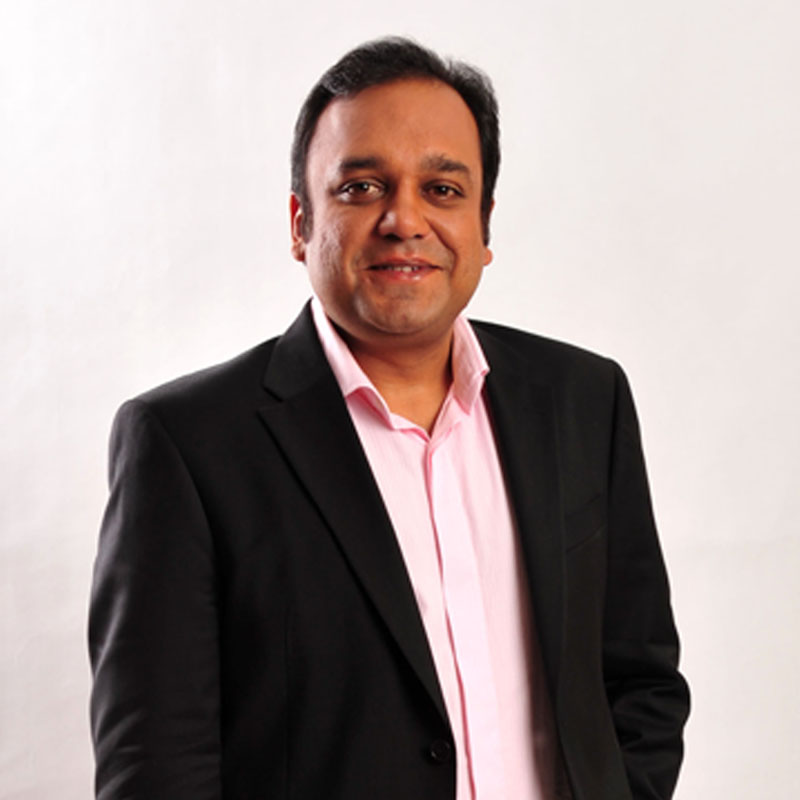
    Tarun Katial has many notable achievements to his credit. Among them: being one of a bunch of  advertising media professionals who  made an effective and successful transition to broadcasting. As programming head of Star Plus, he ensured that the network stayed on top of the viewership ratings in the last decade, before he shifted to Sony Entertainment (now SPN TV).

    But what has kept him busy over the last decade is radio, followed by TV, at the Anil Ambani group owned Reliance Broadcast Network Ltd (RBNL). As CEO he is responsible for the nationwide radio network under the 92.7 Big FM brand and two successful channels – Big Magic and Big Ganga. It is with the last two that he has disrupted the broadcasting ecosystem by building audiences for the two niche channels and making them profitable.

    Indiantelevision.com had a conversation with Katial who spoke about the selloff rumours, his radio journey, benefits of DAS Phase III and trends in television content.  

    Excerpts:

    These days whenever we read we read about the network, the one canard that comes up is the sell off of RBNL. Is there any truth in the entire rumour?

    We are a 10-year old brand and the journey has been very interesting. At this stage of our brand life cycle we look for opportunities to partner with different people. We have been in the process of exploration for sometime now but there isn’t anything definite about the option that we are exploring. Only time will tell where it goes.

    You are the one at the helm of a television channel as well as a radio network. Both are placed poles apart. As a professional, how do you manage the two roles?

    I draw motivation from my consumers and I think it’s an interesting time where consumer and media are concerned…where the content is concerned. We see ourselves as a platform, as a content rich company, and we look to evolve as a company which can stay ahead and map consumer trends as much and as far as possible. It is also hard but interesting as how can you differentiate yourself from everybody else in the market as there are some media companies which are doing excellent work and it becomes a very tiring task to be able to build a product which can actually stand out.

    And now you have been doing it since a decade? What are your key observations over this journey?

    I think consumers have incredibly changed. From time where we started feature phones or smart phones were way away. Apple, Blackberry were not even there to now where everything is smart. You can’t hope that a consumer will latch on to something unless you’re unique, you are value creating, you have a point view and you have place in his daily life and media consumption habits. Until you are cutting edge, sharply focussed and you stand for something you cannot make progress.  

    Do you think the art of storytelling has also changed over the years when it comes to radio?

    We have really evolved as a network and it has taken a lot of time and effort in creating some of the content pillars we have. Yes, the art of storytelling is very rich now. Whatever you do it has to be in depth. If you look at some of our shows like Suhaana Safar with Annu Kapoor whether its Nayak with Sanjeev Srivastava or its Arth or our National breakfast show with Siddharth, each of our shows rely on a huge amount of research and consumer insights.

    Are you happy with the way the industry is evolving in terms of advertising?

    I think the advertising industry has discovered radio from the past three or four years. Every single activity is extremely active on radio. People have seen distinct convergence of their business through radio advertising today. If you look at the national category to local categories, FMCG (which is very number oriented and reach oriented) to the real estate business  – all have discovered radio as their advertising objective.  

    What now for BigFM?

    We are interested in more radio stations coming up. We are exploring how we are going to play them out. Whether we are going to come up with the  retro format in some cities or local format in many cities. So yes we are working on them. There are some interesting markets including Pune, Nagpur, Lucknow which is a very old radio market.

    As we spoke about phase III and now let’s shift our focus to the other phase III which is the DAS Phase III? Has it really happened? Do you see any difference?

    The court cases apart, cable TV digitization has been very, very encouraging. Whatever the remaining pockets will get covered sooner the later.  I think there has been certain amount of innovation from the DTH end. We have seen some very different packaging options coming from the DTH players to cater to the market. Pre-paid options, small ticket size packaging – entry level packaging has been introduced by all the DTH players which is encouraging. The other big encouraging thing is even a more consolidated push in the free-to-air and free dish market. The current FICCI estimates now put this at 30 million which probably will be double that of any other operator. Phase III pushed free TV deeper and our estimate is that  if FreeDish was to start doing regional entertainment, which now it has started to do, this could lead to very polarised Pay TV- free TV scenario. I envision there will be three buckets: one is cable in the main metros, secondly, it will be DTH largely national and then there will be free TV which will be again across metros, mini-metros and small towns.

    How much is the BARC rural roll out a factor behind the separate Pay TV and free TV markets?

    If you look at TAM numbers of free TV they were very encouraging. Some of the TAM estimates for urban on free dish were almost 50 million this year. FreeDish is not a rural phenomenon alone. Yes it has a lot of push in semi-urban areas but it has significant reach in metros, mini-metros and all sorts of strata. We have ourselves seen a 13 per cent reach increase in a city like Delhi.  

    If we go back to the discussion regarding Bhojpuri, is there a market only in Bihar and Jharkhand, or is it across India?

    So we have done lot of work with a large section of the Bhojpuri community across the country. If you look at Ganga’s number even in Mumbai, it is very high and strong. To everyone’s surprise Ganga can actually beat some of the local channels in Bombay. And the truth is there is a population of  Bhojpuri immigrants across the country today. There is Punjab, there is Gujarat, there is Bombay there is Kerala and there is Kolkata, you will see a lot of Bhojpuri speaking people and they are very language loyal wanting to consume entertainment and content in their own language.

    From a brand perspective have you seen advertisers getting on board with a national audience perspective or only those catering to Jharkhand and Bihar in Bhojpuri?

    Actually that depends on the advertiser’s objective, when they look for deep penetration in the market, they tend to influence Bihar and Jharkhand. When they are looking to get their messages nationwide, yes there is large spillover that they can benefit from, and they do benefit from. Initially brands spread the budget in regional then spread across the country.

    Be it Akbar Birbal, be it Chutki, be it Rasoi ki Rani, there is certain amount of differentiated programming. From where do you spark this programming strategy?

    The backend of our programming strategy is good people. We have a very good research team, research desk who actually snap in consumer trends. We entered the entry to television business late and we realized that it is very important for us to look into these trends and identify those which would help us stand apart from the large players. That’s why we tend to do things differently, we tend to do things remotely and we have been fortunate to have a lot of people around us and have been able to do good work.

    In terms of your team structure, are you in that perfect place you want to be?

    Yes, I think we are never perfect, imperfection is also beautiful.

    Has TV storytelling changed since the growth of digital?

    I think storytelling has always changed according to the target audiences we are talking to. There are three or four aspects. One, people love stories that are page-turners. So the level of hooks that you need in stories today are far more than you needed earlier.

    It’s an impatient audience at this time. You can’t hope to hold on to audiences with simple story telling any longer. So it’s very layered, it’s very fast-paced and it’s very hooky.

    When it comes to characters, there are two or three things to them. One thing, why people want realistic characters, is because that at some level they need to be inspirational for them. So it’s a mix of two other people they look for. In cinema you can get away with being realistic but in television you need to be slightly loud and over the top.   Increasingly viewers are looking for characters that they can relate to but also stand out.

    But the quality of storytelling has certainly improved, the quality of production has improved, so have production costs also gone up?

    I think production costs are steady…basically production cost has stayed flat. I think that’s not because of storytelling it is because of technology. Technology has really helped to bring production costs downward. Editing facilities have really helped. Linear and nonlinear facilities are easier and quicker. Standing infrastructure on sets and technology have helped put budget into better talent in writing, better talent in acting, direction and better costumes. Production cost has stayed flat but the composition of the production budget has changed.

    Is the equation of advertising revenue and production costs profitable at this stage without growing any numbers?

    Yeah, I think the margin is there, definitely profits are there. I think all the businesses today have become far more profitable than they used to. We broke even on Ganga much sooner than we thought. The cost mixes are much better than it used to.

    Since you have Big Magic and Big Ganga, one thing that we see on every channel now a days is Naagin, How far are you from a Nagin show in your channels?

    I don’t think we are looking to get to Naagin. A bunch of guys have done Naagin and they have done a wonderful job.

    Is it a trend that something gets successful and then everyone follows it?

    Yeah I think everybody does it all over the world. One horror show starts many follow, one crime show starts many others start to make them. It’s a trend. People do enough of the genre and consumers will see that what are its possible variants, then they move to the next one.

    Do you think somehow content is getting a little less progressive?

    I think content is getting more innovative and more lateral. People are thinking of different ways of storytelling. We have to put our imagination around this. You know if we were to call Nagin regressive then we should also call Vampire Diaries regressive but we watch Vampire Diaries then we don’t tend to call it regressive.

    All the sci-fi or supernatural that goes around in American television, we don’t tend to call it regressive because it comes from Hollywood.

    So you don’t agree to the fact that BARC data is somehow regulating what content can be watched?

    See BARC data has given a perspective as to what people want. Everybody is trying to deliver balanced content across demographics. Somebody might focus on metro somebody might be doing so on other towns. It depends on the strategy you are taking and then the advertisers will buy you accordingly.

    We spoke about your entire radio evolution that you have gone through. Are you happy with the way evolution is happening on TV? Yes on one side we are having HD discussion and 4k discussion. On the other hand nobody knows that consumer is going to pay for content as yet. So what is next with TV?

    I think we should stop thinking TV, and you need to start thinking content. I think as TV channels and broadcasters are building great content, they are also becoming content powerhouses. Whether you see what Star has done with Hotstar and Sony has done with SonyLiv or Zee has done with OZee, it’s not really about TV but it’s about content.

    I think as long as we can build content that appeals to consumers, that consumers want to consume, whether it is on time-shifted DVRs or it’s on DTH or it’s on FreeDish or on OTT platforms or apps it will work . Increasingly,  we are finding ways for monetizing these platforms.

    So, I don’t think that TV is going to go away or content is going to go away. The way uniquely TV broadcasters are structured in India that they are content companies rather than TV companies. We are largely by ourselves content companies. We commission content and run content on a made-for-hire basis. Soo TV companies in India are not going anywhere, They may be simple TV ventures or they could become video platforms or they could become multiplatform companies.

    Time is already out there, there is Voot, Hotstar, Sony Liv, oZee. We are working on one or two platforms. We are working on a separate audio platform. People will continue to consume our content in different forms and fashion, in different ways and we are going to continue to monetize that, which is not changing.

    Star has launched Hotstar, Viacom has launched Voot. What is your plan with digital?

    We are working with a couple of plans. There is definitely going to be an audio platform, on video we will most probably partner with couple of the current platforms. We are in the midst of conversations.

    Are you happy with entire OTT ecosystem? How it is progressing? Again we are giving content to all for free.

    I think that’s a customer acquisition strategy.  Most people do this at the beginning. Everybody spoke about how e-commerce is giving free discounts but you have to look at the ecosystem they have been able to create. They have been able to create a habit of people buying online and all predictions and projections are saying that this online marketplace system is going to go a long way.

    There is Amazon here. Alibaba is going to come. So yes there is an entry level cost and cost of customer acquisition that everybody goes through. As long as you can get the right mix of free vs subscription and get your customer acquisition threshold out there, you always have the opportunity to switch.

    I can tell you when we started Star in 1999, we were a free to air channel and for many years we didn’t have any conditional access system. We completed our first round of KBC and Kyuki and then we moved to conditional access and subscription came in and so on and so forth. The subscription ecosystem grew to what it has only the past 15 years.

    When  C&S started in India, it was a paid ecosystem but ecosystems develop themselves and over a period of time every model does find its feet. But you have to give customers a chance to get used to that ecosystem before you start to monetize it. You can’t say I will monetize it before the customer is even there.

    Has the TV habit been formed now that TV is celebrating now that 25 years of satellite TV in India?

    Yes subscription revenues have started rolling back to TV channels, And the numbers are pretty significant. If you look at any TV channel balance sheet, they have a significant amount of subscription revenue. It’s not small numbers, it may not be as much as they expected but it’s not small either.

    With Reliance Jio coming in, do you see the infrastructure getting better for OTT content?   

    Yes OTT platforms will thrive under Jio but what will thrive is content. There is no OTT content without good content. I think content, content makers, broadcasters like us who have content to be able to monetize and deliver them on various platforms will breathe easier.

    Future Plans?

    I think we have a lot to do. We have a serious distance to go with Big Magic. We will be the number 11 player in the GEC space. Our aim to get into the top 5-top 7 by this year for sure. So that’s a task and with Ganga we want to invest more in content and make it go international. There is a large Bhojpuri population across the world so that’s something now we are working upon.

    With radio we have 14 stations coming up. That’s more than a station a month. We are getting some India dark regions like the Northeast which we are extremely excited to discover. Indian media has not really penetrated into the Northeast.

    Has digital become one of the prime spending platforms?

    Yes, we do spend increasingly on digital but we also spend across platforms. One platform we don’t spend too much now is print because we have not seen any traction from it.
     

  • Mukesh Ambani 20 billion investment plans in television and telecom

    Mukesh Ambani 20 billion investment plans in television and telecom

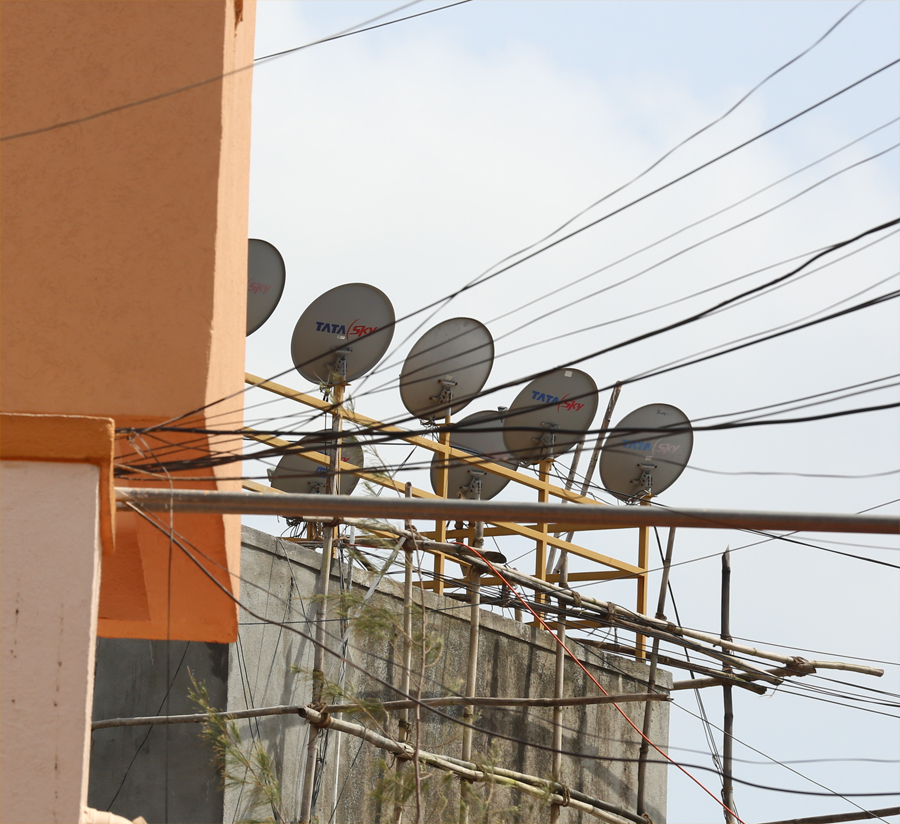
    MUMBAI: Mukesh Ambani’s recent focus in the telecom sector hasn’t gone unnoticed, where he has spent at least $18 billion ($1,800 crore) on 4G telecom brand RJio. Industry insiders observe that Mukesh Ambani’s aggressive take on the telecom and television sector may also pit him against his brother Anil Ambani and his company.

    Now reports are out that he intends to spend another $2 billion ($200 crore) over three years to capture TV sets as he eyes an opportunity to use his financial clout in what is a highly fragmented sector.  To put matters into perspective, Mukesh Ambani’s television unit has been aggressively signing up deals with hundreds of small players in a street-by-street effort to root out any final hurdle in its cable TV drive, reported Reuters.

    Industry observers note that this could also snap up rival operators as part of that push, those sources and analysts said, driving tie-ups in a crowded sector that includes Hathway Cable, Den Networks and Siti Cable.

    Industry sources quoting un-named Reliance officials say that Reliance’s mid-year goal of 1 million (10 lakh) subscribers would rise to 5 million (50 lakh) homes in the medium-term. Within three years, the aim is 20 million (2 crore).

    With only 20 million (2 crore) homes in India having a broadband or another Internet connection, it goes without saying that there is a huge growth potential in a country with a population of some 1.3 billion (130 crore).

    “Once the company manages to crack the last mile… it will be a formidable player,” Den Satellite Network MD Rajev Gavi shared with Reuters.

    Reliance executives say it will offer a bundled package with hundreds of channels and video-on-demand in high definition, along with broadband Internet, a landline phone and home surveillance. It will also offer Jio Play, its version of the Netflix movie and TV series streaming service.