Tag: Andy Knee

  • “ISL teams to breakeven in two-four years”: Andy Knee

    “ISL teams to breakeven in two-four years”: Andy Knee

    International Management Group or simply known as IMG has been a world renowned leader in sports, fashion and media management with operations in more than 30 countries.

    In 2014, IMG was acquired by WME a global entertainment and media agency. In India, the company has formed a joint venture with Reliance Industries. The JV was formed between good buddies Mukesh Ambani and former IMG chairman Teddy Forstmann who died of brain cancer in November 2011.

    IMG Reliance has signed a 15 year partnership with the All India Football Federation (AIFF) to improve and popularise football in India beginning from the grassroots to the professional level. One of its initiatives is the Hero Indian Super League- an IPL styled tournament for football that is slated to begin from 12 October 2014.

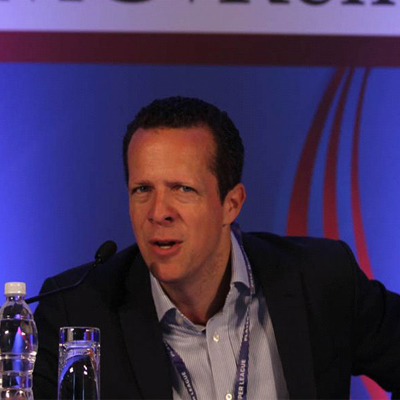
    Present at the international and domestic player draft was IMG football vice president Andy Knee.  His previous stint was at electronic giant Phillips where he was the head of sponsorship. In 2006 he was appointed as director of the Football Championship League where he was responsible to raise the profile for the 24 clubs and improving the competitions revenue.

    Though the league is highly pressurising, one will find Knee always at ease and silently observing team owners replying to hard hitting questions from journalists. On the day of the international player draft, Knee speaks exclusively to indiantelevision.com’s Herman Gomes.

    Excerpts

    The league will kick off in October this year. How is IMG-Reliance developing the league for the first time in India?

    We are doing something unique. We are taking a lot more risks than we typically do in a project. So we are investing in buying rights, in the infrastructure, marketing and putting up an expert team of football from India and abroad to help galvanize the league for the first time.  We want to make the Hero ISL an astounding success and generate value and return more importantly for our clubs and the league to be a catalyst for football to explode interest and participation here.

    In China, IMG has stake in the Chinese Football Association promoted Super League. Commercially the league there is secure and financially controlled by the government. Why have you chosen a private drive model here?

    What we do in China is very different. There we have a 10 year deal with the Association where we represent rights and sell those rights to sponsors. They have an existing league and therefore we do not have an ownership position in China.  IMG works with them to help generate more revenue from the league. We also advise them on how to improve their administration and governance of the sport. In India it is very different. It is not typical of what IMG normally indulges in. Usually we have clients or we work with or on the behalf of partners.  We have had business in India for a very long time and we have been successful in the creation of the IPL. We now looked at football and thought how is it possible that a country of this importance and size does not have advanced football infrastructure industry? So our former owner Ted Forstmann along with Mukesh Ambani discussed it together and decided to do something great in football by coming up with the ISL.

    China has certain advantages. They have got some great stadia and they are fortunate from that point of view, but China hasn’t been in the world cup in recent memory.  Japan and Korea have also risen fast and it proves it can be done. So I think if everyone is pulling in the same direction it will be a very big help.

    IMG has a presence in almost 30 countries. What are the global learnings you have put in to develop the sport in India?

    Globally, we have been representing TV, sponsorship and licensing rights. We have also worked with player business, TV production, hospitality, ticketing, commercialisation of stadia over multiple markets.  We bring that experience to India.  Frankly speaking only some of it is relevant here. For example we helped the financing and seat sale of the Wembley stadium. Is that relevant to India? Unfortunately not! Sadly we are away from our teams being in a position to invest in a significant new stadium. I hope that opportunity comes but that’s a little bit down the chain. So we take the expertise we have all gained through working many years in football and apply those bits that are relevant for India.

    Sports fans and analysts are of the opinion that the ISL will reduce the I-League tournament to an inconsequential format. What are your thoughts?

    I understand that when a new format is introduced it can be seen as a threat to the established leagues. My view is that it can’t be a threat to the I-League because the football pie in the country is very small at the moment. I do not know what is the size of the football industry here but all I know is that it is very small. We could all fight over a small slice of the football pie but actually there is just not much there to get there. We all need to make that pie 100 times bigger and there is plenty to go around. So it is about the game at the moment. It’s not about who gets what bit. Co existence can happen very easily but I hope the ISL will popularise the sport unbelievably. So people would want to watch Delhi Dynamos and then go and watch Mohun Bagan at different time of the year. They are just football fans who watch the Premiere League but they also love the fact that India has a real football league they can support and be proud of.

    How much will IMG-Reliance be investing for the infrastructure of the game in India?

    Well we are not spending too much money on the grassroots facilities. I would love us to be in a position to do so but we are not going around building pitches. We need some far better football facilities but we are not doing that. We hope that will happen organically because people are getting greater interest in football so more space is given to football. Whether its I-League or ISL teams there will be greater money coming for the sport but that money will be reinvested for the football ecosystem to grow, develop and expand.

    It is understood that each of the eight teams have to annually spend Rs 2 crore to invest in grassroots programme to develop football. How will that amount be utilised?

    This is what the teams have to do. Teams bought the rights to run their respective teams and the money they have paid is for a 10 year period and they pay it in 10 equal slices in one year. On top of that there is a requirement to invest in grassroots. This is the requirement we put on teams but at the same time actually we probably didn’t need to because all the teams understood how important this is. The teams know they have to invest in grassroots, in local football programmes in local communities. The teams have got to spend on two requirements-  grass roots and  marketing. The teams do not have to send us that money. Absolutely not! That’s for the teams to build their brand, popularity and love of the game in their local cities.

    IMG ran a three day Grassroots Developmental Programme in Kolkata where we conducted theory as well as practical sessions. We are going to roll that out farther to other cities and teams will do their bit in local cities.

    What is the age group you are planning to target through the Grassroots Developmental programme?

    Typically we look towards the age group of 11 or 12 year olds. This is not certain but we may go a little older because the U-17 World Cup is a very focal point. The teams and we would like to play our part in helping India to produce a team to be proud of in 2017.

    Will the Hero ISL have a league ambassador?

    We had talks if we wanted a league ambassador a big name who just works on the behalf of the league but we decided not to. The teams have got some great owners and some great marquee players so there is no magic celebrity we are planning to unveil. We want the league owners to stand out and the teams themselves. Yes we know we need some stardust but we have people like Ranbir Kapoor and Sachin Tendulkar to do that.

    How did the league go about deciding a fixed price for each of the players?

    Well we had a base price for each of the players that the teams agreed. There is pressure on the business models of the teams. They will lose money for the first couple of years but this is an investment. But we agreed on a price that will make the teams happy. This is the sport where if you want the best you have to spend eye watering sums of money. We found a point where we said not all of these guys are a big name but they are going to be of very good quality. So we will get great playing products and market these guys so that Indians appreciate. They might not be the Beckhams , Messis or Ronaldos but these guys are fantastic players in their own rights. But more importantly than that we need to showcase Indian talent and reassure the country and sports fans that we might be 150th in the FIFA rankings but there is talent here and reasons for real optimism about the future.

    India will be hosting the under 17 World Cup in 2017. What is the Indian government planning for the World Cup and how will it be contributing to the league?

    From what I have heard the government has some plans in terms of upgrading the stadia. I assume the stadia will be good. Well we have got some great team owners and known companies who are behind the league. We have got support of the government and so there will be greater investment in the sport from that point of view.  It’s funny how 20 to 30 years ago you could find the typical teams in an U 17 World Cup like England, East Germany, France and Spain. But now, those teams can come from anywhere. Everyone is developing football unbelievably fast and India has a big gap and it’s not like we can close it. With the third highest number of people playing football (I think only Germany and the States has more active footballer) Don’t tell me there is no talent here. Of course there is talent. We just need to put the processes and infrastructure in place in developing the talent.

    By when do you see the teams breaking even?

    We hope that will happen in two-four years and that depends on certain factors. If India properly embraces football and fans turn on their TV and come to the stadia, it will happen faster. If the reception takes a little bit longer to get warmed up it will happen a bit later. We realise this will not be a success overnight. We will love it if it explodes interest in the first year but at the same time there is the acceptance that Rome wasn’t built in a day. So every team and the league knows you have got to have some patience here. 

    How do you see Star’s association helping the league and will there be localisation of the sport in terms of commentary?

    This is a sport that must succeed on TV.  We have got the most powerful Indian TV network that is going to publicise the ISL across all its channels in different languages.  We have got a partner that really believes in it and has invested significant money. There will be some localization, I am sure, but I do not know how many languages. Star is desperate to take the game to people across India. They have got their skin in the game and their bosses in the states are looking at it closely and there is pressure on us too and we have a partner that is very committed for this league to succeed.

    On a parting note what message would you like to give to football fans in India?

    Tune in, come and have a look and enjoy it. I think this is going to be something that India has never seen from a quality and show point of view and I hope people embrace it, whether they watch 20 minutes of one game or whether every single game of the ISL.

  • Hero Indian Super League ushers in football revolution

    Hero Indian Super League ushers in football revolution

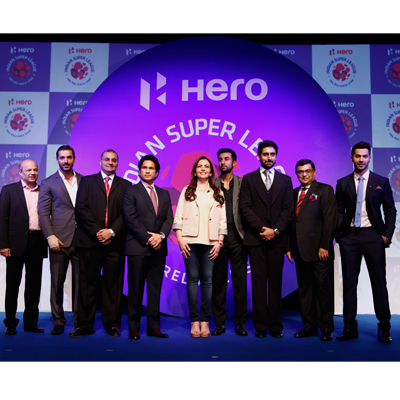
    MUMBAI: The most anxiously awaited Hero Indian Super League (ISL) finally unveiled its official emblem at a grand event attended by the organisers and franchise team owners. The league also saw the unveiling of its official line- ‘Let’s Football.’


    At the beginning, IMG Reliance chairperson Nita Ambani said, “ISL hopes to act as a foundation in creating an ecosystem to nurture talent and make our own national football heroes.” She also added that the Reliance Foundation plans to reach out to 10 lakh kids in India for the first year to help them play the game of football at the micro level.


    ‘Let’s Football’ – is an apt fit to its ambition in connecting with today’s youth and creating interest in millions to play the sport professionally. The emblem with hexagons combined to form a football symbolises collaboration of passion, energy and enthusiasm among its stakeholders. Colours chosen to represent the league conveys the values and emotions, with red signifying the energy, passion and action, while blue exudes confidence, trust and responsibility; both seamlessly combining to represent the league’s values.


    Star India COO Sanjay Gupta commented, “This is the birth of a footballing nation. This is something that has never been attempted before and marks a historic turning point for the future of football in India. What you will experience is a world class spectacle-in stadium, on television, on your mobile screen and across all digital devices.”


    “We plan to attract and nurture the best of Indian talent to play with marquee players selected from 20 countries, spanning five continents,” added Gupta.


    The event began with Nita Ambani leading the eight league partners to sign a pledge- committing to the vision of ISL, which is to bring a football revolution across the country.


    IMG football vice president Andy Knee said, “The potential for football in India is truly immense and the ambition for the league is to spark a revolution for the game so as to encourage teenagers, even hundreds of millions of Indians to start playing, following and watching the sport.”


    Bollywood actor Abhishek Bachchan was declared as the new team owner of the Chennai franchise. Joining him were other owners like Sachin Tendulkar, John Abraham, Ranbir Kapoor, Sameer Manchanda, Utsav Parekh, Kapil Wadhawan, Team Goa ambassador Varun Dhawan among others like AIFF president Praful Patel.


    Each of the teams said that they would help develop football at the grass root level, the announcements of which will be made in the weeks to come.


    Scheduled to kick off on 12 October 2014, the Hero Indian Super League will see some of the greatest players in action from the world of football.

  • Hero ISL international draft sees buys worth Rs 16 crore

    Hero ISL international draft sees buys worth Rs 16 crore

    MUMBAI: When a sport needs to be grown, money needs to be spent. And in keeping with this, Hero MotoCorp Indian Super League (ISL) saw close to Rs 16 crore being spent on international players who were a part of the draft and were picked by eight teams in seven rounds.


    Each team was given the first slot to pick their players as the rounds progressed. The football league will be played from 12 October 2014 to 20 December 2014.


    Team Goa proved to be the most generous as it spent Rs 2.46 crore on seven players. Team Chennai (which is the new team introduced in the ISL after Team Bengaluru backed out) shelled Rs 2.34 crore on its seven players. Next in line was Atletico de Kolkata that selected six players for Rs 2.17 crore. Team Mumbai FC picked seven players for Rs 2.10 crore. Kerala Blasters decided to spend Rs 1.98 crore on its seven international players. Pune FC bagged five players for Rs 1.75 crore. Tying at the last spot were teams Delhi Dynamos and North East United that spent Rs 1.62 crore each on their respective five players.


    IMG Global football vice president Andy Knee said, “The teams are very happy with the international players they have picked up. We are quite satisfied with the quality of football we have introduced here in India.”


    A total of 56 international players, 49 from today’s draft and seven being contracted by the clubs directly, were drafted among the eight ISL clubs. Earlier, in July 2014 the clubs had selected 112 Indian players to complete the domestic players’ mandate. “The 49 players who went into the draft today have had close to 9000 games in between them,” added Knee. “It only speaks about the experience and the competition they will bring into the Hero Indian Super League,” he maintained.


    All India Football Federation general secretary Kushal Das said, “Indian football needs a new dose of adrenaline. We are extremely excited and hope the Indian Super League will provide the dose of much-needed visibility to Indian football. The focus at present is on youth development and grassroots which forms the base of the pyramid. But at the same time, the dose of commerce stays quintessential at the top of the pyramid. Both are interlinked to each other,” he stated. “We hope ISL will be the game changer for Indian football,” added Das.


    For Football Sports Development CEO Anupam Dutta, the international player draft has marked an important milestone in the Indian football. “A league’s success depends on the clubs and we are happy to have equally excited and committed partners in this journey. And against the backdrop of the international player draft, let’s not forget that we have a very good set of Indian players in the league as well,” he opined.


    Star Sports business head Nitin Kukreja commented, “We plan to unleash a sporting revolution in India. It’s not just cricket, we plan to take football, kabaddi and other sports to greater heights too in India.”


    Following are the names of the different teams along with their compositions:


    FC Pune City – Bruno Cirillo, Emanuele Belardi, Ivan Bolado Palacios, Saidou Mady Panandetiguiri, Omar Andres Rodriguez Martinez, Andres Felipe Gonzalez Ramirez, Park Kwang-IL.


    Atletico de Kolkata – Borja Fernandes, Jofre Mateu Gonzalez, Jose Miguel Gonzalez Rey, Arnal Llibert Conde Carbo, Sylvain Monsoreau, Jakub Podaný, Apoula Edima Edel Bete.


    Kerala Blasters – Michael Chopra, Iain Hume, Victor Herrero Forcada, Erwin Spitzner, Pedro Adriano Veloso Gusm?o, Cedric Hengbart, Raphael Romey.


    Mumbai City FC – Diego Fernando, Jan Stohanzl, Francisco Javier Fernandez Luque, Pavel CmovS, Johann Letzelter, Andre Matos Dias Pereira, Ilias Pollalis.


    North East United – Isaac Chansa, Cornell Glen, Massamba Lo Sambou, Do Dong-Hyun, Guilherme Felipe de Castro, TomaS Josl, Luis Alfredo Yanes Padilla.


    Team Chennai – Bernard Mendy, Cristian Hidalgo Gonzalez, Gennaro Bracigliano, Bojan Djordjic, Bruno Augusto Pelissari de Lima, Jairo Andres Suarez Carvajal, Eduardo Silva Lerma.


    Team Goa – Miroslav SlepiCka. Jan Seda, Bruno Filipe Tavares Pinheiro, Youness Bengelloun, Miguel Bruno Pereira Herlein, Gregory Arnolin, Edgar Carvalho Figueira Marcelino.


    Delhi Dynamos – Mads Junker, Morten Skoubo, Bruno Herrero Arias, Gustavo Marmentini dos Santos, Marek Cech, Pavel EliaS, Henrique Dinis Oliveira Dias.


    Click here for the international players pool list