Tag: Andrew Whitaker

  • ‘We are now in a very strong position to overcome any new challenges in the Indian marketplace’ : WWE International executive VP Andrew

    ‘We are now in a very strong position to overcome any new challenges in the Indian marketplace’ : WWE International executive VP Andrew


    Earlier this year to better reflect its business, World Wrestling Entertainment rebranded as WWE. Among other things, it is looking to develop new television products including scripted, non-scripted and animated programmes as well as the launch of a new WWE Network in the next 12-18 months.


    Recognising the importance of India, the company this month set up an office here with Rukn Kizilbash as its head. The company has a strong association with Ten Sports and is also exploring possibilities of putting its content on regional channels.


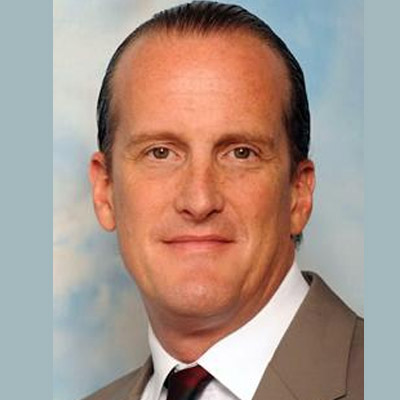
    In an interview with Indiantelevision.com‘s Ashwin Pinto, WWE International executive VP Andrew Whitaker talks about the company‘s growth plans in India.


    Excerpts:

    You recently opened an office in Mumbai. Given that this is an important market, why did it take so long?
    India has been one of our most successful television markets for a number of years now. In line with our global strategy, since we have begun to introduce our other lines of business, the time is now right to begin building a more local presence in the market. The Mumbai office is the first step of that process.

    Could you talk about the opportunities and challenges that you will face in India?
    With our new Mumbai office and Rukn Kizilbash in place as general manager India, as well as our strong TV penetration with Ten Sports and other lines of business, we are now in a very strong position to overcome any new challenges in the marketplace.

    We have an extremely loyal and extensive fan base in India and are highly confident about the opportunities open to us in this important market.

    How have you built upon the relationship with Ten Sports?
    Ten Sports is pivotal to our success in the market. We deliver fresh original content 52 weeks of the year and are able to provide new content to meet with the growing demands in the market. The promotional strategy we deploy with Ten Sports includes implementing regular local consumer promotions and bringing WWE Superstars to market every year.

    Are you talking to regional channels regarding having your content being seen there?
    We are working with Ten Sports to see if we can make some content available on regional channels.

    Live events will play a big role in terms of growing the fan base here. What can we expect?
    We have held live events in India in the past and I think this is something we will consider for the near future.

    “We are working with Ten Sports to see if we can make some content available on regional channels”

    You now have a talent development department. Is India going to be a part of this?
    We have seen a number of non-American talent prosper within WWE, from The Great Khali to Rey Mysterio and more recently Alberto Del Rio, Sin Cara and Sheamus. In fact this year we signed a new talent from India, Jinder Mahal.


    This success indicates a significant appetite and opportunity for us to actively recruit international talent and it is an area we will continue to invest in across all markets, including India.

    How have you grown the studio side of the business over the past couple of years?
    From 2010 through 2012 we have a full slate of nine movies, four of which have been released so far. These are ‘Legendary‘, ‘Knucklehead‘, ‘The Chaperone‘ and ‘That‘s What I Am‘.


    We have successfully deployed a deal by deal model which allows us to achieve structural efficiencies per movie. This model has seen our movies released through multiple platforms around the world including theatrical, home video, pay-per-view, VOD/Pay TV and Free TV. The remaining releases for this year include ‘Inside Out‘ and ‘Family Reunion‘.

    Is there a chance of doing a film co-production in India?
    It‘s certainly something we may consider. We enjoyed a successful partnership last year with Viacom whereby one of our top WWESuperstars, The Great Khali came runner up on Bigg Boss.


    There are a number of parallels to be drawn between WWE and Bollywood and we see great opportunities for us in this area.

    What strategy has WWE followed to grow the brand globally over the past couple of years?
    Our global growth strategy on a market by market basis is first to bring WWE‘s television programming into the marketplace, which is usually the starting point to begin engaging fans and bringing our unique form of entertainment into people‘s homes. Once we have established a strong television audience, we then look to introduce our other multiple lines of business, from live events where fans can see our Superstars live and in person to our vast lines of consumer products, digital media and publishing.


    WWE is a global business, seen in more than 145 countries in 30 different languages, and key to our successful global growth is our local office presence. We have offices in Stamford, New York, Los Angeles, London, Shanghai, Singapore, Tokyo and now Mumbai, which are fundamental to our local level operations.

    Has there been any change in terms of how fans in India and globally perceive WWE?
    I think that our fans have always understood that WWE is fundamentally an entertainment business. In India our partnerships with the likes of Ten Sports, Sify and Mattel provide our fans with multiple brand touch points across TV, online and consumer products and our fans have responded well to our evolution and growth as a family-friendly integrated entertainment business.

    To what extent has the share of revenue from international markets grown? Which are the top three markets?
    When we set up our first international office in London in 2002, international revenues were worth $32 million. That figure has now grown to over $133 million.


    Outside of the USA and Canada, our biggest markets are the United Kingdom, Mexico and France.

    In terms of your various divisions, which has shown the healthiest growth and why?
    Internationally, our television business continues to grow and remains our most profitable division. We have also expanded our global live events business, now scheduling more than 70 international live events on an annual basis.


    Since 2006 international consumer products revenue has doubled, meaning that the retail brand value of WWE now exceeds $1 billion per year globally.

    In terms of the new business model, which are the key focus areas?
    There are two key components to WWE‘s recently announced brand expansion plans. First, the company will maintain a strong focus of growing its core business on a global basis and announced that Paul “Triple H” Levesque will be heading a new talent development programme.


    In addition, innovation will be the key to the long term growth through new consumer product launches, new television programming and international growth.


    The second component will be the active pursuit to acquire entertainment content companies and the outsourcing of WWE‘s core competencies – television and film production, live event production and licensing.

    What targets has WWE set for this year?
    Internationally, our focus continues to be on the Bric markets on the back of our recent TV launches with 2×2 in Russia and EI in Brazil and the growth of our already established business operations in India and China.


    As mentioned above, our new talent development department will be another key focus for us in 2011.

    What growth has there been in terms of doing international tours and holding ‘Raw‘ and ‘Smackdown‘ abroad?
    As I mentioned above, we operate over 70 live events internationally each year and are continuously exploring potential new live event markets. In the last five years, we have held live events in 35 different countries.


    To date, we have taken our Raw and SmackDown TV events that you mention to three markets outside of the USA and Canada – the UK, Japan and Italy – and in May of this year we announced that in October 2011 Mexico will become our fourth international market to host our Raw and SmackDown TV events.

    You recently rebranded as WWE. What was the aim?
    WWE is constantly evolving and this is simply the next step in that evolution to provide a ‘bigger, badder and better‘ – as we say in our advertising campaign – entertainment product for our fans.

    There has been talk about mixed martial arts and boxing now providing more competition for your viewership globally. I would appreciate your take on this?
    We don‘t view MMA or boxing as competitors for our viewership globally. Their product is completely different to WWE. Whilst they may borrow from various elements of WWE‘s production to entertain their own fans more, what they provide is a pure sporting spectacle.


    We view our competition as any live or televised family entertainment event.

    You have stars of the past returning briefly like Bret Hart. Is the aim to reinforce WWE‘s brand value?
    We are fortunate enough to have an extremely loyal and diverse fan base on a global basis, spanning all ages. As such, WWE has the ability to bring back stars of the past and feature them in programming from time to time, thereby creating both nostalgia and new storyline angles.

    What role is the global tie up with Mattel playing in growing your licensing and merchandising business?
    With Mattel, the number one company in toys, WWE has enjoyed impressive growth in its toy revenues. Mattel‘s distribution footprint is unrivalled.


    Allied to the reality of reaching more fans and customers in more countries is Mattel‘s innovation of various WWE lines.


    New play patterns in the action figure segment as well as bringing genuine scaling mean the current line of action figures are as accurate and detailed in their depiction of WWE Superstars than ever before.

    How are you growing the consumer products business in India?
    We have announced our appointment of the specialist licensing agency Dream Theatre to undertake the task of developing a scaled up programme of branded consumer products.


    Local licensees in apparel, footwear, stationery, publishing, magazines, nightwear, underwear and novelties are due to be added over the next two years to compliment the efforts of Mattel, THQ and Topps. We anticipate direct to retail tie ups and traditional licensees representing WWE‘s business as it continues its efforts to grow distribution as India‘s retail landscape continues to change and mature.


    Piracy is a big concern especially in markets like China. How are you tackling this issue?
    WWE is actively engaged in minimising the impact of piracy and counterfeit products on its businesses. We have a robust and mature trademarks registration and protection policy.


    The company takes down sites in real time that illegally stream WWE‘s PPV‘s, which otherwise represent a significant segment of annual revenue. The company also ensures that it seizes all counterfeit goods and legally challenges those companies and individuals found guilty of their manufacture and distribution.


    Piracy is a problem all over the world and cheats fans of genuine articles. It is a cost burden for brands and limits the investment being made in new lines for those consumers purchasing the genuine and authentic branded products. We are committed to continuing to do our utmost to protect our IP in every country.

    How is WWE expanding its presence in the digital space?
    WWE has seen 1,000 per cent growth over the last year in worldwide fans to our Facebook pages. We are currently working with Sify, our web partner in India, to create a WWE branded Facebook page with a few simple but powerful goals in mind:

    To build a direct connection with our fans in the local market, create awareness of our local site (wwe.in), encourage brand loyalty through special offers and promotions, and give fans the opportunity to connect and share their passion for our brand with other fans.


    Could you shed light on how social networks are changing the equation between WWE and its fans?
    The way I see it, the rapid adoption of social networks gives a large amount of power to the fan. It is less about “selling” and more about engaging with the fans. WWE is taking a more editorial rather than a promotional approach with social networks. The key is to use social networks to entertain and inform while subtly marketing to fans.


    Are the social networks allowing you to change course and take corrective action quicker?
    Absolutely! social media gives us immediate feedback to everything we do as a company.


    We have Facebook pages for many of our products from the WWE Superstars to our merchandising and the information we receive is shared directly with our creative and editorial teams. Social media feedback is key to our future initiatives.

  • Dream Theatre is WWE’s licensing agent in India

    Dream Theatre is WWE’s licensing agent in India

    MUMBAI: World Wrestling Entertainment (WWE) announced today that Dream Theatre has been appointed as a licensing agent in India for WWE.

    Dream Theatre has secured licensees to launch WWE products across apparel, bags, stationery, gifts and novelties lines. The team will also focus on consumer promotions to make WWE products more accessible to its fan base in India.

    WWE products will be available in standalone as well as retail chain stores across the country including Lifestyle, Shoppers Stop, Hamleys, Pantaloons, Central, Crossword, More, Hypercity, Lilliput and others.

    Dream Theatre founder and CEO Jiggy George said that products will hit shelves next February-March.

    The deal is for two years and is on a revenue sharing basis. “We are delighted to partner with WWE and reach out to its superb fan base in India. WWE is immensely popular with fans of all ages and this partnership greatly fortifies Dream Theatre‘s portfolio. WWE is the second most popular sport after India cricket. Our market for products will be the Metros as well as the class A,B towns. We are targeting the kids and teens. The North in terms of Punjab and Chandigarh should do particularly well for us”

    WWE International executive VP Andrew Whitaker said, “The tremendous demand for official WWE product from our huge Indian fan base has been driven by having such highly rated television programming on Ten Sports over the last decade. A partnership with a well established and highly regarded agent like Dream Theatre is a major step towards meeting that demand.”

    George adds that while piracy is a threat for any product that is popular it is a function of lack of products in the marketplace and not having the right price points. “WWE is very popular and so it is important that products are available. As organised retail grows, piracy will come down. We are seeing this already. We expect that WWE products like T-shirts and back to school items will work well.”

    With nine hours of WWE programming broadcast each week on Ten Sports, WWE Superstars, Divas and Hall Of Famers can be seen on more than 68 million homes across the country.


  • ‘India is fast becoming one of WWE’s most important international markets’ : Andrew Whitaker- WWE president, International

    ‘India is fast becoming one of WWE’s most important international markets’ : Andrew Whitaker- WWE president, International

    World Wrestling Entertainment (WWE) has emerged as one of the strongest TV brands in India, providing sports broadcaster Ten Sports a daily diet of popular content.


    While US stays as its main revenue earner, WWE’s international revenues make up 26 per cent, or $135 million, of its total pie. UK, Australia and France are its top three markets in terms of size, but the fan base in India is growing. So is WWE’s efforts to market the property as it recently brought down one of its Superstars Kane for a promotional visit to Mumbai and Delhi.


    Despite the enormous proliferation of content in the market, WWE is a significant force within the entertainment and pop culture.


    In an interview with Indiantelevision.com’s Ashwin Pinto, WWE president, International Andrew Whitaker unveils the company’s growth plans in global markets.


    Excerpts:

    Why do you think WWE is so effective in connecting with audiences globally?
    One of WWE’s greatest strengths is that it offers quintessential American content that translates well across cultural boundaries. Developed over the last 25 years, our broad portfolio of specialised business units ranges from live and televised entertainment through to consumer products, digital media and our studios division. These business units, all marketed and distributed under the WWE brand, have made WWE into the recognised global leader in sports entertainment. The content is easy for audiences to relate to. So regardless of our fans’ culture or language, they can become enthralled in the drama, storylines and characters.

    In terms of revenue and business generated, how much comes from outside the US?
    In 2008, international revenues represented 26 per cent of total annual revenue for the WWE, equating to around $135 million. The top three markets in terms of size are currently the UK, Australia and France.

    Where does India fit in?
    Given how quickly the WWE’s fan base continues to grow in size, loyalty and passion, India is fast becoming one of WWE’s most important international markets.

    Ten Sports recently started airing WWE content in the same week as the US. Is this practice followed by most broadcasters globally?
    Yes, we aim to deliver WWE content to our international fans as soon as we can.

    Do you have a special relationship with Ten Sports?
    Ten Sports has been WWE’s television affiliate for over seven years. During this time, it has invested in successfully growing WWE’s profile across India. They are one of our most proactive and supportive television partners internationally.

    Our most important revenue generators are live and televised entertainment and consumer products. Our aim is to continue to grow in these areas, as well as in the digital and studios divisions

    The last time the WWE had a full tour here was back in 2002. How come there has not been more activity in this regard?
    WWE is broadcast in 145 countries globally. We are continuously assessing the right time to hold a live event tour in every market.


    Outside of the US, we deliver around 80 live events per year. While we do not have any confirmed tour dates for India at the moment, we hope to return in the near future.

    Has the number of tours in Asia gone up over the last couple of years?
    Yes, in line with WWE’s growth within Asia, we are also increasing our live events in the region.

    Which of your four divisions has grown the most over the past year?
    Our most important revenue generators are live and televised entertainment and consumer products. Our aim is to continue to grow in these areas, as well as in the digital and studios divisions.

    What increase has there been in revenues derived from television licensing fees over the last five years?
    Internationally, revenues generated from TV licensing fees have grown by well over 30 per cent in the last five years.

    Are you looking at other areas like licensing and merchandising to grow the WWE brand in India?
    Yes. The WWE has appointed an agency to solicit licensing opportunities on our behalf in India, allied to Mattel’s launch of WWE’s new toy line in 2010. The WWE is also exploring the opportunity to develop stand alone official merchandise stores in Mumbai and Delhi.

    WWE reported a drop in the first quarter revenues. By when do you expect to see a turn around?
    During the first quarter, WWE’s core businesses performed relatively well. It is important to note that WWE’s annual WrestleMania event (WrestleMania XXV) occurred on 5 April, 2009 and consequently will be included in our second fiscal quarter financial results.


    By comparison, WrestleMania XXIV in 2008 occurred on 31 March and was included as part of our first quarter results that same year, contributing approximately $31.3 million in revenues and 7.1 million in profit from across our various business lines.


    All in all, despite a challenging economy, WWE stock actually outperformed other entertainment companies on both stock price performance and total return basis for the first quarter of 2009. WWE was actually up 4.2 per cent on a stock price basis versus the likes of CBS, Dream Works and Walt Disney Company, who were all down.

    With the economic slowdown, how is WWE looking to manage costs more efficiently?
    Although WWE is performing relatively well in the current economic environment, as a company we are working to significantly reduce operating expenses. The changes we have made will allow us to deliver even stronger financial performance in a challenging economic climate.

    Could you shed light on how the WWE is using new media?
    WWE’s online presence is continuously growing and developing. We have more than 14 million unique visitors worldwide every month to our primary website, WWE.com, viewing approximately 22 million video streams.


    This makes us a larger site than those of professional sports leagues, such as the NFL and Major League Baseball, and in 2008 WWE was the second most searched term on Yahoo! after Britney Spears.


    We have also launched localised websites in a number of international markets including Spain, Italy, Portugal and, of course, India. In India, WWE has partnered with Sify to deliver a local Indian website. WWE content is also available to fans via on and off portal mobile platforms across the globe.

    In terms of getting in fans at on ground events and driving pay-per-view buys, who are your top three performers at the moment?
    The great thing about WWE Superstars and Divas is that they each hold a different appeal for different fans. While one fan will follow Rey Mysterio or John Cena, another will be a Jeff Hardy supporter. WWE offers something for everyone and that diversity comes to life at live events just by observing the amount of different WWE Superstar signs that are being held and merchandise worn by the fans.
    What have the learnings been from making movies through WWE Studios?
    The success proves that there is an immense appetite from our fans to see their favourite WWE Superstars undertaking movie roles for their enjoyment, either in cinemas or on DVD. It has also highlighted some exceptional talent among several WWE Superstars for applying their acting skills to the big screen.

    How do you view competition like TNA which airs on another sports channel?
    All forms of entertainment are competition for WWE as we compete for the public’s attention and entertainment dollar. For any sports or entertainment company, whether you are Manchester United, U2 or WWE, the biggest concern is the enormous proliferation of content in the market.


    However, WWE is a significant force within entertainment and pop culture. Within our specific entertainment genre, we clearly are the industry leader. While TNA is pro-wrestling, WWE is entertainment.