Tag: Andhra Pradesh

  • Intl children’s film fest kicks off at Hyderabad

    Intl children’s film fest kicks off at Hyderabad

    HYDERABAD/MUMBAI: The 17th International Children‘s Film Festival (ICFF), offering a mix of movies for the tiny tots, kicked off at Hyderabad yesterday,


    Organised jointly by the Children‘s Film Society of India (CFSI) and the Andhra Pradesh government, the festival was inaugurated by the state Chief Minister N Kiran Kumar Reddy.


    In his inaugural speech, Minister of State for Information and Broadcasting CM Jatua said children are the future in a country and have to be taken care of.


    Andhra Pradesh Chief Minister M Kiran Kumar Reddy said this was the ninth ICFF in this city of the Char Minar. He said in a country which has 54 per cent below 25 years of age and 41 per cent below 18 years of age, it is important to make cinema that appeal to the young. He said the goals should be clear since children today were competing in a global village. He said films should make children think, even as they get entertained.


    Reiterating that the CFSI had been allotted ten acres of land for a children film complex and promising that it would be ready by the next festival, he said Andhra Pradesh is the only state where children’s films were tax-free and a subsidy of Rs 3 million is given for makers of children’s films. This is because children’s films needed support because of competition from television and the internet.


    “The festival will have special features for short films, films made by children, age-wise screening of films, workshops and an open form to deliberate on the movies,” CFSI chairperson Nandita Das said.


    She said the curators have taken painstaking efforts to select the rest of the films from around the world for screening during the festival.


    The festival, which will conclude on 20 November, will see the screening of 152 children‘s films from 37 countries.


    Also present were CFSI Chief Executive Officer Sushovan Banerjee, and B Venkateshan of the Andhra Pradesh State Film, Television and Theatre Development Corporation. Also present were Mr Uday Kumar Varma and Mr D P Reddy, Secretary and Joint Secretary respectively in the Information and Broadcasting Ministry.


    The programme, which concluded with the screening of ‘Gattu’ by Rajan Khosa, also had performances by over a hundred children, the percussion legend Sivamani who was accompanied by a child prodigy, and the award-winning Prince Dance Troupe.

  • Telugu version of Bodyguard on cards

    Telugu version of Bodyguard on cards

    MUMBAI: Going by the amount of money that Salman Khan’s Bodyguard had raked in Andhra Pradesh, producer Bellamkonda Suresh has decided to remake the film in Telugu titled Ganga-The Bodyguard.

    The script of the film, which will have Venkatesh playing the lead, will be altered to meet the sensibilities of the Telugu movie buffs.

    The Malayalam and the Tamil versions of Bodyguard, directed by Siddique, preceded the Salman Khan-starrer and the Telugu version will, thus, complete the square.

    While the Malayalam version of Bodyguard had Dileep and Nayantara in the lead, the Tamil version titled Kaavalan had Vijay and Asin in lead. Bodyguard stars Salman Khan and Kareena Kapoor.

    The film, directed by Malineni Gopichand, is being shot on a rapid pace and is expected to release on 21 October.

  • Fox Star Studios’ Engaeyum Eppothum gets strong opening

    Fox Star Studios’ Engaeyum Eppothum gets strong opening

    NEW DELHI: Engaeyum Eppothum, Fox Star Studios and AR Murugadoss Productions‘ maiden co-production in Tamil that released in theatres on 16 September, has recorded an 80 per cent opening in Tamil Nadu and earned Rs 20 million.

    “The film has been released in 128 theatres across Tamil Nadu and has received very positive response from people. The feedback from all release centers is very good. We plan to start our second co-production film in Tamil very soon,” Murugadoss said.

    Fox Star Studios CEO Vijay Singh said, “The enthusiastic response to the film proves that audiences are keen to watch good cinema, even without big stars. We look forward to making more such interesting films in Tamil and other regional languages as well.”

    ‘Engaeyum Eppothum‘, a breezy romantic film with an ensemble of cast including Jai, Anjali, Ananya and Sharvanand in the lead roles. The film narrates the story of 2 couples whose lives are affected in a tragic road mishap. With Story, Screenplay, Dialogue & Direction are by M.Saravanan, the film has been appreciated for its strong message and powerful performances by its lead actors.

    Engaeyum Eppothum will also be released in major markets including Bangalore, Andhra Pradesh, Delhi and key International markets in the subsequent two weeks.

    The film is the first of a two-movie deal for co-producing Tamil films between Fox Star Studios and AR Murugadoss Productions.

  • Inox launches second property in Vijayawada

    Inox launches second property in Vijayawada

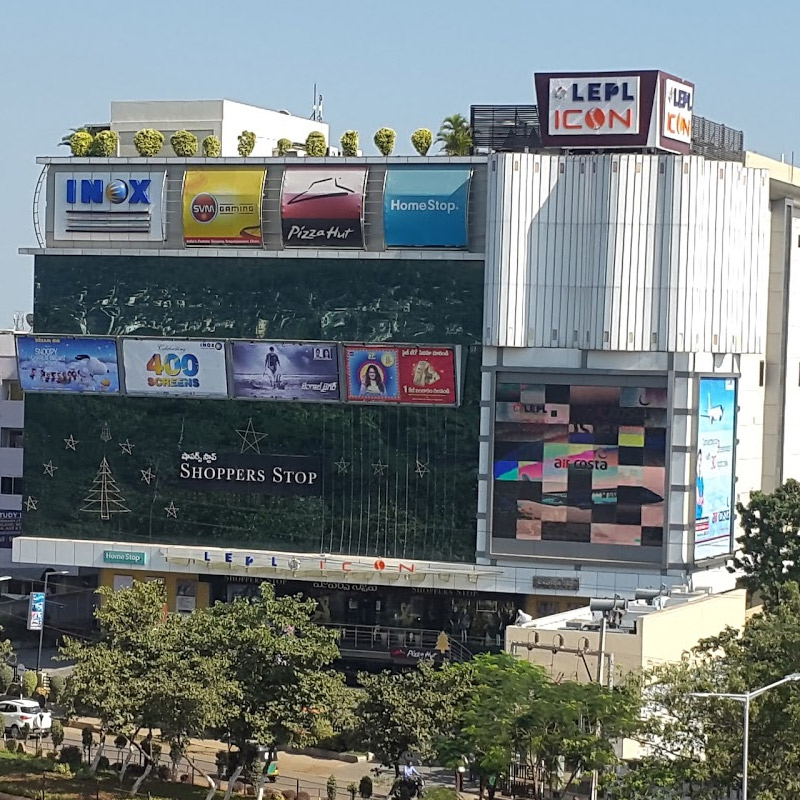
    MUMBAI: Inox Leisure has launched its second multiplex in Vijayawada, Andhra Pradesh. The new property has four screens with a total seating capacity of 1,198.


    With the launch of this property, Inox now has five multiplexes in the state with 23 screens. Nationally, Inox has 41 multiplexes and 155 screens across 26 cities.


    Inox Leisure CEO Alok Tandon said, “We at Inox take pride in bringing the best movie-going experience once again to our patrons of Vijayawada with the launch of our second multiplex at LEPL Icon, Patamata.”


    The multiplex will screen a mix of Telugu, Hindi and English movies. Some of the movies that will be screened this week are Spy Kids: All The Time In The World, Chatur Singh: Two Star, Not A Love Story, Zindagi Na Milegi Dobara, Mugguru Maha Maayagallu, Urimi, Aarakshan, Kandireega, Dhada, Naa Peru Shiva and Kanchana.

  • Future belongs to regional news channels: Ravi Prakash

    Future belongs to regional news channels: Ravi Prakash

    NEW DELHI: The future of television news channels is in going regional. However, the path is not so easy as it is marred with political influence, flawed rating system and pressure on editorial. These were the thoughts of Associated Broadcasting Company Ltd (ABCL) CEO Ravi Prakash.

    ABCL had launched a 24-hour news channel (TV9 AP) in Andhra Pradesh in 2004 and was faced with severe skepticism at that time, Prakash said.

    “When we launched the channel, many questions were raised about viability. Today, there are 17 news channels in the state, and no one is closing down,” he said.

    Prakash was giving his perspective on regional news during the 4th News Television Summit on 17 March in New Delhi.  
         
      During his keynote, he stressed that even if regional is the future; there is a big problem in terms of politicians wanting to launch their channels.

    “The entry of politicians and political money has its consequences. There are other issues also like paid news, but the biggest is political. And it just doesn’t stop there. Problem is that the leaders don the role of editors and control the content,” Prakash rued.

    He cited the example of Tamil Nadu where a leading group is affiliated to a political party. Without taking any names, he also said that at least three channels in Andhra Pradesh are owned, directly or indirectly, by politicians.

    Prakash said that the rating agency is flawed and it forces the channels to produce and serve mediocre programmes.

    “Tam is forcing the channels to air trivial content. The peoplemeters are installed in the lower economic strata and that has to be changed,” he said.

    Blaming it on Tam and demanding rationalisation in the ratings process, Prakash candidly said: “I am ashamed to say that we have had to show some content because they get ratings.”
     

  • TV news consumption in the south – TV9 Kannada and News9 Karnataka director Mahendra Mishra

    TV news consumption in the south – TV9 Kannada and News9 Karnataka director Mahendra Mishra

    The news television in each state in southern India has its own typical character that doesn‘t resemble each other. It‘s so hetergenous and state-centric that most often one state doesn‘t know how the neighbouring states behave.

    The reason is not difficult to understand. Each state has its own distinct langauage, culture and social system. There is hardly any similarity among these states except for the Idlis-Sambhar-filter coffee that they all seem to be pretty comfortable with. But again Kerala is an exception. Here coconut rules more than coffee. Clearly, it‘s unfair to put all the states in one basket and analyse their respective media behaviour in 2009.

    Andhra Pradesh

    Let‘s begin with Andhra Pradesh.The sleepy state until 2008 woke up to a new reality in 2009. Till 2008 there were a few news channels that you could count on fingers. TV9, ETV2, NTV and TV5 were the only news channels in the market. Saptagiri of DD, ETV, Gemini TV, Teja TV, Maa TV and Zee Telugu were the entertainment channels. Some of the entertainment channels telecast news too. Like Gemini, Teja, Maa, and Vissa channels had couple of news slots after dedicating major space to entertainment.

    As 2009 Lok Sabha and assembly elections neared and Tollywood megastar Chiranjeevi announced his entry into active politics, a new tsunami of news channels hit AP within a couple of months.

    The new channels that 2009 saw included Sakshi TV, HMTV, HYTV, I News, Maha TV, Studio-N, Zee 24 Gantalu and ABN Andhra Jyothy. All these channels are in Telugu except HYTV and HMTV that run English and Urdu bulletins in addition to Telugu. But these channels have very little, almost insignificant viewership.

    Most of the news channels were launched by politicians from different parties with low investment. Surprisingly, despite being recession and media companies resorting to cost-cutting, these channels not only survived but also gave unprecedented pay hikes to their employees. And all this meant that the IT state came to be known for something else – for having the largest number of dedicated news channels in the country, apart from having the largest cable TV penetration.

    There was an impression that people were hardly interested in news unless there was a controversy or a coup. But all that proved a misconception as the news channels kept garnering better TRP share than the entertainment channels in AP.

    The TRP war became so intense and cut-throat that sensationalism took a new high in the state. These channels went big on the general elections. Whether it was a road show of actor-turned-politician Chiranjeevi or a public meeting of a low-profile candidate, the channels gave live coverage to all the events.

    Despite the fact that some of the news channels were launched with low investments, they later managed to afford several OB vans and huge infrastructure in district headquarters to ensure that elections were covered live.

    Post election, the channels never ran out of their staple TRP diet, be it India‘s biggest corporate scam of Satyam Computers, tragedy with Chief Minister Y S Rajasekhara Reddy, worst-ever floods in the history of AP, months-long fight for CM post by Jagan Mohan Reddy or the Telangana issue. These major issues ensured that news channels gained numbers while the GEC channels suffered.

    2010 looks poised to witness even more news channels in Andhra Pradesh. With no local English news channel in AP, Reliance group and Deccan Chronicle are planning to come up with dedicated local English news channels. As far as potential for news coverage is concerned, there would be no dearth of news at least in 2010 as Telangana issue keeps everyone on the toes.

    Karnataka

    Unlike Andhra Pradesh, the TRP war wasn‘t too intense in Karnataka. TV9 Kannada remained the top channel not just in the state but also at the national level for a week (Tam). The Rajeev Chandrasekhar-promoted Suvarna news channel did try to make a comeback in a new avatar with a new team in place but failed to offer any measurable competition to TV9 kannada.

    The gap between TV9 kannada and Suvarna channel was as wide as before with minor flactuations intermittently. Udaya Varthegalu, run by Sun group, continued to be in deep slumber except for a certain period when Karnataka Premier League matches were telecast live by the channel, defying all the logic of being a news channel.

    It was more of a cable driven TRP war (rather than content driven which should be the case) in Karnataka as rivals made their best possible efforts to remove TV9 from its position on the cable networks in different parts of the state. They offered big monies to the cable networks to replace TV9 with their channels and succeeded in doing so to some extent but that didn‘t work in the long run.

    One of the most important tasks TV9 Kannada took up in 2009 was adopting 5 worst flood-hit villages in North Karnataka when the floods struck the state.The response was so overwhelming that the channel collected Rs 30 million for rebuilding the villages from all over the state. It was the largest collection ever for any social cause by any media company in Karnataka.

    The Reddy brothers turned out to be another big threat for the channels.They control cable networks in a large part of Bellary and neighbouring districts and most often the channels find themselves in trouble when the content is not favourable to the Reddy brothers. TV9 became a major target and it was completely cut off in the region by the Reddys when they didn‘t find the channel favourable during the state government crisis in September-October 2009.Now there are confirmed reports that they are planning to launch their own news channel that wil be officially used to build their image in public.

    As news channels became the favourite dish for politicians, they couldn‘t resist themselves from taking a plunge. For example, Belgaum‘s BJP MLA and Karnataka minister Satish Jarkhohalli decided to launch a Kannada news channel by Ugadi.

    TV9 launched India‘s first 24/7 city centric English news channel NEWS9 for Bengaluru market in early 2009. The channel was meant to provide Bengalureans the local content that makes sense for them, in addition to the regular national, international, sports, business and entertainment news. The channel was received so well that it took over as the city‘s most preferred English news channel in a very short span.

    The channel made it possible for Bengalureans to see their neighbourhood story on a massive scale and in a way where their voice was also heard by authorities who didn‘t care about anything so far. It became the city‘s voice quickly.The channel‘s growth saga continues as it plans to enter other markets in the days to come.

    Tamil Nadu

    It‘s the Marans‘ Sun network that rules Tamil Nadu, almost in a monopolistic manner. The year 2009 was no different just as before, and predictably, 2010 wouldn‘t be any different.

    The fact that the state has the lowest news consumption (around 2%) among all the four southern states, and it hasn‘t grown much over the last few years, speaks volumes of the way news television works in the state.

    This is the only state in the country where one network commands over 85-90 per cent of eyeball share in the overall TV viewership, be it news or GEC. Others did try to make an entry but in vain. This is largely due to the Sun network‘s monopoly in cable business (through Sumangali Cable Vision) across the state.

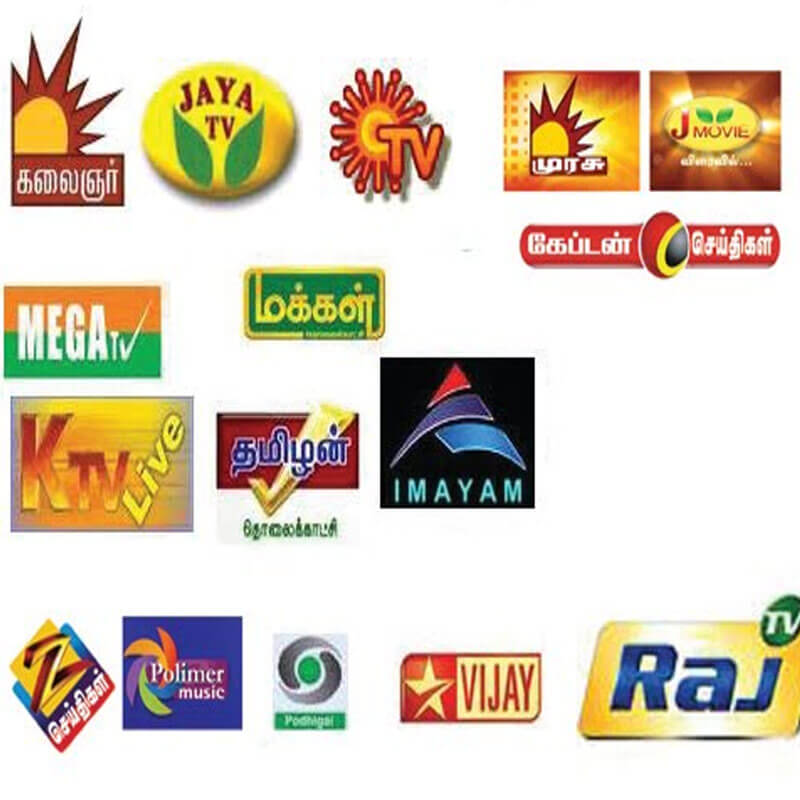
    Any channel has to be at the mercy of the Sumangali cable network. And the network has been extremely selective when it comes to distribution. It has traditionally chosen to carry only those channels which don‘t compete with Sun network. But it has been accommodative enough to carry its harmless rivals like DMK-run Kalaignar Seidhigal, Jayalalithaa‘s Jaya Plus and Raj News channels due to their internal political equations. Since these channels happen to be from different political families (except Raj News), they end up being the political tools to serve the interests of their bosses.

    Raj News did try to be an independent voice but failed, all thanks to Sumangali‘s monopoly.The crux is that majority of the Tamil viewers are deprived of choices and the Marans continue to drive the eyeballs in the state.

    The reason why the Tamil-dominated, culturally rooted Chennai still remains the nation‘s second most English news consuming market after Bangalore is that the average urban Chennaiite doesn‘t have any choice but to depend on the English news channels for an independent, unbiased story.

    NDTV-Hindu was another non-political, independent media vehicle that launched in 2009 but it couldn‘t make any significant impact.

    You hate it or love it, but you can‘t afford to ignore the Sun network, largely because you are hardly left with any choice minus this network. So the story ends here.

    Kerala

    The state always looks hungry for more and more political news. Even if there is an ordinary story, people are eager to explore a political angle to that. This is the reason why Kerala is one of the highest news consuming states not just in south but in the country (over 6%).

    In 2009, Kerala was second to Andhra followed by Karnataka and Tamil Nadu. It‘s also among the largest English news consuming states in the country.

    Other than political news, Gulf related news rules the state, especially in the northern part of the state. Looks like the trend is here to stay.

  • CNN IBN launches special series on drought

    CNN IBN launches special series on drought

    MUMBAI: CNN IBN is launching a special series covering the drought-affected areas across the nation, the worst in recent times.

    The channel, through its series Spectre of Drought, will try and analyse the impact of the drought throughout the week in the news wheel.

    The news correspondents will travel to all the major states like Haryana, Punjab, Uttar Pradesh and Maharashtra.

    The series will attempt to gauge just how bad the impact of the drought is and how much will it affect the common man in urban areas who are dependent on these rural areas for food supplies.

    Says IBN18 Network editor-in-chief Rajdeep Sardesai, “As the country witnesses a severe drought, CNN IBN brings Spectre of drought for it viewers to bring the real impact and effect of the drought in various parts of the country. The series will also look at the impact of drought on urban areas addressing problems like the food prices rising by the day.”

    The series will cover places like Aurangabad in Bihar where farmers have now begun using guns to protect the scanty and precious water in their barely functioning irrigation canals. It will also show western Uttar Pradesh, Andhra Pradesh and Haryana amongst others.

  • Raj to launch Tamil news channel on 23 June, invest Rs 200 mn

    Raj to launch Tamil news channel on 23 June, invest Rs 200 mn

    MUMBAI: Chennai-based Raj Television Network is investing Rs 200 million in its Tamil news channel which is set for launch on 23 June.

    Raj News will be the fourth channel in the network, adding to its Tamil general entertainment channel Raj TV, music channel Raj Musix, and Raj Digital Plus.

    With bureaus spread across Tamil Nadu, Andhra Pradesh and Kerala, Raj News will also have reporters in New Delhi and Mumbai. The Tamil news channel will concentrate more on the South India based stories. For foreign stories, Raj News has tied up with Associated Press.
    “We are investing around Rs 200 million and will focus on news across the southern region,” says a source in the company.

    Raj News is a free-to-air (FTA) channel and will also be available on direct-to-home (DTH) for subscribers. The channel has already tied up with DTH operators Dish TV and Sun Direct.

    Sun TV Ltd. dominates the Tamil Nadu television market with a string of Tamil channels in the GEC, movies, news and music space.

  • MPA conducts anti piracy training seminar in Andhra Pradesh

    MPA conducts anti piracy training seminar in Andhra Pradesh

    MUMBAI: On 24 February 2007 the Motion Picture Association (MPA), in association with the Andhra Pradesh Film Producers’ Chambers held a movie piracy training seminar at the Andhra Pradesh Police Academy, Himayat Sagar, Hyderabad.

    The seminar had more than 400 attendees, including public prosecutors, magistrates, police officers, as well as industry representatives 

    The seminar, with Chief Guest Justice T.Ch. Surya Rao, Honorable Judge, Andhra Pradesh High Court, as its chief guest, saw enforcement authorities and rights holders sharing information on movie piracy and efforts to take action against pirates. The seminar also focussed on the need to raise public awareness of the damage caused to local industry by piracy.

    MPA senior VP and Regional Director, Asia-Pacific Mike Ellis says, “We are delighted to have joined with the Andhra Pradesh Film Producers’ Chambers and local enforcement authorities to take action against piracy in Andhra Pradesh.

    “It is clear that arrests, prosecutions and significant custodial sentences are necessary in order to create a real deterrent to this criminal activity that so badly damages local economies.”

    MPA head of operations Col. Anil Nayer says, “The Andhra Pradesh Police and the Film Producers’ Chambers are our partners in the battle against film piracy. The seminar aims to provide more insight to the enforcement authorities on film piracy and create a stronger team.”

    MPA says that piracy in India affects the Indian film industry more than American producers and distributors. It is estimated that only 20 per cent of pirated goods infringe the copyrights of foreign film titles. The remaining 80 per cent of pirated product infringes the copyrights of domestic films. According to Government estimates, the entertainment industry loses up to 1,700 crores annually on account of piracy.

    Since the beginning of 2004, the MPA has conducted close to 1,000 raids and seizure operations in India in cooperation with law enforcement authorities. Additionally, civil raids have been conducted through court-appointed Local Commissioners in civil suits initiated by MPA member companies.

    A comprehensive study aimed at producing a more accurate picture of the impact that piracy has on the film industry including, for the first time, losses due to internet piracy, recently calculated that the MPA studios lost $6.1 billion to worldwide piracy in 2005. About $2.4 billion was lost to bootlegging, $1.4 billion to illegal copying and US$2.3 billion to Internet piracy. Of the $6.1 billion in lost revenue to the studios, approximate $1.2 billion came from piracy across the Asia-Pacific region, while piracy in the US accounted for $1.3 billion.

    In 2005, the MPA’s operations in the Asia-Pacific region investigated more than 34,000 cases of piracy and assisted law enforcement officials in conducting more than 10,500 raids. These activities resulted in the seizure of more than 34 million illegal optical discs, 55 factory optical disc production lines and 3,362 optical disc burners, as well as the initiation of more than 8,000 legal actions.

  • More than 2 lakh lines per day added to the telecom network

    MUMBAI: The New Year started with the addition of about 6.78 million phones in the number of telecom subscribers during the month of January 2007 – an average daily addition of more than two lakh lines. As a result, the total number of telephones in the country, now has gone up to 196.7 million thereby registering a growth of 3.5%.

    Almost the entire growth registered during the month was in the wireless segment – with GSM contributing 4.99 million and CDMA contributing 1.79 million. With this, the overall teledensity now stands at 17.45%. However, it may be noted that there was a marginal decrease of about five thousand subscribers in the fixed line segment.

    Andhra Pradesh, Maharashtra and Gujarat telecom circles added more than 3.7 lakh each in the GSM segment, followed by the Karnataka circle (3.5 lakh). In the CDMA segment, the total subscriber base registered a growth of 3.9% with a net addition of 1.73 million subscribers. Maharashtra telecom circle contributed the maximum to this addition. Andhra Pradesh and Maharashtra circles added more than 5 lakh subscribers each during the month.

    The growth of broadband connections improved further and at the end of December 2006, about 2.03 million broadband connections were provided and coverage of broadband connectivity by public sector service providers has reached 762 cities. The total number of existing ISP licencees is 385.

    Under Bharat Nirman Programme, out of the 66,822 villages, so far 38795 villages have been provided with Village Public Telephones (VPTs). The remaining 28027 villages are to be covered by November, this year.