Tag: Andhra Pradesh

  • BSNL, MTNL to get financial help on surrender of BWA Spectrum

    BSNL, MTNL to get financial help on surrender of BWA Spectrum

    NEW DELHI: Bharat Sanchar Nigam Limited (BSNL) and Mahanagar Telephone Nigam Limited (MTNL) have got the approval for financial support from the Union Cabinet on surrender of Broadband Wireless Access (BWA) spectrum.


    Upfront charges paid for such spectrum would be refunded.


    The objective of this decision is to provide financial support to the extent of one-time upfront charges paid for BWA spectrum for six service areas of BSNL and both service areas of MTNL on surrender of the spectrum. The six licensed service areas of BSNL are Gujarat, Maharashtra, Andhra Pradesh, Karnataka, Tamil Nadu and Kolkata.


    The amount to be refunded to BSNL is Rs 6724.51 crore and Rs 4533.97 crore for MTNL. The refund will be made to ensure support for the revival and revitalisation of BSNL and MTNL in the competitive telecom sector. It shall also help these PSUs to arrange finances to meet basic financial commitments such as operation and maintenance of their telecom network.

  • Carnival cinemas has big expansion plans in South

    Carnival cinemas has big expansion plans in South

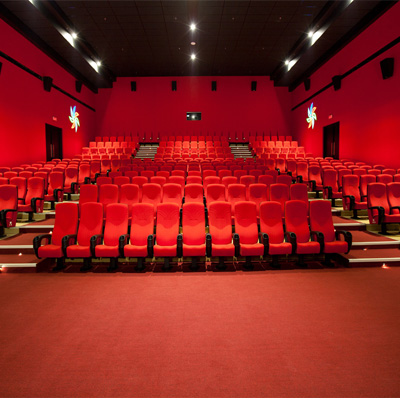
    MUMBAI: After introducing Angamaly in Kerala to the multiplex culture, Carnival Cinemas opened its five- screen multiplex in Dindigul (nearly 50 km away from Madurai) on Thursday kick- starting its multiplex business in Tamil Nadu.

    Carnival Cinemas, a part of a Mumbai-based business group claims to lead south Indian cinema exhibition by 2014, with a holding of 87 screens. Considering the number of film releases in Malayalam, Telugu and Tamil Carnival Cinemas is focused to spread its roots in the smaller cities in south.
    Talking about the expansion plans Carnival Group chairman Shrikant Bhasi said, “We have signed 50 screens in 11 districts of Kerala. By end of 2014 Carnival Cinemas will become the largest holder of screens in Kerala.”

    Apart from this it has also signed 20 screens which would be operational in TN in the next six months and about 17 screens in Karnataka with further expansion plans in Andhra Pradesh bringing world class movie experience to most of the towns in the southern states.

    Further, about 50 screens are slated to be opened in Madhya Pradesh. Carnival Cinemas plans to become a holder of 300 screens across India by 2018 and be a big player in the multiplex business segment in the country. It has adopted both organic and inorganic mode of expansion to speed up the growth.
    Currently, its multiplex in Angamaly is the hottest entertainment destination for people from all walks of life, across a wide age group and user profile. It features regional, national and international movies.

    “Carnival Cinemas tapped the secondary market and the tier 2 and tier 3 cities in south at the time when no one dared to explore these markets or to provide metropolitan cinema experience to the audiences there,” said Bhasi adding that they had also pioneered in playing National Anthem Jana Gana Mana in its theatres in Kerala and the idea was later adopted by several others.

    With a planned tie- up with a firm from Hollywood in Los Angeles, Carnival Cinemas would bring updated technology available in the world.

     “Our aim is to provide quality movie watching experience to the movie goers of smaller cities and town in the country. Carnival group with its own chain of food court and recreation facilities is aiming at wholesome family entertainment zones in most of the places where it sets up multiplexes,” added Bhasi who is confident about ruling the secondary market in the southern states.


  • AP Tourism to spend 40 crore on communications campaign

    AP Tourism to spend 40 crore on communications campaign

    BENGALURU: State tourism departments across India have become more and more visible across the Indian media and mass communication space, including the digital space. Andhra Pradesh (AP) Tourism too has decided to pile on the aggro with a budget of Rs 40 crore for this fiscal.


    AP Tourism Development Corporation (AP Tourism) conducted a road-show – “Fall in Love with Amazing Andhra Pradesh” – in Karnataka at Bengaluru in order to promote tourist places in the state of AP. The state plans to use the tagline ‘Eeverything’s possible’ in its communications.


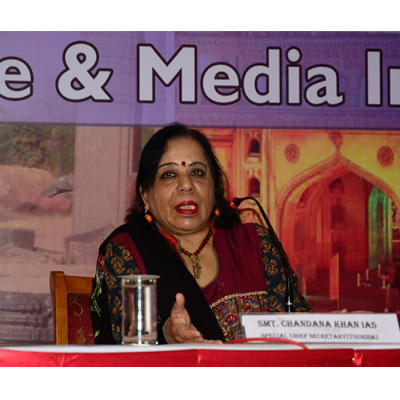
    Government of Andhra Pradesh, special chief secretary (Tourism) Chandana Khan says, “The budgeted spends for next year are likely to be higher. We use a number of agencies for creative as well as media buying.”


    “People are under impression that Andhra is only a land of myriad of opportunities and industrious people. The state has a rich culture and heritage legacy. We are putting in a lot of efforts to attract tourists to the state. A number of ideas are under consideration. With this road-show, we also look forward to have tie-ups with tour operators in the state,” she further adds.


    Hyderabad will also stage the first edition of the Hyderabad Travel Meet & India Tourism Heritage Conclave from 21 to 24 February. “While Hyderabad Travel Meet (HTM) will showcase Andhra Pradesh as a destination, bringing together all buyers, sellers and potential consumers, the India Tourism Heritage Conclave will have seminars and panel discussions on various aspects of the Tourism industry,” says Khan.


    AP Tourism has tied up with airlines to offer complete packages such as Balaji Darshan. It has also placed its facilities through Online Booking and has increased accessibility of making AP Tourism bookings in a big way.

  • Zee 24 Gantalu faces acid test

    Zee 24 Gantalu faces acid test

    MUMBAI: Change is in the air at Zee Media Corp Ltd’s (ZMCL) Telugu news channel Zee 24 Gantalu. Reason: the management has decided to restructure the straggler in the ZMCL portfolio, which has been buffeted by competition in the hyper-news state of Andhra Pradesh.

    ZMCL had set up Zee 24 Gantalu in a 50:50 association with a local politician Satyanarayanan Botsa, whose brother Sateesh Botsa ran the channel.

    “It is not viable for us to run it in its current state. We have invested heavily in Zee 24 Gantalu and have tried many different strategies to make it work. But it has been losing a lot of money,” says ZMCL CEO Alok Agrawal. “We are currently reevaluating the options before us.”

    Among the options before it is shutting down the channel. But Agrawal says no decision has been taken in this direction. “We will know clearly in a couple of weeks what we will do,” he points out.

    What is clear is that the association between Botsa and ZMCL will not continue with Zee 24 Gantalu, if one goes by what Sateesh Botsa has told indiantelevision.com. Quoting him: “It was a management call to stop the channel due to several reasons. Now it is completely a ZMCL property. As a news channel it has stopped but they (Zee) may want to continue it as another channel.”

     
    Alok Agrawal admits that the channel has been incurring losses and that they are looking at restructuring

    A surf through the Telugu news channels space shows that Zee 24 Gantalu is airing only entertainment video footage and fillers without any ticker as of now. Additionally, rival channels told indiantelevision.com that Zee 24 Gantalu staff has started approaching them for jobs. An employee stated that the management has hammered out a severance package under the direction of ZMCL CFO Dinesh Garg which includes three months pay. Agrawal however stated that this is not true and that it could be possible that employees have chosen to look for jobs, because they know that a major restructuring is planned. Zee 24 Gantalu reportedly has 300 employees working with it.

    The channel has been in the news recently because of the cases which have been filed against it for the stories it has aired – the latest one involving the Andhra Pradesh Police DGP V Dinesh Reddy. According to sources, this was one of the reasons that prompted Botsa to opt out.

    Who chose to opt out is not clear, but clearly a new chapter is about to be written in the Zee 24 Gantalu saga.

  • South Indian GECs push fiction to include Saturday

    South Indian GECs push fiction to include Saturday

    Television viewing has always been about appointment viewing – catch up with your favourite shows on a particular day at a particular time.

    While airing fiction shows from Monday to Friday and comedy and movies over weekends has been somewhat the norm, a clutch of channels down South, particularly in Karnataka, has taken a shine to fiction shows spilling over to Saturdays as well.

    Asianet Suvarna, Star’s GEC channel in Karnataka, took this route about six months ago when it started airing fiction shows for six days a week.

    Star’s Malayalam GEC Asianet followed suit with a few prime-time fiction shows extended to Saturday.

    Recently, Sun TV, the Tamil GEC from the dominant Sun Network, joined the fray with its prime-time fiction shows replacing a movie and a game slot on Saturday.
    Not to be left behind, Sun Network’s Malayalam GEC Surya TV added Saturday to the telecast of the crime thriller Satyameva Jayate and its Kannada GEC Udaya TV also traversed the same path.

    So, what prompted these GECs to include Saturdays in their fiction line-up? Apparently, the channels believe airing soaps on a Saturday is more profitable as compared to airing movies, which they used to earlier. “Producing a half-an- hour fiction serial would mean investing about Rs 70,000 to Rs 80,000 whereas acquiring a movie would mean spending at least Rs 2-5 crore depending on the movie,” says Asianet Suvarna business head Anup Chandrashekaran.

    Another factor is that while Tamil Nadu is probably and arguably the best movie market in the south, the Karnataka film industry isn’t prospering too much, according to many channel executives. Hence, neither advertisers nor the revenue from Kannada movies is consistent as compared to that from shows. Again, movie repeats depend on the premiere performance. A good movie can fetch anywhere between Rs 40 lakh to Rs 60 lakh  as ad revenues from its first telecast. This means that for recovery it has to be telecast several times but repeats don’t get the same value.

    It also states that the number of films certified from Karnataka has dropped from 162 in 2008 to 128 in 2012. Whereas, the number of films certified from Tamil Nadu has grown from 175 to 262 in the same time span.

    A month ago, Zee Kannada too joined this elite club with fiction shows between 6:00 pm and 8:00 pm extended to Saturday. “Production of Kannada films has come down and for a movie to premiere on TV takes nearly a year unlike Bollywood where the gap between the theatre premiere and TV premiere is just two or three months,” says Zee Kannada nonfiction programming AVP Balaraj S.

    Balaraj says that Tamil Nadu and Andhra Pradesh are better off since movies do well there

    The Deloitte report also stated that though Tamil and Telugu films are adopting better technology to match Hollywood standards, the same is lacking in the other two markets.

    It also highlighted that since the beginning of this year, broadcasters in Karnataka and Kerala have become selective in acquiring rights of small budget movies due to the use of low quality digital cameras resulting in poor visual appeal on TV.

    ETV Kannada, which was the first GEC to extend its afternoon and evening fiction shows to Saturdays nearly two years ago, has seen better viewership since because most people are at home over the weekend.

    “It is a cost effective way of managing your Fixed Point Chart (FPC) or else you have to invest in movies or events. Fiction shows have appointment viewing and time spent on them is very high,” says Viacom 18 EVP and business head –Kannada, Bengali and Oriya- Ravish Kumar.

    For showcasing movies, the channel makes use of its existing bank rather than relying on new ones. Kumar believes that by the time the movie gets premiered on TV, the interest in it has already faded.

    Balaraj feels that the only good thing about premiering movies is a better sampling of viewers while Chandrasekharan says it is easier to get advertisers locked for six days rather than approach new ones every week for a Saturday.

    Ravish feels that having shows on Saturday gets more viewers due to it being a holiday for most

    So will this trend catch up with other states as well? Balaraj feels that it won’t affect Tamil Nadu and Andhra Pradesh since the film community there loves producing and audiences gorge on movies. New Generation Media Corporation CEO RBU Shyam Kumar, who heads newly-launched Tamil GEC Pudhu Yugam, feels it is too early to speculate. “A movie acquisition runs into crores of rupees and recovery time is long and most channels have a separate movie channel as well,” he says.

    While the Deloitte report said of the total revenue of Rs 2,680 crore from the South Indian film industry in FY 2013, the lowest was from Karnataka with just Rs 150 crore as compared to Rs 1,190 crore from Tamil Nadu and Rs 1150 crore from Andhra Pradesh, the silver lining is that the report also estimates that the Karnataka market is set to grow at a CAGR of 18 per cent by FY 2017 to reach Rs 250 crore, the highest of all four.

    TV advertising market in south India was pegged at Rs 4000 crore during FY 2013 with Karnataka contributing Rs 710 crore. So clearly, television stands at a better position than film.

    The media planners we spoke to feel that as long as serials get good viewership, brands won’t have any problem advertising for an extra day in the week and Saturday anyway gets better viewership since it is the beginning of the weekend.

    Be that as it may, the weekends look to have rung in the end of weak and expensive movies on TV in Karnataka, and the dawning of cheaper fiction shows. 

  • TRAI-MSO to meet on 16 Dec to assess CAF

    TRAI-MSO to meet on 16 Dec to assess CAF

    MUMBAI: The Telecom Regulatory Authority of India (TRAI) has called for a national multi-system operator (MSO) meeting on Monday, 16 December. The meeting has been called to assess the report on collection of consumer application forms (CAFs) in the 38 cities falling in Digital Addressable System (DAS) phase II. 

    Earlier, on 29 November, TRAI had met all the MSOs and had set 15 December as the deadline for submitting 100 per cent CAFs.

    We had to submit the CAFs, including subscriber details and package details by 15 December. TRAI has called for the meeting to assess the situation says SN Sharma

    “We had to submit the CAFs, including subscriber details and package details by 15 December. TRAI has called for the meeting to assess the situation. It is a follow-up of the meeting we had earlier with the regulator,” says DEN Networks CEO SN Sharma.

     The regulator has called for the meeting to review the progress made in the DAS phase II areas. “Though in the last meeting, we had asked for a one month extension to complete CAF, the regulator had given clear directions to complete CAFs in the specified period of 15 days,” adds Hathway Cable & Datacom MD and CEO Jagdish Kumar G. Pillai.

    The MSOs are struggling to meet the deadline. “Our national average for CAF is around 65 per cent. While in a few areas we have achieved 90 per cent CAF, there are also areas like Hyderabad where we have still not collected any CAF,” informs Pillai, who thinks that the collection can improve only if the Information & Broadcast Ministry announces Greater Hyderabad Municipal Corporation (GHMC) as DAS area.

    In the meeting held on 29 November, it was revealed that Gujarat Telelink Pvt Ltd (GTPL) is lagging behind in areas like Vizag and Solapur, Hathway is far behind in Vizag and Hyderabad and Den Networks had a low CAF collection in Uttar Pradesh. “We have achieved 80 per cent CAF in Gujarat, while catching up in other areas,” informs GTPL COO Shaji Mathews.

    Though in the last meeting, we had asked for a one month extension to complete CAF, the regulator had given clear directions to complete CAFs in the specified period of 15 days, says Jagdish Kumar Pillai

    The court cases related to the digitisation process that were on till quite some time in states like Madhya Pradesh, Andhra Pradesh and Gujarat have acted as a hindrance to smooth CAF collection, think the MSOs. “Digitisation in Vizag began only in September, so it will take more time for the MSOs to submit 100 per cent CAF there. Also, we are facing issues in Gujarat,” adds Mathews.

    The Gujarat Cable Operators Association has moved to the Gujarat High Court against TRAI and the case is pending in the court. “We will have to see if the TRAI gives us reprieve for customers who fall under these cable operators. If it doesn’t, then we may have to switch off signals, which will then be against court order. The situation is tricky in Gujarat and we are waiting for what the regulator has to say in the meeting,” says Mathews.

    We will have to wait and watch if TRAI comes up with another extension or penal action for non-compliance! MSOs await the meeting.

  • MCOF seminar aims to educate LMOs

    MCOF seminar aims to educate LMOs

    MUMBAI: Constituted just over a year ago to protect cable operators and safeguard their business, the Maharashtra Cable Operators’ Federation (MCOF), today organised its first business and education seminar in Mumbai.


    Held in Hindi and English,around 400 Last Mile Operators (LMOs) travelled from neighbouring states like Gujarat, Andhra Pradesh, Goa and Karnataka for it.


    The first session was to educate LMOs about the importance of customer care and enhancing the quality of service. Vishwamangal Education CEO Suman Keluskar who deals in soft skills highlighted the need for LMOs to be well groomed as well as train their subordinates to be the same to make customers feel good.
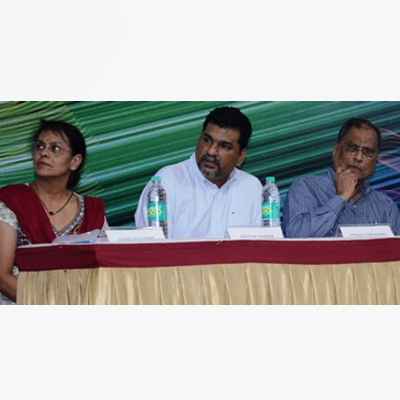
    Suman Keluskar, Vynsley Fernandes and Tony D’Silva spoke about customer care, global trends in cable TV and the upcoming HITS technology respectively


    “The reason why customers welcome a Pizza Hut boy is because he is nice to them,” she said, stressing that customers today were ready to pay for good service but for that to happen, LMOs needed to know the opportunities available to them as well as what customers were demanding. “Innovate in your production. Use the internet to advance yourself,” she said.


    Session two discussed how while LMOs across the globe have learnt to monetise their business, back home, it continues to be a loss-making one. Addressing the session, Castle Media director Vynsley Fernandes, started off by describing how developed countries such as the US, UK and Taiwan had faced the same issues that India is currently facing. But the cable ops dealt with them through innovation and have today grown to last mile digital system providers.


    “From the time the Gulf War happened and everybody wanted to watch TV, things are much different now. Multi-screen viewing is what is happening now,” he said.
    Citing the example of the US, where operators have increased their revenues despite a drop in the number of TV homes, and are expecting the ARPU to go up to $40 from $21 currently in the next five years, Fernandes reasoned this was because they had adapted to using TV along with the Internet and were offering viewers a multi-screen experience.


    He pointed out that concepts like Hybrid Broadband TV, second screen, catch up TV, time shift TV, TV on mobile etc. had already penetrated the US markets and helped cable operators exponentially.


    “Think long term as to whether you can monetise your product. Whenever you are investing in a technology, what is its future road map?” he urged, saying that the only challenge would come from OTT services such as Netflix and Hulu where movies and channels will go directly on the Internet without the need for an MSO or LMO. However, he was quick to add that this hasn’t met with much success in India, yet.

    While advertisers are approaching LMOs to target specific demographics on TV, the STBs taken up by LMOs are not so advanced, Fernandes said. Pointing out that in the US, LMOs provide a posse of services including entertainment, home monitoring, automation comfort, energy management and wellness assisted living, in India too, “an LMO should be the one-stop digital services’ stop for customers,” he concluded.


    Drawing upon his experience in broadcast and DTH to present his project on Headends in the Sky (HITS), former Sun TV CEO Tony D’Silva said this was a good prospect for LMOs to think about.


    D’Silva said that most consumers watch not more than 12 to 15 channels and so, it was necessary to create such packages and device-shifting technologies for the future.


    “You are at the threshold of a game change. Our main threat is the DTH players and we need to be above them and have a robust system,” he said, stressing that HITS was a much better option for LMOs than taking signals from MSOs. Under HITS, the agreements are directly with broadcasters, there are no carriage fees, and it would yield higher revenue (Rs 108) as compared to dealing with an MSO (Rs 59.5) or even independently (Rs 85).


    “The biggest cable company in the world today is Comcast. 17 million out of Comcast’s 22 million subscribers get supply services from HITS and Comcast gives its customers all the benefits that Fernandes spoke about,” said D’Silva, urging LMOs to adopt HITS through which they could choose and demand things as well as insert local channels, the revenue from which would be completely theirs.


    A local cable operator from Goregaon, Bernadette Dsouza, said: “I have come for the seminar to know about new opportunities as well as how to save my business from MSOs’ domination.”

    The good news is MCOF plans to hold such seminars in other states as well in the coming months.

  • Senior Citizen Awards Episode II

    Senior Citizen Awards Episode II

    MUMBAI: CNN-IBN, in partnership with Paranjape Schemes Construction Limited announces the first edition of Senior Citizen Awards – The Unstoppables, to acknowledge the indomitable spirit of the senior citizens who have made a significant contribution to society. The second episode of Senior Citizen Awards features the inspirational stories of Keepu Tsering, who has pledged to save her community from extinction by ensuring that she gives children of the Lepcha community in Sikkim a good education, hope and confidence to achieve greater heights; Merzaban Patel, a 63-year-old hockey coach who has trained Olympians and now dreams of building an academy where players can be trained professionally; Girish Bhardwaj, who started a social movement to connect people from different villages by constructing low-cost suspension bridges; and Chandrashekhar Sankuratri, who after losing his wife and kids in a tragic plane crash, started a school and later an eye hospital for the underprivileged in his village in Andhra Pradesh.

    Watch the first episode of Senior Citizen Awards on Sat, 16th Nov @ 1:30 PM and repeat telecast on 7.30 PM only on CNN-IBN.

  • Zee 24 Gantalu faces acid test

    Zee 24 Gantalu faces acid test

    MUMBAI: Change is in the air at Zee Media Corp Ltd’s (ZMCL) Telugu news channel Zee 24 Gantalu. Reason: the management has decided to restructure the straggler in the ZMCL portfolio, which has been buffeted by competition in the hyper-news state of Andhra Pradesh.

    ZMCL had set up Zee 24 Gantalu in a 50:50 association with a local politician Satyanarayanan Botsa, whose brother Sateesh Botsa ran the channel.

    “It is not viable for us to run it in its current state. We have invested heavily in Zee 24 Gantalu and have tried many different strategies to make it work. But it has been losing a lot of money,” says ZMCL CEO Alok Agrawal. “We are currently reevaluating the options before us.”

    Among the options before it is shutting down the channel. But Agrawal says no decision has been taken in this direction. “We will know clearly in a couple of weeks what we will do,” he points out.

    What is clear is that the association between Botsa and ZMCL will not continue with Zee 24 Gantalu, if one goes by what Sateesh Botsa has told indiantelevision.com. Quoting him: “It was a management call to stop the channel due to several reasons. Now it is completely a ZMCL property. As a news channel it has stopped but they (Zee) may want to continue it as another channel.”


    Alok Agrawal admits that the channel has been incurring losses and that they are looking at restructuri

    A surf through the Telugu news channels space shows that Zee 24 Gantalu is airing only entertainment video footage and fillers without any ticker as of now. Additionally, rival channels told indiantelevision.com that Zee 24 Gantalu staff has started approaching them for jobs. An employee stated that the management has hammered out a severance package under the direction of ZMCL CFO Dinesh Garg which includes three months pay. Agrawal however stated that this is not true and that it could be possible that employees have chosen to look for jobs, because they know that a major restructuring is planned. Zee 24 Gantalu reportedly has 300 employees working with it.

    The channel has been in the news recently because of the cases which have been filed against it for the stories it has aired – the latest one involving the Andhra Pradesh Police DGP V Dinesh Reddy. According to sources, this was one of the reasons that prompted Botsa to opt out.

    Who chose to opt out is not clear, but clearly a new chapter is about to be written in the Zee 24 Gantalu saga.

  • More regional TV channels join the petition in TDSAT against the TRAI adcap

    More regional TV channels join the petition in TDSAT against the TRAI adcap

    NEW DELHI: Some more channels today joined the large number of news and general entertainment channels whose matters challenging the issues relating to the adcap sought to be implemented by the Telecom Regulatory Authority of India (TRAI) will be heard by the Telecom Disputes Settlement and Appellate Tribunal (TDSAT) on 31 October.


    Member Kuldeep Singh of TDSAT tagged along with the other cases those by Eenadu group of Andhra Pradesh and the Sarthak Entertainment group of Odisha.


    While TDSAT had on 1 October listed all matters to come up on 21 October, it had deferred this date to 31 October following a mention by News Broadcasters Association (NBA) who had earlier been given the date of 11 November for hearing the petition challenging the constitutional mandate of TRAI in the matter of adcap.


    TDSAT had earlier accepted an assurance by TRAI not to take any coercive action against the channels.


    Counsel for TRAI Saket Singh had told TDSAT in an earlier hearing that an anomalous situation had been created with some channels having accepted the adcap with effect from today, 1 October. It was therefore requested that the matter be resolved once for all.


    The Tribunal had earlier said that while the channels will maintain weekly records of the advertising time per hour on a weekly basis, they will not be required to submit this to the regulator. Unlike the current practice, the records will only be submitted to TDSAT at the time of the hearing of the case.


    At that time, Counsel A J Bhambani for the NBA had said that a delegation of the Indian Broadcasting Foundation (IBF) had submitted a formula to the regulator but that did not preclude the broadcasters from challenging the validity of the regulations.

    He also said that this was only a compromise reached between the broadcasters and the regulator and could not form the basis of penal action since it was not a regulation or legal provision.