Tag: Andhra Pradesh

  • Star Sports Pro Kabaddi names Rana Daggubati as brand ambassador

    Star Sports Pro Kabaddi names Rana Daggubati as brand ambassador

    MUMBAI: Star Sports’ Pro Kabaddi League has roped in actor Rana Daggubati as its brand ambassador for the third season.


    Daggubati will promote the Pro Kabaddi League across mediums with a special focus on the Andhra Pradesh and Telangana regions .


    Star India COO Sanjay Gupta said, “With season 3, we will scale up our reach and keep raising the league’s value for viewers, players and franchises through high-end production, marketing, communication and grassroots programme. The fact that kabaddi is now the country’s second most viewed sport, second only to cricket, brings us great pride. For Season 3, Rana Daggubati lends his bold, powerful image to Star Sports Pro Kabaddi League. With his pan-India popularity, we hope the association will aid our goal of fostering a multi-sport culture in the country.”


    “For me, Kabaddi has always been a fun sport growing up and excited that Star India has pushed the envelope in promoting the sport and making it even more popular in this new format. I’m particularly excited to meet the amazingly talented players as I am also their fan. This will be a great experience,” Daggubati added.


    “Star Sports Pro Kabaddi has been an emotional journey for us and it is a matter of pride that the league has been extremely well received in our regional markets with spectacular numbers and has led to the numerous kabaddi fans cheering for their local heroes. Season 3 of the league promises to be only bigger and better and we look forward to this association with Rana Daggubati,” added Star India president – South K. Madhavan.


    The third season of the Pro Kabaddi League will kick-start on 30 January, 2016 at Vizag. This year, the league will see two playing seasons, and the squads will include 26 international players from 11 nations, including Kenya, Japan, Oman, Thailand, Indonesia and Poland. Overall, the league will feature around 138 players from eight teams.

  • Andhra Pradesh CM writes to Arun Jaitley seeking 6-month extension on DAS Phase III

    Andhra Pradesh CM writes to Arun Jaitley seeking 6-month extension on DAS Phase III

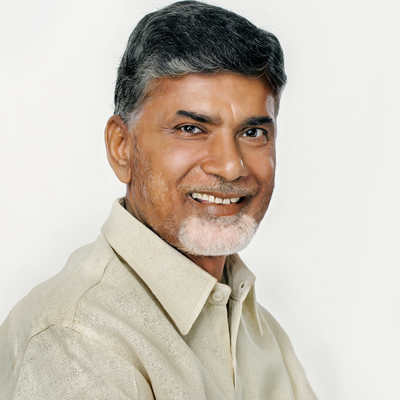
    MUMBAI: With an aim to address the concerns of 800+ multi system operators (MSOs) and 9000+ local cable operators (LCOs) across 13 districts serving 1.3 million households in Andhra Pradesh, the state’s chief minister N. Chandrababu Naidu has written to the Information and Broadcasting minster Arun Jaitley seeking a six-month extension to the Digital Addressable System (DAS) Phase III deadline, which expired on 31 December, 2015.


    The signed letter, a copy of which is with Indiantelevision.com, says, “Only a few MSOs have got Digital License, mainly due to to non-affordability of digital headends and lack of technical know-how. As a part of AP Fiber Grid AP Government envisages to support there MSOs/LCOs by setting up a multi-tenanted digital cable headend that can be utilised as, ‘Infrastructure as a Service & Platform as a service’ facilitating the operations to apply for digital MSO license and sustain their areas of operation. This will help a large number of operators/employees who are surviving on this industry directly and indirectly.”


    The letter further adds, “In view of the initiative and the special situation in Andhra Pradesh, the commissioning of AP Fiber Grid is required to enable MSOs/LCOs to utilise this network infrastructure ad to partner with this project. As this model is going to be uniform among all operators interested in associating with Fiber Grid, the cable operators may not be willing/able to invest for STBs in advance to meet the present deadline. Hence, it is requested to consider extending the phase III Digitisation target date by six months beyond 31 December, 2015.


    Highlighting the status of the AP Fiber Grid Project, Naidu further informed that: 


    .   AP Government has initiated Fiber Grid project to digitise the households in Andhra Pradhesh through both aerial and underground optical fiber cable network.


    .   Work is in progress to lay 24 core ADSS optical fiber cable for a length of around 22000 kms over electrical poles. It is planned to complete this work by June 2016 under phase 1 of Fiber Grid.  2449 PoPs (Points of Presence) will be set up at identified electrical substantiations to house the electronics.


    .   Laying of underground Fiber for a length of around 60000 Kms will be taken up under Phase II in association with government of India.


    .   Dedicated Network Operations Center (NOC) equipped with all digital Headends providing Video (TV Channels, Data (Internet) and Voice (telephone) services also be commissioned by June 2016 facilitating all service providers to utilise the fiber grid with the model of infrastructure as a service & Platform as a Service.


    .   It is planned to enrol the LCOs as Last Mile Operators (LMOs) to provide services to households connecting to Fiber Grid PoPs (points of presence) through their existing network.


    .   The MSOs can be enrolled as ‘multi service providers,’ offering Internet and TV services by connecting to NOC of Fiber Grid and delivering through last mile operators. 


    At the time of filing this story, the AP CM’s office was yet to receive a reply to the letter from Jaitley.

  • DTH to benefit, Reliance Jio to intensify competition in DAS Phase III: Edelweiss

    DTH to benefit, Reliance Jio to intensify competition in DAS Phase III: Edelweiss

    NEW DELHI: Broadcasters are obviously clear winners, but the direct to home (DTH) platforms may ultimately become the greatest beneficiaries of Phase III of digital addressable system (DAS) by garnering incremental market share of more than 50 per cent.

     
    According to Edelweiss Securities Ltd, broadcasters will be one of the safest and most attractive plays on the digitisation theme, irrespective of higher subscriber additions by DTH or MSOs. “We expect a one-year lag for subscription revenue to flow (starting FY18) from the newly digitised subscribers,” Edelweiss said in its analysis of DAS Phase III.   

     
    “In our view, analogue signals will gradually switch off and substantial roll out of Phase III digitisation will take at least three to four quarters driven by mass media ads and proactive steps by DTH players, national MSOs & the regulator,” the firm said.


    However, this view is contrary to the Chrome Data Analytics’ claim of 70 per cent digitisation in Phase III. 

     
    With six states (Assam, Telangana, Andhra Pradesh, Maharashtra and Odisha and Tamil Nadu) stalling Phase III digitisation by eight weeks or more with High Court orders, Edelweiss says, “Uncertainty persists; we expect many more states to follow suit.” In Tamil Nadu, the stand-off between Arasu and the Information & Broadcasting Ministry will delay digitisation, as was the case with Chennai earlier. 

     
    Moreover, Edelweiss believes Reliance Jio’s entry in cable TV will intensify competition in the space. “Overall, we expect Zee, Sun TV, TV18 and Dish TV to be bigger beneficiaries of Phase III digitisation over the long term.”   

     
    In Phase I and II cities, MSOs were able to retain around 75 per cent of incremental market share, while DTH players managed to garner only 25 per cent.

     
    However in Phase III markets, Edelweiss says regional MSOs will have to incur substantial capex to make the cable infrastructure digital ready. “We believe DTH players will enjoy natural advantage over regional MSOs in Phase III markets.”

    Further, voluntary digitisation by national MSOs in Phase III markets, learnings from Phase I & II digitisation and parts of Phase III areas being contiguous with Phase I & II markets put national MSOs in better position than regional MSOs. 

     
    With the rollout of Reliance Jio, Edelweiss expects “competition to intensify in cable TV business. Cashing in on its strong balance sheet, RJio will fuel further competition in cable TV (free STBs, bundled services) in Phase I and II markets. We expect RJio’s entry to change the industry dynamics led by introduction of packaging and prepaid billing.”

  • Discovery channel to air Spirit of India– Makar Sankranti

    Discovery channel to air Spirit of India– Makar Sankranti

    MUMBAI:  Discovery Channel will celebrate India’s traditional harvest festival with the premiere of a special programme Spirit of India– Makar Sankranti.  One of the most auspicious festivals in the Hindu calendar, Makar Sakranti is known by different names in different regions like Lohri in Punjab, Pongal in Tamil Nadu, Uttarayan in Gujarat, Bhogi in Andhra Pradesh, Sankranti in Karnataka among others. Each festival is celebrated largely to observe the harvest season in different parts of India, the start of a new life.


     Spirit of India– Makar Sankranti will celebrate the festival that embodies the spirit of goodwill, brotherhood and reunion with family and will premiere on 14 January 2016 at 9 pm on Discovery Channel.


     According to Discovery Networks Asia Pacific EVP & GM-South Asia Rahul Johri, “Discovery Channel captures and presents India’s vibrant culture and traditions through its path breaking local programming. We are very happy to bring to our viewers a special series Spirit of India – The Festivals that will highlight the rich traditions and diversity of cultures in India. The episode Makar Sankranti will highlight how the traditional harvest festival is celebrated differently in different parts of India.”


     Makar means Capricorn and Sakranti means transition, a day when the sun enters the house of Capricorn leaving the house of Sagittarius. This auspicious occasion is celebrated in myriad cultural forms, with great devotion, fervor & gaiety. Spirit of India– Makar Sankranti will showcase how these festivals are rejoiced in India.


     The state of Punjab enjoys the spirit of Makar Sakranti through Lohri, a festival which is celebrated with great devotion, fervor and gaiety. Lohri is celebrated with the community coming together to engage in many activities like community bonfire, dancing bhangra and gidda to the fast beats of the dhol, flying kites and competing with one another. Even children follow Lohri Loot, a custom which has children going to the neighbouring houses to collect eatables peanuts, jaggery among others. In the evening offerings are made to the fire (agni) to seek his blessings and those of the sun for a bountiful harvest and a prosperous beginning to the year.


    Uttarayan is celebrated in Gujarat and it is the time of the year when kites dominate the sky. People across Gujarat come together with excitement to display their exotic kites of various designs. People make variety of delicacies like undhiyu, sweets to enjoy the festival together.


    In Tamil Nadu, Pongal is celebrated on the same date and the celebrations continue for four days. Pongal means boiling over and Tamilians start the day with the ritual of boiling pot of milk. Just as the sun is crucial to the Indian farmer, Indian agriculture would be lost without its cattle. On this day, villagers bathe their cattle and paint their horns in bright colours.  In the evening the cattle are all gathered together for a celebration where they are garlanded and revered, andare fed pongal, jiggery, fruits and sugarcane. 


    Discovery Channel through its special Spirit of India– Makar Sankranti will celebrate the rituals and celebrations of Makar Sankranti across India that is symbolic of a common thanksgiving to nature represented by the Sun God. 

  • MIB burning midnight oil to find ways to counter battery of High Court orders staying DAS

    MIB burning midnight oil to find ways to counter battery of High Court orders staying DAS

    NEW DELHI: Considering the odds it is facing from various High Courts all over the country for extending the deadline for implementing Phase III of Digital Addressable System (DAS), the Ministry of Information and Broadcasting (MIB) has to find a way to get even justice for the ultimate stakeholder — the consumer.


    Perhaps because of that, the last few days have been very busy in the corridors of fifth and sixth floors of Shastri Bhavan in the capital, which houses the MIB, with officials holding several meetings to find a way to stop the snowballing of the orders that commenced from Hyderabad and found a boost in the arguments in the Bombay High Court based on the Kusum Ingots case of 2004, which encouraged multi system operators (MSOs) and local cable operators (LCOs) in other states.


    At present, the implementation remains stayed for varying periods in the states of Andhra Pradesh, Assam, Maharashtra, Orissa, Sikkim, and Telangana, apart from Tamil Nadu where prolonged legal cases have been pending since Phase I. A petition has already been filed in the Karnataka High Court and is listed for 8 January.


    Ministry sources confirmed to Indiantelevision.com that meetings had been held with legal experts and particularly with Government counsel.


    There was also general consensus on filing a petition by the Government in the Supreme Court, particularly as the apex court had on an earlier occasion relating to the Cable Television Networks (Regulation) Act 1995 and orders issued thereunder that High Courts have to be cautious when giving orders on matters relating to policy.  


    Government legal experts advised that an appeal could be filed against any of the High Court orders in the Supreme Court and the apex court could be asked to transfer all linked matters to Delhi to be heard together.


    However, it needs to be seen whether this will be in the form of a writ petition or an appeal against the various High Courts – a decision left to a battery of legal experts.


    MSOs said, however, that this would impose a lot of financial burden on them as they could ill-afford to hire counsel in the Supreme Court. 


    Even as the Ministry would obey the directives of the various High Courts, which had extended the DAS deadline by various periods ranging between eight to 12 weeks, it would prepare to oppose the decisions.


    A senior Ministry official said that even as the Ministry was waiting to see all the High Court orders, it was working on how plans to thwart the implementation of Phase III could be prevented – if necessary through legislative processes.


    The official also expressed the view that the cases would in fact benefit the direct to home (DTH) and Headend In The Sky (HITS) players and would affect the last mile operator (LMO).


    The sources said they had evidence to show seeding of set top boxes (STBs) to the extent of 76 per cent as revealed in the 13th Task Force meeting on 30 December. 


    Meanwhile, legal opinion is divided on whether the Kusum Ingots case, which was referred to in the Bombay High Court could be used by a High Court to direct a pan-India stay.


    The broadcasters and channel distributors are united on one view: the government should not give any extension on its own, as that would lead to a further delay in not just the Phase III and Phase IV (slated for December 2016) but also pockets of Phase I and Phase II, which have still not implemented digital addressable systems.


    It is also learnt that both broadcasters on the one hand and the channel distributors and major MSOs on the other, are pressing the government to move the apex court to get a single ruling instead of different High Court orders.


    However, it was admitted by the stakeholders that there was very little progress as far as indigenous STBs are concerned with just one or two players making local boxes despite the ‘Make in India’ campaign, and the government had to be proactive in this regard.


    The attempt would be to prevent the High Courts from staying implementation of Phase III under which analogue signals were to be switched off after midnight on 31 December, 2015.


    One representative of a broadcaster said switching back to analogue on getting a High Court stay did not cause any technical difficulty, but it raised problems relating to accounts and agreements already agreed upon.


    Be that as it may, the consumer who has already spent money on acquiring STBs hopes his efforts will not go waste in haste.

  • DAS Phase III: MIB’s big dilemma

    DAS Phase III: MIB’s big dilemma

    MUMBAI: The past fortnight has seen High Court directives in five different states make a mockery of the 31 December, 2015 deadline set by the government for the Phase III roll out of digital addressable system (DAS).


    The courts have urged the Ministry of Information and Broadcasting (MIB) to not act against multi system operators (MSOs) and cable operators who have not been able to place set top boxes (STBs) in homes for two months. In essence, the DAS sunset date has been extended in Andhra Pradesh, Telangana, Sikkim, Maharashtra, Odhisa, Tamil Nadu and now Guwahati.


    The Bombay High Court specifically cited a Supreme Court judgment and noted that a stay granted by a high court on a central notification in one state would be applicable in other states as well. That was the case of Kusum Ingots vs the Union of India, in 2004. (http://indiankanoon.org/doc/1876565/)


    The question on everyone’s mind is: would other petitioners in other states under the DAS Phase III ambit also approach their respective High Courts for relief? Hence, did it make sense for broadcast networks to continue with digitally encrypted signals, which they had resorted to once the clock struck midnight of the new year?


    Most of them including Viacom18, Star India, Zee and Sony thought it did not. Hence, they have all switched on their analog signals a day or so after switching them off.


    Now that has put the MIB in a bit of a quandary. The team lead by MIB secretary Sunil Arora – and including special secretary JS Mathur, and joint secretary RS Jaya apart from other members – have been driving DAS III digitisation and were quite clear that no extension should be given. 


    Sources indicate that one line of action being considered by the MIB is to approach the Supreme Court for relief against the restraint orders granted by the various courts. Experts such as Supreme Court advocate KV Dhananjay have argued against the stance taken in the Kusum Ingots case by the courts. (http://www.legallyindia.com/Blogs/some-hc-judges-are-becoming-terribly-ignorant-of-our-constitution)


    Whether the MIB will go ahead and approach the Supreme Court or not is a moot point, but the industry is putting its might behind it. Most of the industry associations like the Indian Broadcasting Foundation, the DTH Operators Association and the MSO Alliance have all reportedly urged the ministry to move the apex court.


    Industry believes that the extension is unlikely to serve any purpose, as cable operators knew of the phased rollout of DAS as much as for the past three to four years and hence they could have prepared for it. Complaining about a shortage of STBs or interconnect agreements or capital post the sunset date is simply facile, professionals state. 


    “The analog switch off is mandatory,” says an industry observer. “Digitally encrypted signals need to be the only mode of television delivery via satellite in India in Phase III areas. Private DTH operators and the government owned FreeDish can deliver television wherever there are signal dark areas courtesy cable TV’s unpreparedness. The government needs to approach the courts to ensure that DAS Phase III proceeds as soon as possible.”


    We will have to wait and watch if it does.

  • DAS Phase III stayed in 5 states including Maharashtra as Bombay HC issues restraining order

    DAS Phase III stayed in 5 states including Maharashtra as Bombay HC issues restraining order

    NEW DELHI: Maharashtra has become the fifth state to join the group of states, which have obtained a High Court restraint on the implementation of digital addressable system (DAS) Phase III.


    The Bombay High Court cited a Supreme Court judgment and noted that a stay granted by a high court on a central notification in one state would be applicable in other states as well.


    The Hyderabad High Court and the Sikkim High Court have already granted stay on implementation of DAS Phase III primarily on the ground of shortage of set top boxes (STBs). In addition, the implementation of DAS in Tamil Nadu remains stayed after a bunch of petitions were admitted from Phase I onwards by the Madras High Court.


    The Hyderabad stay is for eight weeks in both Andhra Pradesh and Telangana, and the Sikkim stay is till 28 March, which is the next date of hearing. 


    Justice R D Dhanuka of the Bombay High Court said the Court will hear the matter on 1 February and gave the Government time to file its reply.


    Citing shortage of seeding of STBs as well as problems in interconnect agreements (ICA), petitioner Nashik Zilla Cable Operator Association (NZCOA) presented copies of the stay orders by other High Courts. Other petitioners were City Cable Operator Association of Nashik and Sai Big Star Welfare Association of Jogeshwari, Mumbai.


    Legal experts told Indiantelevision.com that while the Bombay High Court could use the precedent of other courts and direct a stay, this would only apply to areas under its jurisdiction and not pan-India. 


    Earlier on 23 December, 2015 a bench of the same Court had refused to extend the deadline and held that interim agreements could be entered into until the Telecom Regulatory Authority of India (TRAI) comes out with a model ICA. 


    TRAI has already issued a Consultation Paper on the subject and hopes to finalise a model ICA by mid-January, TRAI sources told this website.


    The extension of DAS does not augur well for the Information and Broadcasting Ministry, which may see a catapulting of such cases as reports pour of just over 50 per cent of seeding of STBs. 


    In most cases, the Courts turned down a plea by TRAI to be impleaded though it was permitted to file applications for this purpose. 


    The directive by the Hyderabad High Court was notable in that Justice Vilas V Afzalpurkar went against an order given by a division bench of which he was a member in the same court relating to Phase III on 20 August, 2013.


    As reported earlier, the Maharashtra Cable Operators Federation had also expressed difficulties in the 13th Task Force meeting held on the eve of the switch-off and had in fact said that seeding pan-India was less than 50 per cent even as the government claimed 76 per cent seeding and said the percentage achievement was 86.25 if Tamil Nadu that has some legal and other issues is excluded. The meeting was told there were only 405 zero seeding areas till the last report.


    The first phase of digitisation covered four metro, Mumbai, New Delhi, Kolkata and Chennai. In the second phase 38 cities were covered with population more than one million. About 630 districts and 7709 urban areas will be covered in DAS Phase III aimed at all urban areas while the fourth phase by 31 December, 2016, this year will cover the rest of the country.

  • Sikkim joins three others states excluded from DAS Phase III

    Sikkim joins three others states excluded from DAS Phase III

    NEW DELHI: The extension of Digital Addressable System (DAS) by three different High Courts affecting four states does not augur well for the Information and Broadcasting Ministry, which may see a catapulting of such cases as reports pour of just over 50 per cent of seeding of set top boxes (STBs).
     
    After the extension of deadline in both Telengana and Andhra Pradesh, the Sikkim High Court has ordered a stay on analogue cable television signals switch-off until 28 March. A stay had been ordered after the first phase by the Madras High Court for Tamil Nadu, which also remains in force, though the Madhya Pradesh High Court has rejected a petition by Om Systems of Indore challenging Section 4A of Cable Television Networks Regulation Act 1995.
     
    Phase III stipulated for analogue signals to be switched off in all urban areas of the country by 31 December, 2015.
     
    Justice Meenakshi Madan Rai of the Sikkim High Court said in her order on a petition by All Sikkim Cable Operators Association that subscribers will be affected for no fault of theirs. The petition was filed through Association president Roshan Rai.
    In the arguments, it was contended that multi-system and local cable operators had to bear a high cost of migrating to a digital addressable service (DAS) and there were no investors; the difficult terrain of the state was not conducive to laying of optical fibre Cables (OFC) required for Digital networks; Set-Top-Boxes were not easily available in the country; and time limits for migration to digital regime are almost impractical.
    The court also noted that the Association had written to Information and Broadcasting Ministry Secretary Sunil Arora on 26 November, 2015 apprising him of the constraints faced by the MSOs and LCOs and requesting for an extension of the deadline but the Ministry did not care to reply.
    The Court turned down a plea by Telecom Regulatory Authority of India (TRAI) to be impleaded. 
    The directive by the Hyderabad High Court was notable in that Justice Vilas V Afzalpurkar went against an order given by a division bench of which he was a member in the same court relating to Phase III on 20 August, 2013.
  • MIB updates areas in 7 states & 1 UT to be covered in DAS Phase III

    MIB updates areas in 7 states & 1 UT to be covered in DAS Phase III

    NEW DELHI: The Ministry of Information and Broadcasting (MIB) today further updated the urban areas to be covered in seven states and one union territory during Phase III of the Digital Addressable System (DAS) to be completed by the end of this year.


    This is in addition to the 16 states for which upgradation was announced on 16 October.


    The seven states are: Andhra Pradesh; Chhattisgarh; Jammu & Kashmir; Kerala; Madhya Pradesh; Manipur and Telengana, and the Union Territory of Daman & Diu.


    Earlier last month, the states and union territories where changes were made were: Arunachal Pradesh, Assam, Gujarat, Haryana, Himachal Pradesh, Jharkhand, Mizoram, Nagaland, Odisha, Rajasthan, Punjab, Tripura, Uttarakahd, Uttar Pradesh, Andaman and Nicobar, and Puducherry.


    MIB’s updated list with regard to these states and UTs also indicates areas that have been deleted and those which have been added, apart from the number of television households to be covered in each case.


    The changes have been made on the basis of reports of empowered officers in each state.


    The list does not contain areas covered in the first two phases.


    The list of areas to be covered in Phase III had been issued on 30 April this year.

  • Q2-2016: Ortel YoY revenue up 24.6 percent, PAT more than doubles

    Q2-2016: Ortel YoY revenue up 24.6 percent, PAT more than doubles

    BENGALURU: The Bibhu Prasad Rath-headed regional cable television and broadband internet player Ortel Communications Ltd  (Ortel) has reported a 24.6 percent growth in revenue from operations (TIO) at Rs 45.79 crore as in the quarter ended 30 September 2015 (Q2-2016, current quarter) as compared to the Rs 36.74 crore in the corresponding year ago quarter. TIO in the current quarter was also higher by 12.8 percent as compared to the Rs 40.6 crore in the immediate trailing quarter. Ortel provides services in the Indian states of Odisha, Chhattisgarh, Andhra Pradesh, Madhya Pradesh and West Bengal,


    Notes: 100,00,000 = 100 lakh = 10 million = 1 crore

    The numbers mentioned in this report are standalone.


    The company reported more than a doubling of PAT (up 2.3 times) to Rs 2.83 crore (5.9 percent margin) as compared to the Rs 1.23 crore (3 percent margin) in Q2-2015, and 15.9 percent more than the Rs 2.44 crore (5.7 percent margin) in the immediate trailing quarter.


    Ortel President and CEO Rath said, “I am glad to report a strong operational and financial performance for the quarter ended   September 30, 2015. Performance during the quarter was driven by healthy addition in revenue generating units (RGUs) which stood at 571,834. We are witnessing encouraging traction to our LCO buyout strategy in emerging markets like Andhra Pradesh and Chhattisgarh, and I am confident that this would sustain going forward. Going forward, we would continue with our strategy of aggressive LCO buyouts across all our markets and diligently integrate the new  subscribers into Ortel’s last mile network. Healthy contribution from new RGUs along with ongoing focus on the high margin Broadband business would enable us to deliver strong financial performance in the forthcoming years.”


    The company’s EBIDTA (TIO plus Depreciation and Amortisation plus Other Income plus Fixed assets written off minus Total Expenditure) increased 31.3 percent to Rs 17.29 crore (37.8 percent margin) in the current quarter as compared to the Rs 13.17 crore (35.8 percent margin) and increased 8.8 percent as compared to the Rs 15.89 crore (39.1 percent margin) in Q1-2016.


    Ortel’s YoY RGUs grew 9.2 percent to 571,834 in Q2-2016 from 523,833 in Q2-2015 and increased 5.5 percent from 542,217 in Q1-2016.


    Cable TV RGUs’ increased 9 percent in Q2-2016 to 508,171 from 466,305 in Q2-2015 and grew 5.6 percent from 481,317 in Q1-2016.

    Ortel’s YoY primary digital cable RGUs grew 33.2 percent to 117,401 in Q2-2016 from 88,106 and grew QoQ to 4.5 percent from 112,296 in Q1-2016. Analogue cable RGUs’ increased to 330,739 from 322,175 in Q2-2015 and from 307,923 in Q1-2016. The company says that its Cable TV penetration stood at 23.7 percent and penetration in select 10 towns where company offers digital services stands at 71 percent.


    Broadband customers grew 8.9 percent to 63,663 in the current quarter from 57,528 in Q2-2015 and grew 4.5 percent from 60,900 in Q1-2016.


    The company has reported a slight drop in digital and analogue cable and broadband ARPUs’ in the current quarter. Digital cable ARPU in Q2-2016 was Rs 183 in Q2-2016; Rs 187 in Q2-2015 and Rs 185 in Q1-2016. Analogue cable ARPU in Q2-2016 was Rs 143; in Q2-2015 it was Rs 147 and in Q1-2016, it was Rs 144. Broadband ARPU in Q2-2016 was Rs 183, in Q2-2015, it was Rs 187 and in Q1-2016, it was Rs 185.


    Cable Subscription, Connection and Channel carriage fees


    The company’s cable subscription fees in Q2-2016 increased 4 percent to Rs 20.6 crore as compared to the Rs 19.8 crore in Q2-2015 and increased 3 percent as compared to the Rs 20 crore in Q1-2016. Connection fees declined to Rs 0.70 crore in the current quarter from Rs 1.1 crore in Q2-2015 and remained flat as compared to the Rs 0.7 crore in Q1-2015.Channel carriage fees in the current quarter increased 44.9 percent to Rs 9.7 crore from Rs 6.7 crore in Q2-2015 and increased 23.8 percent from Rs 7.8 crore in the immediate trailing quarter.


    Let us look at the other numbers reported by Ortel


    Total Expenditure in Q2-2016 increased 13.3 percent to Rs 38.72 crore as compared to Rs 34.17 crore in Q2-2015 and increased 12.5 percent as compared to the Rs 34.42 crore in the immediate trailing quarter.


    The company’s Programming cost in the current quarter increased 7.2 percent to Rs 9.44 crore from Rs 8.81 crore in Q2-2015 and increased 5.9 percent from Rs 8.91 crore in Q1-2016.


    Bandwidth cost in Q2-2016 increased 19.3 percent to Rs 1.92 crore from Rs 1.61 crore in Q2-2015 and increased 7.9 percent from Rs 1.78 crore in Q1-2016.


    Employee Benefits Expense in the current quarter increased 45.5 percent to Rs 5.64 crore as compared to the Rs 3.88 crore in Q2-2015 and was 15.4 percent more than the Rs 4.89 crore in Q1-2016.


    Last quarter, Ortel announced that it had introduced free broadband option for all Ortel Cable TV subscribers in the states of Odisha, West Bengal and Chhattisgarh as a complimentary special value added service in order to target to deeper penetrate into markets by making internet affordable. Ortel says that its offer includes a free data limit every month for a year. The subscriber will be charged a nominal amount after exceeding the free data usage for the month.