Tag: Andhra Pradesh high court

  • Court ruling on political ads may be contested

    Court ruling on political ads may be contested

    NEW DELHI: The Indian government is contemplating contensting the Andhra Pradesh high court order quashing a ban on political advertisements on the electronic medium. Reason: to douse the fire that has engulfed not only Congress chief Sonia Gandhi, but also Prime Minister Atal B. Vajpayee.

    According to political sources in the Capital, the govermnent is mulling, as one of the options, to go in for a Special Leave Petition (SLP) petitoning the Supreme Court to look into the issue of politcal advertisments, surrogate or otherwise, on television channels.

    A The sources said that a high-level meeting in this regard was held at the Prime Ministers residence yesterday where this matter was debated.

    It is also learnt that Vajpayee, while expressing his unhappiness at being target of a surrogate advertisment questioning his antecendents during the pre-Independence days, would want the issue to be buried. An ideal scenario would be to have the Supreme Court stay the order of the Andhra high court, which removes the ban on political ads to be carried o TV channels under the Cable TV Network (Regulation) Act.

    Amongst the several options discussed, the most plausible looked like the one where the government or an organisation contested the Andhra HC order.

    Those who attended the meeting with the PM included his advisor Brajesh Misra, information and broadcasting minister Ravi Shankar Prasad, Solicitor-General Soli Sorabjee and Bharatiya Janata Party president Venkaiah Naidu.

    On 23 March, the Andhra HC, based on a petition filed by Gemini Television Network, ETV and Maa TV which challenged rule 7 (3) of the Act invoked by the Information and Broadcasting Ministry and Election Commission to ban telecast of political advertisements, quashed the ban.

    The court also observed that the ban order amounted to discrimination between the two media (print and electronic) and was also violative of the right to freedom of trade and business.

    Since the order was passed, the issue has snowballed into a controversy with the Election Commissiona nd the government lobbing the ball into each others court.

    The issue of surrogate political advertisements is echoing not in the Election Commission or on TV channels, but somewhere else. The reverberations of personal attacks can be heard in the Prime Ministers residence. Apparently, according to political sources, PM Atal B Vajpayee is very upset that an ad allegedly showing him in bad light did a round of TV channels before broadcasters decided to take all such ads off air.

    Stung by a surrogate ad put out by a Bharatiya Janata Party front organization questioning party chief Sonia Gandhis foreign origin, a seemingly front organization of the Congress hit back by issuing an ad that dwelt on Vajpayees antecedents and that he was allegedly involved as an informant for the British during the pre-Independence days of India.

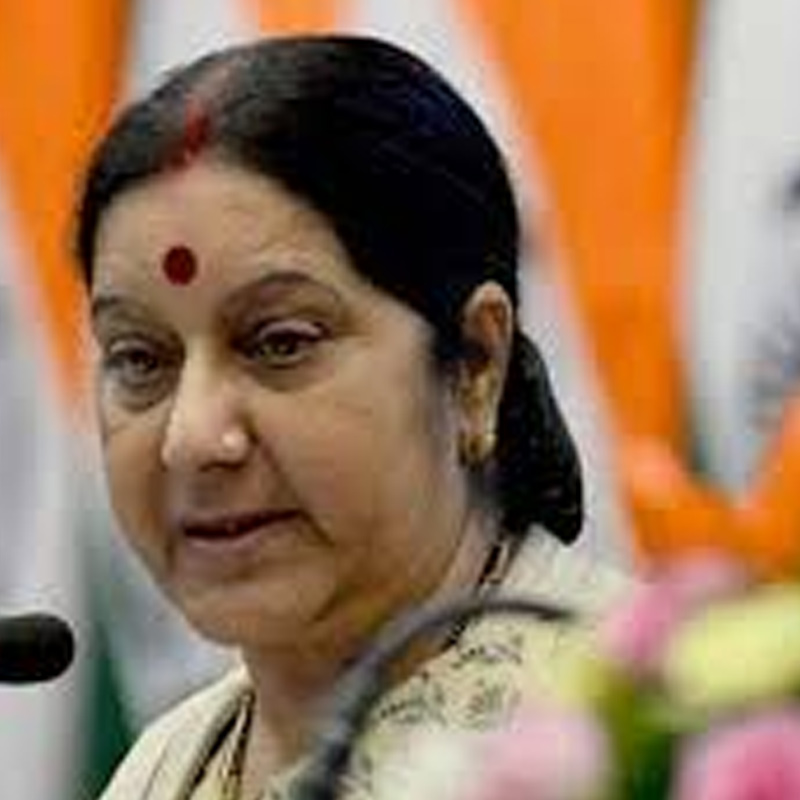
  • Sushma Swaraj says addressability will be compulsory

    Sushma Swaraj says addressability will be compulsory

    Information and broadcasting minister Sushma Swaraj has said that cable operators will have to compulsorily build in conditional access systems (CAS) into their networks. In an interview to the The Times of India she has said that: “This issue (conditional access) is being placed before the parliamentary standing committee on November 19. It will be passed by notification since Clause 22E of the Cable Amendment Act allows the ministry to keep pace with technological changes without taking recourse to an amendment.”

    She told the newspaper that cable TV operators will no find it difficult to build in conditional access in their networks. “The costs are not going to be so high – not at all. The operator can have the CAS financed by a financial institution,” she says. “A subscriber will not be expected to pay more than Rs 10-15 per month for its use. The average cost of a pay channel today is about Rs 5 per month so how will this prove expensive? I must emphasise that today cable operators are showing more than 70 channels every month and several subscribers do not wish to see so many channels. Having a CAS will help ensure proper content regulation. Those who do not wish to see Fashion TV or MTV or any other pay channel for that matter can simply get the operator not to screen it into their homes.”

    Cable TV operators are not likely to take kindly to the initiatives the government is taking to organise the wild cable TV sector. Earlier this week, an Andhra Pradesh High Court (Addressability comes to the forefront) said that basic pay TV channels should stop collecting subscription revenues from cable TV operators until subscribers have the facility to chose which channel they want to watch. This is expected to hit pay TV programmers such as Star TV, Sony Entertainment, Zee TV, Discovery, Hallmark, DD Sports, pretty hard and they are expected to go in appeal against the interim ex parte high court judgement.