Mumbai: Independent production company Everest Entertainment aims to produce web series in Hindi & Marathi by the second quarter of 2023. The film studio has produced 25 Marathi films till date, including well-known titles such as “Me Shivajiraje Bhosale Boltoy”, “Mumbai Pune Mumbai” franchise, “Tukaram”, “Aajcha Divas Majha” and “Happy Journey”.
The content studio has three business verticals, namely its production business, content licensing business, and music licensing business. In content syndication, it boasts a library of 250 Marathi titles and has long-standing syndication deals with Amazon Prime Video on the digital side and with major broadcasters Star (Star Pravah, Pravah Picture), Sony (Sony Marathi), Viacom18 (Colors Marathi) and Zee (Zee Marathi, Zee Talkies) on the traditional media side.
Everest also has a robust music licensing business and is one of the leaders in the Marathi music space. Its YouTube channel Everest Marathi has over 2.7 million subscribers.
Also read: Geo-targeted campaigns ramp up as brands go hyperlocal
Like many production houses, the pandemic created significant bottlenecks for Everest Entertainment, which had to shift its film releases owing to theatres being shut. With the lifting of lockdown restrictions and theatre-goers back in cinemas, Everest Entertainment’s Sanjay Chhabria is jubilant to see the reception of regional cinema across pan-India audiences, including Marathi films such as “Pawankhind” and “Chandramukhi”, which were commercial successes.
In July, the studio released its first film of 2022, “Ananya,” starring Hruta Durgule in her big-screen debut and directed by debutant Pratap Phad.
Including “Ananya,” Everest plans to release four films this year, namely “Boyz 3”, “Autograph,” directed by Satish Rajwade, and a Marathi remake of a Tamil film which is yet to be announced.
Born into a business family, Sanjay Chhabria descends from Gordhan Chhabria, a well-known overseas financier and distributor of Hindi cinema. Having cut his teeth in the world of film financing, Sanjay Chhabria launched his independent video publishing company, Everest Multimedia, to market and distribute home videos of Hindi feature films.
Chhabria soon ventured into film production with Mahesh Manjrekar’s ambitiously written “Mee”. The studio gradually increased its production slate. It began by releasing one or two films every year, and now plans to release four films every year from the beginning of 2022. The studio is currently working on 8 projects that will be released in the next two years.
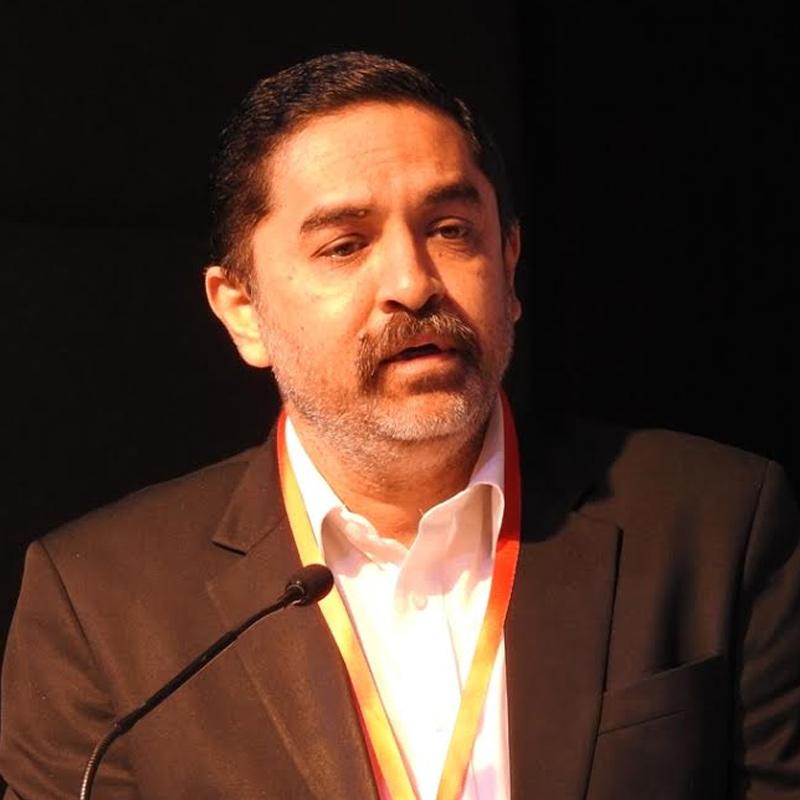
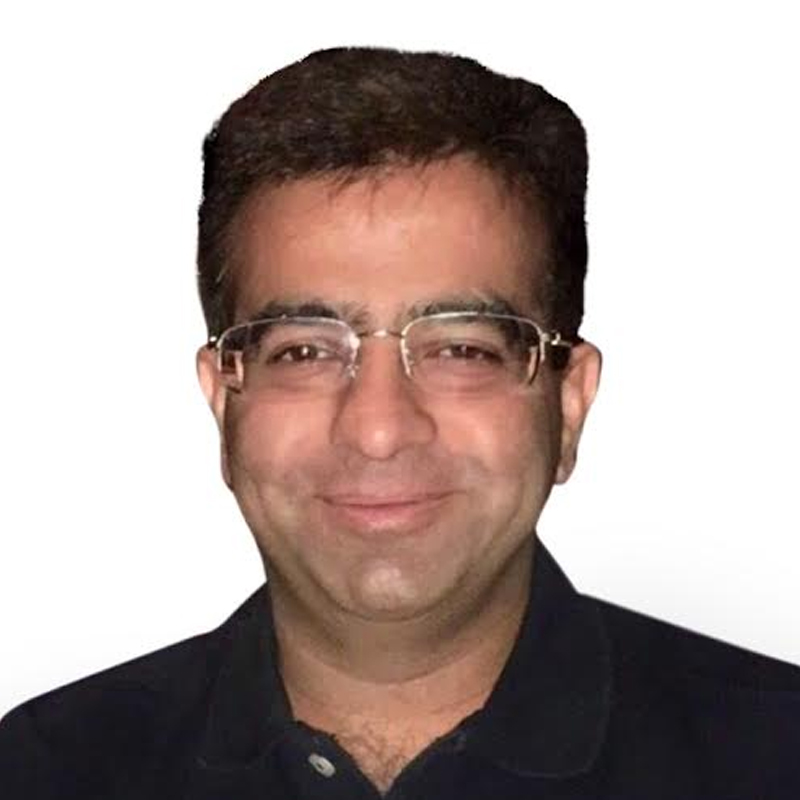
In conversation with Indiantelevision.com, Everest Entertainment managing director Sanjay Chhabria speaks about the studio’s release slate in 2022, the Marathi cinema landscape, setting up its web series vertical and more.
Edited Excerpts:
On the impact of the pandemic
Sanjay: There are a lot of impending releases due to the pandemic. Marathi cinema has always had a healthy flow of new releases, and this year there will be a lot more. Our decision to wait for theatres to open was a good one as there were a lot of big-ticket films that were released without theatres and did not do so well.
On the expansion of Everest Entertainment business verticals
Sanjay: We are an independent studio that has four different business verticals. Under our production vertical, we’ve produced over 25 films till date. Our content aggregation business syndicates content to various broadcasters, including the big four: Disney Star, Sony, Colours, and Zee; and digital platforms such as Amazon Prime Video, Netflix, and Planet Marathi. We have a library of 250 movie titles, including blockbusters like “Pawankhind” and “Chandramukhi”.
We are one of the leaders in the Marathi music licensing business and have a YouTube channel, Everest Marathi, with 2.7 million subscribers. We’re doing some great numbers due to the release of the “Pawankhind” soundtrack and expect to touch 3–3.5 million by the end of the year.
Our plan is to get into web shows and originals as well. OTT platforms such as MX Player, Zee5 and Sonyliv are leading in terms of Marathi content, but I’m sure global platforms like Netflix, Prime Video and Disney+ Hotstar will foray into Marathi content as well. Currently, we are in the process of writing scripts for original shows. The idea is to create a bank of scripts so that we can pitch them to OTT platforms. The plan is to create not only Marathi but also Hindi-language series.
We have hired writers and shortlisted some book rights. Book rights or personality rights are easier to sell compared to a new story as there is a ready script in place. I expect we will start producing our first web series by the second quarter of 2023.
There is already a long-term relationship with OTT platforms such as Amazon Prime Video to syndicate our movie content. We are currently the only ones in the Marathi segment who have an output deal with them.
We also distribute Marathi films globally. While the opportunity in the international market for Marathi cinema is not that big, I believe a sustained effort to market big-ticket Marathi films outside of India will create an opportunity to establish a mainstream audience. The main theatrical overseas markets for Marathi cinema are the US and Canada, which is basically North America.
On the film release slate for 2022
Sanjay: Normally, we have about one or two releases every year. This year, we are having four releases. There is “Ananya,” which was released on 22 July. “The Boys 3” that releases in September. We have a big release called “Autograph” based on a Malayalam film of the same name. The final release for the year is a Marathi remake of a Tamil film.
We’re currently working on the script of another project that is a remake of a famous Tamil film, “Athadu,” featuring Mahesh Babu. The film is a family drama, and we are in the process of putting that on the floors as well.
Today, if you want audiences to come to theatres, you need to have great production values, as witnessed by the success of South films recently. The production values have also increased in the Marathi space. Earlier, we made films with a budget of Rs 90 lakh and one crore rupees. Now, the minimum cost of putting a film on floors is Rs 2.5-3 crore, and I’m talking about a small-scale film. There are Marathi films being produced today with a budget range from Rs 3 -12 crore. There have always been plenty of producers in the Marathi space, but I see the space becoming more structured with some independent production houses regularly churning out films. We are one of the leading independent studios that are making the maximum number of movies.
On the performance of regional cinema
Sanjay: The story of regional cinema in 2022 has been really good. The films from the South are doing well. Some Punjabi films have done well. We have also come across a Gujarati film that has done well. There were five or six Marathi films released between November 2021 and now which have done well. We hold the broadcast, digital and music distribution rights to two of the most successful Marathi films recently, i.e., “Pawankhind” and “Chandramukhi.”
Also read: 5.1 mn viewers tuned in to watch Pravah Picture’s telecast of ‘Pawankhind’: Barc
On the recovery of theatres and theatre-going audiences
Sanjay: Theatrical releases are the biggest chunk of revenue for us, even though OTT licensing revenues are growing gradually. In 2021, the majority of theatres were shut, and now I’m seeing a complete recovery of theatres but a shift in the pattern of theatrical releases.
Regional cinema has done comparatively well as compared to Hindi cinema. Marathi cinema is gaining popularity, with films such as “Jhimma” performing well at the box office. So, audiences are going to the theatres, and it’s not true that we have lost theatre-going audiences to the pandemic. In fact, there are more footfalls now than there were pre-pandemic.
It is about bringing the right film and giving the right experience to audiences. The films that have not worked in theatres are probably outdated or audiences have outgrown such subjects. The audience’s tastes have evolved in the last two years, and what used to work earlier is not necessarily working now.
I am very bullish on our recent release, “Ananya,” which is a strong women-oriented drama. It features Hruta Durgule, who is a youth icon. She is a popular face on TV. “Boyz” is another popular franchise that gets a lot of love from audiences. “Autograph” is a love story, and romantic films have historically worked in the Marathi space. It is helmed by renowned director Satish Rajwade.
On introducing fresh talent to Marathi audiences
Sanjay: In the last seven to eight years, 10 directors have debuted with Everest Entertainment. Pratap Phad is making his directorial debut with “Ananya,” with Hruta Durgule making her big screen debut. We’re also launching two new heroines in our remake of a Tamil film that is releasing later this year.
The audiences that are going to theatres on Friday are 15–30 years old, and there are not many youth icons to look up to. Marathi cinema has its established set of actors, but there is a need in the Marathi space to create stars. Marathi cinema is not a star-driven industry but a content-driven industry. What is needed is to have a strong hybrid of the two.
People flock to theatres on a Friday morning when your film is backed by the star power of a Ranveer Singh or Ranbir Kapoor. We have stars in Marathi like Ankush Chaudhary, Swapnil Joshi, Lalit Prabhakar, Amey Wagh, and great actors like Sachin Khedekar. But instead of having a few stars who you can count on your fingertips, you need a dozen of them to help the industry grow faster.
On broadening the audience base of Marathi cinema
Sanjay: The film “Tanhaji: The Unsung Warrior” featuring Ajay Devgn did business of Rs 275 crore across India, and a large chunk of the revenue of Rs 140-150 crore came from the Maharashtra circuit. If the same film was made in Marathi, I’m sure we could have touched a figure of Rs 100 crore, but we need to reach that scale.
Marathi audiences are cerebral, so while genres like action work, it cannot be plain action high on visual effects. That’s never going to work with a Marathi audience. We’re trying to tell stories from different genres. I personally feel we haven’t seen a rib-tickling comedy in a long time. The 80s Marathi cinema was ruled by comedies like Sachin Pilgaonkar’s “Ashi Hi Banwa Banwi”. But we haven’t seen a film like that in a decade.
“Ananya” is a strong women’s-oriented drama, and we’re producing a biopic that will be released next year. I am also fascinated by the body-swap genre that’s common in Hollywood, like “Freaky Friday” and “13 Going on 30”. I want to create a franchise around our characters, “Faster Fene.”
While Marathi films do go pan-India, the majority of theatrical revenues come from Maharashtra. We’re releasing Marathi films in Indore, Delhi, and Ahmedabad as there are Maharashtrians everywhere. But, bringing audiences to theatres also depends on how well you’ve hyped the film and whether there is a demand for it. Certainly, Marathi cinema has not created mainstream pockets in the same way that South Indian films have penetrated.
Marathi films are doing well in markets like Mumbai, Thane, and Pune, but we need to focus on markets like Aurangabad, Marathwada, Latur, and Vidarbha belts as well. Often, when writers and directors are creating stories, these circuits are ignored. We must make a conscious effort to cater to these audiences as there are multiplexes opening everywhere. The audience base for Marathi cinema has become wider.
All in all, it is a good time to be in the Marathi film space. During the pandemic, people consumed a lot of regional cinema, including Marathi films. I have a lot of non-Marathi friends who have seen Marathi films and are familiar with a few of the actors’ names. If there is strong word of mouth, then you’ll see more non-Marathi audiences in theatres.