Tag: Anand Patwardhan

  • MIFF 2014 concludes amid much fanfare

    MIFF 2014 concludes amid much fanfare

    NEW DELHI: Are you listening by Kamar Ahmed Simon won the Golden Conch Award for best documentary film while Nishtha Jain with her Gulabi Gang was named best director at the recently concluded 13th Mumbai International Film Festival (MIFF) for Documentary, short and animation films.


    Eminent filmmakers Adoor Gopalakrishnan and Shyam Benegal presented the awards as the curtains came down to the seven-day festival.


    Jury 1 comprised filmmaker Anand Patwardhan, film curator Angela Haardt from Germany, Director of the Yamagata Documentary Film Festival – Fujioka Asako of Japan, Slovenian film scholar Jurij Meden, and noted animator from Mumbai Shilpa Ranade.  Jury II comprised Canadian filmmaker Mark Achbar, film director and editor Amitabh Chakrabarty, film maker from Kerala M R Rajan, noted cinematographer Piyush Shah, and Netherlands based film scholar Rada Sesic.


    The 90-minute documentary by Simon won the award in the above 60-minutes category. It gets the Golden Conch trophy and Rs 500,000 cash prize (Rs 300,000 for the Director and Rs 200,000 for the producer – Sara Afreen). Set in the coastal belt of Bangladesh, the film is a powerful and beautifully photographed film that reveals the alarming effects of climate change and deftly captures the fighting spirit of a community and their will to survive. The global issue of climate change is experienced in microcosm in Simon’s film, as he observes the families of Sutarkhali.


    The Golden Conch for Best Documentary Film up to 60 minutes went to Maria Stodtmeier’s (Germany) In Between : Isang Yun in North and South Korea. This documentary explores whether music can overcome the boundaries of a divided country. It examines the worlds of North and South Korean music, taking the viewer along on an exciting journey through two political systems. It got the Golden Conch trophy and Rs 500,000 cash prize (Rs 300,000 for the Director and Rs 200,000 for the producer – Paul Smaczny).


    Black Rock directed by Vikrant Janardhan Pawar and produced by the Film and Television Institute of India was adjudged the Best Short Fiction film in International Competition. It got the Golden Conch trophy and Rs 500,000 cash prize (Rs 300,000 for the Director and Rs 200,000 for the producer – FTII).


    The Golden Conch Best Animation Film award went to True Love Story by Gitanjali Rao. This 18-minute animation set in the streets of Mumbai explores what happens when the ultimate Bollywood fantasy is applied in reality. It gives a glimpse into the influence of Bollywood on real life in Mumbai, told through puppet animation. The award carried a Golden Conch and Rs 500,000 cash prize.


    The film on Right to Information, Chakravyuh, by National Film award-winner Dhvani Desai was voted the most popular film, a new award chosen through voting by festival delegates. Chakravyuh through the struggles of four characters from different regions of India throws light on how the RTI can be used to fight corruption. The film produced by Films Division was first shown on 12 October 2013 on the occasion of the eighth anniversary of RTI in Mumbai.


    Nishtha Jain received Rs 100,000 cash award and a certificate got the Best Director Award in the International Competition section. Gulabi Gang tells the story of Sampat Pal and her group of women vigilantes and activists from Bundelkhand, who fight for women’s rights and their empowerment. Armed with a lathi (stick) the Gulabis visit abusive husbands and beat them up unless they stop abusing their wives. The film has won several other awards, and there are plans to release it in theatres on 21 February as part of PVR Director’s Rare initiative. Jain, an alumnus of FTII, is based in Mumbai.


    The Dadasaheb Phalke Chitranagari Award went to Mumbai based filmmaker Dylan Mohan Gray’s film Fire in the Blood for Best Debut Film of a Director. The 84-minute film tells the story of how Western pharmaceutical companies and governments blocked access to low-cost AIDS drugs for the countries of the global south in the years after 1996 – causing ten million or more unnecessary deaths – and the improbable group of people who decided to fight back. This award carrying a cash prize of Rs 100,000 and a Trophy has been instituted by the Maharashtra Film Development Corporation, Mumbai


    The Indian Documentary Producers Association Award for the best student film went to Sonyacha Amba (Golden Mango) directed by Govind Raju and produced by FTII, Pune. This film had participated in the Berlin and Beijing festivals as well. The Rs 100,000 cash and Trophy is given by the IDPA.


    The Pramod Pati Award for most Innovative film, carrying a cash prize of Rs 100,000 and a trophy went to Pushpa Rawat’s 57-minute documentary Nirnay (Decision). The film explores the lives of women in a lower middle class colony in Ghaziabad, who are young and educated, but feel bound and helpless when it comes to major decisions about their lives, be it career or marriage.


    The Kashmiri film Tamaash (The Puppets) got the Golden Conch for the best Short Fiction Film up to 45 minutes in the National Competition. Tamaash is the first film by directors Satyanshu and Devanshu Singh, who also wrote, edited, and produced it, along with Tulsea Pictures. The film insists on the power of goodness and the importance of preserving the innocence of children.  It had won the Golden Elephant Award at the International Children’s Film Festival held in Hyderabad during November 2013. Along with the Golden Conch, the filmmakers also get Rs 250,000 cash award.


    In the National Competition section, Seven Hundred Zero Zero Seven by Altaf Mazid got the Golden Conch for Best Documentary (upto 40 minutes), while Have You Seen the Arana by Sunanda Bhat and Invoking Justice by well-known Deepa Dhanraj shared the  Best Documentary Awards in above 40 minutes category.

  • MIFF 2014 opens with Anand Patwardhan getting V Shantaram Life Time Achievement Award

    MIFF 2014 opens with Anand Patwardhan getting V Shantaram Life Time Achievement Award

    NEW DELHI: The week-long festival celebrating the best of documentary films – the Mumbai International Film Festival for short, documentary and animation films has commenced in Mumbai with a rare insight into the life during pre-independence India, and presentation of the V Shantaram Award.


    Maharashtra Governor K N Sankaranarayanan who inaugurated the Festival appealed to filmmakers to lend their voice to raise the problems of disadvantaged through their films.


    Information and Broadcasting Minister Bimal Julka, Festival Director V S Kundu who is Director-General of Films Division, and members of the national & international jury and several prominent filmmakers were present.


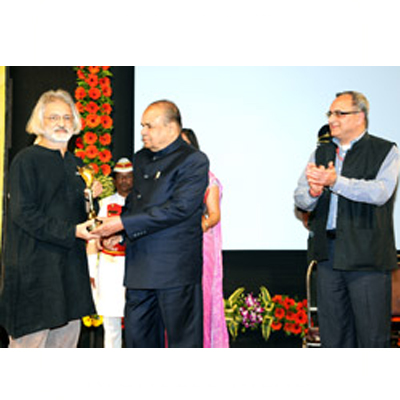
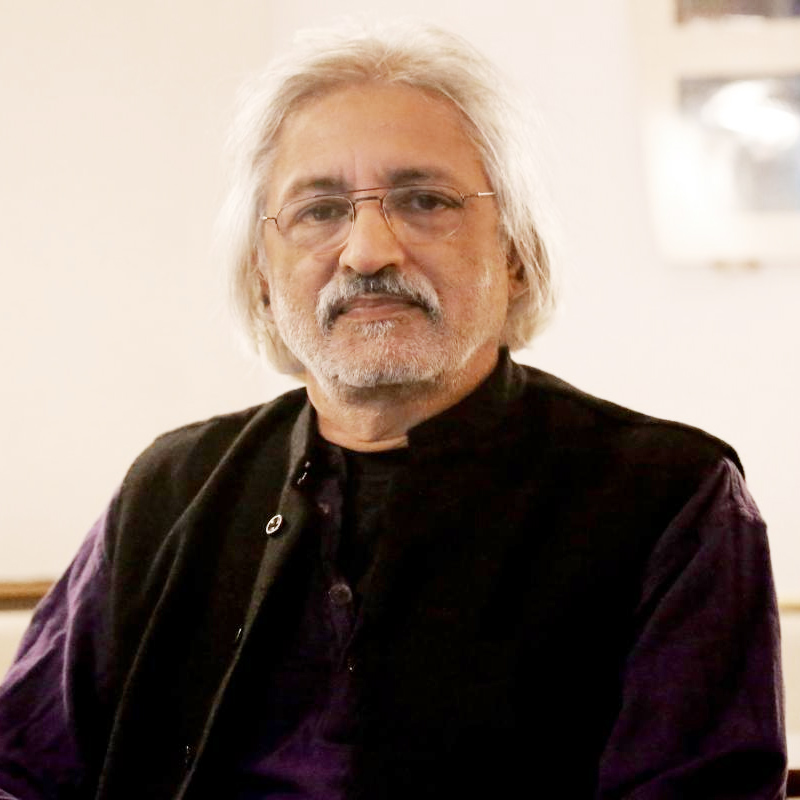
    The veteran filmmaker on social issues Anand Patwardhan who has often raised contoversies through his films was honoured with the V Shantaram Life Time Achievement Award for his contribution to promotion of documentary films movement in India.


    Patwardhan is an acclaimed documentary filmmaker known for his activism through social action documentaries on topics such as corruption, slum dwellers, nuclear arms race, citizen activism and communalism. His notable films include Bombay: Our City (Hamara Sahar) (1985), In the Name of God (Ram ke Nam) (1992), Father, Son and Holy War (Pitra, Putra aur Dharmayuddha) (1995), War and Peace (Jang aur Aman) (2002) and Jai Bhim Comrade (2011), which have won national and International awards. Jai Bhim Comrade had won the Best Film award at MIFF 2012.   


    In his acceptance speech, Patwardhan said, “My feelings are mixed. My films speak about the reality of the disadvantaged. They have raised several socially relevant issues, but the impact has been marginal. The issues I highlighted through my films sine 1980s continue to exist – rampant demolition of slums and uprooting of poor, communal violence, increasing crime against women, atrocities against the downtrodden, nuclear arms race etc, continue to remain as serious challenges”. 


    The V Shantaram Award carries a cash prize of Rs 5 lakh and a citation.


    The opening film – the 86-minute package curated by the British Film Institute National Archive Before Midnight: a Portrait of India on Film, 1899-1947, is a collection of home movies, documentaries , dramas and comedies exploring how life was  lived in British India. It has over 100 short films covering topics ranging from temples to tigers. 


    The Maharajah of Jodhpur’s home movies provide an epic portrait of princely power in the 1930s and 40s, whilst those of the Gorrie family offer an intimate picture of family life and their expeditions into the Himalaya. The collection also features the films and TV dramas that helped to shape the mythologies of British India including The Drum (1938), The North West Frontier (1959) and The Far Pavilions (1984).


    Another highlight of the opening ceremony was the screening of short film titled ‘Checkmate BB’ produced by Mumbai School kids. Seventeen kids from 13 schools were trained to conceptualise, direct, shoot and edit a film of their own at a workshop conducted by by the Linnep Media and CineKids, Amsterdam, as part of the fortnight-long Linnep Kids Film Festival, that was held in 15 schools of Mumbai, Navi Mumbai and Thane, as a run up to MIFF 2014.


    The Indian Navy’s ceremonial Naval band and Bangalore’s noted music group Mystic Vibes also enthralled the audience at the inaugural ceremony.


    The 13th MIFF being held from 3 Feb to 9 Feb at NCPA (Tata Centre) at Nariman Point received over 790 entries including 205 entries in the international section. This biennial film festival organised by the Films Division of the Information and Broadcasting Ministry is held in collaboration with the state Government of Maharashtra and the Indian Documentary Producers Association.

  • Patwardhan’s docu Jai Bhim Comrade at Hong Kong film fest

    Patwardhan’s docu Jai Bhim Comrade at Hong Kong film fest

    MUMBAI: Anand Patwardhan‘s 198-minute documentary, Jai Bhim Comrade, will compete at the 36th Hong Kong International Film Festival that would be held from 21 March to 5 April.

    Shot in over 14 years, the documentary follows the music and the tradition of activism of the Dalits in India.

    It won a special mention at the Dubai International Film Festival 2011 followed by an award at the 12th Mumbai International Film Festival for Documentary, Short and Animation films.

    The other documentary that would be screened at the festival is Bitter Seeds by Micha X. Peled of USA. The film that centers around the plight of a cotton farmer in India, how crops are grown, how they reach the consumers and the real human cost is involved.

    Lucky (South Africa), directed by Avie Luthra, will also be screened at the festival.

  • Mumbai Intl fest announces lineup

    Mumbai Intl fest announces lineup

    MUMBAI: The 12th Mumbai International Film Festival for documentary, short and animation films has announced its lineup.

    Pink Saris, directed by Kim Longinotto which screened at 54th BFI London Film Festival and won an award at the 35th Hong Kong International Film Festival, will participate in the International Competition for documentaries.

    Jai Bhim Comrade, directed by Anand Patwardhan which recently won a Special Mention at 8th Dubai International Film Festival, will also x be screened in International Competition.

    Some of the films that will screen in the Indian competition are It’s the Same Story by Nina Sabnani, The Eclipse of Taregna by Rakesh Chaudhary, Visible Bra Straps by Ajitesh Sharma, Aaliya by Rajiv Mohite, Partners in Crime by Paromita Vohra, Inshallah, Football by Ashvin Kumar and The Rat Race by Miriam Chandy Menacherry.

    Meanwhile, details of foreign entries are awaited.

    The festival will be held from February 3 to 9.

  • Indian film ‘Jai Bhim Comrade’ gets FSA 2011 Best Film Award

    Indian film ‘Jai Bhim Comrade’ gets FSA 2011 Best Film Award

    New Delhi,: ‘Jai Bhim Comrade’, a film by the renowned and often controversial Anand Patwardhan, was awarded the Ram Bahadur Trophy for Best Film at the Film South Asia 2011 festival of documentaries.


    In the Festival which concluded yesterday in Kathmandu, Nepal, the festival jury highlighted “the depth of personal involvement in one film, a contact firmly anchored in political commitment”.


    The ‘Bhim’ in the film refers to the Indian constitutionalist and thinker Bhimrao Ambedkar. Filmmaker Patwardhan, who has been making political documentaries for nearly three decades, was present to receive the Ram Bahadur Trophy from the chief guest, eminent Bangladeshi filmmaker Catherine Masud.


    The three hours and 20 minute long film explores the history of Dalit activism in Maharashtra in the aftermath of the killing of 10 activists in Mumbai in 1997 and has been in the making for 14 years.


    ‘The Truth That Wasn’t There”, directed by Guy Guneratne, was recognised by the jury for Second Best Film. It is about three student journalists who cross into the north of Sri Lanka in the aftermath of the war in 2009. The film was recognised “for having pushed the debate around the very idea of documentary as truth-telling, in a new digital age where the boundaries of newer documenting mediums are increasingly blurred.”


    The Tareque Masud Debut Film Award was given to ‘Journey to Yarsa’ by Dipendra Bhandari, recording the fight for economic survival by a family in Rukum District of Nepal, searching for the yarsagumba larvae-caterpillar. The jury noted the film’s “determination to record a story of a subject little known to the world, a powerful tale of people’s endeavours and relationships in a remote community.”


    A documentary from Burma, ‘Nargis: When Time Stopped Breathing’, was recognised for Special Mention, “for its poetic yet strong visual craft celebrating the human spirit in the aftermath of the devastating cyclone in a closed society.” The film records the tragedy of the Cyclone Nargis, which killed 140,000 people in the Irrawaddy Delta in May 2008.


    It is made by two Burmese directors who prefer not to be known by their real names. The Jury of the FSA 2011 festival was made up of Satish Sharma, photographer, curator and cultural critic; Manesh Shrestha, educator, journalist and former director of Film Southasia; and Igor Blazevic, the founder of the One World Film Festival with its base in Prague. According to Upasana Shrestha, co-director of Film Southasia, 15 of the films selected from the 36 shown at FSA ’11 will tour the Subcontinent and the world as ‘Travelling Film Southasia” over the next two years. The next Film Southasia festival is scheduled for September 2013.