Tag: Anand Neelakantan

  • Ayodhya Mandir Mahotsav hosted by Jimmy Mistry at Della Adventure, Lonavala

    Ayodhya Mandir Mahotsav hosted by Jimmy Mistry at Della Adventure, Lonavala

    Mumbai:  After nearly 500 years, Lord Ram returns to his original seat in Ayodhya which marks a remarkable milestone in Indian history. To commemorate this consecration, Jimmy Mistry, chairman & founder of Della Group, has exuberantly announced a grand celebration ‘Pran Pratishtha Samaroh’ at Della Adventure & Resorts, Lonavala on 22 January 2024 that will attract 3000 attendees rejoicing on this joyous occasion.

    Preparations are in full swing with divine activities planned namely Ram Ratha Yatra that will witness the locals of Khandala, Lonavala, Pune and nearby villages on the route from Lonavala, Bhangarwadi via Kunegaon with the final destination as Della Resorts. With vibrant flags and bellowing voices chanting ‘Jay Shree Ram’, the streets leading to Della Resorts will be a sight to behold. To further set a sacred tone for the Pratah Samaroh, a Maha Yagna with 21 Brahmans will be performed from 11 am to 12 noon. A LIVE telecast of the Pran Pratishtha from Ayodhya (12 pm to 12.30 pm) will thereby heighten the spirits followed by Bhajans & Kirtans. All devotees will receive blessings of the deity via an exclusively curated Maha Prasad offered at 1.30 pm.

    The spiritual journey will continue into the evening session, Sandhya Samaroh (6:00 PM – 9:00 PM), where the atmosphere will be aglow with the Sahastra Deep Prajwalan – a ceremony that will bejewel the skies with fireworks and light up the soil with an exhibit of 3000 Lamps in the shape of ‘Jai Shree Ram’. On this auspicious occasion, young children from Della ZP School will present an inaugural performance in the form of Ganesh Vandana followed by a patriotic musical showcase by the military band, ‘Bombay Sappers’. This occasion marks a landmark in the life of Founder, Jimmy Mistry, a patriotic Indian who will speak about the Indian values deeply embedded in his entrepreneurial journey and the impact of Lord Ram. The evening will culminate with insights from distinguished speakers, including Dr Mickey Mehta, celebrated TV panellist, Anand Neelakantan, noted author of Ramayana TV Series as featured on Sony Television, and E.S.P. Guru Deepak Rao, offering a holistic experience for all attendees.

    Founder Jimmy Mistry invites one and all to partake in this historic event, an embodiment of spiritual fervour, cultural richness, and communal harmony.


  • From ream to reel: The boom in book to screen adaptations in India

    From ream to reel: The boom in book to screen adaptations in India

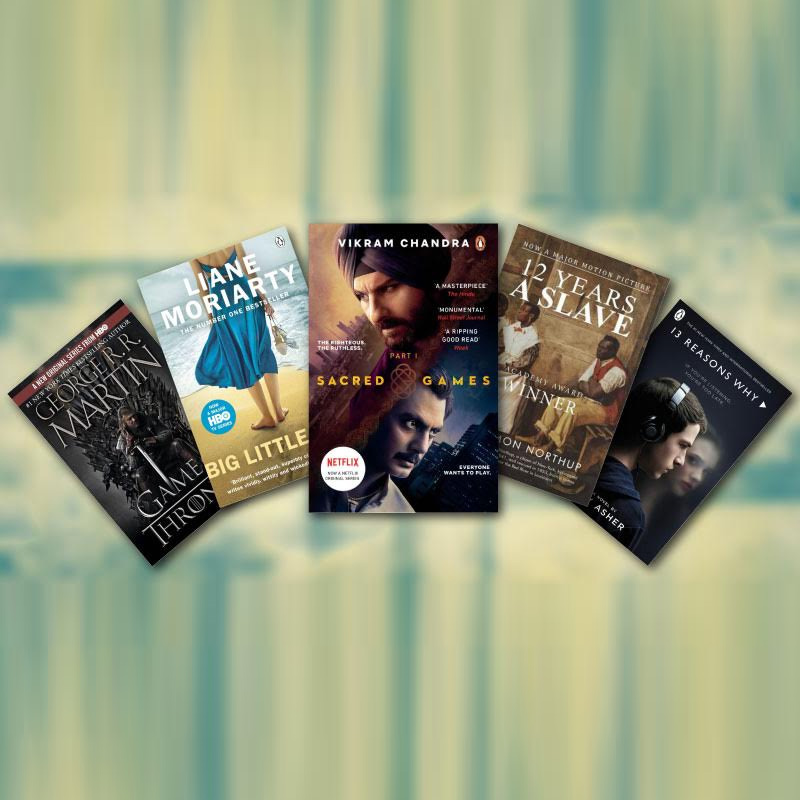
    MUMBAI: From golden age classics like Gone with the Wind and To Kill a Mockingbird, to the more recent young adult adaptations of the 2010s like The Hunger Games and The Fault in Our Stars, Hollywood has a legacy of churning out book to screen iterations. Fortunes in tinseltown have been built on entertaining the masses with 70mm productions of their favourite tomes, be it children's stories (Wizard of Oz, Harry Potter) or suspense thrillers (The Shining, Gone Girl), historical dramas (Schindler's List, Argo) and romantic fiction (Pride and Prejudice, The Notebook). While there have been constant refrains of "the book is better than the movie" by the public, Hollywood has seldom been inclined to buck the trend of motion picture or TV adaptations of mass-market publications. In fact, the massive success of Game of Thrones, whose original source material is A Song of Ice and Fire saga by George R R Martin, led to a renewed interest and spurt in adapting novels for the small screen (think The Handmaid’s Tale, American Gods, Big Little Lies et al)

    But when it comes to Bollywood, historically there has been a dearth of book to screen adaptations. While they have been around for a long time – Satyajit Ray's Pather Panchali (1955) was based on Bibhutibhushan Bandyopadhyay's novel of the same name – their frequency became too few and far in between to really count. Indian audiences were blessed with the occasional gem like Mira Nair’s The Namesake, but mostly, they're used to sub-par replications of frothy Chetan Bhagat paperbacks.

    However, book adaptations in recent years have improved, in both quantity and quality – in fact, we appear to be in the midst of a high-profile book-based production boom. Adapting a hit book isn’t a guarantee of success, but producers, more than ever, are perusing bookshelves for inspiration for the next big show or movie.

    So what has changed? When did books become a foundation for popular films and series? And what does it mean for the future of producers, authors and book publishers alike?

    If one were to pin-point the resurgence of this trend, it was Sacred Games, Vikramaditya Motwane and Anurag Kashyap’s cerebral tour de force adapted from Vikram Chandra’s massive 2006 tome of the same name, which proved to be a game-changer in the Indian OTT space. The dystopian series Leila was also based on the book by Prayaag Akbar; and the cricket drama Selection Day had its roots in the novel by Aravind Adiga. Red Chillies Entertainment’s Bard of Blood was penned by the young Indian author Bilal Siddiqi.

    Beyond OTT platforms, other content producers are also looking at books as source material. Endemol Shine India has recently acquired rights to Richa Mukherjee's Kanpur Khoofiya Pvt Ltd, Chitra Banerjee Divakaruni's unreleased book Lioness: The Last Queen, Salil Desai’s novel The Sane Psychopath along with Damyanti Biswas' crime novel You Beneath Your Skin

    Book to Screen adaptation

    HarperCollins India rights and backlist manager Arcopol Chaudhuri mentioned that in India, screen adaptations from novels have gathered pace over the past five years thanks to new and emerging broadcasting platforms, primarily driven by OTTs.

    Endemol Shine India CEO Abhishek Rege explained that adapting a book comes easy to content producers. “With adaptation, it is like a certain level of the story is already prepared and the other important aspect is popularity. If you have a certain book that is popular, you would want to use it for your story because there is a certain type of fan following which will come to watch it. I think it is something that will be continued as a book right acquisition model. Currently, OTTs need content to fill up their library, and books offer ready material, it kind of cuts short the mainline process. That is why book rights are going to be popular in the coming years.”

    Applause Entertainment content head Deepak Segal also highlighted that long-form dramas have opened many opportunities for content creators. The episodic format allows creators to deep dive into the storyline, sketch different and longer character arcs and allows them to innovate with the plot. With the digital boost, it has become one of the important mediums of storytelling as earlier the adaptations were restricted to films. This helps create more opportunities for everyone – creators, talent, platforms etc.

    Choosing Stories

    For Segal, the story is one of the key deciding factors while choosing a book. Aspects like relevance and connectivity with the audience are thoroughly examined. He said, “With India’s Most Fearless, we knew that this subject is of national importance and we wanted to highlight the storyline in four parallel tracks which the audiences have not seen.”  

    Another parameter that Applause Entertainment looks into is the shades of the character, the uniqueness to bring out a progressing reaction in the audiences. Segal further discusses the subject with the creative team, on how to pan it out into eight to ten episodic series, keeping the audiences engaged and entertained with strong storytelling at the core. Then the creative team makes an observation on how the characters will scale and how much potential it offers to build a room for innovation.

    To help writers sell their books to filmmakers and content producers, Sidharth Jain has started ‘The Story Ink’, India’s first story company. Jain said, “There are very few players in India who have been pursuing screen adaptations. But what we are doing new is to take the screen adaptation business from mere agenting to curating content strategy. I don’t think of us as an agency as it is more like a platform for writers. While we work on a fee model, we are in the business of turning books into projects.”

    Picking Genres

    Rege discovered that post Covid2019, audiences want to see happy stories. The studio is currently focusing on creating light-hearted shows. In terms of understanding viewers’ preferences, Rege uses metrics that are released by some agencies as a report for digital media consumption. Apart from this, there are different reports available that talk about genres. He also reaches out to OTT platforms to understand their research and consumer feedback.

    By contrast, Segal is looking at all sorts of genres as he wants to reach out to all buckets of audiences. “Today the viewers are open to exploring different genres and as content creators, we want to have diverse offerings. Digital has become a great way to gather insights, understand consumer psychology and their points of view on topics. It gives leverage to mould out setup, characters and storytelling,” he added.

    Jain stated that biographies and real stories have been in great demand recently. But a solid thriller, horror or mystery always makes for a good adaptation.

    Process of book adaptation

    Rege revealed that the team at Endemol Shine directly reaches out to authors and inquire if they are represented by any agents or publishers. Nowadays there are a lot of agents that work on book to series productions, and it is not the publishers who hold the rights. There is a set structure on how books are adapted to screen. Endemol Shine follows rules from global learning and then applies that to the contract. It also keeps the rights of all languages as well. When the story pans out the team decides on what could be made from it, whether it is for film, television, OTT and in what language. Packaging is another critical aspect. Post that, the director for that genre, writer, and then the cast is finalised.  

    At The Story Ink, the team has a recommendation-driven approach to pitching. They study the content strategy of the platform, map access to talent and available resources of the producer – and then recommend the right story to them for consideration. Jain added, “We don’t send out lists or catalogues. Our approach is very boutique and curated. I work with authors, publishers, and literary agents. Usually, I find a book that I feel should be adapted and then I reach out to them (the author first and then the publisher). But now, increasingly, authors are reaching out to me on their own.”

    Chaudhuri mentioned that the process involves the licensing of audio-visual rights to the producer, for a fee. The publisher or the author can reach out to the producer to pitch a book and solicit interest to license the rights. “Alternatively, producers/filmmakers themselves reach out to the publisher to acquire the rights for books they're interested in adapting for the screen.”

    According to Neelakantan, in India, the concept of IPR is still in its infancy. Usually, the writer is paid a lump sum for the book adaption rights. Theoretically, an author can put any conditions, but in practice, once the rights are sold, the author does not have any control over the product, he claimed. “Unlike books, films and television are industries and have their own constraints and demands and has scant space for writer’s ego. Once you sell the rights, it is better to forget having any creative control over it.”

    Jain disclosed that writers get somewhere around Rs 15-30 lakh and then the amount is divided between the agency and the writers, and sometimes, the publishing house.

    New Found Interest

    Is content producers newfound interest in books as source material for films and series because of the success of big-screen adaptations of Chetan Bhagat’s novels? Jain held the view that the real reason is the entry of international streaming giants like Amazon and Netflix. They are seeking better content and that’s putting pressure on the limited talent and story pool that is there in the industry.

    On the other hand, Anand Neelakantan, the bestselling author of Asura: Tale of the Vanquished and the Ajaya series, opined that not all books lend themselves for film or TV production. “The screenplay is a concise art, and many stories cannot be told in a short time of two hours. That is why there are so few screen adaptations that have lived up to the standards set by the books. Original series is a better medium to adapt novels, while the film is better served by adapting short stories or novellas. Of course, exceptions are there to this rule,” he shared. Neelakantan has written screenplays for several popular TV series, including Star TV’s Siya Ke Ram, Sony’s Mahabali Hanuman and Colors TV’s Chakravarthi Samrat Ashoka.

    According to Neelakantan, creative writing, on the whole, is moving towards the screen these days – be it movies, television or the OTT platforms. “It is the way to go. That does not mean other forms of writing would die out but would become more and more niche. Films did not finish off plays or poetry but superseded most other forms of storytelling in sheer reach and commercial power. Like any other field, those who keep pace with change in society and technology would retain leadership.”

    Impact of OTT platforms on writers 

    The question arises: are streaming giants like Netflix, Amazon, Disney+Hotstar and various other platforms changing the way books are being written, especially in India? There is a possibility that more and more writers are writing with a view of making their books accessible across audiences through these multi-media platforms.

    Jain pointed out that authors pen stories that inspire them, and OTT platforms rarely, if ever, influence how they write. Good and compelling stories will always work, in any medium. He said, “Thousands of books get published in a year, but a fraction of those will make it to screen. But yes, I believe some writers will make a lot of money because of the emergence of new platforms. Also there is no time for creators to write stories. It is at times difficult to meet the demand. In certain cases where we take on development of the scripts for books to screen adaptation, we always stay focused on what’s the best way for the audiences to enjoy the story – whether they have read the book or not. Organic and honest storytelling, keeping in mind the expectations from the format+medium will always work best.”

    Future of book adaptations

    From content creators, agencies to authors, everybody’s of the opinion that going forwards, book to screen adaptations are bound to grow by leaps and bounds. With the focus of strong storytelling at its core, this is something that will be explored more and more in the future.

    Chaudhuri contended that due to increasing demand, studios will invest more in writers' rooms. Said he: “A few years down the line, the film industry awards and the National Awards will have a category for 'best adapted screenplay', like they always do at the Academy Awards.”

    Neelkanth held the view that more books will get adapted as there is a paucity of content in the show industry. He concluded, “Book adaption does not depend on the commercial success of books. If you have a compelling story and you know how to tell it well, it does not matter how many copies the book sold. The film/ TV industry would lap up the books that would yield you a lifetime worth of royalty of a best seller in one go. So, all the writers out there, keep writing.”

  • Audible inks deal with rajpal & sons, expanding into hindi audio books

    Audible inks deal with rajpal & sons, expanding into hindi audio books

    Mumbai: Further cementing its commitment to break barriers of all kinds in order for a variety of stories to reach the largest audience possible, Audible today announced an exclusive deal with Rajpal & Sons. The world’s largest audiobooks platform joins hands with one of India’s oldest and largest literary Hindi publishers, thus giving consumers access to over 230 titles across genres, such as Hindi classic and contemporary literature, self-development, poetry and translations. The catalogue includes over 150 bestsellers, including titles with translations to English, as well as Hindi and Urdu titles. 

    The deal marks a milestone in Audible’s India journey, which launched in 2018 and has expanded to over 200,000 titles, with over 700 Audible-exclusive deals with Indian authors. This strategic move will allow their consumers to not only access audiobooks in multiple languages, but also further showcases Audible’s ability to understand and cater to the diverse Indian market. 

    While a robust slate of bestselling authors like Divya Prakash Dubey, Anand Neelakantan and Anu Singh is already available on the service, this partnership will further expand this roster to include classic literary authors like Vishnu S. Khandekar, Khushwant Singh, R.K.Narayan and contemporary authors like Ashok Kumar Pandey, Manisha Kulshreshta, Bhagwant Anmol. In addition, the company recently launched the India-only app, Audible Suno, which provides free access to over 60 exclusive audio shows narrated by India’s most famous voices. 

    Rajpal & Sons, a publisher of timeless classics, is also been known for their translations of both Indian and international literature, including the Hindi translation of the award-winning title Rue De Boutique Obscure (English translation: Missing Person) by Nobel Prize winning author Patrick Modiano.  Some of the popular Hindi titles include Kurukshetra by Dinkar and Meri Priya Kahaniyaan by  Amrita Pritam, Lokpriya Shayar Aur Unki Shayari series by Prakash Pandit, Ashadh Ka Ek Din by Mohan Rakesh and Kitne Pakistan by Kamleshwar. This diverse offering will allow Indian listeners to choose the book they would like to experience, language no bar.

    Additionally, Audible has signed exclusive Hindi titles from Manjul Publications, the leader in the self-development space, with translations of books such The Power of Your Subconscious Mind by Joseph Murphy and Sapiens by Yuval Noah Harari, , The Answer (Allan and Barbara Pease), Tipping Point (Malcolm Gladwell) in the pipeline. 

    Some of the books being translated exclusively for Audible include Hindi translations of international bestselling titles like The Alchemist and Adultery by Paulo Coelho.

    Audible country head Shailesh Sawlani stated, “We are very excited about our partnership with Rajpal & Sons, an Indian publishing company with a global legacy. We believe that it will enable our customers to access a whole new world of stories in Hindi. Not only do these include very popular and much loved stories written in Hindi but also translations of popular English works, thus providing easy and convenient access to our non-English readers. At Audible we always keep the customer at the forefront of all our initiatives and I am confident about this association going a long way in making sure we continue delighting our customers.”

    Rajpal & Sons partner Pranav Johri said, “We are always looking for new ways for Indian stories which reflect our rich culture to a global audience, and the partnership with Audible, a pioneer in its space, allows us to do just that. Indian readers can now expect distinctive fiction and non-fiction audiobooks on Audible’s high-quality, user-friendly app. Our endeavor is always to make sure content reaches a wider audience in terms of geographical spread and their preference to consume content over different mediums like print, digital and audio. Our association with Audible is a significant step in that direction.”

  • Star Plus’ 2 shows to end as ‘Siya Ke Ram’ goes on air from 16 November

    Star Plus’ 2 shows to end as ‘Siya Ke Ram’ goes on air from 16 November

    MUMBAI: Star Plus’ two prime time shows namely Tu Mera Hero and Tere Sheher Mein are going off air from 14 November.


    Produced by Shashi Sumeet Productions, Tu Mera Hero will be replaced by Nikhil Sinha’s show Siya Ke Ram in the 8 pm time band from 16 November onwards.


    The last episode of the show Tu Mera Hero, which launched on 22 December, 2014, will be aired on 14 November.


    A source close to the development informed Indiantelevision.com that the reason the show is going off air is because it failed to generate sustainable ratings and the channel wanted to air the show in the same time slot.


    As earlier reported by this website, Siya Ke Ram, produced by Triangle Film Company, has been conceptualised by Aniruddh Pathak, who brought Lord Shiva’s legend to TV through Mahadev.


    Siya Ke Ram will offer viewers a fresh perspective on Ramayan. The story has been envisioned and created by some well-known writers namely – the best-selling author of Asura and Ajaya, Anand Neelakantan and Subrat Sinha – along with creative consultant Devdutt Pattanaik.


    Star Plus’ other show Tere Sheher Mein will also air its last episode on 14 November. Produced by Directors’ Kut,Tere Sheher Mein was launched on 2 March, 2015 and aired from Monday – Saturday at 10:30 pm.  


    Another source informed that an upcoming show from Rashmi Sharma Telefilms’ titled Saajan might replace Tere Sheher Mein in the 10:30 pm slot on Star Plus.


    Rashmi Sharma’s existing show Saath Nibhaana Saathiya on Star Plus is among the top five programmes in the Hindi general entertainment channels (GECs) space according to Broadcast Audience Research Council (BARC) India ratings.


    Saajan is a triangle love story, which also focus on issues of the youth. The official date and time is not yet revealed by the channel.