Tag: Anand Bhadkamkar

  • dentsu India CEO Anand Bhadkamkar moves on

    dentsu India CEO Anand Bhadkamkar moves on

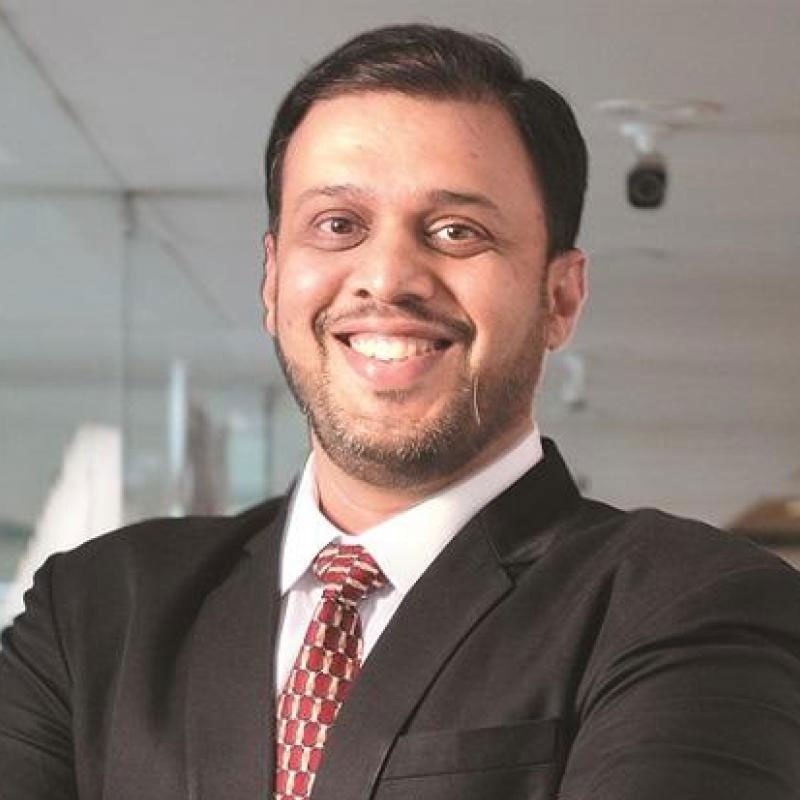
    Mumbai: Anand Bhadkamkar has stepped down as chief executive officer of dentsu International India. He was associated with the agency network for 14 years and served as CEO from September 2019.

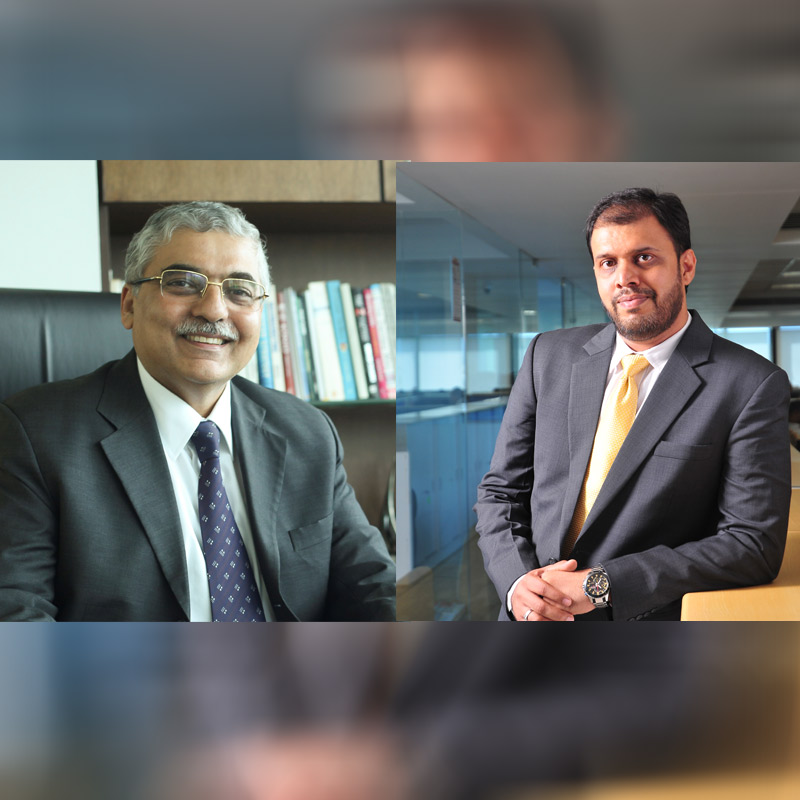
    Dentsu International APAC, CEO and chairman India, Ashish Bhasin and dentsu media and global clients, global CEO, Peter Hujiboom will step in to assume the day-to-day leadership of dentsu India in the interim. The company has yet to find a successor for Bhadkamkar.

    “In the last year, and despite the pandemic, we have started to optimise our portfolio of brands into six global leadership brands, making us more agile and simpler for our clients to access our world-class capabilities and talents. To accelerate this transformation, Ashish Bhasin, CEO, APAC and chairman India, and Peter Huijboom, global CEO, media and global clients will assume interim, day-to-day leadership of dentsu India while the business completes its search for a successor to Anand Bhadkamkar, who leaves dentsu on August 31,” said the agency in a statement on Tuesday.

    “With this new structure, we are well-positioned to unlock higher levels of business performance, innovation, and solution-led strategies for our people and for our clients. Our ambitions and goals are interconnected, and this is the beginning of dentsu India 2.0’s new and transformed path to success,” it added.

    Bhadkamkar joined Dentsu Aegis Network as chief financial officer for India in 2008 and was given additional charge as chief operating officer in April 2019. During his 25-year career, he has been associated with Lowe Lintas and Ernst and Young.

    Bhadkamkar is a chartered accountant who completed his bachelor’s in commerce from Narsee Monjee College of Commerce and Economics.

  • How will BARC’s decision impact news channels?

    How will BARC’s decision impact news channels?

    KOLKATA: L'affaire TV ratings continues.  In an unprecedented move, the Broadcast Audience Research Council (BARC) India has decided to cease giving out ratings  for individual news channels as it goes about improving the way it does its measurement and improves security. The twonews  industry associations expressed diamterically opposte views on BARC's decision. While the NBA welcomed it, the NBF expressed its disappoinment at not being consulted. 

    A key question that begs asking is: will the absence of ratings  impact the way marketers, media planners and buyers buy air time on the news genres?

    BARC data, the only currency to measure what is being watched on TV in India,  plays a major role in the decision-making process of advertisers and agencies. Many news broadcasters are perhaps chewing on their fingernails, fretting over the impact this may have on their revenue.

    Some experts from media agencies believe news channels sales folks needn't worry; there may be very little change.

    Read more news on BARC

    An expert from a large media agency stated, on the condition of anonymity, that the media-rating blackout is not a brand-new experience. Back in the TAM regime, when linear TV was a much stronger medium, the industry survived without any ratings on several occasions, sometimes for as long as a couple of months. He added that advertising never got impacted due to issues regarding jurisdiction.

    Another media executive expressed that there might be a marginal movement of ad dollars to other genres in the short run. "News being a high impact genre can’t be ignored under any circumstances. Further, he cautioned that channels should take note in improving the content quality given the increasing negative sentiment among a part of advertisers as well as viewers," he said.

    Parle Products  senior category marketing head BK Rao believes that ratings are not the only inputs that drive buying decisions for TV. "Besides ratings, brands consider other inputs too, such as speaking to distributors, the programming line-up, and time bands," he shared. More importantly, Rao feels  that now the focus will shift to quality, rather than quantity. “Advertisers will be forced to look at the quality aspect. They will have to speak to shareholders to understand the consumption pattern. In general or business news, content will be considered as a key factor. Quality analysis of news will play a major role. Overall, news networks will definitely suffer revenue-wise. Advertising people will shift their revenue to other genres,” he theorised.

    Some analysts are playing the waiting game, unwilling to leap to any conclusions. “It is too early. As the situation is evolving, it is difficult to predict now. Everybody is evaluating right now as the scene is unfolding gradually,” said Dentsu India CEO Anand Bhadkamkar.

    A senior industry veteran opines that news channels should start leaning towards a subscription  model. "As a group if they decide to go pay and don't break that pact, they will find enough viewing cohorts nationally to help them have a viable business model," says he. "Advertising will then be the cream on top, and not their lifeblood. They will then be able to go about being the fourth estate of society without any worries about the stances they take."
    Are the new channels head honchos listening?

  • India’s GDP contracts, revival of demand will be a gradual process

    India’s GDP contracts, revival of demand will be a gradual process

    NEW DELHI: Recording the worst slump since India started releasing quarterly GDP data in 1996, the Indian economy contracted by 23.9 per cent in the month of June 2020. According to experts, the country has lost Rs 13 lakh crore of income in Q1. The downturn, which was quite evident from the previous few quarters was catalysed by the lockdown and is expected to last beyond the pandemic.

    DAN CEO APAC & chairman India Ashish Bhasin said, “It is quite obvious that GDP numbers are not going to be good because as we know the most significant part of the industry and economy was virtually in a lockdown. It has set us back 2- 2.5 years.”

    Madame executive director Akhil Jain noted, “Primarily fear for the future has led to chaos. The industry is in the expansion and development stage and was already working on thin margins with a huge dependency on financial institutions etc. Poor support has led to either suspension of manufacturing operations or reduction. E.g. the moratorium hasn’t helped anyone much as it will increase the burden in the future. Had there been a waiver on interest for a quarter – it would have corrected the downfall to a great extent.”

    Speaking about the advertising industry, Bhasin noted that he doesn’t see advertising coming to 2019 levels even in 2021 but perhaps by 2022. “There are severe challenges, including liquidity crisis, that a significant part of the economy is facing. Therefore the revival of demand will be a gradual process. It is not going to be a sudden V-shape recovery. It will keep improving gradually, month on month.” 

    The advertising industry faced massive losses during the first half of the year, firstly because of NTO 2.0 and then by Covid2019 lockdown. DAN India CEO Anand Bhadkamkar had shared in an earlier interaction, “Certain economists are predicting that the GDP growth (that was estimated at about 4.5 per cent) may dip up to 1.5-1.9 per cent. If that happens, we will be slipping down by more than half almost. We just have to wait and watch how things pan out.”

    Now, the industry estimates for the yearly GDP stands at negative 15-20 per cent as shared by Bhasin, indicating much bigger losses that the industry had expected in the earlier months. 

    Ethinos Digital Marketing executive director & joint MD Benedict Hayes shared, “We saw an immediate 40 per cent reduction in marketing investments and spends across in the first month of lockdown, by month 2 that touched 65 per cent. It has recovered somewhat of late, but by no means back to where it was. Less expendable income and shopper sentiment mean conversion rates to sales will drastically drop below normal. This means media spends have to be more efficient and this is where we have seen technology make a big difference. Some industries like entertainment, healthcare, gaming, EdTech have seen a positive, but generally, everyone has taken a hit.”

    Industries like travel, tourism, manufacturing, and construction are expected to face the worst of the brunt in the coming months, which will further impact the GDP. The retail sector will also face some struggle to get up from here. 

    Jain shared, “We are expecting the demand to reach 100 per cent only by the second quarter of the next financial year. This FY, we are expecting to reach 65-70 per cent of last financial numbers.”

    However, the industry is seeing the silver lining in a few sectors.  

    Bhasin noted, “On the positive side, the rains have been good, and the demand should start picking up. The festive season’s start should also help in bringing things back to normal. The rural areas and tier 3-tier 4 towns are likely to have more money in consumers’ pocket, which is a good sign because the rains have been good and rural demand should pick up.”

    Arya Collateral MD Prasanna Rao, however, added that just the agri sector and rural spending might not be the best antidote to the ailing economy. “If we look minutely into the data just released, agriculture alone has shown positive growth with a share of 18 per cent in GDP. The only bright spot was the rural economy, where the farm sector grew at 3.4 per cent year-on-year in the quarter. The agriculture, the farm sector is still growing, but it might not be enough to pull out the economy from this stagnation. There is no alternative to public spending in these trying times, people are locked inside their houses and only spending on essentials.”   

    BYJU's head of marketing Atit Mehta says, "According to UNESCO – nationwide closures of educational institutes during this crisis are impacting over 90 per cent of the world’s student population, which is around 1.5 billion learners across 186 countries. Online learning platforms have become almost a necessity in today’s scenario to ensure learning and education for kids around the world is not impacted."

    Mehta further adds that with students now completely depending on online learning to fulfill their daily learning needs, the Covid2019 crisis has caused a paradigm shift, making online learning a vital part of mainstream learning. "It has put the spotlight on the ed-tech sector. At BYJU’S, we introduced several new programs to help students continue learning even during this difficult time. From introducing courses in vernacular languages to launching more subjects, our teams worked diligently to keep bettering our learning programs. We also launched ‘BYJU’S Classes’ – a comprehensive online tutoring program to offer students a platform to solve their doubts instantly. We have received an overwhelming response with almost 3X increase in the number of students accessing our app. Earlier students used to spend 2-3 days per week on our platform. As a result of the lockdown, they are using the platform on a daily basis and spending an average of 100 mins per day. We saw over 20 million new users access our platform. There has also been a significant behavioral shift in the parents’ mindset towards online learning as they have witnessed their children benefiting from it in person and seen how this format of learning can serve as an enabler in their growth. We believe it adds even more responsibility on us to provide exceptional home learning opportunities to students today. Every crisis presents an opportunity and this is that inflection point for education, where we expect the rise of a blended model of education. The proliferation of smart devices coupled with the democratisation of the internet will fasten this process. Screens have become the primary mode of content consumption for the new generation. This will further boost the adoption of the new model of learning," adds Mehta.

    Another sector that is expecting a positive upturn from here is the logistics sector. LetsTransport CEO & co-founder Pushkar Singh highlighted, “The booking volumes on our platform have picked up mostly due to e-commerce and home deliveries picking up. In the initial months of the lockdown, it was very difficult for enterprises to continue operating with traditional companies using archaic processes. We saw enterprises transition to working with more organized logistics players as the focus was on reliability in the supply chain. While the overall economy has contracted affecting every sector, it will certainly push the logistics sector to innovate and adapt faster. Going forward, logistics capabilities will prove to be a key differentiator for brands, all of whom are trying to reach their customers more quickly and more efficiently.”

    The industry has no hopes for the market to revive this year and is expecting it to reach 2019 levels by 2022. 

    Hayes noted, “Honestly, I feel the road to recovery will be long and will stretch until the second half of next year. We are witnessing something that has not happened before and will see a lot more fallout before recovery is complete as well. Restaurants, travel, and hospitality companies are in absolute dire straits, as well as high street retail, automotive, and real estate. Without support, I feel a lot of big businesses will be under extreme pressure. It looks like some economies such as the UK steamrolled into a full-blown recession, and the ripples of the western markets will definitely be felt here.”

    Jain highlighted the need for better economic stimulus from the government stating that the earlier packages did not fare well for the industry at the ground level, “The package didn’t help the MSMEs at all. The upgrade in the limits was an eyewash, e.g. the limit for benefits was increased to 250, but the investment and bank limits weren’t touched making it non-utilisable for a lot of MSMEs.”

    Rao suggested, “The only way possible from here are stimulus announcement and public expenditure outlay in infrastructure, which may bring in the channelisation of economic fundamentals required for the country's growth."

  • Covid2019 might push traditional advertising towards negative growth

    Covid2019 might push traditional advertising towards negative growth

    NEW DELHI: The world economy has been brought to its knees by a medical crisis called COVID-19. The pandemic has battered the situation for even the most developed nations, and India, which was already dealing with a bruised economy for the past few quarters has found itself in a bigger soup. The ongoing lockdown has desisted liquidity across industries translating into a tough time for the media and advertising world, which has slowed down the business greatly mid-March onwards.

    DAN India CEO Anand Bhadkamkar tells Indiantelevision.com, “The pandemic has impacted the entire economy and the effects of it are being felt across all businesses. Manufacturing and other core businesses have been affected the most. People have stopped interacting in physical spaces. They are not moving out of their homes. Consequently, the entire economic activity has slowed down considerably. Advertising and communications tend to fuel the growth of commerce massively, thereby, accelerating its growth forward. Now, given that commerce has been badly hit, advertising is suffering equally.”

    DDB Mudra Group CEO and MD Aditya Kanthy shares that advertising reflects and shapes the economy and there has been a slump in the work opportunities because of the situation. “The demand side problems are obvious. Even in categories where there is demand, there are huge supply-side/ supply chain and distribution issues. Liquidity and credit is a challenge. Advertising is dependent on all of these factors. The industry depends on marketers who have the appetite and the means to invest. That is compromised in the current market scenario. It cannot operate in isolation.”

    While there has been a great surge in media consumption, both on digital and television, it is not resulting in ad monies for the platforms, given the market uncertainty. As per BARC-Nielsen data, weekly viewing minutes in week 15 of 2020, starting 11 April, grew by 40 per cent to reach 1,239 billion, as compared to 887 billion during the time period between 11 and 31 January, however, the number of advertisers dropped to 1,021, as compared to 1,378.

    If Madison Media and OOH group CEO Vikram Sakhuja is to be believed, the advertising growth, which was pinned by his firm at around 10 per cent at the beginning of the year,  will take a big hit in this calendar year. “We were expecting around a six per cent growth for traditional and around 28-30 per cent for digital media. However, looking at the current scenario, traditional media might observe a negative growth, while digital will also shrink considerably. We will be lucky if we can see a 1-2 per cent growth this year.”

    He elaborates, “The January-March quarter was already difficult for TV because of the NTO-2.0 and the second quarter is hit by COVID impact. Third-quarter might see a rise if we have a good Diwali season but it will depend largely on the market sentiments then.”

    Bhadkamkar notes, “We were hoping that advertising spends would grow by 10-10.5 per cent in 2020 as per industry estimates. Now, however, this growth is expected to be half of that. And, if the impact continues, the ill-effects would be much larger on the calendar year.”

    “The first quarter has been severely impacted, and recovery might start after h2. Q3 should return with recovery but again, that is only an assumption at the current stage and depends on how COVID 19 situation improves. Certain economists are predicting that the GDP growth (that was estimated at about 4.5 per cent) by May dip up to 1.5-1.9 per cent. If that happens, we will be slipping down by more than half almost. We just have to wait and watch how things pan out. For now, everything seems very tricky. However, from a long term perspective, the outlook for India is definitely positive, once the country starts getting out of COVID 19 downturn.”

    The industry insiders are hoping for some relief and support from the Indian government to pad the losses advertising industry is facing. Recently, AAAI chairman Ashish Bhasin had written to union minister of information & broadcasting Prakash Javadekar detailing a set of recommendations to support the industry.

    Bhadkamkar supports the decision as he says, “The government intervention is necessary for the current situation because the pandemic has affected the advertising industry severely. The letter stresses on how the Government can help in providing the stimulus to the advertising industry and not for any add-on benefits or expecting any specific fiscal measures. At present, the liquidity is getting tighter and there is a lot of slackness in the market. Hence, we need to protect the businesses by providing more liquidity as well.”

    He adds, “Right now, what is needed, is to protect the entire ecosystem because as an industry, advertising generates a lot of employment and more importantly acts as a catalyst for the growth of businesses. In my view, the letter is trying to address this and seek action towards this more so in this immediate period. Once, this lock-down ends and hopefully, we get ahead of the COVID-19 challenge at the earliest, things will come back to normal. But till then, the industry would need that additional support.”

    Kanthy also believes that the government will have to extend support to the whole ecosystem. “The government’s intervention in all parts of the economy is necessary at this time, whether it is on the stimulus or on the tax side. There is a need to put some extra cash in the hands of consumers as well to stimulate some demand. From an industry perspective, it will help us in access to liquidity and credit.”

    Sakhuja adds, “Government support will be really helpful right now so that brands treat advertising as an investment. Also, the government owes a lot of money to media and advertising companies. They need to pay that back as well.”

  • Dentsu Aegis Network India CEO Anand Bhadkamkar salutes COVID warriors

    Dentsu Aegis Network India CEO Anand Bhadkamkar salutes COVID warriors

    MUMBAI: As COVID-19 disrupts everyone’s life, the essential service providers are the ones who have been working tirelessly and relentlessly so that we can be safe. The pandemic has paralyzed most countries, both economically and socially. While most of us are sitting within the comforts of our homes, there are brave hearts that are fighting from the frontline. Here, Dentsu Aegis Network India CEO Anand Bhadkamkar expresses his gratitude to those warriors: doctors, nurses, hospital staff members, food providers and cleaners who are supporting us during this crisis.  

  • COVID-19 boosts news channels’ viewership, but not ad revenue

    COVID-19 boosts news channels’ viewership, but not ad revenue

    MUMBAI: Over the last few weeks, news channels have ramped up their on-ground operations to ensure that people stay updated, aware and alert on the latest COVID-19 pandemic. Despite going the extra mile, while also maintaining social distancing as well as taking precautions for the health of their employees, the efforts haven’t paid off in terms of advertising revenue.

    Times News Network managing director and chief executive officer MK Anand disapproves of equating higher viewership with automatic higher ad revenue. “This misconception has been doing the rounds for the past couple of weeks that news channels are raking it. Ad revenue has got severely affected in the first two weeks of April for all our channels, including news, and the second fortnight also doesn’t look any better. We think this will continue as long as the lockdown is stretched. Our competitive tracking indicates it’s no different for anyone else in the game.”

    In news viewership, according to Broadcast Audience Research Council (BARC) India and Nielsen’s third lockdown statistics report, news channels raked in an all-time high growth across languages. The news genre saw 251 per cent growth from the pre-COVID -19 times. Meanwhile, TAM Media Research data shows that the overall ad volume has fallen by 11 per cent in March this year as compared to the same period last year.

    Amid the lockdown, the news channels have been put under the essential services category with the aim of helping people keep themselves updated and remain positive. Anand says: “Our programming, currently, is focussed on informing viewers of an extremely important subject – the pandemic – itself, a matter of life and death. And no, we have not gone out to promote packages for ‘Corona sponsorships.”

    The News Broadcasters Federation (NBF) has sent out two appeals to the advertising industry. First, it requested brands to support news channels with more ad sales. Last week, it appealed to media agencies and clients not to re-negotiate ad deals. It said that news channels are being compelled to drop their rates by 50 per cent, despite being the only one showing a viewership boost and well as having invested extra resources to ensure that continuous content is generated.

    Times Now saw about 113 per cent growth in terms of viewership in BARC week 12 as compared to the previous week.

    The country has close to 400 news channels in various languages that are fighting for a small piece of ad revenue. The most impacted during this economic crisis will be the regional news broadcasters.

    Mathrubhumi News chief executive officer Mohan Nair believes that ad revenue has dropped by half across news channels in the market. Nair says: “We could have been in the festive mood with Vishu and Easter in April. However, the lockdown has poured water into all our plans.”

    Mathrubhumi News is one of the leading Malayalam news channels. The channel, which has jewellery brands as its prominent advertisers, has been showing state governments’ advertisements along with RBI’s messages on the platform for free of cost.

    Nair adds: “As a responsible news channel, we aim to shoulder the government’s effort in the fight against COVID-19 and hope to come out of this situation early. Revenue is, of course, important for a broadcaster to run but in these unprecedented times our focus is to keep the audience informed and aware.”

    Republic TV chief executive officer Vikas Khanchandani, on the other hand, says that the viewership growth is translating into ad sales – essential goods from the FMCG sector. Republic TV, so far this year, has been the number one channel in the top five English news channels’ list.

    “What is not selling right now is automotive and consumer durable goods. The lockdown has, of course, impacted ad sales, but there is a huge rush from app-based companies to advertise on the platform. There are clients from gaming apps, healthcare apps, ed-tech apps along with hygiene brands who want to come on board with the network due to the rising viewership,” he says.

    DigitalKites senior vice-president Amit Lall corroborates Khanchandi’s view. “Currently, we are seeing a surge of three digital platforms exponentially: OTT platforms, gaming applications and education apps. As people are locked down in their homes, they either wish to get entertained or upgrade their skills.”

    Brands also factor in the kind of content being presented in order to associate themselves. Lall explains: “Big brands believe in contextual marketing and in news channels this phenomenon plays a vital role. No brand will want to be associated with the content or news that is being shown right now, which is sort of negative, during which the sentiments of people are not right.”

    Dentsu Aegis Network India chief executive officer Anand Bhadkamkar says, “With 300 per cent rise in viewership over normal time, the advertising rates could have gone over the roof. However, in the current situation, all advertisers are very restrictive with respect to spends.”

    “Reliability and comfort are the two things in the consumers’ mind, and brands are likely to become more strategic going forward. The upcoming two quarters are definitely going to be challenging and ad spends itself are going to come down substantially,” Bhadkamkar adds.

  • Brands shift ad spends to digital platforms to tide over COVID-19 crisis

    Brands shift ad spends to digital platforms to tide over COVID-19 crisis

    MUMBAI/NEW DELHI: The emergence of COVID-19 has thrown the near-to-mid-term strategies of businesses off-track. Global media ad spending has been hit as well. According to industry experts, the long-term impact will be positive. However, the next quarter is going to be very crucial for the advertising world.

    Indiantelevision.com spoke to industry stakeholders to get their feedback.

    Havas Media Group CEO India and South East Asia Anita Nayyar says, “In the short-term, only the most necessary, topical and critical advertising will see the light of the day. There will be brands that will look at the situation positively and continue building in a comparatively non-cluttered environment.”

    Brands have to be sensitive to people’s worries as well as that of manufacturers. The consumer is wary of buying, at the same time the manufacturer can’t produce and supply goods. Advertising, then, has to take into account these factors, too.

    Lionsgate South Asia MD Rohit Jain believes that the impact is likely to last two to three quarters before returning to normalcy. “Unfortunately, for most advertisers at this point, it does not make sense to advertise when they can’t deliver or make available on the shelf. Outliers at this point are perhaps the personal hygiene industry and the media and entertainment industry where consumption has shot up.”

    Dentsu Aegis Network India CEO Anand Bhadkamkar says that the advertising plans, which were under execution before the pandemic broke out, are consistently being evaluated by clients before execution. But, it is a wait-and-watch situation till 14 April when the lockdown is likely to be lifted and things can get back to normal. He feels that it would be a slow walk back to growth. However, he is sanguine about the long-term outlook. “As far as the Indian market is concerned it will bounce back. According to me, the long-term impact will be positive,” he says.

    Even as the world practices social distancing, people are still connected through social media and that gives brands and agencies hope. 82.5 Communications chairman and chief creative officer Sumanto Chattopadhyay says, “Social media is helping brands work around media and production limitations and still reach out to consumers. This is a temporary surge for the medium, which will also have a long-term impact as brands get used to communicating this way.”

    On the consumer front, people are locked down at home with genuine concerns about their health, safety, and even livelihood. In such a case, they do not wish to be bombarded with ads. Chattopadhyay adds, “In today’s time, a lot of regular advertising is irrelevant. Add to that the shutdown of newspaper printing and severe challenges in video production. Yes, media plans have to be rejigged.”

    The advertising industry is quickly evaluating what is doing well and what is falling flat. In the wake of the pandemic, advertising firms are introducing swift changes in their media plans.

    According to Bhadkamkar, clients are reviewing and revising media plans as the market situation unfolds. The evolving COVID-19 situation is compelling businesses to consistently evaluate their strategies. "Media plans which were conceptualised prior to the virus outbreak would not be relevant and effective in today’s uncertainty. The coming three weeks will be crucial for brands," he notes.

    BARC India and Nielsen's data has revealed that a lot of viewing is taking place both on TV and OTT platforms. This opens up opportunities for ad spends in the digital medium. Bhadkamkar says, “People are getting used to more digital markets in terms of ad spends. The digital market will grow much faster as compared to what it was earlier.”

    Lionsgate had plans for an OOH campaign but the pandemic has caused it to realign its focus by upping digital investments to engage with consumers and inform them about the latest offerings. “While we have a big release in April, John Wick 3, the first digital premiere, we are trying to optimise our creative and spend on digital to increase our reach and create top-of-mind recall. OOH would have further helped us widen the reach but, in such times, we are looking at higher impact properties on digital and strong showcasing on the partner apps,” says Jain.

    The fraternity believes that this pandemic has also given an opportunity to rethink how various industries want to conduct the business. In every adversity, there is an opportunity. The 2008 recession taught marketers to find efficiencies with much lower spending. Today’s situation may relook at the need for physical movement in favour of online interactions. Warming up to ad spends on digital could be the long-term positive impact of COVID-19.

  • Marketing of India to Trump

    Marketing of India to Trump

    MUMBAI: It’s not your normal day when the president of the United States of America pays a visit. India tried to sway his priorities and hosted the guest and his family as lavishly as possible.

    Starting its preparation a month in advance, the Indian administration left no stone unturned to woo US president Donald Trump.

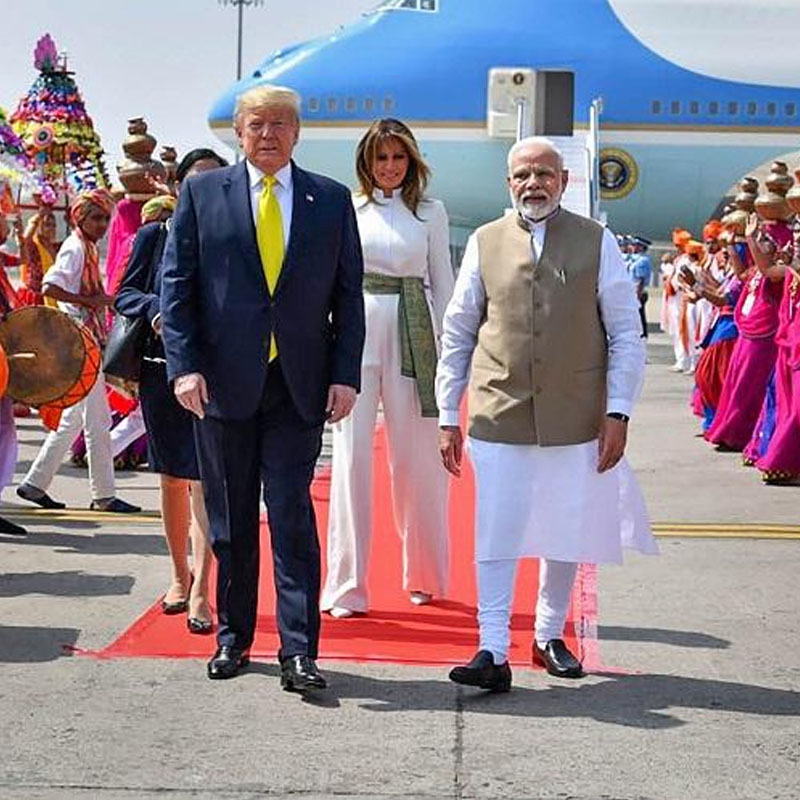
    From traditional folk dance at the airport to the 22- kilometer long roadshow lines with people waving the first family while holding flags of both the countries, India went big in all its efforts. The preparation didn’t stop there as Ahmedabad saw posters and OOH ads all across the city with the tagline ‘two dynamic personalities and one momentous occasion'.

    Dentsu Aegis Network India chief executive officer Anand Bhadkamkar says: “I don’t think the hospitality given to Trump and his family could be termed as a marketing strategy. However, India presented itself quite well in front of the US president. Trump’s India visit was more of to enhance bilateral ties between the two nations and bonhomie between the leaders.”

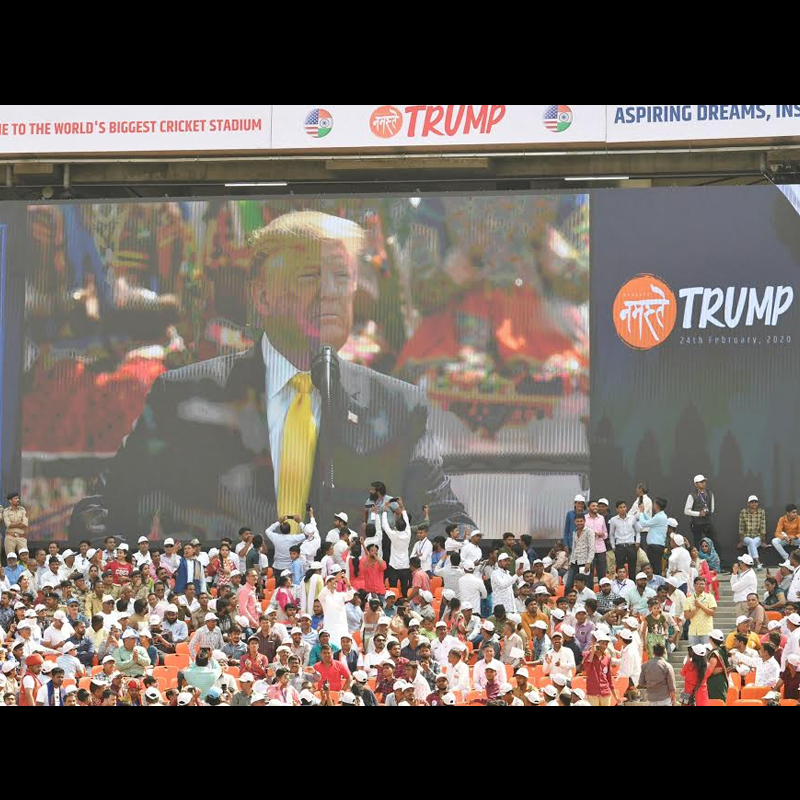
    Trump for the first time ever addressed a crowd of over 1 lakh attendees on a foreign land during an event.

    “Trump is a persona, who is all about spectacle and received very good spectacle in Ahemdabad", believes Bengaluru-based brand guru Harish Bijoor. “It was a very lavish show presented by India as far as the US president was concerned.”

    Donald Trump was on his first-ever two-day (24-25 February) state visit to India post his election as the US president in 2016 along with wife Melania Trump and other dignitaries from his administration.

    The first day of Trump’s visit to India was all about hospitality to Trump. Post landing in Ahmedabad, he visited Sabarmati Ashram, attended Namaste Trump, a return gift for the Howdy Modi event that took place last year in Texas, followed by a visit at the Taj Mahal and eventually ending the first day in the national capital for the next day’s ceremony. The second day was all about a ceremonial event to honour the guest with a state dinner at President of India’s residence Rashtrapati Bhawan.

    Bijoor says, “POTUS (President of the United States) is a very powerful persona as far as the world is concerned, particularly in terms of business and occupying a solid position in the mind of POTUS has been the basic goal of India during the Namaste Trump event, which we have achieved successfully.”

    “The marketing goal of India to Trump was to achieve that pole position and it has been very well established. If the US president repeats his term in the presidential elections slated this year then the gamble is well played as we have a friend in the US for another five years," adds Bijoor.

    As a marketing strategy, this is not the first time that prime minister Narendra Modi has hosted a guest in different parts of the country apart from New Delhi. He had hosted China’s president Xi Jinping in Mahabalipuram, a coastal town in Tamil Nadu, last year and Japanese prime minister Shinzo Abe in his Lok Sabha constituency Varanasi in 2015, wherein Modi made Abe participate in Ganga aarti.

    “Modi is one of the best marketers India has ever had in all of the prime ministers. Modi is India’s best brand endorser,” says Bijoor. “I don’t think India has had any brand endorser as good as Modi. In terms of branding, we’re at a focal point right at the peak with prime minister Modi as a brand ambassador.”

    One only hopes that India's marketing to Trump pays off adequately in the eyes of the world.

  • Trumping India

    Trumping India

    MUMBAI: From Bollywood to cricket and terrorism to defence, US president Donald Trump made an attempt to woo Indians and send a positive message back home to the Indian-Americans in his 26-minute-long speech during an event ‘Namaste Trump’.

    The event, Namaste Trump, is considered to be strategically important to Trump as the US presidential elections are slated later this year. Seeking a second term in office, he has been trying to create positive vibes and raise his brand value across the globe which eventually could have an impact back home. In the US, as many as 40 lakh people Indian-Americans are crucial, capable of swaying votes in his favour.

    Media pundits and experts are of the opinion that Trump’s India visit is a well-calculated marketing initiative.  

    Havas Media chief executive officer Anita Nayyar said: “Indian-Americans are contributing a lot to the US economy and could be the potential campaign fundraisers.”

    Nayyar believes it was a well-planned marketing gambit of Team Trump to come to India a few months ahead of the presidential elections to woo the Indians and the Indo-Americans back home. It may be recalled that in 2018, the US president turned down India’s request to be a chief guest for the Republic Day event.

    She adds: “Trump talked about India very well in his address. He talked about Indian festivals and the country’s cultural diversity. He also touched upon topics such as movies, cricket – all those good aspects where India is progressing.”

    Trump quite often has a habit of making loose comments, which can have repercussions, at domestic and international levels. “I was quite surprised that Trump remembered and touched upon all the areas where the Modi government has made progress,” explains Nayyar.

    Literally playing to the gallery and earning the applause of the cheering crowd at Motera stadium, the US president eulogised Bollywood and mentioned Dilwale Dulhania Le Jayenge and Sholay. He very well struck a chord with the audience by talking about cricket, which is almost like a religion to the masses. He also mentioned the cricket legend Sachin Tendulkar and the Team India skipper Virat Kohli in his speech.

    Despite facing problems in pronunciation, Trump also praised the work of Swami Vivekananda and Sardar Patel in his speech. He also lauded India’s effort to reach the moon’s southern pole.

    The president’s popularity in India has soared to 56 per cent from 14 per cent since his candidacy in 2016, a Pew Research poll said in a report. Nayyar says: “The sole credit for the increase in confidence within Indians for Trump goes to Modi as their bonhomie has been quite visible for the last few years.”

    The president, all along with his speech, kept praising India, Indians and prime minister Modi and his government’s work. “India will hold a very special place in our hearts,” he said. “America loves India, America respects India and America will always be a loyal and faithful friend to Indian people.”

    Nayyar also said that it was expected that Trump would speak on the common problem shared by both the two nations: terrorism. Trump in his speech said: “India and the US are committed to fighting terrorists and their ideology; that is why my government is working with Pakistan to crack down on terror groups.”

    Moreover, on defence strategy, he also announced an over $3 billion military deal between the two nations that would be signed on Tuesday. “The Indian armed forces will get the absolute finest state-of-the-art military helicopters and other equipment through this deal,” he said.

    Echoing Nayyar’s views, Dentsu Aegis Network’s chief executive officer Anand Bhadkamkar says: “Trump is a great marketer and he understands the pulse exactly where to reach out. He definitely will make use of every  opportunity he comes across.”

    He believes that the recent visit to India could be termed as Trump’s approach to woo Indians in India as well as in America. “Indian-Americans are quite large in the US and this visit cannot only be seen as the upcoming US election agenda, but an enhancement of bilateral and trade relations between India and the US.”

    “Trump is a quite sharp businessman and great politician, which he has proved in the last few years. Trump as a brand has great value and people do respect him for what he’s creating. He has maintained what he was before and he’s very conscious and aware of the same,” says Bhadkamkar.  

    The Namaste Trump event is a return gift to the US president. “Five months ago, the United States welcomed your great Prime Minister at a giant football stadium in Texas and today India welcomes us at the world's largest cricket stadium right here in Ahmedabad,” Trump said in his address.

    Quid Pro quo?

  • DAN appoints Gurbaksh Singh to lead DAN Innovation Lab in India

    DAN appoints Gurbaksh Singh to lead DAN Innovation Lab in India

    MUMBAI: Dentsu Aegis Network (DAN) India has announced the launch of DAN Innovation Lab in an attempt to foster, access and accelerate innovative learning and thus, offer advanced solutions to complex client problems.  

    The facility, designed and built as a collaborative Lab space, brings together key resources and superior local talents, hand-picked from across the DAN brands – Dentsu Webchutney, Isobar India and Posterscope India.

    Created to incubate and nurture innovation, DAN Innovation Lab will work on open data, develop prototypes and intellectual property, build new products and services, engage technology to create differentiated consumer experiences, draw holistic client solutions from cross-functional expertise and in due course, collaborate to execute those solutions, seamlessly. 

    Led by Gurbaksh Singh, erstwhile chief creative technologist at Dentsu Webchutney, DAN Innovations Lab India will drive solutions for clients keeping creative and tech at its functional core. As chief innovation officer – DAN Innovation Lab, Gurbaksh will hereafter work with the teams at Dentsu Webchutney, Isobar India and Posterscope India on emerging technologies to drive tech-led innovations for all the three agencies. However, eventually Dan Innovation Lab will also support all DAN brands and service all DAN clients across India.

    Dentsu Aegis Network India CEO Anand Bhadkamkar said, “I am extremely proud to announce the launch of DAN Innovation Lab. The facility will function as a central faculty between Dentsu Webchutney, Isobar and Posterscope to bring together the network’s expertise in strategy, technology, design and creativity from across the Group. Keeping creativity at its core, DAN Innovation Lab will focus on generating ideas and fresh business tactics to help drive greater efficiencies and deliver the best possible outcomes for our clients.” 

    Gurbaksh Singh added, “I am deeply honoured to take up this new role. This has opened a whole bunch of opportunities on a much larger playground. Working with multiple creative teams across agencies will only strengthen the creative output. I believe in embracing new makers and sparking curiosity that can lead to incubating a new culture of innovation in the group. Developing new solutions on this new front will be exciting and equally challenging.”