Tag: analyst

  • Media ‘investment pundit’ Karan Taurani gets his executive stripes at Elara Capital

    Media ‘investment pundit’ Karan Taurani gets his executive stripes at Elara Capital

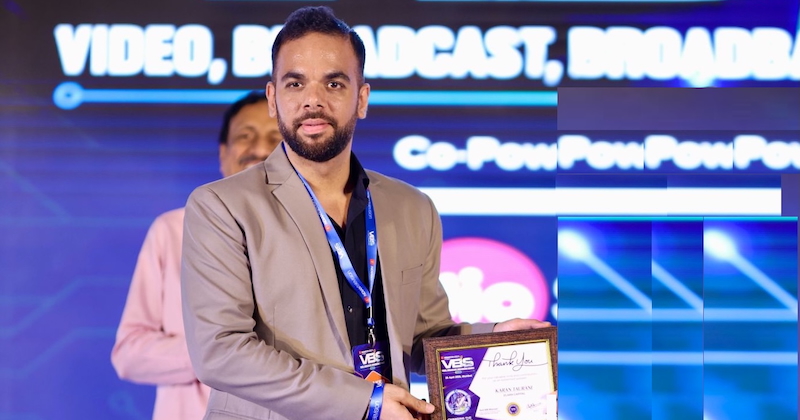
    MUMBAI: Karan Taurani, Mumbai’s most recognisable media analyst, has bagged the executive vice president role at Elara Capital. The May 2025 promotion caps nearly seven years at the investment firm, where he’s dissected media, consumer discretionary, and internet sectors with surgical precision. Now retail has been added to his watch portfolio. 

    Taurani’s climb from vice president (October 2018) to senior vice president (April 2021) and now to the executive suite reflects his growing clout. His trajectory mirrors his expanding media footprint—from conference circuits to prime-time television punditry.

    The analyst’s journey began at Pioneer Investcorp (2008-2011), covering IT and mid-cap technology during the sector’s boom years. IFCI Financial Services expanded his remit to education whilst maintaining IT expertise. Religare offered broader horizons, juggling 15-plus companies across technology, media, telecoms, and education as lead analyst.

    Dolat Capital Market cemented his media sector reputation before Elara Capital came calling in 2018. What sets Taurani apart is his media savvy—regular television appearances and conference circuit presence make him the go-to voice for sectoral insights, whether streaming wars, retail disruption, or consumer spending patterns.
    His independent directorship at Kavithalayaa since January 2024 adds board-level strategic nous to complement analytical prowess. It’s cross-pollination that makes for rounded market commentary.

    At Elara, Taurani’s executive elevation suggests the firm recognises value beyond pure research. In an era where analyst personalities drive investment decisions, having a media-savvy executive who articulates complex trends across platforms is worth its weight in rupees.

    For Taurani, the promotion validates a career built understanding India’s evolving consumer landscape. His analytical journey mirrors the country’s economic transformation—and executive stripes suggest more commentary ahead.

  • LCOs demand access to SMS from MSOs

    LCOs demand access to SMS from MSOs

    KOLKATA: The process of shifting from analogue to digital feed is not without its share of problems; a key issue being the resultant tug-of-war between local cable operators (LCOs) and multi system operators (MSOs) over access to the subscriber management system (SMS).

    The Digital Addressable Cable TV Systems (DAS) requires MSOs to establish a subscriber management system (SMS), where details of all subscribers, along with their choice of services including channels and bouquets, are maintained.

    While cable and entertainment analysts feel, “This brings in addressability and consequently, complete transparency in the whole system,” LCOs have a different take on the matter. They are of the opinion that once MSOs start billing consumers directly, they may end up losing control over their hard-won subscribers. Hence, they’re now asking MSOs to allow them access to the SMS to avoid such an eventuality.

    Says Rajiv Sharma, lead analyst (telecom and media), HSBC Securities: “LCOs are worried about losing control over their subscribers if MSOs bill directly. They are of the view that MSOs should allow LCOs access to subscriber management systems, which are similar to what is being done for airline ticketing.”

    A city-based cable op told indiantelevision.com, on condition of anonymity, that he had worked very hard for the last 20 years and it would be very unprofessional if his business and database were to go out of his hand and to the MSO whom he would then have to depend on totally.

    Meanwhile, an MSO questioned as to how he could allow LCOs access to the SMS which his company had spent a few crores on. Typically, it’s the MSOs that invest in infrastructure including network, encryption, ERP, call centers and SMS.

    Director Manthan Broadband Services pointed out the benefits of SMS as enabling subscribers exercise their choice of services and budget their bills accordingly. “It also helps us in managing their accounting and billing of the services rendered effectively in the long term,” said he.

    Cable analyst Namit Dave suggested that MSOs and LCOs should work hand-in-hand for mutual benefit. While Sharma pointed out that the battle between MSOs and LCOs was sending out wrong signals to the investor community. “Gross billing remains a deterrent for MSOs and we anticipate some delay as we don’t expect clarity on the entertainment tax issue anytime soon,” he said. News is Hathway has suggested it expects to move to gross billing not before phase I i.e. the fourth quarter of the current fiscal.