Tag: analogue

  • Prasar Bharati CEO Shashi Shekhar Vempati on SC verdict, pushing DD Sports and DTT

    Prasar Bharati CEO Shashi Shekhar Vempati on SC verdict, pushing DD Sports and DTT

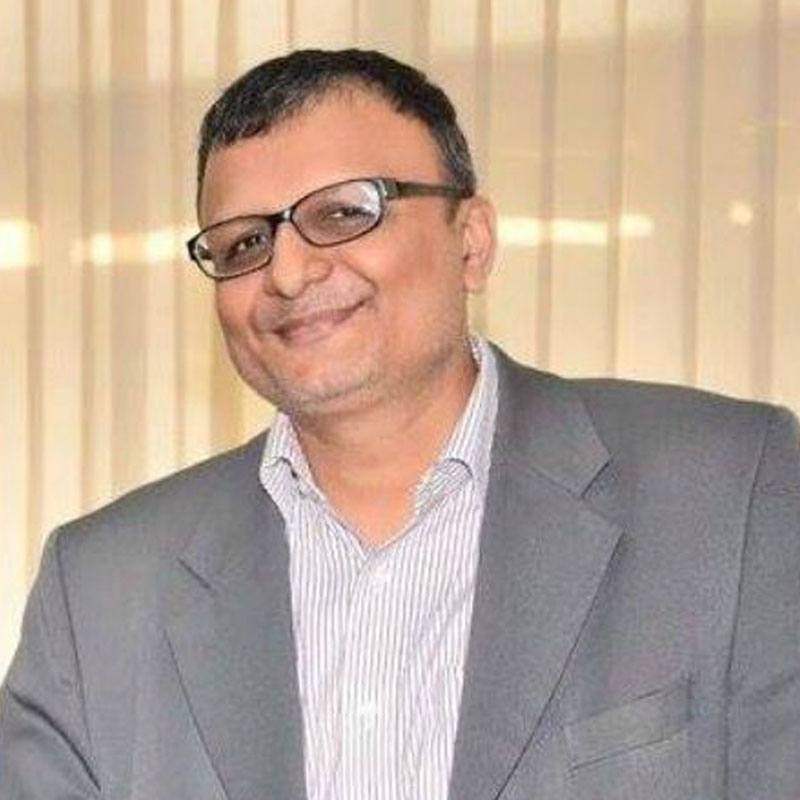
    Shashi Shekhar Vempati is probably one of the youngest CEOs to occupy the Prasar Bharati hotseat.  Additionally, he is the first private sector executive to have got the job. So, media observers expect a lot from him, especially considering his background in Infosys, one of India’s most respected infotech companies.

    And, it is during his watch last month that the Supreme Court issued a verdict upholding the Delhi High Court order which disallowed the pubcaster from sharing with cable operators through Doordarshan (DD) channels the live feed of cricket matches of which private broadcasters ESPN and Star had the exclusive rights. The bench had said under the provision of the Sports Act, the live feed received by Prasar Bharati from content rights owners was only for the purpose of retransmission of signals on its own terrestrial and direct-to-home (DTH) networks and not to cable operators.

    Many would have considered that a loss. But, not Shashi Shekhar Vempati. Clarity and optimism is something you can credit him with. He terms that loss as an opportunity. Read on to get some Vempati-speak as he talks to indiantelevision.com.

    How do you view the verdict of the Supreme Court preventing you from airing sports feeds to private cable TV operators and DTH operators which you share with private sports rights holders?

    The verdict of the Supreme Court on the sports side on the face of it looked like  a setback. And, if you go by the reactions of the viewers to them it was available by default  on Doordarshan. Several matches are not available now.

    But, in reality it was an opportunity.  Many decisions that we just postponed or did not aggressively move on.  Now, there is a real reason to do that. First is on  DD Sports. All along cricket was on DD National. The only sports channel of DD had no purpose or identity, it was just drifting.

    Now we have a reason to make DD Sports the go-to destination for cricket and other sporting events of national importance because of the manner in which the verdict forces us to operate. It creates an avenue  to make DD Sports the place for cricket.

    You cannot air cricket because of the verdict right?

    We will air it. The way the verdict on the act will be operationalised is: the signal sharing for games of national importance is meant for DD’s FreeDish and DD terrestrial. So, we will carry future matches on DD Sports, as a channel available on FreeDish and on terrestrial through DTT.

    Analogue where we have one or two transmitters where we either show DD National or News, there we will ensure that the feed is sports so that one of the transmitters will show the match on analog wherever it is available.

    For the private guys, cable and DTH operators today what are they doing? They are blanking out our screen then they are putting their own commercials, their own promotion. What we are saying is — we will have a separate feed in the future so that they don’t blank out DD National.

    It is atrocious that you can blank out a must-carry channel and put in a commercial message saying “go buy my sports pack.” That we will straightaway address.

    Now because cricket is available on DD Sports, the channel gets a facelift.  Its branding improves – brand recognition goes up. People will have a reason to periodically  tune into DD Sports. So that just takes that channel up. We have enough content on DD National.


    Which of the matches will you show?

    Well, the act,…the government has to notify what are the games of national importance.  And a that list is periodically reviewed. As of now it is all home games of India for one day and T20, then the big tournaments like the World Cup, the challenger and ICC trophy and so on.  Then certain tennis matches, certain soccer matches.

    The big thing is the FIFA under-17. The entire 52  or 56 matches we will show. The  government sees it as a big way of promoting soccer.  For the first time they are holding an international event. And if you look at the generation that we want to attract – which is what I have been talking about. Today, there is no mindshare for Doordarshan in the youth as this generation did not grow up with it. They have no memories of Doordarshan, they don’t relate to it.

    Now with FIFA Under-17 being available this soccer crazy young crowd (chuckling) have an avenue to go and see soccer on FreeDish and DD Terrestrial. DD Sports gets a facelift and it gets a mindshare in this demographic  that we have always wanted to attract and bond with.

    Second thing that I get out of this whole thing is that for all those people who think today I cannot watch those matches on DD on either my private cable or DTH…now I have an avenue to go and promote FreeDish and my digital terrestrial which is just languishing in 19 cities which are the main population centres of India.

    Now I am going to tell them you don’t have to buy that Rs 60 or Rs 120 package. Forget about all that, many of your TVs have an inbuilt digital tuner. There are certain models of Sony, LG and Samsung which have them.

    We will educate people that if you have one of these models, you already have a digital terrestrial tuner, all you need to do is turn it on.  And if you don’t have it, here is an app which you can download. And if your mobile is one of these models, using this app and the DVB-T2 dongle, which is available on Flipkart and other ecommerce platforms you can watch the matches.

    Then, there are certain makes of mobile phones where there is an inbuilt DVB chip available in the marketplace.

    The fourth innovation and I have seen certain products, there are some startups working on it: you need to plug in this hotspot, into the wall, it will get the DVB signal, it will create the wifi – and on all your devices at home you can watch it as a TV channel. We will say these products can support your app.

    How will you monetise the DTT signal?

    When we do the rights sharing under the act , the rights holder and DD both bid on who gets to market the inventory. The highest bidder then gets the rights to sell the entire FCT for the matches on DD DTT and DTH. But the sharing is 75:25.

    Now DTT becomes a new viewership base. So, for the advertisers it is a new way of connecting to the consumers. To me it is new medium to be clipped to the viewership and it’s something where we have a traditional strength because nobody else has terrestrial. We will see how that goes.

    How do you see FreeDish progressing?

    The biggest challenge with FreeDish was that STBs were not  addressable and the signals were not encrypted.  Now for a long time we have had this project to move to MPEG4…the infrastructure is in place, but it required a new STB. That spec was tendered out, iCAS was brought in. Now those boxes are getting ready and soon they will be rolling out. The biggest challenge was what was the motivation for a customer who has an MPEG 2 FreeDish STB to switch to MPEG 4. Now there is a reason, because we can go to the audience and tell them that if you want to watch cricket or any of the sports which you don’t want to pay for your Tata Sky or Dish TV or Videocon or whatever, here is a new iCAS box, it gives you all of these features. That’s another promotional avenue for me. So I am getting two promotional avenues and I am getting to rebrand and relaunch my DD Sports. So in a sense what was a setback in one aspect has opened up opportunity for me.

    One interesting thing that the TRAI is now pushing is the open STB standard with a return path. I think the return path is going to be interesting. It is going to be important for several reasons: for audience measurement, and we would all want interactivity.  Through the regulator’s efforts, and maybe a common standard – and if everyone supports that, it can bring now the price point.

    DD Kids is something which was to be launched?

    There are several ideas. And we will look at each one of them in time.

    What other steps are you taking?

    We have taken some measures following the board meeting recently. It was a long pending board meeting. A lot of decisions were taken. One of the decisions was analog.  We will start sunsetting analog. And that frees up resources. Frees up manpower. Frees up certain operating funds. Those can be put to use in areas where we definitely need a lot of things to be done.

    Information technology being a long pending area where we have not invested. Digital is another area. Then there is the sheer creativity in programming which has come down. The quality of in-house programming has come down drastically. So that requires us to invest in the right talent so we can bring it back in-house.

    DD is the largest network, it has 30,000 people and above… but it has the largest network. We have challenges that nobody else has.

    I chanced upon this report. There was a committee set up in early 2000, late nineties, led by Mr Narayana Murthy which looked at Prasar Bharati (one of the many reports). And, very interestingly, they had a chapter on engineering: they looked at the number of engineers to transmitter ratio, they said this is the highest in any country. That means there is very little automation.

    So, clearly there is a lot of opportunity to get this great talent out and put them to problems which require real attention – be it IT, be it digital, be it reskilling them and repurposing our workforce.

  • MIB directs states to ensure TV digitisation & action against defaulters

    MIB directs states to ensure TV digitisation & action against defaulters

    NEW DELHI: Noting that it has been receiving a number of complaints alleging analogue signals were still being transmitted by some cable operators, the ministry of information and broadcasting (MIB) has directed local administrations in the country to crack down on such errant LCOs and report back on the actions taken.

    This move comes within days of a notice to around 180 multi-system operators — granted provisional licenses — who had failed to comply with requirements of the government regarding digitisation, including updating information on the number of digital boxes seeded in their areas of operation.

    In a letter to all state chief secretaries, MIB additional secretary Jayashree Mukherjee reiterated the government had mandated only digital encrypted signals can be carried on the cable TV networks in the country from 1 April 2017 and carriage of analogue signals and/or unencrypted signals after that date was a violation of the Cable Television Network (Regulation) Act 1995 for which authorised local level officers had powers under the law to seize the equipment of the defaulting cable operators.

    The letter also pointed out that no reports were being received from the authorised local officials on action taken on complaints forwarded by the MIB, which had also prepared a check list for inspection of MSOs and sent it to officials of various local administrations on 25 April 2017. The directive was simple: plan regular inspection and take prompt action against the defaulters.

    “Very poor response on carrying out of inspection by the authorised officers has been received,” the MIB letter rued, requesting various state chief secretaries to direct their colleagues to be more active on this front against defaulters.

    ALSO READ:

    MIB show-causes MSOs on incomplete digitization info

    MIB seeks all new MSO applications online

  • Arasu says MIB can’t enforce analogue switchoff in Chennai on 31 Dec ’16

    Arasu says MIB can’t enforce analogue switchoff in Chennai on 31 Dec ’16

    MUMBAI: Digital addressable system (DAS) or digitisation of India cable TV could well see a further slowdown if the Tamil Nadu Arasu Cable TV Corporation Ltd (TACTV) has its way. The government-owned Chennai-based MSO has written to the information and broadcasting ministry (MIB) saying that its order to broadcasters to shut off analogue signals by 31 December 2016 cannot be adhered to for the city.

    The reason: the Madras High Court has yet to pass judgment on TACTV’s litigation with the MIB and the Telecom Regulatory Authority of India on the applicability of DAS regulations in Chennai and on the issue of a DAS licence to it.

    TACTV had earlier applied to the MIB for a DAS licence but not met with any success as both it and the TRAI believe that distribution of television via cable TV should be kept out of the purview of government owned undertakings, which the former is.

    Following the rejection of its application, the cable TV MSO had approached the Madras High Court through two writ petitions bearing nos. 7067/2013 and 7068/2013. Both had sought direction to the MIB to process its DAS licence applications dated 5 July 2012, and 23 November 2012. But both are pending before the court.

    The Madras High Court had then passed a restraining order on writ petitions 34213/2013 and 40365 of 2015, disallowing the disconnection of analogue TV signals in Chennai.

    TACTV says that if broadcasters heed the 31 December 2016 analogue signal switch off notification sent by the MIB to them, it would tantamount to contempt of court and could attract proceedings in that direction.

    The cable TV MSO says that the “MIB had itself admitted as much in a counter affidavit dated November 18, 2013 filed before the Telecom Disputes Settlement and Appellate Tribunal (TDSAT).”

    TRAI had through a press release on 10 December 2013 termed the transmission of analogue signals in Chennai as illegal and had tried to restrain TACTV from transmitting the same.

  • Arasu says MIB can’t enforce analogue switchoff in Chennai on 31 Dec ’16

    Arasu says MIB can’t enforce analogue switchoff in Chennai on 31 Dec ’16

    MUMBAI: Digital addressable system (DAS) or digitisation of India cable TV could well see a further slowdown if the Tamil Nadu Arasu Cable TV Corporation Ltd (TACTV) has its way. The government-owned Chennai-based MSO has written to the information and broadcasting ministry (MIB) saying that its order to broadcasters to shut off analogue signals by 31 December 2016 cannot be adhered to for the city.

    The reason: the Madras High Court has yet to pass judgment on TACTV’s litigation with the MIB and the Telecom Regulatory Authority of India on the applicability of DAS regulations in Chennai and on the issue of a DAS licence to it.

    TACTV had earlier applied to the MIB for a DAS licence but not met with any success as both it and the TRAI believe that distribution of television via cable TV should be kept out of the purview of government owned undertakings, which the former is.

    Following the rejection of its application, the cable TV MSO had approached the Madras High Court through two writ petitions bearing nos. 7067/2013 and 7068/2013. Both had sought direction to the MIB to process its DAS licence applications dated 5 July 2012, and 23 November 2012. But both are pending before the court.

    The Madras High Court had then passed a restraining order on writ petitions 34213/2013 and 40365 of 2015, disallowing the disconnection of analogue TV signals in Chennai.

    TACTV says that if broadcasters heed the 31 December 2016 analogue signal switch off notification sent by the MIB to them, it would tantamount to contempt of court and could attract proceedings in that direction.

    The cable TV MSO says that the “MIB had itself admitted as much in a counter affidavit dated November 18, 2013 filed before the Telecom Disputes Settlement and Appellate Tribunal (TDSAT).”

    TRAI had through a press release on 10 December 2013 termed the transmission of analogue signals in Chennai as illegal and had tried to restrain TACTV from transmitting the same.

  • TDSAT questions MIB over DAS licence denial to Tamil Nadu’s Arasu Cable

    TDSAT questions MIB over DAS licence denial to Tamil Nadu’s Arasu Cable

    NEW DELHI: The Telecom Disputes Settlement and Arbitration Tribunal (TDSAT), on 14 August, asked the Ministry of Information and Broadcasting (MIB) to file an affidavit in a matter where the root issue is about the denial of digital addressable system (DAS) licence to Tamil Nadu Arasu Cable TV Corporation (TACTV).


    While the MIB had presented a note through a section officer, TDSAT refused to accept it and wanted the ministry to file a proper affidavit.


    Listing the matter for 2 September, TDSAT also said that Star India, respondent in the case filed by cable operator Thamizhaga Cable TV Communication, New Delhi, was free to negotiate with Arasu and other multi-system operators (MSOs) for areas in Chennai for DAS and outside Chennai for analogue transmission.


    At the same time, it said that there would be no disconnection of signals until the next date.


    TDSAT also directed that the Indian Broadcasting Foundation (IBF) should be impleaded as a party since other broadcasters were also giving signals to Arasu for Chennai though it did not have the DAS licence. Option was also given to other broadcasters if they wanted to be impleaded.


    During the hearing earlier this week, TDSAT chairman Aftab Alam and members Kuldip SIngh and B B Srivastava wondered why the Central Government had failed to take a decision on giving DAS licence to Arasu. It had therefore directed that the Ministry be impleaded in the case.


    At the same time, it had held that Arasu (TACTV) was guilty of transmitting television signals in Chennai, which had adopted DAS in the first phase – in analogue mode, and at the same time guilty of using Star signals in the metropolis without any authorisation inter-connect agreement with Star India.


    The Tribunal was told by TACTV that it had applied for a DAS licence as far back as July 2012 but the government had failed to take a decision despite an order of the Madras High Court in December 2013 asking the Centre to take a decision on the application of TACTV for grant of it’s license “in the soonest possible time.”  


    Noting that there is no compliance with the direction of the Court even after more than a year and half, the Tribunal felt it was imperative to know the stand of the Government for a proper adjudication of the matter.


    The Tribunal did not accept the argument by TACTV in the last hearing that it had negotiated with Star India for the entire state since the Letter of Intent (LOI) was only for the rest of Tamil Nadu barring Chennai.

  • Ortel to increase cable TV penetration, broadband with IPO funds

    Ortel to increase cable TV penetration, broadband with IPO funds

    MUMBAI: Odisha based last mile owner (LMO) Ortel Communications, which filed its Red Herring Prospectus (RHP) for a public issue on 21 February, has now announced the price band of Rs 181-Rs 200 per equity share.


    As reported first by Indiantelevision.com, the LMO will open the public issue of up to 12 million equity shares of face value of Rs 10 each including a share premium per equity share on 3 March. The issue comprises a fresh issue to the public of up to six million equity shares and an offer for sale up to six million equity shares by New Silk Route (NSR). The bid will close on 5 March.


    The minimum bid lot is 75 equity shares and in multiples of 75 equity shares thereafter. The issue constitutes 39.25 per cent of the fully diluted post-issue paid up equity share capital of the company.


    In a press conference, held in Mumbai on 24 February, the LMO said that the company and the selling shareholder may, in consultation with the Book Running Lead Manager, allocate up to 60 per cent of the QIB portion to anchor investors at the Anchor Investor Allocation Price, on a discretionary basis, out of which at least one-third will be available for allocation to domestic mutual funds only. Anchor investors can bid on 2 March.


    “The issue is being made through the Book Building Process in compliance with the provisions of Regulation 26(2) of the Securities and Exchange Board of India (Issue of Capital and Disclosure Requirements) Regulations, 2009, as amended, wherein at least 75 per cent of the issue shall be allotted on a proportionate basis to Qualified Institutional Buyers (QIB). In the event of under-subscription or non-allocation in the Anchor Investor Portion, the balance equity shares shall be added to the net QIB potion. Such number of equity shares representing five per cent of the net QIB portion shall be available for allocation on a proportionate basis to mutual funds only. The remainder of the net QIB portion shall be available for allocation on a proportionate basis to QIBs,” says the company release.


    “However, if the aggregate demand from mutual funds is less than 180,000 equity shares, that is five per cent of the net QIB portion, the balance equity shares available for allocation in the mutual fund portion will be added to the net QIB portion and allocated proportionately to QIBs in proportion to their bids. If 75 per cent of the issue cannot be allocated to QIBs, all the application monies will be refunded forthwith. Further, not more than 15 per cent of the issue shall be available for allocation on a proportionate basis to non-institutional bidders and not more than 10 per cent of the issue shall be available for the allocation to retail individual bidders, subject to valid bids being received from them at or above the issue price,” it further reads.


    Ortel Communications, through the IPO, is looking at strengthening its presence in the current four states, including Odisha, Chhattisgarh, West Bengal and Andhra Pradesh as well as expanding to other neighbouring regions. The LMO currently offers services in 48 towns with over 21,600 km of cable supported by 34 analogue and five digital headends.


    When asked about the reason for raising capital, Ortel Communications chairman BJ Panda said, “We have already gone for three rounds of private equity funding. Ours is a CAPEX heavy business. As we go forward, it is essential to have public presence. The time has come, when the company has some currency to scale up.”


    The revenue generated through the IPO will be used for:


       –  Deeper penetration: Ortel plans to expand its penetration in not only the existing markets, but also new geographies. “The plan is to grow the number of subscribers,” said Panda.


      –   Increasing penetration of digital TV: As the nation is moving towards digitisation, Ortel Communications currently has converted 20 per cent of analogue homes to digital homes. The revenue generated will be used at slowly increasing the number of digital homes.


       –  Increasing Broadband: Currently 11 per cent of Ortel’s total subscribers are broadband consumers. The aim now is to take this up. The LMO currently provides data services at a speed of up to 42.88 mbps through the use of cable modem with DOCSIS 2.0. “We are in the process of upgrading the modems to DOCSIS 3.0. This is currently being tested, and has the capacity of providing broadband at a speed of over 340 mbps,” informed Ortel Communications president and CEO Bibhu Prasad Rath.


      –  Expand: By buyout of local cable operators and networks. The company so far has entered into agreements with over 490 MSOs/LCOs between April 2009 to December 2014, resulting in an acquisition of 221,155 cable television subscribers.


      –   Leasing fibre infrastructure to corporates.


    As of 31 December, 2014, the company has 372,979 retail subscribers for analogue cable TV services, 95, 295 retail subscribers for our digital cable services and 58,277 broadband subscribers, including 121 corporate customers with provisioned bandwidth of 806 mbps adding up to 526,551 Revenue Generating Units (RGUs).


    For the six months period ending 30 September, 2014, the company’s total income was Rs 719.34 million and its PBDIT was Rs 252.39 million. In the same period, carriage and placement revenue contributed 17.11 per cent of the total revenues from operations. The trade receivables were at Rs 216.50 million i.e. 15.05 per cent of total income annualised, which according to the company, was substantially lower than other listed national MSOs.

  • TRAI rationalises tariff for non-DAS areas, providing for inflation

    TRAI rationalises tariff for non-DAS areas, providing for inflation

    NEW DELHI: Meeting a long-felt demand, the Telecom Regulatory Authority of India (TRAI) has decided to allow the balance inflation linked hike both at the retail and wholesale levels, from 1 January 2015.

    The Telecommunication (Broadcasting and Cable) Services (Second) Tariff (Thirteenth Amendment) Order 2014 applicable for non-addressable (analogue cable TV) systems prescribes ceiling retail tariff on pan-India basis depending upon the number of pay and free-to-air (FTA) channels.

    The ceilings are Rs 117 per month for minimum of 30 FTA channels; Rs 234 per month for minimum 30 FTA channels and up to 20 pay channels; and Rs 292 per month for minimum 30 FTA channels and more than 20 pay channels.

     At the wholesale level, price ceilings will continue, subject to inflationary adjustments allowed from time to time.

    TRAI said the order was aimed at rationalising retail tariff and simplifying implementation. The Authority had undertaken a similar exercise in April 2014. 

  • Neo Sports decides to break away from The One Alliance

    Neo Sports decides to break away from The One Alliance

    MUMBAI: Three weeks after the Telecom Regulatory Authority of India (TRAI) issued its television content aggregation regulation, Neo Sports Broadcast has decided to break away from its distributor The One Alliance.


    A statement from the company states that the broadcaster has decided not to renew its agreement with The One Alliance that expires on 31 March. From 1 April, the sportscaster will be distributing its channels Neo Sports and Neo Prime through an in-house distribution team.


    When contacted by Indiantelevision.com, The One Alliance president Rajesh Kaul says, “The contract was coming to an end on 31 March and we were contemplating of not renewing the contract because they have lost all the sporting properties from the network. With MSM investing heavily on Sony Six and with IPL and FIFA, it is a formidable sports channel and so we did not want anything else in the bouquet.”


    Apart from Neo Sports, The One Alliance currently distributes television channels of Multi Screen Media, Discovery, Times Television Network and TV Today.


    Neo Sports believes that it can on its own strength build a robust relationship with cable operators, DTH operators and HITS companies. Even when its channels were being distributed by the aggregator to cable platforms, it was handling distribution through DTH on its own.


    According to Neo Sports, standalone channels with good content mix at affordable prices can be good and effective business cases in a digital environment.


    Says Neo Sports Broadcast EVP distribution platforms, Dilip Sharan, “The suggestive regulatory approach combined with digitisation clearly points that future distribution deals will be dictated by the relevant content that is made available to various audiences and the ability to work with the platforms keeping in mind the business issues and not entirely on the strength of the channels size in the bouquet, a prevalent practice in the analogue era.  Our cable distribution deal with MSMD made better commercial sense in the analogue environment.”


    TRAI’s regulation has barred aggregation of television channels from different broadcaster groups and allowed the aggregators six months of transition period.


    Neo Sports believes that there is a lot more scope to monetise from digitisation. The analogue era didn’t allow many channels due to bandwidth limitation. “The new regulation is indicative of how things are likely to pan out in the future. We were waiting for TRAI’s view on it to take this step at the opportune time,” adds Sharan.


    One of the major concerns of various broadcasters is that an aggregator might be bias against the smaller networks. Although Sharan doesn’t agree, he does feel it is very natural for an aggregator to give preferential treatment to its own channels.


    Most aggregators are aligned with several broadcasters.


    Will some other broadcasters also follow suit? “I won’t be surprised if others also do the same,” says Sharan.


    Neo Prime and Neo Sports channels are currently available on DTH platforms such as Dish TV, Videocon D2H, Airtel Digital TV, Reliance DTH and Sun Direct. The Neo channels are available on cable channels across all the leading networks.

  • LCOs demand access to SMS from MSOs

    LCOs demand access to SMS from MSOs

    KOLKATA: The process of shifting from analogue to digital feed is not without its share of problems; a key issue being the resultant tug-of-war between local cable operators (LCOs) and multi system operators (MSOs) over access to the subscriber management system (SMS).

    The Digital Addressable Cable TV Systems (DAS) requires MSOs to establish a subscriber management system (SMS), where details of all subscribers, along with their choice of services including channels and bouquets, are maintained.

    While cable and entertainment analysts feel, “This brings in addressability and consequently, complete transparency in the whole system,” LCOs have a different take on the matter. They are of the opinion that once MSOs start billing consumers directly, they may end up losing control over their hard-won subscribers. Hence, they’re now asking MSOs to allow them access to the SMS to avoid such an eventuality.

    Says Rajiv Sharma, lead analyst (telecom and media), HSBC Securities: “LCOs are worried about losing control over their subscribers if MSOs bill directly. They are of the view that MSOs should allow LCOs access to subscriber management systems, which are similar to what is being done for airline ticketing.”

    A city-based cable op told indiantelevision.com, on condition of anonymity, that he had worked very hard for the last 20 years and it would be very unprofessional if his business and database were to go out of his hand and to the MSO whom he would then have to depend on totally.

    Meanwhile, an MSO questioned as to how he could allow LCOs access to the SMS which his company had spent a few crores on. Typically, it’s the MSOs that invest in infrastructure including network, encryption, ERP, call centers and SMS.

    Director Manthan Broadband Services pointed out the benefits of SMS as enabling subscribers exercise their choice of services and budget their bills accordingly. “It also helps us in managing their accounting and billing of the services rendered effectively in the long term,” said he.

    Cable analyst Namit Dave suggested that MSOs and LCOs should work hand-in-hand for mutual benefit. While Sharma pointed out that the battle between MSOs and LCOs was sending out wrong signals to the investor community. “Gross billing remains a deterrent for MSOs and we anticipate some delay as we don’t expect clarity on the entertainment tax issue anytime soon,” he said. News is Hathway has suggested it expects to move to gross billing not before phase I i.e. the fourth quarter of the current fiscal.

  • Ortel to focus on last mile; to expand in regional markets

    Ortel to focus on last mile; to expand in regional markets

    KOLKATA: Odisha-based multi-system operator, Ortel Communications Limited is looking at investing in expansion of its existing network as well as to new locations in the region. But it stays focused on last mile connectivity.

    The cable television service provider engaged in distribution of analogue and digital cable television services, high speed broadband services and VoIP services, plans to launch various new product lines including High Definition (HD) services to its subscribers.
    Our network is ready for digital services and we will have no difficulty in migrating to full Digital services believes Ortel CEO Bibhu Prasad Rath

    Going forward, apart from increasing its broadband subscriber base and penetration of digital services, the company is eyeing acquisition of MSOs and LMOs for expansion.

    To fund the above growth, the company is exploring various fund raising options including raising equity close to Rs 100 crore.

    Most of our markets are in phase III and IV of digitisation process. We are already active and increasing our digital penetration. Our network is ready for digital services and we will have no difficulty in migrating to full Digital services,” said Ortel CEO Bibhu Prasad Rath.

    It currently offers up to 215 digital channels. The channels on digital services are tiered to offer customers’ option to chose and pay for it.

    The pricing of our digital services is based on a differential pricing for subscribers choosing to avail different services. Currently, the monthly subscription varies from Rs 122 to Rs 305 per month including taxes. In addition to this, we also offer various genres based packages as add on as well as channels on a-la-carte basis,” added Rath.

    Ortel Communications at present has around five lakh subscribers including more than 50,000 broadband retail customers and more than 70,000 digital service users, rest being analogue service users.

    “As a conscious decision, we have preferred the depth model with focus on a given geographical market, control of last mile and full retention of subscription revenue. A major part of our revenue comes from subscriptions and we are comparatively less dependent on carriage fee,” he concluded.

    The business of Ortel is focused in the states of Odisha, Chhatisgarh, Andhra Pradesh and West Bengal. While the network is operational in 39 locations and the services are offered in 53 towns with more than 25,000 kilometers of cables, 35 analogue head ends and six digital head ends.