Tag: Amul

  • FCB India’s  Rohit Ohri’s advertising mantras

    FCB India’s Rohit Ohri’s advertising mantras

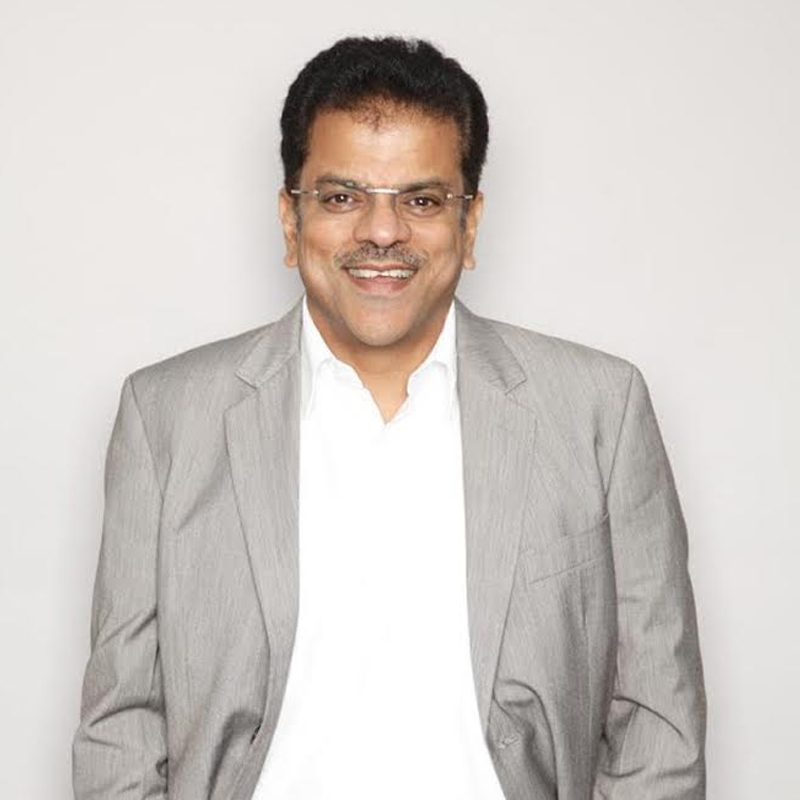
    NEW DELHI: FCB India group chairman & CEO Rohit Ohri doesn’t need a long introduction. An ad veteran, with years of experience in the trenches, he has earned respect and his stripes over the past three decades.

    Hence, when he got together with  Indiantelevision.com founder CEO & editor-in-chief Anil Wanvar over in a virtual fireside chat on Saturday when the rest of the industry was putting its legs up, resting, one expected some interesting insights. And boy! did he provide them.

    For instance, he revealed that he is not a great votary of working from home (WFH), which has become the norm now. He has accepted it as a necessity but is raring to get back to the office.

    “I come from the pretty old school of advertising, and WFH is much harder because you’re doing so many things altogether,” he said. “Advertising is a people business. Yes, virtual meetings are good, we are getting more work done, and are saving on travel time. But the business of advertising requires ideas, which we get in casual interactions and in the face to face meetings and even in having fun. That constant interaction is essential to get the creative juices flowing more. I can't wait to get back.”

    He, however, admitted that the past few months of lockdown and WFH have allowed him the opportunity to get involved in the larger set of business needs. Plus it has lent to a cleaning up of the environment something that millennials have really appreciated.  “Nature is telling us it is possible to clean up your act and this realization has made an impact among people,” he revealed.

    Read our coverage on FCB

    Ohri shared that he has learned all about advertising from his first boss Kolkata-based Response Advertising’s Ram Ray who passed away in November 2019.

    “His skills, his passion, his attention for detail was impeccable, his eye for detail are qualities that I have never seen in many ad professionals,” he expounded. "Ray used to write letters to clients and employees, one of the best lessons I learned in business communication. He always had said if you don’t pay attention to your own brand and if the client sees shoddy communication how will you handle them? Ray took me under his wings, and I learned so many things.”

    Ohri firmly asserted, as leaders of companies and organizations it’s our responsibility to mentor the next generation and leave a rich legacy.

    According to him, Ogilvy’s Piyush Pandey brought about a change in the way creative brand advertising can be used to build organisations just like he did for Pidilite.

    Read our coverage on Rohit Ohri

    But he was also very clear that he lets FCB’s advertising output do the talking rather than sounding a bugle about its creative prowess. “I don't believe in the flamboyance of agencies at all, the flamboyance should be the brands,” he emphasised. “In my head, what work we do, and the best rewards are when the brands do well in the market. In my book, there’s no other flamboyance required. It is genetically against the way FCB is as an organization. We believe in solid partnership with clients.”

    He believes that an agency’s role has evolved to become more of a marketing solutions provider. “It’s not just about advertising. It goes way beyond helping them solve any marketing problems. This is something FCB is known for since Anil Kapoor’s days,” he pointed. For instance, the decision to air old Amul commercials during Ramayan and Mahabharat on Doordarshan was something that both the FCB and the Amul team reached. “It was a nostalgic journey into the Amul history,” Ohri explained. ”And on many levels, AmulDoodhPeetaHaiIndia will go down in marketing history because of the way the brand behaved during this crisis. It built a new bond with the whole set of consumers. There was not a day when Amul Milk was off the shelves even during the lockdown. Even with consumers, it brought back the nostalgia, and everybody felt connected with the brand.”

    Ohri shared that he is cautiously optimistic about the advertising industry’s propsects going forward. “We have a global freeze on recruitments or increments, everyone is holding together in these difficult times. But the good news is that clients are coming back and there’s a lot of pent up demand,” he revealed. “FMCG, automotive, white goods are a few categories that have seen improvements.

    He pointed out that there’s a clear pathway that he has charted out for the FCB group (which includes FCB Ulka, FCB Interface, Lodestar UM, FCB Digital, and FCB Cogito). “We are not in the binge acquisitions game,” he said. “We work with partners to provide services to our clients who are satisfied with what we have to offer. That's the path we will continue to tread. Additionally, we have brought all our digital offerings in-house under the main agency. I believe that way we can work holistically together to offer clients a comprehensive solution.”
  • THROWBACK: Shashi Sinha remembers his days with Verghese Kurien

    THROWBACK: Shashi Sinha remembers his days with Verghese Kurien

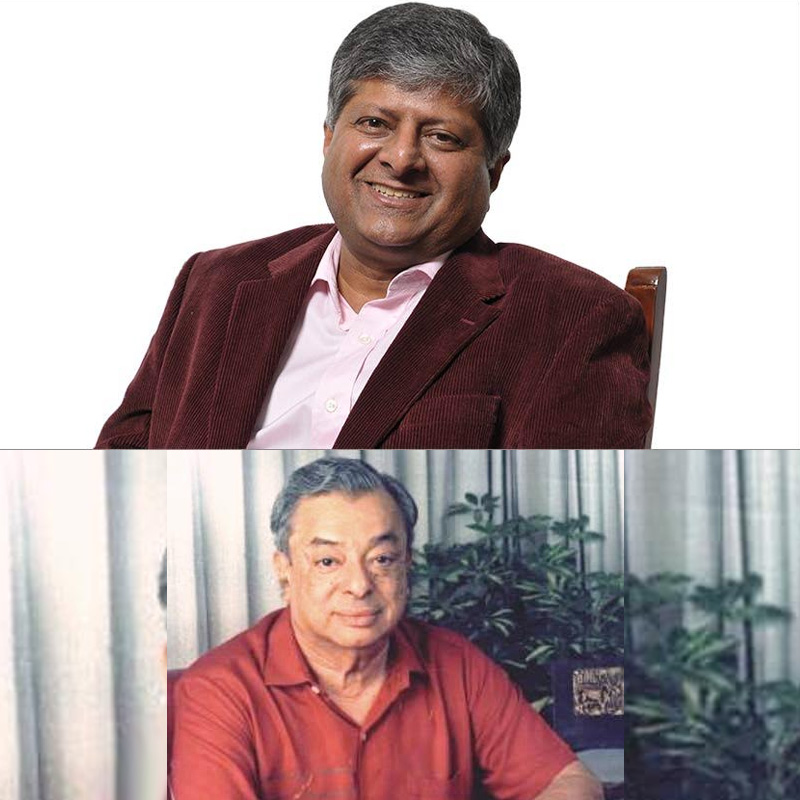
    NEW DELHI: The father of White Revolution, Dr Verghese Kurien is a highly respected man in the business as well as the advertising world. Probably the only client who has given a free hand to all the agencies to follow their convictions and handle the business without worrying about making blunders, he has remained an inspiration to many.

    One such person who has admittedly learnt a lot from the firebrand leader and visionary is the IPG Mediabrands CEO–India Shashi Sinha. In a fireside chat with Indiantelevision.com founder, CEO, and editor-in-chief Anil Wanvari, Sinha reminisced about the golden days he spent working for Kurien and his iconic brand Amul.

    “It was the monsoon of 1986 when I had first met Dr Kurien. I was five-six months old at Ulka when he just showed up, with Vivek Matthai, at our agency’s reception to meet our boss Bal Mundkur. Our secretary did not know who he was and made him sit in the conference room while she looked around to find someone to meet the man. Luckily, I was the first person she saw,”  he shared with a smile.

    “Now, I had an idea who Dr Kurien was but I was still unaware of the scale of the business he was creating. I entered the room and he asked me where my boss was. I told him Bal Mukund was not around. It dawned on me how big a person was sitting in front of me when he invited our team to visit Anand. And I was at a loss of words suddenly, stuttering. Nevertheless, he put me at ease and asked why don’t I come over too,” he added.

    Sinha was stunned and also amazed at the fact that a client of his stature himself visited the agency to meet the team.

    After a week or so, a team from Ulka visited Anand, including Sinha, who was the junior most member of the cavalry.

    “I went there with my bosses, who were all very experienced senior people, who started introducing themselves to Dr Kurien sharing their background and experiences. And he suddenly said, ‘That’s the problem in our country. You people come and join brands and make a blue soap if that doesn’t work you make a red soap, and if that too doesn’t work, you make a green soap…’ Then he talked to us for an hour, very passionately about the cooperative movement and Amul,” Sinha quipped.

    Sinha himself was sitting in a corner at that time, smiling to himself thinking how lucky he was to be sitting in the farthest corner and not getting a chance to introduce himself.

    “Young man, why are you laughing,” Dr Kurien asked Sinha, who replied, “Because whatever you are saying is so nice and at the same time it is humorous we are on the wrong foot.”

    “If I may say so, that was the moment that Dr Kurien grew a liking to me,” Sinha proudly shared.

    He further shared another incident, about the first pitch Ulka took to Dr Kurien for Amulya powder.

    “He had called our team once and said that he doesn’t work on a project basis and works with long-time partnerships. Once I hire someone, they will be with me for life. But I will start with a small project. So, he gave us Amulya powder and asked us to come back a few days later with our ideas.”

    His team went with five creatives after fifteen days and presented them to the team, including Dr Kurien.

    “At the end, he asked us which one we recommended out of the five. Now, there was a painful silence in the room as everyone was so intimidated with a big man asking a question like that. So, I picked up a pack and he just walked out of the room. Everyone turned to me asking what I had done,” Shashi enthusiastically shared.

    “That day, he gave us a message that he trusts us as professionals. He expected all of us to come to the meetings with a point of view and stand by our convictions. He will obviously ask questions, but he won’t question our decision. The second thing he said to us is that every mistake is allowed and it won’t impact our partnership or financial integrity. And he stood true to that. We made hundreds of blunders and he pardoned us a lot. As far as the Amulya packaging is concerned, it is still there.”

    Sinha proudly shared that during his more than three-decade-long association with Dr Kurein he learnt a lot about life and work. “I am so happy that I crossed paths with a man like him at such a young age in my career. He taught me the value of strong focus and integrity. He taught me how important it is to have conviction and having the big picture. He always said that more than anything, it is important to be true to yourself.”

  • Covid2019 did not upset top brands’ growth: Kantar report

    Covid2019 did not upset top brands’ growth: Kantar report

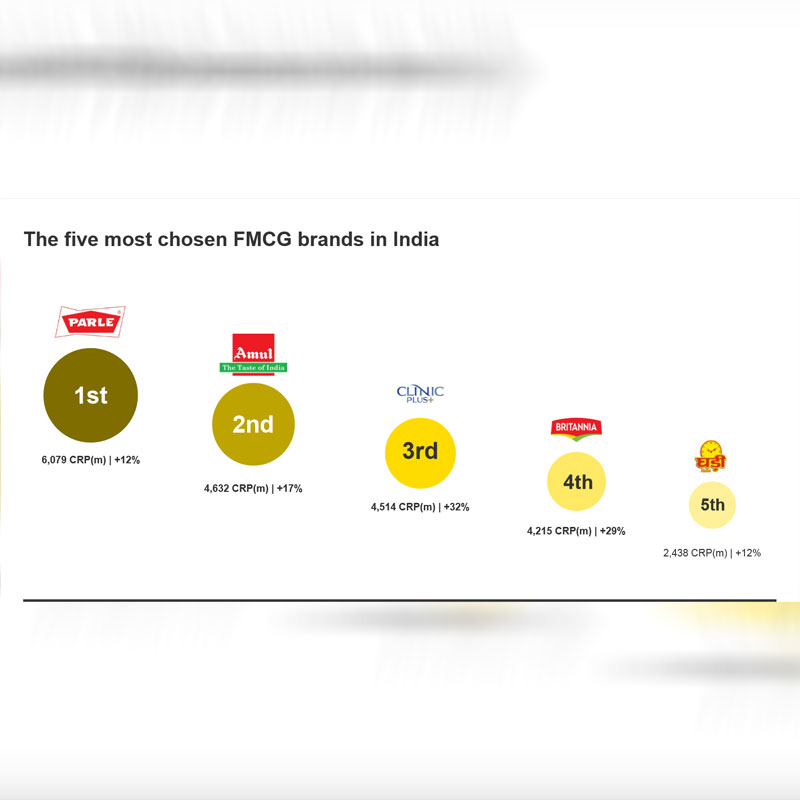
    NEW DELHI: According to Kantar’s Brand Footprint 2020 report, brands including Parle, Amul, Clinic Plus, Britannia and Ghadi emerged as the topmost chosen brands in the country in 2019. The report is an annual ranking of FMCG brands based on the Consumer Reach Points the brands scored in a year. The report is in its eighth edition this year.

    Brand Footprint 2020 follows CRP based ranking which considers the actual purchase made by the consumers and the frequency at which these purchases are made in a year.

    According to the report, scoring the highest CRP (million) at 6029 with a 12 per cent increase, Parle ranked first, which was followed by Amul at 4,632 CRP (million) and 17 per cent increase, Clinic Plus at 4,514 CRP (million) with 32 per cent increase, Britannia at 4,215 CRP (million) with a 29 per cent increase and Ghadi at 2,438 CRP (million) with a 12 per cent increase.

    The report further highlighted that this year five new brands made it to the Billion CRP Club including Dabur, Vim, Sunfeast, Brooke Bond and Patanjali and 21 brands joined this group in 2019 compared to 16 in both 2018 and 2017.

    Consumers made significantly more choices this year leading to a significantly better CRP performance by brands – 57 per cent brands record growing CRPs and bigger brands find better growth and follow the golden rule, brands grow faster by growing penetration. Colgate stands at the highest penetrated brand at 88 per cent, as per the report.

    In the foods category, Britannia is the second-most chosen brand, seventh-highest penetrated brand with a household penetration at 67.6 per cent. Aashirvaad saw a surge with 4 per cent penetration increase and +55 per cent CRP growth.

    Dabur as a brand came out strong in personal care and foods category with 34 per cent increase in CRP growth, making it the fifth-most chosen beauty and health brand in India with a 70 per cent per cent household penetration.

    “Consumer reach points are a great way to measure and rank brands as it is a measure of the number of opportunities a brand has, to interact with a consumer. It is great to see consistent validation for the fact that if you build penetration, frequency and growth follow. This has really been a year of global brands in terms of their higher growth than others. Like these, this year’s report has a lot of interesting nuggets to derive a lot of information and insights on top the behaviour of consumers towards brands in the last year,” Kantar MD- south Asia, worldpanel division K Ramakrishnan said. 

    The report concluded that 2020 is the year of global brands and for the brands that focused on reaching more targets were the clear winners. It also said that Covid2019 did not upset the top brands’ growth.

  • From Fevicol to Dettol, brands play active role in creating awareness on COVID-19

    From Fevicol to Dettol, brands play active role in creating awareness on COVID-19

    MUMBAI: As confirmed novel coronavirus cases have reached 167 in India, brands across different sectors have started creating social awareness campaigns to educate consumers about the disease. Streaming giant Netflix, Zomato, Hindustan Unilever’s Lifebuoy, Reckitt Benckiser’s Dettol and Amul, among others, have joined the bandwagon to stay relevant and express solidarity with people during COVID-19 scare.

    Lifebuoy

    Sensing the fear among people, personal hygiene brands have started posting precautionary tips. HUL’s Lifebuoy has been actively promoting the use of alcohol-based hand sanitizer to stay safe. The campaign was praised for its message, as it mentioned key competitors such as Dettol, Lux, Godrej No 1, Santoor in its ad and urged people to buy any product which is easily accessible to them.

    Dettol

    Reckitt Benckiser, a consumer health and hygiene company, has launched a Paigham-e-Sehat campaign around its brand Dettol. To drive behaviour change communication, the programme is aimed at 550,000 Madrasas across India. Prior to this campaign, Dettol in partnership with TikTok launched #HandWashChallenge to raise awareness about washing hands.

    @urvashirautela

    Wash Hands and Stay Cool ##HandWashChallenge @dettol_india

    ♬ Hand Washing Song – Viruss

    Amul

    Dairy brand Amul never misses a chance to stand out. For instance, the brand featured a topical ad with Amul girl washing hands as the caption read ‘Better saaf than sorry’. The ad appeared on all social media platforms like Twitter, Facebook and Instagram.

    Fevicol

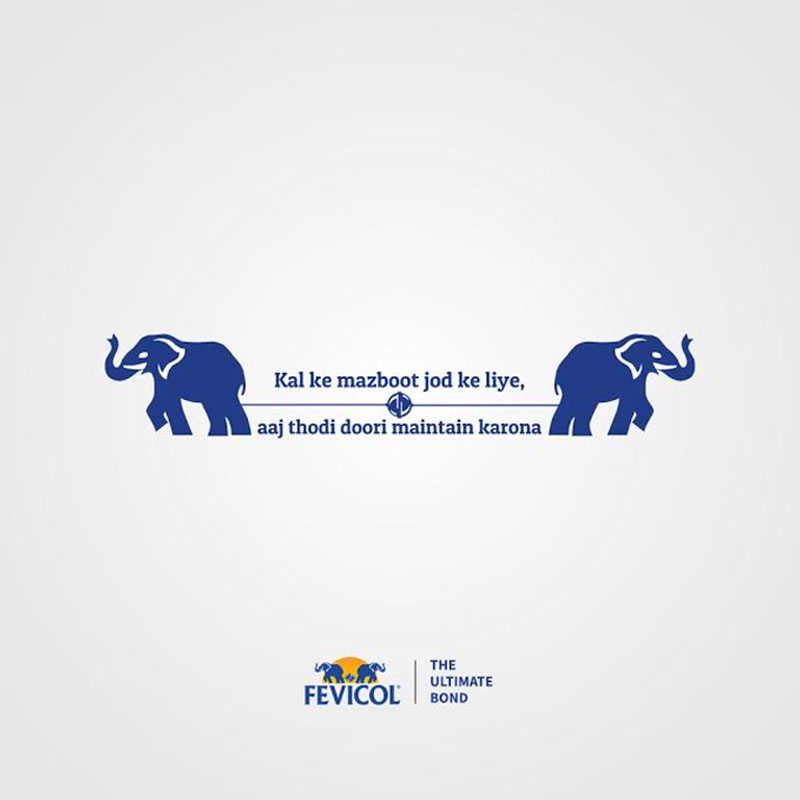
    Fevicol is known as a brand which has mastered the art of ‘moment marketing’. During the times of COVID-19 scare, Fevicol tweaked its iconic logo of two elephants and increased the distance between them to convey the message of social distancing.

    Zomato

    Zomato’s Deepinder Goyal through his twitter handle talks about the precautionary measures taken at Zomato.


    Viviana Mall

    Viviana mall in its social media campaign urges people to spread information and not panic.
    It has collated a few important tips to protect ourselves from COVID-19.

    Mad Over Donuts

    MOD through its social media post builds confidence among people by talking about the hygiene maintained while preparing food. It has mentioned how the entire staff wears gloves and masks while cooking.

    Balaji Motion Pictures

    With the COVID-19 pandemic becoming increasingly prevalent around the globe, Ekta Kapoor’s Balaji Motion Pictures requests people to stay indoors.

    Red Chillies Entertainment

    Red Chillies Entertainment through its post explains the importance social distancing.

    Treize Communications

    As the novel coronavirus outbreak grows, companies are asking their employees to work from home for their safety and work efficiency. Treize Communications brings in some tips for making work from home easy and fun.

    Viacom18

    Viacom18 in through Instagram post are educating people to stay safe amidst novel coronavirus scare. They have set out certain precautionary measures to create awareness around the disease

  • Lodestar UM facilitates unique association between Amul & Cricket South Africa with high visibility during matches

    Lodestar UM facilitates unique association between Amul & Cricket South Africa with high visibility during matches

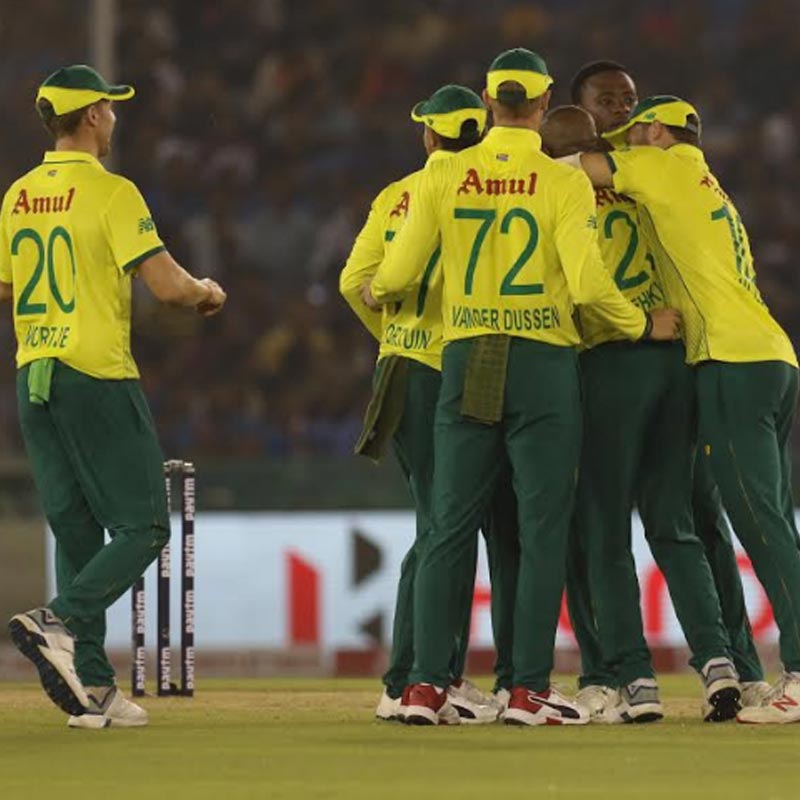
    MUMBAI: Lodestar UM (An IPG Mediabrands Company) one of the leading media agencies in India, has brought together India's largest dairy brand, Amul and Cricket South Africa in a unique and innovative partnership. The agency has facilitated a two-pronged media deal for Amul for the on-going Proteas Tour of India.

    The brand, Amul, is present on the jersey of the South African team, as well as on the boundary rope. It's an innovative media association for Amul, where the brand is getting 10X visibility on television(through  both the jersey and on-ground rope), without buying on-air sponsorship.

    Dr R.S. Sodhi, Managing Director, Amul, said, "Amul is very proud to be associated with the South African cricket series an an Asian Partner."

    Talking about the association, Dhruv Jha, head content and experiences, Lodestar UM, said, "We are always looking out to create innovative media solutions for our clients that benefit them both in terms of reach and cost efficiency. Amul has always been a big sports enthusiast. This association is the testimony to the brand's commitment for sports."

  • How brands made the most out of Friendship Day on Twitter

    How brands made the most out of Friendship Day on Twitter

    MUMBAI: As the world celebrated Friendship Day this Sunday, some brands also bonded with their fans on Twitter to mark the relationship they share with them. From extending messages to fellow members of brand-verse on Twitter to coming out with cheesy friendship messages for fans, to hosting social media challenges for fans, the brands did all and more to make this day special. Here are some of the most creative friendship day campaigns that Indiantelevision.com came across on Twitter:

    1. Amazon Prime Video India

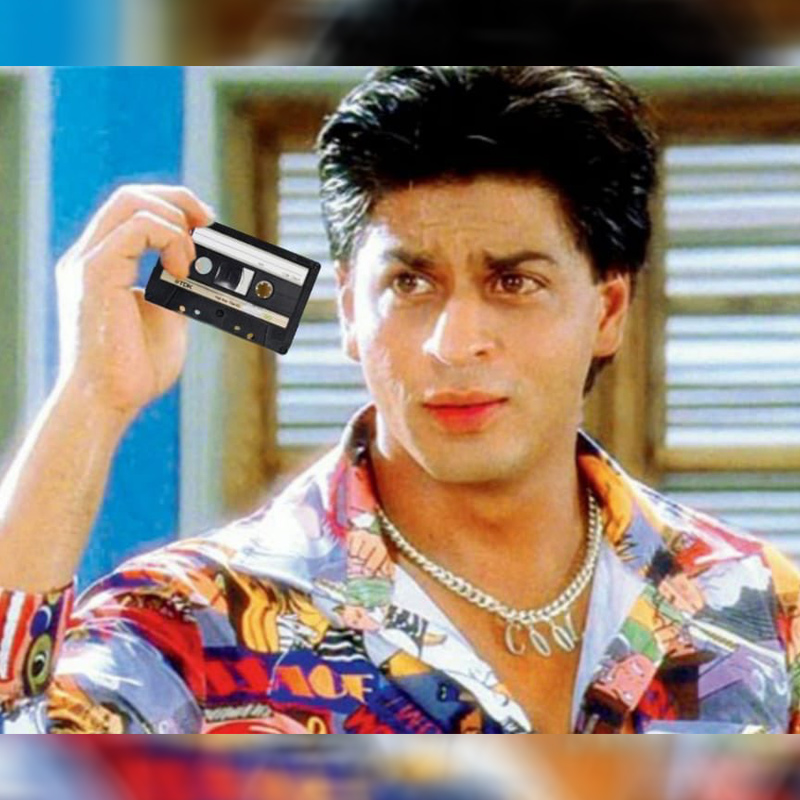
    Amazon Prime Video tagged a number of brands including Starbucks, Zomato, Ola in cheesy friendship day messages, using Shah Rukh Khan from Kuch Kuch Hota Hai as a template. Here are some of the most creative takes:

    Other brands also followed suit and came up with some really interesting and creative friendship day messages for their users. Have a look!

    2. Amul

    3. Dharma Productions

    4. Google India

    5. Honor India

    6. Manforce India

    7. Maxxis Tyres

    8. Netflix India

    9. Red Chillies Entertainment

    10. SBI Life Insurance

    11. UP Police

    12. Vivo India

    13. YouTube India

    14. Zee 5

    15. Gaana

  • IPL 11 saw 61% growth in ad volume from season 1

    IPL 11 saw 61% growth in ad volume from season 1

    MUMBAI: The cash-rich Indian Premier League has witnessed tremendous growth over the years from its inception in 2008. The growth is in terms of different aspects like advertising revenue, sponsorship revenue, number of eyeballs and brands attraction etc.

    According to TAM data, commercial ad volumes grew by 61 per cent in IPL 11 compared to IPL 1 i.e. from 31 hours in season 1 to 50 hours in season 11. Total of 151 brands advertised across 64 different categories during the last season.

    To make the data comparable, one channel each of the respective broadcasters is taken into consideration for both the seasons. Sony Max is for IPL 2008 and Star Sports 1 Hindi for 2018 season.

    Recently, the Board of Control for Cricket in India (BCCI) announced that the 12th season of the cash-rich league will commence from 23 March 2019. Franchises, brands, broadcaster and most importantly the fans were left delighted when the board announced that the 2019 edition will be played entirely in India.

    The 11th season of the cash-rich league enjoyed humungous reach both on TV and OTT platform of Star India. Brands have long recognised the power and popularity of cricket in India and IPL with its undisputed reach and combination of cricket and entertainment is a zero risk property for brands.

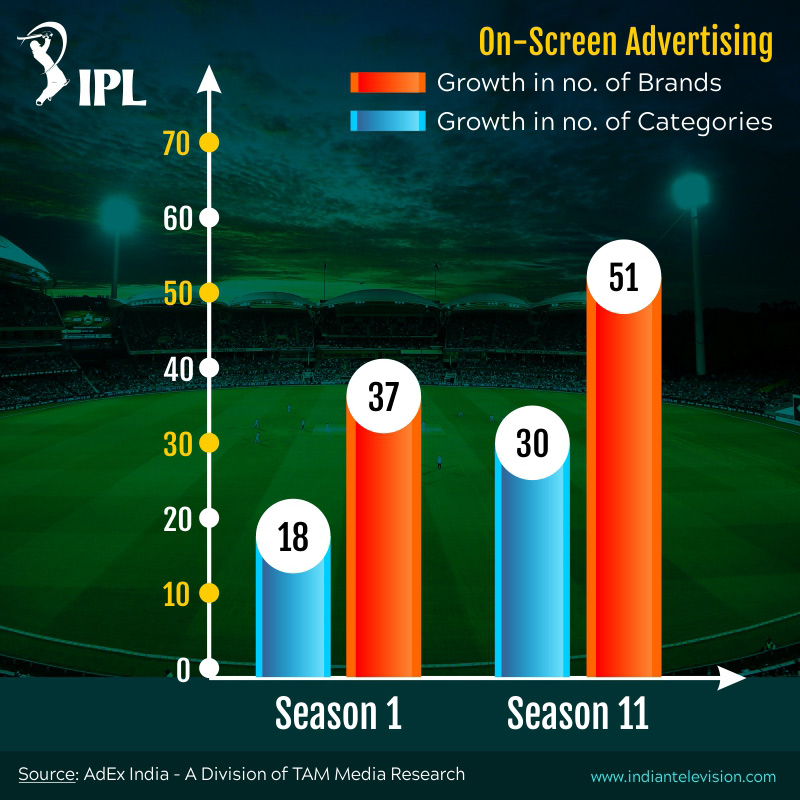
    On-screen advertising, the digitally embedded elements fed by broadcaster during the live telecast of match saw a good spike in the number of brands and categories. Total 51 brands advertised in IPL 11, which is 38 per cent more than IPL season one’s 37 brands. There was a 67 per cent rise in categories from 18 in IPL 1 to 30 in IPL 11.

    Top three categories which dominated the top 10 list across the last three years in cricket genre are perfumes/deodorant, cellular phones-smart phones and cellular services. Experts believe that the event by itself is both a massive opportunity for brands and equally a challenge of sorts to stand out in the storm of brands advertising in it. The shorter format further pushes the challenge.

    Some of new brands that associated with the IPL last season were AMFI, Asian Paints, Berger Paints, Blue Star, Ceat Tyres, Crompton, Dollar, Ford, Haier, Luminous, Pedilite, Sleep Well, Vanessa, Vimal Pan Masala and Voltas joined the existing ones like Vivo, Colgate, Amul, Dream11, Elica, Kent, Parle Agro, Polycab to name a few.

    The season witnessed 21 hours of on-screen advertising with action replay, pull-through and push back the top three on-screen branding units during the play.

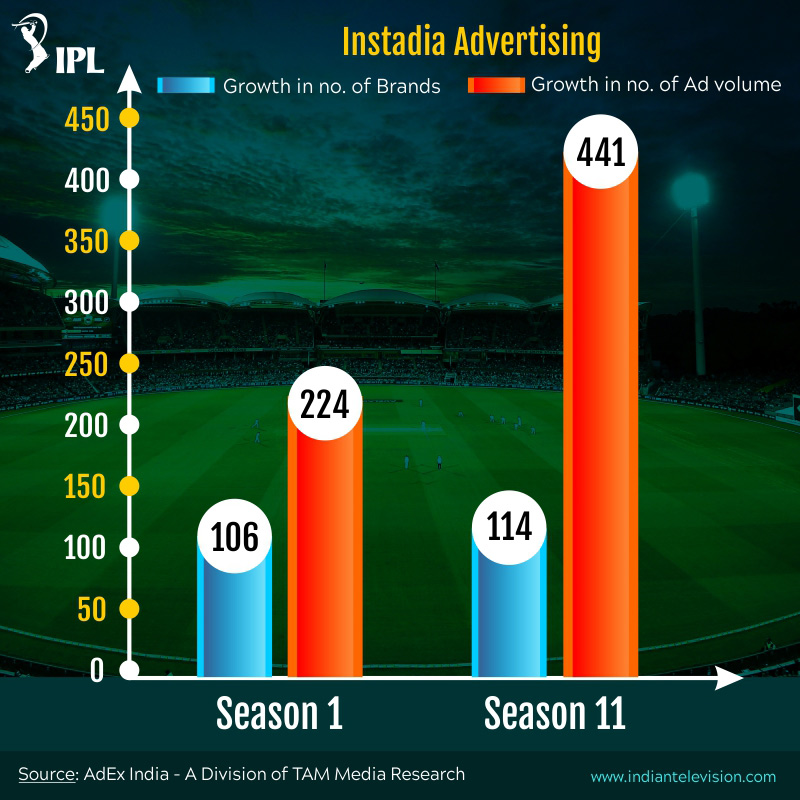
    Talking about in-stadia advertising, 441 hours of in-stadia advertising was registered during IPL season 11. Top three on-screen branding units during the season were t-shirt, backdrop and perimeter board. Compared to the first season, in-stadia ad volumes increased almost by twofold from 224 hours to 441 hours in IPL 11.

    Instadia advertising saw a growth of 8 per cent in the number of brands i.e., 106 brands in IPL 1 to 114 brands in IPL 11.

    To appreciate the spike in brands and advertisers for IPL, Star India in its first year introduced the Re.imagine Awards to recognise and encourage the creativity and innovation in the use of integrated media in advertising campaigns aired during Vivo IPL on Star Sports and its OTT platform Hotstar.

    Not just cricketers on the pitch but brands, marketers and advertisers have gradually upped their game to keep the viewers engaged during the sporting extravaganza.

    In the upcoming season of IPL, a lot of diversified brands will be seen participating. The important thing is how they weave the story into a much more deeply integrated marketing plan. Now, it is about integrating the storyline through both ATL and BTL campaigns.

  • Amul gets relief in ice-cream ad case against HUL

    Amul gets relief in ice-cream ad case against HUL

    MUMBAI: Providing some relief to Gujarat Co-operative Milk Marketing Federation (GCMMF)-run Amul the Bombay High Court has allowed it to run its two TVCs, which were objected to by Hindustan Unilever Ltd (HUL), but only after deleting portions disparaging rivals like Kwality Wall’s.

    In the said judgment that ran into 87 pages, Justice Kathawalla had noted that in 2012-13, Amul started a campaign by distributing pamphlets stating the difference between a frozen dessert and ice cream. These pamphlets state: “Usse real milk wala Amul ice cream khilayein, Vanaspati tel wala nahi”. While frozen desserts contain vegetable oil, ice creams contain dairy fat.

    A division bench headed by Justice BR Gavai and Justice RI Chagla took the decision on an earlier appeal filed by GCMMF against the past judgment of a single bench of Justice SJ Kathawalla restricting Amul from broadcasting the two TV ads showing vanaspati (vegetable oil) flowing in a cup with frozen dessert written on it. The said campaign was launched in March last year and emphasised the difference between ice-creams (made from milk fat) and frozen desserts (made from vegetable oil).  HUL objected to the ads stating Vanaspati is not used in the manufacture of frozen desserts by Kwality Wall’s, instead, edible vegetable oil is used.

    However, the court also found that there was no need to restrain Amul from broadcasting both TVCs entirely – “We are of the view that such a blanket injunction could not have been granted by the learned single judge. A perusal of the advertisement would reveal that entire TVC cannot be said to be of objectionable nature.”

  • Hero ISL helps create positive image among consumers: Amul MD RS Sodhi

    Hero ISL helps create positive image among consumers: Amul MD RS Sodhi

    MUMBAI: We’re halfway through the fifth edition of Hero Indian Super League (Hero ISL) and for now, Bengaluru FC leads the table to capture the coveted crown. Hero ISL has helped bring football to the mainstream and aided the popularity of the sport at the grassroots level.

    Season 5 kicked off on 29 September 2018 with six different languages- English, Hindi, Tamil, Malayalam, Bengali and Kannada.  While five languages are on the Star Sports network, the Kannada feed will air on the newly launched Colors Kannada Cinema. On the digital front, the league is also live streamed on Hotstar and Jio TV.

    This year, the league is being backed by Hero, DHL, Bisleri, Maruti Suzuki Arena, Dream11, Zeven, Nivia and Imperial Blue.

    With football becoming a prime sporting choice for a growing number of Indians, brands have realised the need to step in early in the game. Amul – probably the most ‘Indian’ brand there has ever been- has teamed up with the league for the last four years. The brand, which is famous for its catchy, witty and ironic campaigns with the Amul Girl, has been looking to cash in on the enthusiasm inside the stadiums. Indiantelevision.com caught up with Amul MD RS Sodhi to discuss his iconic brand’s collaboration with the league.

    Excerpts:

    The Hero ISL has become a powerful sporting property that brands want to piggyback on. Not many people thought this would be the case with football in India. What are your thoughts on it?

    The football culture of India has been an active sub-culture in its initial days which has grown over the last two decades significantly among the youngsters. This can be attributed to their exposure to international football events such as EPL, Bundesliga, La Liga, Euro Cup and the World Cup. Also, during this period, Indian football at school and district level leagues have increased, thereby adding to more interest among youngsters.

    Five years back when Hero ISL began, this generation was in between the age of 20 -30 years. It was a moment of awakening among Indians for we were able to see and appreciate this sporting culture in its vibrancy. A new format wherein this generation celebrated international footballers they grew up admiring and appreciating the raw tenacity and skill of Indian football. Many Indian brands saw the potential of the event and its ability to engage with the youth of India both on-ground and on-air through TV and digital.

    How does a brand further tap into the Hero ISL audience, which is young, affluent, informed and passionate?

    Hero ISL as an event has been well received among the youth of India and therefore a new media for brands to engage. However, as Amul, we are very careful to have meaningful engagement with them. For example, as a food brand we focussed on identifying moments where as a brand, we could address the needs of our consumers inside the stadium. We realised that the high levels of enthusiasm inside the stadium can tire our consumers. So we decided to nourish the energetic and health conscious youngsters with our milk, beverages and ice creams. We had our teams present in every match selling our range of beverages and ice cream. This gave the brand a positive image among our consumers as we were able to attend to their needs inside the stadium in every match. In addition, we were also reaching out to the audience across the country with our communication campaigns on TV.

    Grassroots football development appears to have got a boost with the Hero ISL. How can the football administrators build on this?

    The event has triggered conversation among brands, football associations, clubs, schools and parents regarding football in different contexts. This is a positive outlook as a country with a young growing population. Our country needs the youth to be physically active and they should be motivated to plan and pursue a career in sports.

    This has led to setting up of football academies by Pune FC for example and many other clubs and football associations will definitely take up such initiatives. This will help our youth to build a healthy lifestyle and alternate career opportunities where they will be more passionate.

    Do you thing the emergence of Hero ISL is among one of the key reasons behind the improved performances of the Indian national team in the last few years?

    It would not be fair to attribute the success of the Indian national team to Hero ISL alone, for our team has been playing really well. But we can definitely say that their exposure to playing in Hero ISL with international players of repute and experience would have helped them to improve their game plans and strategies. At the same time, there has been an increase among fans of the sport across age groups and genders which are motivational for our team. They follow the team as they travel from championship to championship and stand by them. All of these are positives which I am sure would be helping our team to help stay confident and perform to their best abilities in every game they play.

    CMOs of some of the most reputed brands have expressed their satisfaction over their association with top football leagues in the world (Barclays and the Premier League, Santander and La Liga). How can Indian marketers/brands help fuel a similar integration at scale?

    I believe for any brand to truly see results, they should invest in these events and not look at it purely as an advertising campaign. At Amul, we have been associated with the event for the last 4 years and have supported this initiative. We believe milk is the world’s original energy drink and associating with Hero ISL has helped to strengthen this communication among the youngsters of India. So, for Indian brands, it would be wise if they continue to pursue sporting events with similar mindsets and in the days to come they will see the results.

  • TV best way to advertise in India: Sandeep Seksaria, Macho Hint

    TV best way to advertise in India: Sandeep Seksaria, Macho Hint

    MUMBAI: Innerwear is no longer a product of necessity but even a lifestyle marker. While the industry only has five major players – Lux, Amul, VIP, Chromozome and Jockey, — in the organised sector, there is still potential for them to tap the untapped consumer who is fickle and changes products as and when there is a new disruptor in the market.

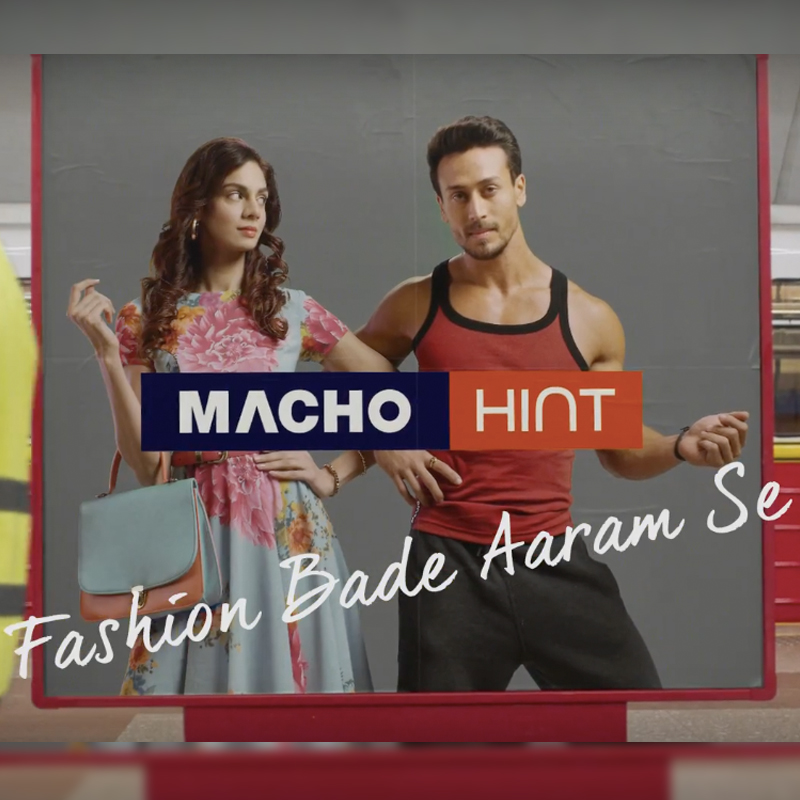
    Amul Macho has launched its sub-brand Macho Hint along with a TVC with brand ambassador Tiger Shroff with the tagline ‘Fashion Bade Aram Se’. The company wants to capture 40 per cent market share in fashion innerwear segment by 2020.

    The innerwear industry in India is said to be over Rs 30,000 crore. The growth potential is vast as people shift from pyjamas to t-shirts, track pants and boxers.

    Macho was launched in 2005 and has become one of the highest selling and fastest growing innerwear brands in the country. Macho operates in the mid-segment innerwear market. Macho Hint director Sandeep Seksaria says, “As part of our business strategy the brand is repositioning itself as a fashion led brand thus we are launching Macho Hint. We are confident that the new range of products in different colours and designs will help us in reaching the masses, especially the customers who are looking for comfort and fashion.”

    The brand wants to create a perfect mix of style and comfort and is aimed at the youthful and fashionable consumer. One of the main features of the new range is that none of the prints will be repeated in the next range of products. Made from 100 per cent premium combed cotton, the lowers and uppers guarantee to maintain shape and appearance, wash after wash.

    On the marketing front, the products will be advertised heavily on television followed by a bite size of outdoor and digital. On television, the ad starring Shroff will be aired across all major GECs, news channels, movie channels and music channels. Macho Hint has become the associate sponsor for many reality and GEC shows in Hindi and other regional languages that are aired on Sony, Colors and Zee.

    Speaking about the heavy investment on television, Seksaria says, “We have always been big on television as that enables us to reach a mass audience. There is no better way to advertise in India other than television.”

    It is interesting to note that the brand does not believe in shelling out money for digital on a larger scale. Defending his case, he says, “We talk about OTT being the next big thing for advertisers but how much of the population is actually watching content on OTT platforms? I think only 2-3 per cent! And the audience that is watching content on OTT platforms is not our customer.”

    The three key channels to distribute are general trade, modern retail outlet and online. Innerwear as a category relies heavily on general trade which occupies 90 per cent of the market followed by modern trade at 8 per cent and online channels at a mere 2 per cent. Seksaria, however, is optimistic that in the next 10 years, modern trade will contribute to 30-35 per cent of its sale and a major chunk will be from modern trade (60 per cent) which is already growing 100 per cent y-o-y.

    The products range of Macho Hint will be available in all modern trade stores India through its strong network of dealers. Priced between Rs 150-250, the products are targeted at males in the age group of 14-45.

    Going forward, the company will also launch its casual wear range in February which will include boxers and track pants. That is another untapped market by Indian players which has huge potential. The lounge/casual wear category in India is dominated by international players including Jockey, Jack & Jones, Hanes, Flying Machine along with premium brands like Tommy Hilfiger, U.S Polo and Fcuk.