Mumbai: TAM media research’s subdivision AdEx India has released the half-yearly report for advertising in the new genre. According to recent data, Hindi news tops with more than 20 per cent share for ad volumes in H1 FY ’22, and observed indexed growth of 33 per cent.
As per the data recorded last year for the same period, ad volumes grew by 33 per cent as compared to H1 FY ’20 and five per cent growth was reported as compared to H1 FY 2021. The month of March 2022 saw the highest ad volume share of 19.5 per cent.
H1 FY ’20 saw the highest share of ad volumes, that is, 31 per cent followed by H1 FY’22 and H1 FY ’21 with 28 per cent share each.
The prime time slot is the most preferred band, followed by the afternoon and morning in the news genre, and during H1 FY ’21 and H1 FY ’22, for each slot Hindi news topped with a 20 per cent share of ad volumes.
Three out of the top five subgenres, which include Hindi news, Bengali news, Tamil news, Telugu news, and others, have retained their ranks in H1 FY ’22. During H1 FY ’21 and H1 FY ’22, the top five subgenres accounted for more than 55 per cent of the ad volume.
The number of news genre categories increased by four per cent in H1 FY ’22 as compared to H1 FY ’21. The spices category led with a three per cent share of ad volume in H1 FY ’22.
The top ten list included two categories each from the food & beverage, building, industrial, and land materials/equipment industries.
Corporate/brand image, range of OTC products, building materials/systems, and pan masala were the new entrants among the top 10, out of which seven categories observed positive rank shifts.
The service industry topped with a 17 per cent share of the news genre’s ad volumes, followed by F&B with 14 per cent.
Corporate/brand image saw the highest increase in ad seconds with 74 per cent, followed by ecom-gaming three times during H1 FY ’22 as compared to H1 FY ’21.
In terms of growth per cent among the top 10 categories, vocational training institutes topped with the highest growth of 3.9 times, followed by face wash with 3.2 growth.
Reckitt Benckiser, GCMMF (Amul), and LIC were the top three advertisers in H1 FY’22. Ultratech Cement, Mahashiya Di Hatti, and Think & Learn were the new entrants among the top 10. Ultratech Cement moved up by 24 positions to achieve the seventh rank.
Roop Mantra cucumber herbal face wash and Lizol All-in-One are the latest brands in the list, with Hari Bhoomi Communications being the top exclusive advertiser, followed by ITV Network.
The report further mentioned that in H1 FY ’22, 20 to 40 seconds witnessed a 10 per cent growth in ad volumes compared to H1 FY ’21. Advertising commercials of 20 to 40 seconds were most preferred for advertising on news channels during both periods.
More than 3,200 advertisers advertised exclusively in the news genre from H1 FY ’22. 2,800 plus advertisers & 4.5K+ brands exclusively advertised in the news genre during Jan-Jun’22. Playgames 24×7 and Roop Mantra Cucumber Herbal Face Wash were the top exclusive advertisers and brands, respectively, during H1 FY ’22 compared to H1 FY ’21.
Mumbai: This season, the Indian Premier League (IPL) franchise Punjab Kings revenue will grow by 20-25 per cent. This will be a mix of central revenue and local revenue. Speaking to IndianTelevision.com Punjab Kings co-owner Mohit Burman says that revenues are up by 25 per cent and quite a bit of this jump is from local sponsorship revenue on the jersey and centrally one or two sponsors have been added.
“Licensing and merchandising and ticketing will not impact the P&L. The BCCI running ticketing centrally. Licensing and merchandising has never given money because you do not have the regulation to curtail spurious jerseys that are made in your name and sold outside stadiums. You will never end up making big money from this area. It will only be a small amount of money,” he tells.
Only two sponsorship deals open up on the jersey next year. So the franchise will have to wait two years to do new sponsorship deals. Non-jersey sponsorship deals can be done in the digital space but the value is much less. While the franchise has reached just one IPL final back in 2014, he maintains that it has not made a difference in terms of sponsorship revenue of more than 15 per cent.
Sponsors look for brand visibility at the end of the day and also doing activation with the franchise’s players. “It is all measured back to what the viewership is, the number of games and so and so forth,” Burman says, adding that, “The two new franchises that came in Lucknow and Gujarat benefitted when they did sponsorship deals because there was not enough inventory in the market. The other franchises he explains were riding out Covid and so earlier did long-term deals. It is a question of demand and supply. The two new teams commanded a premium rate maybe of 50 per cent. This has nothing to do about whether a team has won or not.”
He further says that this year the franchises sponsors have focused more on digital activation. There have not been many commercial shots by Punjab King’s sponsors. “They are doing digital activities which both the players and consumers love.”
He also notes the growing trend of sponsors like Jio, Amul, Boat doing deals across franchises. The advantage he says is that the brand gets constant exposure regardless of who is playing.
He says that earlier in a normal situation the franchise did not make as much from ticketing compared to other franchises like Mumbai. That is because Punjab is a very price-sensitive market and it was hard to sell more than 20,000 tickets for a match through the stadium capacity might have been 25-28,000.
Most of the franchise’s revenue comes from the central pool and Burman hesitates when asked to what extent central revenue’s contribution could rise with the media rights auction next month. But he does say that the BCCI splitting the media rights into broadcast and digital was needed to fully exploit the potential rights value.
When asked about the fall in TV viewership he says that a lot of it has gone to digital through mobiles but this is not being measured properly because there is no single currency yet to measure digital. “Digital is not officially measured. So you do not get the real numbers. There is no body controlling digital measurement. The fact though remains that there is a huge shift where people are viewing IPL matches on the mobile. People sometimes mirror the IPL on their TV. The digital value and cost of streaming the IPL will both go up,” he shares.
In terms of future sources of revenue, he points out digital streams like NFTs, metaverse. “It is early days in terms of NFTs. Crypto has to get regulated but it is big money. We also have a $3 million offer sitting on the table regarding the digital rights of our players. From this content can be created. The BCCI has to approve of it,” he tells.
In the pure cricketing space academies is something being pursued big time. In terms of academies, he says that it will be in catchments areas which is Punjab, Kashmir, Haryana. A central Academy will be set up in Punjab, to begin with. The concept is to then set up Academies in other parts of the country. “We have a huge catchment area in North America and the UK which we will possibly explore. We will do scouting and find potential boys who can be funneled into the system. We will use the help of the local federation.”
When asked about the franchise changing its name to Punjab Kings he said that the aim was to use the name Punjab first which is what other franchises do apart from Bangalore. “People must immediately attach the franchise to the market. We wanted to attribute ourselves to the State we come from.” He adds that operating in a Covid environment has been difficult but it was a bigger challenge for the BCCI. “The fact is that we have pulled off all three seasons quite well. The challenge for us was staying in the bubble and keeping everyone on their toes and happy.”
He also explains that costs did not go up due to Covid. That is because matches were played only in one or two venues. So air travel and hotel costs were saved. “This season we are playing in Mumbai. Otherwise we would have been travelling to different cities and spending money on transport and logistics. Things have evened out.” Beyond the IPL Burman owns the St. Lucia franchise in the Caribbean Premier League (CPL) in West Indies. He is happy about how the ownership has turned out and says that the franchise was profitable from the first year.
“We got the franchise at the right price and we did central deals even before we picked up the franchise. We will probably make money on the jersey also. The local government supports our team and we also have a big sponsor. Our revenue split between central and local revenue is almost equitable.” He is also interested in the upcoming league from Cricket South Africa (CSA) but notes that it is in its formative stage.. Right now the Big Bash League in Australia does not allow for outsiders to own a franchise. “Otherwise we would definitely explore it due to viewership and there is a lot of interest in India on the Big Bash League.”
He adds that he is not interested in non-cricket leagues. Years ago Burman had exited the now-defunct Hockey India League because the math was not adding up. “We have to be sure that we will get a return on investment. We do not get into any league if we know that there is no money to make. Ideally, we would like to make money in the first year itself which is what we did in the CPL. We look at leagues where the cricket board is involved as there will be accountability,” he concludes.
Mumbai: The India chapter of the International Advertising Association’s (IAA) has announced the winners for the eighth edition of the Leadership Awards here on Friday evening.
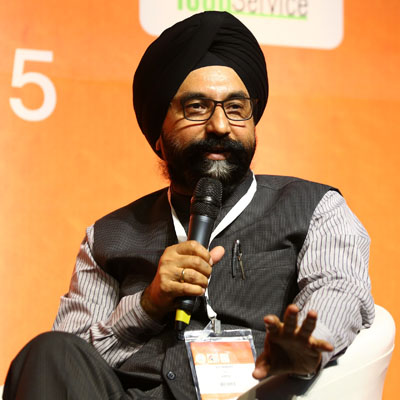
Gujarat Co-operative Milk Marketing Federation Ltd (Amul) managing director Dr RS Sodhi bagged the top honours for Business Leader of the Year. Sony Pictures Network India CEO NP Singh was conferred with the Media Person of the Year award. Veteran film actor Anil Kapoor walked home with the Brand Endorser for the Year award, while Wion’s executive editor Palki Sharma Upadhyay was awarded TV Anchor of the Year.
“I have learned a lot from people right from my retailer to the people sitting here because we interact with the best in the advertising and marketing industry,” said Dr Sodhi, in his acceptance speech. “I would like to tell you one thing that in today’s time the advertising and marketing field has garnered a lot of importance. There are so many retailers coming into the market. The pressure is growing. In order to prove yourself, you have to be creative, and when you bring that creativity in the local language, you will be closer to earth and you will be relevant in the industry.”
The IAA Leadership Awards, which honour individuals in the fields of marketing, advertising and media every year, were presented by the Maharashtra governor and chief guest at the function Bhagat Singh Koshyari, and IAA India chapter president Megha Tata, among others.
Zee was the presenting partner, Good News Today (GNT) powered by partner & Viacom18 the associate partner for the event.
“While we were planning the awards for 2021 we wanted to highlight leaders that have established new age businesses. For one thing this year has taught us is to be agile,” said IAA president Megha Tata.
“We have seen time and again that change or unexpected situations often lead to some brands or organizations and people succeeding while some may collapse. The difference between the two begins right at the top with the leader. And while I can describe our leaders tonight in many ways, I would just like to say that these unprecedented times call for unprecedented leadership and our leaders today definitely delivered on that,” she added.
IAA India inducted Raj Nayak into the IAA Hall of Fame for investing a lifetime in the MarCom industry and for his sterling role in directing the India chapter of IAA towards its ongoing role in being the voice of sustainability.
Other prominent recipients at the awards were Bobby Pawar (Creative Agency Leader of the Year), Nandini Dias (Media Agency Leader of the Year), and Raj Kamal Jha (Editor of the Year).
“True leadership is often about perspective, inner perspective. And for men and women with vision it is not always about different things, but sometimes it’s about the same things differently,” said IAA Leadership Awards co-chair Nandini Dias, articulating her thoughts on the definition of leadership. “That’s when one understands what leadership is actually made of. Leadership is not a talent, art form or science. It is simply about taking the first step in spaces where there are no written rules. So you make your rules because you make your own limits.”
New Delhi: Parle Products has once again emerged as the top FMCG brand in the ninth edition of the annual Brand Footprint India report released by Kantar India.
The report ranks the ‘Most Chosen FMCG Brands’ based on the Consumer Reach Points (CRP’s), which consider the actual purchase made by consumers and the frequency at which these purchases are made in a calendar year. Higher the CRPs, higher the opportunity for brand growth.
With a CRP score of 5715 (million), Parle holds the top spot for a record ninth year in a row, said Kantar India. It is followed by Amul, Britannia, Clinic Plus and Tata Consumer Products.
In a year dominated by health & hygiene, Dettol grew a whopping 48 per cent in CRP’s (923 Mn) and entered the top 25 brand list. Dettol was followed by Lifebuoy with a growth of 25 per cent CRP’s (1798 Mn), Vim at 21 per cent CRP’s (1454 Mn), Dabur at 14 per cent CRP’s (1458 Mn) and Britannia at 11 per cent CRP’s (4694 Mn).
The overall consumer reach points (CRP’s) have increased from 86 billion to 89 billion however, the rate of growth has plummeted down to four per cent, from eight per cent in 2019. COVID impacted the frequency of purchase as average trips made to purchase grocery reduced but more purchases per trip were recorded in 2020.A
According to the report, purchase frequency reduced by one per cent but spend per trip grew by five per cent, which led to lower number of brands (50 per cent) growing in terms of CRP as compared to 2019 (72 per cent). Growth in CRP is also directly proportional to the brand hierarchy in the ranking. Across the board, the percentage of brands growing fell by 22 per cent however brands in the top 50 only fell by 14 per cent (over 2019).
Penetration continues to remain the driving force. Low penetrated brands showcase a CRP growth of three per cent while high penetrated brands show a 4.5 per cent growth. At 88 per cent, Colgate (including all brands like Dental Cream, Cibaca, Active Salt, Gel etc) recorded the highest household penetration in 2020. The overall brand gains (in terms of penetration) are led by health and hygiene brands like Dettol (13.3 per cent), Lifebuoy (6.3 per cent), Savlon (5.4 per cent) and Harpic (4.3 per cent).
Worldpanel Division at Kantar, managing director- South Asia, K. Ramakrishnan said, the brand footprint is a great way of measuring and rewarding brands by the extent to which they are chosen by consumers. “Choice is a function of penetration and frequency. However, year after year, we find that brands grow a lot more on account of penetration gain than frequency gain. The biggest gainers in brand footprint 2020 were expectedly the hygiene brands. That said, the traditional leaders also held their positions by ensuring penetration growths even during the pandemic,” he added.
Brand Footprint Top 10 Most Chosen Brands of India in 2020:
MUMBAI: As India enters its 100th year of participation at the Olympic Games, the world witnesses the Games as never before. The country sent its first team to the Olympic Games in 1920, comprising four athletes and two wrestlers. Cut to this year’s 228-strong Indian contingent- the nation’s largest ever- at the event, delayed by a year due to Covid-19, and being staged amid a raging global pandemic, with zero spectators cheering from the bylanes.
However, that hasn’t stopped brands from going all out to cheer for Team India, as the mother of all gaming events gets underway. Brands have launched rousing, stirring campaigns that aim to infuse hope and cheer at an otherwise sombre Games, dampened by the pandemic.
AstralPipes put out a heartening post acknowledging the efforts of all Olympians, regardless of whether they bring laurels back home, or not. It wrote:
“To all the Indian Athletes, we know you have worked really hard for the Olympics, we are proud of you. Win or lose, it doesn’t matter, keep up with the good work and the glory will follow you to our nation.”
The Dairy major known for its topicals released a couple of posts heralding the commencement of the Games and cheering Team India. #Amul Topical: Let the 2021 Tokyo Olympics begin!
The FMCG major launched a TVC celebrating the inspiring story of C.A. Bhavani Devi- the first Indian fencer to qualify for Tokyo 2021 Olympics. Rin’s #AbWaqtHaiChamakneKa narrates Bhavani’s story throwing light on the sacrifices of her mother who supported her in her pursuit of fencing, and highlights her incredible journey, which is an inspiration for all.
Bharat Petroleum Corporation Limited (BPCL)
BPCL flagged off a series of campaigns under the title ‘Jeet Ka Padak’, which comprises a music video and inspirational stories of athletes on social media. The inspiring campaign aims to support and celebrate the sports individuals who pursue their dreams and demonstrate the valour to rewrite their destiny.
MPL Sports Foundation
The Mobile Premier League (MPL) launched a campaign featuring some of the biggest Indian Olympic stars, as part of a nationwide campaign to rally the 1.3 billion Indians to become fans of the Indian contingent at the 2020 Tokyo Summer Olympics. Called #FanBannJaaoge, the campaign features a film in multiple languages with Olympians PV Sindhu, Wrestler Bajrang Punia, Fencer Bhavani Devi, Shooter Manu Bhaker, and others. It was released across all mediums- TV, print & digital platforms.
The JSW Group
The Group launched an extension of its campaign, Rukna Nahi Hai, to celebrate and wish the Indian contingent. The campaign comprises a video featuring Neeraj Chopra, PV Sindhu, Manu Bhaker, Bajrang Punia and Vikas Krishan Yadav, lauds the indomitable spirit of the Indian athletes. The film also celebrates the official sponsorship by the Indian conglomerate of the Indian Olympic Association for the Tokyo2020 Games. The video showcases how the athletes have had to train harder through the challenging circumstances owing to the COVID-19 pandemic, which even caused the mega-event to be postponed by a year.
Thums Up
The Indian brand from the Coca-Cola beverage portfolio, has come to the forefront and partnered with the major global event. It launched the adrenaline-thumping Toofan wahi jo sab #PalatDe campaign, cheering Team India at the Games.
Mumbai: Just days after Amul claimed vindication on its ad that purportedly unravels the facts and myths behind vegan milk as opposed to cow’s milk, the debate seems to have spilled all over the social media, triggering a tweetstorm between Amul MD Sodhi and PETA India. The ad released in March this year by Amul was challenged by three animal rights organisations, one of them being PETA, for disparaging vegan milk as “impersonating or masquerading as a dairy product”, while extolling the virtues of cow’s milk. The petitioners alleged that the contentions made in the advertisement were false.
The ‘Myths vs. Facts’ print campaign, according to Amul, was to “expose the falsity behind myths that were being circulated regarding milk and to call out plant-based beverages terming itself as ‘milk’.
The Advertising Standards Council of India (Asci) dismissed the three complaints filed by the organisations — Beauty Without Cruelty, PETA and Sharan India, who had complained against the homegrown dairy giant’s ‘Myths vs. Facts advert which said that plant-based “milk” is not milk. The petitions were filed on 24 March.
Based on the response and evidence provided by Amul, as well as FSSAI guidelines that specifically defined milk as a vegetarian product, the consumer complaints council (CCC) of ASCI examined the issue and concluded that the advertiser had not made any misleading claims in the advertisement.
Following this, Amul India MD Sodhi tweeted the news with his strongly-worded statement, where he is quoted as saying, “Plant-based food companies are encashing the equity of milk. These products are nothing but genetically-modified lab foods that are made out of chemicals and synthetic materials by big corporations and MNCSs, with the only objective of profit making and not livelihood.”
In response, PETA India tweeted “Indian farmers stand to greatly benefit from vegan (which simply means made from plants) foods. Instead of fighting the inevitable vegan national/global trend, @Amul_Coop can start making plant-milk itself like so many dairy & former dairy companies now do.”
It also shared a Forbes article stating how India can lead the Vegan economy against the future pandemics. Vegan milk is an umbrella term referring to various kinds of non-dairy, plant-based ‘milks’ such as soy, coconut and almond.
However, the country’s largest producer of dairy products was not amused by the suggestion.
“Peta wants Amul to snatch livelihood of 100 mill poor farmers and handover all resources built in 75 years with farmers’ money to market genetically modified Soya of rich MNCs at exorbitant prices, which (the) average lower middle class can’t afford,” Sodhi tweeted in his rejoinder to the NGO.
Peta wants Amul to snatch livelihood of 100 mill poor farmers and handover it’s all resources built in 75 years with farmers money to market genetically modified Soya of rich MNC at exhorbitant prices ,which average lower middle class can’t afford https://t.co/FaJmnCAxdO
PETA India, countered citing another FMCG brand’s name which had made the shift, “Unilever is into vegan foods. Why can’t Amul?” with a gentle jibe that “Smart businesses respond to trends”.
While both parties continued to stick to their respective stands, several netizens clambered onto the tweet-war, expanding the scale of the debate – with each giving their take on it while taking sides.
Some accused PETA of selectively singling out issues, while ignoring other cases where animal abuse is rampant- advising it to focus on saving animals.
Many others criticised Amul for labelling all plant-based beverages as bad. One twitterati tweeted in favour of veganism, accusing the dairy giant of providing employment and making money at the cost of cows and their calves. “Needs & technology continue to evolve for the better all the time. Jobs evolve with it. You are setting your company up for failure by fighting against what is right. #veganism.”
As of now, there seems to be no end in sight to the debate around cow’s milk vs. vegan milk. What’s your take on it?
Mumbai: It would not be an exaggeration to say that it was the most looked-forward to, most-talked-about and the most nostalgia-generating event all of last week, on social media. After a wait of more than a decade and a half, diehard fans, the world over, of the most popular sitcom in television history finally got to see their six F.R.I.E.N.D.S get back together at Central Perk – albeit just for a little more than an hour and a half.
That was enough to spawn a million memes and dominate endless Instagram stories and conversations, with many declaring this was their best one hour 40 minutes of 2021 so far!
Then why would brands be left behind?
So, here goes a pick of some of the creatives for the FRIENDS: The Reunion that celebrated the friendship and got the nostalgia on spot. Could we be more excited!
ZEE5
The OTT platform which streamed the special episode in India, very usefully came up with some creative excuses we could use to bunk office to watch the reunion episode the moment it was launched- 12.32 pm to be precise! Could we be more grateful?
“The world will be on a BREAK tomorrow. Which excuse will you use to watch the #FriendsReunionOnZEE5 at 12:32 pm with the rest of the world?”
The Paint brand paid tribute to the famed couch in the coffee shop where the group of six used to hang out: “Can we be… any more excited to embrace every colour of this reunion!”
The Insurance brand creatively used the words of the familiar theme song ‘I’ll Be There For You’ and the backdrop behind the famous series to promote its service: “People come and go but true F.R.I.E.N.D.S will always stick around, even in the toughest situation. Let Kotak Life Insurance be that friend of yours.”
MUMBAI: Eid ul-Fitr means the occasion of breaking the fast- the day that marks the end of the month-long dawn-to-sunset fasting of Ramadan for Muslims around the globe. This year, more than anything else, the occasion serves as a great reminder to be grateful for what we have and to share with those who may be less fortunate than us.
Here are a few campaigns that are sure to bring some festive warmth and optimism into these grim times:
Facebook India | More Together. Hum aaj ek-duusre ka saath denge, toh ek behtar kal zaroor hoga. #MoreTogether
While all of us watch out for the wellbeing of our loved ones, it’s only a few special ones who look out for those not their own. It is this extraordinary message of looking out for others that Facebook’s latest ‘More together’ campaign brings out beautifully in the backdrop of the Eid ul-Fitr festival.
The film poignantly conveys hope and a sense of community, sending out the message that if each of us watch out for the other, it would be such a wonderful world.
Kotak Mutual fund shared a real-life inspiring story of Shahnawaz Shaikh on the occasion and inspire others to follow suit:
“For Shahnawaz Shaikh and his team, this Eid is about taking care of the community. Kyonki #MadatHiIbadatHai #EidMubarak
They have been doing their part in the month of ibadat by providing oxygen cylinders to #Covid patients. We applaud their noble deed & wish all of you a safe and blessed Eid.”
Amul released one of its popular topicals to mark the festive occasion of Eid ul Fitr with the creative ‘Eid together, Eat together- Break Fast, Start Feast’:
Tide India shined a light on those who make this Eid brighter for everyone with the words, “Celebrating everyone who went above and beyond to make the holy month of Ramadan brighter! Eid Mubarak.”
McDonald’s creatively depicted the brand’s softie ice cream bitten into, to form the shape of the crescent moon saying, “This Eid, stay safe and celebrate with your loved ones at home.
Mother Diary talked about coming out stronger together through the darkness with its Eid creative: “May this Eid brings us to hope that we see the light at the end of this and come out stronger!”
IT giant, Wipro Limited shared wishes on the occasion: “This year, may the end of Ramadan bless you with lots of positivity, courage, and strength to get through the tough times. Wipro Limited wishes Eid Mubarak to all! Stay safe, stay home. #Eid2021 “
MTR Food Pvt Ltd wished Eid Mubarak to urge everyone to stay home and safe: “MTR wishes you, Eid Mubarak! This Eid, enjoy soft, perfect, and sweet Gulab Jamuns made with MTR- India’s No.1 Gulab Jamun Mix”
Kansai Nerolac Paints creative spread festive cheer with a dose of care: “This Eid, may the crescent moon shine upon you and your loved ones with blessings of harmony and care.” #Nerolac #ColoursThatCare #EidMubaarak
MUMBAI: After a long time of being cooped up at home, a lot us are craving that feeling of exhilaration that comes from participating in extreme adventure sports. The adrenaline rush, the sheer excitement, the butterflies in the stomach before taking the plunge are all hallmarks of what great adventures look like. Discovery Channel is all set to bring back the thrill of extreme sports with an exciting new season of its adventure reality series Feelin Alive season two, this time, helmed by two very dynamic and talented hosts – Amol Parashar and Cyrus Sahukar.
Presented by Mi 10T pro and in partnership with Audible, White Hat Jr, Renault, Amul, Ather energy, and Behrouz Biryani, Feelin Alive season two premieres on 28 December, 2020 on Discovery Channel, Discovery HD, TLC and TLC HD.
Shot in one of the most beautiful locations in India, Manali, the four-part series will see hosts Amol Parashar and Cyrus Sahukar as they go around discovering the unknown and overcoming their fears. Training under experts, the duo will set out to perform some extreme sports including slacklining at Jagat Sukh, canyoning at Jogini Falls, snowboarding at Solang Valley, and ATV off-roading. This action-packed season is sure to make the viewers feel alive.
Amol Parashar said, “It was an amazing experience. I have never felt such thrill in my life! Manali is such a beautiful place, but this time, it was more than just the beauty of this place that I got to savour. That thrill of trying something new for the first time was priceless. To be honest, it was a bit nerve wracking for me before I tried these extreme sports. But once I got into it, I was loving every moment of it. I am grateful to Discovery Channel for such an awesome show, which I not only enjoyed shooting, but one that also helped me overcome my fears.”
Cyrus Sahukar said, “I thoroughly enjoyed myself while shooting for Feelin Alive season two. It was a fun and a very beautiful experience being in Manali. I feel, trying new things really helps you overcome your fears. I would watch people doing all these things and being all cool, on Discovery Channel in fact, but never had the courage to do this on my own, until now. And boy am I glad to have had the opportunity. This is going to be one experience I will remember for the rest of my life.”
Discovery Communications India south Asia MD Megha Tata said, “Discovery has been synonymous with real life entertainment in India and shows like Feelin Alive further enhance that offering. We are delighted to bring back the extreme adventure show Feelin Alive, and collaborate with Mi 10T Pro to drive synergies and accompany the new hosts, Cyrus Sahukar and Amol Parashar on this adventurous journey. We are also happy to associate with some of the leading brands for this show.”
“We are extremely delighted to partner with Discovery India and embark on an adventurous journey with Feelin Alive, one of their renowned and thrilling shows. Today smartphones define not only the way we plan and execute our travels but also how we document them. Owing to the unprecedented advancement in technology, smartphones have definitely ousted traditional cameras, especially for travel photography,” said Mi India MD Manu Kumar Jain. “Allowing users to create and share visual content using smartphones, the Mi 10T Pro which has been featured in this show, is an epitome of technology and creativity and is a perfect companion for all power users.”
NEW DELHI: Advertising informs. It generates awareness, entertains; less often than not – if one goes by harsh cynics – leads to a buy decision, and with even lesser frequency flies into controversy. Sometimes the storm that follows proves beneficial for the brand, especially if it is a cult product. At other times, it proves highly detrimental. 2020 was no different. The year had its fair share of brands and labels which got into the crosshairs of some activist group or other, inviting consumers' ire and even unmentionable expletives. Even though what they communicated was well-meaning, and should be considered by most to be within the norms of decency. Most of these ads will end up finding a mention in marketing case history books, detailing what transpired.
Here's our collection of some of the brands, TVCs and ads that ran into controversy.
1. Tanishq – Baby Shower
The jewellery brand from Titan released a TVC on the theme of Ekatvam (Oneness) featuring a Hindu girl married in a Muslim family which is celebrating her baby shower. This ritual is customarily not a part of the Muslim culture but the ad film showcased a liberal family that was more concerned about their daughter-in-law’s happiness. The film ran into a major wrangle, as a lot OF people opposed the premise and claimed that their cultural sentiments had been hurt. They asked why advertising industry always goes for these tropes and why a Muslim girl was not featured in a Hindu environment. Allegations of promoting ‘love jihad’ were also thrown around. The backlash pushed the brand on the backfoot and it pulled the plug on the ad. However, the move was not acceptable to certain sections, who criticised Tanishq for not taking a stand. For the record, the film got a clean chit from every industry body and reviewers.
Tanishq has officially withdrawn their ad after being trolled viciously. Here's why this is a very sad state of affairs, and context from other such ads that were trolled (and some, withdrawn) https://t.co/Nb0cSiTPHXpic.twitter.com/sn3IMBqdmC
Not happy with getting a social media caning from certain pressure groups, Tanishq’s marketing mavens decided to take a shot at being liberal in its outlook and released a TVC promoting its Ekatvam range. The film featured four artistes – Neena Gupta, Nimrat Kaur, Sayani Gupta and Alaya F – talking about the festivities. During the film, one of the actors’ spoke about not bursting firecrackers and celebrating a peaceful Diwali. While the idea was to prevent pollution, several people took it in a different light and rebuked the brand to not tell others how to celebrate the festival of lights. The brand was stalked by trolls for the second time in a month. Again, Tanishq was forced to withdraw the ad.
On both occasions, trollers pointed that the ad had hurt Hindu sentiments.
3. Kent RO
This year, several brands tried to cash In on the pandemic by communicating how they could help in the fight against pathogens, especially the Coronavirus. While some brands came out with effective ads, some made exaggerated claims even as others tried to be extra cautious in their communication. One such company which took such a tack was the maker of water purification system Kent RO. In an advertisement, Kent cautioned against letting the househelp knead flour in case “her hands might be infected,” which served as the plug for the company’s product. Featuring Hema Malini and her daughter Esha Deol as celebrity endorsers, the TVC got thrashed black and blue on social media. Some even complained to the Advertising Standards Council of India (ASCI). Their reasoning: the TVC was insensitive towards the domestic helps who were already facing discrimination from housing societies across the country. The film was pulled off Kent’s social media handles and the brand issued an apology and promised to investigate its advertising procedures and deploy corrective measures.
4. Amul – Exit the Dragon
During June this year, tensions between India and China were at its peak. Starting with the tiff in Galwan valley, where PLA soldiers were pushed back while trying to enter Indian territory, to boycotting Chinese brands and products with a call for Atmanirbhar Bharat, the dairy brand Amul, famed for its on point topicals, came up with a creative titled ‘Exit the Dragon’. The creative showcased the iconic Amul Girl telling the dragon to exit – an oblique reference to Chinese products. The powerful creative clearly communicated the message in regards to boycott of goods manufactured in China. Shortly after the cartoon was posted, the Twitter account of Gujarat Milk Marketing Federation (which owns Amul) was blocked. Twitterati accused the social networking platform of having a bias against India and #Amul became a top trend. The account was restored soon after.
The ed-tech brand certainly caught the pulse of the nation when it was acquired by Byju’s for a staggering $300 million. Post that, the brand went on a new audience acquisition spree on the back of a huge marketing campaign. However, as many as seven WhiteHat Jr ads fielded complaints for being misleading. Out of these, complaints regarding five ads were upheld by ASCI, which directed them to be pulled down. It used messages such as “TedX Speaker at the age of seven,” among other inflated, unverified claims.
The brand also used the images of global leaders such as Elon Musk, Sundar Pichai, Steve Jobs and others to convey a message that joining WhiteHatJr will turn kids into tech geniuses like them.
6. ISL Mohun Bagan
The ad, meant to create hype for the ISL 2020-21 season among Bengali football enthusiasts, wreaked havoc instead. Mohun Bagan loyalists objected to a scene where a team jersey is dipped into a washing machine along with an ATK jersey. The narration of the ad also mentioned a "six-year-old emotion" that fans found offensive, since Mohun Bagan, which debuted in ISL this season with the brand name ATK Mohun Bagan FC, has a long and glorious history of 131 years.
They were also perturbed with the idea of the team wearing three stars on the left sleeve of their jersey under the ISL logo, with the words 'Champions 2019-20' written under them. The Mohun Bagan fanbase perceived the mishandling of the branding and advertising of their team as an attempt to undermine their club's legacy and heritage. They expressed their disagreement with these branding efforts online. Soon enough, team management stepped in and took measures to cool down the situation.
A print advert by the Indore Institute of Law drew a comparison between two fictional characters – Harvey Specter from American TV series Suits, and Akshay Kumar from Jolly LLB 2. It bore the caption that an aspiring lawyer could be either – “Choice is yours.”
The picture started doing the rounds on social media platforms and netizens were quick to slam the college’s perceived elitist stance behind the ad. Others accused the institute of denigrating the “dignity of Indian lawyers.” Several people questioned whether the college had obtained permission from the original creators before running the campaign. A fair few wondered why the institute chose fictional characters instead of its own alumni or famous practitioners of law in the real world.
The ad-makers were brutally trolled for their creative sense and the ad was roundly panned as problematic and in poor taste.
Facing flak, the law college later issued an apology saying, “We assure everyone that it was absolutely not our intention to offend anyone or defame any section of the legal profession.”
Please find our clarification regarding our advertisement published on 15/10/2020. We would like to make clear the…
The fintech firm took a dig at arch rival Paytm by calling it “Chinese.” It further said that while 220 Chinese apps have been banned, many consumers are still using them on the downlow. MobiKwik urged users to go Indian and questioned them if they were still using Paytm, a Chinese app, for paying their bills.
Describing itself as a ‘truly Indian Payments’ app, the ad called on users to use Mobikwik for all their payment needs.
After the Centre for Science and Environment (CSE) sparked a controversy in the FMCG space by reporting that several leading honey brands had not been able to clear purity tests, a brand war started. The ones that passed the litmus are now talking about their purity, while those that flunked are questioning the report. Post honeygate, several brands released ads sharing their perspective on the situation. The ad war was obvious as no brand would want to let its market share degrade based on one report. Industry experts believe that a massive PR and advertising war will be waged in this category as brands would go to any extent to retain their customers.