Tag: Ampere Analysis

  • Bite-sized drama is eating the internet: Ampere Analysis

    Bite-sized drama is eating the internet: Ampere Analysis

    MUMBAI: The attention span may be shrinking, but the audience for micro-drama is exploding. More than one in ten internet users worldwide now regularly watch drama episodes lasting ten minutes or less on social media—a format that’s turning Hollywood’s traditional playbook on its head and forcing commissioners to rethink everything from episode length to distribution strategy.

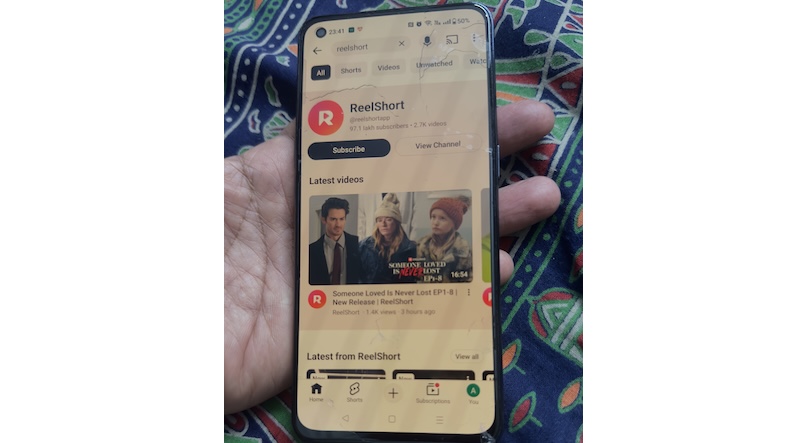
    Ampere Analysis surveyed over 100,000 consumers in two separate waves across 30 global markets, polling 56,000 internet users aged 18–64. The findings reveal that these “mini-dramas” and “micro-dramas”—the shortest clocking in at under two minutes—are thriving on YouTube and TikTok. The platforms have become both primary distribution channels and discovery engines for premium subscription apps like DramaBox and ReelShorts, which are betting big on vertical video optimised for phone viewing.

    The numbers tell a compelling story about changing consumption habits. Average internet users now spend nearly 50 minutes a day watching videos on social media. For younger audiences, that figure jumps dramatically: 18- to 34-year-olds are clocking over an hour daily, creating a captive audience for bite-sized content that fits neatly between scrolls.

    The demographic split is predictable but stark. Viewers aged 18–34 are 21 per cent more likely than average to have watched a mini-drama in the past month. Nearly half of internet users in that age bracket—46 per cent—are already hooked, consuming short-form scripted content as readily as they consume traditional social media posts.

    But the format isn’t exclusively a young person’s game. Among 35- to 44-year-olds, 23 per cent have watched a micro-drama in the past month—the highest proportion of any age group surveyed. Some 19 per cent of 18- to 24-year-olds reported the same, with the 45-to-54 cohort close behind at 18 per cent. Even the 55-to-64 demographic is getting involved, with 13 per cent tuning in. The data suggests mini-dramas are breaking out of their youth-oriented niche and moving into the mainstream.

    AGE OF VIEWERS

    Geography tells an equally revealing story. Engagement is strongest in Thailand, Malaysia and the Philippines, where mobile-first viewing habits dominate and vertical video has become the default mode of content consumption. The Asia-Pacific region leads consumption overall—hardly surprising given that nearly all existing micro-drama platforms hail from China, where the format has already matured into a lucrative industry. The market is soon to be flooded with Western competitors trying to replicate that success. European audiences, by contrast, remain largely unmoved by the format, suggesting cultural preferences or viewing habits that haven’t yet shifted to accommodate ultra-short storytelling.

    YouTube commands 44 per cent of mini-drama viewership, with TikTok capturing 38 per cent. Together, the two platforms account for a commanding 82 per cent of all short-form drama consumption on social media—Instagram picks up the scraps. YouTube’s sheer scale gives it the edge: in September, it accounted for 12.6 per cent of all television usage, according to Nielsen, compared with Netflix’s 8.3 per cent. No other service claimed even five per cent. While vertical video may feel like TikTok’s natural domain, YouTube’s reach makes it nearly impossible to overcome.

    Romance, anime and fantasy are the genres pulling the biggest crowds—commissioners would be wise to treat these as priority areas for future productions. The preference for escapist, emotionally-driven content suggests audiences are using mini-dramas for quick hits of entertainment rather than deep narrative engagement.
    Minal Modha, research director and head of sports media, sponsorship and consumer research at Ampere Analysis, says shorter scripted drama platforms are “capitalising on the increasing use of vertical videos customised for phone viewing, particularly among younger audiences”. The format’s success, she notes, stems from its perfect alignment with existing social media behaviour patterns.

    The industry is pursuing two distinct strategies, both designed to maximise the format’s commercial potential. The first: dump entire series on YouTube and monetise through advertising revenue, treating the platform like traditional broadcast television but with shorter episodes and higher frequency. The second: seed clips and teasers on TikTok or Instagram to build buzz and audience interest, then drive viewers into subscription apps such as DramaBox or ReelShorts for the full experience. It’s a funnel approach that transforms social platforms into massive marketing engines.

    The format may be miniature, but the business model is anything but. Short attention spans, it turns out, can generate long revenue streams—and potentially more reliable ones than traditional hour-long dramas. Production costs are lower, turnaround times are faster, and audiences can consume entire story arcs in a single lunch break. As Hollywood scrambles to jump into mini-drama production, the question is no longer whether bite-sized content works—it’s who can scale it fastest, and whether Western producers can crack the code that’s already minting money in Asia.

  • Global appetite for K-content surges as TV commissions slump

    Global appetite for K-content surges as TV commissions slump

    MUMBAI: Audiences worldwide are consuming more South Korean content than ever, but the number of new TV commissions is shrinking, according to research from Ampere Analysis.

    Volume of skorean titles available on SVodThe share of international viewers who say they watch Korean series or films “sometimes” or “very often” rose from 22 per cent in early 2020 to 35 per cent in the first quarter of 2025. The supply of K-content on global streaming platforms grew 55 per cent between 2021 and 2024.

    Yet commissions are falling fast. Ampere reports that overall South Korean TV commissions dropped 20 per cent between the first halves of 2023 and 2025. Global streamers slashed their orders by 43 per cent, while local players cut back 20 per cent as they struggle with rising production costs. Scripted projects—the crown jewel of Korea’s global success—took the biggest hit, with commissions down 39 per cent.

    Volume of SKOrean titles commissionedNetflix is the outlier. It has kept commissioning volumes steady and accounts for 88 per cent of global SVoD announcements in South Korea this year. But even it has shifted emphasis from scripted to unscripted originals, part of a broader industry pivot towards acquisitions and cheaper formats.

    “Despite continued demand for K-content, TV show commissions from local and global players have declined,” said Mariana Enriquez Denton Bustinza, analyst at Ampere. “This leaves the export market open for South Korean commissioners, especially as Netflix considers introducing caps on actors’ fees.”

    For Korea’s content makers, the paradox is clear: global demand is booming, but the economics of production and shifting streamer strategies risk leaving fewer shows for audiences hungry for more.

  • YouTube eyes the big screen as 38 per cent tune in for TV and film

    YouTube eyes the big screen as 38 per cent tune in for TV and film

    MUMBAI: YouTube’s not just for prank videos and pet fails anymore. That was a point made by YouTube global head Neale Mohan earlier this year when he talked about the platform being watched  more on TVs in the US than on handsets.  Now, this has been confirmed by the latest  consumer research from  Ampere Analysis. The only difference it is beginning to spread globally.  

    Nearly four in ten (38 per cent) of the platform’s global monthly users watch traditional TV shows, films and documentaries. The shift signals YouTube’s growing ambitions beyond the smartphone screen—right into the living room.

    Once the digital playground of vlogs and viral clips, YouTube is fast becoming a home for full-length content from major studios and broadcasters. And it’s not just padding out the platform—TV and film content now ranks among YouTube’s top five most-watched genres. Documentaries alone are pulling in 24 per cent of users each month, while 23 per cent are turning up for shows and movies.

    What’s interesting is how distinct the audiences are: only 22 per cent of viewers watch both. The rest are split between docu-devotees (41 per cent) and drama-only fans (37 per cent). And while the appeal spans age groups, there’s a slight tilt towards 35–44-year-olds and family households.

    The trend is strongest in Asia Pacific (45 per cent) and Latin America (40 per cent), but less so in Western Europe (28 per cent). North America sits bang on the global average at 37 per cent.

    Ampere analysis

    The rise of smart TVs is a game changer here. While smartphones still dominate (used by 77 per cent of long-form viewers), a hefty 34 per cent of those watching both docs and dramas are doing so on smart TVs—compared to just 22 per cent of all YouTube users.

    Ampere, senior research manager Daniel Monaghan sums it up: “YouTube has come a long way from meme montages and low-res vlogs. We’re now seeing serious, studio-backed content that’s pulling in eyeballs. Sure, there’s a risk of cannibalising traditional platforms—but the ad-share potential and massive reach make it a no-brainer.”

    Whether YouTube counts as TV may still be up for debate. But with your gran and your sis now watching documentaries on it from their smart TVs, it might just be time to drop the “user-generated” label.

  • K-dramas rank second on Netflix, just behind US content: Ampere research

    K-dramas rank second on Netflix, just behind US content: Ampere research

    MUMBAI: South Korean content is delivering knockout streaming figures for Netflix, now accounting for a whopping 17 per cent of the platform’s top 500 non-US shows and films, according to fresh research from Ampere Analysis.

    The streaming giant’s Seoul-mates now rank second only to American content for total viewing hours, a relationship that’s proving rather lucrative as Netflix pursues its ad-tier strategy and battles subscriber churn.

    In the latter half of 2024, viewers devoured 7.7 billion hours of Korean content—roughly 8 per cent of all Netflix viewing—outpacing entertainment heavyweights like the UK, Japan and Spain. Squid Game Season 2 topped global charts with a staggering 619.9 million streaming hours, while romance drama Love Next Door and cooking competition Culinary Class Wars also cooked up impressive numbers.

    Viewing share

    The streaming service isn’t playing hard to get, either. Netflix has pledged a cool $2.5 billion to Korean content between 2024 and 2028, having already established relationships with local broadcasting titans CJ ENM, JTBC, KBS, SBS and MBC. Meanwhile, local production capacity continues to expand with facilities like Studio 139 and Samsung Studio now operational.

    Korean media powerhouse CJ ENM is riding this global Hallyu wave with gusto, earmarking $818 million for content in 2025 while eyeing international expansion through Netflix exposure, partnerships with global studios, and potentially launching its streaming platform Tving worldwide.

    “Korean content plays a pivotal role in Netflix’s international success, driving both breakout hits and sustained viewing time,” notes Ampere Analysis research manager Orina Zhao. “South Korean content owners are well-positioned to capitalise on the global Hallyu phenomenon, maximising worldwide audience reach through strategic distribution and collaborations.”

    As the Hallyu wave shows no signs of crashing, Netflix’s Korean romance appears set for quite the happy ending.

  • Six US media firms account for 51 per cent of global content spends: Ampere Analysis

    Six US media firms account for 51 per cent of global content spends: Ampere Analysis

    MUMBAI: The big media and entertainment boys are at it, despite all round murmurings that the content production business is seeing a massive slowdown. At least, that’s what new intelligence from Ampere Analysis has revealed. 

    The research firm stated that while recent market challenges have impacted the TV and film production landscape, spending across the top six global content providers – Disney, Comcast, Google, Warner Bros. Discovery, Netflix, and Paramount Global – has grown since the pandemic. Combined spending across these groups will reach a new high of $126  billion in 2024 and account for 51 per cent of the total content spend landscape, up from 47 per cent in 2020. Original content spend remains the leading spend type across these providers, accounting for over $56 billion in investment and 45 per cent of their total spending since 2022.
    Despite announced cutbacks among its linear and theatrical brands, Disney remains the largest contributor to the media landscape at 14 per cent of global investment in TV and film content in 2024. This has been supported by the full acquisition of Hulu at the beginning of 2024, adding an additional $9 billion in to Disney’s spend total.

    Netflix is the top investor in global streaming content. It has averaged a total of $14.5 billion in annual investment in original and acquired programmes since the pandemic. Further growth is expected in 2025 through the acquisition of sports tights for NFL matches and WWE entertainment.

    In total, $40 billion of the $126 billion is currently spent on these six operators’ subscription streaming services (including Disney+, Peacock, and Paramount+). This highlights the growing importance of these platforms as audiences move away from linear television in favour of the convenience and expansive catalogues available via streaming.

    Google’s contribution to the content market comes via YouTube, and investment in programming through its revenue-sharing arrangements with content creators. While a different entity to other TV and film groups, YouTube continues to build its global presence through partnership deals with major content owners, making it the third largest contributor to the content landscape.

    Despite production shutdowns caused by the US writers’ and actors’ strikes, streamers have continued to support the production landscape by pivoting towards more global strategies. International (non-US originating) programming accounts for 40 per cent of Paramount+’s and 52 per cent of Netflix’s spend in 2024. Such content is typically cheaper to produce, and effective in motivating new and niche audiences to subscribe to a platform, supporting revenues.

    “Ongoing investment by major studios and streaming platforms into new programming will be key to keeping audiences engaged and entertained. We can expect the content landscape to see low-level growth in 2024 as production schedules recover from disruptions caused by the pandemic and the writers’ and actors’ union strikes. Looking forward however, overall growth in spend is set to plateau as companies look to refocus their output. This will include limiting commissioning volumes and prioritising strategic investments and profitability to counter the current challenges of the media market,” said Ampere Analysis investment analyst Peter Ingram, in his recent analysis made public today. 

    Pix Courtesy: The Walt Disney Company

  • Disney+, Hulu combined would own most hit titles in the US: Ampere Analysis

    Disney+, Hulu combined would own most hit titles in the US: Ampere Analysis

    Mumbai: A combined offering of Disney+ and Hulu would account for the largest share of the 100 most popular titles of any US subscription video on demand (SVoD) service. At approximately 30 per cent, the player would enjoy a comprehensive lead on Netflix’s 23 per cent, according to a recent study by Ampere Analysis.

    Shows from Disney’s Marvel Studios, Lucasfilm, and Hulu Originals, such as Only Murders in the Building and The Handmaid‘s Tale, are among them.

    Will Disney push to close the deal early? The US streaming platform Hulu is currently owned by Disney (67 per cent) and Comcast (33 per cent), who are due to reach a sale agreement in January 2024. However, recent reports suggest that Disney intends to close a deal sooner to take a 100 per cent stake and integrate the streamer into Disney+ as a combined offering.

    The merger seems logical to Ampere’s analysts, as Disney’s share of Hulu content has grown significantly, suggesting that the company has continued to invest considerably in the platform. Since September 2016, the proportion of Hulu’s catalogue for which Disney owns the distribution rights has tripled, from six per cent of all movies and TV shows to 19 per cent by September 2022.

    Meanwhile, the major studios without streaming platforms have reduced their contribution to Hulu’s content slate (down from 81 per cent in 2016 to 71 per cent in 2022), and those with their own streaming services have generally maintained or reduced their input. Specifically, the combined content from NBCUniversal, Paramount Global, and Warner Bros. Discovery now makes up less than 10 per cent of all TV shows and movies on Hulu.

    Title reclamation is posing a threat to Hulu. The removal of content from Hulu to support newer services like Peacock, Paramount+, and HBO Max poses a threat to Hulu’s competitiveness. The streamer has already lost highly popular titles like America’s Got Talent (to Peacock), movies and TV shows set within the Star Trek universe (to Paramount+), and Family Matters (to HBO Max). If major studios reclaim their proprietary content, Hulu could lose 10 per cent of its overall catalogue. This figure rises to 37 per cent of Hulu’s 100 most popular titles, using Ampere’s popularity score metric, which tracks overall online engagement with a title.

    Ampere Analysis analyst Christen Tamisin said, “The threat of further popular or critically acclaimed titles leaving Hulu for rival platforms is a concern as engaging content is critical for subscriber retention, especially as the US SVoD market nears saturation. This risk makes the argument for Disney to merge Hulu and Disney+ into a single platform stronger.

    “On the other hand, Disney+ and Hulu’s complementary catalogues mean a combined platform would have a more diverse content offering—akin to that of other major market players—than the two standalone platforms have currently. While the Disney brand has long been associated with family-friendly content, Hulu has a broader, general-audience appeal, offering a wide range of genres and more adult-targeted titles,” he added.

  • Netflix to touch $1.9 bn ad revenue in Western Europe by 2027

    Netflix to touch $1.9 bn ad revenue in Western Europe by 2027

    Mumbai: Western Europe will generate annual revenues of $1.9 billion for Netflix from advertising by 2027, more than the US and almost as much as North America ($2.1 billion when Canada is included), according to a new report by Ampere Analysis. The study forecasts that an additional $841 million will be earned from ad tier subscription fees in Western Europe ($1 billion in North America).

    Ampere believes that Netflix in Western Europe will experience an increase in average revenue per user (ARPU) as a result of the launch of the ad tier. Specifically, the firm predicts that in 2023, ARPU will be 4.9 per cent higher than without it, rising to 8.6 per cent higher by 2027.

    Western European viewers have the highest price sensitivity among Netflix’s customers, which combined with relatively high advertising rates on a cost per thousand (CPM) basis, makes advertising in the region a strong opportunity for the streaming giant. By 2027, nearly one-fifth (19 per cent) of Western European users will be on the ad tier.

    According to Ampere’s report, 19.3 per cent of Netflix users in this European region will view content via the ad tier by 2027, most of them from the existing customer base. The ad tier will stabilise this saturated region. Ampere predicts a 1.8 per cent increase in subscriber growth (with ad tier) in Western Europe over a subscription-only model. A relatively strong increase in the value of advertising-supported customers will boost the overall revenue gain.

    Globally, Netflix will earn $5.5 billion in annual advertising income by 2027, boosted to $8.5 billion a year by ad tier subscription fees. The launch will see Netflix earn $2.2 billion more by 2027 than it would with purely a subscription-only model, driven by an ARPU uplift combined with a modest increase in the overall subscriber base. Ampere estimates that total customers will be 3.2 per cent higher than without an ad tier.

    Ampere Analysis analyst Ben French said, “Very strong advertising rates for streaming in Western Europe will contribute to a significant uplift in the value per customer for those taking the ad tier. Although the overall boost to subscriptions is predicted to be modest in the region, this increased customer value will see Western Europe exceed the value of the US market by 2027.”

  • Netflix to reach $1bn in ad revenue in APAC by 2027: Ampere Analysis

    Netflix to reach $1bn in ad revenue in APAC by 2027: Ampere Analysis

    Mumbai: According to a new report by Ampere Analysis, the Asia-Pacific will be the strongest growth region for Netflix’s ad tier, with one of the largest increases in revenue and the greatest average revenue per user (ARPU) uplift. High tolerance of advertising in the Asia Pacific will see the region generate nearly one billion dollars in ad revenue by 2027. In addition, $574 million will be generated by ad tier subscription fees.

    Due to relatively low ad rates, Asia-Pacific will earn a higher percentage of its ad-tier revenue from subscriptions (38 per cent vs. 34 per cent in North America and 30 per cent in Western Europe). A rapid rise in subscribers in the region will see overall ad-tier revenue grow quickly.

    Ampere explains that Asian-Pacific viewers are the most positive about advertising, with four in 10 (41 per cent) saying they do not mind ads. The comparative figures are 35 per cent in North America and 24 per cent in Western Europe. Ampere predicts that 22 per cent of users in the region will take the ad tier option. With a 17.6 per cent increase in subscriber growth by 2027, Asia-Pacific will be one of the fastest growing ad income markets.

    Globally, Netflix will earn $5.5 billion in annual ad income by 2027, boosted to $8.5 billion a year by ad tier subscription fees. The launch of an ad tier will see Netflix earn $2.2 billion more by 2027 versus a purely subscription-only model, driven by an Arpu uplift combined with a modest increase in the overall subscriber base. Ampere estimates that total customers will be 3.2 per cent higher than they would have been had Netflix not launched an ad tier.

    Ampere Analysis analyst Ben French said, “Although not as valuable as the US market, Asia will be a particularly strong region for Netflix’s ad model. The high tolerance of advertising will see the strongest uptake of the ad tier, and although rates charged for advertising are lower than in other regions, strong subscriber growth will ensure Asia remains central to the success of Netflix’s new strategy.”

  • Q1 2022 streaming renewals is at an all time high: Ampere Analysis

    Q1 2022 streaming renewals is at an all time high: Ampere Analysis

    Mumbai: Ampere Analysis Q1 2022 reported rising demand for renewed seasons on Video-on-Demand (VoD) platform giving impressive numbers altogether.

    The increase in the volume of streaming renewals is being driven by relative newcomers to the VoD landscape such as Disney+ and Discovery+, as they turn their considerable production capacity to streaming. Both companies can be seen taking multiple season risks on high-profile titles, as well as renewing existing titles previously intended for their linear platforms. Despite a common misconception that streaming series are more likely to be short-lived than their linear counterparts, recent VoD commissioning shows that streamers are increasingly committed to long-running series.

    Of all VoD renewals in the UK and US announced in 2021, 51 per cent were in their fourth or later season, a 6 per cent increase in comparison to 2020, suggesting that long-running series are no less effective in driving both subscriber growth and retention than shorter, or limited series. But there are differences in strategies between streamers. Netflix first run commissions continued to increase throughout 2021 (with 8 per cent more new titles announced than in 2020), but the number of returning titles announced by the streaming giant showed a decrease, with 2 per cent fewer renewals announced in 2021 than in 2020.

    Unscripted titles are less likely to be cancelled than their scripted counterparts, representing just 7 per cent of all streaming cancellations in 2021. Unscripted titles are also more likely to last longer, representing the highest proportion of all VoD renewals in Q1 2022 (54 per cent).

    Ampere Analysis senior analyst Olivia Deane said, “It has been suggested that streamer’s high rate of cancellation is purely due to their high rate of commissioning, where a large volume of titles are ordered with the expectation that only a handful of titles will succeed. However, with an overall increase in the volume and proportion of returning VoD titles, streamers must strike a balance between committing to fresh new content and satisfying fans of existing titles in order to compete.”

    “For streaming newcomers like Disney+ and Discovery+, which have well-established fan bases for key IP, it’s easier for commissioners to make long-term commitments to titles they know viewers will love. Streamers also need to compromise between pleasing fanbases of more expensive scripted titles from genres like Sci-Fi & Fantasy, while making a range of unscripted content. The latter fleshes out their catalog with cheaper to make, easily digestible titles that can be very popular, and therefore represent a better return on investment.”

  • Netflix release slate for 2022 set to outpace 2021

    Netflix release slate for 2022 set to outpace 2021

    Mumbai: Streaming giant Netflix is slated to release 398 shows in 2022 which is with more original TV content expected to air on the platform, according to a study by Ampere Analysis.

    “In 2021, Netflix released 395 original TV shows globally including 259 commissioned and released in the same year. Including only shows scheduled for release, those already in the can, and shows that will complete production, 2022 Netflix is set to break this record,” said Ampere Analysis research director Richard Cooper.

    Netflix has already released 55 TV shows by the second week of February and has announced additional 56 premiere dates this year. The company has announced another 97 titles separately that are scheduled to release sometime in 2022 but with no hard release dates confirmed as of yet.

    “However, it’s from within Netflix’s extensive commissioned ‘in-production’ slate that the remainder of 2022’s titles can be found,” said Cooper. “The streamer has a further 88 TV shows that have already finished production and are premiere ready, effectively just waiting to drop on to the platform.  Netflix has a further 102 shows that are still currently either at the script or shooting stages but which we expect to finish production in 2022 in time to air this year.”

    All these shows are already commissioned and in Netflix’s production pipeline. This 2021 beating total excludes any 2022 shows yet to be commissioned, produced, and aired this year. 

    “Were the streamer’s 2022 commissions for same year release only to match the number in 2021, the final year tally of Netflix original releases could easily cap 650 new titles, a 65 per cent uptick on the previous year,” observed Cooper.