Tag: Amitabh Kumar

  • ZMCL appoints Amitabh Kumar as additional director

    ZMCL appoints Amitabh Kumar as additional director

    MUMBAI: Zee Media Corporation Ltd's (ZMCL) board of directors has approved the appointment of Amitabh Kumar as an additional director in the category of non-executive non-independent director with effect from 26 March 2020 until the conclusion of the ensuing annual general meeting of the company to be held in the calendar year 2020.

    Kumar's appointment has been done on the basis of recommendations of the nomination and remuneration committee, confirming that he is not debarred from holding the office of director pursuant to any SEBI order or any other authority, the company said in a stock-exchange filing. 

    Kumar is a technology leader in the media and telecom industry. He is an Electronics Engineering Graduate (Gold Medalist) from BITS Pilani. He also holds PG Diploma in Telecommunications Management from TEMIC Canada and Certification in Electronics Data Interchange from DEAKIN University, Australia.

    He has served as director operations in VSNL from 1995 to 2001 and was also acting chairman and managing director in year 1998- 99, where he had a key role in setting up India's first internet services. He has also served on the board of governors of Intelsat and was council member of Commonwealth Telecommunications Organization {CTO). 

    He has been the president -technology in the Zee Network from 2001 till 2004, being responsible for global broadcast operations spanning to 150 channels and in Dish TV India from 2004 till 2013, where he played a major role in setting up operations for India's first DTH operator. 

  • Pay for content and not channel say broadcaster legal counsels

    Pay for content and not channel say broadcaster legal counsels

    MUMBAI: Regulation in India, unlike the US, is very static. Not only this, any regulation that comes out, does not address the future, but the past. New technology is proving to be a remarkable challenge, not only for the industry, but for the regulators as well.


    These were the major points of discussion at the 2nd Legal Era Media & Entertainment Law Forum, where legal counsels for various broadcasters, emphasised on how the regulatory regime in India is very backward. A normal broadcaster today has to go through the tedious task of applying to the Ministry of Information and Technology (MIB), Department of Space (DoS) and WPC approvals. As per statistics, at present approximately 800 files for channel licence is pending with the MIB and some 600 with the DoS.


    Stressing on the rise of technology, Zee Entertainment Enterprises Limited (Zeel) director corporate Amitabh Kumar said that by the year 2020 linear transmission of channels will be replaced by video on demand (VoD). Kumar also stressed on the need for change in the way licences are given to broadcasters. “The broadcasters’ licence should have provision for VoD, VOIP etc. There should also be a provision, as per which the licence services should be allowed to expand, with no entry fee. The regulatory body must have scope for widening the ambit of services for lifetime,” opined Kumar.


    For Kumar, the regulators need to be pro-active rather than reactive to the new technology advancements.


    Content consumption is undergoing change. “Content cannot be controlled, it can be self regulated, which is working beautifully,” informed Viacom 18 Media group general counsel Sujeet Jain. He also brought to the fore how the functioning of Broadcast Content Complaints Council (BCCC) had forced even the I&B to retract from interfering in the content. “Government should completely take its hands off content,” he added.


    Agreeing with Jain was Singh and Singh Law Firm LLP partner Tejveer Bhatia who said that tariff of the VoD content should not be regulated. “If consumer is demanding a particular kind of content, the media industry should have the freedom to decide the tariff. There cannot be a benchmark on the demanded content,” informed Bhatia.


    According to Star India president and general counsel, legal and regulatory affairs Deepak Jacob the quality of content is directly proportional to the money spent on it. “If we want to produce high quality content for linear TV, there is cost that is attached to it. While in the past 15 years, the ARPUs have remained flat at Rs 150 to Rs 200 and the broadcasters’ fair share of this has also remained the same, the content cost has increased 20 times. So Rs 1 lakh per episode expense, 15 years ago, has today gone up to Rs 15 lakh to Rs 20 lakh per episode,” informed Jacob.


    Jacob also questioned the whole ‘must provide’ clause that was introduced by the Telecom Regulatory Authority of India (TRAI). “All this will kill broadcasters. What is the incentive that a broadcaster is getting for creating content for mobile devices or other platforms?” questions Jacob.


    Another important point raised during the panel discussion was that unlike in the US and UK, where channels are sold as events, in India, this arrangement doesn’t exist. “We should be moving towards a regime, where consumers can subscribe to events and not channels. And the subscription should allow one to view the content not only on TV but mobile, tablet or computer also. Content, not channel should be highlighted and consumers should be able to pay for content,” said Kumar.


    According to Jain, while with change in technology, the format and consumption pattern of the content will change, but the content will remain the same.  “The regulation has to incorporate this aspect and there should be a level playing field,” he opined.


    The panelists also suggested that a lot of licencing should go away and what the government should really look at, while moving towards convergence is providing ease of access. “The Prime Minister is talking about making broadband available across the country, but for this access will be needed,” said Jain.  He also highlighted the need for strict laws against piracy. “Taxation needs to be rationalised in order to give fillip to the sector. That apart, ministries will have to merge so that entire ecosystem can merge,” opined Jain.


    The session also touched upon the issue of carriage fees and if there was any end to it. According to Jacob, while carriage fee, which is an artificially created monster needs to vanish, placement fee is something which will not cease to exist. “Placement is an individual choice that broadcasters make. It will be unfair of broadcasters to expect a certain number of LCN, without incentivising the MSO,” he concluded. 

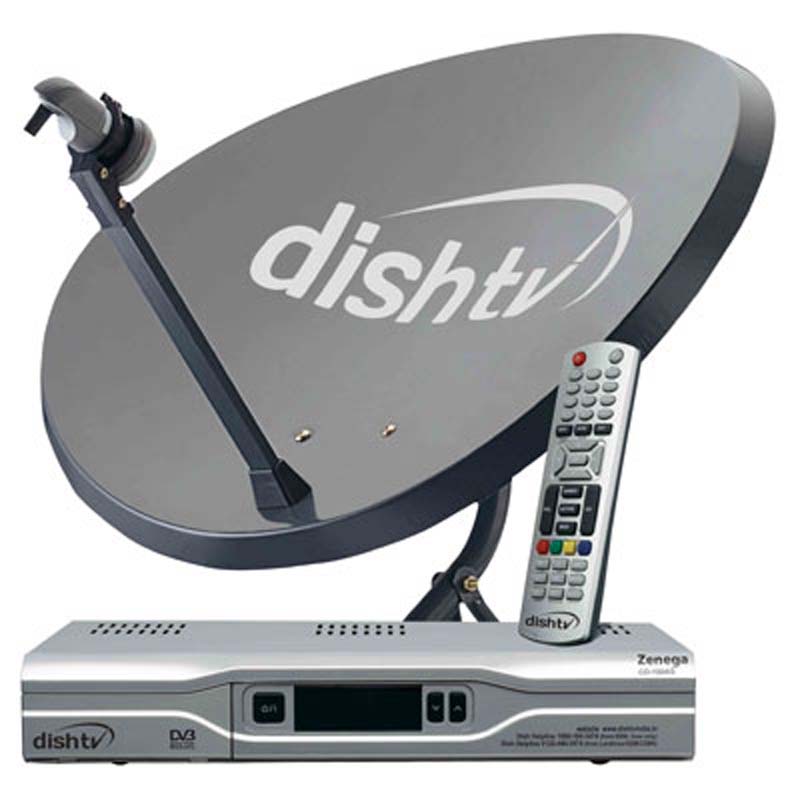
  • Dishtv selects Scopus Video Networks to increase transponder capacity

    Dishtv selects Scopus Video Networks to increase transponder capacity

    MUMBAI: Subhash Chandra’s Dishtv has expressed serious intent to increase its channel offerings on the direct-to-home (DTH) platform. The company has selected Scopus Video Networks, a provider of digital video networking products, to support this expansion.

    The technology will help Dishtv pack up 28 channels per transponder, eight more than its current capacity. “We will be implementing this technology within a month. It is a better compression system without sacrificing the quality,” Essel Group director technology Amitabh Kumar tells Indiantelevision.com.

    Dishtv has seven transponders on NSS-6, offering a total of 130 channels. “We are building up the capability to offer more channels on our DTH platform,” Kumar says.

    Dishtv will use Scopus products to enhance its transponders’ utilization and expand its already fast growing DTH market share throughout the Indian subcontinent. The decision to tie up with Scopus comes ahead of Tata Sky’s DTH launch expected in July.

    The deal brings to Dishtv’s headend Scopus’ full line of products including E-1200 encoders, IRD-2900 decoders, IVG-7100 intelligent video gateway (IVG) platforms and network management system software. Scopus is a Nasdaq-listed company.

    Scopus’ IVG platform will provide advanced video processing capabilities including joint transrating, grooming and bit rate shaping. 

    India is beginning its transition to digital TV in which the number of digital subscribers is expected to grow ten-fold within the next five years.

    Says Kumar commented, “We operate in a complex web of multiple satellites and multiple carriers and the unique capabilities offered by Scopus’ product line such as the Intelligent Video Gateway will help us optimize operations while minimizing cost and enhancing reliability in our operations. Scopus has also helped Dish TV achieve very high satellite utilization and bring down costs on a per channel basis.”

    Scopus VP sales Eitan Koter stated, “We are honoured and delighted to continue doing business with the Essel Group, India’s leading media conglomerate. This achievement is a testimony to our on-going commitment to our customers’ success. Scopus is the only vendor that offers a full product portfolio under one roof, enabling us to provide simple solutions to complex requirements such as the ones posed by Dishtv.”