Tag: Amit Mitra

  • MIB urges industry to buck up on implementing TV ratings

    MIB urges industry to buck up on implementing TV ratings

    NEW DELHI: There has been some hue and cry about the manner in which the Ministry of Information & Broadcasting (MIB) has apparently rushed to notify the latest policy guidelines for TV ratings. Following the notification, there have been fears that unless TAM goes to court and gets a stay order on the MIB’s guidelines, industry will most likely be without TV ratings for at least six to seven months. This is because Broadcast Audience Research Council (BARC) states that it will be ready to roll out its ratings only in the third or fourth quarter of 2014. 


    This has alarmed professionals such as Madison chairman Sam Balsara who has gone on record to state that the industry should plead with the Ministry to delay the implementation of the guidelines, and that the industry cannot do with a TV ratings-dark period. 


    MIB officials are pretty clear that this time it is for real. Says a senior Ministry official: “The entire TV ratings shouting match has been going on since 2007. Industry has been complaining that TAM’s methodology is flawed, and they have done nothing about it over the years. And the murmurings against it have been going on for more than a decade.” 


    He goes on to add, that MIB intervened only on the industry’s insistence and now the industry will have to drink its bitter dose of medicine, no matter what. 


    “We have given the industry and TAM enough time to rectify the situation and find an amicable authentic and reliable solution,” says another MIB official. “The Amit Mitra committee report indicated what needs to be done way back n 2010. Why wasn’t it followed and why were corrective steps not taken by TAM or the industry? TAM will have to follow the guidelines and register with us before 30 days are up, otherwise cease operating. We are not against individuals or companies; we are clear that a due process and the rules for TV ratings need to be followed so that transparency and credibility are associated with TV viewership ratings.” 


    In fact, another MIB official was quite critical of the industry-backed TV ratings body BARC too. 


    “It’s taken them three years to get here,” the senior official says. “First, BARC told us that the ratings will be up and running by June 2013, then they told us they would do so by March 2014, and now they are saying September or October 2014. This is simply not acceptable. We timed our rules and regulations based on the fact that BARC would be up by March 2014 and that industry would not have to be troubled by the absence of ratings.” 


    Another senior official appeals that the MIB cannot keep waiting forever for industry to get its act together. “The industry has been dragging its heels for a long time on the TV ratings issue. Now is the time for it to sprint to the finish line, and faster than ever before,” he says. The longer it takes to get its ratings going, the longer it will be without ratings.”


    The fact that TAM Media might challenge the Ministry’s notification in court has not disturbed the MIB at all. “If it goes to court, we will fight it tooth and nail,” says the MIB official. “Industry has to understand, the MIB means business. Let industry also be serious about its business.” 


    “It’s strange, isn’t it?” another official asks rhetorically with a smile on his face. “Industry complains when the ratings are there; they are complaining now that the ratings will not be there for some time. Let it realise that indeed there will be no ratings for a while and come up with a workable solution in their absence which works well for broadcasters, advertisers and agencies. The ball is in industry’s court now. ”

  • Mission TARA: Mamata Banerjee assures Rs 50 lakh

    Mission TARA: Mamata Banerjee assures Rs 50 lakh

    After witnessing hard times for quite some time, TARA (Television Aimed at Regional Audiences) can now breathe a sigh of relief.


    And guess who has come to its rescue? It’s none other than our every own didi. Yes, the West Bengal chief minister Mamata Banerjee has taken a resolution to revive TARA Newz and Muzik, the only two surviving channels of the redundant Saradha Group’s media business, that were shut down after the expose of the chit fund fraud.


    Under the rescue mission, the first proposition which was floored was to take over the channels; then came the proposal of payment of Rs 16,000 to each and every employee in the form of ex-gratia and now finally, there is an assurance of monthly commercial of around Rs 50 lakh.


    “Mamata Banerjee has asked the state finance minister Amit Mitra to propose ways to revive the channels. And after various brainstorming sessions, it was decided that the state’s public sector units (PSUs) like West Bengal Electronics Industry Development Corporation Limited, West Bengal Financial Corporation among other state government undertakings will give monthly commercials worth  Rs 50 lakh so that TARA as a brand can stay alive,” says a highly confidential government source.


    He adds, “West Bengal Financial Corporation may release a payment of Rs 1.5 lakh to two lakh for the month of September. The channel must have got the amount by now.”


    After the Saradha Groups’ chit fund went bust, the employees of Broadcast Worldwide which runs Tara Newz and Tara Muzik formed an association called Tara TV Employees Welfare Association in April this year with an aim to keep the channels on the air on their own. Nag was made the secretary of the association, and was entrusted with the responsibility of running the two channels by the Calcutta High Court.


    When Tara Newz chief reporter Dipankar Nag was contacted to confirm the same, he denied any news of receiving any commercial order. However, he was quick to add, “We have 100 per cent faith in the CM and she will do something, so that the first 24×7 Bengali news channel can exist.”


    The senior general manager-administration and finance and the president of the employees’ association Indrajit Roy informs that the state government has given an ex-gratia payment of Rs16, 000 each to the 168 employees of the two channels till August 2013. However, about the assurance of advertisement, he like Nag informed that they have not received any such commitment through email or in writing. “Although, we have met Amit Mitra and other state officials and discussed on the commercial, no formal receipt about the release order has been received.”


    If one remembers, the initial plan of the CM was to take over the TV channels which reaches out to Bengali-speaking people across the world and is owned by the Saradha group which did not materalise because as per the present laws it is illegal for a government entity to own or run a television channel, informs the media expert.


    He recounts, “Ms Banerjee had decided to run the channels following an appeal by 168 employees of the two channels who were without a job as the channels had shut shop after the Saradha meltdown.”


    Hence, this does make one wonder if the CM has more than a general interest in saving the two channels?

  • TRAI extends date for TRP consultation paper comments

    TRAI extends date for TRP consultation paper comments

    NEW DELHI: The last date for receipt of comments on the Telecom Regulatory Authority of India‘s (TRAI‘s) consultation paper on accreditation of television rating organisations has been extended to 23 May. The last date earlier was 9 May.

    TRAI said that it had on the request of the stakeholders given 30 May (earlier 16 May) as the date for any counter-comments.

    In an effort to put an end to controversies generated by television rating points, TRAI had on 17 April issued a paper to deal with issues such as establishing an accreditation mechanism for the rating agency and methodology of audience measurement.

    The consultation paper on “Guidelines/Accreditation Mechanism for Television Rating Agencies in India” also seeks to get the views of stakeholders on sample size; secrecy of sample homes; cross holding between rating agencies and their users; complaint redressal; sale and use of ratings; disclosure and reporting requirement; competition in rating services; and audit.

    The consultation paper has been issued at the behest of the information and broadcasting ministry, which had earlier received a report from the Amit Mitra Committee on the subject. The Indian Broadcasting Foundation has since been working to set up the Broadcast Audience Research Council (BARC) as an alternative to TAM.

    The consultation paper aims to lay down comprehensive guidelines/accreditation mechanism for TRP (television rating points) rating agencies in India to ensure transparency and accountability in the rating system.

    A press note from TRAI says ‘incorrect ratings will lead to production of content which may not be really popular while good content and programmes may be left out. Therefore, there is a need to have an accurate measurement and representative television ratings for the programmes. The importance of a credible, transparent and representative television audience measurement system is recognised the world over. Presently television rating in India is being done by only one agency. Issues related to credibility and transparency of the ratings services in India has been raised by certain stakeholders. Lack of credible TRP system will hamper the growth of TV industry as a number of decisions having financial implications and also bearing on the type of content being watched are influenced by the TRP ratings supplied by rating agencies. So, there is a need to establish suitable mechanism/guidelines for the rating agencies which ensures that the data generated by the rating agencies is representative, credible and transparent.”

    The full text of the Consultation Paper is available on TRAI‘s website www.trai.gov.in

  • Govt pushes for adequate representation in BARC

    MUMBAI: Don‘t mistake the alternative television ratings system to be under the total control of the private broadcasters, advertising agencies and the advertisers. The government is pushing for adequate representation inside BARC (Broadcast Audience Research Council), the new entity that will lay out the television audience measurement system in India.

    BARC has been formed with the Indian Broadcasting Foundation (IBF) having a 60 per cent stake and the remaining 40 per cent being shared equally between the Advertising Agencies Association of India (AAAI) and the Indian Society of Advertisers (ISA).

    Prasar Bharati, the public broadcaster, was to benefit from the formation of BARC as the TV ratings coverage would have spread across wider geographies. Now the government also wants DAVP (Directorate of Advertising and Publicity) , which channelises all advertising spends made by the government, to have some voice.

    In a meeting on 4 September called by the government and attended by the IBF, the AAAI and the ISA members, the government has said that it wanted adequate representation. “The Information and Broadcasting ministry asked us what steps were being taken to include the Prasar Bharati and the DAVP (in BARC).They want adequate representation from Prasar Bharati and DAVP to have adequate representation in BARC to look after the Government‘s interest. We have heard the suggestions and will consider them,” AAAI president and Leo Burnett chairman and CEO of India subcontinent Arvind Sharma told Indiantelevision.com.

    The meeting was chaired by I&B ministry secretary Uday Kumar Verma.

    The three bodies were also asked to nominate an advisory committee on BARC by the end of next week .

    “The push has been to move BARC forward. The secretary has asked us (AAAI, IBF and ISA) to nominate a high powered committee whose role will be to guide and advise (on BARC) by the end of next week. We as BARC need to identify and concur on the names,” said Sharma.

    During the meeting, the secretary also referred to the Amit Mitra Committee report which suggested that statisticians, sociologists and demographers should form part of the technical committee.

  • BARC expected to commence TRP reports from July 2013

    BARC expected to commence TRP reports from July 2013

    NEW DELHI: The Broadcast Audience Research Council (BARC) to be set up by the Indian Broadcasting Foundation (IBF) will commence publication of television and radio ratings from July 2013.

    This has been conveyed to the Information and Broadcasting Ministry by the Foundation, which had been forwarded the report of the Mitra Committee on the subject early this year, sources told indiantelevision.com.

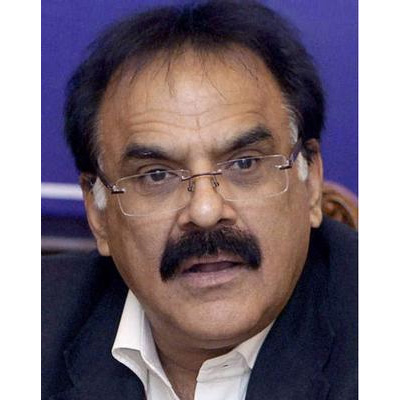
    The Committee headed by former Secretary General of the Federation of Indian Chambers of Commerce and Industry (Ficci) Amit Mitra had said that even as self-regulation is the best way forward for the broadcasting industry, it expressed “the fear that in case significant progress is not made within defined timelines, the Government may be left with no option but to step in, primarily because of the nature of public concerns that have been raised and debated across many platforms”.
     
    The Committee established by the I&B Ministry had said “it is our emphatic preference that all the stakeholders collectively create institutions and corrective mechanisms to improve the accuracy to television audience measurement. The media as a key pillar of democracy must remain independent and free”.

    The 75-page report noted that the present sample size of both Tam (8150 homes) and A-MAP (6000) is very inadequate for a country of India‘s size with 129 million TV households.

    It suggested an increase to 15,000 urban and rural TV households in the next two years and then to 30,000 in three years. The rating system should keep pace with the new emerging technologies, and the recommendations of Trai about mobile people‘s meters and so on should be studied, the TRP Committee said.

    It also said to avoid conflict of interest, there should be no cross-holding between the rating agencies, broadcasters, or advertising agencies. Furthermore, the frequency of the TRP reports should be weekly, and the BARC which has been formed by broadcasters, advertisers and advertising councils should have the discretion to change this to fortnightly if it so desires.

  • Government aims to give community radio a leg-up

    Government aims to give community radio a leg-up

    NEW DELHI: For the investors in radio projects, there is some good news. Stating that the government is trying to look into the investments made by entrepreneurs, the secretary, Information and Broadcasting ministry, government of India, said today that “we must look into how to help them realise their business projections on which the investments are based.”

    The government has decided to further liberalise norms for setting up Community Radio projects as the third arm of the radio policy that includes AIR and FM Radio channels to revolutionise the air waves and make radio entertaining, socially relevant and commercially viable.

    Arora said this while inaugurating the seminar on “Indian Radio Industry: the way forward”, organised by Federation of Indian Chambers of Commerce and Industry (FICCI). The seminar was the first interaction between industry and policy makers after the bids for Phase-II of FM Radio were finalised.

    Arora said, “We are waiting for the results of the Phase-II policy and after a due process of consultation with the stakeholders, and will tweak the policy and then go Phase-III of the radio policy.” He expressed satisfaction that in Phase-II, the number of radio stations was expected to jump from 20 to 270 by the end of the current fiscal year.

    He said competition to AIR from private FM radio channels had given the government radio station a run for its money but expressed confidence that this would force the station to provide quality programme and the available infrastructure that would enable them to withstand competition. “We are trying mix and match the bouquets for the listeners and asking AIR to revive programmes like Hawamahal dramas and skits which were once the hallmarks of Akashwani.

    Trai member AK Sawhney, noted that at while the process of roll-out of services by Phase-II licence is currently on, what is increasingly becoming clear is that the spectrum that was so far lying unutilised has the potential to allow a much greater variety in the offering of radio that was hitherto considered possible.

    He said the focus of Trai has been to expand the markets, provide room for more services and more competition and to allow new technology to come in without fresh approvals being taken at every stage. A key element of the approach is to reduce the cost of licences and spectrum and also to push the industry towards a low price-high growth scenario. The focus of changes in the policy for Phase-III should be in tune with this approach, Sawhney pointed out.

    ENIL Chairman FICCI Radio Forum and CEO and MD AP Parigi, empahsised the need for a continuing dialogue between all stakeholders so that the level of regulation can be decided on a consensual basis. Such dialogue, he said, would provide answers to questions of FDI and the participation of Indian financial institutions (FIs) in the growth of the FM Radio industry.

    FICCI Secretary General Dr Amit Mitra, said the radio industry which was Rs 2,400 million in 2004 is expected to grow to Rs 12,000 million by 2010, representing a 32 per cent growth CAGR when the entire media and entertainment industry is slated to grow at 19 per cent CAGR. This makes the radio industry the fastest growing medium in the media and entertainment sector.

    He announced the launch of the FICCI Radio forum under the chairmanship of Parigi. Among other objectives, the Forum will seek to consolidate the radio industry for effective lassoing with the government, promote interface of the industry with significant international players, support R&D in radio technology and provide facilitation, guidance and interface with government and key radio players for new start-ups.

    During the interactive session on “Regulatory Framework on Radio Industry”, Neil Curry of BBC expounded on the system that governs broadcasting in the UK, said that there are parallels from and lessons to be drawn from the model that has been developed in Britain. The main aim of the regulatory body should be to ensure freedom of speech from economic and political forces. He also emphasised in the UK, the key aspect of regulation is now shifted focus from outlet (that is what audiences hear) rather than input.

    T Sengupta Associates CEO Tamali Sengupta who was the moderator for the second session, asked a seminal question that somehow got buried later: through seeking a voice vote, she remarked that radio was loosing the youth factor, and that most young me were not listening to radio, rather choosing to use on-demand technology like the iPod.
    Issue of FDI and FII cropped up during the interactive session.

    Most speakers felt that radio was being discriminated against vis-à-vis the print medium since the latter had a FDI/FII cap of 26 per cent, where as radio had a cap of 30 per cent.
    Rajiv Sethi, S&R Associates, also raised the issue why private radio FM channels are debarred from hosting news and current affairs programmes. “All the FM channel owners are cleared by the ministry of home affairs in any case, and they have paid a 10-year licensing fee, so why they are debarred from hosting news programmes, whereas the TV channels are not, defies logic.”

    A major section of the debate in this session related to the upcoming broadcasting bill 2006. Questions were raised about the Code of Conduct, and speakers said that since the Supreme Court of India has been issuing orders that have more or less crystalised a sort of code of conduct, is there a need to have a fresh one. One of the major recurring irritants that surfaced was that the proposed bill is more biased towards the TV industry rather than the radio, and it was also stated that the Broadcasting Regulatory Authority proposed does not encapsulate the orders of the Supreme Court.