Tag: amit khare

  • New DTH policy bonanza for operators likely by year-end

    New DTH policy bonanza for operators likely by year-end

    NEW DELHI: If all goes well, India’s DTH operators may have something to cheer about in the new year. The Ministry of Information and Broadcasting (MIB) wants an updated and tweaked policy to go for cabinet approval by the year end.

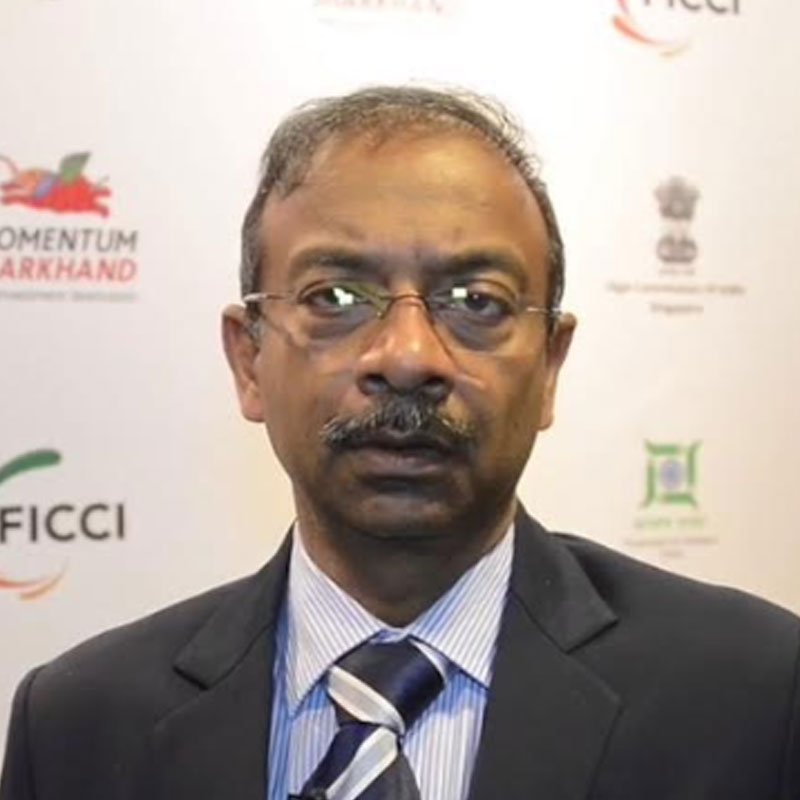
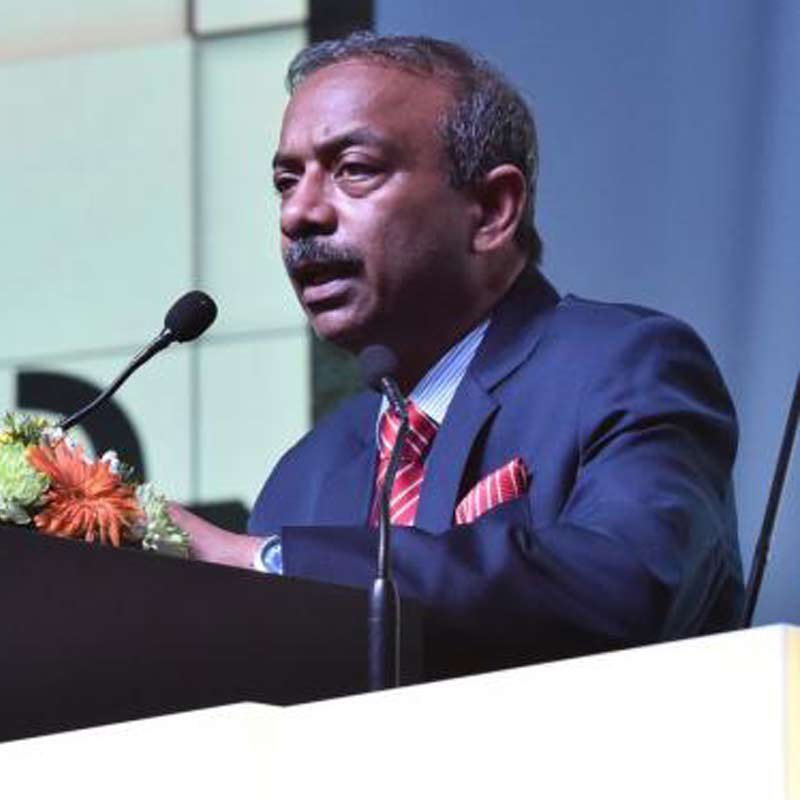
    Speaking to the media on the sidelines of CII Big Picture Summit 2018 here today, MIB Secretary Amit Khare said the new DTH policy is almost ready and the goal is to “send it for Cabinet approval” by December-end.

    Explaining the rationale behind the timing, the senior government official said the interim or temporary licenses, being presently handed to some of the biggest DTH operators, will expire this year-end and that makes it necessary to close the issue as soon as possible.

    Though he refused to divulge details of the decades old DTH policy that’s being updated keeping the present scenario in mind, including fast changing technology and a slowing economy, Khare did admit that some sops would be handed to the DTH operators.

    However, he refused to commit on the fact whether those sops would include financial rationalization too like slashing of the annual revenue sharing with the government that is calculated at the rate of 10 per cent.

    In the past, the DTH industry has demanded, among other things, cut in annual revenue share percentage to 6-8 per cent and other financial adjustments (like removal of content acquisition cost and an adjusted gross revenue) while calculating gross revenues.

    For example, Jawahar Goel, managing director of India’s biggest DTH operator (in terms of subscribers) Dish TV had written to policy-makers in October highlighting once again the industry’s woes and pleading for rationalization of costs and taxes.

    Even as India’s DTH industry has witnessed some consolidation, growth has been sluggish and ARPUs continue to be low with newer technologies throwing up additional avenues for content distribution forcing most legacy distributors to change tactics and business plans.

    Meanwhile, Khare did hint that the licensing period of DTH operators could be increased from the present 10 years. Operators like Dish TV, Tata Sky and Sun Digital, for example, are being handed by MIB interim licenses for a short period of time.

    Incidentally, telecoms and broadcast regulator TRAI in one of its recommendations had suggested increasing the DTH license period to 20 years from the present 10 years, apart from other sops like lower revenue sharing percentage and a one-time entry fee of Rs 100 million.
  • MIB secy Amit Khare advocates self-regulation in media

    MIB secy Amit Khare advocates self-regulation in media

    MUMBAI: Making a strong case for self-regulation, Ministry of Information & Broadcasting Secretary Amit Khare today said it was a better regulatory approach for India’s media and entertainment sector.

    With the advancement as well as convergence of technologies, the government would like to have more of content self-regulation by the sector, rather than the state acting as a monitor, Khare said allaying fears that the present government would strongly push for mandated rules and regulations related to content.

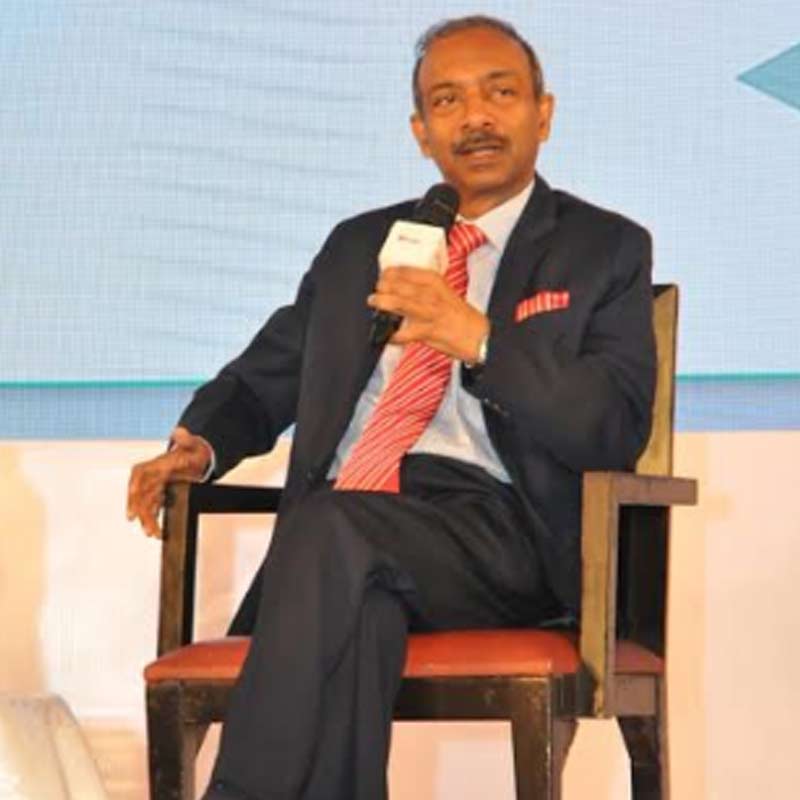
    Peer pressure will serve to make self-regulation effective and ethically driven, the senior government official said while taking part in a panel discussion here on co-creation of a favourable regulatory framework for new and emerging media that had been organised by a media house. 

    Khare observed that the media and entertainment industry in India is one of the fastest growing industries and the sector sector plays an important role in job creation and providing employment to more than 1 million people. Further, for every rupee spent in the sector, there is a multiplier effect of around 2.9, he added highlighting the importance of the sector.

    Pointing out that media regulations historically have been developed more from the point of view of the medium or platform of distribution and not from the point of view of content itself, Khare said the situation has led to legacy players in print and electronic media coming under the ambit of ambit of regulation, leaving unregulated some newer media forms such as OTT services.

    Stating that the government has an open mind on regulation, the MIB official divulged that debates are on within the government whether there is a need to regulate unregulated platforms (like OTT) or whether to reduce overall regulations in the traditional sectors too. “How much regulation is required and how is it to be done, is another matter that needs to be addressed,” he added.

    According to him, FDI policies are being liberalised to make India a more investor-friendly market, but monopolies should be avoided. 

    Khare’s fellow panelists included Alok Srivastava, MD – IoT, Southeast Asia & India, CISCO, Gowree Gokhale, Senior Partner, Nishith Desai Associates law firm and Vivek Krishnani, MD, Sony Pictures Entertainment India.

  • MIB’s new secy Amit Khare joins office

    MIB’s new secy Amit Khare joins office

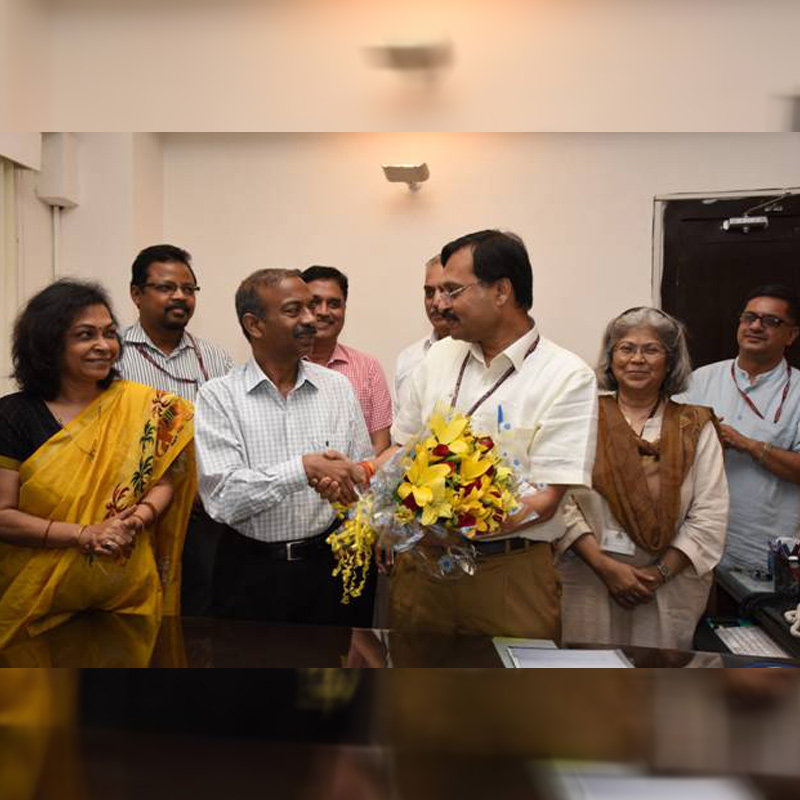
    NEW DELHI: In what could be termed as challenging times, Amit Khare (third from left in the pix) yesterday assumed charge as secretary in the Ministry of Information & Broadcasting on superannuation of Narendra Kumar Sinha.

    Khare is a 1985 batch Indian Administrative Service officer and was posted at a senior level in the state of Jharkhand before he was nominated to take over from Sinha at MIB. Considered an upright civil servant, he is credited for unearthing the multi-million-dollar fodder scam two decades ago in Bihar for which some powerful politicians, including former Bihar chief minister Lallu Yadav, and senior officials have been handed jail sentences of varied time period.

    Some of the issues that would need Khare’s immediate attention, as also his boss MIB minister Rajyavardhan Rathore, include putting in motion the process of quick decision-making at this important ministry, which is responsible for policy-making and their implementation for multi-billion dollar sectors of television, radio, films and advertising.

    With the media and entertainment industry undergoing changes with the arrival of newer technologies, like online distribution of content of all types, MIB needs to keep pace without upsetting the ecosystem that has been reeling under the impact of a sluggish economy and after effects of several other financial policies taken over the last 24 months by the government.

    To give some momentum, Khare would need to hit the road running working along with sector regulator TRAI that has made several recommendations relating to policies, which are yet to be acted upon by MIB, apart from working with the regulator on guidelines that could be in the offing, including uplink and downlink guidelines, DTH licencing norms, online content regulation, removal of bottlenecks in the film sector on opening up more screens and cajoling sister government organisations like Department of Space to have a more liberal approach. Not to mention soothe ruffled feathers at pubcaster Prasar Bharati.

    Media reports have indicated that in the last nine months, inaction had come to such a head at MIB that inter-departmental power games stalled a decision on over 100 applications for new TV channels. It was only about 10 days back that some channel permissions were processed and conveyed to stakeholders.

    During a career span of more than 33 years, Khare has held various field postings and worked at both the state and federal levels.

  • Amit Khare appointed as new MIB secretary

    Amit Khare appointed as new MIB secretary

    MUMBAI: Jharkhand state development commissioner and a whistle-blower civil servant Amit Khare has been named as the new secretary of the Ministry of Information and Broadcasting (MIB). He will take over from NK Sinha who is due to superannuate on 31 May 2018 after a comparatively quiet stint of approximately nine months at a high profile ministry that has constantly remained in the news after finance minister Arun Jaitley gave up the MIB portfolio in 2016 to concentrate on India’s economy.

    The announcement regarding MIB and Khare came on Friday as part of a big bureaucratic reshuffle initiated by the government that is now gearing up for general elections either late this year or first half next year as its five-year term in New Delhi officially comes to an end in May 2019.

    Khare is a 1985 batch Indian Administrative Service officer and is presently serving in Jharkhand. Considered an upright civil servant, he is credited for unearthing the multi-million dollar fodder scam two decades ago in Bihar for which some powerful politicians, including former Bihar chief minister Lalu Yadav, and senior officials have been handed jail sentences of varied time periods.

    Meanwhile, media industry observers hoped that with Khare’s arrival next month and junior minister Rajyavardhan Rathore entrusted with independent charge of MIB last week, some freshness and action would also arrive at the ministry, which has been under fire in recent months for not only taking controversial policy decisions (one of them relating to regulation of fake news being rolled back after PM’s Office intervened), but also angering its own foot soldiers or the Indian Information Service officials by arbitrary transfer postings and allegedly bungling on a film award event where the president of the country was to be present.

    A senior TV executive on condition of anonymity said both Rathore and Khare would hopefully end power games within MIB and actually work to live up to PM Modi’s claims of easing norms for doing business in India; especially as the media industry has been straining to get some helping hand from the government in difficult economic times when the sector is still in the process of recovering from after-effects of demonetisation of high value currency notes in 2016 and a new tax regime of goods and services tax of 2017.   

    Rathore’s senior Smriti Irani, a former TV actress who was handed the dual charge of MIB along with textiles ministry almost a year back, has somehow been in the news for wrong reasons and was divested of the portfolio last week when the Prime Minister initiated a reshuffle of his cabinet colleagues.

    Broadcast industry has been complaining of arbitrary policy decisions being taken by MIB under Irani, including attempts at creating artificial entry-level barriers by insisting on TV channels shift to Indian satellites from foreign ones and hiking administrative processing fees many folds. Industry organisation Indian Broadcasting Foundation recently petitioned the PM’s Office drawing attention to the likely ill-effects on the industry if certain norms regarding uplinking and downlinking, being debated at MIB and regulatory body TRAI, came into force.

    Media reports have also indicated that in the last nine months inaction had come to such a head at MIB that inter-departmental power games had stalled a decision on over 100 applications for new TV channels, apart from other sundry issues. So, media industry stakeholders expect a breath of fresh air to blow in the corridors of New Delhi’s Shastri Bhawan, which houses the MIB along with some other ministries, with Rathore-Khare duo taking charge.

    Earlier this week, Vikram Sahay was appointed as a joint secretary in the MIB.

    ALSO READ:

    Smriti Irani moved out of MIB as Rajyavardhan Singh Rathore gets independent charge

    MIB moves to regulate online media: various organisations join issue   

    PMO directs MIB to withdraw guidelines on fake news

    Time to have rules ensuring no one player dominates media: Smriti Irani

    Smriti Irani exhorts DD to leverage reach better