Tag: amit khare

  • I&B minister Prakash Javadekar launches DD Assam channel

    I&B minister Prakash Javadekar launches DD Assam channel

    NEW DELHI: Information and broadcasting minister Prakash Javadekar today launched DD Assam 24X7, digitally. During the launch, Javadekar said, "We are elated to do this launch. It is a great gesture for the state of Assam, which sends the message of unity in diversity." 

    He further added that Assam and the north eastern region is full of natural diversity and cultural richness and yet it carries the thread of unity. It is, hence, necessary that each state has its own Doordarshan channel. It is important that all the regions should have their respective channels. It will be on DD Free Dish and be easily accessible for everyone. 

    Amongst others who addressed the virtual launch ceremony of DD Assam included I&B secretary Amit Khare, Doordarshan director general Mayank Agrawal and Prasar Bharati CEO Shashi S Vempati. 

    Aggarwal in his address said that DD Assam will showcase the rich culture and history of the state of Assam.

    Follow Tellychakkar for the consumer facing news & entertainment

  • I&B ministry urges home ministry to reopen movie theatres from August

    I&B ministry urges home ministry to reopen movie theatres from August

    MUMBAI: Due to the Covid2019 pandemic, cinema halls across India were shut from March. While several businesses started operational work in Unlock phases 1.0 and 2.0, movie theatres are still waiting for the government's nod.

    Now, as India is approaching  Unlock 3.0, the information and broadcasting ministry (I&B) has passed a recommendation to the home ministry to allow movie theatres across the country to reopen from August.   

    I&B secretary Amit Khare highlighted this issue at a closed-door meeting with the CII media committee on 25 July. However, he also said that the final decision will be taken up by his counterpart in the ministry of home affairs Ajay Bhalla.  

    Khare, during the interaction, recommended that the cinema halls all over India may be allowed to reopen as early as 1 August  or at the latest around 31 August.

    In the meeting he also suggested an alternative formula to practice social distancing norms and other SOPs. As per his recommendations, in theatres the  seats of first and second row to be kept vacant. Theatres will have alternate seats in the first row and follow the same procedure throughout.

    Khare said that his ministry's recommendation takes into consideration the two metre social distancing norm, but tweaks it gently to two yards instead.

    Movie theatre owners present in the meeting showed objection to this idea and pointed out this idea is unwise and running theatres at 25 per cent capacity is worse than keeping cinema halls shut.

    The attendees at the meeting included media CEOs like NP Singh of Sony, Sam Balsara (Madison), Megha Tata, (Discovery), Gaurav Gandhi (Amazon Prime), Manish Maheshwari (Twitter), S Sivakumar (Bennett Coleman and Co Ltd), and K Madhavan, (Star & Disney) who is also the chairman of CII media committee.

  • 26% FDI cap should apply to news aggregators too: I&B secy Amit Khare

    26% FDI cap should apply to news aggregators too: I&B secy Amit Khare

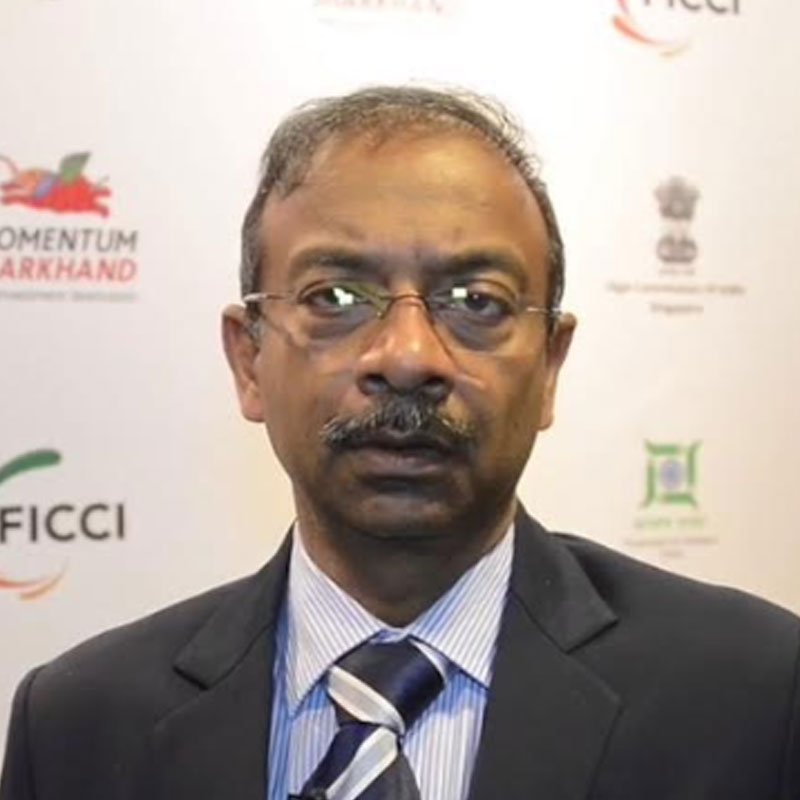
    NEW DELHI: News aggregators could be seeing some trouble in paradise. The ministry of information & broadcasting secretary Amit Khare, in a discussion at FICCI Frames 2020, said that FDI (foreign direct investment) rules should be applicable to print media as well as news aggregators.

    “I would not like to announce it here; that is not my role. But there is very serious thinking that a level playing field should be there between digital platforms and print media. But the announcement will come after the decision is finally taken by the government,” Khare shared during the discussion.

    “26 per cent FDI cap should be applicable to the aggregators as well as print media,” he stated.

    Khare was responding to a query that questioned why regulations applied to newspapers were not applicable to news aggregators who pick up their content to sell news.

    Popular apps including DailyHunt and Inshorts are among the biggest players in the Indian news aggregator space. DailyHunt has more than 100 million downloads on Google Play Store while Inshorts has over 10 million.

  • Amit Khare to start his second tenure as  I&B secretary

    Amit Khare to start his second tenure as I&B secretary

    MUMBAI: He’s back at a post he held just about two years back. Amit Khare, the higher education secretary in the HRD ministry and schools, has been hoicked into the position of secretary, ministry of information & broadcasting (I&B). He replaces Ravi Mittal who has been in the hotseat since December 2019.

    Khare had been appointed to the secretary’s post for the first time on 31 May 2018. It was in December last year, that Mittal got the top charge of MIB during a reshuffle. Now, Mittal has been transferred  as secretary, department of sports.

    Khare is a 1985 batch Indian Administrative Service officer .Considered an upright civil servant, he is credited for unearthing the multi-million dollar fodder scam two decades ago in Bihar for which some powerful politicians, including former Bihar chief minister Lalu Yadav, and senior officials have been handed jail sentences of varied time periods.

    Khare comes into the I&B ministry at a crucial time when the government is battling hard to stem the spread of the dreaded novel coronavirus SARS-COV2 which has already claimed more than 800 lives and afflicted more than 26,000 Indians. Khare will have an important role to play especially considering that the economic trials and tribulations the TV broadcasting, and advertising and media sectors are facing courtesy the government enforced lockdown nationally for the past month or so.  Khare has been relieved of his secretary schools portfolo, while continuing to hold the higher education one.

    During a career span of more than 35 years, Khare has held various field postings and has worked from grassroots to the higher levels of governance in both state and central governments.  Prior to being additional chief secretary, Jharkhand,  Khare served as principal secretary, finance & planning department, Jharkhand. He has served as member secretary in the department of pharmaceuticals, ministry of chemicals & fertilizers, and joint secretary to the in the department of higher education, ministry of human resource development.

  • No current plans to impose regulation on OTT sector: MIB secretary

    No current plans to impose regulation on OTT sector: MIB secretary

    MUMBAI: Ministry of Information and Broadcasting (MIB) secretary Amit Khare said there is a need to rethink regulating over-the-top (OTT) platforms because some sections of the society are voicing concerns on its content. However, Khare also added that the ministry currently does not have any plan to impose any regulation.

    According to a Medianama report, the MIB secretary spoke at a seminar on film certification and regulation of online content, held in Mumbai on 10 October. He noted that while in all commonwealth countries, there are bodies to regulate content in films, newspapers and TV, there is no such provision for regulating content on OTT.

    “They [OTT platforms] do fall under the IT Act, but have no governance or self-regulation. This happens nowhere in the world,” Minister of Information and Broadcast Prakash Javadekar said via a video conference at the seminar. He mentioned that content creators of OTT platforms make all kinds of content including bad and obscene but there is no censor board.

    Notably, according to an India Today report, the Ministry of Technology said there is no monitoring of OTT content right now in response to an RTI.

    "So far as this ministry is concerned, the content on online platforms is not being regulated at present. However your application is being transferred under Section 6 (3) of the Act to CPIO, Ministry of Electronics and IT, New Delhi to provide information pertaining to them," MIB said as per the report.

  • Russian delegation visits I&B ministry to discuss cooperation in the sphere of media

    Russian delegation visits I&B ministry to discuss cooperation in the sphere of media

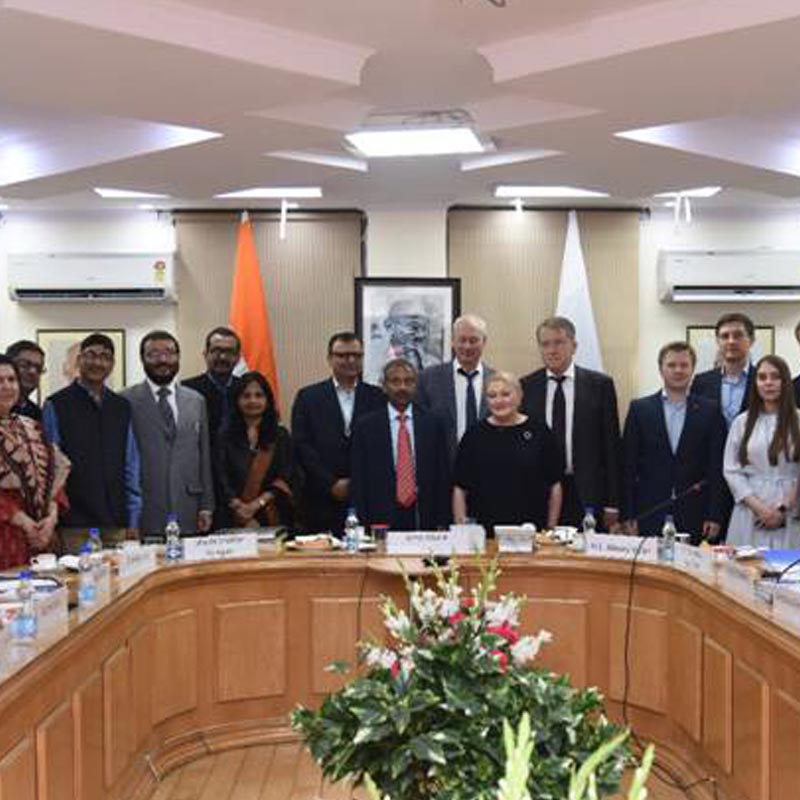
    MUMBAI: A Russian Delegation led by the Russian Deputy Minister of Digital Development, Communications and Mass Media, H.E Alexey Volin, including the Ambassador of Russian Federation to India, H.E. Nikolay Kudashev and other delegates met Ministry of I&B secretary Amit Khare on Friday.

    It was mutually agreed during the meeting that an Annual Indo-Russian Forum for Media Cooperation be organized alternately in India and Russia in order to institutionalize the process of cooperation between the two countries in the media and entertainment sector. Television, news agencies, digital distribution platforms, new media, news gathering, co-production of programmes, sharing of content and exchange of professionals were identified as possible areas of collaboration.

    The need to forge strong connections between the young journalists of the two countries was also highlighted in the meeting.

    During the discussion, Amit Khare stated that the Golden Jubilee edition of the International Film Festival of India scheduled to be held later this year offers an opportunity to countries to showcase their creativity and cinematic excellence on a global platform. He extended an invitation to the Russian Delegation to participate in the Festival.

    H.E. Alexey Volin talked about the immense popularity of Indian films in Russia and mentioned about a 24-hour channel dedicated solely to Indian films, currently operational in Russia.

    The meeting was also attended by Shashi Shekhar Vempati, CEO, Prasar Bharati; Sitanshu Kar, Principal DG, PIB; Vikram Sahay, Joint Secretary, Ministry of I&B; Supriya Sahu, DG, Doordarshan; F. Shehryar, DG, All India Radio; Mayank Agrawal, DG, DD News; Chaitanya Prasad, Addl. DG, Directorate of Film Festivals and JP Mattu Singh, Addl. DG, AIR News.

  • Need to focus on self-regulation and less regulation: Amit Khare, Secretary, I&B at FICCI FRAMES 2019

    Need to focus on self-regulation and less regulation: Amit Khare, Secretary, I&B at FICCI FRAMES 2019

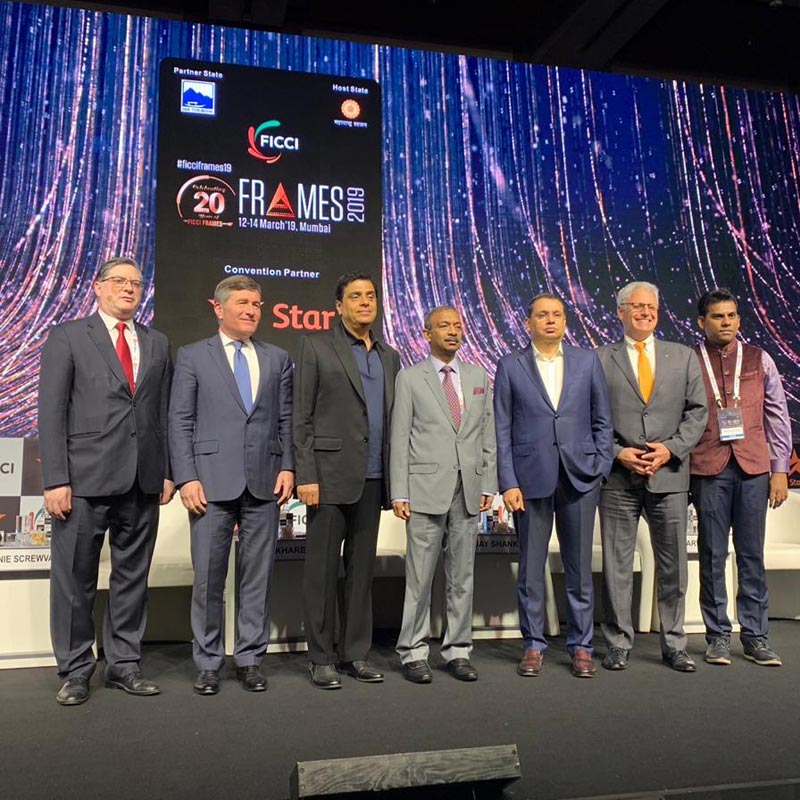
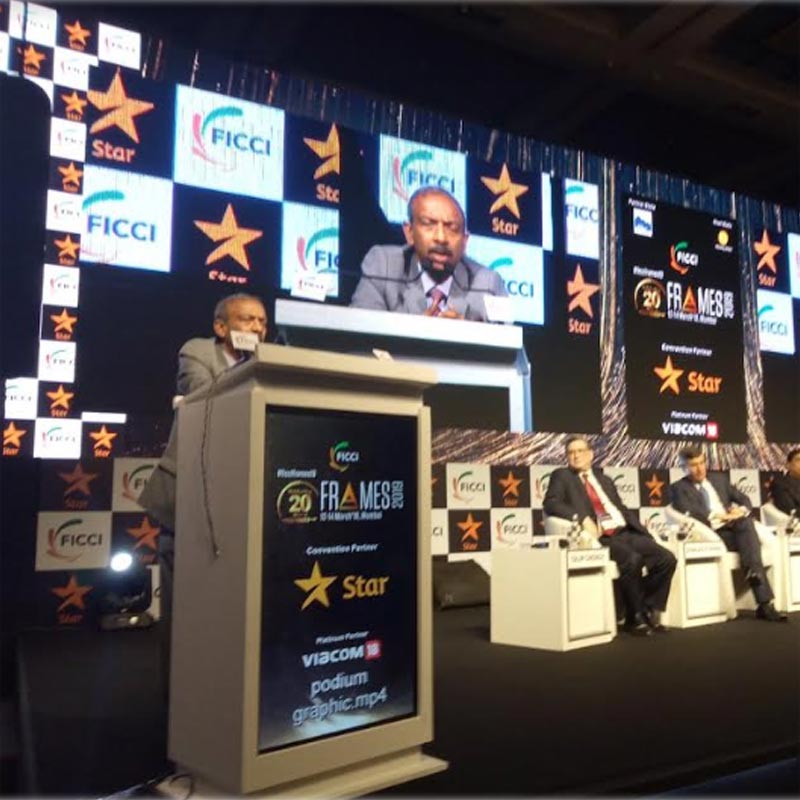
    MUMBAI: The 20th edition of three-day global convention covering the entire gamut of media and entertainment industry, FICCI Frames 2019, saw its inauguration today at Grand Hyatt in Mumbai.

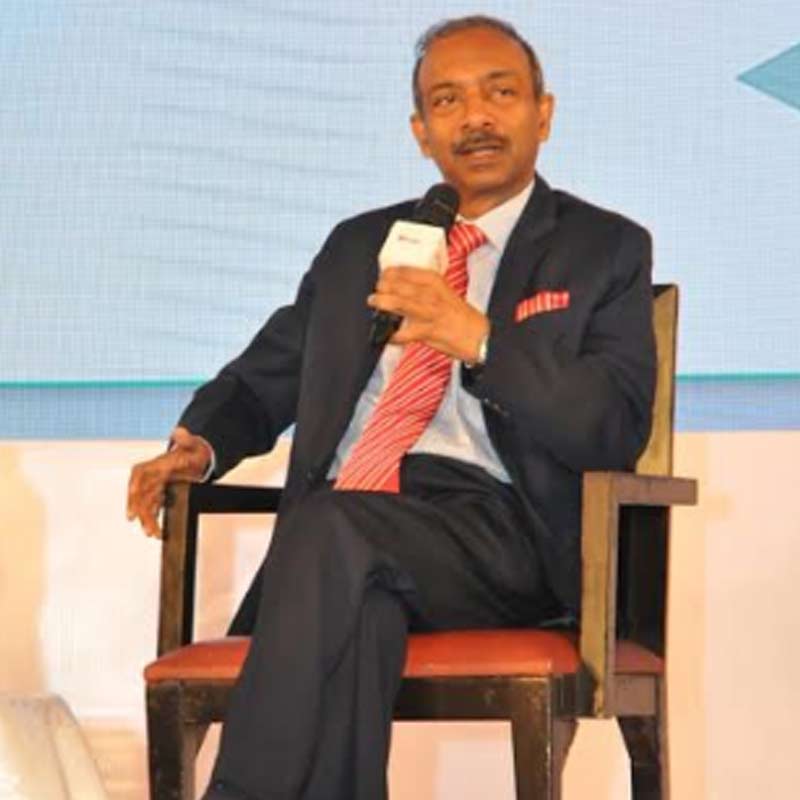
    Mr. Amit Khare, Secretary, Ministry of Information & Broadcasting, delivered the keynote address.

    “One should encourage co-production so that content could be greatly enhanced, joining more countries, that will lead to better viewership.” Said Amit Khare.

    “We have taken an initiative of having a national broadcast policy. One should consider self-regulation and less regulation if we want the system to grow.” He added talking about the regulations in Media and Entertainment industry.

    While Mr. Uday Shankar, Vice President, FICCI took to stage for opening remarks, where he mentioned how the media and entertainment industry and FICCI FRAMES is growing by leaps and bounds. “India is one of the most exciting markets for the Media & Entertainment industry. The great Indian media story has just begun,” he said.

    Mr. Ronnie Screwvala in his ‘Media Mastermind Keynote: An Indian Entrepreneur’s Journey’ said he had seen the industry and FICCI FRAMES for so many years and was happy to note that business people were at the centre stage of the conclave.

    “The companies of tomorrow need to be more consumer companies and not just media companies. The Media and Entertainment sector cannot just function with passion, we also need leaders, founders and entrepreneurship,” said Mr. Screwvala talking about how the media and entertainment industry needs to focus on consumers.

    “Learning is story-telling,” Mr. Screwvala concluded.

    The other speakers in the opening session were Mr. Charles H. Rivkin, Chairman & Chief Executive Officer, Motion Picture Association of America and Mr. Gary Knell, Chief Executive Officer, National Geographic Partners. 

    FICCI-EY 2019 report on Media and Entertainment was also unveiled along with the law book of Cyril Amarchand Mangalda,s and Odisha Film Policy by Dr. Nitin Bhanudas Jawale, Managing Director Odisha Film Development Corporation.

    Apart from the 2nd edition of content market, an initiative to bring together content creators and content buyers from across the globe, another new initiative call 'Frame Your Idea' has been set up this year to help promote script writers in the industry. While the fraternity has been talking about the importance of stories and scripts writers within the industry, FICCI FRAMES will provide a platform as an opportunity for writers to pitch their content to various renowned production houses like Aamir Khan Productions, Balaji Telefilms, Dharma Productions, Disney Studios, Eros Now, RSVP, Kabir Khan Films, SPE Films India Pvt Ltd., Viacom18 Motion Pictures and Fox Star Studios to name a few.

    The pitching sections will be divided into Films, Television, Web shows and short films to make it smoother for the writers to book appointments and to pitch their stories to interested production houses for fruitful associations.

  • MIB secy Amit Khare says national broadcast policy in the works

    MIB secy Amit Khare says national broadcast policy in the works

    MUMBAI: MIB Secretary Amit Khare did some plain talking here while addressing industry and said bowing to needs of the stakeholders, a national broadcast policy is in the offing.

    “We have thought of having a national broadcast policy. The draft is being prepared and we are working with FICCI and other stakeholders so that Indians can have that national broadcast policy,” Khare said at a session on the opening day of the 20th edition of FICCI Frames.

    The government official did not reveal much details, but said the policy could be in place within a few years.

    He also spoke of a strategic paper that is being prepared for the film and entertainment industry which will focus on issues like what incentives should be given by the central or the state government and the type of regulatory changes which are required for improving the screen density.

    “The way we develop, particularly in India or in other Commonwealth countries, it was platform-wise. We have different regulations for print, for online, for films and for broadcasts. But now with the technological change and the convergence that has taken place, there is a need to rethink, there is a need to beat this challenge and also which is a great opportunity in terms of the content which is viewed by the customer,” he commented while talking about the importance of change in technology for the sector.

    The  secretary also spoke about the importance of the conversations that will take place during the FICCI Frames. According to him, it will be very helpful for the government to know the views of the private sector, the stakeholders and then taking a considerate view about regulations or the type of policies that the authority wishes to have for this sector in 2025 or 2030.

  • 38th DD Free Dish e-auction on 11 February: Key highlights of revised policy

    38th DD Free Dish e-auction on 11 February: Key highlights of revised policy

    MUMBAI: The 38th DD Free Dish e-auction for 54 vacant MPEG-2 slots will be held from 11 February. The Prasar Bharati Board on Tuesday gave a green signal to e-auctioning of DTH slots on DD Free Dish. The public broadcaster will resume the allocation of slots based on a revised policy, confirmed Prasar Bharati (PB) CEO Shashi Shekhar Vempati. He thanked the Board, MIB secretary Amit Khare and minister Rajyavardhan Singh Rathore for their support.

    The e-auctioning of slots on DD Free Dish was arbitrarily called off in October 2017. Earlier, DD Free Dish would conduct the e-auction every couple of months to award vacant channel slots to private broadcasters. The last e-auction was held In July 2017.

    With the pubcaster set to kick-start the much-awaited e-auctions, here are the key highlights of the revised policy:

    · The e-auctions will be based on a differential pricing to be determined by the genre (language) of channels. Private broadcasters desirous of carriage on DD Free Dish will have to declare the same to be eligible to bid in e-auctions.

    · To lower the entry barrier for genres (languages) that are currently under-represented on DD Free Dish the differential pricing for slots is split into five disparate buckets as opposed to the 2 buckets based on which e-auctions were previously held.

    · Different genres (languages) have been grouped within these five buckets with differential reserve pricing for slots in respective buckets.

    · To promote the new DD Free Dish authorized set top boxes, the new policy also envisages invitational pricing for channels to also take up MPEG4 slots in addition to the existing MPEG2 slots.

    · The new policy also makes it attractive for channels from a cash flow standpoint through better payment terms. This will ease the burden on channels while lowering the entry barrier for channels.

    According to the PB CEO, a key consideration factored in by the new policy was to increase the diversity of content available on DD Free Dish and to expand its reach across India especially within the non-Hindi speaking states.

    The government-owned DTH platform has had a good run since its launch and is now desired beyond rural areas as well. According to industry experts, the DTH platform now has close to 30 mn subscribers.

    While there are numerous advantages of Free Dish, some private broadcasters feel it offer a threat to distribution platform operators (DPOs).

  • MIB mulls national b’cast policy to ease stakeholders’ woes

    MIB mulls national b’cast policy to ease stakeholders’ woes

    NEW DELHI: India’s Ministry of Information and Broadcasting is exploring formulating a national broadcast policy or NBP with an aim to ease lengthy and time consuming government processes that media and entertainment industry players have to go through while conducting their businesses.

    According to MIB secretary Amit Khare, his ministry is also formulating the internal FDI policy to align the overall framework with that of the Commerce Ministry. The government had liberalised investment norms for many sectors, including media and entertainment, in 2016, and later dismantled Foreign Investment Promotion Board too making sectoral nodal ministries responsible for greenlighting FDI proposals.   

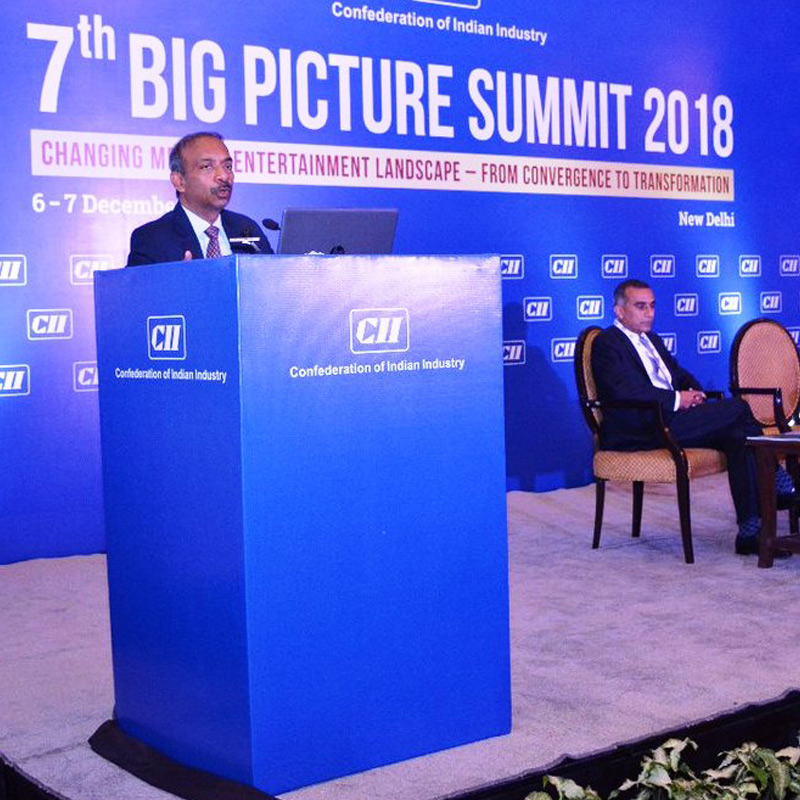
    “The media and entertainment sector should grow in a way that has less hurdle and more motivation,” Khare said here yesterday while addressing the concluding day audience at the CII Big Picture Summit 2018.

    Expanding on the NBP, Khare said government was exploring ways to ease processes, including a rethink on existing regulations for India’s M&E sector, which, not only has clocked impressive growth, but is also a big generator of employment for people. A new DTH policy, which is in the offing, is an indicator of the government's thought process.

    Admitting that regulation has failed to keep pace with changing technologies, the senior government official said, “Regulating everything is not desirable and even if desirable, it may not always be feasible.”

    However, he did not elaborate on the government’s thought process on content regulation for the digital space that’s fast becoming home to bold themes and bolder content if compared to traditional media of print and television.

    Pointing out that the government faced challenges while formulating policies or reviewing existing ones, Khare gave the example of expanding outlets for distribution of content that now, according to him, can be created practically by anyone with newer digital platforms offering creators enough number of outlets to showcase such creations.

    “In such a scenario, policy reforms [become] a little difficult,” Khare said, adding that the present government, however, was keen to review irksome government processes and clearances without being the “monitor” to mind a “grown-up” industry like media.

    Dwelling further on technology and the transformation it was bringing about in society, in general, Khare said MIB was in talks with regulator TRAI and BECIL to hold workshops to explore actively how broadband services could be delivered via existing cable TV networks to approximately 40 million households that presently don’t have internet facilities.

    Broadcast Engineering Consultants India Limited or BECIL, a government organisation under the ambit of MIB, provides project consultancy services and turnkey solutions encompassing the entire gamut of radio and television broadcast engineering.

    Later speaking to the media on the sidelines of the event, Khare said consultations will start with industry stakeholders on the formulation of NBP, but refused to give a time frame of it being legislated into some form of a policy document or guidelines.

    Info Tech Minister advocates robust digital measurement norms

    Facebook, Twitter, YouTube and WhatsApp have changed the manner in which users consume content and communicate with each other, but the social media platforms need to be mindful of "certain dos and don'ts" and guard against any misuse of their platforms, Information and Technology Minister Ravi Shankar Prasad said on Friday.

    Speaking at the CII Big Picture Summit, Prasad said that social media platforms' large focus on India underscored the sheer size and opportunities presented by the market here.

    "Facebook, Twitter, LinkedIn and WhatsApp are coming to India not only because they are giving some service. India offers a robust market, by its sheer size. I always say, come do business, but remember certain dos and don'ts…you must follow," Prasad said.

    The minister said that social media firms should also guard against any potential misuse of their platforms. In particular, these "public platforms" must not be misused by those with wrong intentions for the purpose of exploitation and denigration of others, he said.

    Outlining India's rising digital clout on the back of its large smartphone user base, strong IT outsourcing industry, electronic manufacturing capabilities and biometric programme Aadhaar, the minister asserted that the country will never barter its digital sovereignty and is, in fact, bringing a strong data protection law to safeguard its digital information.

    The right of accessing the internet is "not negotiable" and if the internet is designed for common good, it should be safe and secure, he added.

    He also called for a robust mechanism for measuring the ratings of digital platforms.