Tag: Amit Arora

  • VBS 2024: The Churning Video Distribution Ecosystem – What’s next?

    VBS 2024: The Churning Video Distribution Ecosystem – What’s next?

    Mumbai: India is in the grips of seisnic changes regarding video and broadband consumption. Pay TV cord-cutting is rampant even as free TV subscriptions are on the rise and OTT buy-ins are churning with the signs up for certain platforms stagnating even as others are seeing rapid increases and some are seeing cataclysmic drops. Aggregators of OTTs are popping up on the horizon promising cheap bundles along with value-added services for cable TV and DTH. There’s a rush to set up free advertising-supported TV channels by TV set manufacturers and smart TV device makers. There’s the Jio factor where it seeks to convert most pay TV customers to free streaming of video content by offering free access to consumers at no cost. The consumer continues to demand bandwidth higher than ever imagined even as prices drop. Margins are under pressure as every player goes one-up on each other acquire and retain customers.

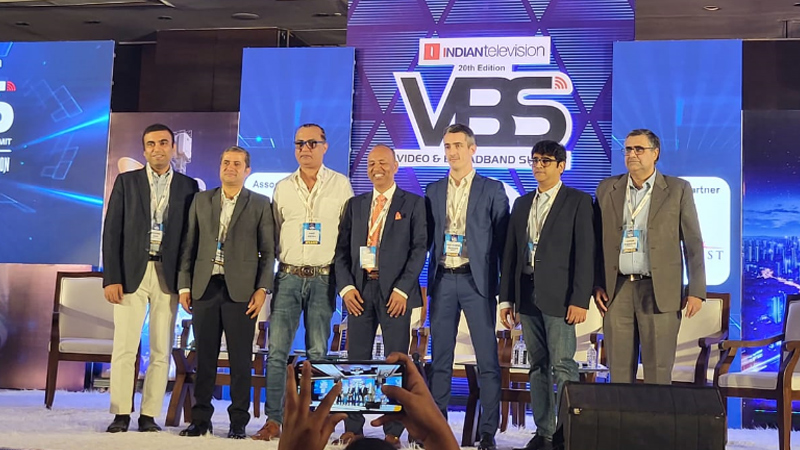
    The video and broadband distribution landscape has not been as vibrant as it is now.. How long will this pot-boiling continue? What will the magic potion of video and broadband look and taste like? And what’s the end game? Indiantelevision.com has held the 20th edition of Video and Broadband Summit better known as VBS at Sahara Star Hotel, Mumbai.

    The session chair for this panel was Ernst and Young LLP partner, media & entertainment advisory services Ashish Pherwani along with panelists: Fastway group CEO Prem Ojha, IndiaCast president Amit Arora, Dish TV CEO Manoj Dobhal, Warner Bros. Discovery & Eurosport South Asia head of distribution Ruchir Jain, Shemaroo Entertainment COO-broadcasting business Sandeep Gupta and Harmonic EMEA-APAC streaming market development director Alexandre Paugam

    Pherwani started off by saying by 2028, the TV world be breaking up into three largely equal partners and will have about 70 to 80 million pay TV and 65 to 70 million free-to-air services.

    Jain said, “We are very hopeful about the future right now. If you look at this, what’s going to happen is one is that the entire set of consumers are increasing in number. So I’m talking about how pay TV is gonna grow, connected TVs, and also about the free-to-air services, etc, so it’s the number of people coming into the media, who is going to invest. So that’s one big factor, the second big factor is the time scale

    Ojha opined that, “Our job is to keep the ground ready so that all this beautiful content and all these absorbing content can reach out to consumers the way they want it today.”

    Arora said, “So it is select all 3 platforms to seem to be consuming a lot of common content assets and that is going to change in the future formats will change may be the price point. I agree with that.”

    Dobhai said, “ We are brands with long-run legacies. And new ones coming up. Fortunately, unfortunately, I’m on the receiving end of it because we are the ones who showed the word of it all the country that you know what experience it brings when you watch an immersive content technology, upgraded version of it, satellite, and all that.”

    Gupta added that for Shemaroo, Gujarati is like building our own Prime Video. Because we are devoted ourselves to Gujrati. We are trying to expand on more areas as well. Other than that Shemaroo and ShemarooMe are mostly devoted to Gujarati.

    Lastly, Paugam replied, “Coming from the technology, part of things, especially the broadcast infrastructure, I think we see a big trend, and DTH cable stays strong. And for us, it stays at a huge part of our business helping protesters and operators distribute their content through those networks and optimize it. But the big growth is in streaming. And we’ve seen a tipping point globally, the number of subscribers from pay TV subscribers, being outpaced by the number of streaming subscribers. We’re moving from sending a unified feed and broke it down to everyone to sending unique guests and a unique feed to the end user. That gives us the ability to customize this unique feed. I think a lot of innovation and new technology that are emerging are around how do we leverage that streaming vessel to have the experience as personalized as possible.”

  • VBS 2022: Over-regulation could impede pay-TV industry’s growth in near-term

    VBS 2022: Over-regulation could impede pay-TV industry’s growth in near-term

    Mumbai: Over-regulation could impede the pay-TV industry’s growth in the near term, especially amid rising competition from the OTT platforms, and DD Free Dish’s expanding territories, highlighted industry stakeholders at the Video and Broadband Summit (VBS) 2022 on Wednesday.

    The day-long virtual event organised by Indiantelevision.com and co-powered by broadpeak concluded its 18th edition. Disney Star came on board as the presenting partner, while NxtDigital was the summit partner.

    The event witnessed an engaging panel discussion among experts from the broadcast and DTH industry as well as other stakeholders as they examined the challenges faced by the pay-TV industry and deliberated on the opportunities that lay ahead. The session was moderated by Indiantelevision.com founder CEO and editor-in-chief Anil Wanvari.

    Overview of pay-TV industry

    TV penetration in India is currently estimated at 60 per cent which means that a third of the households are yet to own a TV set. There are around 210 million TV households, growing at seven per cent year-on-year and adding six-to-seven million new homes. The data also suggests that about 12-14 million TV sets are sold every year.

    While markets like Tamil Nadu and Kerala have a strong TV presence with 98 per cent and 92 per cent penetration, respectively, other markets like Bihar, Jharkhand, Orissa have a huge headroom for growth. In some markets such as Uttar Pradesh, Uttarakhand, Madhya Pradesh, and Chhattisgarh TV penetration is as low as ~40 per cent.

    The Telecom Regulatory Authority of India (Trai) and Federation of Indian Chambers of Commerce and Industry (FICCI) estimated that there are 130 million pay-TV homes in the country. Linear pay-TV business average revenue per user is ~Rs 240 which is less than $3.5.

    “The data shows that there are 300 million homes with 4.5 people on average. While the population may remain the same going forward, the number of households will increase owing to nuclearisation of families,” observed Tata Sky chief financial officer Sambasivan G highlighting the headroom for growth in the coming years. “More households will mean more opportunity for pay-TV to grow.”

    Migration to DD Free Dish

    According to the panellists, free DTH platforms like DD Free Dish are also invading the pay-TV territories and expanding their share. According to the latest data, DD Free Dish run by public broadcaster Prasar Bharati has doubled its base from 20 million to 40 million in the last five years.

    “In the last two years, we have seen the migration to Free Dish gaining momentum,” said Star and Disney India head – distribution and international (India) Gurjeev Singh Kapoor. Drawing attention to the impact of the pandemic, Kapoor said, pay-TV homes had tumbled down by two to three million as consumers moved to free TV because they did not have disposable incomes.

    Ernst and Young media and entertainment advisory services partner Ashish Pherwani noted that the upcoming FICCI report in March will show a further decline of six million households in the pay-TV universe. The report will also indicate a big growth in the number of connected TV (CTV) households. “If you look at pay-TV plus CTV then there’s a growth that will continue in the future,” he said.

    Den Networks CEO SN Sharma maintained that while Free Dish was a noble service that provided entertainment to lakhs of viewers, the challenge emerged when broadcasters charged distributed platform operators (DPOs) money for offering pay channels but gave it free of cost on Free Dish. “There must be a level playing field in terms of regulation,” he said.

    Serving the FTA audience

    Broadcasters and distributors agreed that the TV consumer in India exists on a spectrum where at the top of the pyramid there’s a customer who watches linear TV, broadband video, and OTT whereas at the bottom of the pyramid there’s a customer who prefers to watch only free TV. “For any product and not just TV, you’ll have a market where there will be a free, a pay, and a premium offering,” said Pherwani.  

    “Free TV exists even in mature markets such as the US, Europe, Australia, and the Indian consumer always wants more for less,” commented Indiacast president- affiliate sales- India, South Asia, and APAC Amit Arora. “The bulk of DAS 3 and DAS 4 markets are going to remain connected to the TV, however, growth remains a bigger challenge.”

    According to the panellists, broadcasters have discovered that being available on Free Dish and serving the FTA audience makes more business sense than moving away from the platform. “Somewhere in 2019, when broadcasters went off Free Dish it was estimated to have a base of 30 million. That audience segment remained there,” observed Amit Arora. “We should look at a different solution and attack the market where free TV is present, rather than wishing this problem will go away if we knock off our channels from Free Dish.”

    Star and Disney India’s Gurjeev Singh Kapoor also agreed. “When we vacated that platform (Free Dish) we saw other channels emerging as number one, therefore not being present on Free Dish is not a sensible proposition. You need to have content to entertain people who have less disposable income,” he contended.

    According to Nxtdigital CEO Vynsley Fernandes, free TV audiences can be wooed back to pay-TV by offering them a better product. “A Free Dish customer watches 100 channels for free by paying a one-time nominal fee for the set-top-box (STB),” he said. “We created a lifetime-free product that bundled 300 free channels where the customer had to pay a one-time fee for a digital STB. This allowed them to watch any free channel and upgrade their service to access pay channels if they wanted.”

    He added, “broadcasters and DPOs need to work together to develop products that cater to different socio-economic classes. Today, we’re struggling to figure out what those step-up products can be because you can’t create a thousand different products.”

    NTO 2.0 regulation

    After the first tariff order was implemented in February 2019, it took six months for TV viewership to stabilise and consumers to successfully migrate to the new tariff regime. Pay-TV subscribers declined by 12-15 million according to industry estimates which were compounded by the pandemic which struck in March 2020. Experts on the panel believe that the implementation of the new tariff order (NTO) 2.0 during this period of economic recovery would only disturb the whole ecosystem.

    “This black swan event has changed the consumption patterns on TV, meanwhile, 20-30 million subscribers have dropped from linear TV due to transitioning from one tariff regime to another,” said Amit Arora. “A lot of economies have shown that restrictive policies do not lead to fundamental growth of the sector. What we need right now is a broad paradigm and notover-regulation”

    Highlighting that India has immense competition in the broadcasting sector with 900+ channels and pressure from OTT and Free Dish platforms as well, Gurjeev Singh Kapoor said, in such a market, “the regulator should treat broadcasters with forbearance and let market forces prevail.”

    Adding further, he said, “The average ARPUs for satellite and cable TV and DTH providers is Rs 240. But if you look at what broadcasters walk away with, it is not even one dollar. Is that kind of business model sustainable? We have to look at what the consumer can pay best.”

    Tata Sky chief financial officer Sambasivan G said, said, there was no to flinch from any price increase as a result of NTO 2.0. “We are charging the customer 50 per cent of what we were charging them 20 years ago for double the content. That means the customer is getting four times the value. Even with a price increase we will still be the cheapest pay TV market in the world,” he asserted.

    “The status quo should be maintained for some time,” believed SN Sharma. “Broadcasters have hiked their channel prices by as much as 80 per cent but DPOs are not in a position to handle these kind of price hikes. This kind of disruption will disturb the whole pay TV ecosystem.”

    Parity in regulation of OTT and pay TV platforms

    SN Sharma observed that all major broadcasters are operating their own OTT platforms and offering their pay channels for relatively low cost compared to pay TV. “There must be parity in pricing on cable TV and on OTT,” he stated.

    Commenting on the issue, Gurjeev Singh Kapoor said, “OTT in India is still a second screen phenomenon where a large portion of OTT content is consumed on mobile. It is still not a living room experience. So, I don’t think it is fair to compare linear TV and OTT pricing.”

    He added, “In a market like India with 300 million homes, there are 10 million homes that watch TV content on OTT which is not a big number. So, we’re missing the forest for the trees.”

    “All our linear TV channels are behind the paywall on OTT and not on AVOD. I believe we should be talking about deregulation of linear TV rather than regulating OTT,” remarked Amit Arora.

  • VBS 2019: Broadcast industry dwells on TRAI consultation paper, NTO impact and way forward

    VBS 2019: Broadcast industry dwells on TRAI consultation paper, NTO impact and way forward

    MUMBAI: The new consultation paper on broadcast tariffs is only seeking to address some infirmities in the earlier New Tariff Order (NTO) and will not bring any fundamental changes to the regulatory framework, said TRAI advisor Arvind Kumar at VBS 2019. His comment hinted that there might be some changes in the regulatory framework, which will bring NTO 2.0.

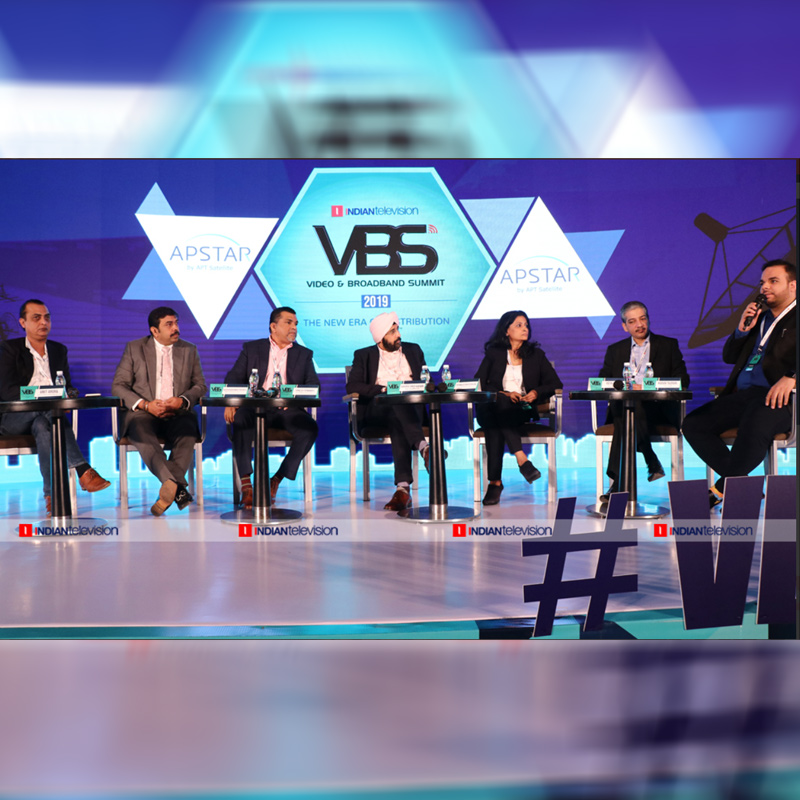
    The first panel discussion at VBS 2019 organised by Indiantelevision.com and its production division ITV2.0 focused on ‘NTO-The future roadmap.’

    The panel was moderated by Elara Capital VP- research analyst (media) Karan Taurani among the panelists IndiaCast Media Distribution president Amit Arora, Star India Distribution and international business president and head Gurjeev Singh Kapoor, Metro Cast Network India promoter Nagesh Narayandas Chhabria, The Remediation Company founder & partner Shyamala Venkatachalam, IndusInd Media & Communications chief executive officer Vynsley Fernandes and GTPL Hathway vice-president Yatin Gupta.

    The objective of the NTO was to bring transparency, freedom of choice, level playing field in the industry and rationalising the consumers’ cost. The panelists agreed that the dust of the new tariff order has settled down but the NTO 2.0 period might impact pricing again. With the new consultation paper Gupta expected that there would be price capping on bouquets and a la carte.

    Said Kapoor: “Very fairly the NTO has allowed consumers to exercise the power of choice. For DPOs the level playing field has come out very clearly. For the first time broadcasters were allowed to go with their understanding on pricing and packaging. We collaborated with all the stakeholders and ensured that smooth transition of the NTO happens. It wouldn't have been possible without the entire ecosystem coming together. I appreciate that MSOs and LCOs came together and were able to manage this really well. Post NTO has been good learning and deep understanding from Star’s perspective.

    Whereas Arora said, “NTO has brought us closures as partners. There have been cases where platforms had designed packages and shown them to us for feedback. We don’t have the expertise of forming packages but we understand consumers as well as the retail price, which is feasible for my market. I don't understand the concept that the consumer has to pay less. I believe the consumers pay for value and content. As we move forward the challenge is going to be how do we make consumers pay more revenue for the content he/she watches. It’s between me and the platform to work together on how do we get him to buy."

    National MSO GTPL Hathway’s Gupta said, “Any industry is always resistant to changes especially if it's technology based. One important thing is how do regulators ensure that it benefits the consumers but not at the cost of industry. There has been a lot of effort that went into building the new regulatory framework. As we see in the past few months, industry has begun to settle down and it's about to grow again. Looking at the tectonic shift, the cable industry is not just here to stay but to grow.”

    “Most of the LCOs have settled down and they have adopted the new structure. They have been able to maintain and grow their business. Over the period of time various MSOs and various platforms have taken different views,” said Fernandes.

    Taurani opined that 60 to 70 per cent of subscribers who cut the cord on cable TV have moved to DTH. It was an important change that has been observed. This was due to various reasons: MSOs not being able to implement the NTO in effective ways, delays on the MSOs’ front in coordination, etc.

    On the same Venkatachalam commented, “On the DTH side, they already had established backend systems, the NTO just gave them a jump to make the transition process even easier. For the MSOs, it took them some time to put all the things in place.”

    The panelists also shared their perspective on norms of 15 per cent capping on bouquet and FTA channels moving behind a pay wall and their expectations from the consultation paper released by TRAI to review NTO.

    Gupta said, “With NTO 2.0 we are expecting the price capping of a la carte. The discounts being offered today range from 10 per cent to 70 per cent, so there should be some capping on that which can help consumers to make intelligent choices."

    Agreeing with Gupta’s comment, Venkatachalam said that NTO 2.0 will impact the pricing.

  • No going back on DAS despite difficulties in P-IV: MIB

    No going back on DAS despite difficulties in P-IV: MIB

    NEW DELHI: Even as he admitted the fourth phase of digital addressable system for cable television was the most difficult, advisor (DAS) in the information and broadcasting ministry Yogendra Pal has said there is “no going back on the deadline of 31 March 2017.”

    Pal said that there were difficulties because several MSOs were reluctant to set up headends in far out rural areas, as the fourth and final phase only covers rural areas. He said the 60-plus cases pending in Delhi High Court relating to Phase III had been disposed of with the exception of three which challenged section 4A of the Cable Television Networks (Regulation) Act 1995, and all stay orders had been vacated.

    However, Pal admitted that a new case had been filed in Telengana to the effect that while there was clear reference to switching to DAS in Section 4A, there was no reference to switching off analogue signals. He said this case had been filed by a party not involved with the cable TV business.

    However, cable TV veteran Lt. Colonel V C Khare (retired) who chaired the session on ‘DAS implementation – miles to go before we sleep?” claimed that just around 22 per cent seeding of set-top boxes had been achieved in the third phase as against government claims of almost total seeding.

    Siticable Networks CEO V D Wadhwa also agreed that there were ‘gaps’ in Phase III, and Siticable had yet to seed another 2,50,000 STBs. But, he welcomed DAS, though he felt monetisation was still a challenge.

    Wadhwa said that while the objective of the consumer getting channels of his choice had been achieved, the industry was cable of overcoming soon the problems about SMS or receipts not being issued which had been raised by Khare in a presentation earlier in the day when he showed various loopholes in the DAS legislation.

    Khare had also pointed out that DAS in effect was aimed at involving only the broadcaster and the multisystem operator, conveniently keeping out the LCO who had built the industry.

    Other speakers in the session were unanimous that the cable TV industry had achieved in four years something that the direct to home industry had not been able to do in twelve years.

    In a session on “Business Model and Regulations”, there was general unanimity that the industry needed regulation but it did not have to come from a government regulator. The speakers favoured industry-led regulation.

    Eminent lawyer Kaushik Moitra of TMT Practice who moderated the session said that the Telecom Regulatory Authority of India (TRAI) had been given the additional burden of broadcasting only till a Broadcasting Regulatory Authority of India is set up but this had not happened. He said there was a certain need to move towards self-regulation. He also raised the question of whether TRAI was working to unite the LCOs.

    However, he applauded the growth of the industry with the last five years showing the growth of the highest number of television channels.

    Indiacast EVP Amit Arora said regulation was welcome, but it should not mean “jumping in at all times – this kills enterprise”. Even as no other country had achieved the kind of growth that local cable operators had shown in India, the regulator had to show greater responsibility towards the last mile operator. He also wondered why the MSOs and LCOs could not handle broadband while dealing with cable TV.

    Prag News CMD Sanjive Narain said that the regulator was only mean t to “ease movement” and not strictly regulate. It should solve problems before waiting for them to arise. He said that though TRAI consulted stakeholders, everything was often’pre-decided’.

    He said the primary problem before the industry was one of revenue sharing. Once that was out of the way, things would move smoothly.

    VuClip consultant Sisir Pillai said a regulator is needed, particularly in view of newer technologies like OTT. Referring to the growth of OTT, he said that the aim was to deliver content in whatever manner the subscriber wanted and find revenue for this.

    Answering a question later, he said that wired delivery was still the best medium even if video had to be sent to mobiles or other platforms.

    InDigital senior VP – operations and head of regulatory Subhashish Mazumdar said there was no regulator when the LCO began with VCRs and built the industry. This meant that the last mile operator and multi-system should be capable of solving their own problems. The industry was now geared up for this, he said.

    Agreeing that the primary problem was one of revenue sharing, Mazumdar said that the issue of unity among stakeholders to solve such problems had to come from the top.

    Earlier, Dr A K Rastogi of Aavishkaar which was among the organizers said that the primary problem was one of unity among stakeholders and a step had been taken in this direction with the formation of the Media Club of India.

    A session later on “Significance of wireline operation in Digital India” moderated by Castle Media ED Vinsley Fernandes was unanimous that there was no better technology than wireline.

    The session was addressed by Cisco CTO Gulshan Khurana, Siti Networks COO Anil Malhotra, Ortel Communications President and CEO Bibhu Rath, Suresh Sethiya of ICNCL of Kolkata, and StoreSay founder and CEO Raman Kalra.

  • Viacom names Amit Arora as VP – strategy & biz development for Asia

    Viacom names Amit Arora as VP – strategy & biz development for Asia

    MUMBAI: Viacom International Media Networks (VIMN) has appointed Amit Arora as vice president – strategy and business development, Asia, with immediate effect.


    Arora will be based in Singapore and serve on the Asia leadership team, reporting to VIMN executive vice president and managing director for Asia Mark Whitehead. He will also be working closely with the global strategy team in New York. In this newly created role, Arora will drive the cross-business growth strategy and business development opportunities in Asia to help shape the organisation’s decision-making.


    “We are thrilled to have Amit join the VIMN family. Amit has a strong track record in driving business growth and executing new channel and digital expansion. His outstanding analytical and strategic abilities coupled with extensive knowledge in the media and telecom sectors enable him to develop effective growth strategies. He will be a terrific addition to the team as we position the organisation for future growth and strengthen our competitive leverage in the region,” said Whitehead.


    Most recently, Arora was with BBC Worldwide in Singapore as head of business development and strategy, Asia. He joins VIMN Asia with 15 years of experience in the media, telecom, cable and technology industries including business development, analytics and strategic advisory roles in well-known media businesses such as ABC Television/The Walt Disney Company, Turner Broadcasting, and Time Warner Cable in the U.S.

  • Viacom names Amit Arora as VP – strategy & biz development for Asia

    Viacom names Amit Arora as VP – strategy & biz development for Asia

    MUMBAI: Viacom International Media Networks (VIMN) has appointed Amit Arora as vice president – strategy and business development, Asia, with immediate effect.


    Arora will be based in Singapore and serve on the Asia leadership team, reporting to VIMN executive vice president and managing director for Asia Mark Whitehead. He will also be working closely with the global strategy team in New York. In this newly created role, Arora will drive the cross-business growth strategy and business development opportunities in Asia to help shape the organisation’s decision-making.


    “We are thrilled to have Amit join the VIMN family. Amit has a strong track record in driving business growth and executing new channel and digital expansion. His outstanding analytical and strategic abilities coupled with extensive knowledge in the media and telecom sectors enable him to develop effective growth strategies. He will be a terrific addition to the team as we position the organisation for future growth and strengthen our competitive leverage in the region,” said Whitehead.


    Most recently, Arora was with BBC Worldwide in Singapore as head of business development and strategy, Asia. He joins VIMN Asia with 15 years of experience in the media, telecom, cable and technology industries including business development, analytics and strategic advisory roles in well-known media businesses such as ABC Television/The Walt Disney Company, Turner Broadcasting, and Time Warner Cable in the U.S.

  • 2014: The year that changed landscape of distribution

    2014: The year that changed landscape of distribution

    2014 has been the most exciting and an eventful year for us in the Media and Distribution Industry. The phrase “There is never a dull moment” is so apt to define the year of 2014 that changed the landscape of distribution so significantly and posed challenges like never before. The year started on a promising note for the Industry with the impact of digitisation settling down and the benefits of this shift starting to roll in. Reduction in carriage fees and an upswing in subscription revenues indicated change, yet the industry continued to grapple with implementation of packaging at the retail level.

    Value chain as a whole moved towards a more structured form, with constituents at each level moving from an adhoc/ flat fee commercial arrangement to CPS model. Subscription flow from LCO to MSO which was significantly low in analog era started growing. Wider choice at the subscriber end also helped growth in ARPUs.

    One of the biggest changes that shall significantly impact the distribution model is BARC becoming a reality. It is set to redefine the way all of us look at distribution. Expansion in LC1 markets and forthcoming BARC measurement is pushing every broadcaster expand visibility to the deepest, darkest corners of the country. Such is the scope of expansion that it will require any organisation 24-30 months to plan, execute and brace one of the biggest change in the history of distribution.

    DTH industry saw a major shift this year in their outlook towards the business. Almost all of them moved away from the customer acquisition mode to better profitability. While the story of subscriber acquisition was not exceptionally different over the previous year, DTH companies managed churn, HD and ARPU increasingly well.    

    No other year has seen a bigger storm than 2014 in the Regulatory environment. There were so many storming changes that touched every stakeholder in the distribution chain. TRAI came out with regulatory changes like Disaggregation, DAS phase III and IV, Commercial establishments and Ad-Cap. The new regulatory environment posed new challenges such as keeping partners together, protecting bottomline revenue and remaining relevant in the new regime. Postponement of digitisation in phase III & IV caused recalibration of business plans by all stakeholders. TRAI’s regulatory change for commercial establishments affected an entire revenue stream of broadcasters and the matter continues to be fiercely litigated.

    Going into 2015, we strongly believe the industry will undergo some paradigm shifts in the way we do business. Implementation of RIOs in cable will see packaging in cable become a reality. Digital platforms hence shall compete effectively. Carriage fee, a big cost for broadcasters will get reduced to miniscule or only exist for FTA channels. HD and broadband in cable will see a big swing to drive revenues significantly for the cable companies. More interesting deals like DEN-Snapdeal shall emerge. DTH players shall equally bring about next level of offers to bring more value to the subscribers such as OTT, 4K boxes, TV Everywhere, and Binge viewing being offered to the consumers.

    For us here at IndiaCast UTV, the year 2014 was equally exciting. In face of compelling challenges, we en-cashed on the opportunities to attain significant growth. There is ample evidence that we are moving forward and in the right direction. In light of disaggregation, IndiaCast UTV was successfully appointed as the authorised agent for TV 18, Disney UTV and ETPL and the broadcasters reposed full faith in the our team. Transcending these regulatory changes, we emerged stronger than ever.

    On the DTH front, we saw all our renewals happening during the year. We had to up our ante and attain a fair share for the unmatched content that the network stands for. It was tough convincing the platforms but eventually they saw sense in the value we bring to the table. We are proud to say that we were able to stitch our multi-year content deals with all the DTH platforms at a healthy growth rate. On the visibility front, we embarked upon the biggest challenge to put in place an entire LC1 team and collectively put in thousands of manpower hours to expand our reach across the length and breadth of the country. Our ratings in the past few months are a testimony to the efforts of the affiliate team who seeded our channels in a number of new networks across smaller markets.

    The year also saw us successfully launching and distributing the third Hindi GEC “EPIC” which expanded the GEC space by offering a season based formats based on Indian Mythology and folklore. Viacom18 gave a myriad of entertainment options with Colors being the frontrunner in Hindi GEC space, launch of new Hindi GEC “Rishtey”, MTV Indies creating a new space in Music genre and by launching “24” – India’s first international non-reality format show with international standard production quality. TV 18 maintained its leadership position and added a business news channel in Gujarati called CNBC Bajar to its portfolio. The regional offering was strengthened by launching four news channels under the ETV banner – Kannada, Bangla, Gujarati and Haryana.

    This year has seen IndiaCast UTV coming of age, adding stability and propelled us to achieve more. We are confident of setting new benchmarks for ourselves and for the industry and embark on a larger journey which will see us coming out stronger than ever before. We are looking forward to an exciting and eventful 2015.


     (These are purely personal views of IndiaCast UTV Media Distribution EVP Amit Arora and indiantelevision.com does not necessarily subscribe to these views)