Tag: Amit Adarkar

  • Ipsos India appoints Unni Hariharan, executive director of tech & e-commerce

    Ipsos India appoints Unni Hariharan, executive director of tech & e-commerce

    Mumbai: Keeping in view the transforming market dynamics and tech focus and digital becoming an essential ingredient for business, eCommerce and engagement, and with many new entrants in this space, Ipsos India has pulled in Unni Hariharan to lead tech and e-commerce, with immediate effect.

    Hariharan is the designated executive director, and his remit is to identify and enhance opportunities with leading players in the tech and e-commerce sector and will work with clients pan India. He reports to Shalini Sinha, country service line leader, brand health tracking (BHT) and creative excellence (CRE).

    Elaborating more on the development, Shalini Sinha, country service line leader, BHT and CRE said, “It is our constant endeavour to hire sectoral experts as they are best placed in providing a strong and strategic counsel to clients for market leading business decisions. Hariharan has domain expertise and has worked extensively with clients in technology, e-commerce and D2C space and we foresee him growing our presence with the roster of clients in these areas and leveraging opportunities.”  

    Ipsos India CEO Amit Adarkar said, “Covid19, hastened adoption of technology with lockdowns and access to brick and motor stores almost unavailable for many months and then the fear of going to public places occupying the mindset of consumers, there was a boom in e-commerce, D2C players and digital adoption for almost bingeing on everything – from shopping to social media browsing and surge in OTT subscriptions etc. Ipsos India views this as a great opportunity area, bringing in Hariharan will help us enhance our quality of work and our client delivery mechanism.”

    Hariharan moved from Nielsen and has about two decades of work experience across leading market research agencies. He is an alumnus of Goa Institute of Management.


  • India stays buoyant and ranks 3rd in optimism: Ipsos What Worries the World global monthly survey

    India stays buoyant and ranks 3rd in optimism: Ipsos What Worries the World global monthly survey

    Mumbai: The November wave of the Ipsos What Worries the World shows India continues to buck the global trend of pessimism and is ranked as the 3rd most optimistic market, with at least 71% of urban Indians polled believing India is headed in the right direction. Interestingly, two South East Asian markets of Singapore (83%) and Indonesia (77%) emerged the most optimistic, while only 37% of global citizens were optimistic and majority (63%) believed their country is on the wrong track.

    These are the findings of the Ipsos What Worries the World global monthly survey that tracks public opinion on the most important social and political issues, alongside whether people think things in their country are heading in the right or wrong direction, across 29 countries.

    Local and global worries

    Top issues worrying Urban Indians in November 2023 were: Inflation (48%), unemployment (44%), crime and violence (27%), financial and political corruption (25%), and terrorism (21%). Terrorism is new in the top 5 worry list, knocking out poverty and social inequality to the 6th spot.

    Global citizens were most concerned about, inflation (38%), crime and violence (30%), poverty and social inequality (30%), unemployment (26%) and financial and political corruption (25%).    

    Elucidating on the findings of the survey, Ipsos India CEO Amit Adarkar said, “India continues to be ranked among the top most optimistic markets despite all the global disruption and macro factors impacting the local market and our economy. Our economy depends a lot on local consumption and festivals have further added to the buoyancy, with consumers loosening their purse strings to splurge.”

    “The worries of Indians have been around wave after wave, despite measures taken by the govt to provide reprieve. Some factors are global, with global economic slowdown, wars in Ukraine and Gaza, job cuts by global companies that have offices in India. Terrorism is a new worry that has surfaced this month. Govt needs to address these worries of citizens on priority.”

    Methodology

    This 29-country Global Advisor survey was conducted between October 20th 2023 and November 3rd 2023 via the Ipsos Online Panel system among 20,570 adults aged 18-74 in Canada, Israel, Malaysia, South Africa, Türkiye and the United States, 20-74 in Indonesia and Thailand, 21-74 in Singapore, and 16-74 in all other nations.

    The “Global Country Average” reflects the average result for all the countries where the survey was conducted. It has not been adjusted to the population size of each country and is not intended to suggest a total result. The sample consists of approximately 1000+ individuals in each of Australia, Belgium, Brazil, Canada, France, Germany, Great Britain, Italy, Israel, Japan, Mexico, Spain, Sweden, and the US, and approximately 500+ individuals in each of Argentina, Chile, Colombia, Hungary, India, Indonesia, Malaysia, the Netherlands, Peru, Poland, Singapore, South Africa, South Korea, Thailand and Turkey. The samples in Argentina, Australia, Belgium, Canada, France, Germany, Great Britain, Hungary, Italy, Japan, the Netherlands, Poland, South Korea, Spain, Sweden, and the US can be taken as representative of these countries’ general adult population under the age of 75. The samples in Brazil, Chile, Colombia, India, Indonesia, Malaysia, Mexico, Peru, Singapore, South Africa, Thailand and Turkey are more urban, more educated, and/or more affluent than the general population.

    The survey results for these markets should be viewed as reflecting the views of the more “connected” segment of these populations. Weighting has been employed to balance demographics and ensure that the sample’s composition reflects that of the adult population according to the most recent census data. The precision of Ipsos online polls are calculated using a credibility interval with a poll of 1,000 accurate to +/- 3.5 percentage points and of 500 accurate to +/- 5.0 percentage points. For more information on the Ipsos use of credibility intervals, please visit the Ipsos website. Where results do not sum to 100 or the ‘difference’ appears to be +/-1 more/less than the actual, this may be due to rounding, multiple responses, or the exclusion of don’t knows or not stated responses.

  • UNESCO-Ipsos: Six in ten urban Indians find social media most misleading yet preferred for news

    UNESCO-Ipsos: Six in ten urban Indians find social media most misleading yet preferred for news

    Mumbai: The UNESCO-Ipsos Survey on the impact of Online Disinformation and Hate Speech shows, that disinformation and fake news and hate speeches are a reality in India with 64 per cent blaming social media feeds as the biggest source of disinformation and fake news. Ironically, 1 in 2 urban Indians (56 per cent) claimed to turn to social media feeds as their top choice for news and information.

    UNESCO and Ipsos decided to conduct a global survey on the impact of online disinformation and hate speech in 16 Countries where general elections are to be held in 2024 and posed questions specific to this context. Do they feel disinformation has already had an impact on political life in their country and is there concern about disinformation impacting the next campaign?  

    Sources of disinformation and fake news. And sources accessed for news and information

    Urban Indians believe social media feeds is the widest source of disinformation and fake news (64 per cent), followed by large groups or communities or online messaging groups (42 per cent), media websites/ media mobile apps (23 per cent), television (17 per cent), in-person/ online discussions with family members, friends or colleagues (17 per cent), newspapers or news magazines (11 per cent) and radio (four per cent).    

    Interestingly, in spite of being aware of the pitfalls of turning to social media feeds, as it is perceived to be the widest purveyor of disinformation and fake news, paradoxically, one in two urban Indians (56 per cent) claimed to turn to social media feeds as a top choice for news and information. Followed by television (42 per cent), newspapers or news magazines (37 per cent), media websites or media mobile apps (24 per cent), large groups or communities on online messaging apps (17 per cent), in-person or online discussions with family members, friends or colleagues (seven per cent) and radio (six per cent).  

    Hate Speeches  

    At least 85 per cent of urban Indians polled claimed to have come across often, online content that seemed like hate speech. Across all 16 markets, Indians came across hate speech the most, followed by citizens of Bangladesh (84 per cent).

    Hate speeches can be found on social networks, comment sections of articles, in instant messaging. And can target individuals or groups of people (ethnic, racial, religious minorities, LGBTQ+ and people with disabilities.

    Biggest victims of hate speech on social media across 16 countries were LGBT+ people (33 per cent), ethnic/ racial minorities (28 per cent), women (18 per cent), religious minorities (17 per cent), the poorest members of society (17 per cent), overweight persons (13 per cent), people with mental health issues (12 per cent) etc.

    Trust and safety measures on social media during elections

    Broad approval (among citizens across 16 markets) for governments and regulators requring social media platforms to put in place trust and safety measures during election campaigns, to safeguard the sanctity of elections. 93 per cent of urban Indians polled endorse this view.  

    Summarizing on the findings of the survey, Ipsos India CEO Amit Adarkar said, “The UNESCO-Ipsos survey is pertinent as India is among the 16 markets that go into the general elections in 2024. Social Media Feeds while being accessed for breaking news and for information, is perceived to be fraught with disinformation and fake news believe majority of urban Indians polled. There is a strong case for guardrails and govt and regulators need to ensure social media platforms implement trust and safety measures during the general elections given the risk it poses for disinformation and fake news.”

    “Social media is like a loose cannon, can cause immense damage to reputation and credibility especially during the elections. All the hate spewed is also unfettered,” added Adarkar.  

  • Consumer sentiment weakens in November 2023 for urban Indians – Refinitiv-Ipsos PCSI monthly survey

    Consumer sentiment weakens in November 2023 for urban Indians – Refinitiv-Ipsos PCSI monthly survey

    Mumbai: Consumer sentiment has weakened for urban Indians by 1.0 percentage points in November 2023, according to the Refinitiv-Ipsos Primary Consumer Sentiment Index (PCSI) for India.

    The monthly PCSI result which is driven by the aggregation of the four, weighted, sub-indices, has slumped across all four sub-indices: the PCSI Economic Expectations (“Expectations”) Sub-Index is down 2.9 percentage points; the PCSI Employment Confidence (“Jobs”) Sub-Index has dipped 0.1 percentage points; the PCSI Current Personal Financial Conditions (“Current Conditions”) Sub-Index has decreased 0.3 percentage points; and the PCSI Investment Climate (“Investment”) Sub-Index has fallen 1.0 percentage points.

    Ipsos India CEO Amit Adarkar said, “Consumer sentiment has weakened over the previous month largely around the economy. The global sentiment is depressed because of the global economic slowdown and war in Ukraine and Israel. Though India has been showing a lot of resilience, it is not insulated from global macro conditions. Another reason could be the post festival gloom, as sentiment is down for personal finances and investments for savings and purchase of big-ticket items. Also being the fag end of the year, hiring and jobs are lowkey as establishments are focusing on wrapping up the financial year. Though inflation is under control for now, the central bank has flagged off fast rise in retail credit as a risk that could have future inflationary impact.”

    Consumer Sentiment in 29 Countries

    India is second highest on National Index.

    Among the 29 countries, Indonesia (63.2) holds the highest National Index score this month. India (63.1), which held the highest score last month, and Mexico (60.8) are the only other countries with a National Index score of 60 or higher. For Mexico, consumer sentiment is at its highest point since tracking started in 2010.

    The Global Consumer Confidence Index is the average of all surveyed countries’ Overall or “National” indices. This month’s installment is based on a monthly survey of more than 21,000 adults under the age of 75 from 29 countries conducted on Ipsos’ Global Advisor online platform. This survey was fielded between 20 October and 3 November 2023.

    How we did it

    These findings are based on data from a monthly 29-country survey conducted by Ipsos on its Global Advisor online survey platform and, in India, on its IndiaBus platform. They are first reported each month by Refinitiv as the Primary Consumer Sentiment Index (PCSI).

    The results are based on interviews with over 21,200 adults aged 18+ in India, 18-74 in Canada, Israel, Malaysia, South Africa, Turkey, and the United States, 20-74 in Thailand, 21-74 in Indonesia and Singapore, and 16-74 in all other countries.

    Since March 2023, Ipsos India has moved the survey from covering only netizens to include an expanded offline sample, using the Ipsos IndiaBus – 1800 offline sample + 400 online sample, covering 16 cities across the length and breadth of the country, scientifically chosen, from NCCS A, B & C. More representative of the urban population.

    Ipsos IndiaBus is a monthly pan India omnibus (which also runs multiple client surveys), that uses a structured questionnaire and is conducted by Ipsos India on diverse topics among 2200+ respondents from SEC A, B and C households, covering adults of both genders from all four zones in the country. The survey is conducted in metros, tier1, tier 2 and tier 3 towns, providing a more robust and representative view of urban Indians. The respondents were polled face-to-face and online. We have city-level quota for each demographic segments that ensure the waves are identical with no additional sampling error. The data is weighted by demographics and city-class population to arrive at national average.

  • Urban Indian consumer sentiment rises by 1.9 points in October 2023

    Urban Indian consumer sentiment rises by 1.9 points in October 2023

    Mumbai: Consumer sentiment for urban Indians is up 1.9 percentage points in October 2023, displaying further improvement in consumer sentiment over September 2023, according to the Refinitiv-Ipsos India Primary Consumer Sentiment Index (PCSI) report for India.

    The monthly PCSI result which is driven by the aggregation of the four, weighted, sub-Indices, has surged across all the 4 sub-indices:  the PCSI Economic Expectations (“Expectations”) Sub-Index is up 4.0 percentage points; the PCSI Employment Confidence (“Jobs”) Sub- Index has slightly moved up 0.2 percentage points; the PCSI Current Personal Financial Conditions (“Current Conditions”) Sub-Index is up 1.3 percentage points; and the PCSI Investment Climate (“Investment”) Sub-Index is up 1.9 percentage points.

    Ipsos India CEO Amit Adarkar elucidating on the findings of the survey said, “Consumer Sentiment among urban Indians has been showing a steady improvement since July 2023, and sustaining through October 2023. We also see improvement across the 4 sub-indices of economy, jobs, personal finances and investments. Sentiment around the economy has seen a major boost of 4 percentage points and likewise for investments (1.9 percentage points) and personal finances (1.3 percentage points).”

    “Indian economy is on a firm growth track. With the recent downturn in food inflation and increased bonhomie about the upcoming festival period, urban consumer sentiment is getting more upbeat. Recently concluded various eCommerce sales also reflect this sentiment,”

    Adarkar added.      

    Since March 2023, Ipsos India has moved the survey from covering only netizens to include an expanded offline sample, using the Ipsos IndiaBus – 1800 offline sample + 400 online sample, covering 16 cities across the length and breadth of the country, scientifically chosen, from NCCS A, B & C. More representative of the urban population.

    Ipsos IndiaBus is a monthly pan India omnibus (which also runs multiple client surveys), that uses a structured questionnaire and is conducted by Ipsos India on diverse topics among 2200+ respondents from SEC A, B and C households, covering adults of both genders from all four zones in the country. The survey is conducted in metros, tier1, tier 2 and tier 3 towns, providing a more robust and representative view of urban Indians. The respondents were polled face to face and online. We have city-level quota for each demographic segments that ensure the waves are identical with no additional sampling error. The data is weighted by demographics and city-class population to arrive at national average.

    Consumer Sentiment in 29 Countries – India emerges most buoyant on consumer sentiment, across all markets covered, followed by Indonesia, Brazil and Mexico.  

    India has climbed to the top spot this month, from the 2nd spot last month.  

    How we did it

    These findings are based on data from a monthly 29-country survey conducted by Ipsos on its Global Advisor online survey platform and, in India, on its IndiaBus platform. They are first reported each month by LSEG as the Primary Consumer Sentiment Index (PCSI).

    The results are based on interviews with over 21,200 adults aged 18+ in India, 18-74 in Canada, Israel, Malaysia, South Africa, Turkey, and the United States, 20-74 in Thailand, 21-74 in Indonesia and Singapore, and 16-74 in all other countries.

    The monthly sample consists of 1,000+ individuals each in Australia, Brazil, Canada, France, Germany, Great Britain, Italy, Japan, Spain, and the U.S., and 500+ individuals in each of Argentina, Belgium, Chile, Colombia, Hungary, Indonesia, Israel, Malaysia, Mexico, the Netherlands, Peru, Poland, Singapore, South Africa, South Korea, Sweden, Thailand, and Turkey. The sample in India consists of approximately 2,200 individuals of whom 1,800 were interviewed face-to-face and 400 were interviewed online.

    Samples in Argentina, Australia, Belgium, Canada, France, Germany, Great Britain, Hungary, Italy, Japan, the Netherlands, Poland, South Korea, Spain, Sweden, and the U.S. can be considered representative of their general adult populations under the age of 75. Samples in Brazil, Chile, Colombia, Indonesia, Israel, Malaysia, Mexico, Peru, Singapore, South Africa, Thailand, and Turkey are more urban, more educated, and/or more affluent than the general population. The survey results for these countries should be viewed as reflecting the views of the more “connected” segment of their populations. India’s sample represents a large subset of its urban population — social economic classes A/B/C in metros and tier 1-3 town classes across all four zones.  

    The data is weighted so that the composition of the sample in each country best reflects the demographic profile of the adult population according to the most recent 
    census data.  

    The global indices and averages reported here reflect the average result for all the countries and markets in which the survey was conducted. They have not been adjusted to the population size of each country or market and are not intended to suggest “total” results.

    Sample surveys and polls may be subject to other sources of error, including, but not limited to coverage error, and measurement error. The precision of Ipsos online surveys is calculated using a Bayesian credibility interval with a survey of N=1,000 being accurate to +/- 3.5 percentage points and a survey of N=500 being accurate to +/- 5.0 percentage points. For more information on credibility intervals, visit this page.

    The LSEG/Ipsos Primary Consumer Sentiment Index (PCSI), ongoing since 2010, is a monthly survey of consumer attitudes on the current and future state of their local economy, personal financial situation, savings, and confidence to make major investments. The PCSI metrics reported each month for each of the countries surveyed consist of a “Primary Index” based on all ten questions below and of several “sub-indices” each based on a subset of these 10 questions.  
  • 69 per cent Indians believe India is moving in the right direction: Ipsos survey

    69 per cent Indians believe India is moving in the right direction: Ipsos survey

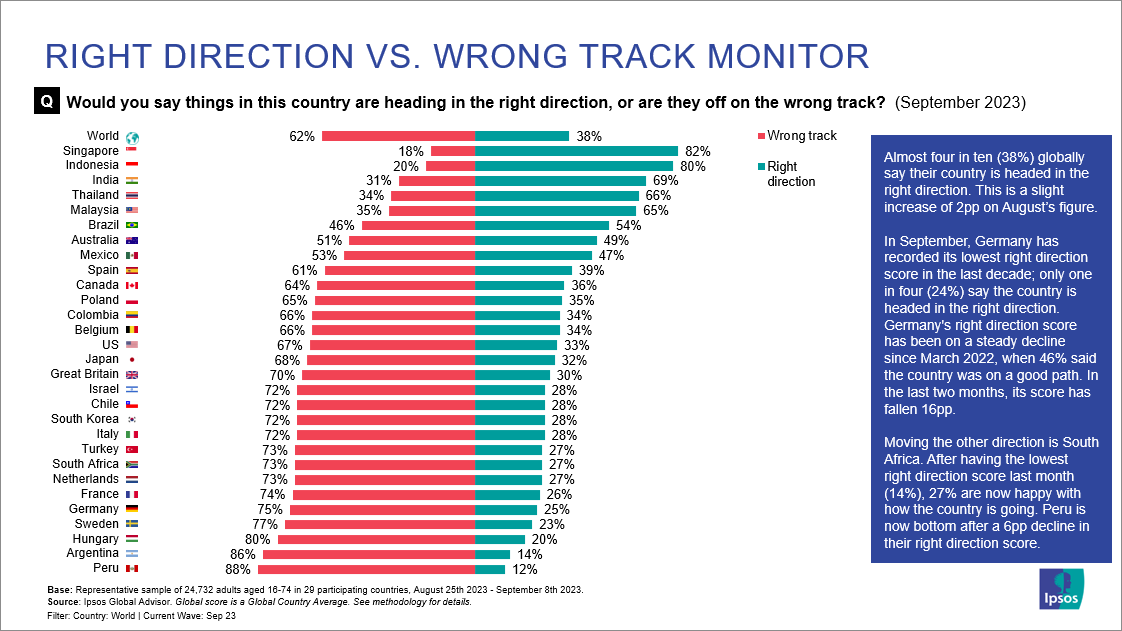
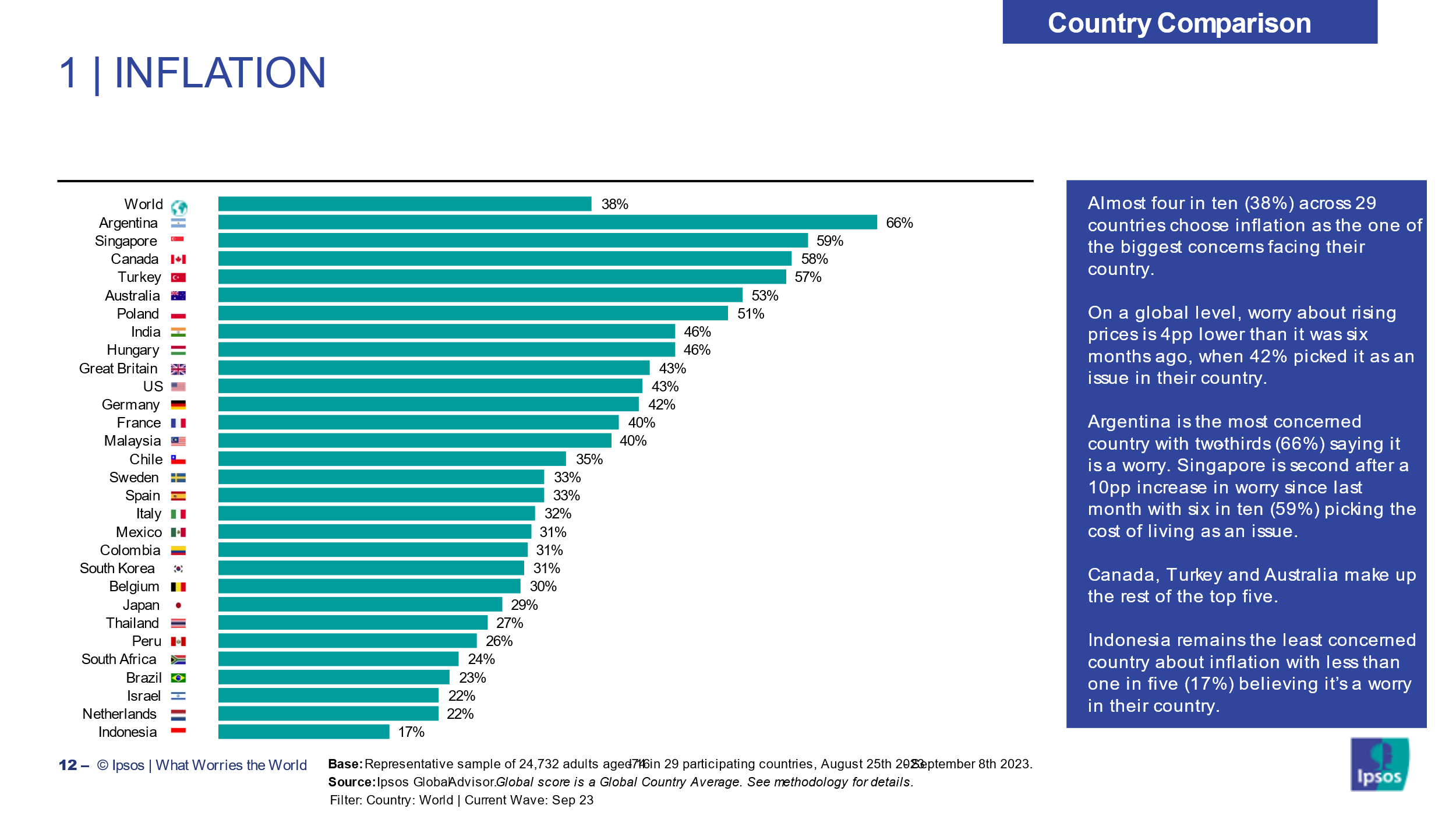
    Mumbai: The September wave of the Ipsos What Worries the World Global Survey shows global south is driving optimism with Asian markets being most optimistic. Ipsos India was placed 3rd in the pecking order, after Singapore (82 per cent) and Indonesia (80 per cent). The other optimistic Asian markets being Thailand (66 per cent) and Malaysia (65 per cent).

    Global citizens on the contrary were more pessimistic with only 38 per cent believing their country is moving in the right direction. Notably, India has moved up five points in optimism in September from the August wave and global citizens too have moved up by two per cent.

    Ipsos What Worries the World tracks public opinion on the most important social and political issues, alongside whether people think things in their country are heading in the right or wrong direction, across 29 countries and among 24,733 adults globally and shows interesting findings for India.

    What worries Indians and global citizens?

    Urban Indians’ top worries were inflation (46 per cent), unemployment (39 per cent), crime and violence (28 per cent), financial and political corruption and poverty and social inequality (18 per cent). Top concerns of global citizens were inflation (38 per cent), crime and violence (32 per cent), poverty and social inequality (31 per cent), financial and political corruption (26 per cent) and unemployment (26 per cent).  

    Inflation remains top most global worry.

    And interestingly, global and local top five worries are the same though not in the same order.    

    Ipsos India CEO Amit Adarkar said, “India continues to be a highly optimistic market with its urban citizens strongly of the view that we are headed in the right direction as a country. This is in sync with actual reality as India is the 5th largest global economy and despite the polycrisis unfolding globally and its impact on global economy, we continue to grow economically and are seen as a country attractive for pumping in more investment by global investors and we are also driven a lot by domestic consumption, being the world’s most populous nation that is also optimistic about spending. Though inflation and unemployment are the top two worries in India, urban Indians are much less worried on these as compared to global peers. Also, food inflation has started coming down and unemployment has seen a sharp downturn. These, coupled with the upcoming festival season, should hopefully bring more cheer.”  

    Methodology

    This 29-country Global Advisor survey was conducted between August 25th 2023 and September 8th 2023 via the Ipsos Online Panel system among 20,570 adults aged 18-74 in Canada, Israel, Malaysia, South Africa, Turkey and the United States, 20-74 in Indonesia and Thailand, 21-74 in Singapore, and 16-74 in all other nations.

    The “Global Country Average” reflects the average result for all the countries where the survey was conducted. It has not been adjusted to the population size of each country and is not intended to suggest a total result. The sample consists of approximately 1000+ individuals in each of Australia, Belgium, Brazil, Canada, France, Germany, Great Britain, Italy, Israel, Japan, Mexico, Spain, Sweden, and the US, and approximately 500+ individuals in each of Argentina, Chile, Colombia, Hungary, India, Indonesia, Malaysia, the Netherlands, Peru, Poland, Singapore, South Africa, South Korea, Thailand and Turkey. The samples in Argentina, Australia, Belgium, Canada, France, Germany, Great Britain, Hungary, Italy, Japan, the Netherlands, Poland, South Korea, Spain, Sweden, and the US can be taken as representative of these countries’ general adult population under the age of 75. The samples in Brazil, Chile, Colombia, India, Indonesia, Malaysia, Mexico, Peru, Singapore, South Africa, Thailand and Turkey are more urban, more educated, and/or more affluent than the general population. The survey results for these markets should be viewed as reflecting the views of the more “connected” segment of these populations.

    Weighting has been employed to balance demographics and ensure that the sample’s composition reflects that of the adult population according to the most recent census data. The precision of Ipsos online polls are calculated using a credibility interval with a poll of 1,000 accurate to +/- 3.5 percentage points and of 500 accurate to +/- 5.0 percentage points. For more information on the Ipsos use of credibility intervals, please visit the Ipsos website. Where results do not sum to 100 or the ‘difference’ appears to be +/-1 more/less than the actual, this may be due to rounding, multiple responses, or the exclusion of don’t knows or not stated responses.

  • Ipsos-Nestle joint paper bags first runner-up at 31st MRSI Annual Seminar

    Ipsos-Nestle joint paper bags first runner-up at 31st MRSI Annual Seminar

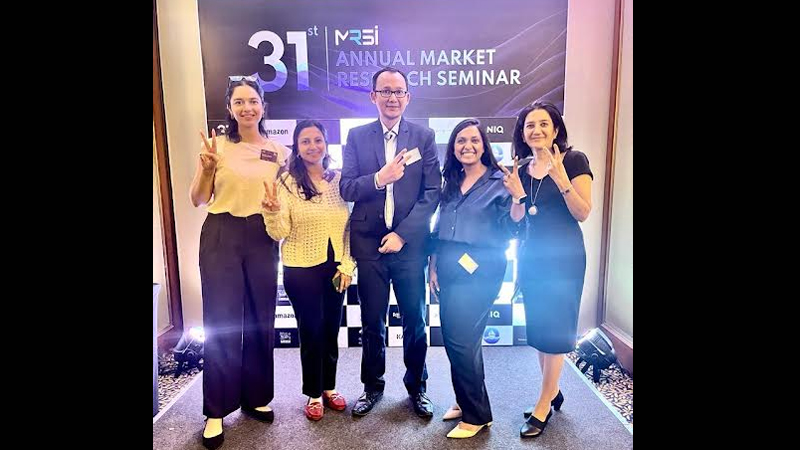
    Mumbai: The 31st Annual Market Research Seminar has announced the winners. Ipsos-Nestle joint paper titled Potential Value of Innovative Reality and Metaverse in Consumer Research, submitted under the category Maiden Voyage has bagged the first runner-up spot. It was chosen from 100 entries across clients and market research fraternity.

    The research paper elucidated on the potential of conducting consumer research in an immersive environment through virtual reality. This innovative approach allowed one to gather unfiltered and authentic responses from respondents, removing distractions and providing a unique immersive research experience. The immersive environment (Café verse) was a game changer on how we conducted research, enabling us to delve deeper into consumer insights. We conducted ‘Café verse’ research for Nestle’s Nescafe brand, specifically to test cafe themes. The results were nothing short of intriguing, providing valuable insights and informing strategic decisions.

    The authors were Shelly Jain: research director, Ipsos India; Ashwini Sirsikar, group service line leader, Ipsos Qual and Synthesio, Ipsos India; Aprajita Chauhan: research manager, Ipsos India; Abhinav Goel, lead consumer insights, Nestle India and Smriti Jain, manager consumer insights, Nestle India.

    The annual market research seminar with the theme Taming the Choppy Waters was held on 9 & 10 October 2023 at The Leela, Mumbai.

    Ipsos India had seven shortlisted research papers in penultimate round. Ipsos had sent over 20 synopses in the first round.

    Within the theme, the seminar sought submissions under the four key categories of – maiden voyage, adventure, steering and sailors,  The objective was to understand the journey in choppy waters as well as new lands that have been charted through the endeavours. And to understand the navigation tools created and the new understanding landed about the new world.

    Ipsos India CEO Amit Adarkar said, “We are very proud of our unprecedented participation and the 1st runner up win. The theme of the 1st runner up paper was futuristic and immersive and captured consumer views in the true sense. Unfiltered and experiential. This was a game changer for Nestle. Congratulations to our teams.”

  • Ipsos India ropes in Shalini Sinha

    Ipsos India ropes in Shalini Sinha

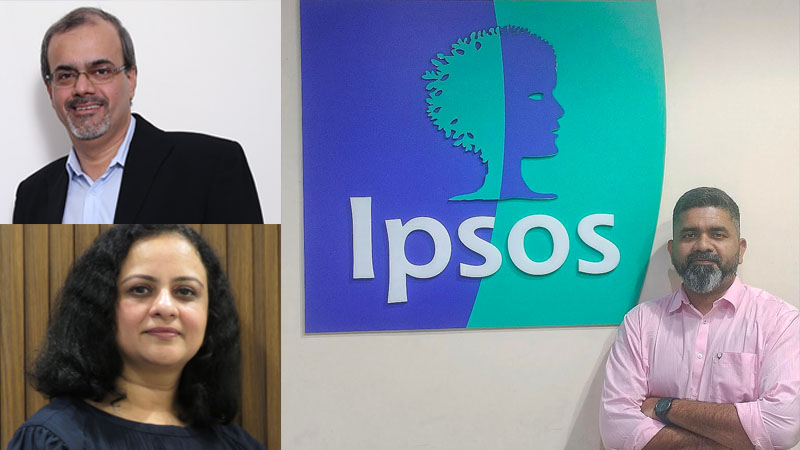
    Mumbai : Bullish and eyeing ambitious growth plans, Ipsos a leading global custom market research company has roped in Shalini Sinha to spearhead the two key verticals of Brand Health Tracking (BHT) & Creative Excellence (CRE) in India, with immediate effect.

    Sinha will be designated group service line leader, Brand Health Tracking (BHT) & Creative Excellence (CRE) and will report to Ipsos India CEO Amit Adarkar. Her remit at Ipsos India will be primarily to drive the business in the areas of brand and communications for Ipsos’ global partnership clients and the repertoire of leading home-grown companies and contribute to thought leadership. Her key focus area and priority will also be to leverage the business potential in the southern region of India. She moves from Creativeland Asia Pvt Ltd where she was CEO, Consumer Insights Division and Director, Strategy. Though based in Bengaluru, her mandate is for pan India.    

    Commenting on Sinha’s appointment, Adarkar said, “Brand Health Tracking and Creative Excellence have both undergone a major renaissance at Ipsos, with new thinking of brand success framework and its key 3 pillars of expectations, context and empathy which clients are extensively adopting to shape expectations, operating from the space of empathy and understanding the role brands play in the lives of consumers (context);it has resonated well with consumers in driving their purchase decisions. Sinha, with her domain expertise and experience will further reinforce Ipsos’s position in brand and communication in India.”  

    “We have a large portfolio of solutions within brand and communication, which include brand activation tracking, brand equity measurement, creative development, creative assessment, creative in-market, digital DIY solutions and to top it all a spanking new Brand Success Framework for clients to implement new thinking to connect with their core target groups and improve market shares and enhance consumer stickiness,” added Sinha.

    “I firmly believe that our BHT practice holds immense potential by leveraging Ipsos’ robust research methodologies and cutting-edge technologies which are geared to match the pace of consumer and brand evolution today. Furthermore, Ipsos’ CRE practice stands out for its expertise, tailor-made solutions that are designed to address the specific needs of each client, advanced methodologies and actionable recommendations, making it a trusted partner for businesses,” added Sinha.  

    With work experience spanning over two decades, Sinha has worked with leading market research companies, handling both qualitative and quantitative research work for clients across Consumer-Packaged Goods sector, with strategic client work and counsel in brands and communications, extensively, primarily for FMCG, consumer durables, automotive, alcobev, tobacco and lifestyle products.

    Sinha is an alumnus of Jaipuria Institute of Management. 

  • Ipsos India appoints Raja Bunet as COO

    Ipsos India appoints Raja Bunet as COO

    KOLKATA: Ipsos India has appointed Raja Bunet as chief operations officer, for leading contactless data collection operations, with immediate effect.

    “Covid19 hampered our fieldwork operations due to lockdowns and restrictions, considering, face-to-face data collection accounts for almost 99 per cent of our fieldwork. And with woes of the virus far from over, we’ve majorly overhauled and launched our suite of contactless data collection solutions for clients to give them an edge in speed, quality and timely insights. And Raja Bunet from our top leadership team will be spearheading our contactless data collection operations with immediate effect. He will be designated chief operations officer,” Ipsos India CEO Amit Adarkar said.

    “Ipsos India has always been at the forefront of client centricity and innovation, and I’m pleased

    to announce  that we are redrawing our strategy and infusing newer techniques in providing

    clients with a large portfolio of tech-savvy, contactless data collection techniques and aligning

    and customizing them to client requirements and exigencies. Bunet will be structuring his teams

    for execution, of online and telephonic,” Adarkar added.

    Contactless data collection techniques will supplement F2F data collection. In order to

    overhaul the Operations and to put it on the grid,  Bunet will be working jointly with Pratim

    Thakurta (face-to-face, field operations head), in drafting the blueprint for Operations.

     Bunet has about two decades’ experience in market research and has held a number of top-level positions in Ipsos India – from head of customer loyalty, to head of mobile research, etc; and his work experience has straddled sectors and categories. He is an alumnus of IILM, Delhi.   

    “In the last few months, we’ve been working on operationalizing our arsenal of contactless data

    collection methodologies and are now focusing on building best-in-class processes to achieve

    operational excellence,” Bunet commented.

  • Ipsos India appoints Sonul Verdia as customer experience vertical head

    Ipsos India appoints Sonul Verdia as customer experience vertical head

    MUMBAI: Ipsos India has announced that Sonul Verdia will lead its Customer Experience (CX) practice, with immediate effect. He takes over from Parijat Chakraborty,  who will focus on Public Affairs & Corporate Reputation businesses.

    Verdia, who already leads the Mystery Shopping practice, views his role as a great way of leveraging dual opportunities with clients: “There is a lot of synergy and linkage between Customer Experience and Mystery Shopping and clients can derive benefits of both at one point of contact and it will enable us to provide clients with a more robust and competitive strategy for enhanced customer satisfaction. I’m super charged about the new role and our enhanced offerings.”  

    Amit Adarkar, CEO Ipsos India and Operations Director, Asia Pacific, sees ample opportunity for growth in CX business, “CX is the new battleground and at the top of every CEO’s agenda, as it ties in with healthy topline and bottomlines – Ipsos delivers a complete ‘Return on Customer Experience Investment, ensuring that CX delivers on some of the key challenges faced by organizations –  how they can exceed brand promise, promote customer retention and recover those at risk, grow share of wallet, increase advocacy and drive up operational efficiency.”  

    “Ipsos is already is key player in Customer Experience both globally and locally, but we feel some sectors have not understood the utility of measuring and monitoring of customer expectations and delivering on them. Because a bad experience can make customers reject the brand for life. Our enhanced offerings come backed with technology to capture in the moment experience, helping clients address issues with speed,” added Adarkar.       

    Verdia will be leveraging opportunities with the existing base of Ipsos clients and will be tapping into new opportunities as they unfold. 

    Verdia joined Ipsos a year ago, to launch the Mystery Shopping practice for Ipsos India and has exponentially grown the business across all the major sectors.