Tag: Amit Adarkar

  • India maintains highest national index score despite April 2024 consumer sentiment drop: LSEG-Ipsos PCSI survey

    India maintains highest national index score despite April 2024 consumer sentiment drop: LSEG-Ipsos PCSI survey

    Mumbai: India continues to sit at the top of the consumer confidence index with the highest national index score of 67.0, despite a 5.0 percentage point drop in overall consumer sentiment index in April 2024, according to the LSEG Ipsos primary consumer sentiment index (PCSI).

    Among the 29 countries, India (67.0) and Indonesia (65.1) remain the only countries with a National Index score of 60 or higher.

    Ten other countries now show a National Index above the 50-point mark: Mexico (59.8), Thailand (57.6), the Netherlands (54.8), Singapore (54.6), Sweden (54.5), the U.S. (53.4), Brazil (53.3), Poland (50.3), Great Britain (50.2) and Australia (50.1).

    In contrast, just three countries show a National Index below the 40-point mark: South Korea (39.6), Türkiye (36.8), and Hungary (33.2).

    Each month, Ipsos tracks attitudes of consumers in 29 markets on the current and future state of their local economy, their personal financial situation, the employment climate, and their purchasing and investing confidence.

    Consumer sentiment lowers in April 2024 for India

    The overall or national index has experienced a drop of 5.0 percentage points in April 2024 for India. Further, consumer sentiment has fallen across the 4 sub indices (the PCSI is an aggregation of four weighted sub-Indices) – the PCSI Employment Confidence (“Jobs”) Sub- Index, is down  6.3 percentage points; the PCSI Current Personal Financial Conditions (“Current Conditions”) Sub-Index is down 6.6 percentage points; the PCSI Investment Climate (“Investment”) Sub-Index is down 6.5 percentage points; and the PCSI Economic Expectations (“Expectations”) Sub-Index has a minor drop of 1.5  percentage points.

    Summarizing on the findings of the survey, Ipsos India CEO Amit Adarkar said, “India continues to show the highest national index score of 67.0 percentage points despite the drop in consumer sentiment this month. There is  lowering of consumer sentiment overall and largely driven by lowering of sentiment for personal finances, investments, jobs and the economy. Consumers are experiencing financial crunch for not only day-to-day running of households but also for savings and investments. We see downgrading of confidence for jobs. End of the financial year for a lot of companies would mean freeze on hiring by India Inc. And it should pick up in May/ June. Further, around this time, the tax burden increases on personal incomes, tightening the tight rope for discretionary spends. Also, it is election time in India. For 2 months no course correction or sops are likely to be announced by the incumbent government.”  

    Sentiment is largely up throughout Europe. Sweden (+3.6 points), Great Britain (+3.1 points), France (2.8 points), and Spain (+2.5 points) all show significant gains this month. For Sweden, this month’s reading is the country’s highest in nearly two years.

    In contrast, sentiment is more mixed in other regions. In the Asia-Pacific region, consumer confidence is up in Thailand (+2.1 points), while India (-5.2 points) shows the largest decline of any country. In Latin America, Argentina (+3.7 points) shows the largest increase among all countries, while sentiment declined sharply in Brazil (-3.5 points).

    The Global Consumer Confidence Index is the average of all surveyed countries’ Overall or “National” indices. This month’s installment is based on a monthly survey of more than 21,000 adults under the age of 75 from 29 countries conducted on Ipsos’ Global Advisor online platform. This survey was fielded between 22 March and 4 April 2024.


  • Indians have a sense of onus on climate change but live in their own reality: Ipsos’ Earth Day survey

    Indians have a sense of onus on climate change but live in their own reality: Ipsos’ Earth Day survey

    Mumbai: Ipsos, one of the world’s leading market research companies, releases a 33-country study as part of Earth Day, looking at how attitudes to climate change are changing. Urban Indians believe govt (75 per cent), businesses (75 per cent), individuals (77 per cent) need to act now to mitigate the risk of climate change, at the same time two in three urban Indians (68 per cent) believe the negative impact of climate change is too far off to worry in the present. Further, 68 per cent urban Indians see no rationale in changing their own behaviour in tackling climate change believing it will make no difference.  

    Should developed countries be doing more?

    Two-thirds across 33 countries and 76 per cent Indians think countries like the US, GB, France, Canada and Germany should pay more to solve climate change. At the same time, France and Canada have seen an increase in people feeling they are being asked to sacrifice too much to fight climate change, with both countries now more likely to say this is the case than not.

    Attitudes to climate change and misconceptions

    People do want to help in limiting the effects of climate change. In all countries people are more likely to say if everyone made small changes in their everyday lives this could have a big impact, with at least 77 per cent in India endorsing this view. However, they lack the knowledge on how to do this. For instance, 66 per cent urban Indians believe it is the usage of products that deplete the ozone layer as the biggest contributing factor for climate change, while in actual rank the number one cause was industry, electricity and heat production; number was deforestation, agriculture and other land use changes; and number three was air pollution caused by cars, trucks, planes, trains and ships etc. Further, they overestimate the importance of recycling and underestimate the impact of acts like not having a car or going vegan.

    Incentives for personal action

    Urban Indians say the following would encourage them to take personal actions to fight climate change: Seeing the impact of climate driven weather events in other countries around the world (30 per cent), seeing the impact of climate driven weather events in my country (29 per cent), having easy access to information on the steps which I can take every day (28 per cent) and a financial incentive, or tax cut to allow me to make more environmentally friendly purchases of goods and services (27 per cent).

    Summarizing on the findings of the survey, Ipsos India CEO Amit Adarkar said, “On Earth Day, we are aware of the grim realities of climate change and how it is leading to sudden, unforeseen weather conditions and natural calamities in India. We need to build more awareness around the actions actually needed to offset the impact of climate change. Right now the immediate actions needed are not the ones on the radar of citizens. Indians also tend to underestimate the power of personal actions.”

    https://resources.ipsos.com/GM-GC-2024-04-22EarthDay_W.html

    The “33-country average” reflects the average result for all the countries and markets where the survey was conducted. It has not been adjusted to the population size of each country or market and is not intended to suggest a total result. All global numbers cited reflect this 33-country average.

  • India emerges most optimistic market in March 2024 across 29 markets polled: Ipsos Global Advisor What Worries the World

    India emerges most optimistic market in March 2024 across 29 markets polled: Ipsos Global Advisor What Worries the World

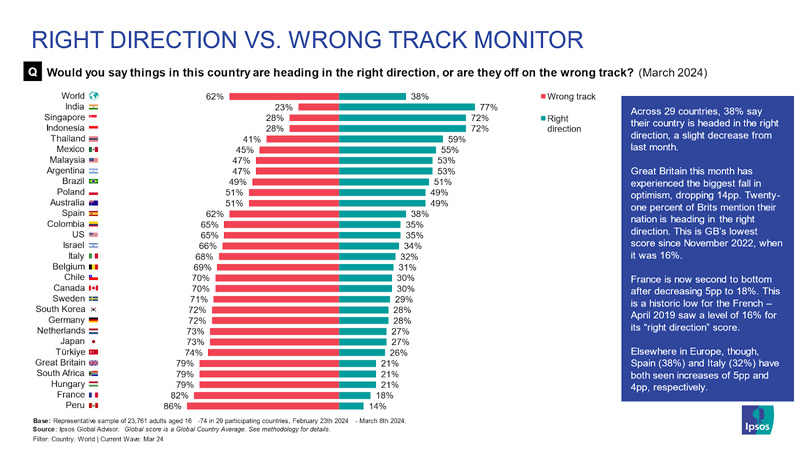
    Mumbai: India has emerged the most optimistic market in March 2024, across all the 29 markets covered in the survey with over three in four urban Indians polled (77 per cent) believing India is moving in the right direction, according to the Ipsos Global Advisor monthly survey that tracks public opinion on the most important social and political issues across 29 countries, alongside whether people think things in their country are heading in the right or wrong direction.

    The other top markets on optimism were Singapore (72 per cent) and Indonesia (72 per cent), tied at the 2nd spot, followed by Thailand (59 per cent) and Mexico (55 per cent). The markets at the bottom of the heap were Peru (14 per cent) and France (18 per cent) with lowest optimism levels about the future. Only 38 per cent global citizens were optimistic about the future.  

      Ipsos

    Worry levels diminish around key issues for Urban Indians in March 2024

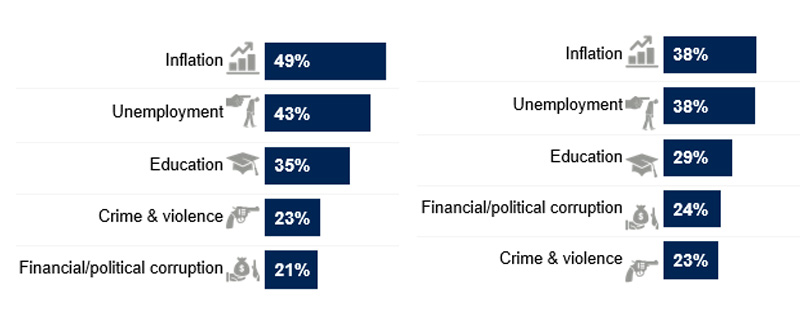
    Further, the survey reveals a significant drop in worry around the key issues of inflation (38 per cent) (minus 11 per cent), unemployment (38 per cent) (minus five per cent) and education (29 per cent) (minus six per cent) over the previous month. Though worry around financial/ political corruption (24 per cent) ( plus three per cent) has increased, but unchanged for crime and violence (23 per cent).  

    Inflation

    A graph of a graph with text Description automatically generated with medium confidenceA graph of a number of people Description automatically generated with medium confidence

    Global worries – Global citizens have got a slight reprieve in March 2024 around inflation.

    Global worries   Summarizing on the findings of the survey, Ipsos India CEO Amit Adarkar said, “India has bucked the global trend of pessimism and emerged the No.1 market in optimism across the 29 markets, where the Ipsos Advisor survey is held every month. If we look back, India has always been among the top markets in optimism, through months and years. India has not crumbled under global adversities and citizens have believed in the system, unlike many global markets that have been downbeat. What could have worked for India? Its resilience, its course correction in the face of severe hardships on citizens. Govt cut fuel prices by Rs. 2, in March, across India, which provided some relief around inflation and cost of living. Worry around unemployment has also reduced with the job market in the hiring mode in some sectors like retail, automotive, f&b, IT & technology etc. Worry around inflation and unemployment has seen a significant drop in March 2024 and likewise for education. With general elections coming up in mid-April, corruption charges are already flying thick and fast, which is a matter of concern. Also crime and violence are of deep concern to citizens.”
  • 78 per cent urban Indians perceive India to be on right track: Ipsos Global Advisor What Worries the World

    78 per cent urban Indians perceive India to be on right track: Ipsos Global Advisor What Worries the World

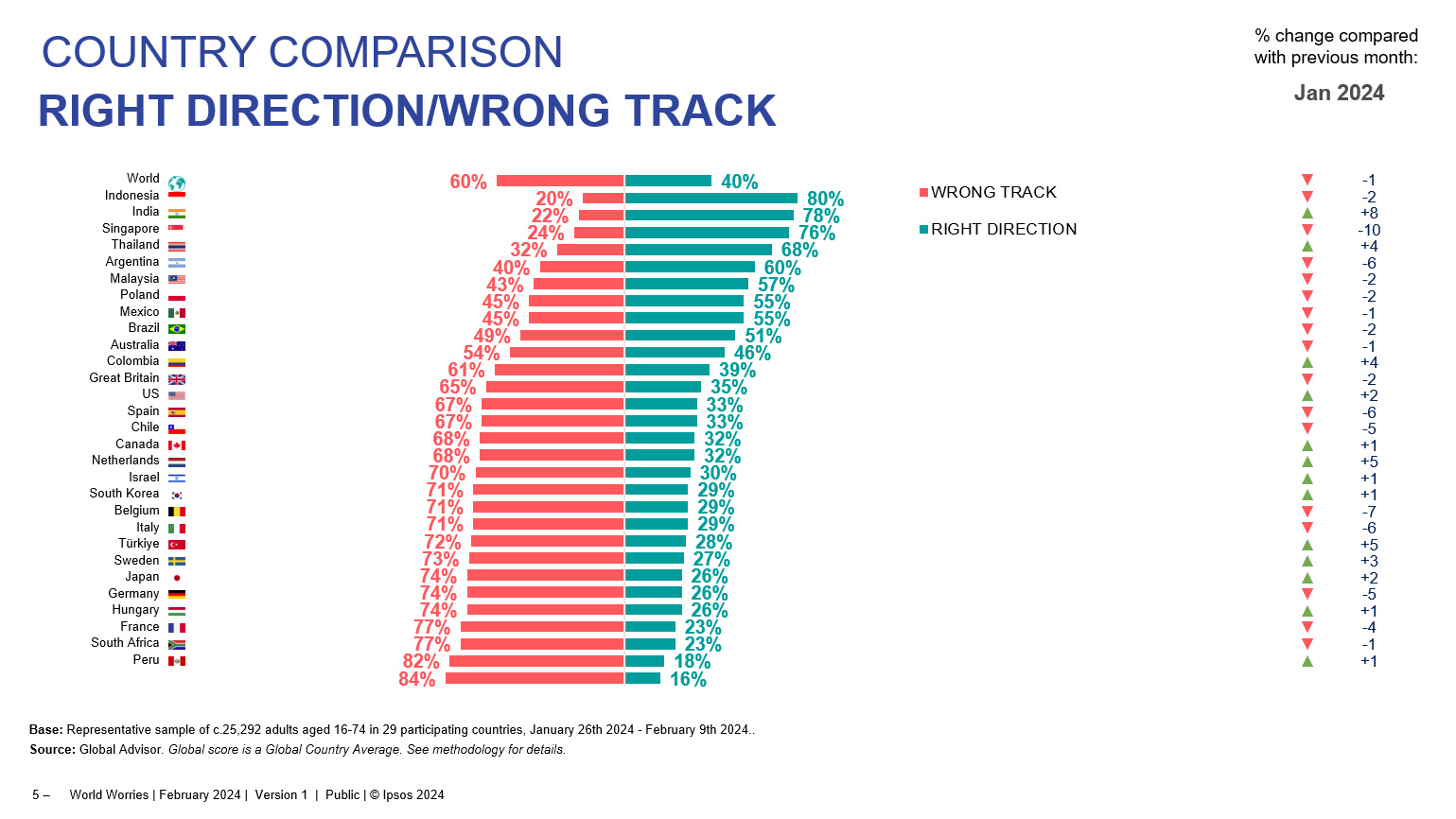
    Mumbai: The Feb 2024 wave of the Ipsos What Worries the World shows that at least 78 per cent of the urban Indians polled believe India is moving in the right direction. Interestingly, there was an eight per cent surge seen over Jan 2024. On the contrary, six in ten global citizens said their country is on wrong track.

    wrong-track

    Countries belonging to the global south were at the top of the heap. Signalling the new shift in growth and optimism. The markets being Indonesia (80 per cent), India (78 per cent), Singapore (76 per cent), Thailand (68 per cent), Argentina (60 per cent), Malaysia (57 per cent) etc. Countries most downbeat about the future and believing their country is on wrong track and at the bottom of the heap were – Peru (16 per cent), South Africa (18 per cent), France (23 per cent) and Hungary (23 per cent).

    What worries urban Indians and global citizens

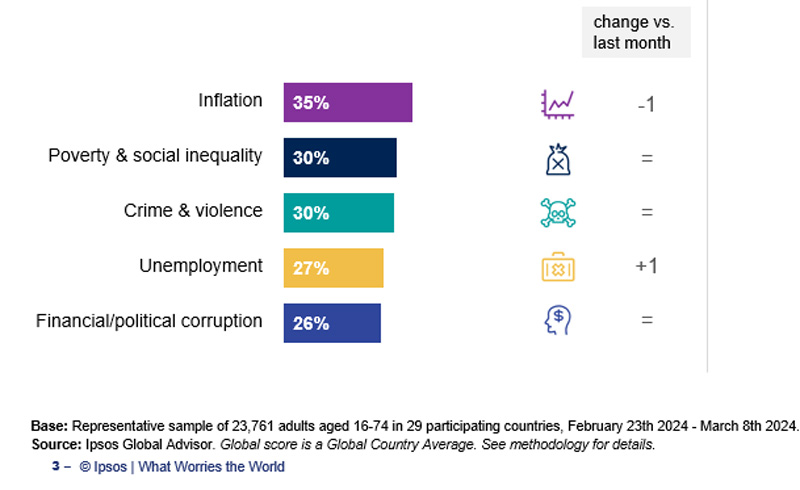
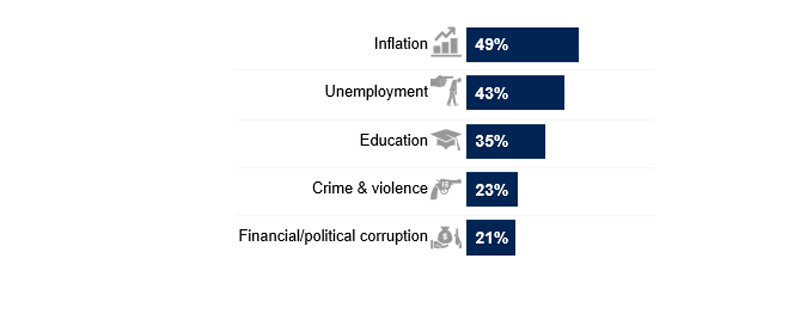
    Ipsos What Worries the World global survey also covers views on the top issues citizens believe their countries are facing. In Feb top issues enlisted by Indians included – Inflation (49 per cent), unemployment (43 per cent), education (35 per cent), crime and violence (23 per cent) and financial and political corruption (21 per cent). For global citizens their top worries included inflation (36 per cent), poverty and social inequality (30 per cent), crime and violence (30 per cent), unemployment (26 per cent) and financial and political corruption (62 per cent).

    Ipsos  

    “In Feb we witness more Indians being confident about the future and about how we are doing as a country. India has always been resilient during torrid times. Even with the 2 wars (Ukraine & Gaza) impacting global economies including India, increasing inflationary conditions and leading to massive job cuts. We have shown stability and consistency in growth. As a country we are defining our own set of priorities for trudging forward . A confident nation has a positive impact on its citizens. Indians worry about inflation, unemployment, education, crime and corruption the most. The survey highlights issues to flag it to the govt that some of these areas need attention. Though inflation continues to be the No.1 global worry as well,” stated Ipsos India CEO Amit Adarkar.

    “It’s a double whammy of issues Indians are dealing with – high cost of living and unemployment. And these issues continue to sit on the top, for 2 years in a row now. Global polycrisis has accentuated it for India as we live in an interconnected world and no country is insulated from it,” added Adarkar.

  • Consumer confidence further rises for urban Indians in Feb 2024: LSEG-Ipsos PCSI India 2024

    Consumer confidence further rises for urban Indians in Feb 2024: LSEG-Ipsos PCSI India 2024

    Mumbai: The LSEG-Ipsos monthly primary consumer sentiment index (PCSI) consumer confidence has further improved in February 2024, over January 2024, according to the LSEG-Ipsos primary consumer sentiment index (PCSI). Overall, there was a 2.9 percentage points increase in February 2024, over the previous month, as India continues to show resilience despite the stressed global macro forces, and its score was 69.4 (highest globally).

    The PCSI is driven by the aggregation of the four weighted sub-indices and the report showed a positive uptick across all the four sub-indices: the PCSI current personal financial conditions (“Current Conditions”) Sub-Index was up 4.2 percentage points; the PCSI investment climate (“Investment”) sub-index moved up 4.2  percentage points; the PCSI economic expectations (“Expectations”) sub-index was up 1.7 percentage points and the PCSI employment confidence (“Jobs”) sub-index increased 2.5 percentage points.

    How did the global markets stack up?

    Global markets provided interesting trends – some markets witnessed an uptick in the sentiment index and some markets witnessed a downward slide in consumer sentiment.

    The LSEG-Ipsos  

    The Global Consumer Confidence Index is the average of all surveyed countries’ Overall or “National” indices. This month’s installment is based on a monthly survey of more than 21,000 adults under the age of 75 from 29 countries conducted on Ipsos’ Global Advisor online platform. This survey was fielded between 26 January and 9 February 2024.

    Consumer sentiment in 29 countries

    Among the 29 countries, India (69.4) holds the highest National Index score this month. Indonesia (65.2) and Thailand (60.4) are the other countries with a National Index score of 60 or higher.

    Consumer sentiment in 29 countries
    “We continue to witness stable conditions in terms of the economy, personal finances, as consumers are less stressed about running their households and daily spends, and are also buoyant about discretionary spends, for investments, savings and buying big ticket items. Interestingly, sentiment around jobs has also improved as some companies are hiring in the new fiscal. Our survey captures the pulse of the consumer and gauges how consumer sentiment moves from month to month, as it has ramifications for marketers. In a depressed macro environment, it would be natural for consumers to cutback, and it resets consumer priorities. But in the reverse scenario (which was seen in Feb 2024), consumers are willing to splurge and  generally feel good about the economy and the job market. Also, the interim Budget had no big surprises in terms of direct and indirect taxes – govt did not burden the consumers more. Food inflation has also been under control,” said Ipsos India CEO Amit Adarkar.

  • Ipsos India bags two key awards at the MRSI-organised Golden Key Awards 2023

    Ipsos India bags two key awards at the MRSI-organised Golden Key Awards 2023

    Mumbai: Ipsos India has bagged two prestigious awards at the Market Research Society of India (MRSI) organized, the Golden Key Awards 2023 (GKA 2023). The awards won were in the categories of the Most Effective Storyteller (won jointly with Nestlé and the Best Operations Team of the Year. The awards were held on February 21st, 2024 at The Leela Ambience Hotel, Gurugram.  

    The Most Effective Storyteller award was for the acclaimed recognition of the paper produced in collaboration with Nestlé, that underscored the significance of fundamental storytelling elements in conveying meaningful insights. As the the widely accepted adage goes: Insights are delivered, stories are heard, and movies leave a lasting impact – this encapsulated the distinctive aspect of the winning paper.

    It adopted a novel approach of movie-based storytelling, to vividly illustrate the experiences of Generation Z. The team of Ipsos, Shelly Jain (research director, Ipsos UU), Maitreyi Mangrati (executive director, service line leader, Synthesio), and Ashwini Sirsikar (group service line leader, Ipsos UU and Synthesio), confabulated and conceptualized this innovative approach. And complemented by key inputs from client partner, Nestlé and Abhinav Goel (lead consumer insights, Nestlé). Ergo, the collective effort redefined the power of storytelling, delivering impactful insights.

    “Generation Z is a not only a very important target set for Nestlé but also reflects on the new employees entering the workforce. To understand them in reality, Ipsos conducted an important research, understanding the cohort in detail and more importantly bringing  them alive in a unique way that aroused the curiosity of all the stakeholders,” said Nestlé director strategy and marketing communication, South Asia region Chandan Mukherji.

    “Ipsos India is a strong advocate for using the storytelling principles for delivering insights. We realised that we needed to do something different for the insights to be impactful and memorable since there was already so much that was known about Gen Z. Short, engaging and well woven, data-led business narratives are the need of the hour and what better way to deliver insights than using the magic of cinema! We used the classical story arc to build and deliver the narrative in the form of a short movie, complete with a trailer to create excitement, expert speak and a meet with the cast on the big day,” stated Ipsos UU and Synthesio group service line leader Ashwini Sirsikar.

    In case of the 2nd win, for the Best Operations Team of the Year Award, public affairs executive director Mridula Mishra elaborated, “Pey Jal Survekshan was done in 485 major cities in India where views of citizens were captured for the water supply related services provided by the Urban Local Bodies. We reached out to 5 lac plus citizens in this process and provided meaningful insights to the client for planning the next course of action.”

    Ipsos India operations director Meghana Kelkar said, “The Ipsos Operations team was honoured with the Best Operations Team of the Year award at the MRSI Golden Key Awards, 2023. We also had the distinction of shortlisting of two finalists in the same category. We demonstrated operational excellence as we successfully conducted the world’s largest sanitation & cleanliness survey, the Swachh Bharat Survekshan Urban & Swachh Bharat Survekshan Grameen, and the Pey Jal survey, India’s first unique urban water quality survey. It’s a matter of immense pride to win one and for the other project to be a finalist in this prestigious category. Our work was on full display at the great GKA 2023 platform.”

    Apart from the research team led by Mridula Mishra and her team. The Operations team comprised of Meghana S Kelkar (operations director), Surojit Podder (associate director-field), Sonia Marwah, (associate director-field), Dilip Mishra (associate director- field) and Jaspreet Singh (senior manager-field).

    Ipsos in India CEO Amit Adarkar expressed his joy with the stellar performance by his teams. He said, “It is a matter of great pride and honour for everyone in Ipsos, that our two teams have picked up these much coveted awards. While it is our constant  endeavour to provide clients with the best in class solutions and deliver impactful work to provide them with the market leading position, awards validate our work. For us, the total of 8 finalists on the GKA 2023 is in itself a significant achievement. We keep the tempo going.”    

    Golden Key Awards

    MRSI Golden Key Awards recognize and celebrate Research and Researchers contributing to growth in their clients’ business. Research is a critical foundation for business success, albeit the work done by researchers can be a ‘behind the doors’ activity supporting the more visible brand, marketing and business strategy.

    MRSI instituted the Golden Key Awards in 2019 to recognize the contribution of insights for the growth of the business.

    MRSI Golden Key Awards 2023 continue to be a beacon of recognition and celebration, honoring the vital role of research & insights and researchers in driving business growth. In a world where research often operates behind the scenes, supporting the more visible facets of branding, marketing, and business strategy, these awards serve as a platform to shine a well-deserved spotlight on the dedicated professionals in the field.

    The 2023 edition is set to take place at The Leela Ambiance, Gurgaon on 21 February 2024.

  • India shifts to a new socio-economic classification system ISEC, women education is one of the key definers of social capital

    India shifts to a new socio-economic classification system ISEC, women education is one of the key definers of social capital

    Mumbai: India’s sole and autonomous market research industry body, Market Research Society of India (MRSI) announces the adoption and implementation of its latest Socio-economic Classification System, ‘ISEC’. The current Socio-economic Classification (SEC) being followed in India is based on ownership of consumer durables and vehicles. The growth in GDP and income, penetration of consumer durables, and ownership of vehicles has witnessed a significant increase, leading to the current socio-economic classification becoming less discriminatory and more volatile. The need to redefine the key variables led to the formation of a more stable, and more robust construct, ‘ISEC.’ Among the various industry stakeholders on track to adopt ISEC are The Indian Society of Advertisers (ISA), research users of various organisations such as ITC, Hindustan Unilever Limited, Marico, Dabur India, etc., research agencies including Kantar, IPSOS, as well as key media agencies.

    On rolling out the new socio-economic classification system, Market Research Society of India director general Mitali Chowhan said, “Socio-economic classification is the base of any targeted consumer understanding. At MRSI we recognise the need for an evolved SEC structure and ISEC is a system that is highly relevant. ISEC was developed by the industry, for the industry and unlike any previous classification system, it considers women’s education as a key definer of social capital, an attribute that is highly pertinent in current day. As an industry body, we are deeply invested in our stakeholders and the launch of ISEC is in line with our commitment to help our industry grow and evolve.”

    Socio-economic classification enables brands and agencies to understand their target audience’s behaviour and profiles and set price points. Updates to the current socio-economic classification is critical given the changing landscape of Indian households. ISEC addresses this with classification using household education and occupation profiles.

    In line with the roll-out of ISEC, MRSI organized a panel discussion that reaffirmed the importance of an evolved Socio-economic classification system to target consumers. Reinforcing ⁠their thoughts were senior industry leaders Amit Adarkar, CEO of IPSOS India, ⁠Jasmine Sachdeva, Managing Partner of Wavemaker India, ⁠Muralidhar Salvateeswaran, Chief Operations Office, Insights APAC at Kantar, ⁠Rajiv Dubey, Head of Media at Dabur India, ⁠Vivek Malhotra, Group CMO of India Today Group and Vinay Virwani, Head – Consumer Insights at Dabur India. The panel that was moderated by MRSI’s General Secretary, Shuvadip Banerjee, Chief Digital Marketing Officer of ITC Ltd. discussed the increased need for a deeper understanding of consumer behaviour, media targeting, and challenges the industry is faced with given the existing NCCS construct.

    Stressing on the need for a robust SEC system, IPSOS India CEO Amit Adarkar said, “Socio-economic classifications are the starting point of any planning or decision-making, impacting almost all industries. Following a SEC system that is relevant, evolved and representative is hence critical. NCCS was introduced at the time when digitisation was gaining momentum and women representation in household decisions was marginal. Our country has evolved greatly since then and it is essential that we follow a SEC that is equally evolved.”

    Concurring with Adarkar, Worldpanel Division managing director South Asia K Ramakrisnan Kantar said, “The challenges that companies are faced with these days are innumerable with the current SEC system adding to these challenges in terms of targeting and understanding behaviours. ISEC is a robust system that works well in both urban and rural India. It has more distinctiveness, a better distribution and it gives us the confidence that its structure will benefit brands and their decisions.”

    Unlike NCCS that only factored the education of the chief earner and the presence of certain consumer durable items in the household, MRSI’s ISEC takes on a more advanced approach by including the occupation of chief earner, education of highest educated male adult as well as education of highest educated female adult. Created by a team of seasoned experts and professionals from across the research and insights industry using National Council of Applied Economic Research (NCAER), the Worldpanel division, Kantar, Indian Readership Survey (IRS), and referencing data from VTION,  ICUBETM, among others.

    Speaking on the new SEC, Sunil Kataria, chief executive Officer – Raymond Lifestyle – India & International, and chairman of The Indian Society of Advertisers said, “The development and progress of our economy is at a rapid pace. At such a pace it is even more important for us as advertisers and spenders to understand our consumers and their behaviour. ISEC is representative, relevant and robust. It gives us a holistic view of our audience segment and how they are equipped to make decisions. We welcome this new socio-economic classification and will continue to work with MRSI to further strengthen this system as and when required.”

    ISEC makes way for improved distribution and sharper and refined targeting. It is considerably more stable than NCCS, hence omitting the need for frequent updates.  ISEC’s discriminating quality is visible with each of the class/tier behaving differently, thus being more relevant as the economy develops with improvements in standards of living, increased asset ownership, infrastructure development and government interventions. Moreover, social capital in India can be defined by the education of the female and this parameter helped improve ‘discrimination’.

    Speaking on the implementation, IPG Mediabrands India CEO Shashi Sinha, further added, “A better and deeper understanding of consumer cohorts is always appreciated. It equips brands the opportunity to identify and target consumers in a sharper manner and opens up avenues for sharper communications. ISEC is highly discriminatory which is also crucial in current times. The implementation was long due and we are certain that this will help the industry considerably going forward.”

    “Following a socio-economic classification system that is representative of the population ensures that the industry is marching forward with efficiency. It ensures that the money spent is being spent correctly and more effectively. ISEC gives us that confidence and we are certain that this is a step forward in the direction of economic growth and development.” added India Today group CMO Vivek Malhotra.

    Representative of India’s social-economic strata, ISEC works equally well for urban and rural, is straightforward and quick and is not intrusive to administer.  A classification system spanning 1 to 12 tiers, ISEC is an open-source system and is available for all industry stakeholders

    SEC systems are used by all research companies, advertisers, and measurement bodies to target households. 

  • Ipsos India hires Shrutika More to lead creative excellence vertical

    Ipsos India hires Shrutika More to lead creative excellence vertical

    Mumbai: Global market research company Ipsos has announced the hiring of Shrutika More as country service line leader for the creative excellence vertical, in India, with immediate effect.

    She moves from Abbott Healthcare, a leading pharma company and will report to Ipsos India group service line leader, brand health tracking (BHT) and creative excellence (CRE) Shalini Sinha.

    With 12 years of rich and diverse work experience, both with leading market research agencies and corporates, her expertise areas include creative, concept and product research and benchmarking studies. And is adept at handling qualitative and quantitative research work across categories for complex and strategic work.  

    Commenting on her new role, Ipsos India country service line, creative excellence Shrutika More stated, “Advertising in India has undergone massive shifts in recent past. In this new age, it becomes essential to adopt newer perspectives to evaluate and enhance the effectiveness of creative strategies. The future of advertising in India necessitates a broadened perspective for the evolving media consumption patterns of its diverse audience.”

    “More’s remit will be on driving the next leg of growth for the Creative Excellence vertical in India; and to achieve this, she will be working closely with the account facing teams across different verticals and offices in Ipsos India; with emphasis on building thought leadership for CRE and consolidating our presence in the domain,”  said Ipsos India group service line leader, BHT & CRE Shalini Sinha.

    “Creative Excellence encapsulates the entire creative development process, from ideation to assessment, storyboard, monitoring the impact of campaigns and communications, and More’s extensive experience will be an asset to our prestigious roster of clients,”  Sinha added.

    “Creativity requires excellence and it all starts with a spark. Shrutika More is joining us at a time when we have a whole new arsenal of digital and AI products for clients, to address their constant need for spiffier and more agile tools for faster decision making,” said Ipsos India CEO Amit Adarkar.

    More holds a post grad management degree (PGDM) from Indian Education Society’s Management College, Mumbai. Further, she has bachelor’s degree in microbiology & industrial biotechnology, and a diploma in food production & processing, both from Bharatiya Vidya Bhavan’s College, Mumbai.

  • Consumer sentiment improves for urban Indians in December 2023: Refinitiv-Ipsos PCSI monthly India report

    Consumer sentiment improves for urban Indians in December 2023: Refinitiv-Ipsos PCSI monthly India report

    Mumbai: Consumer sentiment shows recovery and uptick of 1.2 per cent points for urban Indians in December 2023, according to the Refinitiv-Ipsos Primary Consumer Sentiment Index (PCSI).

    The monthly PCSI result, which is driven by the aggregation of four weighted sub-Indices, displays a mixed response across the four sub-indices. The PCSI Current Personal Financial Conditions (“Current Conditions”) Sub-Index is up 3.2 per cent points; the PCSI Investment Climate (“Investment”) Sub-Index improves and is up 3.0 per cent points. On the contrary, PCSI Economic Expectations (“Expectations”) Sub-Index is down 0.1 percentage points and the PCSI Employment Confidence (“Jobs”) Sub- Index has dipped 1.9 percentage points.

    Ipsos India CEO Amit Adarkar said, “We see a slight recovery and upturn in consumer sentiment in December, after November’s downturn. The RBI has left the Repo Rate unchanged in its recent Monetary Policy, which means no hike in interest rates on home loans, vehicle loans, borrowings etc., which should have brought some cheer to consumers. Improvement in sentiment is seen more around the 2 sub-indices of current financial conditions and investments, which shows consumers do not need to observe frugality in their spending and savings. Sentiment around jobs and the economy continues to be pessimistic as the two wars in Israel and Ukraine and a significant slowdown in the global economy continue to impact most global markets, especially now that we are seeing job cuts by major global companies.”

    Consumer Sentiment in 29 Countries

    Among the 29 countries, India (64.3) holds the highest National Index score this month. Indonesia (63.9) and Mexico (60.0) are the only other countries with a National Index score of 60 or higher.

    Six other countries show a National Index above the 50-point mark: Thailand (58.1), Singapore (57.5), Brazil (56.5), the Netherlands (52.2), Poland (51.5), and the U.S. (51.1). For Poland, this month’s score is the country’s highest since November 2019.  

    In contrast, five countries now show a National Index below the 40-point mark: Chile (39.9), South Korea (39.1), Japan (37.5), Hungary (36.6), and Türkiye (35.5).

    https://lh7-us.googleusercontent.com/5xO87cdvNbhHl9HDHtm4WFTDVB7B6v_Xy2UT_51B8636SIBhhu2wUu4B2j0cgI7pC2bBJq-d1jDinzJjVsxZkRRNNPEQn8jii-aJj0ab2Tr2cmIJryEnhr6YWu3wmjx9l7iApwhGcLY561HR1u-gRg

    These findings are based on data from a monthly 29-country survey conducted by Ipsos on its Global Advisor online survey platform and, in India, on its IndiaBus platform. They are first reported each month by LSEG as the Primary Consumer Sentiment Index (PCSI).

    The results are based on interviews with over 21,200 adults aged 18+ in India, 18-74 in Canada, Israel, Malaysia, South Africa, Türkiye, and the United States, 20-74 in Thailand, 21-74 in Indonesia and Singapore, and 16-74 in all other countries.

    The monthly sample consists of 1,000+ individuals each in Australia, Brazil, Canada, France, Germany, Great Britain, Italy, Japan, Spain, and the U.S., and 500+ individuals in each of Argentina, Belgium, Chile, Colombia, Hungary, Indonesia, Israel, Malaysia, Mexico, the Netherlands, Peru, Poland, Singapore, South Africa, South Korea, Sweden, Thailand, and Türkiye. The sample in India consists of approximately 2,200 individuals of whom 1,800 were interviewed face-to-face and 400 were interviewed online.

    Samples in Argentina, Australia, Belgium, Canada, France, Germany, Great Britain, Hungary, Italy, Japan, the Netherlands, Poland, South Korea, Spain, Sweden, and the U.S. can be considered representative of their general adult populations under the age of 75. Samples in Brazil, Chile, Colombia, Indonesia, Israel, Malaysia, Mexico, Peru, Singapore, South Africa, Thailand, and Türkiye are more urban, more educated, and/or more affluent than the general population. The survey results for these countries should be viewed as reflecting the views of the more “connected” segment of their populations. India’s sample represents a large subset of its urban population — social economic classes A/B/C in metros and tier 1-3 town classes across all four zones.  

    The data is weighted so that the composition of the sample in each country best reflects the demographic profile of the adult population according to the most recent census data. The global indices and averages reported here reflect the average result for all the countries and markets in which the survey was conducted. They have not been adjusted to the population size of each country or market and are not intended to suggest “total” results.

    Sample surveys and polls may be subject to other sources of error, including, but not limited to coverage error and measurement error. The precision of Ipsos online surveys is calculated using a Bayesian credibility interval with a survey of N=1,000 being accurate to +/- 3.5 per cent points and a survey of N=500 being accurate to +/- 5.0 percentage points. For more information on credibility intervals, visit this page.

    The LSEG/ Ipsos Primary Consumer Sentiment Index (PCSI), ongoing since 2010, is a monthly survey of consumer attitudes on the current and future state of their local economy, personal financial situation, savings, and confidence to make major investments. The PCSI metrics reported each month for each of the countries surveyed consist of a “Primary Index” based on all 10 questions below and of several “sub-indices” each based on a subset of these 10 questions.

    The concerned publication of these findings abides by local rules and regulations. 

  • For Circa 2024, 87 per cent expecting better year: Ipsos Global Predictions 2024

    For Circa 2024, 87 per cent expecting better year: Ipsos Global Predictions 2024

    Mumbai: Ipsos Global Predictions for 2024 shows a positive outlook emerging for the year 2024 with 87 per cent urban Indians and 70 per cent global citizens predicting it to be a better year.

    And 8 in 10 urban Indians (84 per cent) say they are willing to make personal resolutions and specific changes for themselves in 2024. And 85 per cent Indians are also hopeful of the global economy doing better in 2024.    

    2023 was a bad year

    The local and global verdict on the year 2023 shows a great deal of disappointment, with 65 per cent of urban Indians pronouncing it a bad year for India and 64 per cent calling it a bad year for them and their family. 70 per cent global citizens felt it was a bad year for their country and 1 in 2 global citizens (53 per cent) felt it was a bad year for them and their family.

    The markets unhappy with 2023 were Argentina (88 per cent), Sweden (84 per cent), Turkey (84 per cent), Great Britain (per cent), Portugal (82 per cent), South Korea (82 per cent) and Hungary (82 per cent).

    The survey captured views of citizens on a host of issues, with their predictions for 2024.  

    Economy

    Most urban Indians expect cost of living to go up, with 71 per cent believing prices in the country will increase faster than people’s incomes.79 per cent global citizens echo similar views

    7 in 10 urban Indians (70 per cent) further believe inflation will be higher in 2024 as compared to 2023. 68 per cent urban Indians expect interest rates to be higher in 2024 as compared to 2023. 66 per cent expect unemployment to be greater in 2024 versus 2023.

    Technology

    Impact of technology in 2024 is likely to be a mixed bag. 61 per cent urban Indians expect artificial intelligence leading to loss of many new jobs in the country. 56 per cent Indians fear their personal data being leaked on the internet in 2024. 67 per cent urban Indians expect doctors in India to use artificial intelligence regularly, to decide on treatments for their patients. Interestingly, 61 per cent urban Indians believe in 2024, robots will look, think and speak like humans. The biggest upside, 65 per cent urban Indians polled believe artificial intelligence will lead to many new jobs being created in the country. And 57 per cent urban Indians plan to use social media less in 2024.

    Environment

    Climate change has been wreaking havoc around the globe.

    In 2024, 65 per cent urban Indians expect more extreme weather events in the country than seen in 2023. 60 per cent Indians also fear a natural disaster hitting a major city. And 70 per cent urban Indians expect the average global temperature to increase.

    At the same time 67 per cent urban Indians polled expect the govt to introduce more demanding targets for reducing carbon emissions quickly in 2024. While 63 per cent urban Indians expect more restrictions to be introduced to reduce the amount people drive in their cars in the country.    

    Society

    Predictions for 2024 are optimistic. 71 per cent urban Indians expect women to be paid the same as men for the same work. 71 per cent expect India to win more medals in the 2024 Summer Olympics than the last one. 66 per cent Indians believe people in the country will become more tolerant of each other.

    69 per cent urban Indians predict office workers spending more time in the office than at home, in 2024. 86 per cent Indonesians held this view, 78 per cent Malaysians and 76 per cent Chinese.

    63 per cent Indians expect the level of immigration into the country to increase in 2024. Markets predicting the most influx included Portugal (87 per cent), Turkey (82 per cent), Singapore (82 per cent) and Italy (79 per cent).

    And 1 in 2 Indians (53 per cent) expect the total size of the population of the country to fall in 2024. For a country that has become the world’s most populous nation.

    Ipsos India CEO Amit Adarkar said, “Majority of our citizens have a positive outlook for 2024, predicting it to be a better year for them. Though they are bracing themselves up for a tougher year in terms of inflation, rising prices, higher interest rates and higher unemployment. Year 2023 was a bad year is the majority verdict. The year saw many upheavals due to inflation, rise in prices of essential commodities, yo-yo of fuel prices, drought and floods and violence in certain parts of the country. The predictions for 2024 hinge a lot on optimism, of office workers going more often physically to work, govt taking stringent measures to reduce the carbon footprint, pay parity of women with men doing the same work, citizens becoming more tolerant of one another and India bagging more medals in its kitty in the summer Olympics. AI is expected to stave off some jobs and create new ones, so this will put a lot of emphasis on reskilling. Cautious optimism is the approach for 2024, as there is also fear of a new more severe pandemic and natural disasters.”      

    About the study

    These are the results of a 34-country survey conducted by Ipsos on its Global Advisor online platform and, in India, on its IndiaBus platform between Friday 20 October to Friday 3 November, 2023.

    For this survey, Ipsos interviewed a total of 25,292 adults aged 18 years and older in India, 18-74 in Canada, Malaysia, New Zealand, South Africa, Turkey, and the United States, 20-74 in Thailand, 21-74 in Indonesia and Singapore, and 16-74 in all other countries.

    Africa, Turkey, and the United States, 20-74 in Thailand, 21-74 in Indonesia and Singapore, and 16-74 in all other countries.

    Read the full report here:

    https://www.ipsos.com/en-in/optimism-rife-among-urban-indians-circa-2024-87-expecting-it-be-better-year-ipsos-global-advisor