Tag: Ambika Soni

  • Foreign firms find Indian film market attractive: Pratibha Patil

    Foreign firms find Indian film market attractive: Pratibha Patil

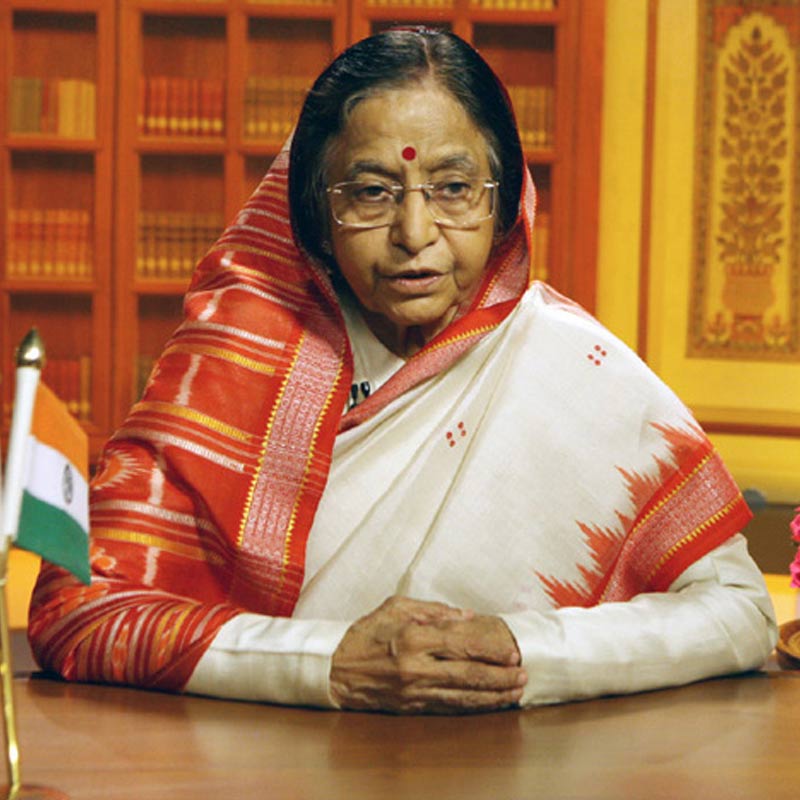
    NEW DELHI: Foreign film production houses are finding the Indian film market attractive, according to President Pratibha Devisingh Patil.

    Indian movie companies are also going global, finding new markets and deepening their existing presence.

    Speaking after giving away the 58th National Film Awards for 2010, Patil said that the medium of cinema imposes a great responsibility on everyone associated with the film industry to use the power of cinema to do good for society, through the portrayal of attitudes that help in building a tolerant and harmonious society.

    She stated creativity knew no barrier of age and the human spirit had always been striving for excellence. The awards received by five young artistes and the award for best writing in cinema going to the 90-year old Vijay Mulay was an encouraging fact and would surely inspire and motivate young film makers to give their greatest possible expression through this powerful medium.

    Speaking on the occasion, Information and Broadcasting Minister Ambika Soni said the Government had moved forward in setting up the National Film Heritage Mission with an outlay of Rs 6.6 billion. This Mission would provide a platform for comprehensive solutions for cataloguing, dissemination and monetisation of film content, video tapes, posters and other related materials in the possession of either the film wings of the Ministry or with various State Governments as well as with private individuals and institutions. The greatest benefit of the mission would be to enable the preservation of invaluable filmic heritage of the country which was an integral part of the socio-cultural heritage of the nation, she said.

    She said the year 2013 would mark the centenary year of Indian Cinema as the country’s first indigenous feature film ‘Raja Harishchandra’ by DG Phalke was produced in 1913. This centenary would be a milestone in India’s cinematic journey and needed to be showcased and celebrated. The Minister added that the Centenary celebrations would provide the country with an excellent opportunity to exhibit India’s ‘soft power‘ on a global scale and reinforce the idea of “Cinemas of India” along with the “Incredible India” campaign. As part of the Centenary celebrations, the National Museum of Indian Cinema, a first of its kind in India now being built in Mumbai, would showcase the evolution of Indian Cinema.

    Regarding skill development in the film sector, the Minister said the two Institutes under the Ministry – the Film and Television Institute of India (FTII), Pune, and the Satyajit Ray Film and Television Institute (SRFTI), Kolkata – were being upgraded to cater to the ever-increasing, highly skilled and specialised manpower requirement of the film and TV industry. Measures were being taken to declare these two Institutes as Institutions of National Importance through an Act of the Parliament.

    The Minister added that the winners of the awards in various categories had reinforced the belief in the motto of the National Film Awards for good cinema. This provided a platform for film centres to emerge all over the country thereby reflecting the vibrant socio cultural identity of our country in the realm of cinema.

    Veteran filmmaker K Balachander received a standing ovation as he went up to receive the Dadasaheb Phalke award, the nation’s highest honour for cinema. The award is conferred by the Government of India for outstanding contribution to the growth and development of Indian Cinema. The award consists of a Swarn Kamal, a cash prize of Rs 1 million, and a shawl. The award is given on the recommendations of a committee of eminent persons.

    A special highlight of the programme was the musical renditions of their award-winning songs by Suresh Wadekar from Mee Sindhutai Sapkal, and Rekha Bhardwaj from Ishqiya.

    Another highlight was that four children have won the best child actor awards. They include Harsh Mayer for the film I am Kalam, Shantanu Ranganekar and Machindra Gadekar for the film Champions, and Vivek Chabukswar for Baboo Band Baaja.

    The President particularly paid a special tribute to Vijay Mulay, who – when complemented by the President on receiving an award at this age – remarked: “But I am only ninety”.


  • NBA denies violation of rules as ICC threatens to sue

    NBA denies violation of rules as ICC threatens to sue

    NEW DELHI: Though relieved at being allowed World Cup coverage of the final contest between India and Sri Lanka, the News Broadcasters Association (NBA) reiterated that its members had scrupulously adhered to the NBA News Access Guidelines and the dispensation available to them under Indian laws which clearly must prevail over ICC’s unilateral actions.

    Rejecting the ICC position that its Members had violated any Guidelines, NBA said its members had acted in consonance with the invariable practices followed in the past (including for ICC events), in the face of ICC’s attempt to deviate from standard accepted business practices prevalent in India.   
         
      Noting that the ICC had seen reason and understood the true nature of the India – Sri Lanka final match and restored accreditation to its Member Channels, NBA said this was “in large measure due to the constructive intervention of the Ministry of Information and Broadcasting, including the personal interest shown by Minister Ambika Soni, who has truly appreciated the sensitivities and rights of the Indian viewers”.

    NBA said its members are responsible broadcasters and are conscious of the rights and obligations of the parties, including those of the ICC, broadcasters and the Indian public.

    By restoring accreditation, ICC has also recognised that it must subject itself to the prevalent laws governing ‘fair use’ in the host country.

    The members will continue to strive to bring to their large number of viewers a most enjoyable coverage of the event which has always been the principle driving force of the news broadcasters, NBA said.


  • World Cup news imbroglio continues as meeting ends in stalemate

    World Cup news imbroglio continues as meeting ends in stalemate

    NEW DELHI: With International Cricket Council (ICC) and television news channels refusing to budge on their stance over the use of World Cup footage, the impasse seems to continue.

    It is learnt that the meeting held today at the Information and Broadcasting Ministry failed to come up with any fruitful outcome and that here is dispute on the display of scoreboards by the news channels. It is also learnt that another meeting will be held tomorrow to resolve this imbroglio.
            
      Earlier, after the ICC had withdrawn accreditation to all news channels, I&B Minister Ambika Soni had personally written to ICC president Sharad Pawar to permit the coverage of the India-Pakistan semi-final in Mohali as both the Indian and Pakistani Prime Ministers were going to be present. She had also called for a meeting for today to resolve the tangle.

    Although neither Soni nor Pawar were present, it is learnt that a three-hour meeting held in the presence of senior Ministry officials failed to resolve the tangle, with ICC alleging the news channels of violating the guidelines set up in the earlier agreement with them.

    The final between India and Sri Lanka gains importance as both President Pratibha Devisingh Patil and Sri Lankan President Mahindra Rajapaksa are expected to be present.


  • World Cup news blockade ends as ICC agrees to Govt plea for truce

    World Cup news blockade ends as ICC agrees to Govt plea for truce

     NEW DELHI: The International Cricket Council late this evening agreed to allow various Indian television channels to attend and report the India-Pakistan Cricket World Cup semi-final in Mohali tomorrow, following a request from Information and Broadcasting Minister Ambika Soni.

    Soni, who had written to ICC President Sharad Pawar, had also pointed out that the Prime Ministers of both India and Pakistan would be present at the match.

    Soni had proposed a 24-hour ‘truce‘ in a dispute created by Indian non-rights holders breaching the terms and conditions they had agreed to follow when they were awarded accreditation for the ICC Cricket World Cup 2011 in Bangladesh, India and Sri Lanka.

    In a statement, ICC Chief Executive Haroon Lorgat said: “Soni agreed to convene a meeting at the Ministry on 31 March to address the dispute which has been caused by repeated and serious breaches of the terms and conditions which these organizations had signed up to”.

    He added however that “to ensure that there is no misunderstanding, it is important for me to outline the facts. Firstly, the News Access Guidelines for Broadcasting the ICC Cricket World Cup were issued in January 2011 and all news broadcasters were reminded of these Guidelines in a letter from the ICC on 27 January. No objections to the guidelines were received and accreditations were issued to the non-rights holders’ reporters and cameramen on condition that these guidelines were followed. Sadly there have been many breaches and despite requests for such activity to cease the NRH stations continued to break the rules.
            
      “It was only as a last resort that the ICC withdrew the accreditation of these companies when they refused to sign an undertaking that they would desist from breaching the guidelines. It was not something done without very good reason.

    “It is also important to understand that the removal of the accreditation does not prevent these channels from reporting the ICC Cricket World Cup. It only prevents them from entering the stadium. Footage is provided to them from several agencies, including SNTV and Reuters, the ICC‘s official news providers.

    “I am grateful for the minister‘s intervention in calling a meeting but I must repeat that we are committed to protecting the rights and investments of our broadcast partners as well as the exclusivity of our commercial partners. We will not allow that to be compromised and if the relevant members of the News Broadcasters‘ Association are not willing to give the necessary undertakings we require, we will have no other option but to withdraw accreditation for the final in Mumbai.”

    Earlier today, the NBA in a meeting decided to desist from accessing ongoing cricket World Cup venues including Mohali and covering press conferences and practice sessions in the wake of ICC barring them from these events. In a statement, the NBA said they have taken the stand in the view of the “unreasonable” stand taken by the ICC at a crucial juncture of the World Cup matches.

  • Soni urges DAVP to give more ads to electronic media

    Soni urges DAVP to give more ads to electronic media

    NEW DELHI: Information and Broadcasting Minister Ambika Soni urged the Directorate of Advertising and Visual Publicity (DAVP) to give greater share of advertisements to the electronic media, small and medium newspapers, and the Urdu press.

    Soni said she often received complaints that the print media was getting a larger share as compared to the electronic media. Similarly, she said the Urdu press had particularly shown phenomenal growth and needed to be helped.
     
    Addressing a function where she released the official calendar for 2011 of the Government of India brought out by the DAVP, she noted that the calendar was on the theme of “India’s Endangered Species.” She said the purpose of bringing out the calendar was to sensitise people on the impact of environment and climate change on matters concerning the endangered species within the country. Each month would focus on a single endangered species.

    In order to sensitise the people of the country on the subject, she said the calendar was being sent to all Panchayats in the country, all Eco-Clubs in schools across the country funded by the Ministry of Environment and Forests, and Schools under “Sarva Shiksha Abhiyan” and “Rashtriya Madhyamik Shiksha Abhiyan” funded by the Human Resource Development Ministry. Approximately 200,000 schools would be covered. A total of 1.2 million calendars were being printed for distribution.
     
    The endangered species covered each month separately include: the Tiger, the Asiatic lion, the Vulture, the Indian Elephant, the Indian One Horned Rhino, the Swamp Deer or Barahsingha, the Black Necked Crane, the Western Tragopan or the Western Horned Tragopan, the Snow Leopard, the Oliver Ridley Turtle, the Golden Langoor and the Red Panda. There is also a paragraph about each of these creatures. The photographs have been contributed by the eminent wildlife filmmaker Mike Pandey, who is a three-time winner of the Green Oscar – the world’s highest award for environmental films.

    The Minister mentioned that the Wall Calendar brought out by the Ministry for the year 2010 was based on the theme “Empowerment of Women through Flagship and other programmes of the Government”. Each month dealt with one flagship programme of the government and depicted the role of women in it. The Wall Calendar for 2010 was distributed to all Panchayats in the country in bi-lingual and regional languages format.
     
    DAVP Director General Frank Noronha outlined the initiatives taken by DAVP in the past one year. He specifically mentioned the key initiatives in the AV Sector, IT & digital initiatives and the steps taken for streamlining the empanelment procedure of newspapers and magazines including implementing the recommendations of the Rate Structure Committee. He touched upon the initiatives being currently studied including mobile telephony and SMS.
     

  • Press Council wants larger ambit to deal with paid news

    Press Council wants larger ambit to deal with paid news

    NEW DELHI: The Press Council of India has demanded that it should be reconstituted with members from the electronic and other media if it has to check the paid news syndrome.

    In its report dated 30 July, the PCI also wanted the Press Council of India Act 1978 to be amended to give it more powers to make its recommendations binding, and for empowering it to adjudicate the complaints of paid news and give final judgment in the matter.

    Parliament was informed by Information and Broadcasting Minister Ambika Soni that the Representation of the People’s Act 1951 should be amended to make incidence of paid news a punishable electoral malpractice.

    It has recommended that the Election Commission should set up a special cell for action against complaints about paid news.

    While recommending self-regulation by the media to check the menace, the PCI said the guidelines drawn up by it earlier on coverage of elections should be adhered to by the media organisations.

    Voters should be educated to enable them to differentiate between paid news items from genuine news, and there should be awareness generation amongst the stakeholders.

    At the outset, the Council has defined paid news as “any news or analysis appearing in any media (print and electronic) for a price in cash or kind as consideration.”

  • HITS a gain but government mum on FDI hike in 2009

    HITS a gain but government mum on FDI hike in 2009

    With India having touched the monumental figure of 512 in terms of television channels including 249 news channels, the Information and Broadcasting Ministry pushed the panic button towards the end of 2009, asking the Telecom Regulatory Authority of India (Trai) to study how many channels can be permitted in the country.

    As a follow-up, the Government has with immediate effect suspended receipt of new applications for permission to uplink television channels from India and downlink channels to India until the regulator submits its report on spectrum availability.

    In an order of 18 January, the Ministry said “it has been observed that although improved technologies have resulted in better utilization of the available spectrum and transponder capacities, the spectrum and transponder capacities for satellite TV channels are not unlimited. A need is felt to revisit the present policy for uplinking and downlinking with respect to the approach towards grant of permission including the eligibility criteria and the terms and conditions of the permission.”

    Early in October 2009, I&B Minister Ambika Soni had written to Trai Chairman J S Sarma to examine issues relating to expansion of private television channels in the country. The Minister asked the Authority to examine ways of checking the financial viability of parties that apply for setting up news channels in the country.

    However, Soni on 7 December denied in Parliament that the directive to Trai to examine the status of television channels in the country implied any plans to curb the growth of the sector. She said the study to examine the maximum number of channels that could be telecast was being carried out in view of spectrum constraints.

    “The government is surely not going to shut the door on the growth of TV channels in India. But there is a logistic problem and the government has to sort it out. Some of our growth plans may be temporarily upset,” says the head of a broadcasting company on request of anonymity.

    Meanwhile, the I&B Ministry is also keen that the Broadcast Services Regulation Bill that is pending finalization for about three years should sail through and provide for an independent regulator and a Content Code.

    A senior Ministry official told indiantelevision.com that a task force had been set up under the chairmanship of the Secretary in the Ministry, Mr Raghu Menon, and had already held a few internal meetings, The task force – which comprises representatives from the Indian Broadcasting Foundation, the Broadcast Editors Association, and the News Broadcasters Association among others – would now meet stakeholders including consumers, representatives of the print media, civil societies, and editors “to understand their concerns.”

    “Self-regulation has some limitations,” the official added without elaborating, while referring to the Content Code and the Regulatory Body formed by the News Broadcasters Association.

    It was expected that this task force would complete its work by March this year. The official said the issues under discussion were not merely content, but also quality of service, carriage fee, service charges and so on. Thus, the entire responsibilities that the independent regulator would have to bear would be finalised.

    However, the Cable Operators Federation of India has challenged the constitution of the Task Force on the ground that those sought to be regulated cannot adjudicate on the kind of regulation the government can impose.

    Meanwhile, six State Monitoring Committees and 67 District level Committees have been constituted to review and deliberate on the litany of complaints received by authorized officer or take suo motu cognizance of violations transmitted and re-transmitted in the local channels.

    Over 130 Advisories/Warnings/Orders were issued to various TV channels for violation of the Programme and Advertising Codes prescribed under the Cable Television Networks (Regulation) Act, 1995 and rules framed thereunder.

    Interestingly, many of the notices issued during 2009 related to reality shows like Big Boss on Colors, Pati Patni aur woh on NDTV Imagine, and Sach ka Saamna on Star Plus, apart from some for popular series like Bandini on NDTV Imagine and Balika Vadhu and Na aana is des Laado on Colors, and most of the others for the content of commercial advertisements.

    A total of 77 private satellite TV channels were permitted to uplink/downlink under the uplinking and downlinking guidelines, taking the number of general entertainment channels to 263. Permission has been given to set up nearly 75 teleports.

    In comparison, there were 417 private channels (357 uplinked from India including 197 news channels) and 33 Doordarshan and Parliamentary channels in 2008.

    Trai had earlier issued a consultation paper on restructuring of the cable sector, and is understood to be working on a deadline since cable operators have not been responding to the questionnaire placed by it on its website.

    After obtaining the Union Cabinet‘s approval to issue policy guidelines for Headend-In-The-Sky (HITS) operators, the guidelines were announced on 26 November 2009. Being a digital delivery mode of distribution, HITS would speed up the process of digitalization of cable services located in non-Cas (conditional access system) areas of the country.

    Though the country failed to make much headway in the area of IPTV despite the Ministry having rushed through amendments in the downlinking guidelines for this segment in September 2008, this was attributed to the slow pace of broadband growth and to the strong penetration of cable TV and growth of DTH. IPTV operators also complained that there was very little clarity provided by the government on content issues.

    Media companies are hoping that the government will hike FDI (foreign direct investment) limit and come out with more liberal policies in 2010 to fuel the sector‘s growth.

  • DD’s news correspondent freeze

    DD’s news correspondent freeze

    NEW DELHI: Is state-owned broadcaster DD saddled with an ageing news correspondent network? If one goes by information and broadcasting minister Ambika Soni’s admission in parliament, then this probably is true. She said that no appointments of news correspondents had been made in Doordarshan since the first selection of 51 persons to the posts of news correspondents, assistant news correspondents, and assistant news editors in 1988.

    She added that a proposal for appointment of a principal television correspondent and two special news correspondents in Doordarshan and Recruitments Rules in this regard are pending before the finance and personnel ministries respectively.

    Thus, the recruitment was made 15 years before the creation of Doordarshan News in 2003, and Prasar Bharati sources told indiantelevision.com that some persons have been appointed as
    ‘artists’ from time to time apart from Indian Information Service officers being sent on deputation to DD News. These sources said that at present, Doordarshan has two TV news correspondents, three assistant news correspondents, and 12 TV news correspondents deputed to
    various regional kendras.

    The 18 TV news correspondents, 27 TV assistant news correspondents, and six TV assistant news editors appointed in 1988 as artists were in May 1993 declared as government servants from the date of their appointment.

    Information and Broadcasting Minister Ambika Soni also denied that the Ministry had furnished any undertaking about acceptance of the Joshi Committee of 1985 that had suggested creation of a separate cadre of news correspondents for the pubcaster.

    When the Central Administrative Tribunal in Hyderabad had in November 2000 on a petition filed by one correspondent directed Prasar Bharati to induct the applicant in the Indian Broadcasting (Programming) Service, the Government had challenged this decision in the Hyderabad High Court and obtained a stay in April 2001 and the matter was still pending and therefore, sub judice.

    The Government, however, claimed that assured career progression had been given to all eligible officers. Meanwhile, it is learnt that subsequent to the Joshi Committee report of 1985, the Urmila Gupta Committee had also recommended creation of a separate cadre for news correspondents. It had opposed the merger of news cadre into the Indian Broadcasting (Programming) Service. This service provides for programme management cadre and programme production cadre in All India
    Radio and Doordarshan.

    Earlier in February this year, a parliamentary committee in a strongly-worded report regretted that no recruitment has been made in the Indian Broadcasting (Programme) Service, started in 1990, to train a separate cadre of employees for All India Radio and Doordarshan.

  • CNN’s ‘Task’ Group to organise eco-tourism event

    MUMBAI: On 7 December 2007, international and Indian personalities in the fields of eco-tourism and conservation will come together at Horizons 2007 – Eco Tourism in New Delhi to discuss ways to develop sustainable eco-tourism in India. Horizons 2007 – Eco Tourism has been organized by CNN’s Task group (Tourism Advertising Solutions and Knowledge), recently launched by CNN’s advertising division.

    For the uninitiated, Eco Tourism is environmentally responsible travel to relatively undisturbed natural areas, in order to enjoy and appreciate nature that promotes conservation, has low negative visitor impact, and provides for beneficially active socio-economic involvement of local population.

    Participating in the event will be the Ministry of Tourism (MOT), Government of India and supported by PATA (Pacific Asia Travel Association). The conference aims to stimulate discussions on a timely topic – tourism and related issues – and will seek to provide insight and learnings, based on successful models and best practices, both in India and globally.

    Horizons 2007 – Eco Tourism will draw on the expertise of some of people who work in the field of sustainable tourism growth. These include Climate Change expert Prof. Ian Swingland; policy advisor Lisa Choegyal; International zoo expert Bernard Harrison; Managing Director of Jetwing Hotels, Hiran Cookay; herpetologist, wildlife conservationist and founder of the Madras Snake Park, The Andaman and Nicobar Environment Trust (ANET), the Madras Crocodile Bank Trust, Romulus Whittaker and renowned travel journalist and author, Yeoh Siew Hoon.

    Representing the Ministry of Tourism, Government of India will be the Union Tourism and Culture Minister Ambika Soni, Secretary S Bannerjee and Joint Secretary Leela Nandan.

    Turner International India VP, ad sales India and South Asia Monica Tata said, “With the rapid growth of the Indian Tourism industry over the last few years, this is the right time to plan future strategies that will balance tourism growth and environment conservation. The Task Group has brought together an experienced panel to debate, discuss and deliberate on effective solutions, necessary to successfully implement eco tourism and sustainable tourism in India.”

    Leveraging the expertise of the panellists, the forum will dwell on how responsible and strategic tourism initiatives will offer benefits to future generations. Some of the key sessions on the agenda include a case study on a country that has implemented a successful ecotourism model; eco labelling and the importance of marketing and a peek into the evolved, ecologically sensitive traveller of tomorrow. A white paper will be formulated from the deliberations and policy discussions of the conference that will then be shared with the Ministry of Tourism for implementation.

    The Task Group is a fully complimentary client service comprising a team of external experts working closely with CNN, who focus on building partnerships with clients to create impactful solutions for their tourism strategies. The Group offers clients best of breed advice, information and intelligence to significantly enhance their nation and brand building efforts. The Group is the first service of its kind in the international television marketplace.