Tag: Amazon

  • IBM Cloud to help MutualMind in expanding social media network

    IBM Cloud to help MutualMind in expanding social media network

    NEW DELHI: MutualMind, a startup that provides social media sentiment analysis, has leveraged IBM cloud to upgrade its infrastructure and double the computing power of its real-time, on-demand content analysis and visualisation application.


    MutualMind migrated to IBM after replacing Amazon Web Services and Rackspace.


    Through MutualMind, customers can monitor brand discussions on the social networks on which they have a presence, enabling them to gain valuable insights from social discussions.


    Major brands like Kraft, AT&T, Nestle and Walgreens use MutualMind to support various product development, market research and consumer care programs, the company said.


    IBM cloud powered by SoftLayer has allowed MutualMind to improve processing efficiency, performance and scalability while also meeting growing customer demand, said MutualMind CEO and co-founder Barbar Bhatti. “We now have the ability to successfully offer our products cost-efficiently and provide our customers the real-time support needed in today’s digitally social world.”


    By moving its application to SoftLayer, MutualMind is able to leverage the power of big data to help customers transform their operations and gain a competitive advantage.


    MutualMind’s platform can process between 30,000 to 80,000 different queries on these documents at any moment, and SoftLayer delivers the flexibility required to deliver accurate and continuous customer engagement in real time.


    Utilising SoftLayer’s bare metal infrastructure, MutualMind’s engineers can appropriately customise and configure the right kind of servers and apply these changes where needed – such as when a client needs extra support for a major new product launch or social media campaign, the company said.

  • Amazon to start a wholesale portal in India?

    Amazon to start a wholesale portal in India?

    MUMBAI: After launching an e-retailer Amazon India and a product-comparison site Junglee.com, the US online retail giant is all set to launch a new portal in India.


    According to a report by economic times, the Seattle-based company is preparing to launch a portal for wholesale merchants in India, the first country outside the US where such an initiative is being planned.


    The report also said that the wholesale portal could be launched as early as next year and the team has been working on this secret project for the past few months. Talks with potential suppliers and the hiring process have also begun. The initiative could be led by Samir Kumar, who is currently director of category management and the team will report to Amazon India head Amit Agarwal.


    “It will be similar to what Walmart is doing online in India and what Alibaba does in China,” sources said to economic times.


    Amazon refused to comment to the report. An Amazon India spokeswoman said, “As a policy, we do not comment on anything that we may or may not do in the future.”


    Amazon’s online retail business has grown rapidly since its debut in India. It is already the biggest competition to the home-grown e-commerce site Flipkart. Just a day after Flipkart raised $1 billion, Amazon founder Jeff Bezos announced that Amazon is going to invest $2 billion in its Indian arm.


    The India wholesale portal is said to be similar to AmazonSupply, its online site in the US focused on business consumers. The India platform will target small and medium enterprises. However, it is not clear what categories of products will the company sell under its wholesale platform. For instance, AmazonSupply does not sell apparel and other soft lines such as furnishings.


    Launched in 2012, AmazonSupply sells products ranging from office supplies to electrical equipment.


    Since June last year, Amazon in India has set up a network of seven warehouses across the country and has over 8,500 merchants selling products in over 28 categories on its platform.


    Recently, US retail giant Walmart also estimated that India’s wholesale market will grow to $700 billion by 2020 from the current $300 billion. Earlier this year, it launched a business-focused site bestpricewholesale.co.in for its wholesale club members in Lucknow and Hyderabad.


    It is estimated that the retail market in India currently at $525 billion will double in size by 2020.

  • “India is an incredibly important market for us with no dearth of stories to tell”:   Ravi Agrawal

    “India is an incredibly important market for us with no dearth of stories to tell”: Ravi Agrawal

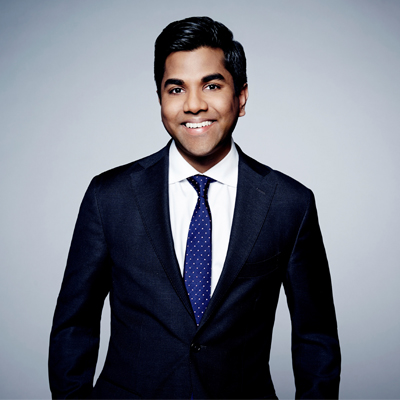
    It has been just six months since he’s taken charge of CNN International operations from south Asia. As bureau chief from New Delhi, Ravi Agrawal has been associated with the media conglomerate since he stepped into the media fraternity eight years ago.


    First in London and then in New York, Agrawal has been producer for several shows including ‘Fareed Zakaria GPS’. Now in Delhi, he will be looking at increasing the coverage from the country with a new government at the helm. As the world’s focus shifts towards South Asia, Agrawal will lead the CNN team from India to deliver key stories for the global English audience.


    In conversation with indiantelevision.com’s Vishaka Chakrapani, he shares a few insights on the focus of CNN International in the country and what Indian stories mean to the world.


    Excerpts…


    How important is India in terms of world stories for CNN International?


    India is a great fascinating story now. It’s 1/6th of humanity. It has become an increasingly important force economically speaking and is demographically vibrant. In all our stories we emphasise that the median age of Indians is 27 which means half of all Indians are under 27 years of age which when compared to other countries shows India as a very young and vibrant country. It has immense potential to be a huge player. The spurt in growth of smartphones which will grow from 130 million users today to 250 million in the next five years will impact stories and the economy. This in turn will also impact how we as journalists cover stories. India is an incredibly important market for us and there is no dearth of stories to tell us. 


    What are the changes you’ve brought in the reporting teams?


    Historically, we have had a very strong presence in India and are looking at maintaining that with two correspondents in Mumbai and Delhi for politics and business. With producers and cameramen and now we are well positioned to attack not just breaking news but also trend stories.


    What stories from India interest your audience?


    Certainly demographics interest us as well as the growth of digital in the country. The reason why Flipkart raised $1 billion was because there was a feeling that with the growth of the smartphone industry, Indians are going to spend a lot of money online. Immediately after, Amazon announced its investment of $2 billion here. We are fascinated with this because it changes not just retail but also the media, banking and daily life of people.


    Politics is also of interest to us, especially with the arrival of a new government which has got a mandate after 30 years with absolute majority. A lot of businessmen we spoke to are optimistic about the opportunity India has in store. Our challenge is how will we cover the larger India narrative that is on the cusp of doing what China might have done 20 years ago which is high speed growth, big transformative change across country and as journalists we need to analyse whether this change will actually happen.


    We do have a commitment to doing strong people stories. For all of India’s economic advances, there are a number of social ills too. We have a show called Freedom Project where we tackle world issues but they have mostly led us back to south Asia.


    Have there been any changes in the reporting style?


    That’s a constantly evolving process. We use Live-U for reporting, which enables us to go anywhere and broadcast with just two people. In India, with widespread technology and 3G coverage, we get amazing signals and so we can be more mobile and live.


    We invest a lot of money and resources in our photographers. We shoot state of the art 16:9 HD and we broadcast in HD in the US and you can see that difference the way our shots are framed, the way we get to places that few others get to. Some examples are our coverage in Gaza, Africa for Ebola and the Ukraine crisis. We invest a lot in just reaching these places and reporting from there. It costs a lot to get there first, to ensure security and to be with experienced teams.


    Does CNN have any plan to produce shows from India anytime soon?


    We have a bureau where we have a number of places where we can go live from, but we don’t have a studio yet. However, we are committed to telling the India story. One of our shows, Connect the World has now shifted from London to Abu Dhabi that puts focus on the Middle East and South Asia. That’s a global story, watched in Latin America but it still nods to the fact that its 8:30pm in India when its telecast.


    During elections, Becky Anderson came to India and hosted her entire show from here.  We are well equipped to broadcast live from India by getting anchors here for breaking news. Indian elections were covered in both our International feed and the US feed. Americans love elections and so a number of shows did live and guest segments with Becky.


    Any plans for a regional focus in India?


    We are essentially an English channel catering to an English speaking audience that is the upper niche, outward looking, global traveller with business interests. The global viewer is English and India will soon be the biggest English speaking audience.


    How do you operate on digital? Is digital a precursor to TV for breaking news now?


    We’ve stopped distinguishing between TV and digital. We don’t think of a story as ‘this is a web story’ or ‘this is a TV story’.  The basic research needed for both is the same. CNN is truly one of those places where we think multi-platform for every story. When we take a picture we think of it in terms of the best TV imagery and also if it can be used online. The aim is to show it visually for TV and in a simple way for digital. We ensure that we aren’t just tweeting our stories but also engaging people and collecting news. When there is breaking news, we first verify and then put it out on multi platforms simultaneously.

  • Amazon to invest additional $2 billion in India

    Amazon to invest additional $2 billion in India

    MUMBAI: Amazon is looking at India as a potential market. The e-commerce platform which launched its maiden TVC to woo Indian consumers during this edition of Indian Premier League, has now decided to invest an additional $2 billion to support its rapid growth and to enhance customer and seller experience in India.


    According to Amazon, since its launch just over a year ago, its marketplace (www.amazon.in) has grown to be India’s largest store with over 17 million products from a continually growing base of thousands of small and medium-sized businesses, serving millions of customers across India and delighting customers with its guaranteed next-day delivery service. 


    “After our first year in business, the response from customers and small and medium-sized businesses in India has far surpassed our expectations,” said Amazon founder and CEO Jeff Bezos. 


    He added, “We see huge potential in the Indian economy and for the growth of e-commerce in India. With this additional investment of US $2 billion, our team can continue to think big, innovate, and raise the bar for customers in India. At current scale and growth rates, India is on track to be our fastest country ever to a billion dollars in gross sales. A big ‘thank you’ to our customers in India – we’ve never seen anything like this.”


    On 29 July, Flipkart had announced that it was raising $1 billion which will be used to make long-term strategic investments in India, especially in mobile technology.

  • Do celebs really push the online gamut?

    Do celebs really push the online gamut?

    MUMBAI: Everyone is talking about it. Everyone is on it as well. Online retailers have caught everyone’s fancy and if stats are to be believed then they are here to stay.


    The e-commerce industry has been growing at a rapid pace; 2013 saw the industry grow over 65 per cent which is currently estimated to be at $3.2 billion. As new competitors entered the space to encourage the shopaholic in all of us to click on the ‘buy now’ button and get parcel at the place of convenience, the competition has only grown manifold.


    To woo the ever-confused shopper who has too many options to choose from, thanks to new players entering the lucrative e-commerce market, the online retailers have to lure them with various offerings. Be it delivery in one day or exclusive brands on board, they have done it all to make sure customers come to them, time and again.


    Discounts are offered every now and then, and on special occasions like anniversary through various contests, customers are awarded shopping points and gifts. For instance, eBay India launched a Way Too Fab (WTF) campaign for its ninth birthday bash. As part of the celebration, it created a special page www.ebay.in/waytoofab that allowed any user who purchased products which valued more than Rs 500 on 12, 13 and 14 March 2014, to spin the Wheel of Magic which offered consumers an assured gift ranging from special coupons to mobile phones and tablets to name a few.   


    However, the latest mantra has been to launch eye-catching TVCs. Amazon India launched its first TVC during the most-sellable property on Indian television – Indian Premiere League (IPL). Having said that, who can forget the ads of Flipkart? The ads featuring children role-playing as adults went viral and soon many others followed. After a lull period, the war on the television screen has begun again as the new entrants want to leave their mark on people’s mind.


    Like Victoria Secret would be just another brand without its angels, similarly, each e-commerce platform is trying to be different than the other.  And for this, these portals have decided to attach popular faces to the brand. The hottest fad currently is popular Bollywood faces associating themselves with various e-retailers.


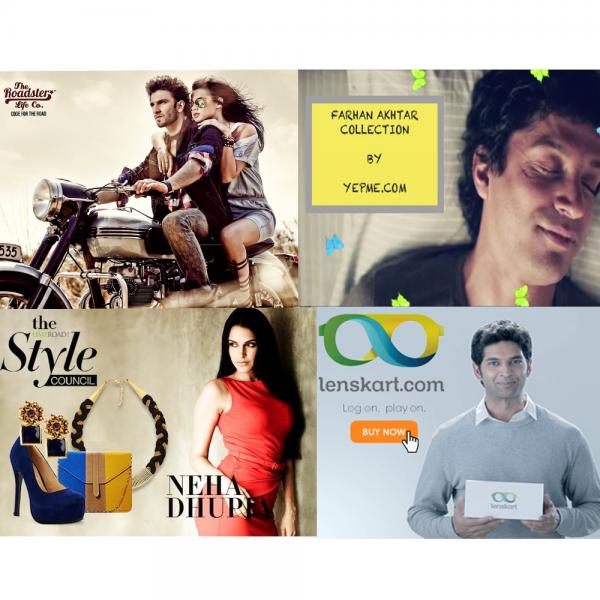
    Ranveer Singh, Lisa Haydon, Neha Dupia, Farhan Akhtar, Purab Kohli are just a few names associated with lifestyle e-retailers. When asked how does it help the platform, Myntra’s chief marketing officer Vikas Ahuja says, “By associating with celebrities, Myntra is making an effort to not just provide fashionable apparel and accessories but also be a thought leader in the latest style trends that are driving the fashion industry. Our association with celebrities such as Ranveer Singh for Roadster and Lisa Haydon for the Myntra brand has strengthened our focus on fashion, providing fans and customers an enthralling experience that goes beyond just shopping on our site.”


    LimeRoad, which caters to women’s sensibilities only, believes that though it has differentiated itself from other e-commerce players by moving away from a discount led offering, it did bring in Neha Dhupia on its management team. The reason behind it was that the team felt that her style could inspire a lot of women who shop on the site and those who make scrapbooks to express their style on LimeRoad. “Celebrities who reflect the brand’s promise help you get the right people to the site. They also bring in a lot of freshness and relevance to the context,” says CEO Suchi Mukherjee and adds, “Neha Dhupia is not only a pretty face but she epitomises the hard work, grit and dedication needed to make it big in life.”


    Others like YepMe, Lenskart etc too have celebs endorsing them. The rationale behind it is that most of them believe that celebrity associations help to create awareness, provide credibility and stature to the brand and rub-off of the celebrity’s personality and appeal onto the brand which strengthens the brand positioning / attributes further.


    Online apart, many companies have shopping on television ventures as well. However, these 24*7 channels which cater to mostly housewives don’t have celebs promoting them.   “Celebrity endorsement is beneficial for instant recall of the brand. When customers watch their favourite stars endorsing the brand or promoting a clothesline it does garner some visibility and helps draw eyeballs. But in the long run it’s all about the products and propositions that any brand has to offer,” believes HomeShop18 CMO Vikrant Khanna.


    The channel through its offerings, customer relationship management, value proposition, three-screen presence on TV-Web-Mobile and technology, wants to stand apart from the competition.


    HomeShop18 recently announced its TVC around the mantra “Shopping Makes Me Happy,” which had (talking) cats connecting with consumers to establish an emotional connect appealing to their desire for shopping. Similarly, Star CJ Alive, which parted ways with Star Network, introduced new mascot ‘Shoppie’ which works at bridging the gap between the current name and until the new name is finalised.


    TV has the highest media reach so irrespective of the industry, it’s still one of the most effective advertising medium. However, with changing times most of these brands have a 360 degree approach. New mediums like digital and social media have become an essential part of business today.


    Companies are taking extra efforts in the digital space to supplement the tools social media offers. Facebook, Twitter, YouTube channel, Instagram etc. are deployed to engage with peers and reach out to existing and potential customers across the digital platform.


    One of the best examples of luring youngsters today who are perpetually online is Myntra’s latest campaign -‘Live for Likes.’ The platform so far has also conducted other campaigns, both online and offline like the survey of India’s Most Fashionable Politician, Indian Fashion League, the Online Treasure Hunt, Online shopping fest, celebrity engagement through Fashion Icon of the Month among others. All this to encourage shoppers to be a part of its brand story.


    Online analysts believe that whatever be the case – online dominance or celeb in hand – a brand needs to be very clear of what it wants to accomplish. “There is a string of young actors who are willing to come on board. However, partnering with a right celeb is also very important. He/she should be able to generate interest among visitors on the site which should invert into sales to be successful,” says an analyst.


    A brand expert adds that these celebrities come at a certain price, so have to be used wisely. 


    Celebs might help generate initial traffic, but loyalty is dependent on product offerings, propositions, value, after-sales service, ease of use of the portal, hassle free delivery and return policies and lastly an overall virtual shopping experience. “If these important things are in place, shoppers will return to explore more, irrespective of the portal being endorsed by a celebrity or not,” concludes the expert.

  • E-commerce gives thumbs up to Budget 2014

    E-commerce gives thumbs up to Budget 2014

    MUMBAI: The e-commerce sector is a happy lot. Finance Minister Arun Jaitley in his maiden budget announced that manufacturing units will be allowed to sell their products through retail including e-commerce platforms without any additional approval.


    This paves path for the foreign direct investment (FDI) in the manufacturing sector.


    Foreign consumer brands with manufacturing units in the country have been piggybacking on the online retailers’ potential growth which is currently estimated to be at $3.2 billion.


    PwC India technology leader Sandeep Ladda says, “Liberalisation of FDI in e-commerce sector will provide much-needed certainty to foreign players and to a sector that has the promise to provide increased commerce and generate employment in the country. This will also provide boost to the sector and create healthy competition so as to benefit all the constituents in the ecosystem – consumers, government, e-commerce players, and retailers in general.”


    While the Department of Industrial Policy & Promotion (DIPP) is keen on opening e-commerce to FDI, as was made abundantly clear in the meeting with industry stakeholders, they were also clear that they needed to understand how FDI would help boost manufacturing.


    American Swan CEO and director Anurag Rajpal says, “A more robust online retail sector will spur manufacturing and help an economic revival. India currently does not allow global online retailers from selling goods directly to customers but allows them to own 100 per cent of a marketplace business, where third-party suppliers can use their platform. Both Amazon and eBay use such a platform to operate in the country.”


    Amazon India, which recently launched its first TVC in the country during IPL 7 and promises delivery on the same day, feels that FM’s announcement is a positive statement of intent for the e-commerce industry. “It recognises the role of e-commerce companies in the growth of manufacturing sector. Following this statement, we are hopeful of a more positive and liberalised policy on e-commerce in the near future aimed to help grow the manufacturing industry,” says a spokesperson from the e-retailer.


    One of the biggest players of this space in the country, Flipkart co-founder and CEO Sachin Bansal thinks this is a forward looking budget and hopes to see results over time. “The focus on giving a fillip to infrastructure and skill development is very encouraging. The fact that we could see a GST roll out by the end of the year is very positive and will augur well for all sectors. The attention to facilitating entrepreneurship and the allocation towards the National Rural Internet and Technology Mission is an extremely positive move, as collectively they provide the opportunity for both individuals as well as businesses to go digital,” he opines.


    Brands feel that the move will give a push to the manufacturing sector, and will also encourage foreign companies to set up manufacturing facilities in India.


    Currently, India allows wholly-owned overseas subsidiaries in single-brand retailers that sell products under a single label through physical stores such as Zara, Panasonic or Marks & Spencer. However, the catch is that they have to get clearance from Foreign Investment Promotion Board (FIPB) and produce 30 per cent of their products within the country.


    Moreover, other announcements in the budget too signal a positive way for the online sector. More internet penetration and connection in the rural areas, increase in logistics because of increase in railway freight and decrease in excise duties on shoes, apparel etc bring in good news for the portals.


    Jabong’s co-founder & MD Praveen Sinha feels that though it is still unclear that how increase in service tax on online advertising will impact the sector, one will have to wait and watch how these announcements will be implemented. 

  • Sir Martin Sorrell shares 10 trends shaping the global ad business

    Sir Martin Sorrell shares 10 trends shaping the global ad business

    The world’s biggest media conglomerate, which shapes the advertising and marketing of brands globally, has good news for marketing companies even though some nations are going through economic crises.


    WPP’s founder and CEO Sir Martin Sorrell shared his views on the trends impacting the global marketing service industry on his Linkedin blog.


    “As we plan for the future of our business, looking across the 110 countries in which we operate, we try to identify the trends that we think are shaping the global marketing services industry.


    Here’s our top ten:


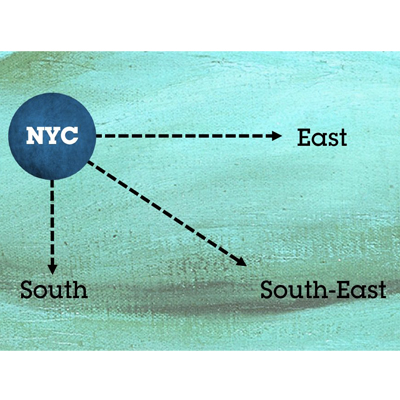
    1. Power is shifting South, East and South East

    New York is still very much the centre of the world, but power (economic, political and social) is becoming more widely distributed, marching South, East and South East: to Latin America, India, China, Russia, Africa and the Middle East, and Central and Eastern Europe.


    Although growth rates in these markets have slowed, the underlying trends persist as economic development lifts countless millions into lives of greater prosperity, aspiration and consumption.


    2. Supply exceeds demand – except in talent

    Despite the events that followed the collapse of Lehman Brothers in 2008, manufacturing production still generally outstrips consumer demand. This is good news for marketing companies, because manufacturers need to invest in branding in order to differentiate their products from the competition.


    Meanwhile, the war for talent, particularly in traditional Western companies, has only just begun. The squeeze is coming from two directions: declining birth rates and smaller family sizes; and the relentless rise of the web and associated digital technologies.


    Simply, there will be fewer entrants to the jobs market and, when they do enter it, young people expect to work for tech-focused, more networked, less bureaucratic companies. It is hard now; it will be harder in 20 years.


    3. Disintermediation (and a post-digital world)

    An ugly word, with even uglier consequences for those who fail to manage it. It’s the name of the game for web giants like Apple, Google and Amazon, which have removed large chunks of the supply chain (think music retailers, business directories and bookshops) in order to deliver goods and services to consumers more simply and at lower cost.


    Take our “frienemy” Google: our biggest trading partner (as the largest recipient of our clients’ media investment) and one of our main rivals, too. It’s a formidable competitor that has grown very big indeed by – some say – eating everyone else’s lunch, but marketing services businesses have a crucial advantage.


    Google (like Facebook, Twitter, LinkedIn and others) is not a neutral intermediary, but a media owner. Google sells Google, Facebook sells Facebook and Twitter sells Twitter.


    We, however, are independent, meaning we can give disinterested, platform-agnostic advice to clients. You wouldn’t hand your media plan to News Corporation or Viacom and let them tell you where to spend your advertising dollars and pounds, so why hand it to Google and co?


    Taking a broader view of our increasingly tech-based world, words like “digital”, “programmatic” and “data” will soon feel out-dated and obsolete as, enmeshed with so many aspects of our daily lives, network-based technologies, automation and the large-scale analysis of information become the norm.


    The internet has been a tremendous net positive for the advertising and communications services business, allowing us to reach consumers more efficiently, more usefully and often more creatively on behalf of clients. But it won’t be long before those clients stop asking our agencies for a “digital” marketing strategy (many already have). It will simply be an inherent part of what we’re expected to offer.


    4. Changing power dynamics in retail

    For the last 20 years or so the big retailers like Walmart, Tesco and Carrefour have had a lot more power than manufacturers because they deal directly with consumers who are accustomed to visiting their stores.


    This won’t change overnight, but manufacturers can now have direct relationships with consumers via the web and e-commerce platforms in particular. Amazon is the example we all think of in the West, but watch out for Alibaba, the Chinese behemoth due to list on the New York Stock Exchange later this summer in what could be the largest IPO in corporate history (and heading a capitalisation of around $200 billion).


    5. The growing reputation of internal communications


    Once an unloved adjunct to the HR department, internal comms has moved up the food chain and enlightened leaders now see it as critical to business success.


    One of the biggest challenges facing any chairman or CEO is how to communicate strategic and structural change within their own organisations. The prestige has traditionally been attached to external communications, but getting internal constituencies on board is at least as important, and arguably more than half of our business.


    6. Global and local on the up, regional down

    The way our clients structure and organise their businesses is changing. Globalisation continues apace, making the need for a strong corporate centre even more important.


    Increasingly, though, what CEOs want is a nimble, much more networked centre, with direct connections to local markets. This hands greater responsibility and accountability to local managers, and puts pressure on regional management layers that act as a buffer, preventing information from flowing and things from happening.


    7. Finance and procurement have too much clout, but this will change

    Some companies seem to think they can cost-cut their way to growth. This misconception is a post-Lehman phenomenon: corporates still bear the mental scars of the crash, and conservatism rules.


    But there’s hope: the accountants will only hold sway over the chief marketing officers in the short-term. There’s a limit to how much you can cut, but top-line growth (driven by investment in marketing) is infinite, at least until you reach 100% market share.


    8. Bigger government


    Governments are becoming ever more important – as regulators, investors and clients. Following the global financial crisis and ensuing recession, governments have had to step in and assert themselves – just as they did during and after the Great Depression in the 1930s and 1940s. And they’re not going to retreat any time soon.


    Administrations need to communicate public policy to citizens, drive health initiatives, recruit people, promote their countries abroad, encourage tourism and foreign investment, and build their digital government capabilities. All of which require the services of our industry.


    9. Sustainability is no longer “soft”

    The days when companies regarded sustainability as a bit of window-dressing (or, worse, a profit-sapping distraction) are, happily, long gone. Today’s business leaders understand that social responsibility goes hand-in-hand with sustained growth and profitability.


    Business needs permission from society to operate, and virtually every CEO recognises that you ignore stakeholders at your peril – if you’re trying to build brands for the long term.


    10. Merger flops won’t put others off

    Despite the failure of one or two recent high-profile mega-mergers, we expect consolidation to continue – among clients, media owners and marketing services agencies. Bigger companies will have the advantages of scale, technology and investment, while those that remain small will have flexibility and a more entrepreneurial spirit on their side.


    FMCG and pharmaceuticals (driven by companies like 3G and Valeant) are where we anticipate the greatest consolidation, while our own industry is likely to see some activity – with IPG and Havas the subject of constant takeover rumours. At WPP we’ll continue to play our part by focusing on small- and medium-sized strategic acquisitions (31 so far this year, and counting).”


     (These are purely personal views of  WPP’s founder and CEO Sir Martin Sorrell and indiantelevision.com does not subscribe to these views.)


  • Want to be an e-retailer? Then, click here

    Want to be an e-retailer? Then, click here

    MUMBAI: The world is moving online; today with a click of a button people can shop, pay bills and get entertained.


    Every business model today is or plans to ride the digital wave, but not many have been able to crack the code. There are many who have spent lakhs to set up the online business but haven’t been able to generate the right buzz amongst its target audience or generate enough revenue to sustain the competitive market.


    According to Internet & Mobile Association of India (IAMAI), the e-commerce market saw a jump of 33 per cent to Rs 62,967 crore in 2013 as compared to previous year’s Rs 47,349 crore. Also, currently, there are over 2.5 crore online buyers in the country and still counting.


    To cater to this need, new online portals are launched every now and then, thus making the sector highly competitive. And like how everyone once in a while needs a godmother, Rage Communications with the launch of Ystore has just done that.


    The new offering is a comprehensive e-commerce platform to enable retailers to go online with significant ease.


    “The success of large e-commerce sites such as Flipkart, eBay and Amazon in India is driving interest in various categories. Retailers from almost all consumer product industries have shown keen interest. In particular, clothing, jewelry, home accessories and lifestyle product retailers are most excited and several online stores have already been launched,” says Rage Communications director JRK Rao who adds that these are also the categories that are most suited for online commerce.


    It works on two business models. First, it builds a store either using the YStore platform, or any other commercially available e-commerce platform. Typically, there is a one-time fee for the design, development, and deployment of the store, followed by a nominal quarterly management fee to cover routine store maintenance functions.


    The second one works on a very reasonable monthly license fee basis. A single monthly charge covers all initial set-up costs, and all future software upgrades as they are made available. This makes it relatively easy for small retailers to enter the online commerce space at minimal cost.


    The 200 professionals in technology, design, user experience and business analysis provide a range of services to its clients.


    It includes store-front design using pre-designed templates, or fully customised layouts, implementation of all commerce features, from the basic to the most advanced features that are offered by high-end commerce sites, creation of the initial catalog of products for sale, managing taxes, shipping charges, payment gateway for credit card and bank transactions, order tracking, gift registry, inventory, merchandising, integration with external marketplaces such as Amazon and eBay, affiliate marketing sites, and more.


    Apart from that, it will also help clients to optimise performance across devices – laptops, tablets and smartphones, search engine optimisation, ongoing search marketing, database marketing, email marketing, leads management, online customer service, detailed analytics covering site traffic, user experience and sale conversions, server optimisation for efficient site performance and ongoing content and catalog management (if required by e-tailer).


    The company which has offices in Chennai, Mumbai, Singapore and Sydney already has over a dozen e-commerce sites on board – using both YStore and other commerce platforms.  A few among those are: soakandsleep.com –a premium bed and bath products; parisera.com – handcrafted products for women; strandofsilk.com – contemporary Indian designer wear and thejus.com – gold and multi plated gift articles among others.


    As per online space watchers, there are many factors driving the e-commerce industry worldwide. Penetration of smartphones and internet amongst tier II and III cities is slated to be the main cause behind it. Ready availability of inventory at a central warehousing location and for retailers the ability to reach customers anywhere and at any time are just a few others pointed out by them.


    Having said that, they also believe that apart from YStore there are many platforms, like Shopify and Browntape that help retailers sell online. “So, what’s important is how you’re able to be different from each other and how you’ve been able to master your particular niche. This is already a crowded sector, and any new entrant will need to significantly differentiate itself from the dozens of other companies who have been here successfully for years,” points out Seedfund managing partner Mahesh Murthy.


    Nonetheless, researchers and analysts agree that e-commerce will continue to grow in a practically limitless manner, for a wide range of product categories. In the years to come no retailer can survive without harnessing the reach and power of the internet.

  • What makes IPL click with brands?

    What makes IPL click with brands?

    MUMBAI: Indians love for cricket is inevitable. And nothing can come between the fans and the most-awaited entertainment tournament in the country: The Indian Premier League (IPL). But that’s not all, like honey to bee; brands too get attracted to it.


    Year after year, controversies galore, nothing has deterred brands from putting their money on IPL.  


    Over the years, while the experts have debating that the overdose of cricket will make people lose interest in the game, but the fact is that even controversies – Lalit Modi fisasco, slapgate or even match-fixing – hasn’t affected the tournament when it comes to sponsorships. The Rs 2000 crore plus property has many lining up to sign deals.


    With the expected ad revenue from this year’s IPL to be Rs 900 crore, the official broadcaster of the tournament, Sony Max and Six, have already brought on board, Perfetti Van Melle, Havells and Amazon as on-air associate sponsors while Vodafone and Pepsi will be the co-presenting sponsors.


    So why do brands jump into the IPL bandwagon. The reason is simple: it is the biggest visibility platform in the country for brands.


    Many in the industry feel that IPL helped its first title sponsor DLF become a household name.


    “DLF was known in the north among the upper class, but today the name is known at every corner of the country,” says GroupM ESP Sports and Live national director Vinit Karnik.


    The sports and entertainment arm of GroupM, in its SportzPower-GroupM ESP India sports sponsorship report 2014 reveals that Indian sports TV broadcasting was, is, and will continue to be dominated by cricket for the foreseeable future, contributing to 80 to 85 per cent of the total television sports media revenues.


    In 2008, when tire major Bridgestone considered IPL as a medium for brand communication, it was put off by the price tags for premium rights. For example, real estate company DLF, at that time, was paying Rs 400 million per year for the title sponsorship of IPL. So, Bridgestone made a modest entry into cricket as a co-sponsor of IPL franchise Mumbai Indians.


    The cricket tournament is a perfect platform to not only increase visibility but it also enhances the brands’ customer engagement. For instance, Karbonn Mobiles which, till a few years back, was fighting to make space in the market which was ruled by Nokia, entered the tournament through ‘Karbonn Kamal Catch’ and IPL Nights.


    The deal helped the mobile company engage with its customers through the programme wherein spectators were selected and had to catch a ball. If they caught the ball, during a match, they would receive a ball signed by a player.


    Similarly, Citi Bank’s ‘Citi Moment of Success’ helped the brand come out of the dark period it was witnessing because of the slowdown. “Citi’s initiative helped it rise above negative PR, especially what it was going through in the US. It used the platform well by associating itself with the ‘successful’,” points out Karnik.


    Agreeing and adding on the subject, Madison Media COO Dinesh Rathore says, “IPL is one property which everyone knows will deliver for those 45 days consistently and hence, it increases the recall value of brands too. Why else would we see so many new launches (campaigns and products) during this time-frame?”


    How can one forget the Zoozoos? Telecom giant, Vodafone, every year launches a new campaign during IPL. Vodafone India was one of the first few brands to get associated with the IPL and continues the relationship even in the seventh year. Zoozoos were launched in the second season and since then have helped Vodafone to establish a strong connect with the customers and enhance brand recall. One can even say that Zoozoos and IPL are inseparable today.


    “Our experience so far has been that if you do things that are truly innovative and cutting edge during the IPL then the impact multiplies and bang for the buck is unmatchable. For example, apart from the ZooZoo campaign, our customer connect initiative ‘Vodafone SuperFan Contest’ has also received positive response from our customers,” says Vodafone India Brand Communications and Insights senior vice president Ronita Mitra.


    She adds, “This year Vodafone customers can help a cricket crazy friend to get a dream come true opportunity to be selected as ‘Vodafone SuperFan’ and win all the privileges that go with it.  While the friend gets all the privileges available for ‘Vodafone SuperFan’, Vodafone customers, as the nominee also gets hospitality ticket to watch the match live.”


    Highlighting that new brand launches have gained tremendously, particularly in the segment of auto, brand consultant Harish Bijoor highlights that the format is dear to not only men, but women and children alike. “IPL is today a family sighting and outing. Therefore, anything that attracts family eyeballs is a marketing opportunity not to miss for brands.”


    Not only this, but established brands too have jumped on the bandwagon. Pepsi, for instance, has been associated with cricket per se for years now. The cola giant taking the IPL title rights has been a huge brand lift for the IPL. That time, the move surprised many market watchers because they thought that a brand that needed to build a national brand recall as well as presence, would bid for the IPL rights.


     PepsiCo India EVP Homi Battiwala has been quoted in the SportzPower-GroupM ESP report saying, “We are delighted that we have succeeded in rebranding the tournament as Pepsi-IPL, thus cementing a five-year partnership between two brands which enjoy an iconic status not only in India but globally. With our continuing sponsorship of the ICC World Cup, we are now the biggest supporters of the game of cricket.”


    The cola giant also feels that the timing of the tournament is ideal given that packaged beverages is an impulse category and nearly 50 per cent of consumption happens in these months.


    However, the controversies related to the tournament have left a dent in its sheen. Last year’s match-fixing fiasco hit it bad. And with elections coinciding with the tournament, many feel that it can impact the tournament’s TVTs and brand value.


    “This year due to the various reasons the on-ground sponsorships may witness more desperation and many marketers may not invest for the long run.  The revenue for the franchise is also hit due to the shifting of large part of tournament to UAE as 35-40 per cent of revenue comes from tickets for these franchises,” points out IPG Mediabrands branch head Mukti Kumaran.


    She adds, “Also, brands are more conscious as the money will get fragmented between IPL and elections.”


    Similarly, Red Fuse Communications India CEO Shubha George says, “IPL is now a standard media property that will broadly fluctuate as it has in the past. The fact that it will be partly played outside India will affect viewership to an extent. Over the years, advertisers have a good pulse of what to expect from IPL and so it is no longer the imponderable it used to be.”


    Others argue and believe that even though overall brand value might get impacted but the property will continue to attract not only brands but fans and players too. “There are always two sides of a coin. If we take the case of Rajasthan Royals, one set of people can say that RR’s management failed and hence we don’t want to get associated with it while others might feel that why penalize the whole team for the wrong of a few,” says Karnik philosophically.


    The biggest sporting property is all set to start soon and the brands aren’t shying away from queuing to hit a six with IPL, yet again.

  • Sony’s video service Crackle leaves UK shores

    Sony’s video service Crackle leaves UK shores

    MUMBAI: The Sony run video service – Crackle – is no more crackling among UK users and the media conglomerate has had to take the tough call of shutting it down completely from 1 April.  


    The company posted a notice about the closure on Crackle’s UK homepage that read: “We’d like to thank all those who have supported and enjoyed Crackle UK. As of April 1, 2014 Crackle’s UK service will no longer be operating.”


    Crackle offers viewers free, ad-supported video content, including full-length movies and TV series. The service also operates in US as well as Canada, Australia and close to 20 countries across Latin America, and those operations will not be affected by this closure.


    One of the major reasons for the call to shut shop in UK seems to be the increasingly competitive market in the country. Netflix entered UK two years ago and reached out to an estimated 1.5 million subscribers and there is also Amazon, which has been fighting hard to stay relevant by closely aligning its Lovefilm service with its core brand.


    Both companies have also tried to outbid each other on content rights for British viewers, undeniably raising the costs for Crackle and any other third-party service to compete. And in the case of Crackle, Sony also had to monetise the service through ads, which may be even harder in a comparably small market like UK.