Tag: Amazon

  • Apple commits $4.2 bn for original content

    Apple commits $4.2 bn for original content

    MUMBAI: Apple can’t get enough of taking more bites. The Cupertino-based company is reportedly spending a whopping $4.2 billion a year on coming up with original content by 2022.

    According to a report in Variety, this amount is much higher than the original commitment of $1 billion in 2018. Despite the effort, Apple will still lag the budgets set by video on demand giants Amazon and Netflix. Amazon’s pocket will turn up $8.3 billion for original video content, the highest for any tech giant. This will also shadow Netflix’s $6.8 billion margin.

    Much of Apple’s current programming has been music-based but the company is looking at looking eye-to-eye with contemporaries – Amazon, Netflix and Hulu. This will involve beating them where are best – shows and movies. Apple Music will be rebranded in the next 2-3 years which will also give it a headstart with its 30 million subscriber base. They will get video content access at just $10 a month.

    The idea behind focussing on a new territory is to give a boost to its services vertical, which is expected to make up 14 per cent of the revenue in 2017.

    For now the company has planned two offerings, Amazing Stories reboot from Steven Spielberg and a news-business comedy with Jennifer Aniston and Reese Witherspoon.

  • Amazon acquires rights for digital premiere of 2.0

    Amazon acquires rights for digital premiere of 2.0

    MUMBAI: Amazon announced an exclusive content deal with Lyca Productions for the digital premiere of 2.0, the Rajnikanth and Akshay Kumar-starrer mega-budget blockbuster. Prime members will have access to watch the Tamil, Telugu and Hindi versions of the much-awaited film on Prime Video. One of the most opulent projects in Indian cinema, with a reported budget of almost $ 90 million, 2.0 also marks the debut of Kumar in South Indian cinema and as the antagonist.

    Commenting on the association with Lyca Productions, Amazon Prime Video director content Vijay Subramaniam said, “With this momentous deal, Amazon Prime Video further enhances its robust Bollywood and regional content library. We keep the customer at the centre of all that we do. Amazon Prime Video is happy to join hands with Lyca Productions for the exclusive streaming rights for this mega blockbuster film. Both, Rajinikanth and Akshay Kumar are phenomenal actors with an unbelievable fan following that will soon get the chance to stream the sequel of Rajnikanth’s memorable movie on their favourite streaming device.”

    “Making movies is my passion” said Lyca Group chairman Subaskaran Allirajah. “We are here to produce great movies. I hope these investments will take Tamil and Indian cinema to world-class standards.”

    2.0 is helmed by the master of grandeur, Shankar, and is the sequel to the 2010 film Endhiran (Robot). It will see Rajnikanth reprise his role of Dr Vaseegaran and the robot Chitti. The movie, pegged as one of Asia’s costliest ventures, is also being filmed using 3D cameras directly to ensure that the film provides a grand visual experience.

  • Disney, Pixar’s John Lasseter accused of misconduct, takes leave

    Disney, Pixar’s John Lasseter accused of misconduct, takes leave

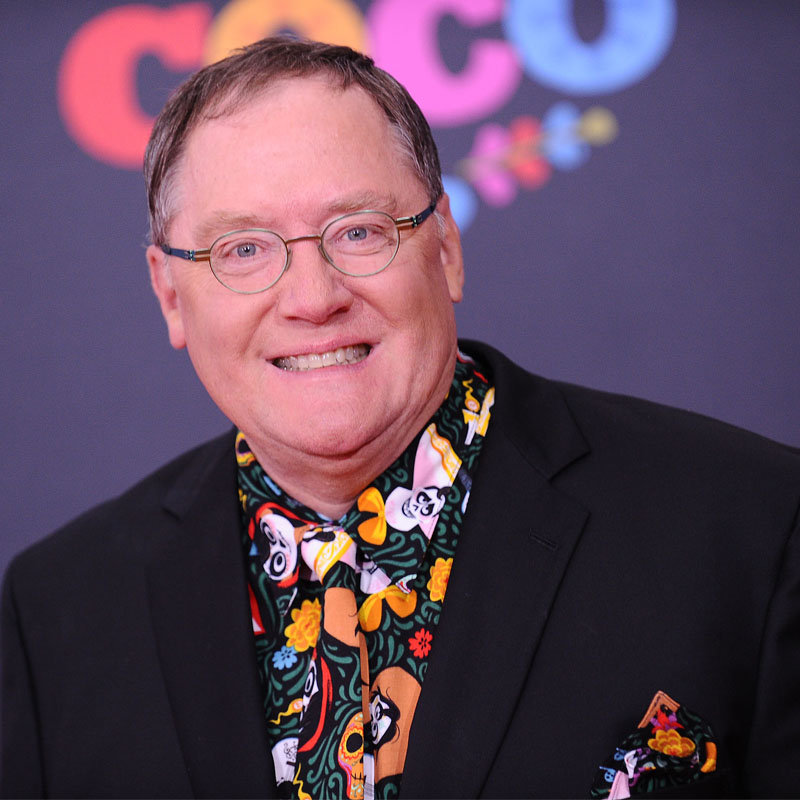
    MUMBAI: Now it’s the turn of Pixar cofounder and Disney chief creative officer John Lasseter to lose his halo. The animation legend has apparently taken a leave of absence from the company following alleged misconduct and missteps. The leave is expected to be for six months.

    A number of reports appearing in the US media have Pixar employees over the years alleging that Lasseter hugged them or kissed them wantonly. In fact, many employees were petrified to come out in the open and talk about their sordid experiences with the twice Oscar winner wherein he intruded on their private personal spaces or commented on their bodies. Many stated that they had got used to his moves and even found ways to avoid. Some partners, over the years, chose to discontinue working with the studio, according to media reports.

    In a memo to his company staff Lasseter stated : “I’ve recently had a number of difficult conversations that have been very painful for me. It’s never easy to face your missteps, but it’s the only way to learn from them. I have always wanted our animation studios to be places where creators can explore their vision with the support and collaboration of other gifted animators and storytellers. This kind of creative culture takes constant vigilance to maintain. It’s built on trust and respect, and it becomes fragile if any members of the team don’t feel valued. As a leader, it’s my responsibility to ensure that doesn’t happen; and I now believe I have been falling short in this regard.”

    Disney response to the media on the allegations and Lasseter’s sabbatical read as follows: “We are committed to maintaining an environment in which all employees are respected and empowered to do their best work. We appreciate John’s candor and sincere apology and fully support his sabbatical.”

    The last few months have seen a spate of senior executives and talents in Hollywood fall from grace following allegations that they abused their positions and made sexual advances or indulged in questionable behavior. Among these: Harvey Weinstein, Amazon’s Roy Price, actor Kevin Spacey, and director James Toback. Now the name of Lasseter has been added to the list of alleged sexual offenders.

    Surely, the characters Walt Disney Animation or Pixar – whether Woody from Toy Story or Moana from the Disney hit Moana – created must be cringing and holding their heads in shame.

  • Regional OTT content more than just catch-up TV

    Regional OTT content more than just catch-up TV

    MUMBAI: The rise of digital content platforms has forever changed television viewing in India. The revolution in the over-the-top content (OTT) and video-on-demand (VOD) industry in the country is reminiscent of the growth of satellite television during the 1990s. Due to the rollout of 4G services and exponential growth in the smart phones, the OTT industry expanded widely in 2017 in India.

     In the past two years, the competitive landscape has evolved quickly with the entry of 25 to 30 OTT service providers in India. There were nearly 10 investments in OTT and OTT technology companies during 2016 and competition is heating up in terms of who is acquiring the exclusive rights of TV shows as well as in terms of launching originals. Millions of rupees are being invested in content production and acquisition by all major players. According to the Accenture 2017 Digital Consumer Survey, the surge in VOD in India is pegged at 78 per cent, which is growth in the number of consumers of VOD services in India.

    When a brand addresses a regional demographic in its language, it builds an emotional connect with it. Likewise, when video content players such as OTTs serve content in vernacular mediums, people tend to associate better with them. And 2017 has seen almost every player dive into the regional language pond.

    The entertainment sector has woken up to the huge potential of the regional OTT language content with platforms like ViuClip, YuppTV, Amazon, ALTBalaji, SonyLIV, Voot, Hotstar, and Netflix providing exclusive regional content.

    In an interaction with Indiantelevision.com’s Kirti Chauhan, Viu country head (India) Vishal Maheshwari, ALTBalaji CMO Manav Sethi, Voot COO Gaurav Gandhi, Amazon Prime Video content director India Vijay Subramaniam, SonyLIV EVP and head digital Business Uday Sodhi, YuppTV CEO Uday Reddy, and Amagi Media Labs co-founder Baskar Subramanian spoke about the current scenario of regional content language on various digital platforms. The inputs by media experts of the industry from Stratagem Media MD Sundeep Nagpal and Lodestar Media GM Deepak Netram overviewed the role and the potential of regional content in the OTT space.

    Among the trends that emerged, include: the current OTT ecosystem is geared towards serving the youth. Said Netram, “Maximum users are in the age group of 18 to 34 years spending 15 minutes plus on average on consuming content via apps and more than 55 minutes overall in a day.”

    Defining regional content

    “Content available in languages catering beyond the Hindi and English-speaking masses in India would be categorised as regional content. The focus of the content is shifting from what is popular across India to what is popular in a select region. At Viu, we are creating relevant and contemporary entertainment to cater to these masses,” commented Maheshwari.

    Gandhi said that besides Hindi, the VOD’s focus on regional languages like Marathi, Kannada, Bangla, Gujarati, and Tamil.

    Amazon Prime’s Subramaniam thinks that their content mix is significantly local. “We have a line up of multiple new Hindi originals coming up that would also be dubbed in multiple languages. We already offer the latest movies in Marathi, Tamil, Telugu and Bengali,” he said. In Bengali, we have tied up with Shree Venkatesh Films, in Tamil, we have partnerships with Dream Warrior Pictures, V Creations and Studio Green; in Telugu, we have tied up with Lakshmi Narasimha Productions, DVV Entertainments, and in Marathi we have tied up with Everest.”

    Amazon Prime Video availed some of the blockbusters of 2017 like Arjun Reddy, VIP2, Nene Raju Nene Mantri, Dhananjoy, and Bhikari soon after their theatrical release.

    The new player in town, ALTBalaji, has added another angle. “Regional content cannot be defined under state boundaries. The democratisation of labour and movement in jobs have showed that language travels across the region from where it originates. So, it will be wrong to look at regional content from location stand point, it has to be looked at from language stand point,” said Sethi.

    The early entrant, YuppTV, shared plans to have Telugu content. For now, it is launching content in Tamil and, going forward, it will feature content in Malayalam, Marathi, and Bengali, too.

    SonyLIV’s Uday Sodhi is gung-ho about regional content. “Besides Hindi, we have a strong catalogue of Bengali content. We are now aggressively looking at adding other languages on our platform as we have created original shows in Marathi and Gujarati. We are looking for acquiring content in south Indian languages to make our regional language portfolio strong,” he said.

    According to Netram, 25 to 30 per cent of the audience visiting the OTT platforms consume regional content and it is expected to reach around 50% by 2018. Maharashtra and the South are the two dominant markets in India at the moment.

    Beyond catch-up TV

    While discussing the restrictions of regional content, Amagi’s Baskar Subramanian said, “I feel that regional OTT is largely driven by television content like what they call catch-up TV.”

    Sodhi, however, believes that catch-up TV is the starting point for consumers because they are familiar with it. SonyLIV is witnessing significant consumption of films, short films and original shows on the platform.

    Sethi offers a different perspective. “Not many investments are being made in creating shows or narratives or stories that have the propensity to be consumed by 10 to 20 million people outside TV. But now ALT is investing a lot in creating shows outside TV.”

    Added Maheshwari, “Video on demand around the country has moved beyond catch up TV. While there is a sizable amount of regular television content consumption on these platforms, the growing effort to create locally relevant originals is establishing the demand for experimental and fresh content created for the digital-first audience.”

    YuppTV, which already has a big basket of TV content to watch on-demand, now has a small basket of originals for binge watching. Reddy said that they have created their own linear TV playout so people can watch it like a typical TV format as well. “We have created epic engagement of audience with our own and syndicated content. Our goal is to have 20 per cent of our own YuppTV content. We will be announcing four more shows soon.”

    Besides making Viacom18’s TV shows available as catch-up TV, Voot is providing exclusive content around the TV shows. Gandhi said that they are now starting to create original series for Voot in regional languages.

    Working with language experts

    Viu works with creative minds from the particular region they are catering to. This builds a content base for them that the millennial audience can resonate with. Said Maheshwari, “We are consistently working with creative talent that has the knowledge and expertise to create content in specific regional languages. We have an in-house team of researchers who dive deep into market and consumer insights. We work with studios big and small, independent producers as well as creative folks.”

    Reddy said that they have content team experts who had been in the industry and going forth, they will be hiring more experts for other regional languages.
    Gandhi added, “We work with our TV networks in each of the regional markets to create and curate the content in the respective language. We also have a regional content team at Voot, which focuses on shows for their respective language.”

    SonyLiv, meanwhile, has a team that looks at the content and understands the content beyond languages.

    Even Amazon’s Subramaniam said that the platform has dedicated teams that assess content demand amongst customers in each region based on various factors.  “A combination of these factors decides our content strategy.”

    Sethi too agreed on having a language expert on board, giving the example of the soon-to-be released Bose and Dhimaner Dinkal series, which have a Bengali expert. “Our choice of the production house is also guided by the person’s understanding of the nuances of that particular region’s language, traditions, culture, and many more things.”

    “The benefit of taking OTT players to regional sectors is that they give them a platform to talk to the local audiences in their language, helping advertisers to engage more efficiently,” pointed out Netram. Nagpal, however, thinks that the benefits for OTT players is just to capture eyeballs from a different screen and different audiences, while they are young, with fresh content and win them over from TV.

    Market research

    According to Sethi, both primary as well as secondary research needs to be done before undertaking a new language sector. “Our secondary research is all about the shows, which have come live, sources of data that have guidance, whether the show worked in particular region, how did it work, what was the monetisation opportunity in that show and many more. From the stand point of primary research, it is largely based on picking up the focus group. While doing our Bengali show research, we spoke to a group of Bengali people to identify the kinds of stories and drama they would like to consume. In our secondary research, we looked at the data consumed on Facebook and Youtube along with the growth in consumption.”

    Baskar Subramanian believes that there are two things to consider for regional content creation. First is the economics of production and second is the cultural nuisances of those regions that can be captured exclusive to the TV content.

    Maheshwari said, “Our strategy is deeply anchored in technology and consumer insights. Research affirms that regional content on OTT will command close to 30 per cent of the overall share in the years to come. Indian language internet users will drive the next phase of internet adoption in India. This new generation of users will come on board from tier 2 and tier 3 cities. With this potential increase in consumer base, there will be immense demand for intriguing regional content.”

    Sodhi said that they have we looked at the original content in language while doing Marathi and Gujarati shows. He said, “We found that both are underserved markets and, besides the television content, there is very little digital only content is available but a lot of our consumers come from these regions, which made it a perfect combination to serve content in these languages.”

    “At Amazon, we keep customers as our prime focus. The best way we customise and select our content is by giving our consumers what they want. We invest a lot of time and effort in market research to understand what customers want in order to deliver it to them,” said Subramaniam.

    Voot is currently open only to those languages on that have a strong TV network content. Based on internet penetration, digital video penetration, content availability, and preference of the native language over Hindi, Voot is looking at opening other markets, too.

    Said Nagpal, “Given the rapid penetration of mobile and growth rates of internet services in the hinterland, as well as the reducing tariff rates of bandwidth and downloads, the biggest challenge can well be to produce compelling content.”

    Content creation and marketing strategies

    For promotion, Voot uses its TV networks and other digital media assets as well. ALTBalaji, however,  focusses largely on digital for marketing. “On digital, it becomes easier for us to target in terms of reach and frequency,” added Sethi.

    At Viu, the content ecosystem is driven by consumer demand and their anticipated entertainment needs. This includes a mix of licensed and originally created content. The platform is focussed on locally relevant content in every market and does not believe that one size fits all. “We knew Korean dramas did well in Malaysia and Indonesia, and decided to put the content on our Indian app as well. Since then, we have witnessed a lot of consumption by a small group of people,” said Maheshwari

    Sodhi’s team is capable of targetting the right content to the right user with the help of analytics, which tells them which audience is coming from which spoken language region. And, similarly, based on the content engagement matrix of YuppTV, Reddy and the team designs the content strategies. YuppTV has its own platform intelligence to build the content strategy. For marketing, they use social media platforms.
     
    Revenue potential

    As the audiences grow across regional language content, monetisation will grow as well. “While this was small so far, it is beginning to become interesting,” Gandhi believes. “It is an early evolving market. We are still at early stage when revenue started coming in. However, we are confident that over the next 12-18 months, we will see significant numbers in revenues,” said Sodhi.

    “With urban markets saturating with content, the regional content demand will be the next thing that OTT platforms are likely to tap into. This will command close to 30 percent share in overall revenue,” Maheshwari added.

    “After Hindi, regional has acquired the maximum share in terms of viewership and monetization ability. From monetization and ROI stand point, largely Tamil language has the highest potential because it has far invite, they are higher on payment curve, they are affluent, they are educated and the mobile uptake is more,” said Sethi.

    While sharing the current regional content on their platforms Sethi said, “15 per cent of our total number of hours of shows will come from regional content. We are investing a lot in regional talent across genres because they have tremendous appeal in terms of following. However, SonyLIV currently have regional content of around 10 per cent, besides Hindi and English, said Sodhi.

    Nagpal commented that OTT content can be made available for advertising almost immediately, but it would take about 2 years to reach a critical mass for advertisers to recognize its value. But the options to market can be many more than just airtime. Wherein, Netram thinks that this is an active aspect, monetization has already started and is expected to further ramp up looking at the consumption pattern. He said, “OTT Platforms like Ozee are centered on the regional content and are monetizing it well.”

    Regional programming

    Maheshwari said that there is an immense scope for original content in regional language. “For Viu, we are focused on creating and providing a mix of regional content beginning with Hindi and Telugu. Currently, we are focusing on Telugu as a region with shows such as Cinema Pichollu, Pelli Gola and PillA. We aim to provide undubbed shows. Instead, we are creating bilingual content in Telugu and Hindi that has universal appeal.”

    Gandhi agreed and said, “We are already working on digital original series across 3 regional languages already.”

    Subramaniam believes that homegrown and original content are significant drivers of viewership and box office collections already. Local stories help them to remain relevant, relatable and eventually widen audience reach.

    Sethi, Reddy and Sodhi accepted that the market has tremendous scope. And the regional content growth will only come from original shows made in various regional languages.

    Where Nagpal thinks that Regional advertisers are still not enthusiast about digital regional content, Netram believes they are.
    Nagpal said, “Not yet, but this will not take time, once the content starts flowing out. There are enough regional success stories to go by. However, “Netram said, “Yes the OTT Platforms are very kicked about the regional content and the same is shown by the way it’s been consumed, special web series in the regional language have also been created.”

    Growth potential

    Gandhi said “Our biggest regional language on Voot is Kannada. We are also seeing good growth in Marathi. We are extremely bullish on our Tamil language play as well, especially as we launch our TV network in that market soon.”

    Sethi believes that Tamil, Bengali, Kannada and Telugu languages has the biggest scope for growth.

    Sodhi said that they have seen significant adoption for South Indian languages which includes Tamil, Telugu, Kannada & Malayalam and then Marathi, Gujarati, Bengali and Punjabi by audience.

    Because YuppTV have started a little early in Telugu, the platform has higher audience numbers in it. Reddy firmly believes that Telugu, Hindi and Tamil, other regional languages like Malayalam, Marathi and Bengali have a big scope for growth.

    Maheshwari said, “We have launched Telugu and Hindi, we are contemplating other language content to get added to our regional repertoire.”
    Netram said, “Identify content that is working well on TV, get the same content in the regional language, for example if a big reality show on TV gets the highest viewership. South being the second highest region to consume regional content, the same could is also been leveraged on OTT.” However, Nagpal only suggests to just watch the growth of technology.

    While talking about the investment in regional content language, Maheshwari said, “Content investment is required to seed adoption. This investment partly goes towards licensing content and partly towards producing originals. In a market like India where there are many OTT players, differentiation is the key. When we do originals, we let the script, production quality required for the script to reach its full potential and audience reach and monetization expectations define the budget for a show. Sometimes, it is well below TV production scale and sometimes it is much bigger.”


  • Emerald Media leads $65 mn funding round in aCommerce

    Emerald Media leads $65 mn funding round in aCommerce

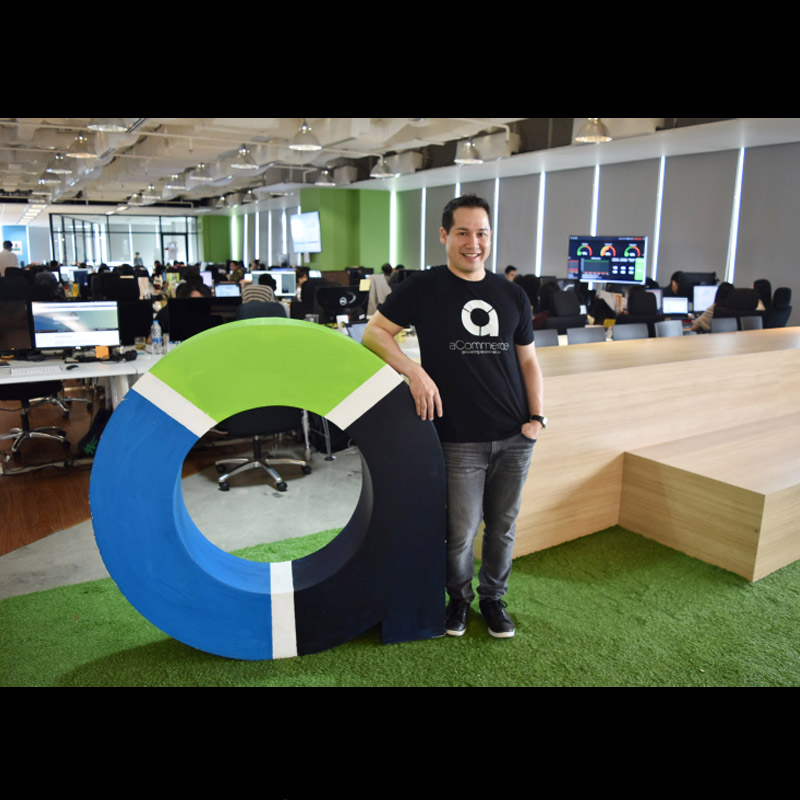
    MUMBAI: Southeast Asia’s leading e-commerce brand aCommerce Co has announced that it has closed a $65 million Series B funding round. It is an enabler and e-distributor in four markets for over 260 brand clients such as Samsung, Unilever, Nestlé, L’Oréal, Philips and Mars.

    The newest funding round is led by Emerald Media, a pan-Asian platform established by global investment firm KKR to fund growth investment opportunities across Asia. Other participants include existing backers Blue Sky, MDI Ventures and DKSH, with North Ridge Partners advising.

    “At the beginning of the region’s adoption of online, it was enough to simply have a website,” says aCommerce co-founder and group CEO Paul Srivorakul. “Fast forward a few years later and brands are realising that in order to stay ahead of the retail game, they need to be omnipresent and data hungry to fully control all pricing and consumer touch points. Customers want to reach their favourite brands at any time through any platform. Clients leverage our e-commerce expertise, data-driven approach and local footprint to effectively distribute their products to become business-to-all,” he adds.

    The investment will be channelled into further augmenting the company’s brand-centric tech platform that allows clients to ‘plug in’ and distribute through an integrated network of business-to-consumer (B2C). The investment will be further channelled into scaling strategic partnerships within the retail ecosystem in current markets – Singapore, Indonesia, Thailand and the Philippines while enabling client expansion into new markets like Malaysia and Vietnam.

    Given the rapid growth of the B2C market and retail industry in Association of Southeast Asian Nations, more brands are looking to launch on multiple channels to reach new audiences such as B2B that include speciality retailers, resellers, business-to-governments (B2G), and business-to-corporate employees (B2E).

    “Our platform covers the entire customer journey online, from product sample distribution, collecting customer data to driving and attributing purchases across channels like the brand’s own webstore and the region’s top marketplaces,” adds Paul. “Having a strong partner like KKR and Emerald Media with their years of investment experience in the region will provide capital and critical connections in content and demand generation across Southeast Asia, which we see a great deal of convergence in. We can provide our clients an even better level of transparency and accountability hard to find elsewhere.”

    The region’s residents are moving to online shopping at an increasingly exponential pace, expected to grow 32 per cent year-on-year for the next 10 years according to research by Google and Temasek. The surge in online activities has caused giants such as JD.com, Amazon and Alibaba to expand their presence in Southeast Asia’s retail market.

    “What gives us confidence in aCommerce is the company’s highly brand-centric technology platform that enables clients to simply plug in and use all operating systems, channel distribution methods and demand generation applications across the region,” says Emerald Media managing director and co-founder Paul Aiello. “This provides new entrants with a quick way to roll out multi-channel operations in these exciting markets without building large local operations.”

    In 2017 alone, brands such as Mars, Nestlé, and Unilever, have all established a stronger official e-commerce presence with aCommerce across the region in addition to selling through existing offline channels.

    “In four short years, aCommerce has established itself as a leader in Southeast Asia working with the world’s top brands. We look forward to accelerating the expansion of the business as a key player in moving Southeast Asia’s retail ecosystem forward,” concludes Emerald Media managing director and co-founder Rajesh Kamat.

  • Amazon to tickle your bones with Funny or Die films

    Amazon to tickle your bones with Funny or Die films

    MUMBAI: From only streaming to now producing, Amazon has taken a leap. One of the top OTT video content providers, Amazon, is financing the production of three Funny Or Die (FOD) comedy shorts to be available exclusively worldwide on Prime Video. This is happening for the first time that it is investing in the development of original, exclusive partner content.

    The deal has given creators, studios and distributors different options for distributing content on Amazon’s video platforms.

    Under the partnership, Prime Video will debut three new original FOD shorts on Nov. 10:

    Lovebirds

    Written and directed by Ahamed Weinberg (“Comedy Bang! Bang!”, “Quincy Jones: Burning the Light”), the short film tells the story of a lonely young man who buys a bird feeder to attract birds to the window of his studio apartment. When that doesn’t work, he’s compelled to fall in love with a woman in his apartment complex.

    The Jury

    Written and directed by Anna Kerrigan (“Hot Seat,” web series “The Impossibilities”), it brings viewers into a roomful of bored strangers called for jury duty awaiting their assignments, when a mysterious, foul odour unites — and then threatens to divide — them in a quest to find the source.

    Soojung Dreams of Fiji

    Documentary satire written by SJ Son and directed by Hye Yun Park about first-generation Korean-American Soojung Yoon, a renowned nail salon owner, who elevates her craft to an art form — an unexpected profession that puts her into conflict with her immigrant mother.

    According to the source Variety, Funny Or Die VP partner content Brian Toombs said, “We have had great success with showcasing our content on Prime Video through Amazon Video Direct.” Our comedy has really resonated with the Amazon audience and we look forward to showcasing these original shorts on the service.”

    Amazon Video Direct, launched in 2016, provides four options to content owners. They can make their content available: in Prime Video at no additional charge to Prime members; as an add-on subscription to Prime Video; for a one-time rental or a one-time purchase price; or available to all Amazon customers on an ad-supported basis. The new FOD shorts will be distributed on Prime Video globally.

    Funny Or Die was founded 10 years ago by Will Ferrell, Adam McKay, and Chris Henchy as a comedy website destination. The company, whose investors include CAA and AMC Networks, has increasingly branched into TV and film projects.

    ALSO READ :

    Amazon Prime offers deals to subscribers

    Amazon India head Nitesh Kripalani’s amazing growth recipe

    Cartoon Networks with Amazon Prime Video

  • Oppo  to go full steam ahead this festive season

    Oppo to go full steam ahead this festive season

    MUMBAI: Chinese smart phone maker Oppo Mobiles is getting into overdrive mode this festive season.

    The brand, which has tapped into the tendency of Indian youth (18-35 years) to take selfies and positioned itself as the selfie expert, commands a 24.2 per cent market share of the Rs 15,000 – Rs 30,000 segment category (as per Counterpoint Q2 2017 data). And, it is hoping to up that share further in Q3 2017.

    It is introducing a new phone, dropping prices of an earlier version, launching a new TVC featuring Indian cricketers, and continuing its massive media investment in Colors marquee shows like Big Boss and Kaun Banega Crorepati in its latest season.

    First the launch. In an Amazon online exclusive, Oppo is unveiling a Oppo F3 Diwali limited edition phone in festive red color with a sticker price of Rs 18,990 on 29 September. The phone will also be available on all Oppo offline stores across India and comes preloaded with festive themes and wallpapers.

    Says Oppo India brand director Will Yang: “This customised red phone, a colour that signifies the auspicious festivities, aims to help our consumers click perfect moments with their families and make this a preferred Diwali gift.”

    The brand has positioned the product as the best Diwali gift one can gift or buy. In order to lure more consumers into snapping up the new handset, Oppo will give away exclusive cricket bats signed by the Indian cricket team with each purchase of the F3. Oppo says it will also be announcing a price cut for its earlier model F3 Plus in the coming weeks.

    Yang believes that the new offering very much resonates with Oppo’s target audience: young people who are always looking for a fashionable smartphone. Says he: “In order to connect with today’s digital savvy generation or millennials as we call them, we continue to invest heavily in non-fiction shows, web series and cricket which is a religion in India.”

    The new TVC features Team India cricket players – Virat Kohli, Rohit Sharma, Shikhar Dhawan and R. Ashwin, along with a Bollywood Diva – Elli AvrRam. It shows the festivities that surround the festival and the importance of the perfect gift which helps you capture your memorable Diwali moments.

    Oppo, says it, leverages all platforms to connect with its consumers and uses a 360-degree marketing campaign for all its products and service but television continues to command the highest advertising investment.

    About 350 million people out of the country’s 1.2 billion population currently own a smartphone. To expand its presence to tier II and tier III cities, which are still relatively untapped regions in the country, Oppo is looking to tie up with local merchants to rebrand their stores as Oppo stores. Although the brand enjoys a healthy mix of sales from urban and rural areas, 55-60 per cent of its offtake comes from mini metros and rural.

    The company at present has 25,000 point of sales in India and aims to open 550 plus after sales service centres by the end of 2017. “Our key focus is on offline sales and that is why we are constantly exploring more retailers to get on board,” Yang concluded.

  • Brands bullish this festive season but not for Navratri

    Brands bullish this festive season but not for Navratri

    MUMBAI: Marketing mavens are aware that a majority of brand spending in India takes place between August and December every year because of a range of festivals that dot this period. It begins with Raksha Bandhan and chugs ahead with Ganesh Chaturthi and gathers steam in September with Navratri, Durga Pooja and Dussehra, only to move at a superfast speed during Diwali, until the calendar year ends. Indian consumers are in a celebratory mood, flush with cash, courtesy employment bonuses.

    The past 10 months have, however, been different. The reason: the double whammy of demonetisation and the rollout of goods and services tax (GST) put the brakes on optimism. Both forced brand custodians to zip up their ad purses and postpone any spends until customers had money to splurge and the entire GST process – which commenced on 1 July 2017 – panned out.

    Net result: even the months of August 2017 and early September 2017 have seen sedate brand activity. Questions are being asked whether marketers are ready to let their hair down during Navratri 2017 to get consumers back to spending on goodies ostentatiously?

    Indiantelevision.com got in touch with a clutch of marketers and agency heads and the consensus was that a majority of national brands are going to go easy on both, Navratri and Dussehra, but they are going to go hell for leather during Durga Pooja and Diwali, allocating a large chunk of their ad and promotional budgets during these two periods.

    Even in Gujarat, which normally goes into marketing overdrive during Navratri,  there will be some amount of softness this year between 21-29 September.

    “Navratri is clearly the biggest festival in Gujarat which is bigger than Diwali in terms of activations and promotions. It is a big period for Gujarati channels (national and local) as all major FMCG brands, automobile brands and local retailers want to make the most of this season but the spends will be soft this year because of GST and demonetisation,” says a media expert.

    Navratri event organisers in Mumbai and Gujarat had to struggle this year to find sponsors mainly due to the fact that real estate and telecom categories, which otherwise are heavy advertisers during the nine-day festival, shied away, unlike previous years.  The real estate sector was relatively cold as a majority of the developers are busy getting their houses in order to comply with the stringent requirements that new real estate regulations that have been thrust on them by RERA. Adding to developers’ relative lack of enthusiasm is the GST rollout.

    Says a media buyer from a leading agency: “Navratri this year will see a lot of local and retail advertising rather than multinational players. This is a great opportunity for local and small brands to promote themselves on the venue or via various BTL activations at a reasonable cost which otherwise would be priced very high.”

    Indeed, some savvy companies are stepping in to take advantage of the opportunity and spend on the various garba events that have been organised across Mumbai and Gujarat. Thousands gather on various grounds in these two states to dance to the rhythms of dandiya stars — Falguni Pathak, Parthiv Gohil, Preeti Pinky, among other. These events are normally aired on the local cable TV channels as well as on some of the handful Gujarati language channels.

    Consider:

    * ONE Broadband, Hinduja Group’s Flagship Company for Telecom Data Services for Consumer & Enterprise Segments will be offering unlimited 10mbs free Wi-Fi service to the devotees during Navratri season across Maharashtra and Gujarat.

    * Residential, commercial and real estate company Ruparel Realty is the title sponsor for Mumbai’s Navratri Mahotsav 2017 while Colors Gujarati is the television partner for the event. Gujarati queen Falguni Pathak will be seen performing at the event for nine days.

    * Ride hailing app Uber will provide lucky customers with a free gift hamper which consists of free passes for Radio Mirchi Rock n Dhol garba event in Gujarat along with two dandiya sticks.

    * Online e-commerce platforms  Flipkart, Amazon and Ebay have also announced their big sales to commence the festive season encouraging people to buy more products online. The sale on these platforms began yesterday and will go on for a week.

    Dentsu Aegis Network chairman and CEO – South Asia Ashish Bhasin told Indiantelevision.com that there’s no reason to worry, however, as overall he sees the festive season spends this year growing 20 per cent over the last year even as the advertising budgets for the whole year will expand 10-12 per cent. What this means is that the last quarters of this year should contribute heavily, and help make up for the losses during the previous quarters.

    Bhasin notes that consumer goods, automobiles and FMCG  sector are going to go all-out with campaigns to seduce India’s fast-burgeoning middle class.

    A media planner adds that brands are actually drawing up massive plans and there’s actually going to be a shower of spending (mainly by categories like automobiles, real estate, jewelry, electronics along with e-commerce)  this festive season as most of them have got over the demonetisation and GST issues.

    That should be music to most media and TV ad sales professionals who have been toiling away, struggling to meet their ad sales targets.

  • Martin Sorrell on how WPP is combating ad world slowdown

    Martin Sorrell on how WPP is combating ad world slowdown

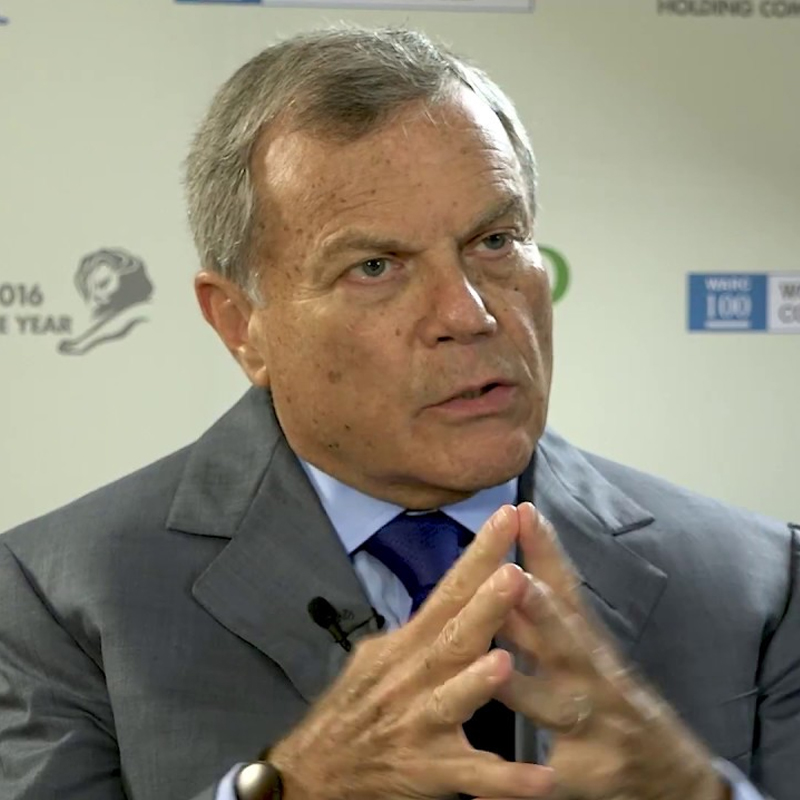
    MUMBAI: It’s been sometime that we have got to listen to advertising heavyweight and guru Martin Sorrell’s unique insights. For those who have missed him, he’s still at his vintage best. The WPP CEO shared his worldview on what’s impacting the advertising business and how the industry is combating with the slowdown in a fireside chat with Goldman Sachs analyst Lisa Yan at the 26th Goldman Sachs Communacopia Conference held last week.

    Sorrell pointed out that the advertising industry has been generally  going through a slow growth-pace for a while now, though it has seen some upward movements for a short period. The reasons: low-economic growth, low-inflation, very little pricing power, and focus on cost, amongst clients. “That’s been tolerable, certainly up until, I would say the end of 2016,” expressed Sorrell. “What we started to see, a little bit of softness…certainly in Q4 of last year.”

    What caused this slowdown? Sorrell gave at least three hypotheses that could have contributed, and could continue to do so, and industry will have to have adequate responses to them.

    The first being consulting firms who have been looking at generating cost savings for bottomline-focused corporations, and the first expense they have been scratching out is advertising.  

    “I think you can build the case, so that consultants, it’s not just an Accenture or Deloitte or BCG or McKinsey or Bain, go into client and say you’re spending too much money generally, your costs are too high, we’ll see if we can do something about it, and that fans out from there,” said Sorrell.

    The second hypothesis is that increasingly agencies and brands have been diverting spends towards Google and Facebook. “Google and Facebook have become significant  destinations… we are the most significant customer with  the two – on behalf of our clients,” he said. “If Google was $5 billion, Murdoch $2.25 billion and Facebook $1.7 billion last year, this year the figures are Google $5.5 billion-$6billion, Facebook $2.5 billion, and Murdoch $2.25 billion.”

    Sorrel labeled the two digital giants as frenemies, though he acknowledged that they have become friendlier than last year, especially Google.

    The third hypothesis – which he called the most plausible reason for the impact this year – “is that in an era of cheap capital, a zero cost — or close to zero-cost capital, there are pools of capital which fund zero-based budgeting approaches or private equity activist approaches that are putting tremendous pressure on particularly packaged goods companies,” said Sorrell. “Their approach has get rid of R&D spending, get reduced marketing spending and its running across sectors…Beyond tech and pharma, top-line growth is very hard to come by. And, I think that’s the central issue. So, as long as there’s cheap capital, as long as there is this very significant pressure of a zero-based budgeting and an activist later, you’re going to see pressure.”

    Sorrell does not expect the era of cheap capital to go away quickly thanks to Hurricane Harvey and the tragedies in Houston and Florida. “The results of this is indices rise, the fed probably is going to keep interest rates down lower longer,” he expressed.

    WPP has been responding to these challenges, he pointed out, through what it calls horizontality – basically integrating the  company in a much more aggressive, seamless, efficient manner.

    The second response has been zooming in on the high growth markets of Asia, Latin America, Africa, Middle East and central and eastern Europe. “That continues. That’s a third of our business; it continues to be a high level of focus,” he said.

    WPP, has got a razor sharp eye on digital which is 40 per cent of its business. “It is very much in the target range that we identified three, four, five years ago. It doesn’t stop at 40 per cent, 41 per cent, which it was in the first half of the year; it has to go beyond that, so probably to the extent where ultimately everything is permeated in one way or another by digital. But that’s some way off, but getting closer,” highlighted Sorrell.

    “Making data, the centre or a significant part of the centre of what we do is critically important, particularly when you have disintermediation in retail from the likes of Amazon or Alibaba or Tencent or JD.com or others where the battlefield will ultimately be about who controls the data,” he added.   He, however, mentioned that the growth of data has not been as good as the industry would like to see it but that doesn’t diminish its importance in relation to horizontality.

    Sorrell expressed his worry that what’s happening in the packaging goods industry could have worrying implications as a whole for the ad business.

    “My hypothesis would be that cheap money is chasing packaged goods and driving up the valuations. And those last three quarters, if you look at revenue growth at 2.4 per cent, it’s mainly price, very little volume. And those of you know how packaged goods companies function know that the moment the volumes stutter and stagnate or even fall, which is the case with a number of packaged goods companies, the trouble starts. If you have fewer consumers, fewer customers,  that’s when the trouble starts. So, I come back to this, and it’s fundamental obviously, it’s our lifeblood, I come back to this thing that investing in innovation and brand is key, and that’s the heart of it,” the WPP chief elaborated.

    WPP has lost out on a lot of business (AT&T and VW) in recent times, and Sorrell stated that competition will always stay but it’s a question of price. “I’ve never heard any of our people say to me it was because we didn’t do a good job, they’ve always said it’s because somebody else discounted and we lost the business on the basis of price. Sometimes, that maybe the case but I think mainly it’s due to the qualitative side of the offer. But, I think we’ve got our act together much better on integration,” he added.

    Google is the biggest destination for WPP’s media spend for their clients. “It is by definition currently the most powerful media channel that you can find, search being the primary product. Boycotting that, not accessing it, I think is a mistake. Working with Google to improve the way that they manage the process is the way to go,” he said.

    Sorrell also mentioned that WPP will be changing its regional management approach encouraging more integration on shared client work across agencies. “Well, with the growth of technology, with the rise of the BRICs — Brazil, Russia, India and China should not be regional reports, they should be direct to the center. Even if that upsets regional managers,” he quipped.

    He said that he saw Amazon becoming a very serious threat to Google on search with 55 per cent of product searches in the US  emanating from it. “Amazon now has a voice activated device. Every one of the Fearsome Five has a voice activated device. What that means for brands is very serious.”


  • Govt steps helping APEJ STB market, global sales may expand at 7.5pc CAGR

    Govt steps helping APEJ STB market, global sales may expand at 7.5pc CAGR

    MUMBAI: Owing to increase in penetration of television and TV services within rural areas as well as urban areas, the set-top box market will receive a boost all across the APEJ region. Disposable incomes are on a rise in India and China, and this is helping the set-top box (STB) market turnover to grow, according to Reportlinker study. In China and India respectively, governments have taken initiatives to focus on HD pictures, HD channels and decline in TV prices. This has led to the growth of the set-top box market in the APEJ region.

    The global set-top box market is estimated to be valued at US$ 22,269 million in 2017 and is projected to reach US$ 46,091 Mn by 2027 end. Sales revenue is expected to increase at a CAGR of 7.5 per cent during the forecast period (2017–2027), the Reportlinker report added.

    Increasing demand for TVs from rural areas boosting the set-top box market in the APEJ region: Due to increase in penetration of television and TV services within rural areas as well as urban areas, the set-top box market will receive a boost all across the APEJ region. In the Asia Pacific region, consumers are more aware about the features, quality and pricing of the set-top box, helping the market achieve greater growth and acceptability.

    Increasing demand for IPTV STBs is fuelling the market for set-top boxes in North America: Increasing demand of 4K TVs is expected to provide support to the growth of the set-top box market in North America. It has been observed that the demand for IPTV based services has increased by 12 per cent and operators are viewing IP-based services as an opportunity to differentiate their products. IP transmission recording features and higher storage specifications are anticipated to support steady revenue growth of the North America set-top box market.

    Domestic production and low-cost products hampering the market growth in APEJ: In the Asia Pacific region, domestic production of set-top boxes by local companies is leading to an increase in price competition with global set-top box manufacturers. Emerging companies are acting as competitors to the established players in the market, thus making the smooth operation of this market difficult.

    Focus on HD videos and powerful interfaces with technology a growing trend in the global set-top box market: It has been observed that set-top box vendors are focussed on supporting devices that enable seamless rendering of high-quality video on a powerful user interface and set-top box vendors have started manufacturing operation systems and app based set-top boxes. The global market is moving towards the 4K android customised set-top box and smart set-top boxes. It has been observed that in the past few years, set-top box manufacturers have shipped a large number of 4K set-top boxes in the APEJ region, and consumers are more aware about the technology and features of set-top boxes in this region.

    Flexible policies and government support encouraging the use of set-top boxes in the APEJ regional market: In November 2015, the Chinese government banned 81 third party apps that allow users to turn television sets into internet streaming devices. The Chinese State Administration of Press, Publication, Radio, Film and Television proposed a rule for governing set-top boxes. In China and India respectively, governments have taken initiatives to focus on high definition pictures, towards HD channels and decline in TV prices. This has led to the growth of the set-top box market in the APEJ region. Manufacturers in this region have also utilised e-commerce retailers such as Alibaba, Ali Express, Amazon, Flipkart etc., and this has propelled the growth of this market.In terms of value, the North America set-top box market is projected to be the most attractive regional market in the global set-top box market during the forecast period

    However, the APEJ market is also poised to register high Y-o-Y growth rates throughout the forecast period. In terms of value, APEJ is anticipated to register a CAGR of six per cent during the forecast period. In 2016, the APEJ market was valued at US$ 6,067.4 Mn and is expected to witness sustained growth in terms of revenue throughout the forecast period.