Tag: Amazon

  • Amazon India to launch 10 originals in 2018

    Amazon India to launch 10 originals in 2018

    MUMBAI: With the advent of digital and data cost coming down, there is a cut-throat competition among digital players to grab as many eyeballs as they can. Amazon Prime Video is set to launch 10 original shows in 2018 for India.

    These include unscripted shows like Remix which is nearing its release, Comicstan which will be a hunt for the next stand-up comic and two more shows where the titles are in the final stages. This will later be followed by director Zoya Akhtar’s premier striped fiction – Made in Heaven along with Mirzapur and 4 More Shots. While calling the shows a pure labour of love, Amazon Prime Video India director content Vijay Subramaniam says, “We are very clear that we want to give our customers high quality and the process of setting that up takes a really long time. For every story we create, we make sure it gets the amount go time it deserves to be put together.”

    E-commerce website amazon.in helps prime video in a great deal to penetrate into smaller markets as people already have a relationship with the brand. Subramaniam is of the opinion that young consumers in India like unscripted content and Amazon Prime Video and although the platform is only a year old, they want to get to a place where they will know what the right mix between scripted and unscripted is.

    With a solid set of content on its platform and an equally aggressive attitude like Netflix and Hotstar, the platform banks on creative content marketing for the promotions of its shows. Amazon chose a funny path to promote American comedy web series The Tick with Indian comedian Jose Covaco who created hilarious videos about what the audience can expect from the show. 

    José Covaco

    With digital changing the way brands communicate with audience, Amazon Video uses social media in a large way to connect with the consumer and as a marketing tool but also leverages out of home (OOH) in a big way to promote the shows and the platform itself. But it wants to restrict its OOH only to metro cities as that is where the majority of viewership comes from. 

    Amazon Video was launched in 2006 but came to India only in December 2016. Launched with an initial offer price of Rs 499 for free and faster delivery of goods bought on Amazon, free content viewing, and free music streaming, the subscription cost is expected to go up to Rs 999 this year. The move might come as a bad news for several subscribers as they might not be willing to pay the extra buck resulting in a drop of subscribers. 

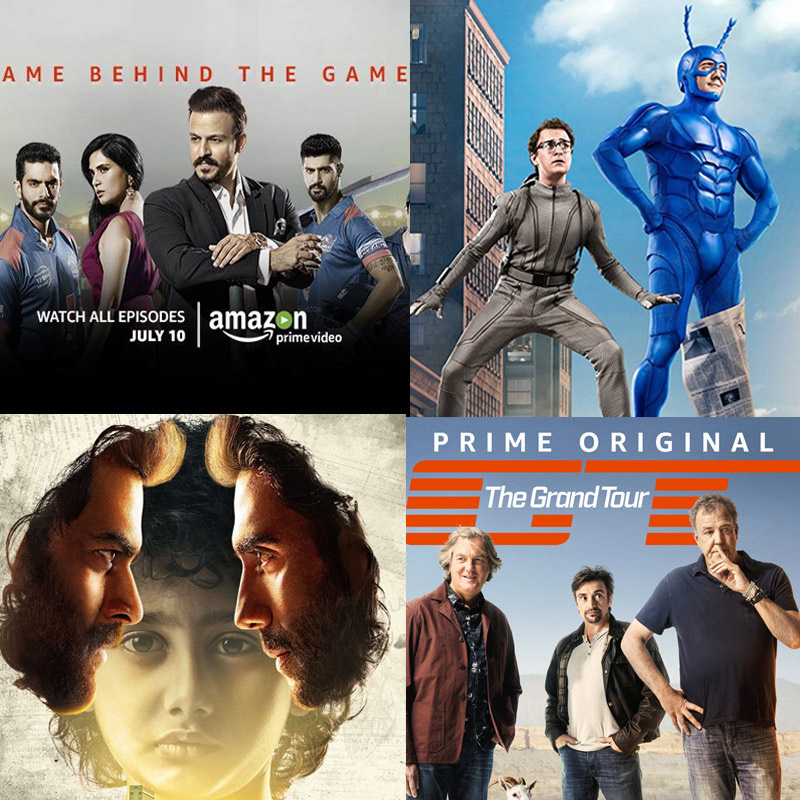
    Although the platform had a lukewarm beginning when it began operations in India, its original show – Inside Edge became a game changer for the player as the show went out to become one of the most successful property for the platform. The OTT player marked the new year by announcing its new scripted thriller show, Breathe which has the quality of cinematic television. With the availability in over 200 countries, the show will be available in Hindi, Tamil and Telugu.

    In order to expand its reach, Amazon Video recently tied up with Indian telecom operator Bharti Airtel to offer one year of free subscription. Amazon Prime India director and head Akshay Sahi opines that the move enables seamless access to Amazon Prime for Airtel postpaid customers, providing a world of new video streaming content and more.

    But the player faces stiff competition from global giant Netflix that also entered the Indian market in January 2016. Netflix in India comes with three different subscription plans – basic, standard and premium where the basic subscription plan starts as low as Rs 500. With data becoming cheap and smartphones become more accessible to a large part of Indians, it will be interesting to see how the digital and OTT space shapes up and how players create content for consumers. 

    Also Read :

    Guest column: Ads that didn’t work!

    The ins and outs of femvertising

    Industry applauds Sam Balsara as he turns 67

    Going from clicks to bricks

  • Amazon says out with the old in Great Indian Sale ads

    Amazon says out with the old in Great Indian Sale ads

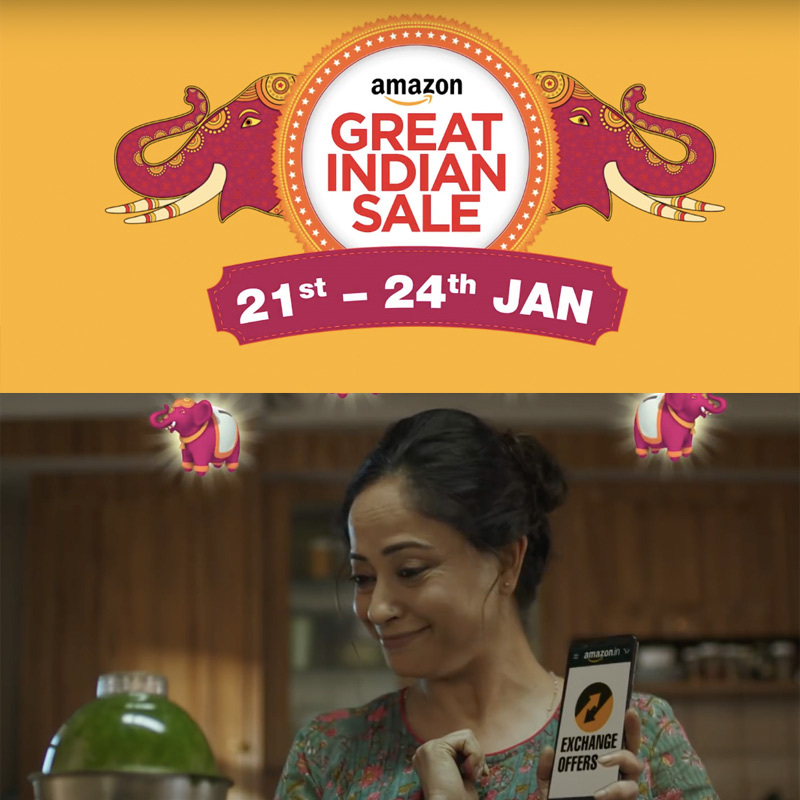
    MUMBAI: E-commerce giant Amazon has launched its new campaign ‘Ab Sehan Kyun Karna’ in tandem with its first Great Indian Sale for 2018. The message to the customers is to do away with the old and usher in the new for the new year.

    The campaign features a series of ads on various situations in which customers break out of the spiral of managing with the next best thing. The campaign ads have been directed by Rajesh Krishnan of Soda Films.

    Conceptualised and created by Leo Burnett Orchard Bangalore, the campaign was brought to life through four TV ads that seamlessly bring together unique features of Amazon and overlays it with the Indian shopper’s mindset of adjusting with an old/damaged product in order to save money.

    The first film opens in an Indian kitchen, where the lady of the house is having a conversation with the mixer about how she has lived with its many tantrums over the years.

    The second film is set in a typical Indian bachelor pad. We see the protagonist using his old phone in spite of a loose charging port. Both the ads then change their tone with the characters declaring that the old mixer and phone have to go, especially since the Amazon Great Indian Sale is around the corner.

    With this campaign, Amazon wants to tap into the cultural truth that people in India generally manage with less-than-desired products and wait for special occasions such as anniversaries and birthdays to replace/upgrade them. The focus of the new campaign is the emotional and cultural conditioning that creates a barrier to accessing the goods Indians want.

    Amazon India director mass and brand marketing Ravi Desai says, “We understand that customers sometimes manage with old/defective products or without some products in order to postpone expenses. Considering Amazon’s constant quest to be earth’s most customer-friendly company, we wanted to put our best foot forward to address this behaviour. The Amazon Great Indian Sale with its big deals, extra cashback, no cost EMI and exchange options gives customers the perfect opportunity to replace those run-down products with new, upgraded versions while still saving money.”

    Leo Burnett Orchard national planning head Rohitash Srivastava adds, “Indians wait for right occasions to buy/replace things. Diwali, birthdays, auspicious occasions have been such marquee days. Our ambition was to let people look at the Amazon Great Indian Sale as one such occasion. Working with this insight, we nudged people to not adjust any longer with the old or postpone the new.”

    The campaign is supported by a robust 360-degree communication that spreads across digital, press and outdoor.

  • Patanjali to partner e-tailers to boost sales

    Patanjali to partner e-tailers to boost sales

    MUMBAI: In its most recent move to provide a fillip to sales, Baba Ramdev-led Patanjali Ayurved is likely to partner with eight leading e-tailers and aggregators to give a big push to online sales of its swadeshi range of fast-moving consumer goods (FMCG) products. Some of Patanjali’s products are already available on several online platforms through various other sellers but this would allow the Haridwar-based firm to systematically place its range of products, said a company official.

    The Haridwar-based company is expected to enter into agreements this month with major online retailers such as Amazon, Flipkart, Paytm Mall, 1MG, Big Basket, Grofers, Shopclues and Snapdeal, a step through which its range of products will be available on various online platforms.

    Patanjali will be organising a function on 16 January where representatives of all the online companies are expected to attend it along with Ramdev and the company’s MD Acharya Balkrishna.

    Patanjali spokesperson S K Tijarawala said, “We are now going into it in a massive way. Now, we would have an organised and systematic agreement with the players to place our all product online, so that it could reach to customers to the end point.”

    These partnerships with e-tailers will be in addition to its own portal patanjaliayurved.net, wherein the company is already selling its products online. “This would change the scenario of whole FMCG trade through online. Through this arrangement, Patanjali’s product could be served across the globe,” he added. 

    However, he refused to share further details and arrangements with the online retailers.

    Recently, Patanjali had forayed into kids and adult diapers and affordable sanitary napkins segments. Last month, it had also announced venturing into solar equipment manufacturing. Besides the FMCG segment, Patanjali is present in other sectors such as education and healthcare. In 2016-17, it had crossed a turnover of Rs 10,500 crore and aims a two-fold growth this fiscal.

  • Going from clicks to bricks

    Going from clicks to bricks

    MUMBAI: Nothing beats the feeling of being served at your doorstep and this convenience is what has thrust e-commerce to pole position among shoppers worldwide. Add to it the ease of picking, cross-checking prices across sites and the frequent discounts are the cherries on the cake.

    The growth of e-commerce became evident since 1994, with the first sales of Sting album in the United States. Soon, products like wine, chocolates and flowers became the pioneering retail categories which further fuelled the growth of online shopping. Before long, researchers dug out that some products are more appropriate for e-commerce buying than others – most of them turned out to be generic items which didn’t need physical touch validity. Nothing isn’t online today, you name a product and it’s up for purchase.

    India officially went online publicly in 1995; before that, it was only for research and educational institutes. It was in the early 2000s when India was introduced to a novel way of purchasing – teleshopping. With the advent of the internet age here, this hopped onto the web with Flipkart being one of the earliest entrants. Starting with books, the Softbank-backed company is now giving a tough fight to America’s Amazon.

    Old teleshopping TVC:

    Today, India has an internet user base of over 450 million, which accounts for 40 per cent of the country’s population. NASSCOM has projected the country’s e-commerce market to be worth Rs 2 lakh crore this year. As per Google, there were 100 million online shoppers in India in 2016. Online apparel is one of the most popular verticals, which along with computers and consumer electronics, makes up 42 per cent of the total retail e-commerce sales. According to various media reports, India’s online retail market grew at about 25 per cent in 2017 and is projected to touch $20 billion by the year 2020. It won’t be incorrect to say that it has been a joyride for online websites and e-commerce platforms in India.

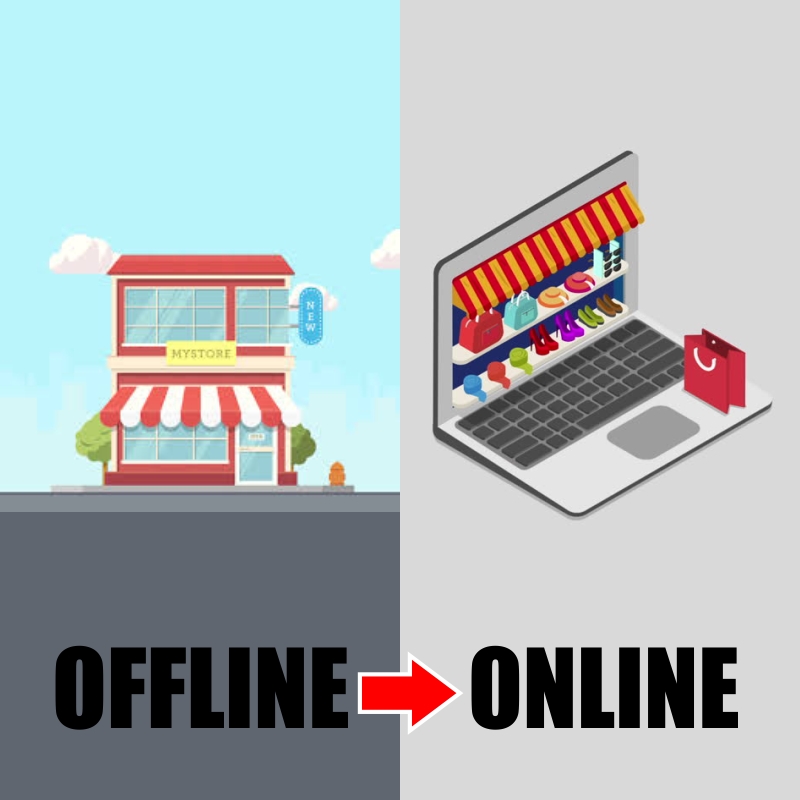
    But things seem to be changing now. Following a successful run in the online world, e-commerce companies are now venturing into a space they once thought would soon see the same fate as dinosaurs— brick and mortar stores.

    Globally, this phenomenon has taken the industry by a storm. Large organisations that were leaders in online have taken the route of opening physical stores or pop up shops. E-commerce marketplace Amazon is one such example. The global giant has teamed up with Calvin Klein to open holiday-themed pop-up stores in New York City and Los Angeles. Chinese e-commerce titan Alibaba is all set to steal a page from Amazon’s playbook by opening its first store in Shanghai.

    In India, lifestyle and fashion company Myntra, beauty and cosmetics website Nykaa, eyewear company Lenskart, housing and furniture websites Pepperfry and Urban Ladder and lingerie website Zivame are a few of those who have taken the online-to-offline route.

    Lenskart has established its strong presence in the offline space and is targeting to take its total brick and mortar count to over 900 in the next two years. Its current 400 offline stores contribute 50-60 per cent of its business. Online furniture website Pepperfry currently has over 23 physical stores which contribute 20 per cent to its overall sales.

    Flipkart owned online fashion marketplace, Myntra is considering launching its own multi-brand offline stores where customers can walk in and shop for all the collection that is also available on its online platform. Earlier in March 2017, Myntra launched its first offline store in Bengaluru for its homegrown brand – Roadster. The decision is in line with the company’s effort to aid profitability.

    Pepperfry, Lenskart and Urban Ladder are aiming to come up with their Initial Public Offering (IPO) in the next two to three years.

    Chinese mobile handset manufacturer Xiaomi, which was only available in India via Flipkart and Amazon in 2016, decided to open up stores here to boost sales and boy, did that work for the company!

    Xiaomi, which currently has 13 Mi Homes in top six metro cities, plans to increase the count to 100 by the end of next year. The Chinese manufacturer clocked revenue of about Rs 7000 crore in 2016 but doubled it in 2017 posting Rs 14,000 crore.

    Online leaders are investing heavily in setting up physical stores to fuel their next phase of growth. The move aids them in getting more customers and the hybrid strategy helps in gaining double-digit growth figure while expanding the business.

    Setting up offline stores also helps brands in balancing the high cost of acquisition that the online store demands. Although this is an emerging trend which will play an important role for online retailers in the days to come, brands have begun to embrace this omnichannel approach.

    Having said that, it is also a gamble that not every brand might have an appetite for. Setting up physical stores means investing heavy money into infrastructure and land acquisition while also running the risk of the store being an utter dud! It is a win-win situation for brands that are willing to embrace the step back.

    Also read:

    A year after demonetisation: E-payment services emerged winners

    BFSI’s changing communication in the digital era   

    E-commerce ad wars are the result of marketing myopia: experts


  • Guest Column: The comeback of full-service agencies in India

    Guest Column: The comeback of full-service agencies in India

    By 2020, we will be close to a billion digitised screens. With the advent of cheaper data and smartphones and by virtue of tech giants such as Google, Facebook and Amazon entering the grassroots of India, digitisation has become inevitable. And it’s going to be mobile plus digitised television (OTT) that’s going to drive most of the scale.

    If digital is where maximum content is going to be consumed, surpassing Dish/Cable TV in most geographies, then brands will slowly and steadily move towards exploring digital in a much-evolved fashion and at a large scale. This means media and creative agencies will have to rethink their game plan, which has not changed much in the past two to three decades. Many questions arise, such as will mainline agencies reverse integrate their creative and media thinking to digital? Will digital agencies be able to manage the scale and responsibilities of managing multi-million-dollar campaigns? Will there be a need of creative and media standardisation? How many agencies will a client want to deal with to achieve the end objective? Who will win the rat race? And the list goes on, as we start thinking about how agency life will be when digitisation takes over completely.

    In my view, consolidation to make a full-service agency that gives solutions across screens plus creative and media is going to be the future. To date, most agencies are not fully prepared to manage this new world of ‘non-line,’ that is not just online or only offline but both together, as the lines are starting to fade. Mainline and digital agencies are poles apart in creative as well as media thinking but both are eventually chasing one goal. And that’s where the need of a full-service agency is, which creates and advertises one campaign with one objective across multiple platforms and formats. Not to ignore the fact that advertising bodies will also play an equal role in the entire standardisation process. And, sooner or later, it’s a self-evolving cycle that we will all get into, like the one mentioned below-

    1)  Consumers will become more and more digitised; thus, brands will want to get them through digital mediums across mobiles, TVs, PCs, tablets, and even hoardings

    2)   One master creative created in various sizes and formats will start to be the new norm with a fair bit of shoulder content for digital

    3)   And then planning will get more standardised across various mediums and consolidate into one form

    4)   KPIs will become more standardised as well to judge campaign effectiveness against various brand objectives

    5)   Possibly, there will be one tool that agency networks will create and connect to plan and buy across in a truly ‘non-line’ fashion

    This model of a full-service agency exists in mature markets such as the US, Japan, Singapore and will soon be a reality in India as well. Such a model increases planning and operational efficiencies and also ensures standardisation, right from planning to execution to industry benchmarking.

    It’s about time large agency networks wake up to the reality of a full-service model or soon a challenger start-up that is nimble to take such decisions will start changing the name of the game!

    The author is VP operations & media – West & South, WATConsult. The views expressed are personal and Indiantelevision.com may not subscribe to them.

  • Guest column: Taking Indian content to the global market

    Guest column: Taking Indian content to the global market

    The year 2017 has been a year of paradigm shifts in the wake of Digital India. Over the last couple of years, international OTT and VOD players such as Netflix, Amazon Prime Video, etc, have been making inroads in the Indian market to unlock the true potential that our increasing digital-first audience provide. Telecom, print, broadcasting, FMCG, and virtually every industry has ventured into the digital space. India’s journey on the digital path saw a rise in the number of homegrown content streaming platforms, with some creating original content and some taking and distributing content from external creators. While it came as a boon to India’s digitally driven audience, there was still a paucity of locally relevant content creators and platforms. On the other hand, short length format shows/series soon began to launch in regional markets as well. Additionally, region specific OTT platforms took shape. These developments assured that not just millennials, but family audiences as well were fed entertaining content on digital that matched their tastes and preferences.

    Internet penetration and adoption in India has been at an all-time high. As per the KPMG India – Indian M&E report 2017, currently there are 462 million internet users in the country out of which 82 per cent of them access the web through mobile devices. Competitive mobile data pricing and the overwhelming mass adoption of 4G led to a revolution of gigantic proportions for content creators in the digital space. It positively aided the growth of OTT/VOD platforms and thereby, short format content. However, while we continue to open windows for international players and brands to get more and more access to Indian audiences, either by placing our shows on their platforms or striking partnerships to deliver their content here, the most significant question for me is how far are we actually taking ourselves beyond India and Hollywood?

    While India’s vision of digital continues to get served, how is that making a difference to the country’s economy? How far are we expanding our digital footprints beyond existing geographies by leveraging both homegrown and international OTT platforms? The year 2018 might well be a step in this direction which in turn would begin to provide the answers to us. A SWOT analysis for the possibility of this happening in the near future would give some key insights on the plan of action.

    Focus on the strength – Content, the driving force

    While we speak about the generalisation of Indian content across territories through OTT platforms, a similar example was already set this year. Dangal’s staggering success numbers in other countries and approx Rs 200 crore (fifth-highest earning non-English film in global box office history) in China speaks for itself. A similar fate followed for Secret Superstar. These examples prove the potential that lies for Indian content creators to venture into untapped regions beyond India. These mega movies clearly state that strategy plays a vital role in accomplishing the desired results. India is another key selling factor is the original content curated by every media and entertainment entity which brings a fresh perspective. With such great pool of data that lies with us, only selling it won’t serve the purpose. Where do you sell it and how is what will decide its best outcome.

    Understand weaknesses

    The major roadblock in venturing into other regions is the language barrier. Upon deciding the target regions, next thing to consider is the national language of the country and whether its audience prefers the global language. Analysing this would mean additions or modifications for dubbing or sub-titles in the content, such that it match the sensibilities of the audience across different languages and sensibilities.

    Tap into the right opportunities

    India’s rich content resonates well with the masses. We are fed with entertainment from across the world, likewise, there also exists a majority of Indian diaspora in regions where we haven’t made in-roads yet. Evaluating such regions helps tapping onto a ready audience base. In order to expand the reach further, it is very crucial to research about the consumption pattern of the region, the inclination towards short-format content, internet usage statistics, number of mobile device users in that region. The digitally savvy audience looks for great content, be it from any source. A populous region having an audience base with varied tastes automatically ensures effective penetration of content into a newer market.

    Evaluate the threats –  adapt a differentiated approach and have an evolving nature

    The digital world in itself is quite vast with various existing and upcoming mediums that provide access to entertaining content making it widely available. A stark comparison would be between Asia’s first premium VOD service Hooq and the homegrown platform Voot. Hooq’s strong strategy reflects in its distinguished offering. It serves its customer with varied options to choose from Hollywood, local and regional shows across multiple platforms. On the other hand, Voot has tactfully planned its expansion across geographies in a short span of time. There is this agnostic nature of the players from other territories looking at a similar expansion plan that would increase the competition for Indian content creators to gain visibility overseas. Building a differentiated plan of action and being flexible is the key in such a scenario.

    While we analyse the various means by which we can best cater to the potential markets across territories, the digital platforms and content creators should continue to maintain a strong foothold within India itself. Having a catalogue of rich content and effective reach pan-India will attract more international brands that look at reaching out to their TG in the country. This in turn will bring in more international buyers which will eventually pave way for homegrown content to have a global presence few years down the line without having to actually root for the expansion, the other way round. This indeed will be a game changer in taking Indian content to global markets.

    The author is the CEO of Worldwide Media.The views expressed are personal and Indiatelevision.com may not subscribe to them.

  • The year of sex scandals

    The year of sex scandals

    MUMBAI: The year 2017 will be known for the open-to-the-public-eye exposure of the dark underbelly of the media and entertainment industry. And it did not happen just in Hollywood or in American prime-time news — the Indian entertainment ecosystem was not sequestered from it.

    No, no not all. Skeletons spilled out of the closet as allegations were hurled at TV hosts, journalists, on-screen talent, creative and business icons that they could not keep a check on their excessive libido and lust and keep their pants and zippers up. Accusations of sexual molestation and abuse saw them fall from grace.

    Several of them faced the axe. Some issued denials and protested their innocence. Some of them admitted to the excesses and misuse of their positions and apologised — their organisations stated that they were bringing in place processes to prevent recurrences.

    Amongst the major scandals that hit media-dom and entertainment-dom include:

    The Viral Fever gets a virus

    The Viral Fever’s (TVF) Arunabh Kumar had become a darling of the new-age digital content generation. Almost everything he touched on behalf of brand partners was lapped up by millions who had been starved for content for too long.

    And then an anonymous post was made by a woman online. In it, she alleged that Kumar had preyed on her. His company pooh-poohed the post, saying it was put up to discredit TVF. More women surfaced to complain. The denials continued and the same digital generation that swore by him came out in hordes and trolled and slammed his behaviour on various social outlets.

    A video production executive filed a first information report (FIR). Another FIR followed. The police swooped in, Kumar was questioned several times, and he was arrested and released on bail immediately. Under pressure from investors, the company decided to let go of Kumar, who, in his parting post, said that TVF was bigger than any individual.

    Shilpa Shinde’s long running feud

    Actor Shilpa Shinde—who is stealing the limelight on Colors’ happening show Bigg Boss—had been feuding with her Bhabhiji Ghar Par Hai producer Sanjay and Benaifer Kohli about an exclusivity clause for over a year that prevented her from taking up other assignments and the mental harassment it caused her. Benaifer Kohli, on her part, had highlighted Shinde’s unprofessional behaviour, which included throwing tantrums, leaving the show mid-way and also demanding a higher per-day fee. The channel supported Kohli and Shinde was let go. Both filed suits against each other; the Kohlis wanted Shinde to cough up Rs 12.5 crore for losses caused to them on account of her walking out; Shinde wanted Rs 32 lakh for alleged back payments not made.

    Shilpa approached the actors’ union, which did not support her. All was quiet while the two fought a legal battle behind the scenes.

    And then in March Shinde shocked the world by alleging that Sanjay Kohli had touched her inappropriately and even made suggestive statements to her. She filed an FIR while the couple filed a defamation suit. The husband-wife duo denied the allegations outright and questioned her motives having taken so long to hurl such accusations.

    Somehow, Shinde stopped mouthing the charges, the controversy seemed to have lost steam—probably, it did not have too much of it in the first place—and she then moved on to reality show Bigg Boss.

    Were her charges real? Or was she just gathering enough of a bad girl and controversial reputation to push her candidature and be considered for selection to the Bigg Boss house?

    These are questions to which answers will emerge when she emerges from the Big Boss house. But, for the Kohlis, it left an extremely bad taste in the mouth.

    Harvey Weinstein: A giant collapses

    Harvey Weinstein probably did not know what hit him. One morning, he was the toast of Hollywood–an Oscar-winning producer of the Weinstein Co and the next he was consigned to being a bad memory everyone wanted to forget. Almost 50 actors, and some of them top-notch A graders — right from Rose McGowan Gwyneth Paltrow to Angelina Jolie to Selma Hayek to Ashley Judd to Kate Beckinsale to Annabella Sciorra to Darryl Hannah — came out and alleged that Weinstein had made passes or propositioned them for sex or groped them or even raped them. He denied all allegations and initially announced he would sue The New York Times, which first broke the story.

    The furore against him grew. The greater his denials, the more Hollywood women stepped forward to reveal the violations that were made into their personal spaces by somebody they once revered like the almighty.

    As the scandal continued to grow, he was evicted from the board of the company he cofounded with his brother, from the Producers’ Guild of America, he was stripped of his membership to the BAFTAs, the Academy of Television Arts & Sciences, and the Academy of Motion Pictures Arts & Sciences, and then his lawyer and later his wife left him.

    What next, only time will tell. But his image has been tarnished forever.

    Weinstein continues to insist that most of the acts he was accused to have been involved in were consensual and that he unequivocally denies any allegation of rape.

    The amazing downfall of Amazon’s Roy Price

    He had close to $4.5 billion dollars to spend every year on content for Amazon’s video play. But Roy Price paid the price for allegedly giving in to his lusty nature and repeatedly propositioning Isa Dick Hackett, an executive producer of the popular Amazon show The Man in the High Castle in 2015. Within hours of her disclosures to The Hollywood Reporter, Price was told to carry his personal belongings and leave Amazon Studios forever. He had joined Amazon in 2004 and oversaw the launch of its digital video store and then its video streaming unit, Amazon Prime.

    Price was also allegedly linked to the Weinstein scandal when Rose McGowan, who first blew the whistle on Harvey, reached out to Jeff Bezos on Twitter telling him that she had told the head of Amazon Studios that the former had raped her. And before that she had also directed a message on Twitter at Price stating: “Remember when I told you not to do a deal with him and why?”

    Post his departure, Amazon also undid a few deals that the streaming site had signed with the Weinstein Co. They ran into tens of millions of dollars. Many say that the price both paid was not enough.

    Pixar’s Lasseter: Animation’s poster boy goes down

    Pixar’s John Lasseter was not kidding around when he announced that he was taking a leave of absence after confessing to certain missteps when building the company that is a part of Disney and has produced classics such as Toy Story.

    He was the poster boy of the animation industry, renowned as a creative genius who entertained hundreds of millions of kids the world over with Pixar’s 3D CGI movies.

    Then news began to trickle out about his alleged hugging and kissing and passing lewd remarks at women at Disney and Pixar and placing his hands on their knees and legs.

    In response, Lasseter sincerely apologised in his sabbatical announcement memo. “I especially want to apologise to anyone who has ever been on the receiving end of an unwanted hug or any other gesture they felt crossed the line in any way, shape, or form. No matter how benign my intent, everyone has the right to set their own boundaries and have them respected. My hope is that a six-month sabbatical will give me the opportunity to start taking better care of myself, to recharge and be inspired, and ultimately return with the insight and perspective I need to be the leader you deserve,” he said.

    With the Lasseter myth busted, his six-month leave might extend beyond that period considering the growing number of sexual harassment scandals that are hitting the limelight and the growing public outcry against them.

    Den of Vice

    The Shane Smith-headed firm has been living up to its name. It apparently is a den of vices with charges being filed against senior male executives who preyed on women employees and even bought off their silence in a few cases.

    This was revealed following an investigation by The New York Times, which stated in its report that more than two dozen women–mostly in their twenties and thirties–had been groped, kissed, and had advances made on them by males ranging in the ages of twenties to forties.

    Vice Media settled four cases of sexual transgressions or defamation against employees, including the current president Andrew Creighton, by making hefty payments. The latter had been accused by a woman executive of propositioning her for sex; he apparently bought her silence for $135,000. Vice, however, stated that the woman had initiated and pursued a sexual relationship with Creighton.

    Jason Mojica–an executive who led Vice’s documentary film units–was accused by two women of sexual abuse. Former Vice journo Abby Ellis disclosed that in 2013 he tried to kiss her against her will and she beat him off with an umbrella several times. Then Helen Donahue, a former employee, said that he groped her breasts and buttocks at a holiday party in 2015.

    Vice has since fired Mojica and another two employees, has brought in a new HR head, created a diversity and inclusion board, which includes social activist Gloria Steinem, and issued a ban on supervisors dating juniors.

    Both Vice founders, Smith and Suroosh Alvi, have admitted that there were problems at the $6 billion valued media firm. “From the top down, we have failed as a company to create a safe and inclusive workplace where everyone, especially women, can feel respected and thrive,” they said in a statement.

    There are many other media executives who have been blamed or implicated in scandals throughout 2017. Amongst these include:  Netflix House of Cards star Kevin Spacey and comic Louis CK, NBC TV journalist Matt Lauer, ABC TV journo Mark Halperin, Def Jam founder Russel Simmons, television host Charlie Rose, and director Brett Ratner. Even documentary maker Morgan Spurlock vlountarily disclosed that he had two questionable encounters with women and resigned from his firm. Probably to preempt any shaming that may have hit him had he not. According to a Time magazine report, the figure runs into hundreds.

    According to a Time magazine report, the allegations of sexual misconduct by people in positions of power in the media and entertainment ecosystem run into hundreds in the US. India, however, had just two pretty prominent ones in 2017. Hopefully, their tribe will not increase in 2018 and thereafter.

    Also Read:

    The year the telecom sector quaked

    The year of big switch in sports broadcasting

    Kids genre grows on TV despite digital onslaught

    Guest column: Taking Indian content to the global market

    Guest Column: How 2018 could become a landmark year for OTT entertainment in India
  • Amazon Prime Video targets airline travellers

    Amazon Prime Video targets airline travellers

    MUMBAI: Amazon is making full use of people’s busy lives by demonstrating how its Prime Video fits in perfectly with their need for convenience.

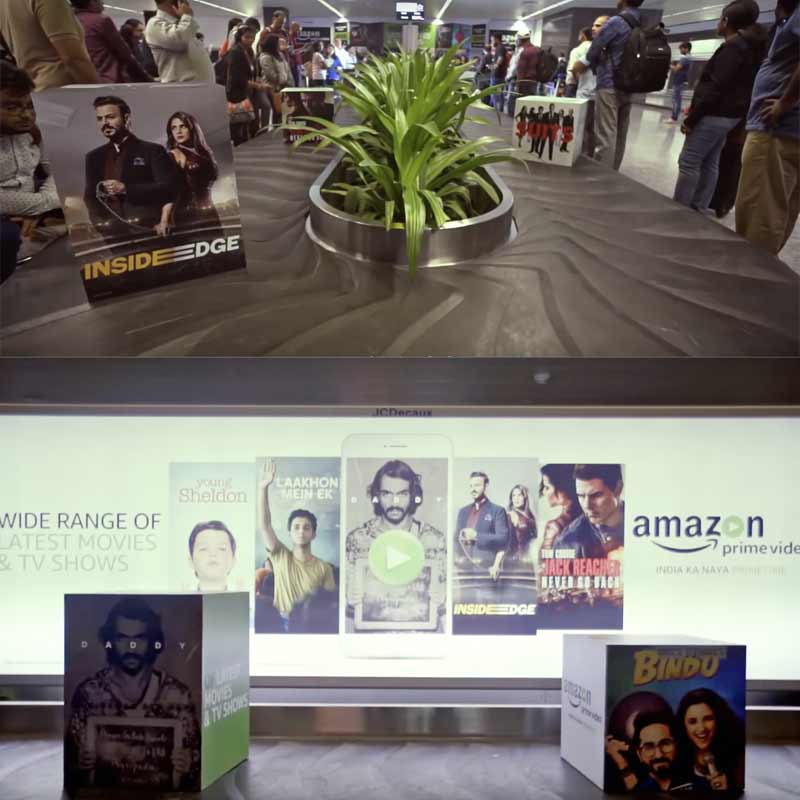
    To highlight how Amazon Prime Video can be everyone’s travel companion, Leo Burnett India came up with a way of communicating the message at the best location possible – the airport. Utilising the boring wait time that passengers have to suffer before their luggage arrives, Amazon Prime Video showcased its wide range of movies and TV shows on the conveyor belt. The activity was carried out at the Bengaluru airport for 10 days. The brand has also planned to amplify the activity by carrying it out at other airports across India.  

    The video seamlessly captures people’s need for entertainment on-the-go and how Amazon Prime Video can be their new travel accessory. It also captures some really candid moments of travellers’ surprised, shocked and happy reactions that made the activity a huge success. In ten hours, the conveyor belt saw close to 30,000 travellers interacting with the boxes. 

  • 55% marketers make better decisions with machine learning: iProspect report

    55% marketers make better decisions with machine learning: iProspect report

    MUMBAI: Digital agency iProspect has released its third annual Future Focus whitepaper geared to examine how machines and technology are impacting marketing and advertising in the year ahead. The paper takes a look at how brands can make the most of machines in 2018, from facilitating seamless consumer experiences to delivering greater efficiencies.

    iProspect interviewed 250 of its global clients, including FTSE 100 and Fortune 500 companies, and used real-time feedback to outline key insights and priorities necessary for businesses to thrive in our fast-moving, high expectation digital economy.

    Feedback shows that the transformative impact of voice, artificial intelligence (AI) and machine learning (ML) is being felt across the entire business landscape with 55 per cent of marketers surveyed agreeing that ML will allow them to make better decisions in 2018. 56 per cent of the marketers surveyed highlighted effective management of large data sets to deliver personalisation and relevant one-to-one experience as their main priority in 2018.

    The 2018 Future Focus whitepaper discusses some new machine rules. Brands enhanced customer experience by closing the gap between consumer expectation and brand reality. While 2017 was about understanding how best to connect data to understand consumers better, 2018 will be the year where marketers put consumers firmly at the centre of communications.

    The concept of ‘consumer moments’ will become widespread in 2018, encouraging marketers to seek out data signals that help them understand not just who their customers really are, but what are the moments that matter most as those consumers interact with brands at different stages of the purchase journey.

    Digital assistants have become the new gatekeepers and are set to fundamentally change the relationship between brands and consumers. According to market intelligence company Tractica, more than 700 million people use some form of digital assistant today, be it Siri on their mobile phone, or Amazon’s Alexa via a home device. With word error rate now at parity with humans, digital assistants can understand us better than ever, and usage of assistants is expected to soar to almost two billion by 2021. Within the next five years, most of the developed world will be using a digital assistant in one form or another to automate and manage many aspects of their daily lives.

    And it’s not just millennials who are early adopters of this technology. Forrester estimates that while 66 per cent of 18-24 year olds are using digital assistants, almost 40 per cent of the 70+ age group are also engaged. For marketers, this represents a new challenge in 2018 and beyond on learning how to market not to the consumer, but to the machine.

    AI & ML have transformed marketing and it is time for brands to get ahead of the intelligence curve. Simply put, AI aims to emulate human cognitive capabilities through artificial systems. One of the specialities of AI is machine learning, which enables computers to solve a problem by themselves, learning through examples, rather than being programmed especially to solve a distinct problem. If AI and ML capabilities are sought-after by tech companies, it’s because those companies understand the benefits for customer experience (eg., personalised recommendations on Netflix), security (eg., fraud detection on Paypal transactions), or product development (eg., autonomous cars for Uber).

    In 2018, we can expect mainstream brands to truly start testing the potential of AI and ML in advertising, taking marketing efforts to the next level. ML has the power to improve efficiency, help scale personalisation, and predict consumer behaviour with greater accuracy. As a result, 2018 will bring greater investment and experimentation in this area.

    VR will take commerce to new horizons and the distance between inspiration and conversion is now smaller than ever. Global e-commerce sales reached nearly $1.9 trillion in 2016, and are forecasted to grow to $3.9 trillion in 2020. As consumers expect to be able to buy everything, everywhere and at any time, this staggering growth will be increasingly supported by ecosystems which weren’t designed to be transaction first, but are now developing commerce features.

    There will be a rise of Amazon, the ‘everything store’. There can be little doubt that 2017 was a significant year for Amazon, as its seemingly irresistible expansion broke new ground across some of the biggest categories in the world. Amazon’s enormous capital power and evident knack for winning in any division it turns its attention to means it truly is becoming the oft-quoted ‘everything store’, apparently achieving the impossible — major, simultaneous expansion without sacrifice of either product or profit.

    Yet the company remains highly secretive, rarely announcing its intent or offering strategic insight. This means that as Amazon claims not only more net shoppers, but also creates new shopper behaviours, the onus is on today’s marketers to be proactive, rather than reactive, in developing their understanding of it. The good news is that there’s no more opportune time to learn than now. As Amazon finally turns its attention to the long dormant opportunity in ads by outlining plans for it to become a major income stream, marketers should seize the opportunity to get in at ground zero and start including it on media plans today.

    iProspect global chief strategy officer Shenda Loughnane says, “Advances in ML will allow for greater effectiveness and efficiency in marketing communications, freeing both marketers and agencies to focus on adding strategic value. Brands will need to understand how to balance the human versus machine elements of their business in order to leverage the full value of both.”

    iProspect India CEO Rubeena Singh adds, “In an increasingly complex digital economy, ML is set to play a pivotal role in our ecosystem. In India, we are already feeling these forces of change are driving better data understanding, enabling personalised conversation at scale and delivering greater efficiencies. We are at an inflection point where brands need to learn how to marry human capital and machines in order to succeed in the transformation that lies ahead.”

    Advances in ML will allow for greater effectiveness and efficiency in marketing communications, allowing both marketers and agencies to focus on adding strategic value, whilst allowing machines to take on more of the more complex administrative tasks associated with digital optimisation.

  • Regional content on ALTBalaji to constitute 15% of show hours

    Regional content on ALTBalaji to constitute 15% of show hours

    MUMBAI: The year 2017 has witnessed the phenomenal growth of regional languages, such as Tamil, Telugu, Malayalam, Gujarati, Marathi and Bengali, over Hindi and English. OTT players like ALTBalaji, Viu, Amazon, SonyLIV, Voot, Hotstar, Netflix, and YuppTV have taken a deep dive into offering regional content this year.

    ALTBalaji CMO Manav Sethi observes that though English is a niche audience in India, most competitors aren’t focusing on originals beyond Hindi. “We realised that consumption from non-HSM has been growing where people watched these shows with subtitles. We have also noticed traffic coming from states and cities where these languages are predominant. Then we started to integrate the ‘potential’ universe from a marketing point of view to the ‘consumption’ universe and that is when interesting patterns and trends started to emerge. At that point, we started to invest in creating these stories in languages apart from Hindi as there is latent willingness to consume and pay for it, too.”

    ALTBalaji has released its first Tamil show Maya Thirrai with 16 episodes. Not only did it get audiences from Tamil Nadu but even Tamil-speaking population from Singapore and Malaysia. Even the Bengali original Dhimaner Dinkaal’s trailer garnered traction from Dhaka. “In the next four to six quarters, we will launch originals in more languages. 15 per cent of our total show hours will be regional content and we are heavily investing in it,” adds Sethi.

    ALTBalaji has already launched its comedy show Standup in various regional languages like Marathi, Gujarati and Punjabi. Now, it has announced dubbing of some of the most popular original shows like Karrle Tu Bhi Mohabbat, Dev DD, Bewafaa Sii Wafaa, Romil and Jugal and The Test Case in Malayalam, Telugu and Tamil languages for the regional audience.

    OTT giants believe South Indian languages have the biggest growth possibility and revenue potential. Sethi ascribes the highest revenue potential to the Tamil market because it has a higher payment curve, affluent audiences who are also educated and the mobile uptake is more.

    Viu is focusing on the Telugu-speaking regions with shows such as Cinema Pichollu, Pelli Gola and Pilla. Voot hasn’t tapped any new language yet but is working on three regional series. Amazon Prime has a line-up of many new Hindi originals that will be dub in multiple languages like Marathi, Tamil, Telugu and Bengali. It has already released some of the regional language blockbusters like Arjun Reddy, VIP2, Nene Raju Nene Mantri, Dhananjoy, Bhikariand others soon after their theatrical release. SonyLiv is also looking for an expansion in Marathi and Gujarati languages and it has started looking at south Indian and Bengali language now.