Tag: Amazon

  • Amazon could bid for La Liga media rights

    Amazon could bid for La Liga media rights

    MUMBAI: Global tournament and league rights are no longer only within the reach of big broadcasters. Social networks and e-commerce portals too are now in the running to stake a claim in rights acquisition. One of the big names that come to the mind is Amazon. After acquiring a package of 20 football matches from the English Premier League, industry observers are now predicting that the Jeff Bezos-owned company will turn its attention to the Spanish market and seek to acquire minority lots of La Liga football TV rights over the next three seasons, Advanced Television reports.

    La Liga has four lots of football TV rights for sale after granting majority of the rights to Telefónica. The Spanish telecommunications company has outbid its main rival Mediapro for the bulk of broadcast rights to La Liga, the top-flight of Spanish soccer, in an auction that raised €3.4 billion (US$3.98 billion).

    Telefonica was awarded the two main packages, for nine matches each week in the recent auction. Mediapro got the right to one match each week, along with highlights and broadcasts in public spaces such as bars and restaurants. However, rights to Spain’s Copa del Rey were not included in the package offering.

    In India, Sony Pictures Network (SPN) owned the telecast rights until 20 May 2018.

    La Liga hopes to get €120 million for these rights, which will be added to €980 million paid by Telefónica and €160 million already paid by Mediapro.

    La Liga may still meet its target with the sale of the four packages that were withdrawn (only four out of eight have been awarded) to new companies like Amazon, Facebook or Netflix.

  • More than 85% of US millennials tune in to OTT platforms

    More than 85% of US millennials tune in to OTT platforms

    MUMBAI: Over-the-top (OTT) platforms have become the new opium for millennials. According to a new report from the analyst firm Parks Associates, more than 85 per cent of millennials in the US subscribe use at least one OTT video service. Interestingly, the number of OTT subscribers among other generations is also growing gradually.

    An earlier report from Parks Associates showed that the number of households worldwide with an OTT video service subscription will exceed 265 million by 2022. Since 2010, a steady increase has been noticed in the adoption of smartTVs and streaming media players.

    Many of the millennials opt for more than one platform for browsing. More than one-fourth of millennials subscribe to three or more OTT services, and more than 50 per cent subscribe to at least two. OTT service penetration among ‘Baby Boomers’( 1946-64) and older generations grew more than 10 per cent between the two groups as a whole between 2016 to 2017.

    public://gr_2.jpg

    “Overall penetration of subscription OTT video services among millennials has topped out, suggesting that those households that want such a subscription already have one or more. The more interesting and important question is how many subscriptions they will keep,” Parks Associates research senior director Brett Sappington said.

    Millennials are more prone to consume online content not only because of a personalized experience but also due to the flexibility it offers. Various reports since 2014 have highlighted how millennials are opting for streaming services like Netflix, Hulu, Amazon over television.

    Parks Associates researcher Hunter Sappington thinks self-aggregating content is simply a part of the entertainment experience, particularly in millennial households. 

    “Their evaluation criteria for services, and brand loyalty, differs from that of previous generations. To take advantage of this self-aggregation trend, providers need to understand the evaluation criteria consumers use for their OTT services, which can vary from household to household,” he commented.

    Also Read :

    Global OTT subs to cross 265 mn by ’22: Park Associates 

    India to enter top 10 OTT video markets in 2022: PwC

  • Atul Gawande appointed CEO of Amazon-JP Morgan joint venture

    Atul Gawande appointed CEO of Amazon-JP Morgan joint venture

    MUMBAI: Indian-American surgeon Atul Gawande has been appointed to lead the health care venture formed by e-commerce giants Amazon, JP Morgan and Berkshine Hathway.

    Gawande has taken the role of CEO at the newly formed entity and will officially start working from July. The heath care company headquartered in Boston, US, will be an independent organisation and work as an NGO (free from profit making incentives and constrains).

    Thrilled to be working with the company, Gawande said, “I have devoted my public health career to building scalable solutions for better health care delivery that are saving lives, reducing suffering and eliminating wasteful spending both in the US and across the world.”

    Gawande mentioned that this work will take time but must be done. “The system is broken, and better is possible.”

    The newly appointed CEO practices general and endocrine surgery at Brigham and Women’s Hospital and is a professor at the Harvard TH Chan School of Public Health and Harvard Medical School.

    Berkshire Hathaway chairman and CEO Warren Buffett said, “All felt that better care can be delivered and that rising costs can be checked. Jamie, Jeff and I are confident that we have found in Atul the leader who will get this important job done”.

    JPMorgan chairman and CEO of Chase Jamie Dimon added, ”Together, we have the talent and resources to make things better, and it is our responsibility to do so. We’re so grateful for the countless statements of support and offers to help and participate, and we’re so fortunate to have attracted such an extraordinary leader and innovator as Atul.”

    The companies’ executives Jeff Bezos, Warren Buffett and Jamie Dimon had said in January that their companies would work together to give their combined 8,40,000 employees better health care choices. With this venture, they hope to bring down costs, both for their workers and their companies.

    He’s a staff writer for The New Yorker and has written four New York Times bestsellers.

    It is possible that MacArthur genius grant recipient and the Rhodes Scholar will try a different approach to make the health care ecosystem . Amazon, after all, is known for upending the markets they enter.

  • PwC predicts global emergence of ‘Convergence 3.0′ as services’ distinctions blur

    PwC predicts global emergence of ‘Convergence 3.0′ as services’ distinctions blur

    MUMBAI: PwC’s Global Entertainment and Media Outlook 2018-22 has predicted global revenues are expected to grow with a CAGR of 4.4 per cent from 2017-22 to $ 2.4 trillion in a digitally-driven world where the distinction between print and digital, video games and sports, wireless and fixed internet access, pay TV and over-the-top (OTT), social and traditional media will blur in what has been described as `Convergence 3.0’.

    Explaining the new concept, PwC said that `Convergence 3.0’ is redefining the competitive playing field. Differing from earlier waves of convergence, it’s creating an ever-expanding group of “supercompetitors” and specialized, niche brands that are striving to “secure the engagement and spending of increasingly demanding consumers”.

    The fastest growth will be in digitally driven segments, with virtual reality leading the way, followed by over-the-top content (OTT). Esports will be the second fastest-growing segment if it were separated from the overall video games and e-sports segment. By contrast, newspapers and magazines will see declines in revenues to 2022.

    public://pc1.jpg

    While the sector is largely dominated by Netflix, Amazon, and Hulu, PwC said SVOD revenue accounted for 79.6 per cent of OTT revenue in 2017 as niche players increasingly make a dent in the overall business. 

    The potential power of artificial intelligence or AI in E&M is further increased by the opportunity to combine it with other emerging technologies, especially virtual reality and augmented reality. Revenues from VR apps, gaming and video, which were US$3.9bn in 2017, are expected to soar more than fivefold by 2022.

    The VR revenue is expected to grow at 40.4 per cent CAGR till 2022 in the 10 key markets including US, Japan, China, South Korea, UK, France, Germany, Russia, Italy, Spain. The revenue will be close to $ 170 million.

    Even among the most dynamic segments, there are sharp differences among sub-segments. Although the video games and e-sports segment will grow at an overall CAGR of 7.2 per cent, the e-sports component will leap by 20.6 per cent compounded annually. Conversely, global recorded music is projected to rise at a robust 6.1 per cent CAGR, but three of its sub-components – physical, downloads and ringtones/ringbacks – will see significant declines. 

    According to Ennèl van Eeden, Global Entertainment & Media Leader, PwC Netherlands: “The story behind the Outlook’s global figures is a near-infinite accumulation of micro-stories, and a dizzying array of different trends, at a territory and segment level. For almost every trend, there’s a counter-trend somewhere among the 15 segments and 53 territories. Also, the pace of change isn’t going to let up: technologies such as artificial intelligence and augmented reality will continue to redefine the battleground. Across all segments, technology is enabling content delivery to become progressively cheaper and more personalised. This heightens the urgency for companies to invest in technologies that will enable them to compete more effectively.”

    public://pc2.jpg

    The global internet advertising revenue is expected to grow with a CAGR of 8.7 per cent from 2017-22 and will be around $ 345 billion, whereas the broadcast TV advertising revenue will grow by CAGR of 2.3 per cent and reach till $180-200 billion.

    public://pc3.jpg

    Smartphone data consumption will see a huge spike and will overtake fixed broadband by 2020, according to the PwC report. Smartphone data consumption will reach around 650,000 billion megabytes with a CAGR of 33.3 per cent from 2017-22. Whereas the fixed broadband data consumption will grow at a CAGR of 18.8 per cent in the same time span and will reach till 500,000 billion MB. 

    public://pc4.jpg

    As people continue to change the way they access content across increasingly sophisticated devices, more robust data is required to build a deeper understanding of consumer habits.

    Christopher Vollmer, Global Advisory Leader for Entertainment and Media, PwC US, in a statement said: “To succeed in the future that’s taking shape, companies must revisit every aspect of what they do and how they do it. This means going ‘above and beyond’ in how they envision their business, generate revenues, create and organise their capabilities and build and retain trust. And given the pace and scale of change under way, speed is vital. For many companies, the models, assets, practices and capabilities that support their businesses today will simply not be enough in the future. Standing still is not an option.”

    Also Read :

    India to enter top 10 OTT video markets in 2022: PwC

  • Online majors are biggest spenders on TV, says a global report

    Online majors are biggest spenders on TV, says a global report

    MUMBAI: Some of the biggest tech giants are the biggest spenders on TV.Figures from around the world show the extent to which online businesses are now investing in TV advertising.

    For example, in Australia in 2017, Google spent sixtimes as much on TV advertising, reaching A$11.3 million and Apple increased its ad spend by 17.4 per cent to A$20.2 million. Amazon backed its Australian launch with a TV ad investment of A$3.2 million, and Uber increased its TV spend with a first investment of A$3.4 million, according to Nielsen Adex,.

    Using comScore data in the US, the Video Advertising Bureau found that online businesses see an immediate and significant lift in web traffic once they launch TV campaigns – data from 14 online businesses showed the lift ranged from 11 per cent to 1,075 per cent. Studies from around the world have proven the impact that TV advertising has on online activity. A study in France by SNPTV found that organic traffic to a pure players’s website increases by 66 per cent during a TV advertising campaign.

    The global figures were compiled by The Global TV Group, an informal grouping of TV broadcasters’ and sales houses’ trade bodies in Europe, the US, Canada, Australia and Latin America. Findings show that from Brazil to Germany, brands such as Amazon, Zalando, Netflix, Expedia and Airbnb are building their image, reputation and sales through the reach and influence of TV.

    The investment trend demonstrates the strong relationship between TV and online, with viewers armed with Internet-connected devices able to respond to TV advertising immediately.

    According to Google Australia and New Zealand marketing director Aisling Finch,”Like most marketers, we use a range of channels to achieve campaign objectives. We know that audiences engage with content across different platforms at different times, and marketers do the same. For campaigns such as the launch of Google Home we used a combination of radio, TV, cinema, print, outdoor and online channels including search, YouTube and social. In this campaign we found the combination of contextual media and creative drove stronger uplift.”

    In Belgium, during 2016, TV represented a 62 per cent share of the online business sector’s media investments. The Rocket Internet group, the second biggest spender, which owns companies like HelloFresh and Home24, spent a total of €6,072,463 in 2017 on TV advertising.

    Online businesses’ TV ad spend grew by 17 per cent in Brazil between 2015 and 2017. When including the e-commerce players owning physical stores, the increase is almost 20 per cent. In Canada, online businesses represent one of the fastest growing sectors in TV advertising. Online businesses have doubled spend on TV over the past five years, with spend in 2017 topping $105 million.

    Over a 3-year period (2015 to 2017), Airbnb’s TV ad spend increased by 44 per cent. Expedia and Amazon show even more impressive figures with an increase of 65 per cent each. In Italy, online businesses invested a total of €95,653,000 in TV in 2017, representing a 10.7 per cent increase compared to 2015 whereas in Netherlands, e-commerce advertisers increased their TV investment by 26 per cent between 2015 and 2017 to become the fourth biggest category of TV-advertisers. 200 e-commerce advertisers invested €300 million gross in TV in 2017. The highest TV investor was the German booking site Trivago with a gross investment of €25 million. Spain saw Amazon’s TV ad spend go from €106,990 in 2015 to €11,006,360 in 2017, more than 100 times the investment in 2015. Google’s investment in TV went from €40,250 in 2015 to €603,620 in 2017, 15 times more.

    In United Kingdom, online businesses including brands Amazon, Trivago, Google and Purple Bricks invested a total of £682 million in TV advertising in 2017, up from £590 million in 2015. Despite cuts in other categories due to ongoing economic uncertainty, online businesses, which in 2016 became the biggest spenders on TV in the UK, remained steadfast in their TV investment.

    United States of America in 2017, saw digital-native companies including brands like Amazon, Expedia, Wayfair and eBay spend over $5.9 billion US dollars on TV, representing a 10 per cent increase over 2016.  Within this spend is a group of 50 “direct-disruptor” newcomer brands, including Gwynnie Bee, Peloton and Leesa – who only recently began investing in TV but now collectively spend over $1.3 billion US dollars in TV annually.

    The positive trend is set to continue in 2018 as more e-commerce brands around the globe put their trust in TV advertising to strengthen their image, drive traffic and generate return.

    Video Advertising Bureau president and CEO Sean Cunningham said, “We’ve been analysing digital-native companies since 2014 and found that those who turned to a heavy reliance on TV early in their company’s history saw substantial benefits.”

    n a more recent study, featuring various case studies, the VAB looked into how TV drives business outcomes for disruptor brands. For example, expanding brands saw an average increase of 188 per cent in their search volume as they increased their TV investment.


  • TiVo exits STB business

    TiVo exits STB business

    MUMBAI: TiVo is exiting the manufacturing, sales and distribution of set-top boxes to a yet-undisclosed third party, the company has said.

    CEO Enrique Rodriguez, talking to analysts on its Q1 earnings call, said that consumers would continue to see TiVo-branded boxes in the retail sector, and specifically mentioned outlets such as Best Buy and Amazon. “Once we complete this transition, we still will have direct consumer hardware sales through TiVo.com, which we will be fulfilling through this box manufacturer.”

    Q1 revenue was $189.9 million, with core revenue up $9.7 million (5.9 per cent). Product revenue was $116.9 million, up 2 per cent year-on-year.

    Rovi Corp acquired TiVo in 2016 and Rodriguez said that synergies had already topped $100 million of its $110 million targeted savings from the combination.

    Rodriguez told analysts that its traditional markets consist of consumer electronics, or CE manufacturers, and Pay TV service providers. “The emerging markets for us are virtual service providers, content and new media companies as well as advertisers. These are the areas that we believe will drive TiVo’s future growth.”

    He added that TiVo had expanded its patent agreement with Google in Q1 to include YouTube TV. Additionally, KDDI renewed their OTT service agreement with TiVo in Japan. “In Asia, we added Telstra Corp as a licensee in Australia and renewed our IP licence deal with Alticast in Korea. In Europe, we added the number two service provider in a major European country as a customer under a six-year licence arrangement. This comes on top of renewing eight service providers in Europe last year.”

    Also Read :

    Tata Sky, Airtel DTH gain market share in 2017

    Dish TV-Videocon d2h to bank on economies of scale

  • Three years down, YouTube Kids unable to make an impact

    Three years down, YouTube Kids unable to make an impact

    MUMBAI: Generation Z has grown up with mobile phones and even smartphones in their hands. What TV was to the older generations, the phone was to these kids who grow up with YouTube. In 2015, YouTube Kids was launched promising filtered content and parental control but Indian viewers seem to have given it a pass.

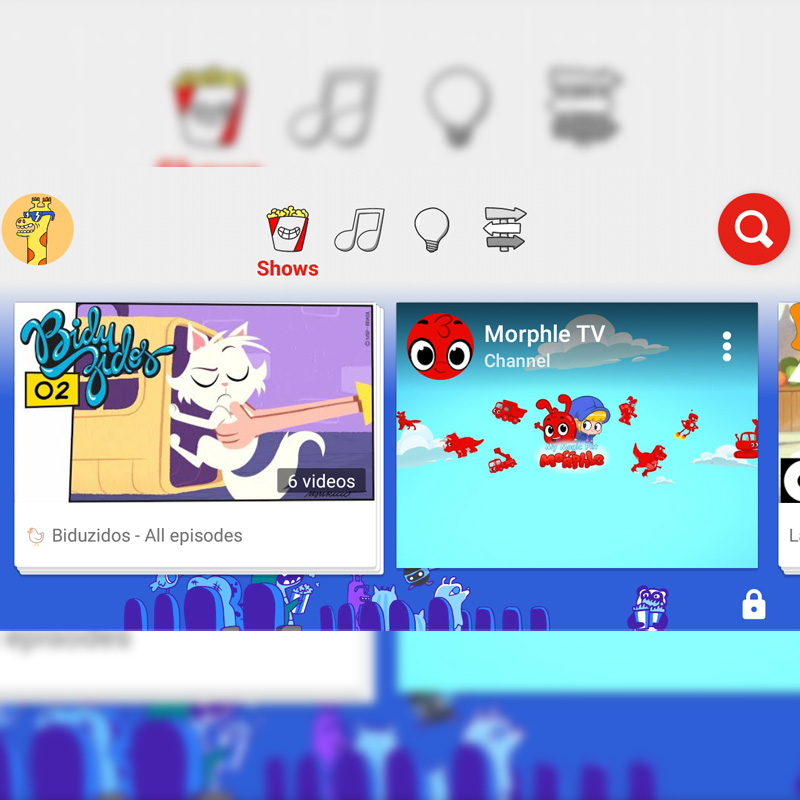
    “The app makes it safer and easier for children to find videos on topics they want to explore,” YouTube Kids group product manager Shimrit Ben-Yair said in a blogpost when the app was first unveiled. In 2016, the app was officially launched in India. Parents can keep a timer restricting the usage as well as limiting the content kids can search with a “turn off” option. There are four sections in the app offering different kinds of content- shows, music, learning, explore.

    YouTube along with other OTT platforms targeting kids has become a ‘digital babysitter’. Though, according to a recent survey, even in developed countries, big screens remain a favourite of kids, the trend of consuming content on portable screens is rising expediently. Turning away from linear TV content, kids are increasingly flocking towards digital content globally. In such a scenario, YouTube Kids definitely has a promising market but there are several factors stunting the growth, especially in India.

    In India, YouTube has not aggressively started any campaign till now for its standalone app. While YouTube itself offers a wide range of kids’ content, other OTT platforms such as Viacom18’s Voot have done extremely well in terms of views. It has popular shows such as The Powerpuff Girls, Ben 10, Roll No. 21 and Chotta Bheem alongside Dora, Spongebob, Motu Patlu, Shiva and Pokemon.  Amazon and Netflix also have rich content—both commissioned and original.

    In addition to that, YouTube itself is a competition to YouTube Kids with children having plenty of entertainment options. Sparky short form content channels like ChuChu TV, LittleBabyBum, ToyPudding TV, Marsha and the Bear, Ryan ToysReview have more than 13 million subscribers and are thriving. The numbers show how many kids flock to these channels. Whereas, YouTube Kids is restricted. It can be accessed only on mobile devices and smart TVs making it less accessible than the parent site.

    “From collections of channels from trusted partners to enabling parents to select each video and channel themselves, we’re putting parents in the driver’s seat like never before,” YouTube Kids product director James Beser said after the recent announcement of introducing several ways for parents to limit what can be watched on the popular app after receiving huge criticism. After three long years, at least YouTube has acknowledged it needs better policing for the kids app.

    While YouTube has marketed its kid-specific app as a safer place for children, it has to walk a long way to prove itself safer. With its main site being unbeatable in the competition, amidst outcries from child rights groups, the presence of several other players offering various range of kids’ content, YouTube Kids is still not a primary option for kids.

    One of the main reasons behind the launch of YouTube Kids was to make it a safer platform for parents, who didn’t want their children using the main site unsupervised. Since the launch of the app, advocacy groups listed several serious problems. Amidst cartoon animation, explicit sexual language was used, graphic adult discussions about family violence, pornography and child suicide were noticed, modelling of unsafe behaviours, even jokes about paedophilia and drug use were discovered. Along with that, through the commercials, there are enough potential risks for kids to watch inappropriate content.

    Despite not tasting the kind of success YouTube is accustomed to, especially in India, YouTube Kids finds itself to be under promoted. Though more kids are hopping on board digitally, the lack of success of YouTube Kids is a glaring anomaly. YouTube has to ramp up the offering and make the app a safer place for kids, thereby giving usage a shot in the arm in a cluttered market.

  • Netflix, Amazon may contribute to rising production cost in India

    Netflix, Amazon may contribute to rising production cost in India

    MUMBAI: Netflix and Amazon Prime Video are known for loosening their purse strings when it comes to production cost. The threat of driving up costs is already looming over the Hollywood industry. As the OTT giants have begun to mark their territory in India, there is a concern that production cost may rise here as well.

    Recent reports state that Netflix and Amazon are throwing money to lure top talent from Hollywood. In addition to that, Netflix is also driving up Hollywood salaries by offering big pay rises. Traditional players have been sweating it out in competing with the rising cost. Netflix’s $300 million deal to poach Ryan Murphy from 21st Century Fox was a classic example of this development. Robert Kirkman, the creator of the hit show The Walking Dead, signed a two-year deal with Amazon last August.

    Both companies have renewed their focus on India and, in order to understand the market, it is likely that they will look to poach talent from rival companies. The quest to offer premium content will also lead to higher production cost.

    When Eros Digital COO Ali Hussein was asked if because of Netflix and Amazon’s higher investment the overall cost of Indian ecosystem will go up or not, he said though there’s not a definitive answer to this. But, in general, the cost will definitely go up. Along with that, he also feels that it depends on how smartly the work is being done in the existing ecosystem to have a certain amount of control over the cost.

    “If in any business, the demand is high, the supply chain cost will go up. Across all businesses, when there is a large demand for episodic or original web content, how do you ensure you are able to maintain a certain quality of production with a growing talent pool? It’s not just the cost of the celebrities or directors, it is the technical cost and that of the entire process,” says Hussein.

    ALTBalaji CMO Manav Sethi thinks the cost has already increased due to international players splurging but the output quality has not increased much. In addition to that, the companies have less understanding of the Indian market, which has unorganised, segmented content making.

    According to Bodhi Tree Multimedia founder Mautik Tolia, the increasing number of productions from Netflix and Amazon will not have any short-term impact on overall production costs. This is because the volume of content being produced at the moment by the duo is very limited compared to overall content production in India.  It will only drive the premium talent costs upwards such as A-list actors and directors. But at the same time platforms are providing opportunities for new and fresh talent, making the content creation process more inclusive and might actually bring down the talent costs as a fresh pool of talent will get injected in the system. “It all depends on what path the platforms will take forward whether they emulate the traditional studio systems going for safer bets with established stars and directors or punting in and promoting new talent. This remains to be seen,” Tolia says on the possible future scenario.

    However, one of the main reasons for spending more money on production is to increase premium quality content. “Overall, I believe that content quality in digital both for domestic as well as international players is improving and there will be a premium for quality content,” Arre co-founder Ajay Chacko says.

    Endemol Shine CEO Abhishek Rege also thinks Netflix is only shelling out money to get premium content. “Costs in digital will be higher than that of what we see in television because digital needs better quality of content,” he says.

    Where there’s a fear that Netflix and Amazon may shake up the Indian ecosystem like they are doing in Hollywood, the scenario is less viable in India despite the fact that production cost will definitely go up. Indeed, the streaming giants will aggressively try to acquire top talent from the industry but other OTT players can opt for fresh talent. In the next four to five years, the traditional players, including Bollywood and broadcasters, will face a tough challenge from these international players. However, with new content strategies, the cost can be controlled to a certain level.

  • Owning IP not priority for Big Synergy

    Owning IP not priority for Big Synergy

    MUMBAI: Broadcasters today are experimenting with a new type of show ownership–that of allowing the creators to hold the intellectual property (IP) rights. Most recently, Swastik Productions decided to own 100 per cent of its magnum opus Porus, which airs on Sony Entertainment Television in India, setting a benchmark in the industry as it went around the world gathering new broadcasters in new countries.

    In an interaction with Indiantelevision.com, Big Synergy partner producer Namit Sharma, however, said that the concept of owning an IP was a very subjective conversation and not too relevant in present times. “A lot of people hype it to make themselves look good, so it makes you look like a kingpin when in actuality, the real monetary value of that IP could be nothing,” he said.

    “I feel that the whole conversation in the industry is overrated. We want to be careful about when we do it and how we do it. We are a production service company. If we wanted to own an IP, we would have started making films, raised Rs 800 crore and taken the risk,” he added.

    Digital players are furiously churning out new formats to attract the moving eyeballs of younger audiences. New formats, ideas, execution–you get it all. But TV isn’t far behind. TV today has innumerable reality shows to pick from and is not restricted to saas-bahu sagas, sitcoms and period dramas.

    Sharma, feels that the Hindi GEC genre will not be experimenting anymore but this will be the prerogative of the digital industry. “They [Hindi GECs] are going to try and stick to what they have, whereas now all the experiments will start happening in the over the top and regional. We have a lot of developments happening in both these spaces,” he said.

    Shedding light on his plans for digital space, he said that talks with industry daddies Amazon and Netflix are on. “As part of a two-year plan, we intend to focus on getting together with storytellers; they could be filmmakers, writers, book authors, film writers, and they could be people who may have never written anything.” Big Synergy will set the ball rolling in the regional market with South India.

    Big Synergy, a part of the Anil Ambani-led Reliance Group, had tied up with Phantom Films, led by Anurag Kashyap, to create entertainment content across television and digital media. Speaking about the partnership, he said that there wasn’t any phenomenal interdependence apart operational synergies between the two entities. Both production set-ups co-ordinate in interesting ways behind the scenes.

    Recently, Big Synergy produced a web series for Viu named Kaushiki that has garnered a lot of traction for the OTT platform. The production company is looking to produce five marquee web series, such as Bose: Dead/Alive, in the next one year along with its slate of regular shows for OTTs.  

    Also read:

    Sony Yay banks on originals with a slew of fresh content

    No reason for GECs to panic as IPL grabs eyeballs

    The era of dance reality shows

  • Amazon ties up with Chetan Bhagat for 6 books

    Amazon ties up with Chetan Bhagat for 6 books

    MUMBAI: They say that traditional book publishing business is dying a slow death. But many beg to differ and believe it is here to say, although it may change its shape and format. Today’s generation does not want to invest time in sitting down and reading a novel, but they would rather go for an e-book or just listen to an audio book. Amazon was the first e-commerce platform that introduced the world to ebooks at large.

    Launched in the United Stated in 2009, Amazon Publishing is the publishing arm of Amazon and publishes literary and commercial fiction and non-fiction. Today, Amazon Publishing is a global publisher working with Amazon editors in Seattle, New York, Grand Haven, Luxembourg, London, Munich, Milan, Madrid, and Paris. In Europe, Amazon Publishing publishes original-language titles in English, French, German, Italian, and Spanish.

    In order to reach and target the Indian market and expand its publishing portfolio, Amazon acquired Westland publishing in 2017 which is one of the largest English-language trade publishers in India. Westland’s bestselling authors include Amish Tripathi, Ashwin Sanghi, Devdutt Pattanaik, Ashok Banker, Rujuta Diwekar, Rashmi Bansal, Savi Sharma, Anita and Harsha Bhogle, and Preeti Shenoy.

    Adding another feather in the list, Amazon Publishing has now announced a global deal for the next six books by Chetan Bhagat, India’s best-selling author.

    The deal includes three fiction and three non-fiction titles by Chetan Bhagat and Amazon Publishing to publish these books globally in print, eBook and audio formats. The first title in fiction genre will be published in October 2018 followed by a non-fiction novel later in the year. The pre-orders for the book will start from August.

    It will be Chetan’s first book in both e-book and print formats with Amazon Publishing.

    All the books are planned to also be available in multiple Indian language translation versions. Westland, an Amazon company, will distribute the print editions in India. All the books will also be available in multiples book stores and will be distributed in India by Westland.

    Westland brings Amazon Publishing’s bestselling international books to the Indian market available in over 1000 outlets.

    The company is excited to have Chetan Bhagat on board. Amazon Publishing vice president Jeff Belle says, “Millions of readers have enjoyed Chetan’s work for over a decade. His books deftly weave together the everyday life of youngsters with the prevalent social milieu of our time. He is India’s best-selling author and we both share a common passion that more people reading more books makes the world a better place.”

    Delighted to partner with Amazon Publishing, Chetan Bhagat says, “Amazon’s online advantage and their commitment to reach every corner of India ties in well with my goals of inspiring every Indian read books.”

    Chetan wants to reach readers in Tier II and Tier III with his books as he believes that the next round of readers are going to come from smaller towns and villages in English and regional languages.

    With this deal, Amazon wants to bring Westland’s authors to more customers in India and over the world.

    Our aim to bring great content from around to our readers whenever and wherever they are. For this, we are open to partnering with new publishers and authors. With the publishing arm, Amazon wants to reach the audience that is digital savvy and constantly on social media platforms to create reading culture among them.

    Amazon Publishing will advertise and market the association with Chetan Bhagat on its online  shopping website amazon.in followed by some OOH and digital.

    Although Amazon registered a loss of USD 622 million from international operations in the first quarter of 2018, Jeff Belle is optimistic about the Indian market and will continue to invest in India as it sees great potential here with both sellers and customers.