Tag: Amazon Prime

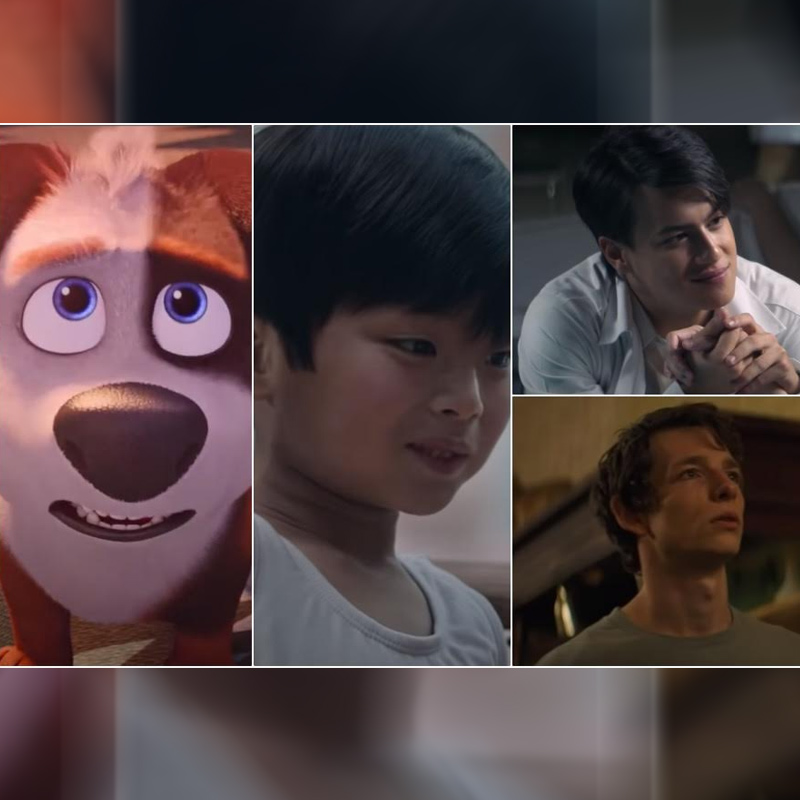
  • From Panic to Ghost Lab, five must-watch shows on OTT this week

    From Panic to Ghost Lab, five must-watch shows on OTT this week

    Mumbai: This weekend, OTT platforms will set a new jazz-like movie standard of Take Five, with five films set for release to exploit the dearth of available big ticket quality content, now that IPL cricket is suffering the pandemic blues.

    With the big ticket sports viewership space staring at a void due to unavailable live entertainment content, since IPL 2021 that was playing throughout the day and all evening in India called in sick after its bio-bubble burst, OTT films have launched themselves full st(r)eam ahead.

    After the onset of the COVID-19 pandemic, OTT platforms like Netflix, Amazon Prime Video, Zee5, and the Disney-Hotstar combo enjoyed wide popularity in India emerging as the clear winners in the battle for maximum viewership eyeballs.

    This trend is likely to continue in the coming years, as SVOD giants compete to offer quality content to audiences, while the current weekend provides a classic example of how prime time viewing has acquiesced to the OTT giants. 

    Indiantelevision.com presents you with a list of five OTT shows that can be watched this week. 

    Ghost Lab (Netflix)

    One of the most-anticipated films that will be released on Netflix this month is Ghost Lab. Directed by Paween Purijitpanya, this horror thriller stars Thanapob Leeratanakachorn, Paris Intarakomalyasut and Nuttanicha Dungwattanawanich in lead roles. 

    The film portrays the story of two doctors who try to prove the existence of ghosts after experiencing paranormal events in the hospital they work at. Ghost Lab will be available for streaming on Netflix on 26 May. 

    Black Space: Season 01 (Netflix)

    The first season of the action series Black Space will have its premiere on Netflix on 27 May. The series revolves around the life of a detective who investigates a massacre committed by mask-wearing assassins in an Israeli school. 

    The series is created by Anat Gafni and Sahar Shavit. The series stars Guri Alfi, Shai Avivi, Assi Levy, Reut Alush and Meirav Shirom in lead roles. 

    Panic: Season 01 (Amazon Prime Video)

    Panic is a teen drama series that will be streamed on Amazon Prime Video on 28 May. The series is based on Lauren Oliver’s 2014 novel of the same name. Season 01 of Panic is created by Lauren Oliver herself, and it stars Olivia Welch, Mike Faist, and Jessica Sula in the lead roles. 

    The series is set in the backdrop of Texas, where a team of graduating seniors take part in a series of challenges risking their very lives. Even though the challenges pose a life risk, they are enticed with the offer of making big money that would change their lives forever. The only catch being, that just one person may win while the others stand to lose the game and more. 

    Disney’s Launch-pad (Disney+Hotstar)

    Disney’s Launch-pad is a series of live-action shorts developed for the OTT platform. These short films are directed by debutante filmmakers who have created films with uplifting themes that relate to family, culture and experience. The first season of Launch-pad will be released on 28 May. 

    Dog Gone Trouble (Netflix)

    Animation lovers will enjoy Dog Gone Trouble on Netflix. The film will be released on 28 May. Directed by Kevin Johnson, the film revolves around the life of a pampered dog named Trouble, who is trying to live in the real world after escaping from his former owner’s greedy children. https://ssl.gstatic.com/ui/v1/icons/mail/images/cleardot.gif

  • Amazon India launches free video streaming service – miniTV

    Amazon India launches free video streaming service – miniTV

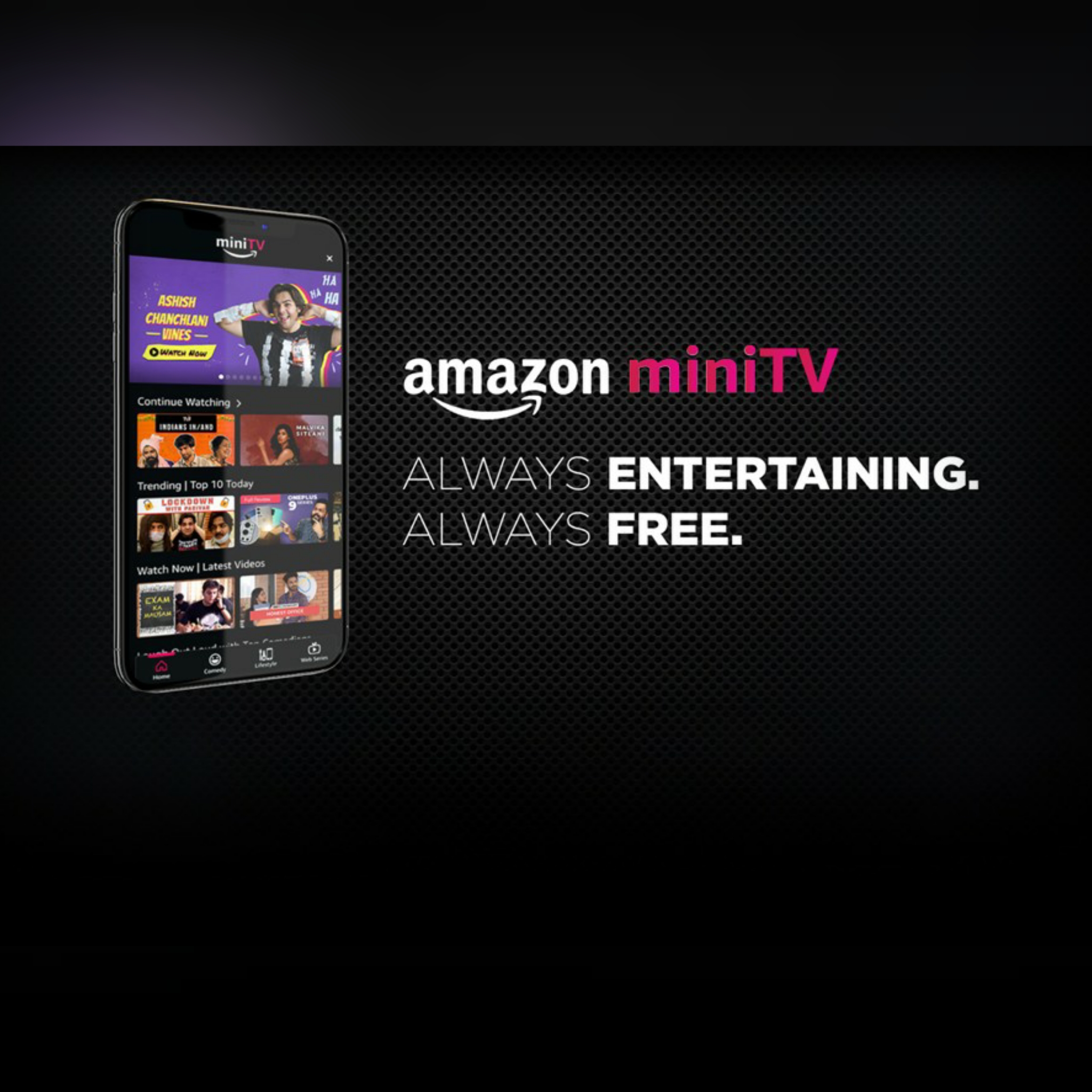
    New Delhi: In a global first for Amazon, one of the country’s largest online store, Amazon.in on Saturday announced the launch of a free, ad-supported video streaming service, miniTV which is available within the Amazon shopping app.

    miniTV has professionally created and curated content across web series, comedy shows, tech news, food, beauty, fashion, and more, the company announced on its blog on Saturday.

    The list includes leading studios such as – TVF, Pocket Aces, and leading comedians – Ashish Chanchlani, Amit Bhadana, Round2Hell, Harsh Beniwal, Shruti Arjun Anand, Elvish Yadav, Prajakta Koli, Swagger Sharma, Aakash Gupta, and Nishant Tanwar. Viewers will be informed on the latest products and trends by tech expert Trakin Tech, fashion and beauty experts such as Sejal Kumar, Malvika Sitlani, Jovita George, Prerna Chhabra and ShivShakti. Food lovers can enjoy content from Kabita’s Kitchen, Cook with Nisha, and Gobble. In the coming months, miniTV plans to add many newer and exclusive videos.

    With this launch, Amazon has two video entertainment offerings – miniTV and Prime Video. miniTV is completely free and does not require a separate app. Prime Video requires a Prime subscription and offers a collection of award-winning Amazon Originals, latest movies, and TV shows, in English and 9 Indian languages. Viewers can access Prime Video on the app or stream it on their smart TVs.

    With the launch of miniTV, Amazon.in has stepped up its reach as a shopping app that offers customers a one-stop center to shop from millions of products, make payments and watch free entertainment videos.

    miniTV is available on Amazon’s shopping app for Android phones. It will also be extended to iOS app and mobile web over the coming months.

  • Amazon Prime hits 200 million subscribers

    Amazon Prime hits 200 million subscribers

    NEW DELHI: Amazon Prime, which comprises the e-commerce giant’s video streaming service, has reached a userbase of 200 million, an increase of over 50 million post the outbreak of the Covid2019 pandemic, revealed Amazon CEO Jeff Bezos in a letter to shareholders.

    For comparison, Netflix had over 204 million users at the end of 2020, while Disney+ has amassed more than 100 million users in an year of its launch. Considering the viewing plans, Amazon is considered the most affordable when compared to Netflix and Disney+, and it is giving the OTT platform widespread acceptance in countries like India. 

    Streaming service Prime Video is simply an added value element included in Prime membership. Amazon has never officially revealed how many Prime subscribers are actively using the Prime Video function. 

    However, the company’s attention to churn out  video content has surged significantly over the years. Web series and movies produced by Amazon Studios (which invariably land on Prime Video) are finding favour not only with viewers but critics, too. The OTT platform’s star has been rising on the back of popular shows like The Boys and The Marvelous Mrs. Maisel, as well as Oscar-nominated films like Borat Subsequent MovieFilm and Sound of Metal.

    Bezos, who will be replaced by former AWS head Andy Jassy as Amazon CEO this year, said in his final letter to the company’s shareholders that Amazon customers have connected more than 100 million smart home devices to Alexa. 

    Further, he informed that Amazon is currently employing more than 1.3 million people worldwide. 

    "Last year, we hired 500,000 employees and now directly employ 1.3 million people around the world. We have more than 200 million Prime members worldwide. More than 1.9 million small and medium-sized businesses sell in our store, and they make up close to 60 per cent of our retail sales," wrote Bezos. 

    The world’s richest man added that Amazon has created $1.6 trillion of wealth for shareowners. Additionally, the etailer spent $11 billion on video and music content in 2020, up from $7.8 billion in 2019, and it includes contents for Amazon Prime Video and royalties from Amazon Music. 

    Talking about Andy Jassy, Bezos said, "Andy is brilliant and has the highest of high standards. I guarantee you that Andy won’t let the universe make us typical. He will muster the energy needed to keep alive in us what makes us special. That won’t be easy, but it is critical. I also predict it will be satisfying and oftentimes fun.'' 

  • “Joji’ movie review: Dileesh Pothan’s Macbeth adaptation is an insightful crime drama

    “Joji’ movie review: Dileesh Pothan’s Macbeth adaptation is an insightful crime drama

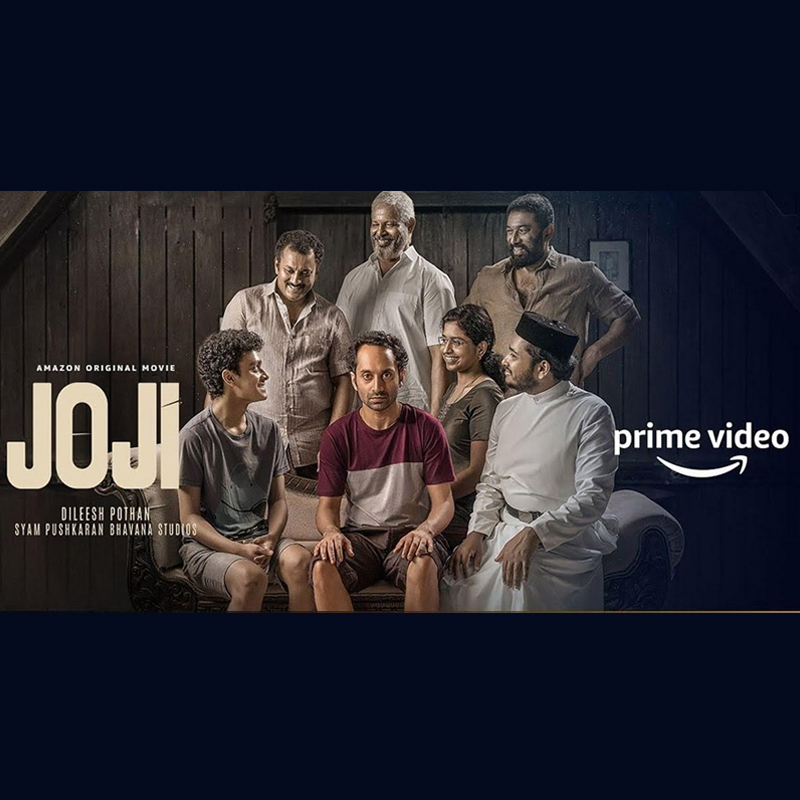
    MUMBAI: Dileesh Pothan is widely considered one of the most talented filmmakers in Mollywood. His debut movie Maheshinte Prathikaram that starred Fahadh Faasil was a critical and commercial success, and later, the duo came together to deliver another blockbuster with Thondimuthalum Driksakshiyum. And now, Fahadh and Dileesh have teamed up again with Joji, and the film had its OTT release on Amazon Prime Video on 7 April.

    Dileesh Pothan's adaptation of Macbeth

    Joji is inspired from one of Shakespeare's four major tragedies, Macbeth. In adapting the play for Indian audiences, Pothan and writer Syam Pushkaran set the story against the backdrop of a rich Christian family in south Kerala. The film primarily focuses on the three sons of a wealthy plantation owner, who are vying for their share of the inheritance after their father suffers a stroke. 

    The eldest son Jomon (Baburaj) is much like his father. He is tough, hard-working, and also an alcoholic. The second son Jaison (Joji Mundakkayam) is an ordinary man who runs the family’s ancestral business. However, the third son Joji (Fahadh Faasil) is considered a bit of a worthless person by his family members, and his father always calls him a baby born out of 'rubber milk'. 

    Even though neither Jomon nor Jaison have proper plans to inherit their share of the property, the aimless Joji has a proper plan to secure his father’s huge wealth for himself. 

    Despite being a modern-day adaptation of Macbeth, Pothan and Pushkaran have brought together elements from KG George’s emergency-era classic Irakal to construct a wholly original world of a Christian family. The writer conveys that self-interest and money define all human relationships, and if needs are not met, people may often turn violent. 

    Strong detailing supported by a stellar star cast

    The film solely belongs to Dileesh Pothan and Syam Pushkar. From the opening scene where young Popy receives an air gun from an e-commerce seller, the plot is rich in foreshadowing and building anticipation. In one scene, Bincy (Unnimaya Prasad) asks Fahadh Faasil to wear a mask, symbolic of the mystery and crookedness associated with his character. The request from Bincy also harks back to the iconic words uttered by Lady Macbeth, "Look like the innocent flower, but be the serpent under it.” 

    The dialogues are crisp, and the cinematography is atmospheric. With a runtime of just one hour and 52 minutes, Joji touches the highpoints of the thriller genre and will not bore audiences in the least. 

    When it comes to performances, Baburaj shone as Jomon. The director deserves plaudits for bringing back Sunny, whose only film performance happened a few decades back in Sphadikam. Joji Mundakkayam and Unnimaya Prasad excelled as the couple duo. Fahadh Faasil, as always, did a remarkable job and breathed life into Joji on screen. 

    Final verdict

    Joji is a complex and insightful crime drama film crafted by Pothan and masterfully delineates how society and family incite criminal traits in the mind of a person. Dileesh Pothan has scored a hat-trick by delivering three successful movies which are special in their own way.

  • New IT guidelines not intended to control OTT platforms: I&B minister

    New IT guidelines not intended to control OTT platforms: I&B minister

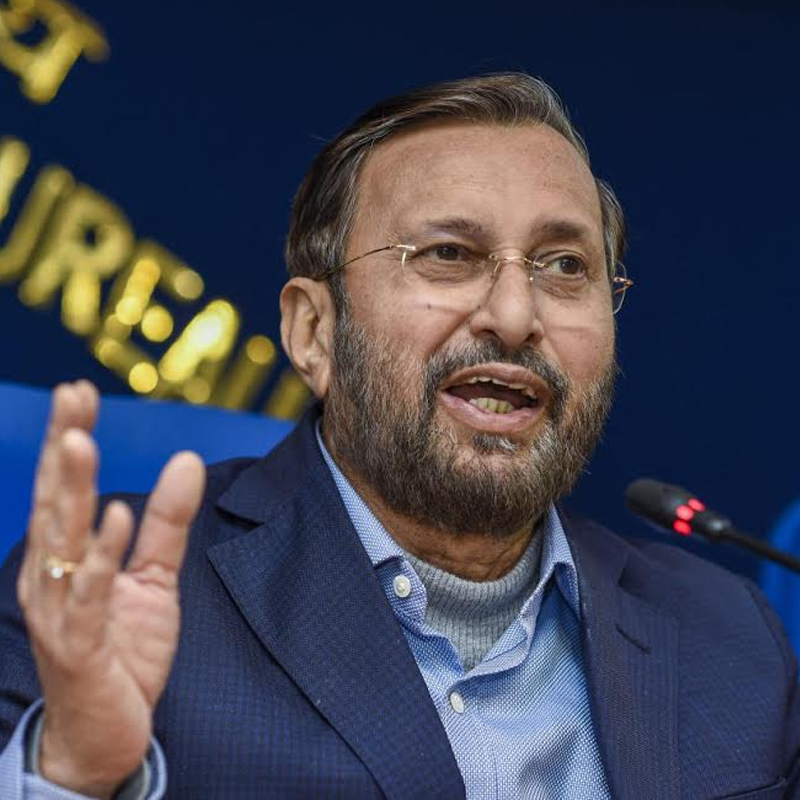
    NEW DELHI: The government has attempted to provide a level-playing field for various digital platforms through the new guidelines on over-the-top (OTT) platforms, said union information and broadcasting minister Prakash Javadekar, amid concerns that the new rules may pose a threat to the freedom of expression.

    The minister mentioned that digital technology platforms have played a key role in promoting transparency and introducing a corruption-free atmosphere in governance.

    “Through these guidelines on OTT, we have tried to bring about transparency and provide a level playing field to various media platforms, be it electronic, print, or digital media. It is just for fair-facilitation for self-regulation and not intended for controlling the OTT platforms,” said Javadekar, while speaking at a digital media conclave organised by a private TV network in Mumbai.

    The new rules released by the government on 25 February ask for a three-tier grievance system and content classification for digital platforms. First, self-regulation by the platform through a grievance redressal officer; second, by an institutional self-regulatory body of industry experts, and third level of oversight through an interdepartmental committee constituted by the government.

    While this may create a forum where users can voice their complaints, there are concerns that it could also lead to an increase of content-related disputes in the country. Several video streaming platforms are already mired in controversies over their content, the latest being Amazon Prime’s Tandav and Netflix’s Bombay Begums.

    The formulation of guidelines took place expeditiously, revealed Javadekar, with more than 50 cabinet meetings held virtually to ensure that there weren't any delays in the decision-making.

    The union minister also talked about the decision to broadcast the old Doordarshan TV series like Ramayana, Mahabharat during the pandemic and how it registered record-breaking viewership.

  • 65% millennials and Gen Z prefer OTT over TV, report says

    65% millennials and Gen Z prefer OTT over TV, report says

    KOLKATA: Urban India’s youth has relied on OTT platforms to kill monotony. Amid other options, the streaming services have emerged as the most popular source of entertainment as 70 per cent of the youth have turned towards OTT platforms in their spare time. Along with existing subscribers, new OTT subscription purchases during the lockdown period spiked throughout the country across demographics.

    According to a report from The Data Sciences Division of Dentsu Aegis Network (DAN) India, 65 per cent of millennials (25-39 years) and Gen Z (5-25 years) prefer consuming video content on an OTT platform over TV. The younger the audience is, the habit of consuming OTT is higher. The report also shows that daily OTT content consumption among Gen Z is higher than millennials. 

    While before lockdown 95 per cent of the respondents used to consume only two-three hours of daily content, during lockdown on average each millennial has consumed 1.66 hours of additional content and GenZ is consuming two-three hours of additional content too.

    As a result of having more time at hand, binge-watching is becoming a prime trait of popular culture. While five per cent of the research universe has claimed to consume between six-twelve hours of daily content on OTT platforms in pre-pandemic period, currently 20 per cent of the sample is enjoying binge-watching. Millennials and Gen Z’ s purchased two and three additional OTT platform subscriptions respectively since the start of the lockdown. The average daily consumption hours have remained around four hours.

    The international platforms with expanding local content library are becoming popular choices. 60 per cent of the sample has a subscription to either Amazon Prime Video or Netflix. Disney+Hotstar also has been able to attract nearly 19 per cent of the urban youth. Homegrown platforms like ZEE5, Voot are creating a buzz gradually. Comedy, thriller and action-based entertainment were the top three preferences of GenZ audiences while millennials were more inclined towards consuming a lot more Sci-Fi over thrillers. Money Heist, Breaking Bad, Paatal Lok, Narcos, Riverdale, Friends were all the rage among the episodic content. 

    Another interesting trend that has come out of the study is that OTT based gaming has gained significant popularity during the lockdown period. While the curve of heavy gaming remained constant, casual gaming saw a steep increase in popularity. However, millennial audiences were significantly less likely to consume OTT based gaming when compared to their GenZ counterparts.

    OTT platforms have traditionally been more favoured by the young audience for the nature of the content it produces. Surprisingly, 11 per cent of the respondents criticised OTT platforms of imposing, glorifying and promoting “Content disgracing a religion or a caste”. These criticisms were accompanied by a majority (73 per cent) criticising the depiction of anti-national sentiment, foul language and bold as well as smutty content.  “Pop up Ads” were also criticised for harming the seamless viewing experience. Despite the growth of broadband across the country, connectivity issues are prevailing until now.

    The OTT industry is anticipated to grow 45.5 per cent during the forecast period 2019 to 2026. Along with the humongous growth, increased collaborations between OTT platforms and pay up TV, further hybridization and evolution of OTT monetization models could be more noticed going forward. India is expected to emerge as the second-largest OTT market with 500 million users by 2020 itself. 

  • Voot’s Akash Banerji moves on to join Amazon India’s centralized mobile biz development unit

    Voot’s Akash Banerji moves on to join Amazon India’s centralized mobile biz development unit

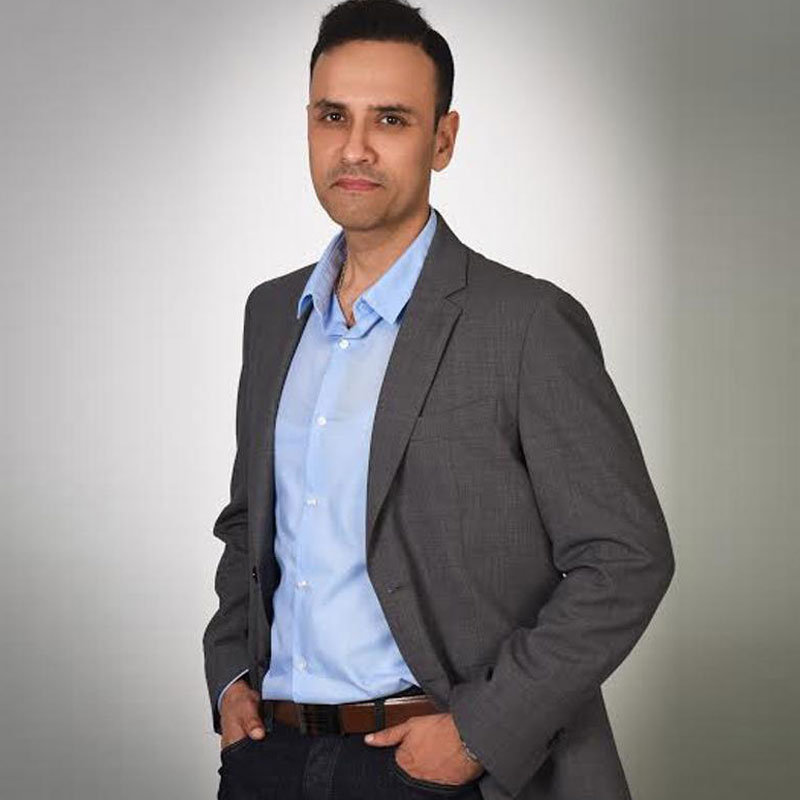
    KOLKATA: Voot’s Akash Banerji has put down his papers after a five-year stint with the digital arm of Viacom18. He will join Amazon India’s centralized mobile business development unit as marketing head in September end. At Voot, Banerji was serving as a business head for AVoD.

    According to sources close to the development, Banerji will work closely with different businesses of Amazon ecosystem as well as the multiple strategic distribution partners (including telcos). In his new role, he will foster synergies with partners and create new product expansion strategies with the aim to drive subscription numbers and revenues. 

    Banerji joined Voot back in 2015 as vice president and head of marketing and partnerships. He was associated with the launch of the OTT platform which has now become one of the leading players with over 100 million monthly active users. 

    Being a media and marketing professional, he has worked across leading brands including Star India, Marico. During his stint at Star, he led the successful marketing launch of Hotstar as well as the marketing launch of the new Star Sports network.

    We tried reaching out to Banerji, but he was not available at the moment.

  • Wanted to create prototype for digital media with ‘Bandish Bandits’: Anand Tiwari

    Wanted to create prototype for digital media with ‘Bandish Bandits’: Anand Tiwari

    Anand Tiwari, the man behind Love Per Square Foot is back with yet another directorial venture Bandish Bandits. Tiwari is a stage actor and director known for his roles in films like Kites, Udaan, Aisha, and Go Goa Gone. As a stage actor, he is best known for his role of a 'lamp post' in Rage Productions' One on One. For the uninitiated, Tiwari is the co-founder of the theatre company FAT Productions in Mumbai.

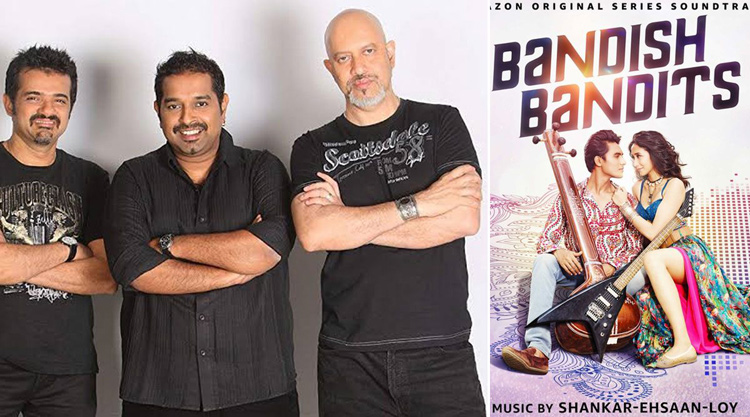
    Set in the backdrop of Jodhpur, the Amazon Prime Video is a 10-part series. The series introduces newcomers Ritwik Bhowmik and Shreya Chaudhary as Radhe and Tamanna respectively. Romantic drama Bandish Bandits is a love story of Radhe and Tamanna who hail from diverse musical backgrounds.

    In conversation with indiantelevision.com, Bandish Bandits director Anand Tiwari talks about the importance of music in storytelling, the idea behind creating the series, roping in the trio of Shankar-Ehsaan-Loy and much more.

    Edited Excerpts:

    Please tell us about your journey from being an assistant director in Barfi to now directing your own show.

    It has been fantastic, every day you spend on the set or with actors and technical team teaches you something. However, sometimes you have to learn and unlearn so many things. The circumstances are always different and not like an office job. I like to keep exploring new things. Even when I am shooting a romantic scene or any other scene, I pretend like I do not know this. I do feel that my storytelling has matured as I grew but it is a long journey, I have just started learning.

    What was the concept behind making Bandish Bandits?

    We have been making movies on music since time immemorial because that is how we have weaved our stories since theatre times. Music is an integral part of storytelling in India. Amrit (Amritpal Singh Bindra, producer) and I love music. From the time of Band Baja Baarat we have always told stories that get conveyed by music. When we looked at the content that is being created in today’s time, there wasn’t something similar to Bandish Bandits. It’s high time we create a prototype for digital media and we were convinced that audiences would also like to watch it. I believe music is the most transcending of art forms. And what better way to summarise India’s culture than mixing two forms of popular music – traditional and pop.

    How long did it take to do the research and create the whole series?

    Amrit and I have been making different kinds of content for the past five to six years. For a long time, we wanted to do a project together. It took us almost one and a half years of pure research. We spent good three to four years to make the entire series right from ideation to creation.

    Also, did you approach Amazon Prime or did they contact you?

    We took Aparna Purohit (Amazon Prime head of India originals) through our story idea and that is how it happened. Amazon Prime has always given us good originals; that is known internationally. We were hopeful that they will also like the content that we are giving to them.

    Speaking about direction, do you think you have grown as a director? Also, you are an actor too so does it help you while directing?

    Yes, it absolutely helps to be an actor because I understand that most of the time actors are struggling. It has very little to do with their fear or talent, sometimes it is so much to do with their understanding. There are so many things such as one might agree or disagree with the scenes or sometimes they are dealing with something which has nothing to do with the shoot itself. As an actor, I know the psyche of the other actors and I have a special relationship with every actor on the set. We all share a very special bond, so it doesn’t sound like an instruction which always helps.

    Which is your favourite part of the role, actor or director?

    I like being a storyteller, sometimes I can be a writer, director, actor, producer, anything. However, during a specific time, it is more exciting being a director. It also depends on the story that comes because accordingly, you will focus on that specific part. But as a director, you have a far greater perspective to the story. I really enjoy every role that comes my way.

    Bandish Bandits also marks the digital debut of Music geniuses Shankar-Ehsaan-Loy. How challenging was it to bring them on onboard?

    When we were planning this series, Shankar, Ehsaan and Loy were on top of our list. Apart from giving music in movies, they have also done many albums. They have done classical, hip hop and every kind of music. They were the first people we approached. Here, storytelling was challenged through music that they took up with us. A lot of scenes which had music in them were planned after our discussion with Shankar Mahadevan. He was able to give us the insights into what happens in a studio when a song is created.  It was a brilliant experience; all the songs that one can see in the show have been created in front of us.

  • The Big Shift: Where is digital taking the M&E industry?

    The Big Shift: Where is digital taking the M&E industry?

    NEW DELHI/MUMBAI: It’s a rainy afternoon in Delhi and 48-year-old homemaker Sunita is looking for recipes for fritters on YouTube on a smartphone she was recently gifted by her husband. She has made fritters a thousand times in her life and she knows the recipe to it by heart, but she likes to watch chefs online to “learn new tricks” for perfecting her already excellent culinary skills. Sometimes, she plugs in the firestick on her smart TV and scrolls through Amazon Prime and Netflix for old movies. Even her evening TV watching has shifted to apps like Hotstar and Voot, which she is still learning to use properly but nevertheless enjoys the ad-free entertainment on demand. 

    This is not just the story of Sunita, but a whole lot of other people from all age groups and interests. Her husband prefers watching news online rather than switching on the TV channels as it is more comfortable to watch it on his phone, though without earplugs. Their three-year-old grandson is learning his ABCs on yet another mobile app and doesn’t miss his Peppa Pig sessions every evening. And as the never-ending lockdown imposes its dark shadow on his probability to attend physical classes like his parents or grandparents, there are investments being made into paid subscriptions of many educational apps and sites, along with other digital tools. 

    Digital, as we know, is dominating all aspects of our lives. From grocery shopping to learning, to working out, to dating; everything has found a digital counterpart and in many cases a competition. 

    The media and entertainment industry is also not untouched from this trend. As per PwC Global Entertainment and Media Outlook 2019-2023, digital revenues are accounting for a larger share of the industry’s total revenue, year-on-year, starting at 40.7 per cent in 2014 and reaching 55.4 per cent in 2019. It is expected to reach 61.6 per cent in 2023. 

    India is not far behind from the global trends. In fact, it is one of the top markets to embrace this digital boom. As per EY-FICCI report 2020, digital media overtook filmed entertainment in 2019 to become the third-largest segment of the M&E sector. Digital media grew 31 per cent to reach Rs 221 billion and is expected to grow at 23 per cent CAGR to reach Rs 414 billion by 2022. 

    “Digital subscription revenues more than doubled from 2018 levels and digital advertising revenues grew to command 24 per cent of total advertising spend. The sector continues to grow at a rate faster than the GDP, driven primarily by growth in subscription-based business models and India’s attractiveness as a content production and post-production destination,” read the report. 

    The same report suggests that OTT subscription market will approximate 10 per cent of the total TV subscription market by 2020 and there will be over 40 million connected TVs by 2025. And while there is no concrete comparative data to see the growth of digital in comparison to traditional forms of media, there have been many agencies and people claiming that Covid2019 has only accelerated this process. Several reports by bodies like BARC, Nielsen and Kantar have hinted at the increased time spent on digital platforms during the lockdown. 

    So, is this big shift to digital indicating a slow demise of traditional media?

    Swastik Productions MD Rahul Kumar Tewary notes that while digital media has gained traction during the past few months, there is not going to be a takeover of the market space that television enjoys by it. Both the mediums may overlap to a certain extent, but in the end, these are two different market segments. 

    “I believe digital is growing but TV will remain the same. I don’t think there will be too much of an impact on TV programming. There is a certain age group of consumers for the digital content; there is a trend that the youth of India is moving towards the digital side,” he shares. 

    Locomotive Global co-founder Sunder Aaron adds, “We will come out of this pandemic at some time and the domination of pay television and the advertisement on pay TV will continue. But it will have a new balance with digital media and digital delivery of content. We still are a country where there is low penetration for digital consumption. Mobile consumption is actually high but if you look at wirelines into households, it’s still very low as compared to the rest of the world. Hopefully, we will see an increase in the wireline broadband penetration over several years and that will be a big game-changer for digital delivery and digital content consumption.” 

    But are there enough rigid lines between TV and digital anymore? Once, during an interview, someone had asked to define television and the gentleman then went on to elaborate that television is more than the idiot box we knew a few years back. It has camouflaged in a ‘smart box’ now, which also hosts traditional entertainment as well as the modern digital options. It also enables personal chatting and social media apps on the big screen and has a far bigger role to play as a shared screen as well.  

    And definitely, no one can deny the part of digital technologies in keeping this traditional form of entertainment up. In the past few years, almost all the big GECs and news channels have launched their own apps to keep pace with the digital age. Be it Hotstar, Sony Liv, Voot, or Zee5, all these applications first started as an inventory of television shows and then went on to host original content as well. 

    All the major telecom players are a part of the revolution as they were in the DTH era. With Airtel launching its own entertainment app and partnering with other OTTs to offer its consumers exclusive access to content, Idea offering live channels on its movies and TV apps and the very popular and Jio announcement Jio TV+ aggregating TV as well as OTT content, digital dominance seems to stay here. Even on the regulators’ side, TRAI recently launched a channel selection app to facilitate easy subscription modifications for users. 

    Digital technology is now everywhere and that’s what made it possible for the world to continue running even during the strictest of lockdowns for the past few months. 

    One of the biggest industries to benefit from it has been the online news industry. In an earlier story , Indiantelevision.com wrote on the movement of mainstream journalists like Vikram Chandra and Faye D’Souza to digital content curation. It showed how the democratic environment that digital offers as a medium allows journalists to be more true and free to express themselves. The added technological features and better reach are cherries on the top. 

    While Chandra admitted of being heavily reliant on AI-based execution of his editorial functions and being in advanced-level talks with some of the OTT players to push his content, Pankaj Pachauri said, “GoNews has been successfully able to converge satellite TV technology with digital technology as our product can be uplinked on any satellite channel digitally for broadcast. We have tried and tested this technology during the last general elections with APN news for its prime time broadcast,” highlighting the vast roles digital technologies are playing there. 

    All this, undoubtedly, has opened up the gates to great opportunities for digital marketers. Most of the functions of an agency have turned data-driven and are claiming to provide a never-attained-before hyper-targeted reach to advertisers. 

    Digitalkites sr. VP Amit Lall, a few weeks back, discussed s the ability of marketers to follow a consumer’s journey not just across platforms but also devices to provide them with a seamless experience and help advertisers understand user behaviour better. 

    Madison Media & OOH group CEO told Indiantelevision.com on Media Minds 2 that the entire digital renaissance has been a big part of his successful five-year-long journey at the agency, thus far. He shared that the share of digital in agency billings has increased from two to three per cent to 20-22 per cent in this time. 

    And this digital intervention is not only helping the programmatic, SEO, search, social and other digital aspects of marketing but also helping traditional options to be more targeted and improved. The whole lot of data collection that is done via digital media is used to chart out trajectories for mainline campaigns. 

    Additionally, the oldest mainline medium of traditional advertising, out-of-home (OOH), has begun its digital journey, again pushed by the Covid2019 lockdown. 

    Eyetalk Media Ventures MD Gautam Bhirani says, “Fuelled by technological advancements as more devices connect with the power of internet-of-things, location-based mobile data can bridge the gap between digital-physical worlds and converging them can give us holistic consumer insights. As we adapt to the pandemic induced lifestyle changes often termed as ‘The New Normal’, it is constantly impacting consumer behaviour, sentiment and journey which makes it imperative for us to learn and integrate these learnings in OOH planning. Detailed analysis of mobile data that determine brand affinity, interests, preferences, income size, gender, commute patterns, dwell time in the online and offline world can help identify locations for OOH placement and mobile device IDs can be used to retarget the consumer.” 

    Laqshya Media Group CEO Atul Shrivastava adds his own experience, “Our transformation from an OOH to a multi-media conglomerate has followed a carefully coordinated strategy of delivering the most optimised consumer-contact solution to our clients by combining digital, OOH and experiential. In order to make our OOH and experiential offerings more interactive, we added a digital marketing company to our network, which gives us the bandwidth to offer our clients an unbeatable offline-online combination.” 

    Digital dominance is clearly shaping up a distinct world, dominating the media and entertainment industry. While there are high chances that traditional platforms will survive this big shift, one can look forward to redefined versions of televisions and newspapers. 

    (With inputs from Anjali Thakur and Shikha Singh) 
     

  • Impact of Covid2019 on global ad spends on Indian ad industry

    Impact of Covid2019 on global ad spends on Indian ad industry

    The Covid2019 pandemic has presented serious challenges when it comes to stabilising the overall economy amidst lockdown, one of which is changing industry dynamics. Covid2019 has impacted the way brands, agencies and various other businesses work which disrupted the ever-evolving advertising and marketing industry. The world’s leading economies have witnessed a downfall in the revenue as the businesses are shut. While there is no handbook that one can follow in such crisis, it is essential for advertisers to re-calibrate their entire approach and connect with the right target audience.

    Since people spend maximum time staying at home during the quarantine, connecting with them through digital media is convenient. In such cases, advertiser’s needs to know the tactic of how to keep their audiences engaged through right media platforms and how to make the brands invest through them.

    Are brands taking a responsible route? Shifts that were witnessed

    Restrictions on travel due to lockdown have posed to be a threat for Out-of-home (OOH) advertising and seems to be a medium that has no realistic lockdown replacement as it has majorly been impacting revenues. But what has actively taken over the current scenario during these tough times and has saved brands from sinking is the way online advertising is responding to it. Brands have started focusing on alternative ways of boosting their businesses online by taking a different approach towards dealing with the current scenario.

    Is global ad spends sinking?

    Spending has now made a shift from the traditional means of advertising from newspaper ads, hoardings, printed pamphlets etc., to digitally active platforms. These include social media like Youtube, Instagram, Facebook, Snapchat and also digital OTT Platforms like Netflix, Amazon Prime, Spotify, Voot etc. 

    Global ads are expected to sink this year as the pandemic has led to dip in travel and tourism and entertainment industry among others, all of which has impacted demand. This change in the global ad spending is what is been highlighted in the way brands have chosen to spend particularly on platforms as a means to increase their sales during and post lockdown. One of the major reasons why ad spends are sinking is because of the attitudinal shift in consumer behaviour. Most advertising companies will experience negative impacts on their business as ad revenues are dropping at a faster pace.  

    Even when sales are at halt because of the pandemic, what was to be noticed is the way how brands did not stop advertising. They continued to create awareness through digital platforms by posting TVCs and coming up with creative ways on Instagram pages which strongly depicted how brands are posing to be with their audience even during these tough times. 

    Creatives from various brands like Metro, Mochi, Burger King, Swiggy, Zomato, Audi etc., have found different ways and means to stay connected with their audiences on typical topics like lockdown, quarantine, isolated, pandemic while playing around strategically with these terms. Changing their logos to promote social distancing, etc brands like Dominos, Swiggy, Big Basket have even started safely delivering groceries by following WHO's guidelines at your door steps to hold credibility in the eyes of its consumers.

    Impact on Indian advertising industry

    While industry is actively dealing with the challenges of OOH during these challenging times, advertisers have now realised that digital progression is the only savior. Digital is the best medium for advertisers to reach their end users. We can already see a shift in Flipkart’s Big Billion Day sale, Myntra’s end of reason sale, etc has always happened in a particular way, but have a possibility of changing due to the crises.

    (The author is co-founder and managing director, Makani Creatives. The views expressed are his own and Indiantelevision.com may not subscribe to them.)