Tag: Amazon Prime Video

  • Dinklage gets down and dirty as The Toxic Avenger

    Dinklage gets down and dirty as The Toxic Avenger

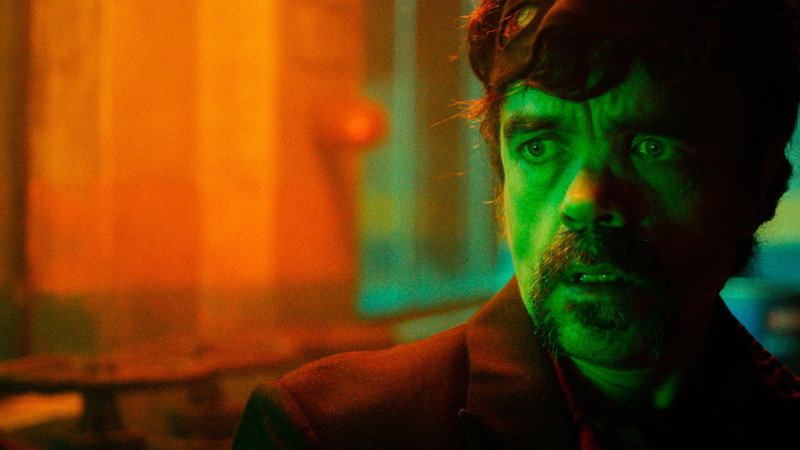
    MUMBAI: Talk about a clean act gone gloriously messy! Peter Dinklage swaps thrones for toxins in The Toxic Avenger, which scrubs its way onto digital platforms in India this Halloween. The cult-classic reboot will be available for premium rental at Rs 499 on Amazon Prime Video, Apple TV and Youtube starting October 31.

    The horror-comedy follows Winston Gooze, a mild-mannered janitor whose ordinary life takes a hazardous turn after a toxic accident transforms him into a monstrous yet oddly endearing hero, the so-called “Toxie.” What follows is a riotous blend of slime, satire and superhero chaos as he takes on corporate villains threatening his family and town.

    Alongside Dinklage’s unlikely avenger are Kevin Bacon, Elijah Wood, Jacob Tremblay and Taylour Paige, rounding out a cast as eclectic as the film’s tone. Directed and written by Macon Blair with Lloyd Kaufman and Joe Ritter, the film first turned heads at the Edinburgh Film Festival earlier this year before making its global theatrical rounds.

    A cheeky nod to its 1984 cult predecessor, this reboot promises buckets of irreverence, a dash of gore and a surprising dose of heart. So grab your mop and your remote, it’s time to get gloriously toxic.


  • Mythik brings Disney and Amazon veteran Gunjan Bhow on board

    Mythik brings Disney and Amazon veteran Gunjan Bhow on board

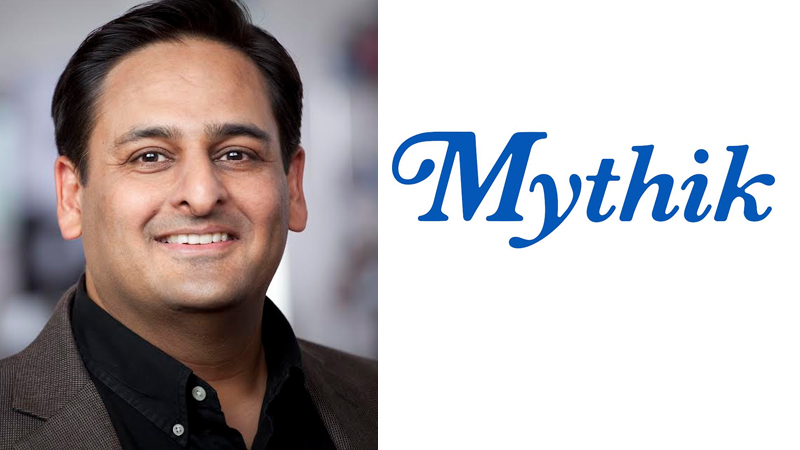
    MUMBAI: Mythik, the tech-first entertainment company aiming to become the “Disney from the East”, has appointed Gunjan Bhow, a veteran of Disney Plus, Amazon Prime Video and Fire TV, to its global advisory board.

    Bhow joins an illustrious panel of leaders from Softbank, Disney, Marvel, Amazon, BBC and Crunchyroll, who together bring decades of experience in scaling some of the world’s biggest media, entertainment and technology businesses.

    A global figure in digital entertainment, Bhow served as senior vice president and general manager at The Walt Disney Company, where he led direct-to-consumer platforms including Disney Plus, Disney Movies Anywhere and Disney Movie Club. Before that, he played a key role at Amazon in shaping the growth of Prime Video, Fire TV and Fire TV Stick, redefining subscription models in the process.

    Currently a board member at the BBC and broadband company Wide Open West, Bhow also advises organisations on AI, media innovation and customer experience. He has held senior roles at Microsoft and Walgreens Boots Alliance and is an inventor on over 20 patents.

    “Gunjan’s leadership in scaling iconic direct-to-consumer businesses makes him an exceptional addition to Mythik’s advisory board,” said Mythik founder and chief executive Jason Kothari. “He embodies the mix of technology, creativity and consumer focus that defines our vision.”

    Bhow added, “Mythik stands at the intersection of technology, storytelling and audience behaviour. I’m excited to help bring timeless stories from the East to the global stage.”

    He joins a powerhouse board that includes Alok Sama (Softbank), Kun Gao (Crunchyroll), Nick Van Dyk (Disney), Bill Jemas (Marvel), John Lynch (Amazon Studios) and Gui Karyo (Marvel and Dapper Labs).

    Mythik aims to reimagine Eastern mythology, history and folktales for global audiences through technology-led storytelling, backed by a founding team drawn from Disney, Netflix, Amazon Studios, Jio and Tencent.

  • TV Asahi to celebrate Doraemon’s French return with party at Mipcom 2025

    TV Asahi to celebrate Doraemon’s French return with party at Mipcom 2025

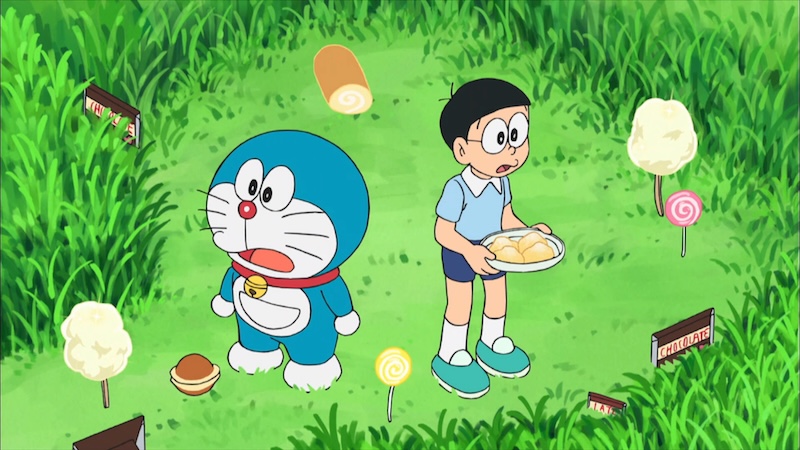
    PARIS: TV Asahi is throwing a Dorayaki Party at Mipcom on 14 October to celebrate the return of Doraemon, Japan’s time-travelling robotic cat, to French screens after a 10-year hiatus. Voice actors Emmanuel Curtil and Brigitte Lecordier will dish behind-the-scenes stories about reviving the beloved animation series at the Cannes event.

    The party marks the launch of 13 freshly dubbed episodes hitting French audiences from 3 October—the first French-language version since 2015. The new season drops first on YouTube France before rolling out across Anime Digital Network, Amazon Prime Video and Pluto TV.

    Paris-based distributor Soupir is orchestrating the multi-platform push, backed by a promotional blitz dubbed Bonjour Doraemon featuring voice cast videos, YouTube Shorts and exclusive previews.

    Curtil—the French voice of Jim Carrey and Disney’s Goofy—leads the cast as Doraemon. He’s joined by Lecordier, famous for voicing Son Goku in Dragon Ball, who plays Nobita Nobi and co-directs the dubbing alongside Louis Lecordier.

    “I hadn’t come across Doraemon before, but I had the pleasure of dubbing it alongside my long-time friend and collaborator, Brigitte Lecordier,” says Curtil. “I am very happy to bring this cheerful and intrepid little hero to life.”

    Lecordier calls the blue cat “a legendary figure throughout the world of animation” and says she feels “so lucky” to work on the series.

    Created by Fujiko F. Fujio, Doraemon debuted as manga in 1970 and hit Japanese television in 1979. The series has since spawned over 2,000 episodes and become a cultural juggernaut across Asia.

    TV Asahi head of animation sales and development Maiko Sumida says Japan and France share “a deep cultural affinity.”

    Soupir founder Charles Courcier, reckons the new dub will help Doraemon become “as beloved in France as it is around the world.”

  • Cinema Halls to Smartphones: The Shift in Indian Entertainment Consumption

    Cinema Halls to Smartphones: The Shift in Indian Entertainment Consumption

    India has long been among the world’s biggest film markets in terms of ticket sales, number of films produced, and theatre infrastructure. Over the past decade, the rise of digital streaming, cheaper data, and changing consumer behavior has pushed for a rebalancing.

    According to a recent EY research, the Indian media and entertainment (M&E) industry increased by 3.3% in 2024 and was valued at approximately INR 2.5 trillion (US$29.4 billion).

    Within that, digital media is the largest segment, and contributed around 32% of total revenues. In contrast, traditional media, like TV, print, and radio, saw drops in both advertising and subscription income.

    The Legacy of Cinema Halls

    For so long, the cinema has been the centrepiece of Indian entertainment. Big festivals, major star vehicles, and regional cinema in language hubs built the live-theatre experience. It was in the 2000s and 2010s when multiplexes in large cities boomed. Single screens remained relevant in smaller towns, and cinema halls generated major portions of film revenues.

    However, it can’t be denied that experiencing entertainment at the cinema can be a bit pricey. The cost of theatre tickets, travel, and supplementary expenses (food, parking) slows attendance for many films. Some mid-budget or smaller regional films struggle to recoup costs via theatrical alone. The impact of COVID-19 also forced many delayed releases or direct-to-OTT experiments, which in turn raised questions about the sustainability of cinema as the only route.

    Rise of OTT and Mobile-First Viewing

    India’s OTT universe in 2025 stands at 601.2 million people who watched at least one streamed or online video in the past month. That accounts for about 41.1% of the population.  
    Of those, 148.2 million are active paid OTT subscriptions (including through telecom bundles and OTT aggregators).

    Connected TV usage has surged: the number of Connected TV users is now 129.2 million, up 87% year-on-year.  This shift shows streaming is no longer confined to phones only, as viewers want larger screens and living room experiences as well.

    Data costs have fallen, smartphones have become ubiquitous, and broadband penetration has improved in urban and rural areas alike. Streaming platforms like Netflix, Amazon Prime Video, Disney+ Hotstar (now JioHotstar), Zee5, SonyLIV, and many regional players have scaled voice, subtitle, language localisation, and pricing to reach broader audiences.

    Sports-related platforms or communities, both legal streaming and fan engagement spaces, show another angle of audience shift. For instance, users who follow cricket or other live sports not only stream matches on OTT platforms but also use various digital forums and social media platforms.

    10CRIC and other similar websites are some of those online spaces where fans get access to the latest odds, team stats, and more. That reflects the way entertainment and live content spill over into related digital spaces, though the core viewing remains on OTT and smart devices.

    Regional Content and Language Diversity

    Regional language content is a key driver in this transformation. Ormax Media reports show that in 2024, the number of streaming originals in India dropped by about 18% compared to the previous year, after peaking in 2023. Still among originals, fiction series dominate (around 70% of OTT originals), and Hindi remains the dominant language with 65%share.

    Other languages, such as Bengali, Telugu, and Tamil, have growing representation. Platforms focused on regional content (e.g., those devoted to one language) are just really seeing stronger engagement in their markets.

    Viewers increasingly prefer content in local languages, with dubbed or subtitled versions helping content move across state borders. Films originally released in theatres are seeing extended life on OTT in regional markets.

    Economics: Theatrical vs OTT

    Releasing a film in theatres is expensive. Studios spend on distribution, digital or print delivery, big marketing campaigns, and then share a large cut with theatre owners. If a film doesn’t get a strong opening weekend, it often struggles to recover those costs.

    An OTT release works differently. Platforms can cut down distribution expenses, reach audiences across cities and smaller towns at once, and earn through subscriptions or ads. This makes it a safer option for mid-budget or niche films that may not draw big crowds in cinemas.

    Subscription Video On Demand (SVOD) and Advertising Video On Demand (AVOD) are also coexisting. Many platforms give both options. There is also bundling through telecom providers. Some films release theatrically and land on OTT after a window. Some would have direct-to-OTT release strategies, especially for smaller budgets or niche content.

    Technology, Platforms, and Interactivity

    Better mobile networks (4G, growing 5G), cheaper data, improved video compression, and smart TVs all push streaming quality up. Platform features like offline downloads, profiles, parental controls, and multi-device sync help retain users.

    Interactivity now matters. Live trivia, polls during shows, social features built into streaming apps, and second-screen experiences. Streaming of sports or live events gets further amplified by chat, fan forums, commentary, and behind-the-scenes clips.

    Hybrid content consumption (combining cinema and streaming) is becoming standard. Consumers may watch big action or festival films in theatres, but a large part of their weekly content diet comes from OTT. As streaming grows, the role of theatres adjusts.

    What the Future Looks Like

    Growth projections are strong, and the FICCI-EY report estimates the M&E sector will grow 7.2% in 2025. So, that’s about INR 2.7 trillion at a CAGR of about 7% to reach around INR 3.1 trillion by 2027.

    OTT audience and adoption are also expected to increase, though growth rates might moderate. Connected TV adoption will likely continue its sharp rise.

    However, platforms will still need to combine technology investment, pricing innovation, content localisation, and strong marketing to retain audience loyalty. Those who will are the ones likely to remain relevant for a long time. 

    Disclaimer:This article has been published without the journalistic or editorial involvement of Indiantelevision.com. IndianTelevision.com Group, or any of its affiliated websites. IndianTelevision.com Group does not endorse, subscribe to, or take responsibility for the content, opinions, or views expressed herein.

    Readers are further advised that Online Casino, Betting, Cryptocurrency products, Financial Investments/Engagements, NFTs, and products or calls-to-action related to Health, Booking, Wellness, and Food are largely unregulated and carry significant risk. There may be no regulatory protections or avenues for recourse in the event of financial losses or health-related risks arising from engagement with such products or services.

    IndianTelevision.com Group expressly disclaims any responsibility or liability for the information, views, announcements, declarations, or affirmations presented in this article. By choosing to proceed, the reader acknowledges and agrees that they do so at their own discretion and risk, and expressly absolve indiantelevision.com (IndianTelevision.com Group) from any potential legal claims, liabilities, or actions.

    The content provided is solely for informational and awareness purposes.
     

  • Suno strikes a new note with Gourab Ghose as head of international markets

    Suno strikes a new note with Gourab Ghose as head of international markets

    MUMBAI: When Suno talks, the world listens and now it wants the world to sing along. The music creation platform has roped in Gourab Ghose as its new head of international Markets, a move that sets the tempo for its global expansion plans.

    Ghose arrives with an eclectic track record across some of the world’s biggest platforms. At Snap Inc., he was instrumental in scaling communities and monetisation in India the company’s largest market worldwide. Before that, he tuned growth strategies at Amazon Prime Video and Disney+ Hotstar (now JioHotstar), where his subscription initiatives hit high notes in one of the fastest-growing streaming battlegrounds.

    At Suno, Ghose will orchestrate the company’s international growth strategy, focusing on taking its AI-powered music creation tools to millions of creators across cultures, languages and communities. “Suno is rewriting the way the world interacts with creativity and creativity tools,” he said, calling the chance to globalise its vision both “exciting and deeply personal.” Suno’s co-founder Martin Camacho echoed the sentiment, hailing Ghose’s experience as key to scaling the platform’s community-first approach.

    With Ghose at the helm, Suno is looking to harmonise technology, creativity and global reach striking fresh chords in the rapidly evolving world of music creation.

  • Fast channels surge 14 per cent this year as news and horror fuel boom

    Fast channels surge 14 per cent this year as news and horror fuel boom

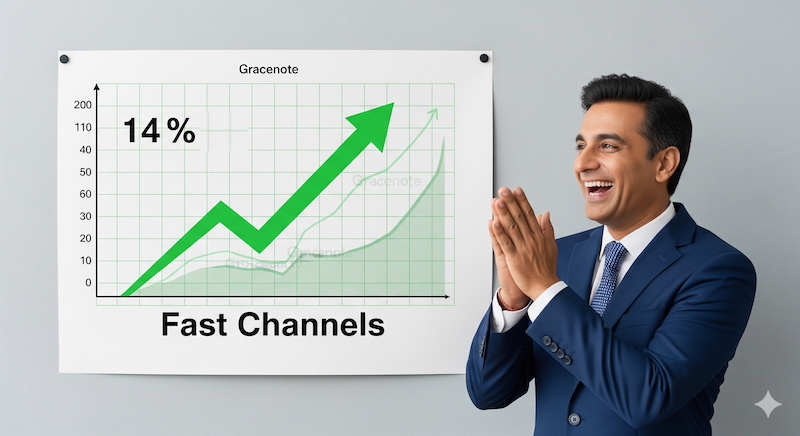
    MUMBAI: Free ad-supported television (Fast) is enjoying a blistering run. The number of Fast channels worldwide has climbed nearly 14 per cent since the start of 2025 and 76 per cent since 2023, according to fresh analysis from Gracenote, the content data arm of Nielsen.

    The firm has expanded its Data Hub to track nearly 1,850 active Fast channels, enabling direct comparisons with subscription video-on-demand (SVOD) catalogues from the likes of Amazon Prime Video, Apple TV+, Disney+, Netflix and Paramount+. The enhanced tool now covers more than 645,000 TV shows, films and sports programmes across SVOD and a further 197,000 across Fast.

    Fast is skewing younger than its subscription rivals. Almost half of its content has been produced in the past five years, compared with only a third for SVOD. Stretching the timeframe to 15 years, Fast jumps to nearly 80 per cent of programming, versus 68.5 per cent for SVOD.

    Television dominates both formats, but especially Fast: 93.1 per cent of its content comprises TV programming by episode count, compared with 88.8 per cent on SVOD platforms.

    Genre trends are diverging. Documentaries make up the largest Fast slice at 16.1 per cent, followed by drama (10.6 per cent) and news (9.9 per cent). Yet it is news and horror that are powering growth, up 37 per cent and 30 per cent respectively. On SVOD, sports led the charge in the past quarter with a 13.2 per cent bump, ahead of films (10 per cent) and TV (9.2 per cent). Sports on Fast dipped 3.7 per cent in the last three months but remain up 14 per cent year to date.

    Among the big streamers, Amazon bulked up most aggressively, expanding its catalogue by 12.6 per cent quarter on quarter. Paramount+ followed with a 6.4 per cent increase. Overall, SVOD offerings grew 9.8 per cent in the same period.

    Gracenote, which covers video content in more than 70 languages and 80 countries, is pitching its Data Hub as a strategic compass for distributors, producers and advertisers eager to map where audiences are headed.

  • Applause Entertainment marks eight years with bigger bets

    Applause Entertainment marks eight years with bigger bets

    MUMBAI: Eight years may seem young, but Kumarmangalam Birla-owned, Sameer Nair-led Applause Entertainment has already muscled into the top tier of India’s content business. Since its 2017 launch, the studio has churned out more than 50 original series, films and documentaries across every major streamer — from Netflix and Amazon Prime Video to Disney+ Hotstar, Zee5 and Sony Liv.

    Operating on what it calls a “hub and spoke” model, Applause invests upfront in content, collaborates with producers such as Banijay Asia, BBC Studios, Rose Audiovisuals and Emmay Entertainment, and then syndicates the finished work to platforms worldwide. Its catalogue includes both original dramas and Indian adaptations of acclaimed books and international formats.

    After shaking up the digital series  market, Applause has shifted gears into films with titles like Iftikaar, The Rapist and Aruvi. It has also launched Applause Productions, whose debut project is the Indian remake of Fauda. In animation, it has struck an exclusive deal with Amar Chitra Katha to reimagine 400-plus comics for global audiences and under the Appla Toon brand on YouTube.

    It recently partnered with author Jeffrey Archer to adapt his books into series or movies. 

    Nair has built a seasoned team backing him up, with Deepak Segal as chief creative officer, Prasoon Garg as chief business officer, Sunil Chainani heading films, Maansi Darrbar heading Applause Productions,  Siddharth Khaitan heading special projects like Gandhi and Scam, and Devnidhi Bajoria overseeing marketing.

    With scores of projects in the pipeline, the studio is plotting a push beyond India into documentaries, infotainment and even gaming.

    Eight years in, Applause is just clearing its throat. And loving the viewing audience’s critics’  applause.

  • What Are Overseas Viewers Loving About Indian TV in 2025?

    What Are Overseas Viewers Loving About Indian TV in 2025?

    Indian TV is no longer just for Indian households. Viewers from the U.S., UK, Canada, and Australia are tuning in like never before. Shows from Mumbai, Delhi, and Hyderabad are building global fanbases. This isn’t just Bollywood spillover. People are watching daily soaps, thrillers, game shows, and reality series. And they’re sticking around.

    So what’s pulling international viewers in? What shows should they watch? This guide answers that. It breaks down the trends, the titles, and how to jump in.

    Why Is Indian TV Getting Global Attention?

    Streaming platforms made Indian TV easier to find. Netflix, Amazon Prime Video, and Hotstar now offer subtitles, better curation, and global access. Shows that were once stuck behind time zones and language barriers are now front and center.

    Viewers Want Emotion and Drama

    Western shows often focus on subtlety. Indian shows bring the opposite. Big drama. Strong emotions. Larger-than-life characters. That contrast is refreshing for new viewers.

    A UK college student said, “I started watching Anupamaa as a joke with my roommate. Three episodes in, we were crying and yelling at the screen.”

    Shows like Yeh Rishta Kya Kehlata Hai and Kundali Bhagya are slow-paced but heavy on relationships and emotion. For some, that’s the point. They want time with the characters.

    Stories Feel Personal

    Family tension. Cultural values. Sacrifice. Indian TV hits these themes hard. And it turns out, they’re universal. You don’t need to be Indian to connect with a mother trying to support her kids, or a couple fighting family pressure.

    A viewer in Toronto explained, “My mom is Egyptian, not Indian. But when we watched Ghum Hai Kisikey Pyaar Meiin, we both got it. The aunties. The guilt. The family drama. It felt like home.”

    What Genres Are Popular with International Viewers?

    Soap Operas and Dramas

    This is the big one. Indian daily soaps are still dominating. Viewers love the long arcs and family themes.

    Top choices in 2025:

    ●  Anupamaa (Hotstar)

    ●  Imlie (JioCinema)

    ●  Parineetii (Voot)

    These shows air nearly every day in India but are available with subtitles overseas. New fans binge through hundreds of episodes in weeks.

    Mythology and History

    Viewers want stories they haven’t seen before. Indian TV delivers with epics and historical tales. Shows like Mahabharat and Chakravartin Ashoka Samrat bring Indian legends to life with colorful costumes and massive sets.

    Netflix recently added a remastered version of Ramayan and saw a 40% spike in South Asian sign-ups in the UK that month.

    Crime and Thriller

    This is where Indian TV is gaining new fans fast. Indian police procedurals and crime thrillers are picking up steam. Series like Crime Patrol, Sacred Games, and Delhi Crime bring suspense, corruption, and high-stakes investigations.

    Even fictionalized stories like Asur and Rudra offer a mix of culture, mystery, and edge.

    One American fan posted, “Asur was way better than most crime shows on HBO. It’s weird, smart, and totally messed up in a good way.”

    Reality and Game Shows

    People outside India are discovering the chaos and charm of Indian reality TV. Whether it’s cooking, dancing, or singing, the emotion is always on full blast.

    Top picks:

    ●  Indian Idol

    ●  Dance Deewane

    ●  Kaun Banega Crorepati (India’s version of Who Wants to Be a Millionaire?)

    These shows often go viral on YouTube too. Full clips with subtitles bring in millions of views from outside India.

    What Makes Indian TV Different?

    Indian TV doesn’t hold back. Characters cry hard, love harder, and argue louder. The sets are colorful. The music is constant. The stakes feel huge even when the plot is small.

    New fans enjoy how immersive it is. Watching Naagin might feel like stepping into a whole other world of shape-shifting serpents and epic curses, but that’s exactly why people like it.

    Another key difference is the length. Indian series can run for years. Some have thousands of episodes. That’s a lot of screen time, but it also means you get attached.

    How Can Overseas Viewers Start Watching?

    Use Subtitled Streaming Platforms

    The best platforms for Indian TV in 2025:

    ●  Hotstar: Great for StarPlus and Star Bharat shows

    ●  Netflix India: Best for crime, thrillers, and originals

    ●  Amazon Prime Video: Wide mix of drama and comedy

    ●  ZEE5: Strong in regional content (Marathi, Bengali, etc.)

    ●  Sony LIV: Good for soaps and sports

    Most of these platforms offer subtitles in English. Some are adding French, Spanish, and Arabic too.

    Don’t Start in the Middle

    Some shows have long histories. Jumping in at episode 1472 won’t help. Find recap videos or start with new seasons. YouTube channels often post “story so far” clips.

    Explore Different Languages

    Indian TV isn’t just Hindi. Try Tamil, Telugu, Marathi, or Malayalam shows. Each brings a different style and pace.

    One Australian viewer shared, “I watched Koodevide (Malayalam) with subs. I don’t speak a word, but the acting pulled me in. Now I’m learning bits just to follow better.”

    What’s the Cultural Impact?

    As more people watch Indian TV globally, it’s shaping how India is seen. Not just Bollywood, but real India. Families, food, arguments, humor. This kind of media spreads soft power.

    It also boosts language interest. Duolingo reports that Hindi and Tamil enrollments from U.S. users rose 22% year-over-year in early 2025.

    And it builds community. Facebook groups, Reddit threads, and TikTok edits connect fans across borders. Some viewers even learn how to remove google search result pages to hide spoilers before watching new episodes.

    Final Thoughts

    Indian TV is loud, long, and full of life. That’s why global viewers love it. In 2025, it’s not just about watching from afar. It’s about joining the party.

    If you’re new, start with Anupamaa or Delhi Crime. Then try a regional language show. Explore genres. Share clips. Get hooked.

    Because once you’re in, you’re in. Indian TV doesn’t just tell stories. It pulls you into them. 
     

  • To The New scores a hat-trick as Prime Video’s preferred partner for 2025

    To The New scores a hat-trick as Prime Video’s preferred partner for 2025

    MUMBAI: To The New has once again made the cut as Prime Video Preferred Fulfillment Vendor (PFV) for 2025, proving it knows exactly how to package, polish, and push pixels to perfection.

    For the third year running, the digital technology services firm has been handpicked by Amazon Prime Video as part of its global PFV roster, a tightly curated club of partners trusted to handle the heavy lifting of content delivery, localisation, and OTT-ready packaging.

    “TO THE NEW has consistently demonstrated a deep understanding of our content fulfillment requirements,” said Prime Video & Amazon Studios head of global media vendor services, Paul Nguyen. “Their ability to deliver with accuracy, speed, and alignment to our standards has made them a valued partner in our global operations. Their continued recognition in our PFV program reflects our ongoing collaboration and their focus on meeting Prime Video’s expectations.”

    “We are pleased to continue our partnership with Amazon Prime Video as a Preferred Fulfillment Vendor,” said To The New co-founder & CEO, Narinder Kumar. “This recognition is a testament to our team’s deep domain expertise and our unwavering commitment to helping content creators and studios deliver exceptional viewing experiences to global audiences.”

    In the streaming world, where one glitch can trigger mass exits, consistency is currency. To The New brings both blending deep domain expertise with slick, automated workflows that keep content flowing fast, secure, and studio-grade.

    With marquee clients across media and entertainment, the firm has quietly become a behind-the-scenes juggernaut, ensuring your next binge-watch lands glitch-free and grammatically correct.