Tag: Amazon

  • BigCity goes Down Under to play the loyalty game in Australia

    BigCity goes Down Under to play the loyalty game in Australia

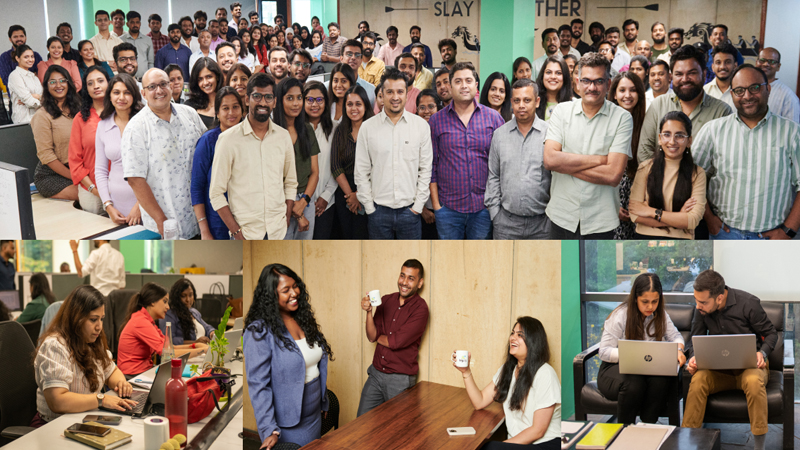
    MUMBAI: When it comes to loyalty, BigCity just levelled up this time, all the way Down Under. BigCity Promotions, one of India’s most awarded sales promotion and loyalty agencies, has announced its entry into Australia with the launch of a new office in Sydney, marking its first international expansion in nearly two decades. The move signals the company’s ambition to replicate its India success across the Australia–New Zealand (ANZ) region, a market ripe for disruption in the loyalty and engagement space.

    Founded in 2006, BigCity has become something of a legend in India’s reward ecosystem known for turning mundane promotions into high-voltage brand experiences. With 8,000 plus programs executed for over 500 global brands, including Pepsico, Unilever, Mondelez, Coca-cola, Samsung, and Amazon, the agency has earned a reputation for blending creativity, technology, and measurable impact.

    From B2C reward programs to B2B loyalty solutions and gamification-led engagement, BigCity has redefined how brands connect with consumers and trade partners alike. Its proprietary plug-and-play platform lets brands launch campaigns within days offering faster time-to-market, reduced costs, and full creative flexibility. Built on an in-house technology and analytics stack, it also enables deep insight into consumer engagement, redemptions, and ROI, giving marketers the holy grail of modern marketing measurable loyalty.

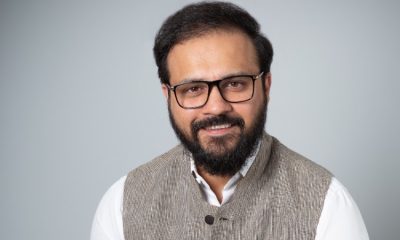
    The Sydney office will serve as BigCity’s regional hub for Australia and New Zealand, extending its full-service suite to local and global brands in the region. The operations will be spearheaded by Gunjan Kumar country director, who brings over 27 years of global experience across telecom, banking, retail, and FMCG. Having driven client engagement and loyalty strategies across continents, Kumar is tasked with building the BigCity playbook for the ANZ market, one that blends local insight with the brand’s signature executional agility.

    “Australia is a market ripe for transformation, and our goal is to bring the same scale, creativity, and speed that have powered some of India’s biggest campaigns to brands here,” said BigCity Promotions co-founder Vikas Shah. “For nearly two decades, BigCity has redefined how brands engage through innovation, technology, and storytelling this expansion is a natural next step in that journey.”

    BigCity’s forte lies in its ability to gamify engagement, transforming passive audiences into active participants. Its campaigns often feature instant-win mechanics, leaderboards, challenges, and digital contests, all designed to boost brand love and repeat purchase intent. This gamified approach has proven especially potent in cluttered categories like FMCG and telecom, where attention spans are short but loyalty can be won with the right mix of fun and function.

    The expansion also comes at a time when the ANZ market is seeing brands look beyond conventional loyalty cards and cashback models. With digital-first consumers demanding more personalised, experiential rewards, BigCity’s data-driven, experience-centric approach may find fertile ground.

    In India, the company has long been the behind-the-scenes architect of some of the country’s most memorable campaigns, the kind that combine large-scale activation, complex fulfilment, and regulatory precision without ever losing the element of play. It’s this operational mastery that BigCity now hopes to bring to Sydney’s brandscape.

    As the company steps onto foreign shores, the move underscores how homegrown Indian marketing innovation is beginning to travel the world not as an imitator, but as an industry leader exporting expertise. For BigCity, the next game has just begun. And this time, it’s on a whole new continent.


  • Australia forces Netflix and Disney+ to bankroll local content

    Australia forces Netflix and Disney+ to bankroll local content

    MUMBAI: Australia has stopped asking nicely. The government will introduce legislation this week forcing streaming platforms to invest in Australian drama, children’s shows, documentaries and educational content—or face the consequences.

    Any service with more than a  million Australian subscribers—Netflix, Disney+, Amazon Prime and others—must commit at least 10 per cent of their local expenditure, or 7.5 per cent of revenue, to homegrown productions. It’s a quota system that puts streamers on par with free-to-air and pay television, which have long faced similar obligations.

    The rules were meant to arrive in July last year but got tangled in trade politics. Concerns about how they would mesh with Australia’s free trade agreement with America led to a pause. The government blamed difficulty negotiating with Washington during an election year. After Donald Trump’s victory, questions swirled about whether the quotas could trigger retaliatory tariffs.

    With both elections now behind them and the US-Australia relationship stable, Canberra has pushed ahead. Tony Burke, arts minister, and Anika Wells, communications minister, framed the move as a jobs safeguard for an industry increasingly threatened by artificial intelligence.

    “Since their introduction in Australia, streaming services have created some extraordinary shows,” Burke said. “This obligation will ensure that those stories—our stories—continue to be made.”

    Wells pointed to Bluey, the children’s programme that became a global phenomenon, as proof of concept. Australian content connects people with “who we are” and shares that with the world, she said.
    The government hasn’t explained how it will calculate the two quota options—10 per cent of expenditure or 7.5 per cent of revenue—leaving room for future friction with the platforms.

    The Australian model raises an obvious question: could India impose similar quotas? While Netflix, Amazon Prime Video and Lionsgate Play are commissioning o9r acquiring local content, it’s unclear whether they’re hitting anything close to a 10 per cent threshold. Indian regulators have repeatedly failed to enforce local quotas on television channels, making it unlikely they’ll succeed with streamers.

    But the precedent matters. If Australia can strong-arm global platforms into funding local productions without sparking a trade war, other markets may feel emboldened to try. For now, India’s streaming landscape remains a free-for-all—heavy on local content by choice, light on obligation by design. Whether that changes depends less on regulatory ambition than political will. And in India, that’s always been in short supply.

  • India’s AI ambitions hit the high note with Microsoft scholarship surge

    India’s AI ambitions hit the high note with Microsoft scholarship surge

    MUMBAI: India isn’t just coding the future, it’s rewriting it, line by line, in AI. The country has emerged as one of the top applicant nations for the 1 million dollars Microsoft AI Innovator Global Scholarships, a landmark initiative by Women in Cloud, launched alongside Opulis: Women Powering Microsoft’s Trillion-Dollar Shift.

    The collector’s edition coffee table book endorsed by Microsoft and the Microsoft Alumni Network celebrates 50 women tech leaders who have helped steer the company through its transformation into the AI era. But this is more than just glossy pages and golden stories; Opulis doubles up as a career catalyst through its Book-to-Scholarship Model, where every purchase unlocks real AI learning opportunities for aspiring professionals.

    Since its launch, the scholarship programme has drawn over 700 applications from 20-plus countries, including Brazil, the US, Nigeria, India, Australia, South Africa, Canada, Kenya, and Egypt. India’s strong showing underscores its growing momentum in AI skilling particularly among young professionals and women technologists eyeing the global digital workforce.

    “We’re ensuring that access to AI careers and education isn’t limited to a few, it belongs to everyone, especially women ready to lead India’s digital future,” said Opulis president of women in cloud and executive producer Chaitra Vedullapalli. “Electricity unlocked the industrial revolution, and AI is unlocking quantum progress.”

    Through 1,000 Opulis book pre-orders worldwide, Women in Cloud has already unlocked 100 Microsoft AI Certification Scholarships offering learners world-class credentials that can power careers worth Rs 55–60 lakh per annum. The move is projected to create over Rs 60 crore in new economic value annually, translating to about 7 million dollars in wages and an estimated 21 million dollars total economic impact.

    The ultimate goal? To ignite 1,000 AI careers by 2030, powered by book sponsorships, corporate grants, and community support proof that storytelling and access can together spark large-scale economic mobility.

    Marking Microsoft’s 50th anniversary, Opulis also spotlights five Indian-origin women leaders shaping the company’s AI journey: Chaitra Vedullapalli, Monika Mital Gupta, Aparana Gupta, Sharmila Rathinam, and Nitasha Chopra. Among them, Aparana Gupta, based in India, leads as Director of Engineering and Principal Software Engineering Manager at Microsoft embodying the homegrown excellence the programme seeks to inspire.

    Available in hardcover and digital editions across Amazon, Barnes & Noble, and over 4,000 global retailers, Opulis carries a unique promise: every 10 books sold funds one AI Innovator Scholarship, creating a virtuous loop of knowledge, opportunity, and empowerment.

    In the end, Opulis isn’t just chronicling women who powered Microsoft’s trillion-dollar shift, it’s scripting a new chapter where Indian women and technologists worldwide can claim their seat at the AI table. And this time, they’re not just participating in the revolution, they’re training it.

  • Credit where it’s due as festive shoppers swipe big this Diwali

    Credit where it’s due as festive shoppers swipe big this Diwali

    MUMBAI: Looks like this Diwali, Indians didn’t just light up their homes, they swiped their way to sparkle too. A new survey by Paisabazaar reveals that over 42 per cent of credit card users spent upwards of Rs 50,000 on festive shopping this year, signalling that big-ticket buying is firmly back in fashion.

    The festive cheer wasn’t limited to diyas and discounts, it spread right across credit limits. About 22 per cent of respondents spent between Rs 50,000 and Rs 1 lakh, while one in five splurged over Rs 1 lakh on their cards during Diwali. The survey, which covered over 2,300 users, paints a clear picture of India’s growing comfort with credit as a strategic spending tool.

    When it came to what they bought, home appliances topped the wishlist at 25 per cent, followed by mobiles, gadgets and accessories at 23 per cent, and apparel at 22 per cent. Furniture and décor made up 18 per cent of spends, while gold and jewellery accounted for 12 per cent proof that both sparkle and substance drove shopping choices this season.

    But it wasn’t all impulse. The study revealed that 91 per cent of shoppers planned their purchases around card-specific offers and festive deals. Less than 10 per cent relied solely on their card’s standard cashback or reward structure. Clearly, today’s consumers are not just shopping, they’re strategising.

    “Consumers are using credit cards more intelligently, timing their high-value purchases with festive offers and card-linked deals,” said Paisabazaar CEO Santosh Agarwal. “This growing financial awareness shows how value and convenience are driving credit card use.”

    The benefits are paying off too. Nearly 71 per cent of respondents owned shopping-specific credit cards that offered cashback or festive rewards, while 15 per cent received seasonal deals even without such cards. For many, cashback remained the biggest draw chosen by 20 per cent of users followed closely by co-branded offers (19 per cent) and accelerated reward points (18 per cent).

    Among those opting for EMIs, No-Cost EMI emerged as the clear winner, attracting 56 per cent of users, while 29 per cent chose EMIs to unlock extra discounts and 10 per cent used them simply to spread payments more comfortably.

    Interestingly, shoppers were equally at home online and offline 48 per cent said they preferred a mix of both. The hunt for better deals drove most of them to e-commerce giants, with 83 per cent claiming they found the best discounts on platforms like Amazon and Flipkart. Together, the two dominated with a 43 per cent preference rate, followed by Myntra (15 per cent), Meesho (10 per cent), and other platforms such as Ajio, Nykaa, Zepto and Tata Cliq accounting for 32 per cent collectively.

    Paisabazaar, head of credit cards Rohit Chhibbar summed it up aptly: “This festive season marked the rise of the value-savvy shopper, one who plans, compares, and capitalises on every offer. Cashback, rewards, and no-cost EMIs have made credit cards indispensable for festive spending.”

    In short, this Diwali, shoppers didn’t just chase lights, they chased the right swipes.


  • Aashirvaad celebrates mothers with its Diwali campaign ‘Ghar Layein Aashirvaad’

    Aashirvaad celebrates mothers with its Diwali campaign ‘Ghar Layein Aashirvaad’

    MUMBAI: This Diwali, Aashirvaad, one of India’s most trusted household staple brands, is celebrating the women who bring every home to life. Its festive campaign, ‘Ghar Layein Aashirvaad,’ is a heartfelt tribute to mothers: the light that truly illuminates every household.

    At the heart of the campaign is a beautifully composed music video that captures how a mother’s warmth, care and quiet strength turn every moment of Diwali into something magical. From kitchens filled with the aroma of gujiyas and besan laddoos to courtyards glowing with diyas and laughter, the film shows how her touch transforms rituals into lasting memories and everyday gestures into blessings.

    Speaking about the campaign, ITC Ltd BU chief executive, staples, food division Anuj Rustagi said, “Diwali is a celebration of light, togetherness and gratitude, values that truly reflect the ethos of Aashirvaad. This year’s campaign honours mothers, who create moments of connection and make every celebration complete.”

    To add an interactive twist, Aashirvaad has also launched a ‘Ghar Layein Aashirvaad’ rangoli contest, inviting participants to upload pictures of their Diwali rangolis for a chance to receive personalised digital greeting cards from TV’s beloved actress Rupali Ganguly. Each day, 100 winners will win Amazon vouchers worth Rs 500, adding an extra sparkle to their festivities.

    Further sweetening the celebration, the brand has introduced limited edition Diwali packs of Aashirvaad shudh chakki atta, featuring a QR code that directs consumers to the contest microsite, turning every festive purchase into a chance to celebrate and win.


  • Mythik brings Disney and Amazon veteran Gunjan Bhow on board

    Mythik brings Disney and Amazon veteran Gunjan Bhow on board

    MUMBAI: Mythik, the tech-first entertainment company aiming to become the “Disney from the East”, has appointed Gunjan Bhow, a veteran of Disney Plus, Amazon Prime Video and Fire TV, to its global advisory board.

    Bhow joins an illustrious panel of leaders from Softbank, Disney, Marvel, Amazon, BBC and Crunchyroll, who together bring decades of experience in scaling some of the world’s biggest media, entertainment and technology businesses.

    A global figure in digital entertainment, Bhow served as senior vice president and general manager at The Walt Disney Company, where he led direct-to-consumer platforms including Disney Plus, Disney Movies Anywhere and Disney Movie Club. Before that, he played a key role at Amazon in shaping the growth of Prime Video, Fire TV and Fire TV Stick, redefining subscription models in the process.

    Currently a board member at the BBC and broadband company Wide Open West, Bhow also advises organisations on AI, media innovation and customer experience. He has held senior roles at Microsoft and Walgreens Boots Alliance and is an inventor on over 20 patents.

    “Gunjan’s leadership in scaling iconic direct-to-consumer businesses makes him an exceptional addition to Mythik’s advisory board,” said Mythik founder and chief executive Jason Kothari. “He embodies the mix of technology, creativity and consumer focus that defines our vision.”

    Bhow added, “Mythik stands at the intersection of technology, storytelling and audience behaviour. I’m excited to help bring timeless stories from the East to the global stage.”

    He joins a powerhouse board that includes Alok Sama (Softbank), Kun Gao (Crunchyroll), Nick Van Dyk (Disney), Bill Jemas (Marvel), John Lynch (Amazon Studios) and Gui Karyo (Marvel and Dapper Labs).

    Mythik aims to reimagine Eastern mythology, history and folktales for global audiences through technology-led storytelling, backed by a founding team drawn from Disney, Netflix, Amazon Studios, Jio and Tencent.

  • Kärcher powers up ‘Make in India’ with locally-made WD 3–17L vacuum

    Kärcher powers up ‘Make in India’ with locally-made WD 3–17L vacuum

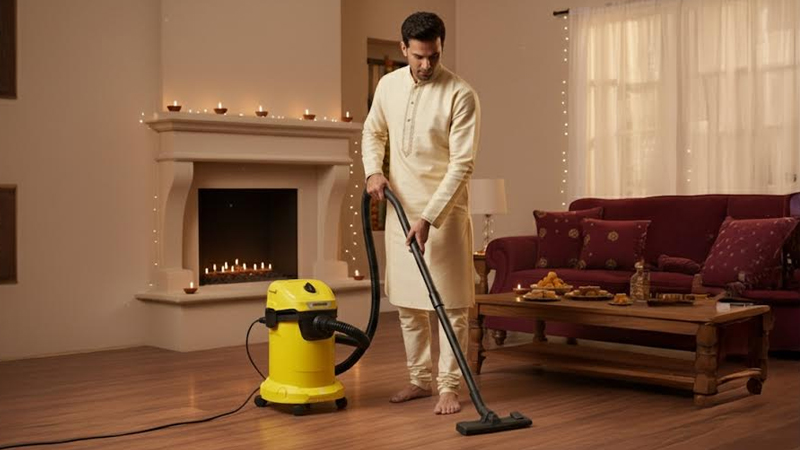
    MUMBAI: In a move that aligns sparkle with strategy, Kärcher India has unveiled the WD 3–17L, a wet-and-dry vacuum cleaner now proudly manufactured in India. The launch marks a milestone in Kärcher’s commitment to the Government of India’s “Make in India” initiative, combining global engineering with homegrown production to deliver powerful, affordable, and accessible cleaning solutions.

    Available across Kärcher’s official webshop, Amazon, Flipkart, and leading retail outlets, the WD 3–17L is designed to meet the evolving needs of Indian households, from everyday spills to balcony dust and garage grime.

    “Our proud German legacy of quality and reliability is now being carried forward in India,” said Kärcher India director Prashanth Srirangam. “By blending German engineering with local manufacturing, we’re ensuring greater accessibility, service support, and long-term value for customers nationwide.”

    Built on Kärcher’s signature WD Series platform, the WD 3–17L features a 17-litre container, a 1000w motor, and an integrated blower function for hard-to-reach areas. Its one-piece cartridge filter allows seamless switching between wet and dry vacuuming, no filter change required. With a compact design, energy efficiency, and clever storage hooks, it’s built for homes short on space but big on cleanliness.

    By localising production, Kärcher can now respond faster to seasonal demand, improve parts availability, and expand its after-sales service network across India.

    A subsidiary of Alfred Kärcher SE & co KG, Kärcher India continues to lead the way in domestic and industrial cleaning technology. Under its vision 2025, the company aims to fuse innovation, sustainability, and customer focus to clean up quite literally, in one of the world’s fastest-growing markets. 

  • Shambhavi Mishra named head of marketing at Gourmet

    Shambhavi Mishra named head of marketing at Gourmet

    MUMBAI: Gourmet Investments Pvt. Ltd. has promoted Shambhavi Mishra to head of marketing, tasking her with steering the company’s entire portfolio of global dining brands in India, including P.F. Chang’s, Pizzaexpress, and Chili’s American Grill & Bar.

    Mishra, who has spent the past two years driving digital-first campaigns and consumer engagement for Pizzaexpress and Chili’s, now oversees brand strategy across all outlets, aiming to strengthen market presence and cultural relevance in India’s fast-evolving dining scene.

    Prior to Gourmet, she was AVP – marketing at Impresario Handmade Restaurants, shaping strategy for Social, antisocial, Smoke House Deli, Boss Burger, Lucknowee, and Hungli across more than 47 locations. Her tenure at Social redefined F&B marketing through community-building, culture-first partnerships, and high-profile collaborations with Amazon, Netflix, Spotify, Tinder, Bumble, Budweiser, Absolut, Flipkart, and global IPs like Game of Thrones and Stranger Things. She also created original experiences such as Fresh Cuts, Satrangi Mela, Culture Chutney, and Deluxe Thali.

    Mishra is recognised not only for her strategic acumen and digital-first thinking but also for championing initiatives around women’s safety, gender inclusivity, and diversity, embedding values into both workplace culture and consumer experiences.

    An alumna of ISB and MICA, with a foundational degree from the Institute of Technology & Management, she is widely regarded as one of India’s most dynamic voices in F&B marketing, known for marrying creativity with measurable business impact.

    Gourmet Investments’ elevation of Mishra signals a sharpened focus on strategic marketing, brand storytelling, and cultural resonance across India’s competitive dining landscape.
     

  • Google taps Raveesh Dev to chase small business growth across the Americas

    Google taps Raveesh Dev to chase small business growth across the Americas

    NEW DELHI: Climbing the ladder at Google takes stamina. Raveesh Dev has just demonstrated plenty of it. After nearly ten years shuttling between roles at the tech giant, Dev has been named head of en-Americas, SMB growth, a position that puts him in charge of scaling Google’s small and medium-sized business operations across the Americas from the company’s Gurugram office.

    The promotion, announced in October 2025, caps a rapid ascent through Google’s commerce division. Dev spent the past two years as head of commerce for India, leading go-to-market strategy for advertisers in travel, retail, beauty and healthcare. Before that, he briefly helmed multichannel and consumer packaged goods operations. His track record includes steering a business generating hundreds of millions of dollars in annual recurring revenue and winning Google’s 2024 APAC sales leader award.

    Dev’s 15-year career spans media and technology. Before joining Google in 2016, he cut his teeth in advertising sales at Times Television Network, where he rose to associate account director, and earlier at Red FM and Reliance Broadcast Network. His pitch is straightforward: scale businesses, mentor teams, drive operational excellence. It’s corporate speak, but his promotions suggest he delivers.

    The Americas SMB role is no easy brief. Small businesses are notoriously fickle customers, quick to churn when platforms don’t deliver immediate results. Google’s challenge is keeping them hooked on advertising products whilst fending off rivals like Meta and Amazon. Dev’s experience in India’s chaotic, price-sensitive market may prove useful, though the Americas present their own headaches.

    Dev’s LinkedIn post struck the obligatory note of gratitude—thanking mentors, celebrating teams, expressing excitement. What matters more is whether he can translate India’s lessons into growth across vastly different markets. Google clearly thinks he can. Time will tell if they’re right.

  • Mythik ropes in Jio, MX Player & Walmart veterans to power product-tech vision

    Mythik ropes in Jio, MX Player & Walmart veterans to power product-tech vision

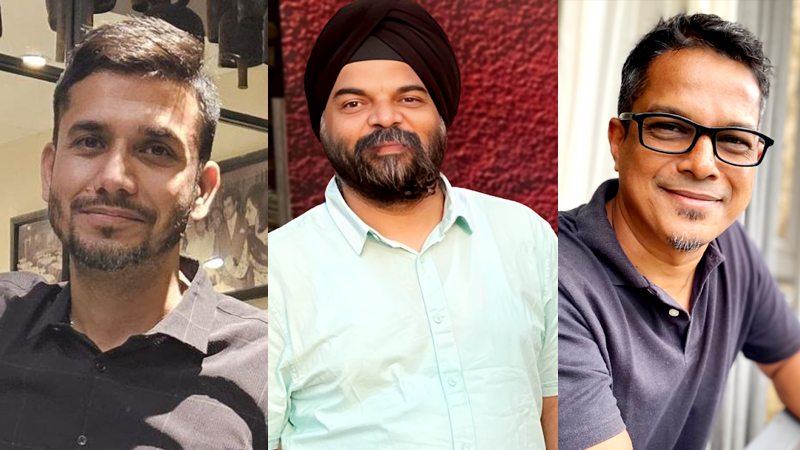
    MUMBAI: The global entertainment startup, on a mission to be the “Disney from the East” has unveiled a heavyweight product and technology leadership team with three marquee hires. Sachin Thapliyal joins as founding member & chief product officer, Kamalmeet Singh as chief technology officer, and Nitin Pakhare as head of product design.

    Between them, the trio boasts over 60 years of experience across giants like Jiosaavn, MX Player, Amazon, Walmart, Microsoft, Payu, and Paytm, shaping platforms that entertained and engaged millions. From building music and video apps with 100 plus million users to pioneering GenAI architecture, their combined resumes read like a masterclass in consumer-tech at scale.

    Thapliyal, who once scaled Jiosaavn past 100 million MAUs and helped shape MX Player into a 175 million-user super-app, will steer product strategy. Singh, an ex-Walmart principal architect and author of large-scale tech design books, brings the muscle of cloud, GenAI, and enterprise-grade architecture. Meanwhile, Pakhare, who has designed experiences for Jiocinema, MX Player, and Yahoo Labs, will focus on ensuring Mythik’s stories look as good as they feel.

    Founder & CEO Jason Kothari is betting on the trio’s mix of creativity and technology to help Mythik deliver its bold promise: reimagining Eastern mythology, history, and folktales for global audiences in compelling, tech-driven ways.

    As Kothari put it, “Their experience in building entertainment platforms at scale, architecting global solutions, and creating engaging user experiences aligns perfectly with our mission.”

    If Mythik’s new chapter reads anything like its hiring, the East’s tales may just get a blockbuster retelling for the world stage.