Tag: Amarujala

  • PubNation: How print players expanded digital operations amid Covid

    PubNation: How print players expanded digital operations amid Covid

    MUMBAI: The process of the digital transformation of the print industry has been ongoing for a while now, but the Covid2019 crisis accelerated the need for news publications to realign their objectives and operational model, and to look toward creating new avenues to diversify offerings. More than ever, media businesses will have to act now in order to capitalise on this current growth and ensure success in this new landscape and beyond. 

    Different news organisations came forward to discuss the effect of pandemic and how it accelerated their business at the two-day-long summit – PubNation (print and digital), organised by Indiantelevision.com in partnership with Quintyoe Technologies and Gamezop. The panel was moderated by Omdia content strategies senior principal Tim Westcott and included ET Online editor Deepak Ajwani, Moneycontrol editor Binoy Prabhakar, HT digital streams chief content officer Prasad Sanyal, Amar Ujala Ltd state editor Uttrakhand Sanjay Abhigyan, The Hindu strategy & digital editor Sriram Srinivasan and Mathrubhumi assistant editor-online K A Johny.

    During the pandemic a lot of publications were forced to take the digital route to stay in business. As the movement of people, transport and delivery came to a complete halt owing to lockdown, and readers unsubscribed due to economic constraints or risk of contracting the virus off of newspapers, the e-paper played an important role in these tough times.

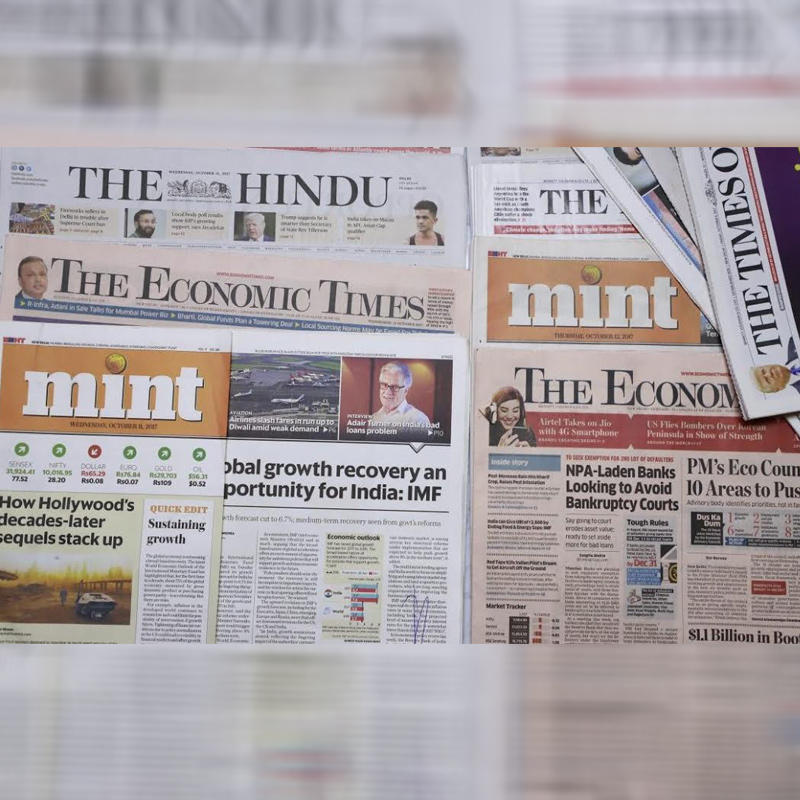
    Starting off, Srinivasan revealed that The Hindu was among the first few publications to go digital and adopt a subscription-based model two years back. It is also among first few organisations to launch a paid version of the website. He added, “We have an e-paper, we provide dozens of newsletters. So, everything that is required for a digital publication is there. Then there are our sister publications also, including Business Line, political magazine Frontline and a sports magazine.”

    Amar Ujala, which has a very strong presence in Hindi heartland and is among the top five newspapers in the country, has shifted its focus towards creating digital content. The organisation is present in eight to nine states with more than 250 print editions. Amar Ujala has a very vibrant digital presence in the form of a website, YouTube and Facebook. 
     
    Echoing the sentiment, Sanyal mentioned that Covid20919 has accelerated the digital journey for Hindustan Times and the brand is looking forward to expanding its offering. “All the three outlets Hindustan Times, Hindustan and Live Mint are digitally present. During the pandemic, the company has launched three new segments HT automobile, HT tech and HT Bangla,” he added.

    A large number of media groups were already digital first and working towards ensuring that the customer experience is right and they were abreast with the content trends. Ajwani revealed that in March 2020, ET doubled its viewership. Said he: “We were effective, productive and were making a difference with whatever content we were producing from home. A lot of technology, collaboration with our print team has been around for the last three-four years. We have been connected with each other via multi-modes of technology. So, using our feet on the ground, and the skills of technology and the skills we have built online, we have had a very integrated approach from day one.”

    He further added, “Somewhere in the month of July, we saw that Covid2019 pandemic has accelerated our offerings. I believe there is no transition from print to digital. They both work in synergy. It is an omnipresent world, we are present wherever the reader wants us to be.”

    When the novel Coronavirus arrived in India, it came with more than its fair share of misinformation and fake news. People were in desperate need of verifiable, trustworthy news and they turned to print publications and their digital arms for it. In this regard, Prabhakar mentioned that Moneycontrol was focused on reaching out to its audiences and providing all the necessary information related to the pandemic. “Seeking viewer attention was never a problem for the organisation. Today, the lockdowns have been lifted and many of our readers have gone back to their daily routines, now the challenge once again is to how to seek the user’s attention,” he rued.

    The brand had diversified its offering to acquire and retain new users by expanding into the regional language space. It has three subscription-based products — Moneycontrol Pro, Moneycontrol Hindi and Moneycontrol Gujrati. 

    HT is also doing something similar, said Sanyal, and offers products for Gujarati and Hindi speaking audiences. The network closely works with all partners to deliver content.  

    K A Johny disclosed that it has a very powerful presence in both print and TV. He also shared that the driving force for Mathrubhumi is the trust of people. Covid2019 has only revived things for the organisation. Irrespective of the medium, he thinks that a platform of trust and credibility is the need of the hour.

  • PubNation: Are paywalls the future of digital news?

    PubNation: Are paywalls the future of digital news?

    MUMBAI: Covid2019 has impacted industries across the board but it also gave a massive fillip to digital adoption. People are using digital more than ever for most of their requirements – from buying groceries, to reading news, and seeking entertainment.

    The massive change in consumption habits has not gone unnoticed by media organisations and while some may think that the print industry is on the cusp of a digital revolution, the truth is that they have been preparing for this for a while now; upgrading their capabilities by investing in technology, video, content formats, creating properties and, most of all, training editorial teams. 

    In order to understand the new form of print media, its relevance as an advertising medium, the content that will define print publications in future, and technology that will shape the copies of tomorrow, Indiantelevision.com is hosting a two-day-long summit – PubNation (print and digital) in partnership with Quintyoe Technologies and Gamezop.

    One of the virtual panels focused on the convergence of print and digital, and how news will evolve and be consumed in the next three years. The panel was moderated by Omdia content strategies senior principal analyst Tim Westcott and included ET Online editor Deepak Ajwani, Moneycontrol editor Binoy Prabhakar, HT digital streams chief content officer Prasad Sanyal, Amar Ujala Ltd state editor Uttrakhand Sanjay Abhigyan, and Mathrubhumi assistant editor-online K A Johny.

    Abhigyan opened the session by sharing that till recently, Amar Ujala was known as a print maven, but the organisation has adopted digital at a rapid speed. It has a vibrant online presence in the form of a website, YouTube and Facebook pages. In current times, content diversification is of utmost importance, he stated. 

    But going digital also raises the question of modes of monetisation. Will the future of the digital news content be obscured behind paywalls?  

    The Hindu strategy & digital editor Sriram Srinivasan shared that the group was one of the first ones in the country to figure out that getting into a subscription model was inevitable. “We identified it a few years ago, before we even did it. We all saw where the online advertising was going and a lot of publishers were struggling to make it as a main source of revenue and it is still a problem. There is a limit to which the online advertising can support a publication,” he said.

    Prabhakar mentioned that Moneycontrol has a subscription product – Moneycontrol Pro, which has been around for the last two years and has managed over three lakh subscribers in the last 18 months. “We have been doing this because our business ambitions and editorial objectives were clearly aligned.” 

    Ajwani, who was representing one of the biggest publishers of the country, mentioned that for the last two years, ET Prime was running without any ads. However, they were the first website in the realm of business mulling to go the subscription route. Initially, the print team was helping them with great paywall content. Then they started with video content, deep-dive stories and experimenting with formats and graphics. Covid2019 further hastened the process of segueing from partial to complete paywall.

     “Initially we put out three articles with in-depth analysis and graphics behind the paywall on ETPrime.com. This July we integrated it into the ET platform and it became the membership platform for us. We redesigned an integrated website, launched a paywall mechanism, and a lot of changes were made and all this was done from home,” he detailed. 

    During the conversation, K A Johny disclosed that Mathrubhumi is planning to go behind a paywall and the teams are working towards this end. 

    Westcott wondered how these industry giants were going to make readers pay for their digital platform, to which Prabhakar admitted that building a subscription-based model is not easy. There are also hefty production costs to contend with. To make the content look worthy enough so that the readers pay for it, the organisation uploads weekly stock results and in-depth investigative reports.

    Adding to this, Ajwani said that it is important to make the user-experience more hassle-free and enjoyable. "I think both science and content are the subscription mantra." Sanyal agreed, chiming in with the reveal that the organisation is aware of what audiences read, and discovery of the kind of content that will be run on the site is driven by algorithms and not individuals. 

    It will be interesting to see how the content strategies of these platforms unfold in the long run and how willing users will be to pay for the content.