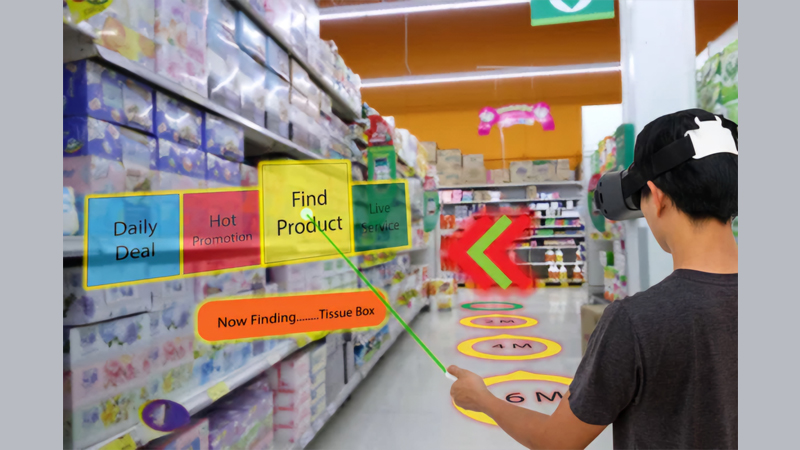
Mumbai: Metaverse and AI; these are not just buzzwords that everyone uses nowadays, but are the cornerstones of our digital future. With the burgeoning advancements in technology, these innovations are rapidly reshaping the way we interact with the world around us.
From immersive gaming experiences in virtual reality to augmented reality enhancing our daily lives, and from e-commerce platforms leveraging AI to personalise online shopping to virtual storefronts in the metaverse, the convergence of these technologies is creating a dynamic landscape of possibilities, transforming industries and redefining how we connect, work, and play.
To gain deeper insights on the potential impact of the metaverse on the future of online shopping, Indian Television has gathered perspectives from various industries ranging from e-commerce business solution providers to brands, retail, manufacturing, and ad agencies.
Some of the industry experts have also shared their thoughts on how they are exploring opportunities to integrate cutting-edge technologies into their e-commerce solutions.
Vserve founder & CEO Siva Balakrishnan:
The concept of the Metaverse, a virtual reality space where users can interact with a computer-generated environment and other users, has been gaining traction in recent years. As technology continues to advance, the potential impact of the Metaverse on the future of online shopping is significant and transformative.
One of the most significant ways the Metaverse could revolutionise online shopping is through immersive shopping experiences. Imagine stepping into a virtual store where you can browse shelves, touch and feel products, and even try them on using augmented reality technology. This level of immersion not only enhances the shopping experience but also addresses some of the limitations of traditional e-commerce, such as the inability to physically interact with products before making a purchase. Additionally, the Metaverse could enable social shopping experiences, allowing users to shop together with friends or connect with other shoppers who share similar interests. This social aspect of online shopping can enhance engagement and make the experience more enjoyable and interactive.
Furthermore, the Metaverse has the potential to blur the lines between physical and digital retail spaces, creating seamless omnichannel shopping experiences. For example, users could visit virtual versions of their favorite brick-and-mortar stores or attend virtual events like fashion shows or product launches, all from the comfort of their own homes. The Metaverse represents a paradigm shift in the way we shop online, offering new opportunities for retailers to engage with customers and create unique and immersive shopping experiences. As technology continues to evolve, the potential impact of the Metaverse on the future of online shopping is vast, and businesses that embrace this trend early on stand to gain a competitive advantage in the ever-changing retail landscape.
In today’s rapidly evolving digital landscape, staying ahead of the curve is essential for e-commerce businesses looking to remain competitive. As such, we are constantly exploring opportunities to integrate cutting-edge technologies into our e-commerce solutions to enhance user experiences, streamline operations, and drive growth. One area of focus is artificial intelligence (AI) and machine learning (ML), which offer tremendous potential for improving personalization, recommendation engines, and customer service. By leveraging AI and ML algorithms, we can analyze vast amounts of data to better understand customer behavior, predict trends, and tailor product offerings to individual preferences.
Additionally, we are investing in augmented reality (AR) and virtual reality (VR) technologies to revolutionize the online shopping experience. Through immersive AR and VR experiences, customers can visualize products in real-world environments, try before they buy, and make more informed purchasing decisions.
Furthermore, we recognise the importance of blockchain technology in enhancing transparency, security, and trust in e-commerce transactions. By implementing blockchain-based solutions, we can ensure the integrity of supply chains, authenticate product origins, and protect sensitive customer data. Moreover, we are exploring the potential of Internet of Things (IoT) devices to create seamless omnichannel experiences and optimize inventory management processes. By connecting smart devices, such as wearable gadgets and smart home appliances, to our e-commerce platform, we can deliver personalized promotions, monitor product usage, and automate reordering processes.
In conclusion, integrating cutting-edge technologies into our e-commerce solutions is not just about keeping up with the latest trends; it’s about anticipating future needs and exceeding customer expectations. By embracing innovation and harnessing the power of emerging technologies, we are positioning ourselves for long-term success in the dynamic e-commerce industry.
JetSynthesys’ Metaphy Labs COO and co-founder Varun Sharma:
The future of shopping is – interactive, immersive, and social. Think about walking through a virtual version of your favorite store, where you can see, touch, and even try products in a digital space. The metaverse is poised to transform online shopping by merging the ease of e-commerce with the tactile experience of physical stores. This will create a dynamic, immersive shopping journey where personalized recommendations and virtual assistants enhance your experience, making shopping not just a task but a delightful experience.
The metaverse isn’t just shopping, it’s a playground. A complete future where shopping is not just a transaction but an experience.
Doodhvale co-founder and CEO Aman Jain:
The potential of the metaverse is limitless as it brings the online shopping experience to the next level by creating a 3D, immersive virtual world where customers can comfortably shop, use various products, and even ‘try on’ products through augmented reality. This degree of immersion can have a substantial effect on the customers’ experience of shopping online as they can transition to inventing between digital and physical retail.
Rosemoore director operations Ridhima Kansal:
Together with the development of the metaverse, we could soon have virtual marketplaces where clients would not only shop or entertain themselves, but also communicate with each other, visit events, or ask for professional consultation. This participation in socials will instill in consumers a sense of community and loyalty thus adding to the social part of internet shopping.
OuchCart CEO & founder Atif Shamsi:
The integration of modern visualisation technologies including photogrammetry and real-time rendering into e-commerce can be life-changing in the way that consumers see and experience products online. The three-dimensional models look like a real product with absolute details. This would enable customers to virtually put the product in their own space thus having a direct feeling for a better fit and informed purchase.
Saraf Furniture founder & CEO Raghunandan Sarraf:
The metaverse provides a channel for the development of aesthetic and artistic product storytelling. By applying the latest tech like volumetric video and spatial computing we can develop stories in which viewers can experience and go through the place, things, or product in a very detailed way that is very difficult to perform online. Such a change in the event could be a defining factor providing an additional emotional layer to the experience of customers and as a result, leading not only to the higher brand awareness but to the skyrocketing sales.
French Essence founder & CMO Nidhi Gupta:
In the ever-evolving landscape of e-commerce, embracing cutting-edge technologies isn’t merely an option – it’s a necessity. Just as we blend rare essences to create timeless fragrances, we embrace cutting-edge technologies to redefine the boundaries of e-commerce.
In an effort to ensure relevance and competitiveness, we continuously explore innovative ways to incorporate these advancements into our solutions. From AI-driven solutions to tech-enabled security measures, each opportunity becomes a gateway to revolutionising customer experiences, streamlining operations, and staying ahead of the curve.
By harnessing the power of innovation, we not only enhance convenience but also evoke emotions and forge connections. Through this relentless pursuit of progress, we transform the digital landscape into an enchanting realm where every click is a journey of discovery.
Through relentless exploration and strategic implementation, we chart a course towards unparalleled efficiency, effectiveness, and excellence in meeting the evolving needs of our customers and staying ahead of the curve in the digital marketplace.
BOD Consulting senior partner and practice leader, customer strategy Anjali Malhotra:
Metaverse will change the way people shop, by providing immersive product experiences and life-like product interactions that make the experience fun, interactive & enjoyable. These cohesive shopping experiences will close the gap between physical and online shopping experiences.
Augmented reality has already been implemented in many categories like jewellery, bags, watches, and colour cosmetics, enabling brands to effectively showcase their product’s features. Customers can also do “virtual try-ons” of the products online, and see how they “look” and make them “feel”.
In the future, the advent of VR (virtual reality) will make it even more engaging by allowing virtual shopping assistants and even social shopping experiences where they can interact with other shoppers and get shopping advice from online friends.
Gokwik CEO & co-founder Chirag Taneja:
With AR/VR becoming more advanced by the minute, the metaverse which is set to experience a CAGR of 34.98 per cent and reach a total market size of $485.8 Bn by 2030 holds immense potential for online shopping, offering a platform for enhanced, immersive shopper experiences. For instance, shoppers can do virtual try-ons of the products they want to buy, attend new product launches in real time get fully immersed in the unique experiences a brand has to provide. We are in the era of extreme personalisation, with Vision Pro and Google VR headsets becoming popular, it’s evident people want these immersive, interactive experiences. The integration of social features into the metaverse can also redefine e-commerce, given that 71 per cent of shoppers are influenced by social media these days. The metaverse will very well transform the essence of shopping, combining the convenience of e-commerce with the experiential richness, something that shoppers these days desire.
Being tech first is our DNA. We have been constantly using network intelligence-backed robust tech capabilities in the entirety of our multi-product suite to help e-commerce brands grow across the funnel. Our cutting-edge technology has created a checkout solution is the fastest, safest and most rewarding solution that elevates the shopper experience and enhances GMV for brands. Not only this, we are leveraging AI and machine learning capabilities to solve for RTO problem right at the source, thereby reducing return-before-delivery losses for brands and enabling their growth. We are also using technology to enable omnichannel automated and personalised communication, ensuring targeted messaging across platforms, at every stage of the shopping funnel. We continue to keep our solutions abreast of every technological advancement and trend while also continuing to create new tech based solutions to help e-commerce brands unlock their growth potential. By strategically integrating these innovations, we are continuing to enable brands with the best of tech, while they focus on building the best of products, thereby charting course to a 360 degree growth.
Frendy co-founder & CEO Sameer Gandotra:
Gaming has been transformed from a singular to a social experience. While shopping is a social experience but online shopping is still a singular experience. If the metaverse can transform e-commerce to a more engaging social experience, it will enhance the shopper’s engagement & brand’s connect with its consumers
The biggest challenge for retailers on metaverse, will be about creating an immersive shopping experience for their customers. Replicating the auditory in-store retail experience is what will act as the biggest hook to grab the customer’s attention. I feel now, we will see multiple retailers trying to create the most personalised meta stores to extend a far more immersive experience for the consumers.
We are currently using Computer Vision, to monitor the customer experience at our stores (checkout experience, availability of products, pilferage, shoplifting, etc) We are using AI-based tools to create better merchandising communication to the consumers and to forecast demand and manage our auto replenishment system. Endless aisles tech at the stores provides a wider assortment to consumers at the same retail point.
Beyoung founder Shivam Soni:
Metaverse has shaken up traditional commerce, offering online businesses opportunities to cater to their target groups in a three-dimensional world. As an everyday fashion brand, we are excited to see what’s in store for the e-commerce world.
Beyoung is set to launch innovative solutions in this vertical, to offer our customers a convenient and personalised shopping experience.
Finding the right sizes and styles for men in tier two, three, and four cities has traditionally been challenging.
Virtual try-ons, powered by AR and VR technology, present an ideal solution to bridge the gap between uncertainty and satisfaction.
This technology allows customers to explore multiple options, enhancing their confidence and decision-making process.
This enables businesses to manage limited inventory more effectively while achieving higher conversion rates. Additionally, this approach creates greater engagement, brand awareness, significantly lowers return rates, enhance customer satisfaction and brand loyalty.
Furthermore, it creates a seamless transition between online and offline channels.
Ame Organic founder and CEO Nandita Sharma:
The integration of the metaverse into e-commerce is set to redefine the retail landscape, offering unparalleled opportunities for both retailers and consumers. This promising new development is poised to deliver rich, immersive, and highly interactive shopping experiences, heralding the future of retail in the digital age. The advent of the metaverse will revolutionise the consumer experience, shifting the dynamics of interaction and engagement in virtual shopping environments. This new realm marks a paradigm shift from traditional e-commerce platforms to a more immersive, personalised, and engaging digital marketplace.
Ame Organic is embracing the metaverse to offer a new level of personalisation. Here, you can design your own custom skincare routine, virtually try on products before you buy, and even see how they perform in realistic simulated scenarios. Additionally, the integration of biotechnology is set to play a pivotal role in our future offerings. By leveraging cellular-level research and innovations, we aim to create products that not only provide superior results but also revolutionize the way skincare is approached. The use of the metaverse as a platform for biotechnology firms underscores the potential for groundbreaking advancements, making personalised skincare more effective and accessible than ever before.
HiveMinds chief strategy officer Deepti Bhadauria:
Imagine browsing virtual stores alongside friends, attending fashion shows with celebrities, or learning about complex gadgets in interactive showrooms. The metaverse promises to revolutionise online shopping, offering a more immersive, personalized, and engaging experience for consumers.
Metaverse is making us reimagine the way brands can tell their story, but especially for the online shopping, a few trends might emerge:
1. The biggest impact of metaverse on online shopping will be through data enrichment and customer experience.
Right now, brands track user journey and buying patterns to understand their customers. But through metaverse, brands can know the customer at a much deeper level, for example, we know, India loves IPL, but on metaverse, we will know which of our customers follows which team, how much they are willing to pay for premium seats in the virtual stadium. This will then further help to use AI to customise the ads and get much better conversion. Instead of showing a cricket collection, a brand can show me a t-shirt of my favorite team, especially when the team has recently won a match.
2. In online shopping, the biggest challenge marketers’ face while launching new categories is to bridge the knowledge gap and educate customers about how to use the product. With realistic video generative AI like Sora from OpenAI and Veo from Google Gemini, the aspect of consumer education – and education in general, is set to be disrupted in a big way.
3. One of the memorable reasons why we love shopping is window-shopping, looking at aspirational purchases or products that you might want to buy in the near-future but don’t want to buy right now. In offline shopping, we also tend to go from one store to another, complementing an apparel store visit with a jewellery store visit later, eg. In the metaverse, these sort of innate human behaviors can be mimicked so that customers get a wholesome buying experience.
We understand that the initial hype cycle of Metaverse didn’t match the eventual payoff, but like with all emerging futuristic technology – there is an adoption curve. And it’s ok if some initial versions were not successful. Just like how the experience of listening to music changed from cassette players to walkmans to cd players to ipods etc, every new generation of the Metaverse will be multiple times easier to use while being significantly more beneficial. We’re quite lucky to witness a lot of the genius ideas in technology – including multimodal AI, metaverse, data-privacy tech happening simultaneously and hence there is a huge potential for these ideas to interplay with each other, improving the overall capability and experience.
Grapes co-founder and CEO Shradha Agarwal:
Metaverse has been gaining a lot of traction across industries, owing to which people have high hopes that it could revolutionise the online shopping experience. Amidst such optimism, it is very difficult to foresee how it will shape the shopping experience in the future. It can take customers a while to understand the various nuances of using Metaverse. Looking at the interface, at times it can be exhausting for people to explore the myriad features of the Metaverse.
For instance, creating an online avatar for understanding and viewing the use case of the products can involve a lot of hassle. Moreover, with constant upgradation, it becomes very difficult to stay updated and adapt to the new features being added. But industry players can still capitalise on the trend of the metaverse by strategically tapping the right set of audience. For instance, they can integrate and promote shopping sites on other platforms, such as gaming sites, to grab the attention of the audience that is familiar with the various aspects of the metaverse.
Zippee founder & CEO Madhav Kasturia:
We see the metaverse as a paradigm shift that will make it more conducive for a consumer to browse, interact, and purchase products- seamlessly from the comfort of their homes. Adoption of emerging technologies like AR & VR will help D2C brands deliver an immersive online shopping experience. Industry behemoths like Flipkart recently rolled out Flipverse, their metaverse project.
At zippee, we’ve always believed in leveraging technology to solve the most pressing problems for our customers- from the ground up. We’ve implemented AI-powered route optimization algorithms to streamline delivery routes & enhance operational efficiency. We also leverage data analytics and machine learning to help our brands predict demand patterns, optimize inventory management, and minimize stockouts. This helps them significantly improve order fulfillment rates & customer loyalty.
FNP global CEO & director Pawan Gadia:
The integration of data analytics and AI algorithms has fundamentally transformed the way we envision the future of online shopping at FNP. By leveraging insights gleaned from customer data, we’re pioneering a new era of personalized gifting experiences within the metaverse. Imagine virtual showrooms tailored to individual preferences and interactive avatars guiding customers through an immersive gifting journey. The metaverse holds immense potential to revolutionize online gifting, allowing us to showcase our product offerings in innovative ways and ensuring a smooth delivery experience. We’re excited to lead the charge in leveraging this technology to enhance customer engagement, satisfaction, and the overall gifting experience.
At FNP, we’re committed to pushing the boundaries of e-commerce innovation through the integration of cutting-edge technologies. Our recent focus on data integration for personalisation and enhanced customer experience underscores this commitment. By harnessing the power of data analytics and AI, we’ve been able to analyze customer behavior and preferences at a granular level, enabling us to tailor our product offerings and marketing efforts to meet their individual needs. This personalization not only results in improved customer engagement but also enhances the gifting experience, ensuring a smooth and delightful delivery process. Moving forward, we remain dedicated to exploring and integrating new technologies that will further elevate the online gifting experience for our customers, making it more seamless and enjoyable.