Tag: Amagi Media

  • India congregates at Mipcom as TV industry grapples with streaming wars

    India congregates at Mipcom as TV industry grapples with streaming wars

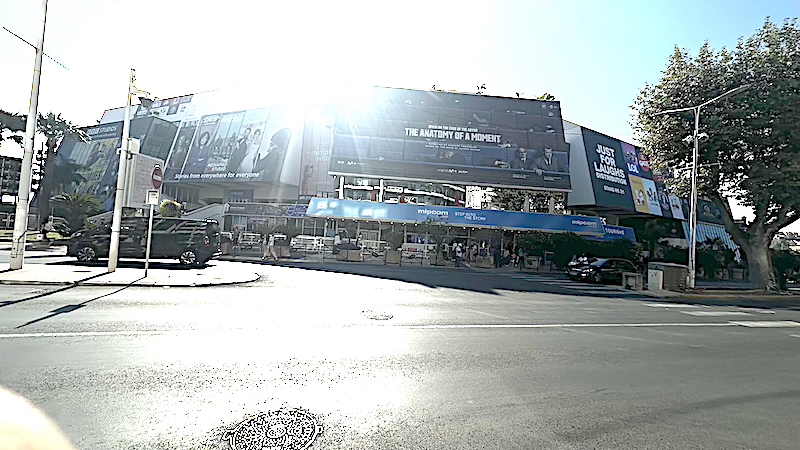
    CANNES: Mipcom 2025 opens its doors on 13 October in Cannes, and India is making serious noise. Whilst the global television and streaming industries thrash about in existential angst—wondering what they are, where they’re going, and whether anyone still watches television—over 10,500 participants and 330-plus exhibitors from more than 100 countries are cramming into the Palais des Festivals. Identity crisis? Not on India’s watch.

    RX management, which runs this annual gathering, expects the gloom to lift the moment delegates start talking deals. And nowhere is the optimism more palpable than in the Indian contingent, which has arrived in force with more than 70 companies ready to do business.

    Centre stage sits the Indian Pavilion—a sprawling 100 sq m affair rebranded as the Bharat Pavilion/Waves Bazaar. It’s a joint initiative between the Indian consulate in Marseilles, the ministry of information and broadcasting, and the Services Export Promotion Council. More than 40 Indian companies have piled in under its banner: animation studios, video service outfits, content distributors, post-production houses—the full ecosystem.

    But the real heavyweights are flying solo. Eschewing the shared space, a formidable lineup of Indian firms have planted their own flags with independent exhibition stands: Animation Xpress, Amagi Media, Enterr10 Television (which runs the Dangal channel), GoQuest Media, JioStar India, One Life Studios, One Take Media, PowerKids Entertainment, Rajshri Entertainment, Rusk Media, Shemaroo Entertainment, and Zee Entertainment Enterprises. It’s a show of strength that reflects India’s growing clout in the global content economy.

    Indian delegates hunting for content—whether licensing hit formats or acquiring finished programming—number more than 120 this year, a figure that underscores the country’s voracious appetite for fresh material and its ambitions as both buyer and seller.

    Hiren Gada, chief executive of Shemaroo Entertainment, said he was returning to Mipcom after many years away and was “looking forward to some exciting meetings with international clients.” The veteran executive’s presence signals that even established players see renewed opportunity in the current market turbulence.

    Siddharth Kumar Tewary, founder of One Life Studios, called the atmosphere “electric,” adding that his company was now positioning itself as a global multiplatform content and production services partner—not merely an Indian supplier, but a genuine international player capable of creating content for any screen, anywhere.

    The Indian surge comes at a curious moment. Traditional broadcasters are bleeding viewers to streaming platforms – which are themselves struggling against the vertical and micro drama platforms and Fast services -trying to figure out sustainable business models. Studios are consolidating, mergers are multiplying, and nobody quite knows whether “peak TV” was last year or five years ago. Yet Cannes remains Cannes—a place where hope springs eternal and every conversation might be the one that spawns the next global hit.

    As deals snap shut and pitches fly across the sun-drenched Riviera, sleepy Cannes has morphed once more into the pulsing nerve centre of the global content trade. Champagne corks pop, business cards change hands at dizzying speed, and somewhere in the Palais a Hindi-language crime thriller is being sold to a Scandinavian broadcaster who’s convinced it’s the next Squid Game.

    Streaming uncertainty be damned. The curtain rises, the cameras roll, and India’s moment in the spotlight has arrived—louder, brighter and more confident than ever.

  • Geo-targeting eliminates ad wastage says Amagi’s Subramanian

    Geo-targeting eliminates ad wastage says Amagi’s Subramanian

    MUMBAI: The biggest chink in the armour of Indian advertising, which is also celebrated as India’s unique trait, is its heterogeneity. Its diverseness creates differences in dialect and lifestyle ever 110 kilometres. If taken in the right stride, it also opens up a range of opportunities for businesses.

    If a product is meant for a particular state, only the big companies can afford to conduct pan-India advertising. Smaller businesses that don’t have such deep pockets have an alternative in an upcoming technology of hyperlocal advertising. It lets you target people sharing a neighbourhood or ethnicity.

    During an interaction with indiantelevision.com, Amagi Media Labs co-founder Baskar Subramanian broadly discussed the advantages of regional and hyperlocal advertising. Soon turning 10, Amagi has grown from its modest base in Bengaluru to hold offices in New York, London and Hong Kong boasting of clients in 40 countries with 80 feeds.

    How do pan-India ads lack when it comes to regional areas?

    While pan India ads do convey what they should regionally do, but they never connect with the audience, as regionalisation today is the way forwards for the brand and consumer bonhomie i.e. If there is a Lalitaji endorsing Surf Excel in Haryana, there needs to be a Lalitaamma selling the same Surf Excel regionally across Udupi.

    Dhirubhai Ambani once said, “Money is lying in every street of India. One must know how to collect them!”, and so what really matters here, is going “To the bottom of the pyramid” by ensuring to go regional, and creating prosperity by pricing not the product but the customer, his aspiration and affordability (i.e.FMCG sachet’s or JIO’s offers).

    Would you like to share some successful regional ad campaigns?

    When you look at few of the award-winning regional campaigns from various national brands such as the “NaakaMukka’ of the Times of India, the ‘Ella okay, cool drink Yaake?’ campaign of the United Breweries, the Allu Arjun redBus campaign or the ‘my first train ride’ by Paper Boat, it takes us beyond the thought of just dubbing or adding regional subtitles to make things seem regional.

    The example of Dhirubhai Ambani strongly applies to brands advertising product categories and regions across, i.e. Tata Tea deciding to run the “Alarm Bajne Se Pehle Jaago Re” nationally, while it goes on a price war with Wagh Bakri in Gujarat or Frito Lay holds a national campaign during IPL while decides to target Balaji Bhujia in Maharashtra and Gujarat. On the other end, we also have regional brands like Medimix and Cavinkare expand towards the northern market with value propositions suiting a region across Punjab or Haryana. Also, look at Horlicks, which promotes itself as a supplement to milk in Kolkata (perceived as a milk-deficient market), while in Chennai, it promised nutrition from wheat based drink, as the intake of wheat in the southern state is lower compared to the North. At the bottom, the real nationalisation of brands is now happening hyper locally across India.

    What are your thoughts on bringing cohesiveness in regional marketing spends by giving importance to local television?

    The regional channels’ advertising revenues are ascending with an increase in viewership year on year as compared to national channels. With the regional spread across DTH and cable, the plethora of regional platforms is on the rise. As per data from BARC India TV measurement system – regional GECs comprising of regional movies and regional music accounted for 38.99 per cent viewership share over a particular period(TG: All 4+, Market: All India, Period: Wk 41 to Wk47, 2016).

    Similarly, in Hindi speaking markets (HSM), GECs are the leading genre in regional markets as well with 29.6 per cent viewership share followed by regional movies with 6.6 per cent in 2016. Among the regional markets, Tamil channels occupy the biggest share with 25.7 per cent share in viewership and Telugu market is the second largest with 24.4 per cent viewership share.

    What are the factors to consider while customising budgets for regional targeted ad spends?

    The ad spends for regional advertising should focus more on tactical executions rather than intensive brand building activities. Though the increase in brand awareness cannot be neglected, the focus has to be on festival promotions, regional discounts, dealership level sales push and test marketing avenues to name a few, need to adequately have their share of targeted television expenses. In fact, brands like Patanjali and Reliance Jio have stabilised their ground through regional advertising across tier II and III cities. They are expected to increase their ad spends considering new product launches and price wars in the current and future.

    Has geo-targeted advertisement become the disruptor in television advertising ecosystem?

    Geo-targeted television advertising, is a new phenomenon in India which is disrupting the current television advertising eco system. Television, a medium with one of the highest penetration across India, suffers from limitations as being expensive and lacking measurability. With associations such as BARC, the share of reach and voice can be determined for brands advertising across categories, but the actual conversion of campaign effectiveness are miles away. Also with India’s diverse heterogeneous market coupled with varied regional preferences, TV was unable to singularly address this diversity. There were limited options for brands to target a specific market using TV, until today where platforms like Amagi Mix ensures a collection of channels, which helps advertisers decide their targeted television advertising, measure the effective reach and modify campaigns accordingly based on national or regional business requirements. By eliminating the spillage and wastage, geo-targeting justifies television spends.

    What opportunities exist for the collaboration between digital advertising spends with regional television advertising?

    The average young Indian spends around 2 hours 20 minutes on digital platforms every day. This is vastly expected to go up, considering the exponential rise in OTT viewership. Today over 300 million Indians commuting to work and back use OTT platforms on mobile phones, and while this audience is set to increase across rural and urban India, it has currently already crossed the population of United States of America.

    Hence, television advertising (comprises over 40 per cent of advertising viewership) coupled with personalised OTT and digital communications (12 per cent) together as a combination gives formidable marketing opportunities to brand managers of various sectors. These ensure targeted, high impact reach, bring in measurable results, and cost effectiveness for hyperlocal brand marketing.

  • Amagi Media raises capital from Premji Invest, Mayfield Fund

    Amagi Media raises capital from Premji Invest, Mayfield Fund

    MUMBAI: Advertising network Amagi Media Labs has raised its next round of investment from Premji Invest, the family office of Wipro’s chairman, Azim Premji and a continuing investment from Mayfield Fund.


    The funds raised from this round will be used to bolster the company’s growth plans both in India and globally. In India, the funds will be primarily used for expanding its geo-targeting network including addition of new channels to its bouquet.


    Having recently opened an office in Japan, Amagi also intends to use these funds to set up local offices in UK, Singapore and the US to expand its growing client base for its broadcast technology platform.


    Amagi Media co-founder Baskar Subramanian said, “At this stage in our development, it is critical that we get the right investors on board whose vision matches ours and in this respect we are extremely pleased to have Premji Invest associate with us. This investment also reconfirms Mayfield Fund’s continuing confidence in our execution and growth. With over 300 per cent growth in revenues from last year, we have become the de facto choice for brands in their pursuit for effective advertising.”


    As a highly diverse market with varied culture, languages, food habits and purchasing parities, India poses a unique marketing challenge. Addressing this need is Amagi’s USP. National and regional brands use Amagi’s platform to target their advertisements to specific markets or regions depending on their requirements.


    Initially incubated in NSRCEL at IIM-Bangalore, Amagi Media had previously raised $12 million from Nadathur Investments and Mayfield Fund.

  • Jitesh Rajdeo quits Zee Media

    Jitesh Rajdeo quits Zee Media

    MUMBAI: After dedicating 14 years to the company, Zee Media chief sales officer Jitesh Rajdeo has decided to move on. He is currently serving his notice period and according to sources his next stop will be Amagi Media.


    Rajdeo took over the role of chief sales officer in February last year for the entire bouquet of Zee News, Zee Business, Zee 24 Taas, Zee News UP, Zee News Punjabi and Zee 24 Ghanta. Prior to this, he was the chief revenue officer at DNA. 


    He has worked at various places including Mukta Advertising, Asian Age newspaper, Modi Entertainment Network and Multichannel India.

  • Amagi Media to tie up with 5 broadcasters

    Amagi Media to tie up with 5 broadcasters

    KOLKATA: Amagi Media Labs is gearing to increase its reach. The Bengaluru based technology and media startup that facilitates geo-targeting of television advertisements, is now expanding its services to five more national broadcasters. And all this in the next two-three months.


    “We are in discussions with broadcasters who have presence largely in the Hindi speaking markets (HSM),” informed Amagi Media Labs business head LS Krishnan.


    Amagi had recently roped in Zee Media as a broadcast partner and in turn added Zee News and Zee Business to its channel roster. “IBN7, CNBC Awaz, Times Now and UTV Movies, among others are our partners,” he said.


    The company is also looking at getting the fourth round of private equity funding. “We have signed the paper and expect the funds flowing in the company, anytime sooner,” added Krishnan, without divulging any detail on the amount to be infused in Amagi for further expansion of business.


    Krishnan who was addressing the press in Kolkata, stressed on the eastern region becoming an important destination for national brands. “The region is important for brands that are looking for deeper penetration and reach. 45 per cent of viewers in West Bengal are Hindi speaking. The region contributes around 20-25 per cent to our topline. We aim to scale up in terms of advertisers here,” he said.  


    Currently, Amagi has around 50 clients in the state. Some of which are: Shalimar, Konark Cement and Keo Karpin. “80 per cent of the revenue comes from the FMCG sector,” concluded Krishnan.


  • Amagi Media Labs enables ETV to generate custom feed for Singapore

    Amagi Media Labs enables ETV to generate custom feed for Singapore

    MUMBAI: Geo-targetted advertising was started in India by Amagi Media Labs that enabled channels to have particular ads in particular regions. But it didn’t just stop there. It has also started creating local feeds for channels that want to air in other countries.


    According to Amagi, at times, certain shows are not allowed to be aired in other countries due to broadcast regulations, so it is replaced with regional shows. Local content to cater to local audiences can also help in getting targeted advertising in the country.


    In the latest move, the channel has partnered with Eenadu Television to provide custom feed for ETV Telugu in Singapore through Amagi’s cloud enabled broadcast solution. Amagi’s localisation platform at SingTel’s Mio TV will be doing the job for the channel. Earlier, another Telugu network had done the same in Singapore. Maa Network’s Maa TV and Maa Movies also aired local shows to its viewers in Singapore earlier this year.


    ETV Telugu wanted to bring their linear feed to Singapore and it was asked to opt out of two hours of its programming. Using Amagi’s cloud based platform, they have been able to create a local feed for Singapore audiences. “We had a requirement to replace couple of hours of programming on every day basis for our distributor in Singapore while justifying the RoIs,” said Eenadu TV vice president Bapineedu.


    Amagi’s technology helps channels save a lot of resources of creating a new feed using satellite or fiber.


     “The system is designed in a manner such that the content masking process works in parallel to the satellite broadcast’s processes and scheduling,” said Amagi co-founder and CTO Srividhya S. “Unlike the traditional triggering mechanism used, Amagi’s barcoding based approach offers workflow flexibilities and 100 per cent accuracy in identifying and replacing content assets.”


    Recently Amagi has perked up on its geo targeted advertising for Nickelodeon and HUL as well as Zee TV.

  • Nickelodeon-Unilever-Amagi enter advertising geo-targeting deal

    Nickelodeon-Unilever-Amagi enter advertising geo-targeting deal

    MUMBAI: Advertisers and their agencies always want a bigger bang for their buck. Especially if it is buying expensive air time on TV channels. And one player that has been working at getting them that extra zing is the Bengaluru-based Amagi Media with its geo-targeted advertising DART technology platform.


    With almost 15 channels as clients and a reach of about 200 million viewers, the hot shot tech firm today announced that it has done a deal with arguably India’s biggest advertiser Hindustan Unilever Ltd (HUL) and the Viacom18 kid’s channel Nickelodeon.


    As part of that deal, an HUL TV commercial will run simultaneously on Nick nationally in different versions , depending on geographical location using Amagi’s DART platform. .Lo and behold, HUL will be micro-targeting its communication, something which would surely delight the savvy marketing behemoth. .


    Terming this pact as ‘creative-versioning’ Amagi claims that it addresses crucial needs of advertisers as well as broadcasters to make the most of the ROI from the television spot.


    Says Viacom18 group CEO Sudhanshu Vats: “We are pleased to partner with Amagi and Hindustan Unilever on this unique concept of micro-targeting. This initiative further builds on our strategic thrust of sharper segmentation.”


    Amagi was rated as the second fastest growing technology company in India by Deloitte Touche Tohmatsu.


    Amagi Media co-founder Srinivasan K.A explains: “This is the first time worldwide in television advertising that a single spot bought nationally has been used to communicate different brand messages in different regions. Such micro-targeting is going to be the future of television advertising.”


    What Amagi does for its other broadcast partners is buy ad slots on their channels and then resells them to regional advertisers. A bar code is added to the ad which is used to identify the placement of ads in specific regions.


    Broadcasters have been wary of this kind of advertising as it would mean giving up national inventory for lower-cost local advertising.


    This is probably why Nick is letting HUL do its own micro-targeting rather than selling its ad space to Amagi to get regional advertisers on board. However it is a boon to local advertisers who only pay for advertising in a particular region of a national channel at a much lesser cost as well as those who want to mould their ad to suit geography-specific cultural demands.


    About Rs 70 crore has been invested in Amagi and it aims to break even somewhere in 2014-2015. Its current yearly revenues are a little less than Rs 50 crore.


    It already has a long list of broadcast partners such as TEN sports, Times Now, CNBC Awaaz, IBN7, CNN-IBN, UTV Movies, Maa TV, Zoom, Udaya TV as well as Tata Sky as its DTH partner. Zee News and Zee Business were recently added to its kitty. Its list of advertiser clients includes Chevrolet, Toyota, Fortuna, Skoda apart from local ones such as Kuberan Silks, YLG, Mysore tarpaulins etc.With Unilever being roped in will other top notch advertisers also follow?


    That’s for later, but the news now is that soon a kid watching Nickelodeon in Kolkata will not see the same ad as a kid watching the channel in Kolhapur. Wonder whether he or she will notice the difference?

  • Amagi Media Labs ropes in LS Krishnan

    Amagi Media Labs ropes in LS Krishnan

    MUMBAI: Amagi Media Labs has appointed LS Krishnan for a senior leadership position. He will directly report to the management.

    Krishnan joins in from Sakal Group where he was working as the head of business.

    Amagi co-founder KA Srinivasan said, “It gives me immense pleasure to announce that Krishnan will be joining the Amagi family. He will play an exciting new role in the Amagi growth chart.”

    On his new role Krishnan added, “I am excited about my new role in a dynamic company like Amagi. I believe Amagi is paving way for a new segment of TV advertising that is giving SMEs a level playing field to compete with national brands for eyeballs.”

    Krishnan comes in with over 25 years of experience in media. He has also worked with Mudra Communications and GroupM.

    Based in Bangalore, Amagi Media is a player in smart advertising on TV.

  • ‘TV is the only medium that does not have geographic targeting’ : Amagi Media Labs co-founder Srinivasan K A

    ‘TV is the only medium that does not have geographic targeting’ : Amagi Media Labs co-founder Srinivasan K A

    Geographic targeting of television advertising is a business that is still in a nascent stage in India. Once adopted by various players in the television advertising chain, it has the potential to be a game-changer in the way brands and products are promoted and aired in India. 

    Bangalore headquartered Amagi Media Labs (Amagi) has the advantage of being one of the first players in this space in India. Amongst the Amagi team are investor and board member N S Raghavan, who was one of the co-founders and joint managing director at Infosys, former ZeeEntertainment Enterprises Ltd CEO Pradeep Guha and ex-CEO of Tata Sky Vikram Kaushik as advisors.

    Amongst the three founders at Amagi who run the show are Baskar S who works on strategy, investments and R&D, and Srividhya S who works on engineering and technology deployment.

    In an interview with Indiantelevision.com‘s Tarachand Wanvari, Amagi‘s third co-founder Srinivasan K A. (Srini as he is called by his friends) talks about the company‘s strategy and growth plans.

    Excerpts:

    How does Amagi tap into advertisers who look at geographic targeting?

    We at Amagi make TV advertising smarter. If you look at all the media options available to an advertiser now, except at a language level, TV is the only medium that does not have geographic targeting. We look to strike out that disadvantage for TV by bringing targeted advertising on this medium.

    By rolling out our patent-pending technology infrastructure across the country, we enable different ads to be run in different regions on the exact same ad spot. So a single 30-sec ad spot can have different creatives running in different cities across the country.


    So you have a business model that can assist local as well as national advertisers?

    We have two business models. The first is local ads. Purchasing power across the top 100 cities in India is growing dramatically. This has been good for a variety of regional businesses in FMCG, retail, real-estate and education catering to the local population.

    These businesses have the capacity to spend significantly in advertising to build their brand, but are limited by the absence of a viable TV advertising option.

    Advertising on satellite TV is expensive and there is a significant spillage beyond their target geography for these businesses. So a lot of them have stayed away from satellite TV, except in pockets like Chennai, where a viable local option was available.

    Amagi for the first time in the country has brought the option of advertising on satellite TV channels for a specific region at a fraction of the national price. This enables local businesses to build brands that emotionally connect with the local audience and unleashes the power of TV advertising for these businesses in the most cost-effective manner. 

    The second model is Ad Versioning. This business option is specifically targeted at large national advertisers. Ad versioning allows able to play different creatives in different parts of the country on the ad spots that they have already bought from the channel.

    One example could be an advertiser can have different creatives for the same brand in different parts of the country – one with Aamir Khan in the north and Vijay in the south, say during an ad spot in a cricket match.

    Another example could be to have different local promotions and offers on products in different regions which today are entirely done in print as TV is not isolatable by market.

    This is the Holy Grail for advertisers who want to target Internet, but want the reach of TV. Amagi‘s platform enables this for advertisers. 

    Amagi also works with TV channels and operators to enable this option for advertisers.


    How have the various players in the equation taken your offering – advertisers, agencies, television channels, MSOs and the cable operators?

    This is a change in the way TV advertising is currently done. Amagi is working with multiple partners in the TV ecosystem to speed up adoption – obviously, anything as dramatic as this option requires time and patience and we are seeing adoption rate accelerating now.

    We believe that this is good for advertisers and the broadcasters – as this brings more advertising monies to TV and improves productivity and effectiveness for the advertiser.

    In the US, local advertising on TV is a $5 billion business, and has been working great for the whole TV ecosystem, and we believe that we can replicate the same success here in India. Like the US, India has a vibrant local economy that has largely been underserved from media availability perspective. We are filling that gap.

    Amagi is bringing in a new set of advertisers at the local level, and a new set of product advertising from larger advertisers which never looked at TV as a viable option. We believe that this a great boon for TV channels as more advertisers and product categories would advertise on their channels, leading to higher yield and revenues. 

    Amagi partners with MSOs who for the first time have the opportunity to participate in sharing advertising revenue.


    What is the size of the market for your services? 

    The size of the market comes from two parts: Regional businesses which contribute 40 per cent of print advertising in the country today; and large businesses that see that Amagi platform enables their ad spends to work better and provide 20 per cent-30 per cent effective over their current ad spends. 

    With these two market opportunities combined, the potential for this capability is above Rs 50 billion by 2015. 


    ‘Amagi for the first time in the country has brought the option of advertising on satellite TV channels for a specific region at a fraction of the national price‘
    What is driving your growth?

    We are an ad marketplace. We connect right content with right advertisers at the local level. Our growth comes from expansion across geographies, and bringing in a portfolio of TV channels that cater to the needs of local businesses.

    We are currently in 15 cities across the country, including Mumbai and Delhi. We will be in 22 cities in the next 6 months. We believe that will give us the critical mass to bring a compelling bouquet of TV channels to local businesses; we will have established a local TV marketplace across the country.


    Could you tell us how your system works and the safeguards from failure and intrusion or misuse or piracy that you have in your system?

    Amagi places ad insertion systems in different cable MSO headends across the country. These systems uniquely and predictably identify the ad spot that is allocated for Amagi, and replaces them with different content in different regions.

    Amagi is a completely automated technology platform and are securely controlled and monitored from a centralised location. So essentially these ad insertion systems cannot be programmed, tampered or intruded at these headends. The only way to programme them to do their activities is from a secure Amagi control server located in Bangalore. So, essentially these boxes have no way to be tampered at the local level. 

    Amagi has been running this technology for the past two years and has done close to half a million seconds of local advertisements across multiple advertisers across the country. 

    Amagi‘s technology is one of the most advanced, robust and comprehensive technologies in the world, where this is the only system that can handle dynamic requirements of sports, news TV channels with their dynamic scheduling needs and abrupt end of ad spots during sports events. We are in discussions with broadcasters outside the country as well, as this need is universal. 

    So this is a mature system with a built-in secure work-flow that guarantees no possibility of any misuse whatsoever.


    How strong is competition in the space that you are in?

    Rediff is one company that started earlier than us in trying to address a similar opportunity. I cannot comment on where they are in their lifecycle.


    How scalable is Amagi?

    We have a scalable technology platform, large sales force across 15 cities and hundreds of installations across the country, and are exponentially increasing the number of deployments as we speak. More than 230 advertisers have advertised on our platform with close to half a million seconds of advertising. 

    We believe this the future of TV, and would be happy to see more people exploring this opportunity as it will help build a vibrant marketplace.