Tag: Alzheimer’s

  • India braces for a grey wave as elderly numbers set to hit 230m by 2036

    India braces for a grey wave as elderly numbers set to hit 230m by 2036

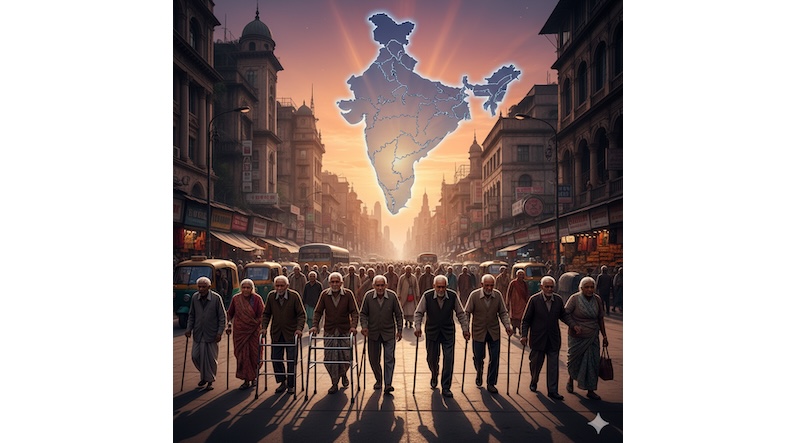
    MUMBAI India’s population is ageing fast. By 2036, roughly 230 million Indians—one in seven—will be 60 or older, more than double the 100 million recorded in 2011. It’s a demographic earthquake that will reshape everything from healthcare to housing, pensions to public transport.

    The south is greying fastest. Kerala, already home to 13 per cent elderly in 2011, will see that figure leap to 23 per cent by 2036, matching developed nations. Tamil Nadu and Himachal Pradesh aren’t far behind. 

    Meanwhile, northern states like Uttar Pradesh, though younger now, are catching up quickly—elderly numbers there will nearly double from 7 per cent to 12 per cent.

    Women dominate the demographic. They make up 58 per cent of India’s elderly, with a sex ratio of 1,065 females per 1,000 males. More than half are widows. The overall dependency ratio—62 dependents per 100 working-age people—signals mounting pressure on families and the state.

    The challenges are stacked high. Mental health stigma around dementia and Alzheimer’s persists. Geriatric infrastructure is patchy, especially in rural areas. Social security remains inadequate even as living costs climb. Traditional family support systems are fraying under the weight of urbanisation and nuclear households. And India’s infrastructure—from public transport to pavements—remains stubbornly unfriendly to the elderly.

    New Delhi is scrambling to respond. The ministry of social justice and empowerment has rolled out a raft of schemes. The Atal Pension Yojana, launched in 2015, has swelled from 15.4 million subscribers in 2019 to 82.7 million by October 2025, managing assets worth over Rs 49,000 crore. It promises monthly pensions of Rs 1,000 to Rs 5,000 after subscribers turn 60.

    The Integrated Programme for Senior Citizens runs 696 old-age homes across 29 states and union territories, with 84 more approved this year. The Rashtriya Vayoshri Yojana distributes walking sticks, hearing aids, wheelchairs and dentures to low-income seniors. A toll-free helpline—14567—offers support. The Sacred portal helps those over 60 find jobs. The SAGE portal encourages start-ups to develop elderly care solutions, offering equity support of up to Rs 1 crore per project.

    Legal muscle backs the effort. The Maintenance and Welfare of Parents and Senior Citizens Act, amended in 2019, compels children—including step-children and in-laws—to provide for parents. It scrapped the Rs 10,000 monthly maintenance cap and mandated special police units for seniors in every district. All hospitals, private included, must now provide dedicated queues, beds and geriatric care.

    Technology is pitching in too. Telemedicine platforms like e-Sanjeevani offer free home consultations. Wearable devices track vital signs. Online pharmacies deliver medicines to doorsteps. Smart home sensors let families monitor elderly relatives remotely.

    The silver economy—goods and services for those over 50—is booming. Valued at Rs 73,000 crore in 2024, it’s set for multi-fold growth. Globally, senior citizens and professionals aged 45 to 64 are the wealthiest cohort. India’s senior care market presents vast opportunities for health and wellness firms, both at home and abroad.
    Yet success hinges on more than schemes and start-ups. India needs specialised regulations for senior care, policy reforms anchored in evaluation frameworks, and better coordination across ministries. Panchayati raj institutions, urban local bodies, NGOs and private providers must work in concert. Public-private collaboration across healthcare is essential.

    The clock is ticking. By 2050, India’s elderly population will swell to 319 million, growing at three per cent annually. The country that once prided itself on youthful demographics now faces a greying future. Whether it becomes a burden or a boon depends on how swiftly India adapts. The grey wave is coming. Ready or not.

  • What has made Saiyaara a Rs 300 crore box office wonder?

    What has made Saiyaara a Rs 300 crore box office wonder?

    MUMBAI: The box office success of Saiyaara has been a topic of wide discussion over the past month. The film has performed exceptionally well, crossing Rs 300 Cr at the domestic box office, and becoming the second-highest grosser of 2025 in India, behind Chhaava, at the time of writing this report. A popular theory attributes this success to the influence of Gen Z (those born between 1997 and 2012, currently aged 13-28). It’s an easy conclusion to draw, given the film’s genre and debutant cast. But is it really true? Can one audience segment alone propel a film with no franchise or star value to cross the Rs 300 Cr mark? This analysis explores that question.

    According to Ormax Media analysis, the remarkable box office success of Saiyaara is less about a single generation’s love affair with a fresh romance and more about how different cohorts engage with emotion on screen. On paper, the culprit seemed obvious. Gen Z—those aged 13 to 28—looked tailor-made for the film’s youthful leads, moody soundtrack, and breakneck visuals. Social chatter, sneaker fashion and music streams all suggested the movie was “their” moment. But Ormax Media’s data complicates the narrative.

    The firm’s proprietary OPR (Ormax Power Rating), a 0–100 index that tracks likeability and advocacy, is a trusted predictor of word-of-mouth and sustained collections. A score above 60 typically signals robust engagement, translating into strong box office legs beyond opening weekend. Over four weeks of tracking, Saiyaara notched a sturdy OPR, with Gen Z audiences scoring it at 68 and those aged 29+ close behind at 63. A respectable gap, but not wide enough to explain the runaway commercial phenomenon.

    Saiyaara

    The real story, says Ormax Media, emerges when the data is split by gender. Women across generations responded almost identically strongly, suggesting that themes of love, empathy and sacrifice cut across age barriers. Among men, however, the divergence was stark. Gen Z men mirrored women’s enthusiasm, while older men slipped sharply, delivering an OPR of just 56.

    Why does this gap matter? For Ormax analysts, it reflects shifting life priorities. Gen Z men—many still students, young professionals or in early relationships—saw in Krish Kapoor, the protagonist, an avatar of their own anxieties and aspirations. At 22, Krish is all swagger and style: racing bikes across Mumbai flyovers, flaunting Air Jordans, and smoking defiantly. But when his girlfriend Vaani is diagnosed with Alzheimer’s, he doesn’t flee. Instead, he pauses his rising music career to stay by her side. The arc resonated with younger men who are wrestling with questions of identity, love and loyalty in their own lives.

    “Cinema becomes a tool of self-discovery for this cohort,” Ormax Media notes. “It validates emotions that are difficult to articulate, reassuring them that ‘forever’ love is not entirely a myth.”

    Older men, by contrast, appear to want films to serve as escape hatches from the daily grind of careers, mortgages, and parenting. For them, Saiyaara may be admirable cinema, but not essential viewing. As Ormax points out, this explains the 10-point OPR gap between the two male groups.

    For women, the generational divide all but vanishes. Ormax’s data highlights how relationship-driven storytelling continues to resonate across age brackets, aligned with academic research suggesting women are both socialised, and to some extent biologically primed, to prioritise empathy and relational bonds in narrative consumption. Saiyaara capitalised on this, shaping Krish’s trajectory not as a melodramatic sacrifice but as a nuanced portrait of resilience and commitment.

    The outcome: a Rs 300 cr-plus blockbuster that defied industry cynicism around non-franchise, debutant-led films. Saiyaara’s triumph is not solely Gen Z’s doing. Rather, it is the uncharacteristic enthusiasm of young men—an audience often elusive for romantic dramas—that Ormax Media credits with tipping the film from respectable hit to cultural juggernaut.

  • MTV launches ‘Memory Karaoke’ to help people with Alzheimer’s

    MTV launches ‘Memory Karaoke’ to help people with Alzheimer’s

    Mumbai: MTV in collaboration with Ogilvy has launched ‘Memory Karaoke’ – an initiative to help those living with early Alzheimer’s cope with memory loss. 

    Emphasising how forgetting isn’t funny, ‘Memory Karaoke’ will feature four foot-tapping songs based on commonly forgotten information by those in the early stages of Alzheimer’s. With these songs meant to be practiced daily along with caregivers, MTV hopes to ease their suffering and raise awareness about the progressive disease that presently has no cure, said the channel in a statement.

    “Music is nothing less than manna for one and all. MTV Memory Karaoke elevates this very role of music to a higher plane by making a small yet significant difference to the lives of those affected by Alzheimer’s and their caregivers. We at MTV are humbled by the opportunity to be a part of this initiative,” said Viacom18 head of youth music and English entertainmentAnshul Ailawadi.

    The sing-along songs will hold important details about the person suffering from Alzheimer’s such as their home address, name, and meals. His or her family and caregivers can also have access to them. The hummable lyrics appearing on the screen like in karaoke will enable the person to remember the information enjoyably and musically over time.

    The songs have been written by Ogilvy and composed by Komorebi, an alternative electronic act from New Delhi, and the musical baby of Tarana Marwah – an Indian composer, singer-producer, and instrumentalist who has also lent her voice for the tracks on ‘Memory Karaoke.’ Further, to uplift moods and maintain humour MTV has collaborated with a young comedian on the initiative.

    “Music is a therapeutic tool for the mind, body and soul. Memory Karaoke will be an enjoyable, assistive aid for those with early Alzheimer’s to retain, reminisce and recall,” stated ARDSI  secretary-general and integrative therapist and dementia care specialist Vidya Shenoy.

    In an attempt to create a deeper impact, remove social stigma and reach out to a wider population, MTV has also joined forces with Alzheimer’s & Related Disorders Society of India (ARDSI) as knowledge partners for this initiative. ARDSI, an NGO affiliated with Alzheimer’s Disease International (ADI) is active pan India, and is recognised for providing specialised care services for those living with Alzheimer’s. MTV has also onboarded doctors for the initiative. The channel will leverage its widespread presence to initiate and empower professionals, students, and caregivers in Alzheimer’s month.

    “Growing up, we have all experienced how retaining new information would become easier whenever it was set to a tune. With the same being true for those with early Alzheimer’s, we wanted to create a platform where tracks could be customised by the family member by entering important information of the affected member as lyrics,” said Ogilvy Mumbai’s group creative director Akshay Seth and senior creative director Chinmay Raut. “Memory Karaoke offers personalised songs that can be practiced daily, resulting in better retention and recall over time. The mission is to introduce an enjoyable, daily ritual that takes away the frustration and helps the caregiver and the person with early Alzheimer’s to eventually sing in a manner comfortable to them.”

     The custom-made karaoke will be available on www.mtvmemorykaraoke.com.